



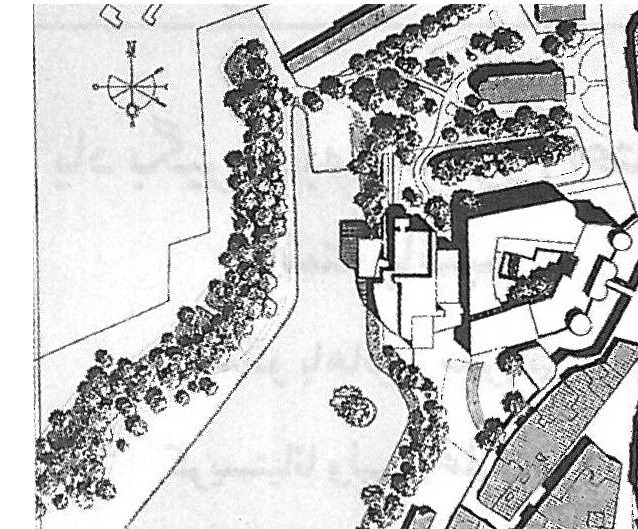
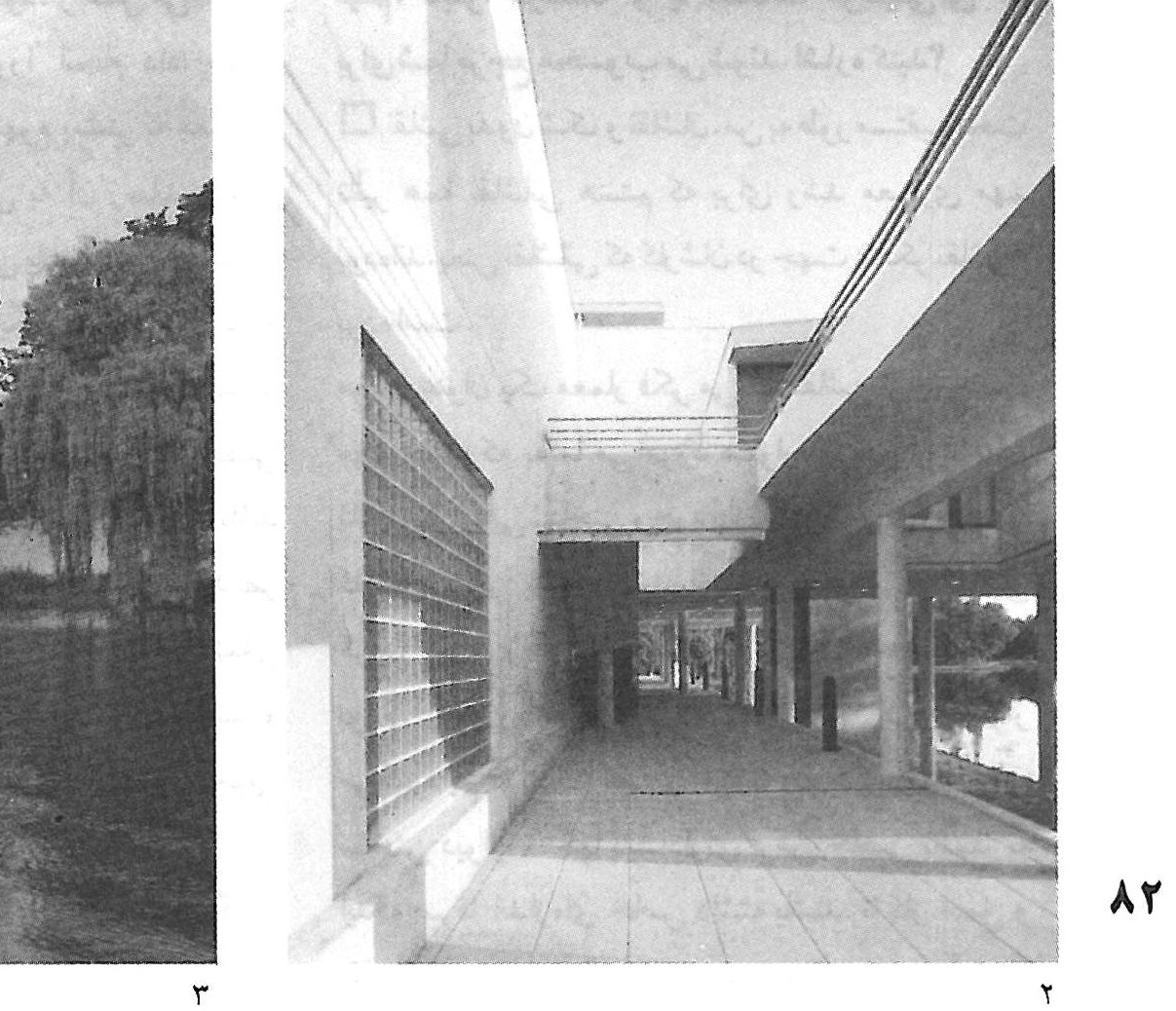
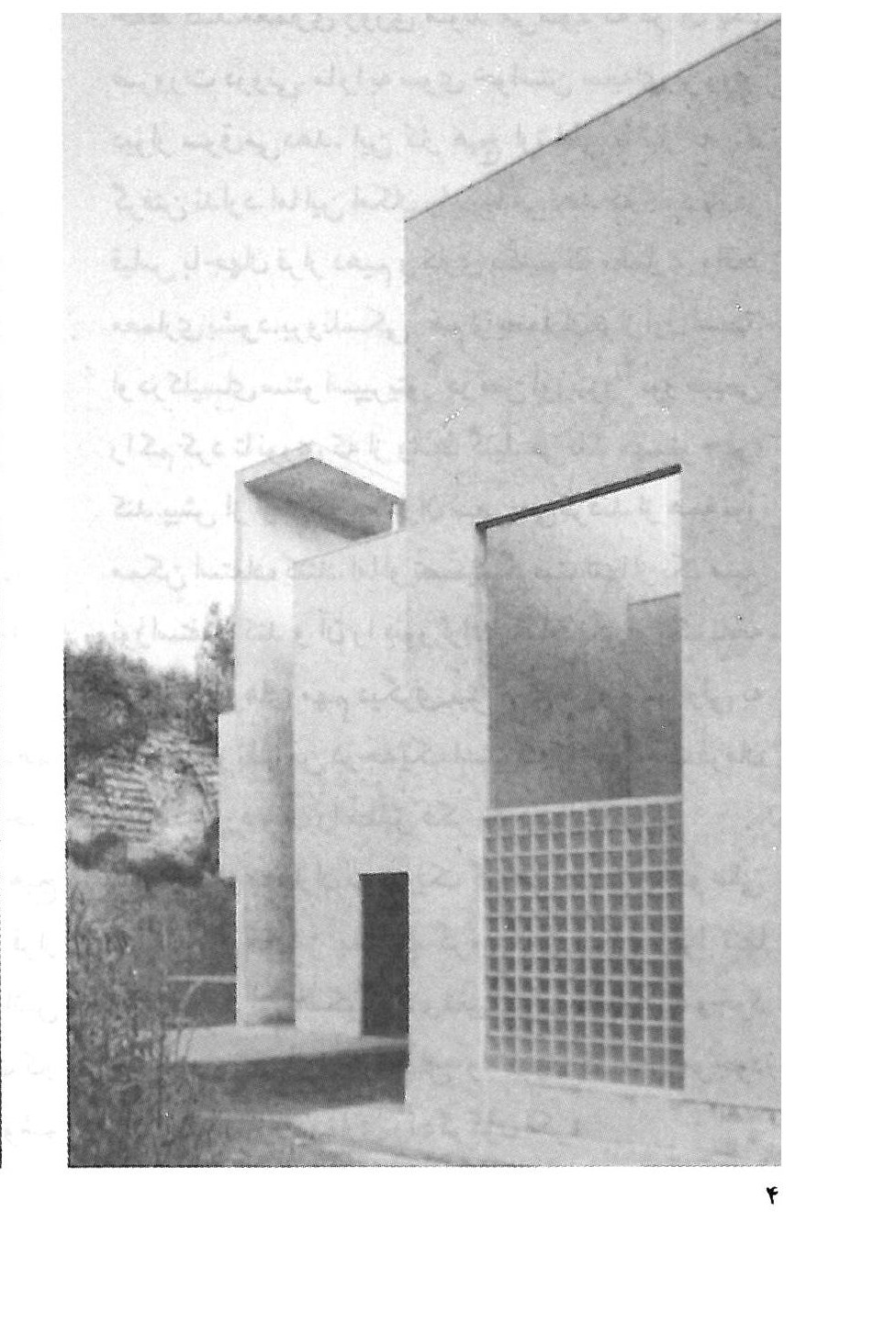
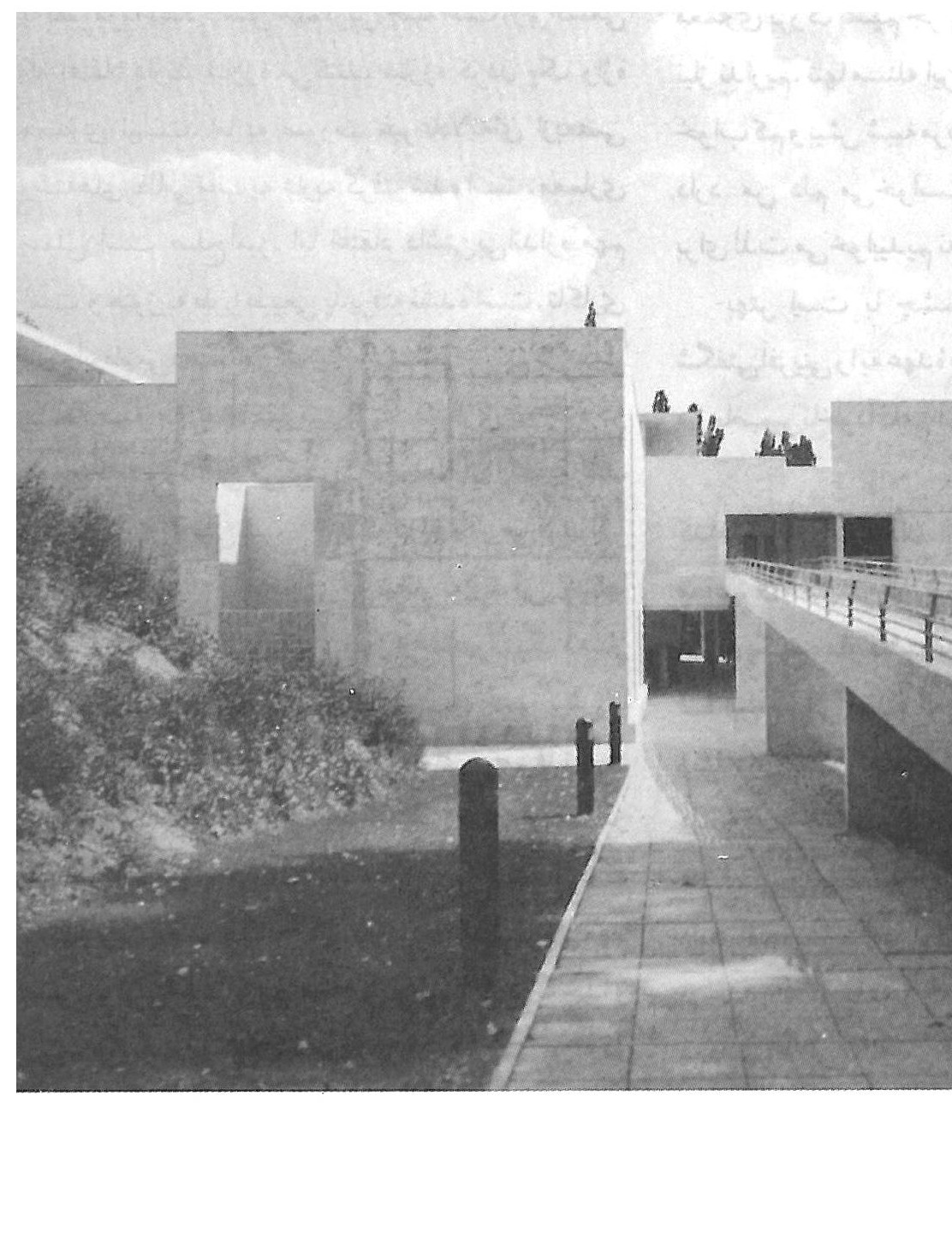
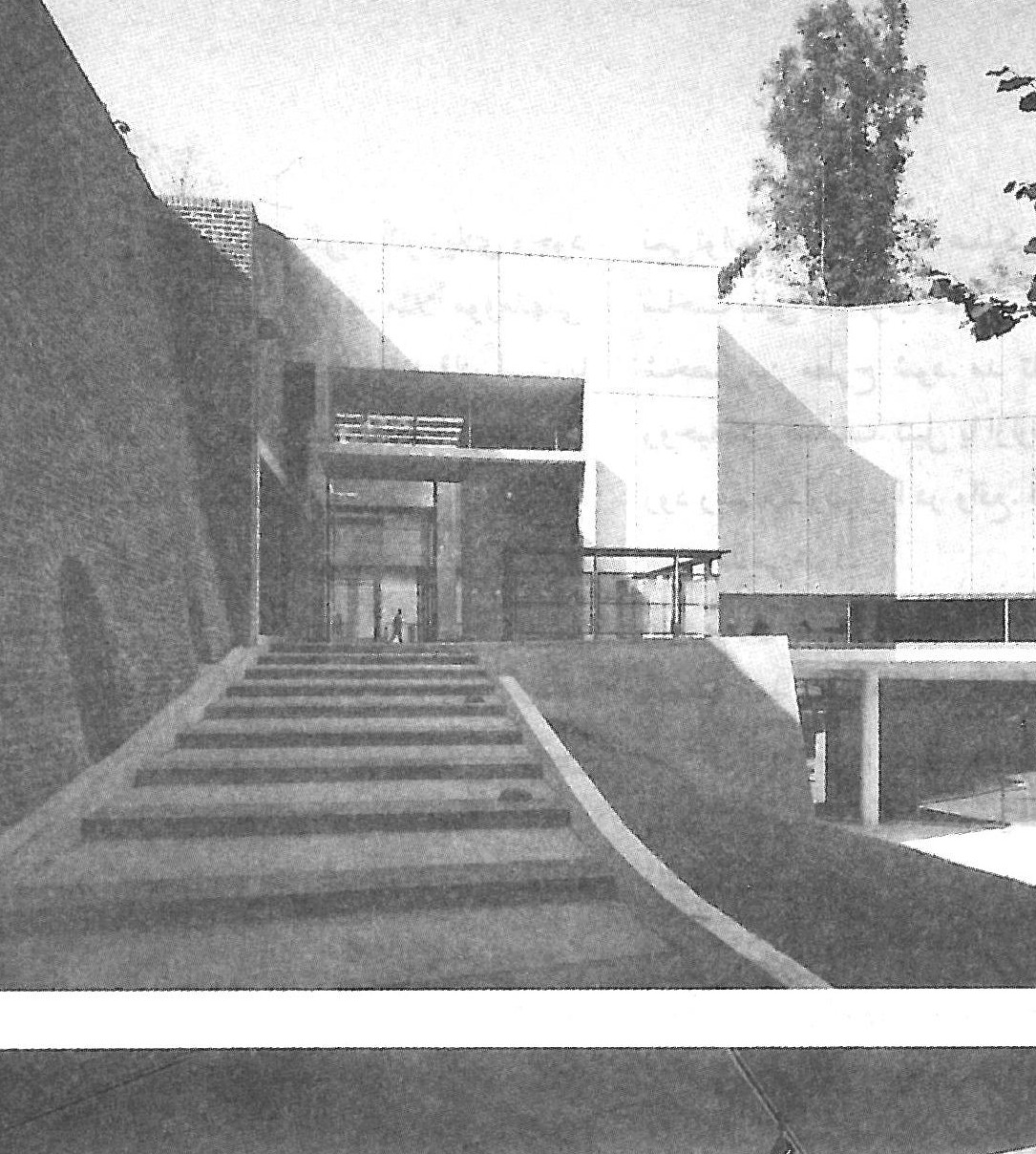
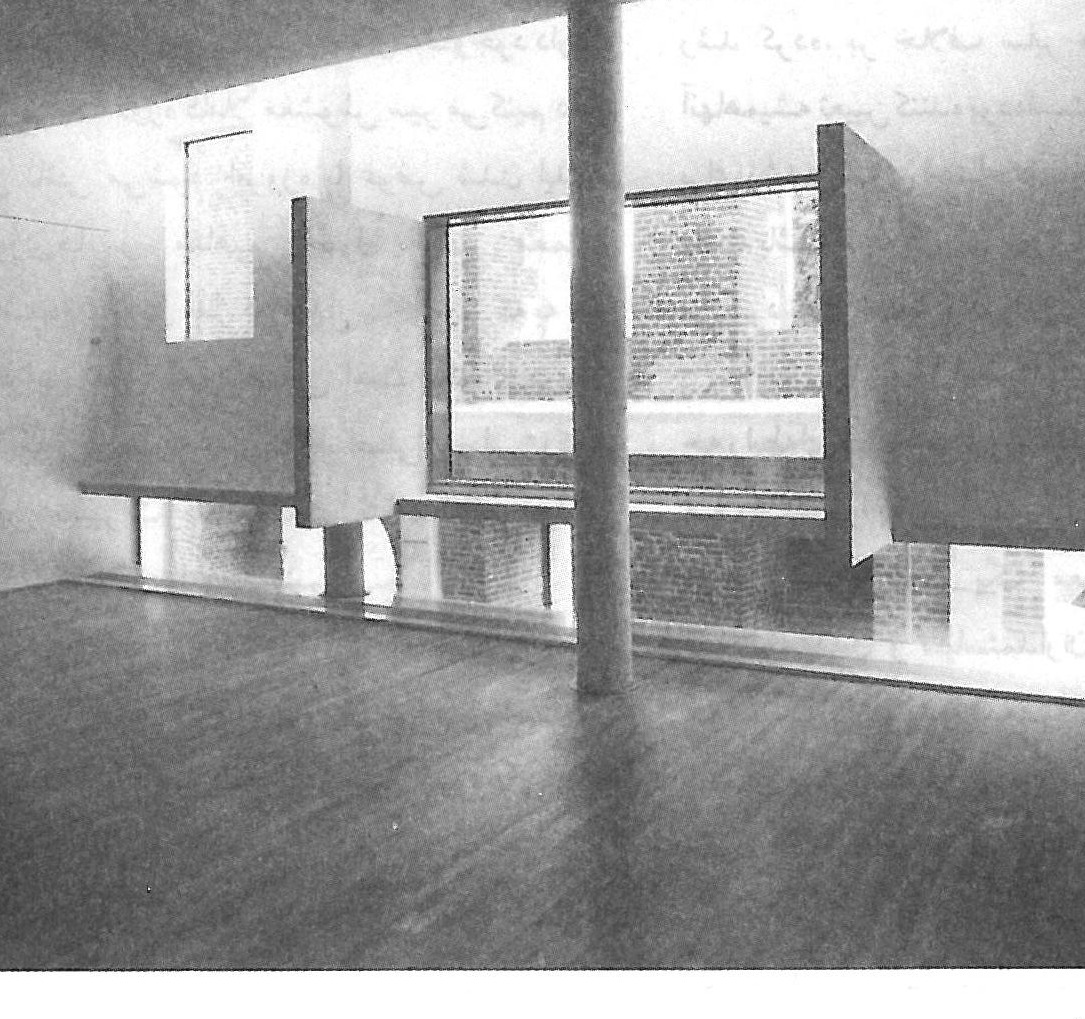
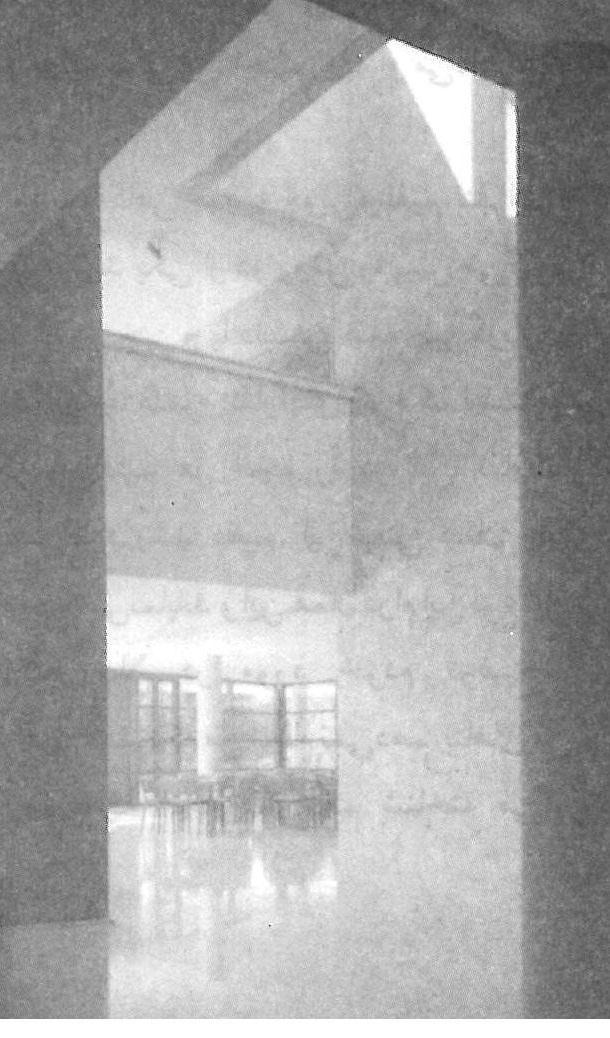
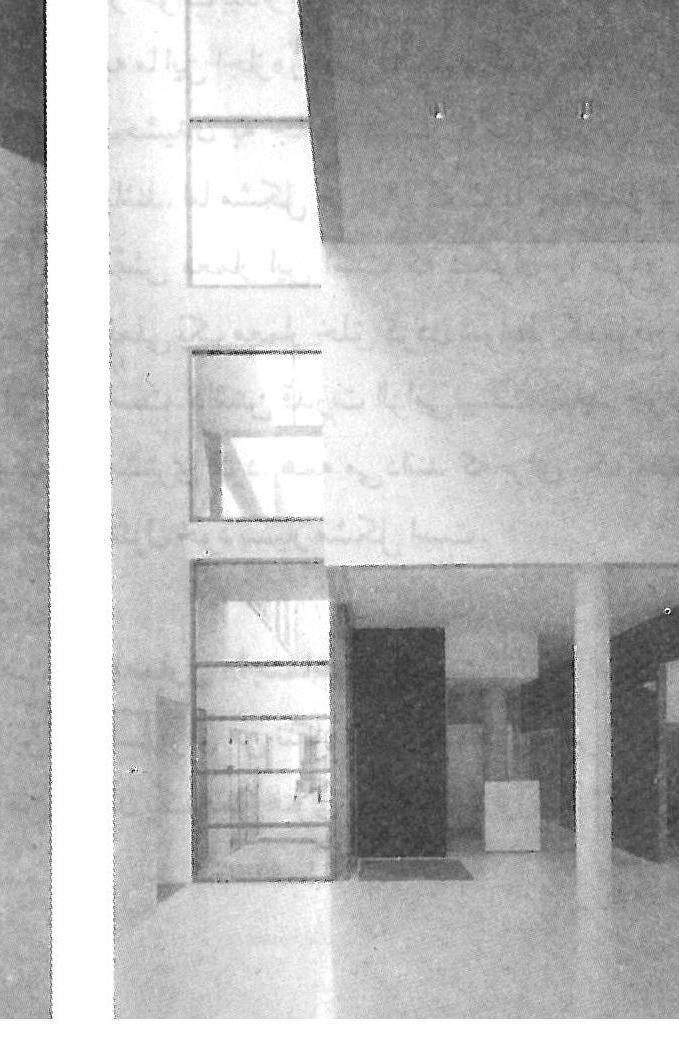
Ciriani was born in 1936 in Peru and has long been living and working in France. He is among those who continue modern theories with a novel and attractive arrangement. His first important works, such as the Marne-la-Vallée residential complex (~1978), are counted among neo-rationalist works and placed alongside those of Aldo Rossi, Mathias Ungers, and Rafael Moneo. Unlike many neo-rationalist architects of the 1970s, he did not pursue historicist tendencies and has maintained his allegiance to Le Corbusier. His works, and especially the museum of the Grande Guerre in the city of Péronne (1992–97), demonstrate his remarkable ability to achieve novel and beautiful volumetric compositions. Ciriani pays close attention to the relationship between architecture and life, and the function of a building is among the important concerns of a project for him.
Due to the length of the conversation with Henri Ciriani, a number of questions have been omitted and some answers have been summarized.
Memar: Belief, obedience, and struggle: are these the three ideals of architecture?
Before anything else, let me say that I am a true believer. In my view, believing is the most important aspect, for those who believe also fight. Fighting is not a characteristic of architecture. But it has been borrowed, rather unfairly, from certain militaristic disciplines. Architecture is a peaceful action, but believing is immensely important — and it has not yet been naturally accepted. Unless we believe in what we do, we cannot resist difficulties and opposition. An architect who lives in a filthy world, if he wishes to clean it up, must necessarily begin from the place where he works. If he does not believe that architecture can expand and improve people’s lives, nothing will have been made of him as an architect. And it is here that the pedestrian act of building — not architecture — will merely become a profession for him. One must believe, and in architecture this is a duty.
Additionally, it must be said that believing also has a religious dimension, which in my view is important — with the difference that in architecture, it is not belief in God and paradise, but belief in the present moment and in what is possible in the here and now.
Architecture is without doubt not a challenge to the future, but rather a response to the present. The future is a situation in which architectural thought acts with a more relaxed imagination. But if everything could be done immediately, that would be much better. The future as a concept has harmed architecture more than it has benefited it. Today, for example, futuristic goals have created a condition in which no one is any longer interested in doing good work, and everyone wants to take root in the future and secure rights for themselves there. No longer does someone wish to build a structure that functions well, is beautiful, and takes into account those who will live in it. Instead, everyone is ready to erect some strange building that has never been seen before, one that could best serve as a set for the science-fiction film Star Trek.
I think attention to the future from an idealistic and utopian standpoint is better than the above approach.
Memar: What is the role of culture in the development of an architect?
Culture is fifty percent of architecture, and effort is the remaining fifty percent. Talent plays no role here. For us to be great in architecture, we need nothing other than culture and work. The only issue is that from time to time one must sleep, and sleep is more or less like dying … and this is regrettable. I wish we could choose and sleep for pleasure, not out of necessity. It is better to dream with eyes open, and to entrust the art of architecture and wonder-making to the charge of our unconscious. I have made a pact with my unconscious on this matter.
Memar: Which artists — among the ancients, the moderns, and the contemporaries — have contributed to your education and development as an architect?
This is a question I answer with difficulty, for in the life of every artist there has always been a chapter that was important to me. But at the same time, no artist exists who has directly influenced me — except for the legendary Le Corbusier, whose ideas are so realizable that I always look at him as an ever-ready assistant.
I love literature, and I also hold the authors themselves in high regard, quite apart from their literary work. I cannot read Proust for long stretches — it kills me. I find him extraordinary, magnificent. But more than a page of him overwhelms me. I mostly read for the purpose of learning, and to know enough so that I can argue. I am a person of argument and debate. I do not read for pleasure; I read out of necessity.
Memar: Among the various forms of artistic expression, could you point to the films, paintings, sculptures, or musical pieces that serve as references for you?
Painting, without doubt, and painters. I am directly under the influence of all painters who have been important for the development of architecture — that is, painters whose work has been in the direction of “painterly thinking.”
As an architect, I think painting is important because it teaches us that there always exist certain grounds for exploration on which one can work, and this is far more important than finding things to copy. Once I spoke of first-rate architecture. The first architect to belong to this group is Imhotep1 the Egyptian, who conceived that stones should be cut in a specific way for building walls — not so that the stones would be of a specific size, but so that transport would be easy. Thus, he designed in the true sense of the word. I think it was at this moment that architecture was invented.
For me, the hut and the cave are not the beginning of architecture. Architecture is neither an underground excavation nor a tree under which people can shelter from a tiger or rainfall. Architecture is born on the day when an inner necessity drives us toward wanting a shadow upon a wall. This has nothing to do with the need for shelter. But it gives us the possibility of placing ourselves in relation to the world and believing that architecture has truly come into being.
Brunelleschi2 is also among the first-rate architects. In the Church of Santo Spirito3 he reduced the lessons of San Lorenzo4 and natural light so that the light pouring from the center of the dome would appear more significant. Before him, all architects tried to use as much light as possible. But he decided to use only one source and called it “willed light.” He was a genius, and he accomplished another important thing as well — but the reason he is first-rate in my view is that he brought light under his command and arranged it according to his own thought.
After the first-rate architects, there is also a group that is superb second-rate. Michelangelo belongs to this group, for he was only a magnificent stylist and brought about no change in architecture. He accomplished his best works within existing frameworks and did not transform the system of architecture.
Memar: Do universal laws still exist in architecture that are applicable everywhere? In your view, to what extent do Vitruvius’s three laws apply today?
Yes, they exist. But I think that the three laws of Vitruvius — “firmness, commodity, and delight” — lack a concept. Today, concept is of equal importance to each of the three elements above — three elements that are undoubtedly essential. But today, because of the evolution of thought and mind, they depend on concept. The most important thing now is the idea that exists at the foundation of architectural activity. And the fact that we are drifting in a confused period arises precisely from this. Today, with the changing of ideologies and concepts, architecture has become ineffective. For example, when confronted with a building that is utterly dysfunctional, someone might say: “It is true that it has no function, but …” The main problem is that in the face of these changes, architecture has failed to produce at least some notable concepts.
Memar: In the language of an architect, what part is personal expression, and to what extent is it influenced by context, prevailing styles, and trends?
Before anything, let me say that in architecture one should not be in search of personal expression. Personal expression is one of the ailments of our age, in which there is an excess of information. In the Renaissance, one could set erudition as a goal before oneself. Alberti was a man of erudition. He was a writer, and because he was extraordinarily intelligent, without being an architect, he engaged in architecture. His knowledge in various fields permitted him to address architecture.
Today we are well aware of our own ignorance. Therefore, those in a hurry adopt one of two approaches: knowing a little of everything, or knowing everything about something trivial. This is the realm of small differences. So we are led to think that we should cultivate whatever has a share in these small differences. This is what makes us “distinctive,” and this is the drama of this kind of personal expression.
Let me explain in terms of my own case. There are things I do not do. My buildings are also known by those things I do not do. I cannot build a structure that does not function well. Thus, building something that works well can be taken as my personal expression. Fashion has a very great influence on weak, lazy, or wounded spirits because of the rush to arrive quickly — for in reality, what is easy to copy becomes fashion.
Gehry is very popular but not easy to copy. He is fashionable but not influential. On the contrary, the works of architects such as Ando, Koolhaas, and Foster are very easy to copy, and naturally, they are influential.
Memar: Today, the architectural profession is going through a deep crisis. Is there a specific reason for this crisis? Has this crisis always been in keeping with our profession?
Architecture has grown whenever progress and enthusiasm have existed. Unlike other arts, for which crisis and doubt have always been defining, we need work. For the growth of architecture, we need a society that believes in it. What receives attention in a period of crisis is thought, contemplation, and introspection — not architecture.
Memar: What relationship exists between architecture and political power?
To tell the truth, usually a political man is a friend, or a fine match for an architect. We possess the power of representation, and politicians possess the power of proposal, and with these two powers, architecture can achieve brilliance. We wish this relationship to be as close as possible. But the problem is that politicians are politicized.
Memar: Can the architect, in the course of fulfilling his essential role — that is, serving society — also possess a kind of freedom? Should this freedom exist? To what extent?
I think every morning I wake up to help improve society, even though they do not want this from us and do not give us permission. But our role is in any case to improve society. Freedom must also exist. But it is difficult to say to what extent. Here, the role of the architect is to create expectation in others. The architect’s actual role is to create the conditions for expectation and necessity. Possessing power is not obligatory. One should not make oneself the client’s successor. Everyone knows that building one’s own house is very difficult for an architect.
Memar: What is “social” architecture?
For me, the only possible architecture is precisely this. The other kind is an artistic act — perhaps valuable, perhaps interesting, perhaps grand and magnificent, but of little importance. Either one must be essential and fundamental, or else what one does is not architecture. The criterion for this essentialness is the relationship with human beings, and the bonds that connect people to one another. Otherwise, one will find oneself only before great artists such as Gehry, who is a product of Los Angeles.
Memar: Among the various paths to gaining experience — in a small office, a construction workshop, or the academy — which do you find most valuable?
Before doing any of these, one must study at a school of architecture, serve an apprenticeship in an office, but above all be a student — sometimes obedient, sometimes rebellious. The only thing one must never do is doubt, for doubt is not good for a young person. Leave the great doubts for the elders. I think a young person, when they have no time for doubting, should concentrate their knowledge and then, with everything they have accumulated by the age of forty, set doubt aside.
Memar: What advice can you offer us, young students, in relation to learning and our future professional life?
One must know everything, see everywhere, and work a great deal. One cannot become an architect by bad luck. Alongside architecture, one must be interested in stamp collecting, or read a great deal, or listen to much music. If I can give you one piece of advice, it is this: adopt a method by which everything turns into architecture, and in this way, you can be interested in anything. If you are unable to turn everything into a project, you had better give up, for architecture is hard work and no one has asked you to do it by force. It is you who seek it. It is logical that you must believe in it and be devoted to it.
Memar: What role does teaching play in your life and in your architecture?
Teaching is exceedingly important and virtually defines the organization of work. But there is a difference between a teacher and the head of an architectural office. Here I am the head, or rather the owner — I prefer the word “head” to “owner” — someone who knows. So here, the aim is to develop my project. But at school, the aim is to develop the student’s project. I do this well, because I can separate these two things. I never try to assign my personal project to the students. I am referring to those architectural offices where young people carry out the projects.
In my architectural office, although the work is divided, I do everything myself. Here, everyone knows that the project being executed belongs to me. So teaching is fundamental for me. Even so, I feel that from time to time there will be moments of interaction. For this reason, it happens that I give long explanations about my project to the colleagues who work with me — which is a great waste of time. Every so often I hold conferences about my project for my collaborators on the subject of architecture, which I have been doing twice a week for thirty years. I feel that teaching and professional life are for me one and the same. I would like to add that you can analyze your own work with mature criteria, or have critical analysis of others — which is something of an unbelievable luxury and especially a remarkable point of view. Actually, sometimes I am a seeker and sometimes a finder. But between my hand and my mind there is still a struggle. Normally, I have the project in my head, although knowing what goes on in my mind is truly difficult — and this is only my problem.
When everything is finished and the project is delivered, it is a brief transfer. When the project is someone else’s, I can distance myself from it and once again become a teacher. In that moment I know that this work is instructive.
It is obvious. Most of the senior students are the ones who work here, and the rest are outsiders who come to register for a term and become students. My architecture — I am careful not to teach it. Or rather, I can say that I teach it a great deal, but the fact that in all my courses the foundations of my architecture are present — that is inevitable.
Sometimes students are embarrassed to adopt one of my projects in their research, and occasionally they choose unfamiliar examples. I do not teach my own architecture, but the fact that in all my courses the foundations of my architecture are present — that is inevitable.
1 Imhotep — Egyptian architect (c. 2650 BC), designer of the Step Pyramid at Saqqara, considered the first architect known by name.
2 Brunelleschi — Filippo Brunelleschi (1377–1446), architect of the Florence Cathedral dome.
3 Santo Spirito — Basilica di Santo Spirito, Florence, designed by Brunelleschi.
4 San Lorenzo — Basilica di San Lorenzo, Florence, also designed by Brunelleschi.