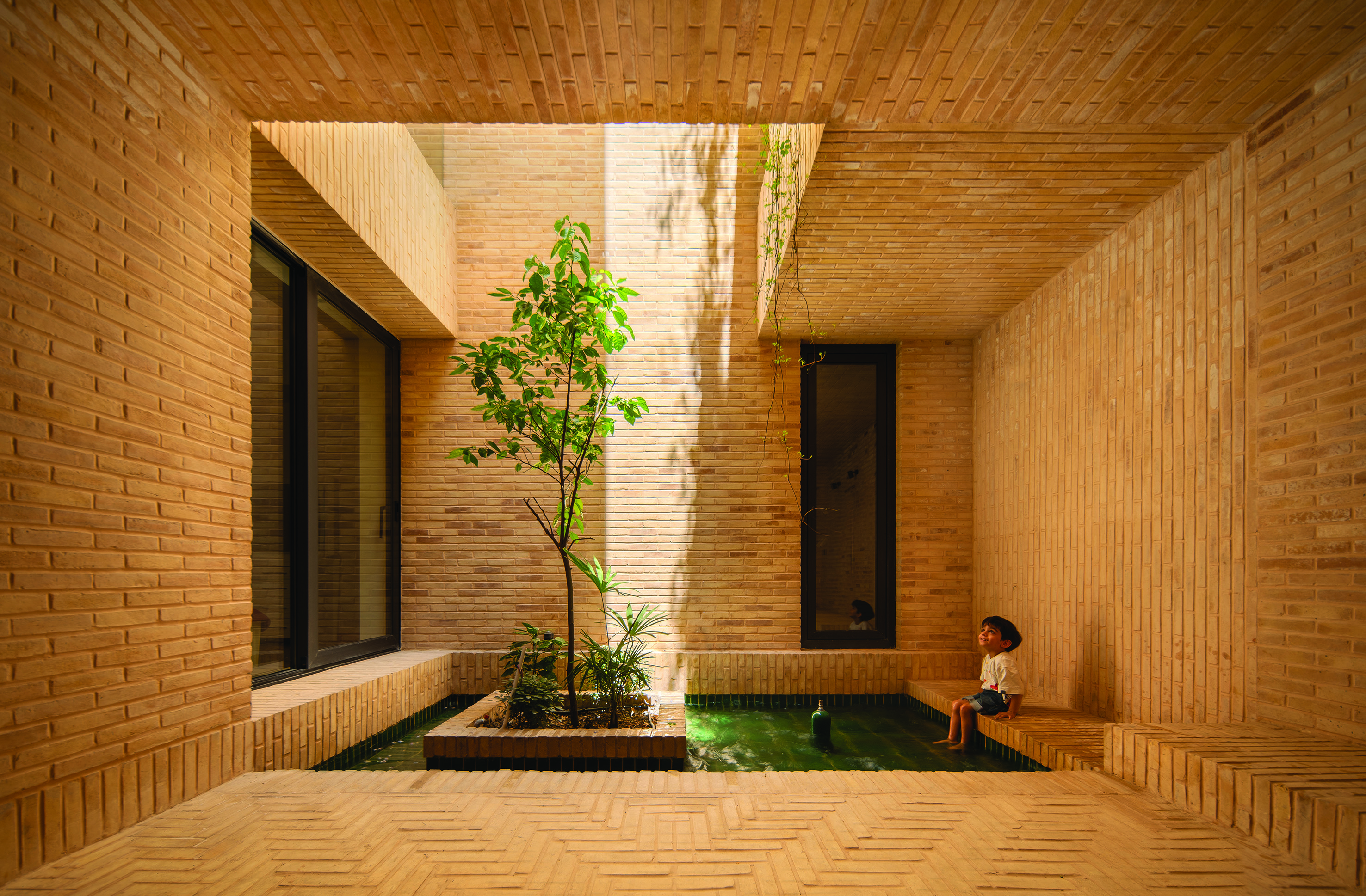
This project endeavors to regard the "home" not merely as a genre of architecture, but as a part of us and our everyday life — something that, more than any other place, defines our relationship with ourselves, with others, and with the world around us. A cursory glance at the history of contemporary architecture reveals that over the past several decades, the distance between us and the true meaning of "home" has widened. Economic factors today are certainly not without effect in this outcome, yet the question remains: is the current paradigm of "home" in Iran solely the result of economic conditions? Or is it, rather, a shift in our very belief in the concept of "home" that has engendered these conditions?
The concept of "home" in Iran and the world has undergone vast transformations over the past several decades, driven by numerous factors. In Iran, the turning point came in the 1350s (1970s), when, on the one hand, urban populations surged and, on the other, increased oil revenues and misguided government policies transformed the "home" into a profitable commodity for generating capital — a trend that, from the 1370s (1990s) onward, became bureaucratized by the ruling order, turning the matter of "home" and homebuilding into the foremost field of investment in Iran.
For us, in the design process of "House No. 10 Jolfa," there was an opportunity to search for a deeper meaning of "home." This project, therefore, strives, through an effective engagement with its surrounding context, to become a haven and a place that might recover some of its inhabitants' lost tranquility. Looking at the role and standing of "home" in the past history of this land, one might say that the "home" was an answer aimed at improving the quality of human everyday life in response to the manifold challenges and problems of the surrounding environment. The question now is: where does the relationship between contemporary man and his surroundings — with all its challenges, crises, and the concept called "home" — stand today? Can the recovery of a contemporary meaning for the concept of "home," in response to prevailing conditions, provide a better space for living and resilience for today's human being?
"House No. 10" is situated in the Jolfa neighborhood, beside Vank Cathedral, a place that was designated some 400 years ago by the decree of Shah Abbas of the Safavid dynasty to serve, on the other side of the Zayandeh Rud, as a settlement for the Armenians relocated to Isfahan. Vank Cathedral, the Church of Mary, Bethlehem Church, Jolfa Square, and the historic houses — alongside the project — are enduring markers of the architecture and way of life of the people of that era.
The Armenians of Jolfa, as one of the most important agents of Shah Abbas's economic reforms — playing a vital role in the silk trade — no longer constitute the majority of this neighborhood's residents today. On the one hand, a significant Armenian population has emigrated over the past several decades, and on the other, given the neighborhood's location and tourism potential, many spaces have been converted into cafes and restaurants, transforming the area into a destination for the leisure of citizens and tourists alike.
In the course of this process, day by day, the number of "homes" and permanent residents who once lived their daily lives in this neighborhood has diminished, while commercial and touristic spaces have multiplied. Although the creation of public spaces and tourism infrastructure brings many positive benefits for the city, this process, when continued without proper planning and without considering all aspects, carries negative consequences. The question, then, is how the "home" and the matter of habitation — as the most essential components of the city — can influence the physical, social, and cultural transformations of its surrounding fabric.
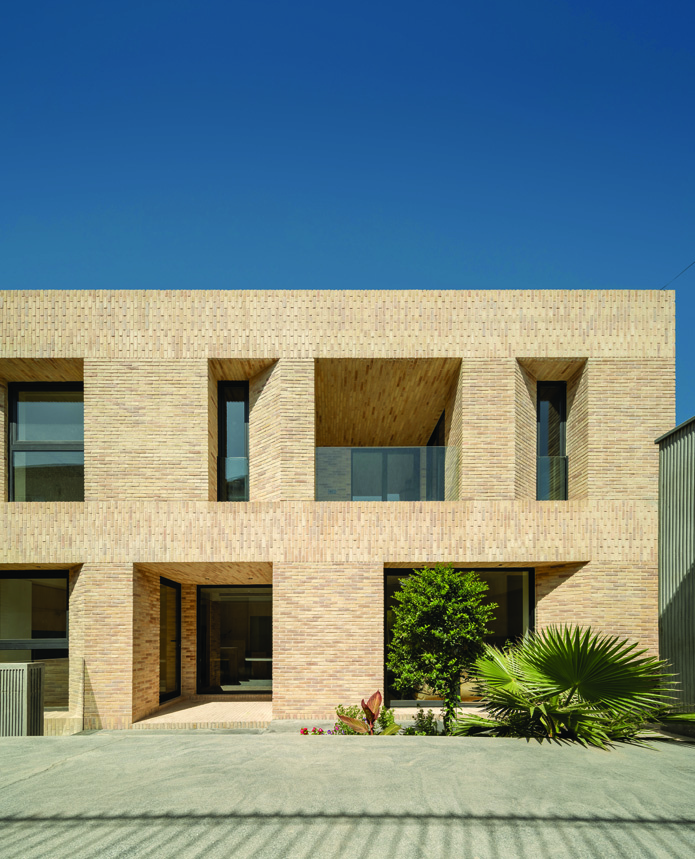
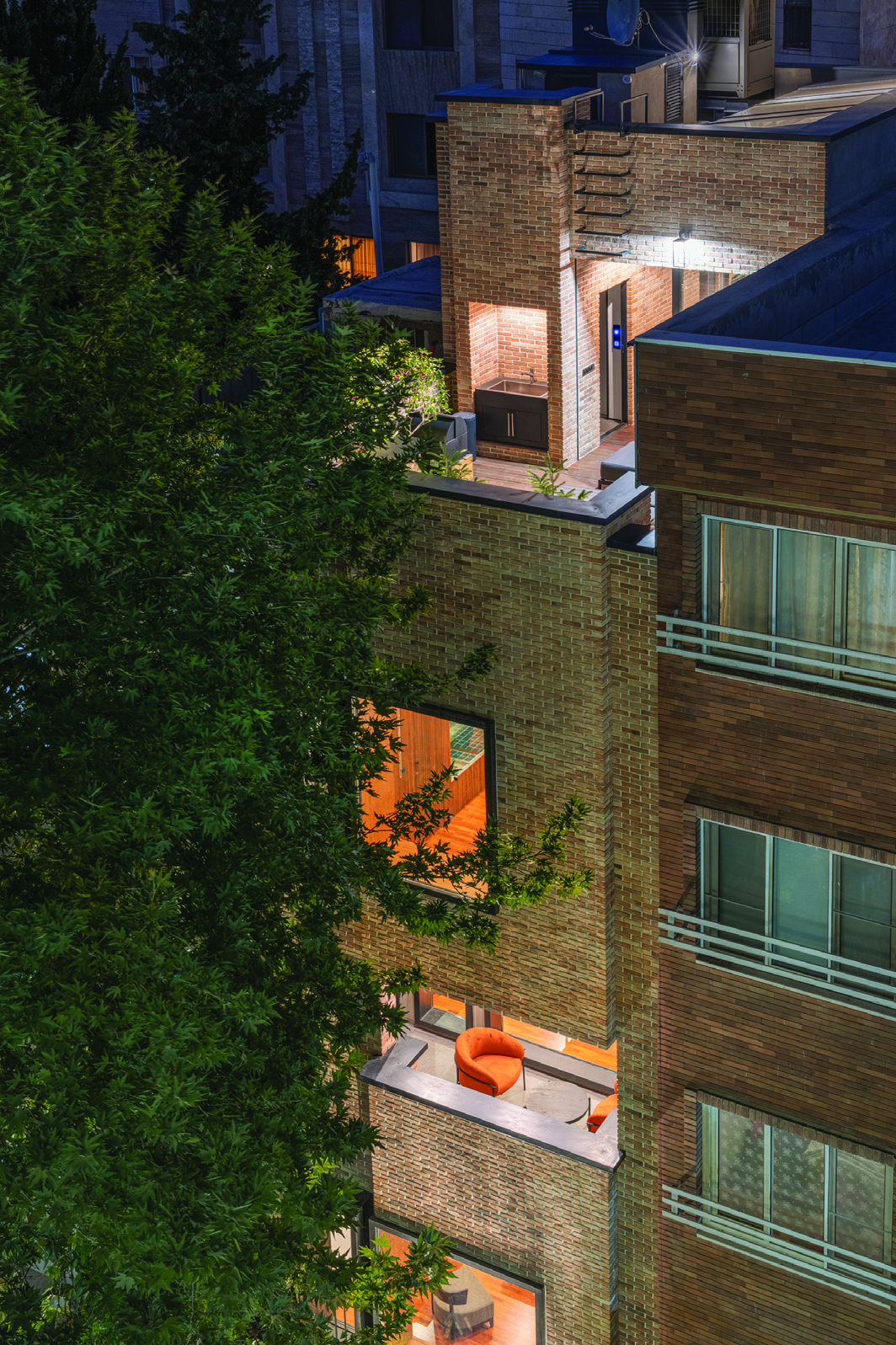
When one confronts the house, the combination of the warm spirit of brick with the building's simple volumes promises a warm and intimate environment. Windows appear on the exterior structure with simplicity alongside the brick, so that the principal material takes center stage. The house also employs small handmade colored ceramic tiles and wood to reinforce the sense of habitation and its bond with memories.
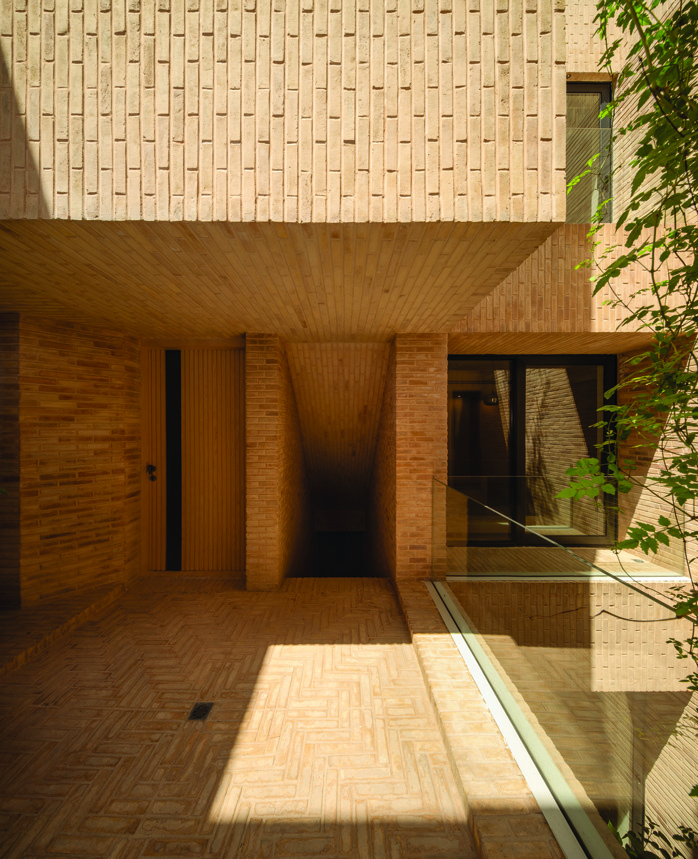
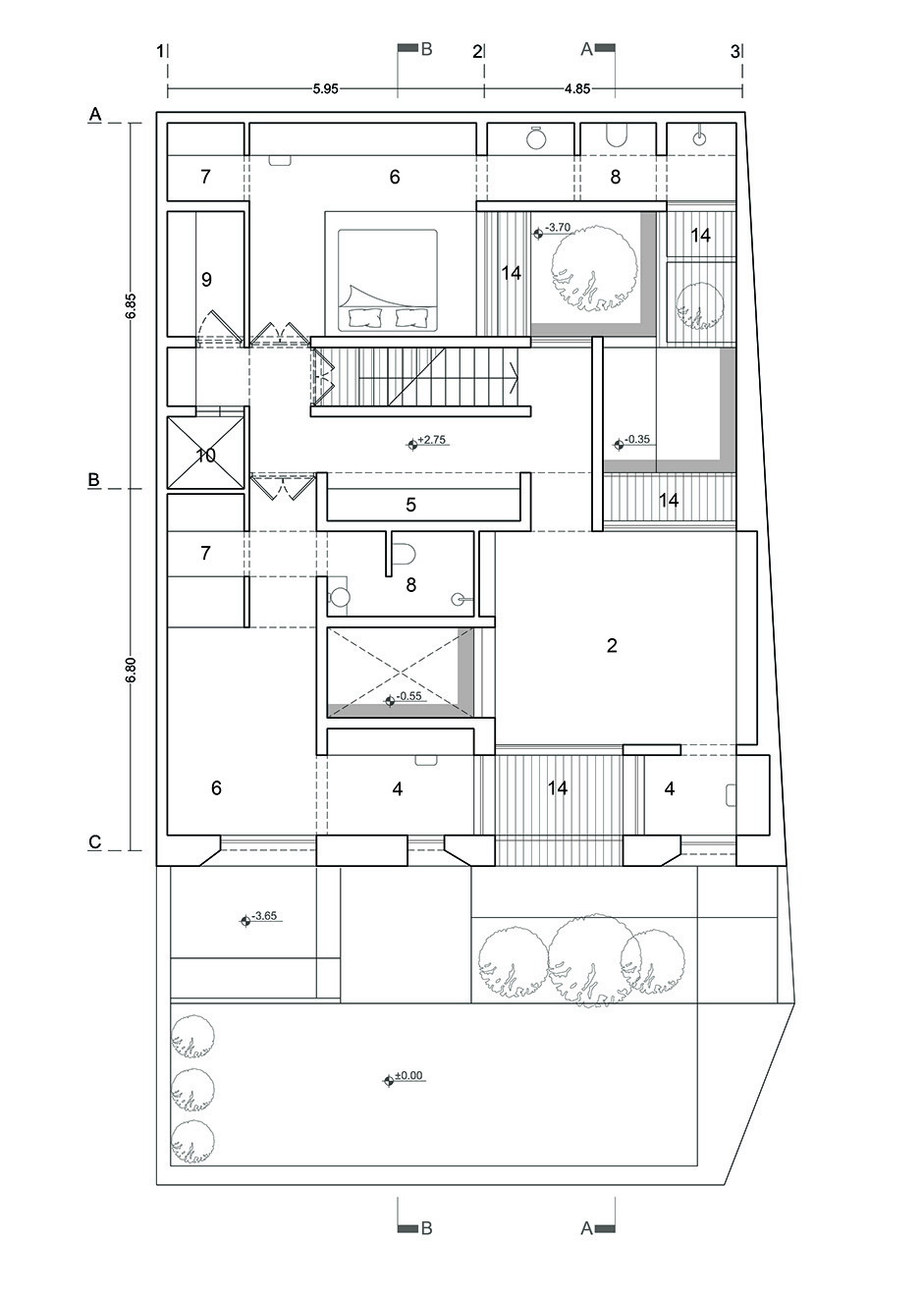
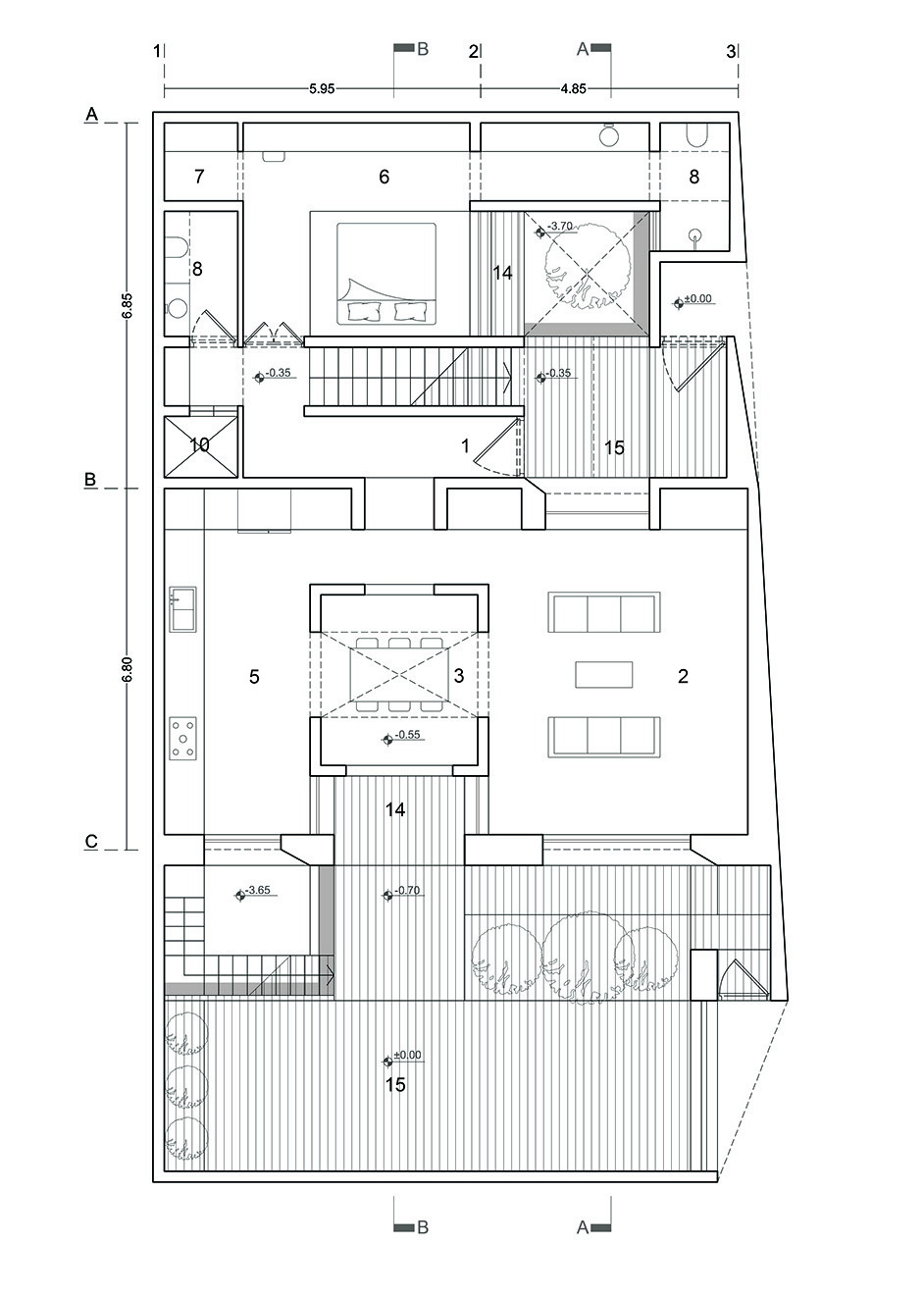
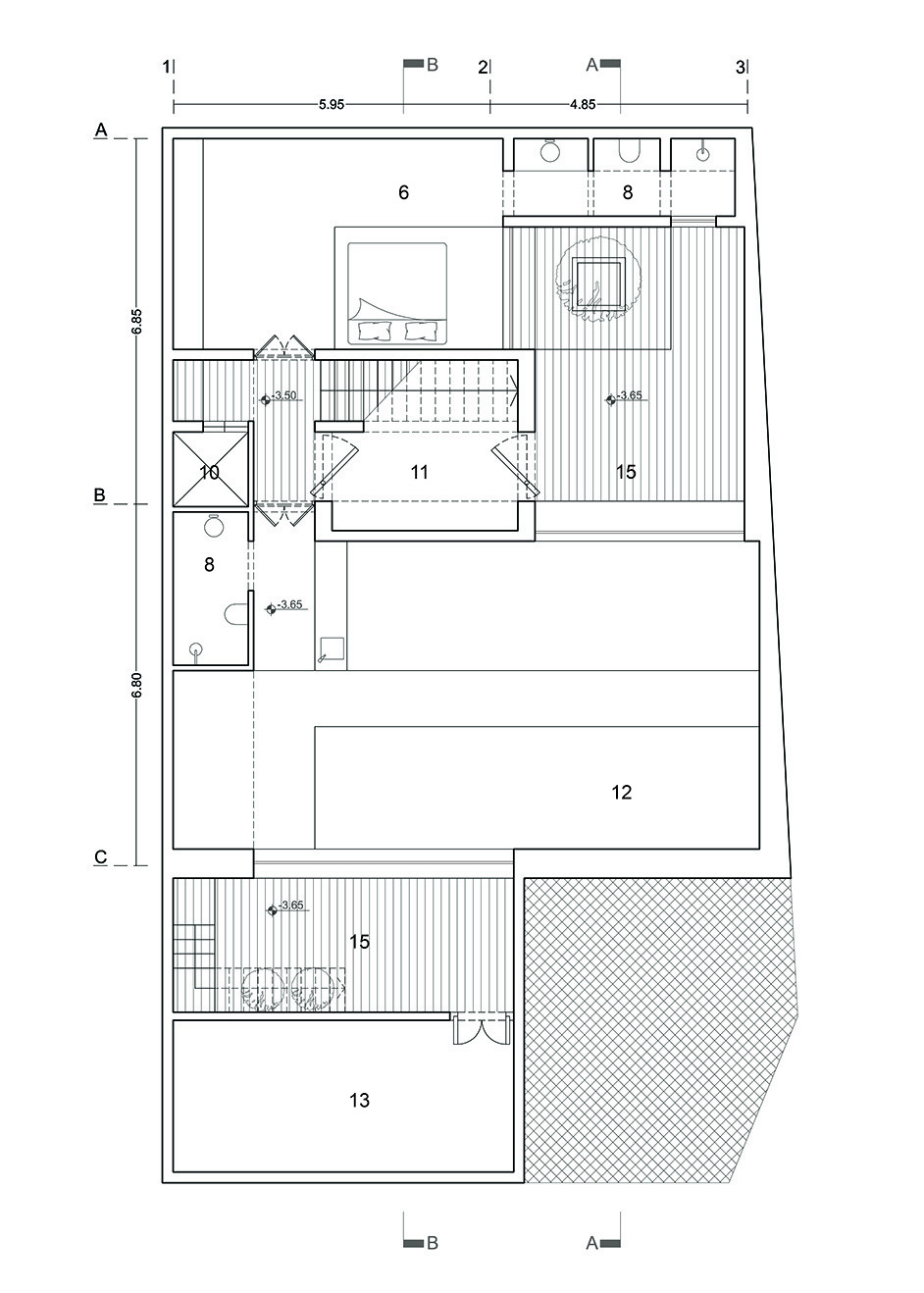
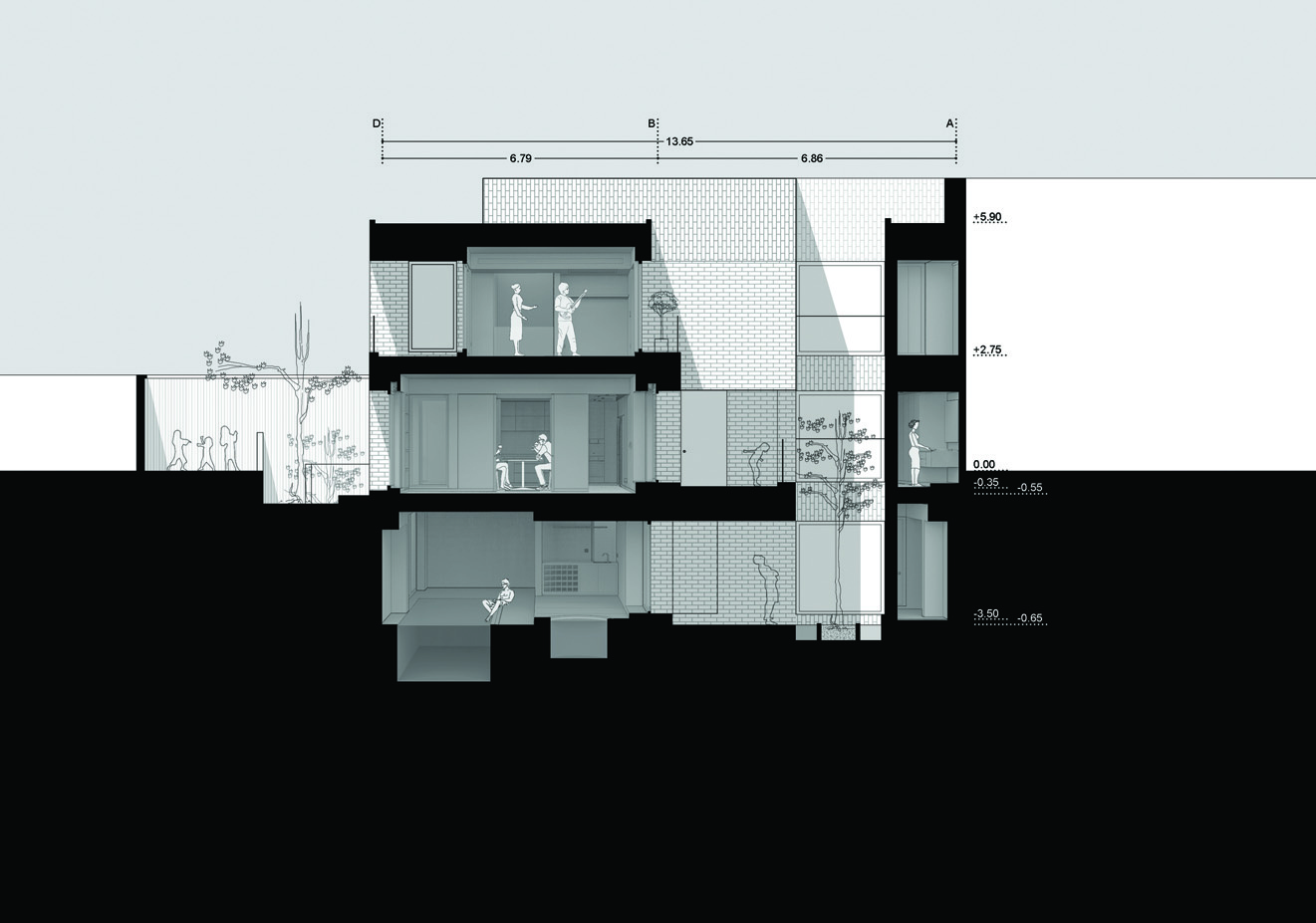
A brick wall that rises from the lowest level of the house to the brick parapets of the rooftop, joining the exterior and interior of the project more prominently, has become the backdrop of the house's staircase. The light that streams through the glass ceiling of the stairwell onto this wall adds the play of light and time to the space. The house's lightwell, too, clad in brick, accommodates two terraces and a suspended metal planter that, while allowing the passage of light, offer opportunities for a dialogue between the interior and exterior spaces of the house.
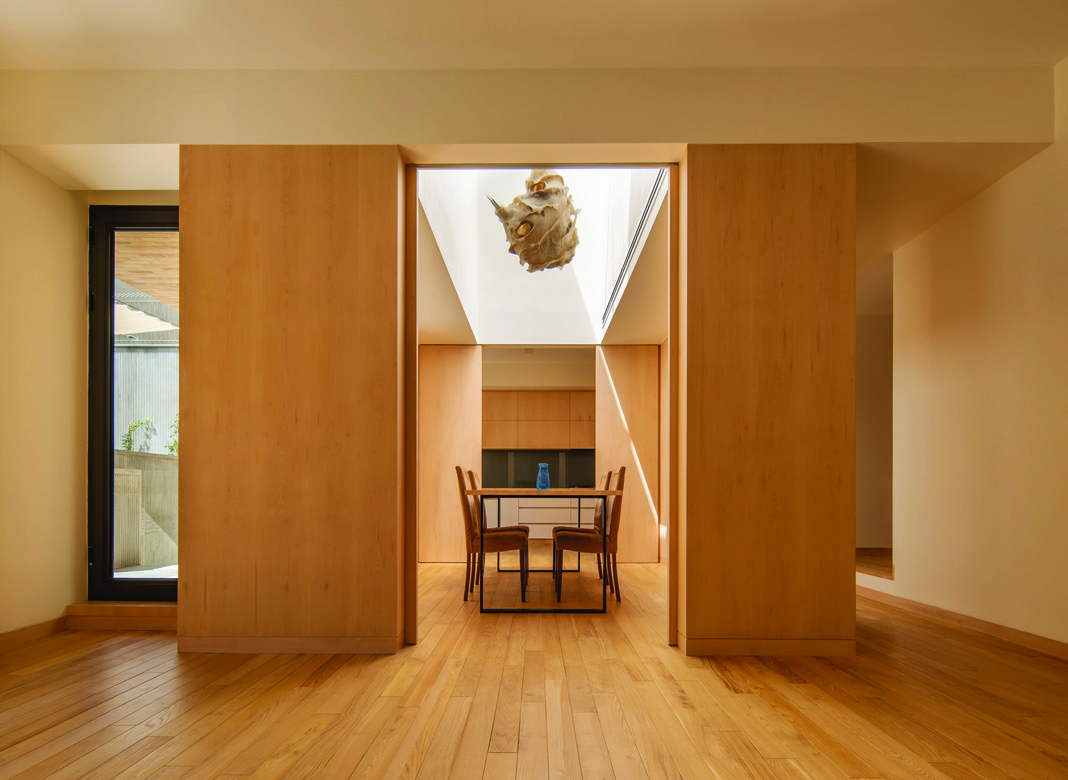
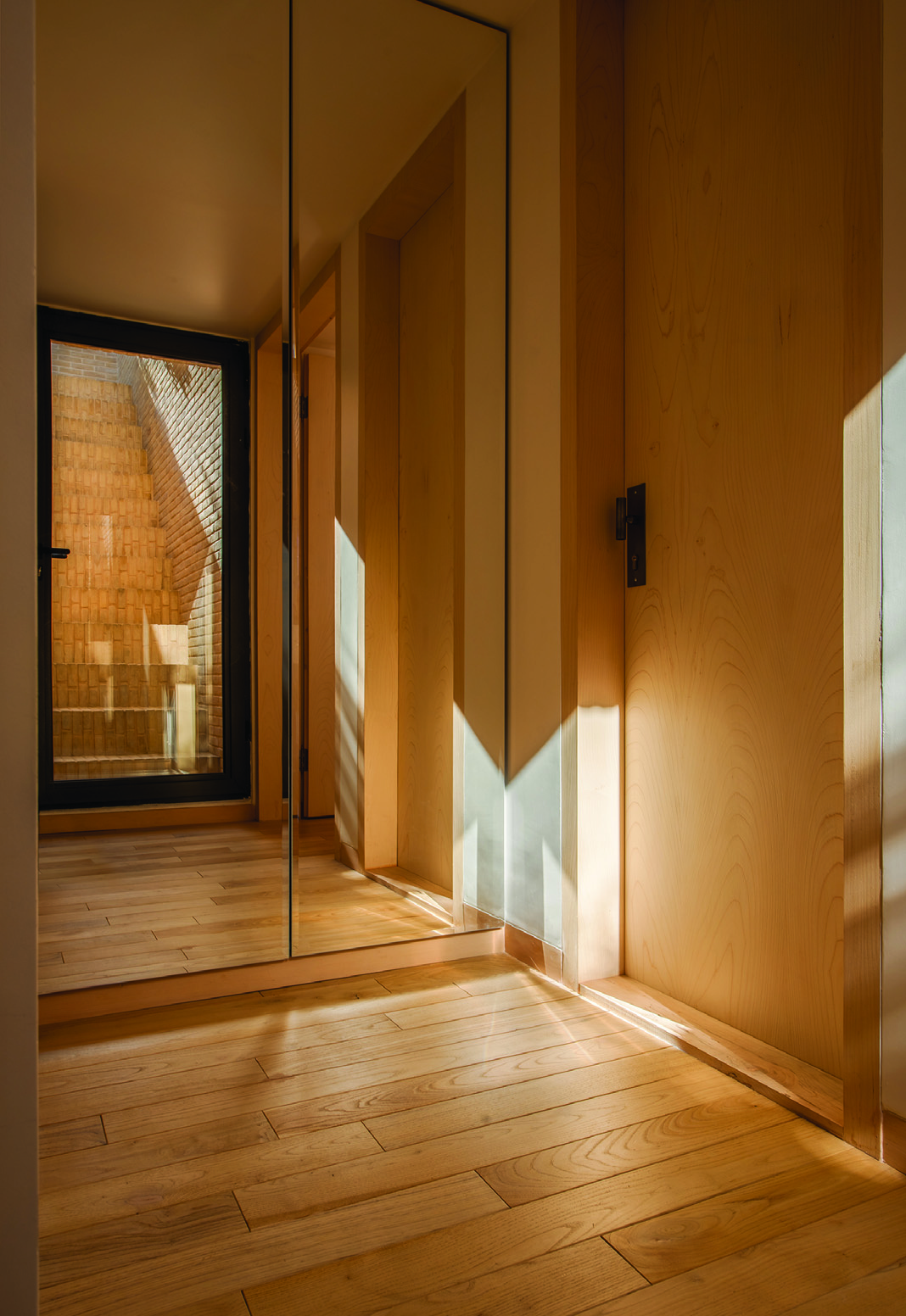
Terraces also take other forms on the facade. Two metal frames provide small spaces for engaging with the outdoor environment, while a more expansive terrace connects the living room with the large plane tree adjacent to the house. The kitchen, in order to accommodate a dining area within itself, conceals the cabinets behind unified doors whose green color harmonizes with the plants of the courtyard.
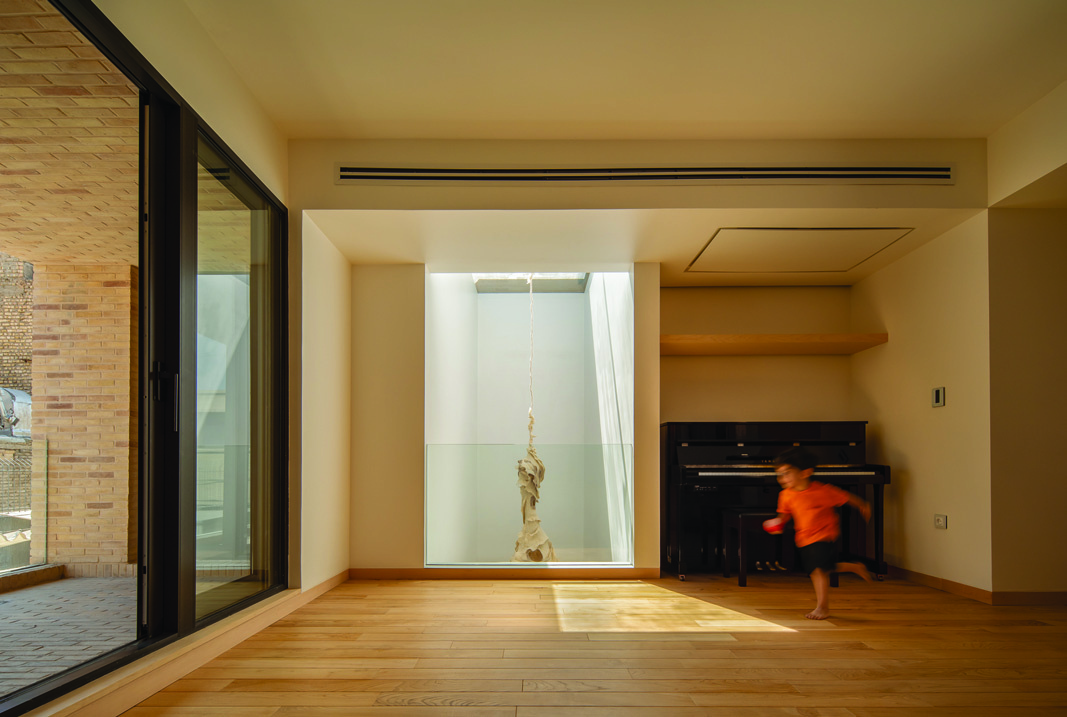
The house opens generously toward light, and the proportions of the windows are configured so that the limited spaces of the building, in concert with their full-height glazing, extend into the outdoor spaces while simultaneously providing a medium for the exchange of greenery between inside and outside. These expansive windows benefit from small adjacent terraces for cleaning, and with parapets of suitable height, they also allow the formation of window seats alongside them.
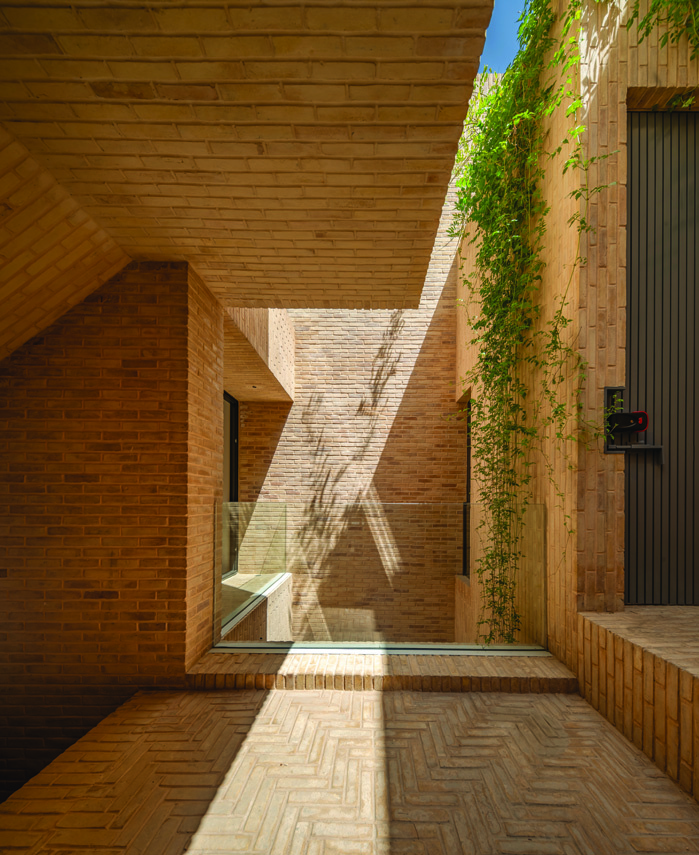
In its courtyard and rooftop, the house forms a composition of open, closed, and semi-open intermediary spaces so that, especially on the rooftop, movement between these zones makes possible the experience of diverse sensations for the residents. The brick cladding of surfaces preserves the house's unity during this movement, and the transparent ceiling and walls of the stairwell connect the interior space to the outside. On the northern section of the rooftop, a small pool and jacuzzi are situated, which, with plant cover and a wooden partition, achieve their privacy.
Location: Jolfa Neighborhood, Mehrdad Street, Leila Alley, No. 10, Isfahan
Client: Mousavi-Nejati Family
Design Team: Mohammad Arab, Mina Moeineddini, Elaheh Hajdaei, Nazila Rabiei
Associates: Faezeh Taiefi, Sepehr Azizpour
Construction: Ansaripour Construction Group
Supervision: USE Studio (Faza, Roydad, Shahr)
Construction Manager: Mehran Ansaripour
Structural Engineer: Hossein Doudi
Electrical: Rahbanan Andisheh
Mechanical: Hamid Mohajerani
Graphic Design: USE Studio
Photo: Mohammad Soroush Joshesh
Total Built Area: 400 m² · Lot Area: 235 m²



