An introduction
Mehrdad Iravanian, born in Shiraz in 1957 (1336), a graduate of the U.S.L. Department of Architecture (USA), demonstrated his novel manner from the late 1980s through several architectural exhibitions in Shiraz, the first of which was titled The Gates (Darvazeha). His urban-landscaping works in Shiraz were first introduced in Memar 7; it is worth noting that one of those very works — Darvaze-ye Qor'an in Shiraz — was recently awarded the first prize for urban landscaping in the Italian Stone Industry competition.
Iravanian is unquestionably one of the hopes of the future of Iranian architecture, and the brilliant outcome of the recent Italian Stone Industry competition — first place in urban landscaping, alongside the renowned Swiss architect Mario Botta — bears witness to that. His chief virtue is his independence in method and in his professional development, and his disregard for the architectural fashions of the day. Architectural history has shown that the most influential and important architects are those who do not paddle along with the current of the day, but, with steadfastness and effort, themselves bring the currents into being or shape them.
Iravanian's works bear witness to a great effort to satisfy the personal aesthetic sensibilities of the designer — an effort that has approached the threshold of the scrupulous. A breaking-with-tradition is to be seen in all his works (whether urban furniture, exterior, or building interior).
The conventional tradition-breakers: shaking the classical principles
This work of Iravanian's is markedly characterised by an architecture of transition: it does not put forward a fresh aesthetic but is fundamentally an anti-aesthetic; his work ends in the critique of classical forms, of the well-established architectural genres, and of any certainty or eye-habit — and not by way of theoretical seriousness or geometrical revelations (as is the way of the established aesthetic-breakers).
This particular piece resembles a discordant tune that wishes to draw the visual capacities of architecture beyond the boundaries of aesthetics: architecture as protest. In any case, his work is teeming with ideas and artistic creativity, and is in this sense close to the experiments of the leading architects of North America and the SITE group of the 1970s. He is the most successful Iranian architect in the integration of architecture and the visual arts.
Unity-in-disassembly
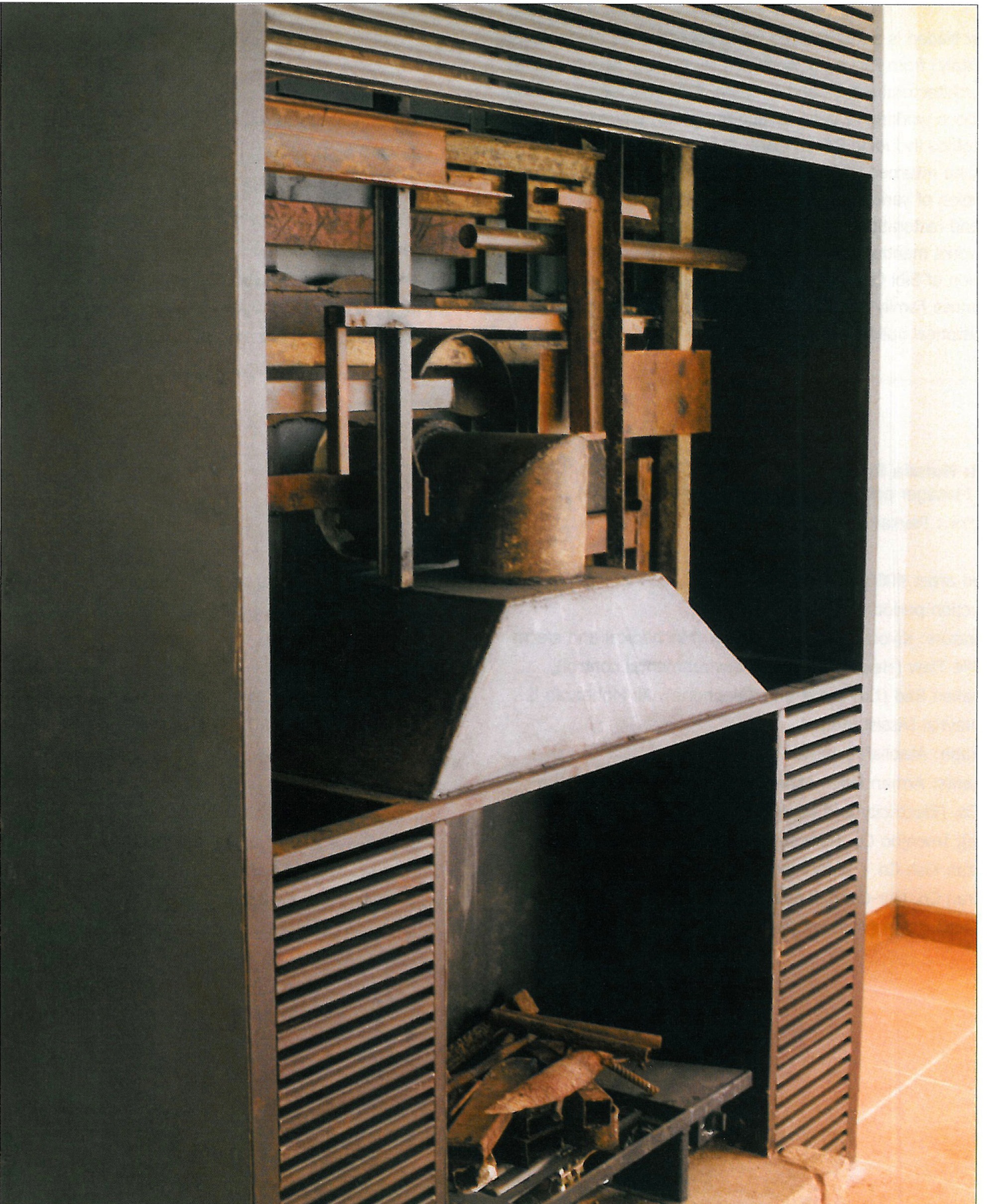
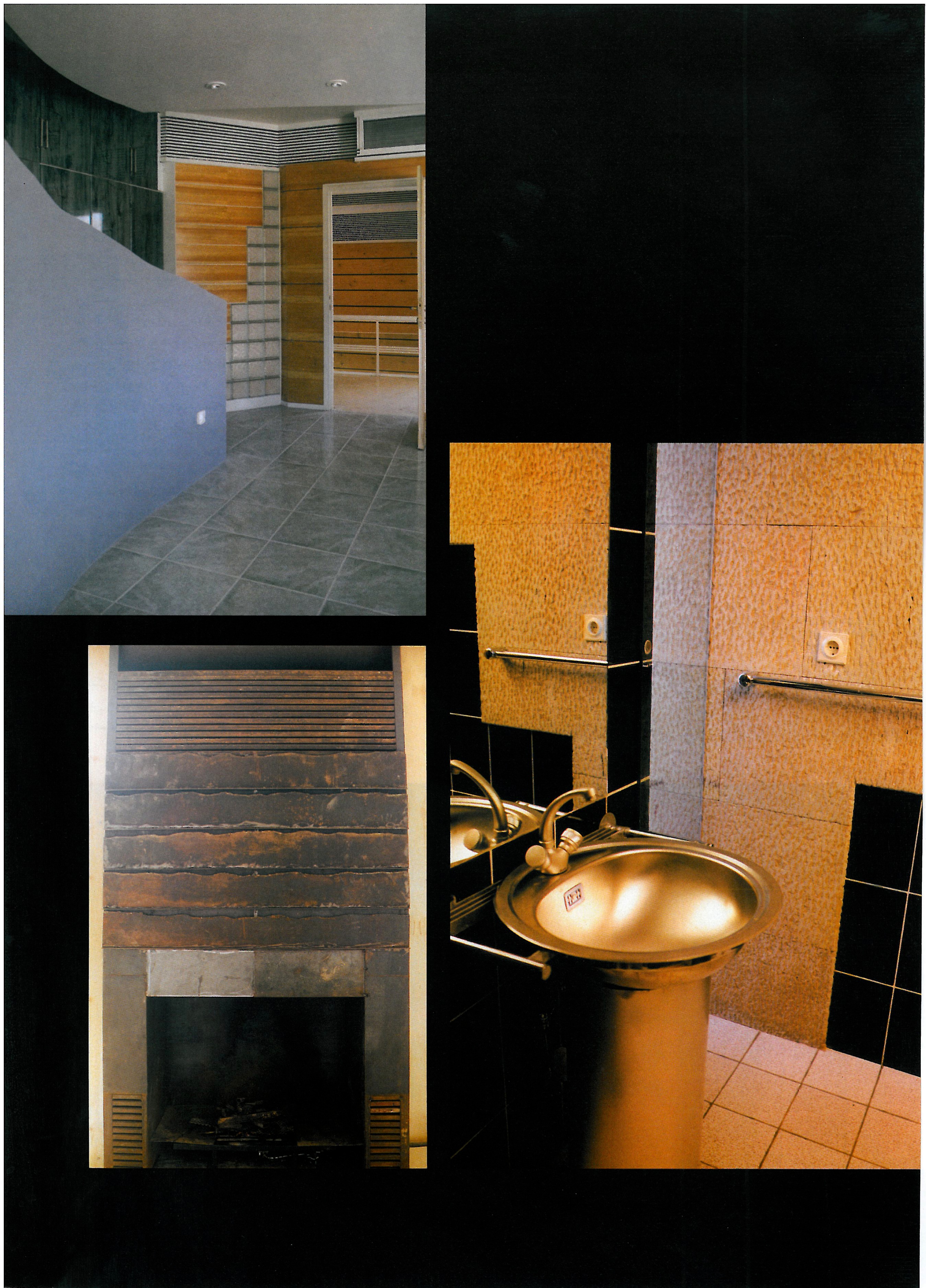
Iravanian's works do not impart a sense of unity; each architectural part can be examined as a relatively independent piece, and in many cases these parts share the value and dramatic expression of works of visual art. The iron fireplace looks more like a sculpture than a means of warming a house — though, in its function, it lacks nothing of a good ordinary fireplace.
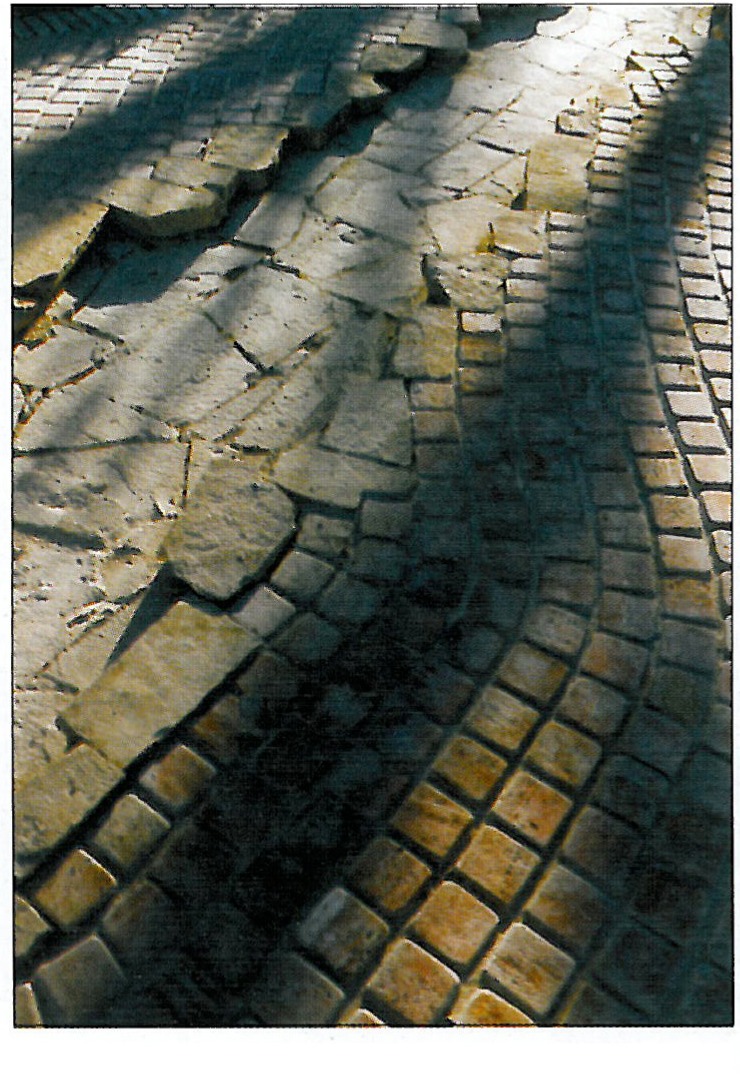
Four factors: nature, the civic, scale, and edit
In explaining his way of working, he refers in general to a sense of categorisation that may have meaning only within a phenomenological frame. He takes the four elements of architecture to be 'nature', 'urban life', and 'scale'. By 'nature' he means those elements that enter the work without the intervention of the human hand; by his account, elements like the window take on meaning through their presence in the city, and for that reason he calls them civic. 'Scale' is ergonomics, proportion, and the matters bearing on the building's function and its physical needs. The fourth factor is edit — though I should think the word 'montage' more fitting for it. He believes that, instead of using the classical method of composition and finding the hidden overall structure that gives order to space and form, he uses a method of placing parts side by side without any compositional connection between them.
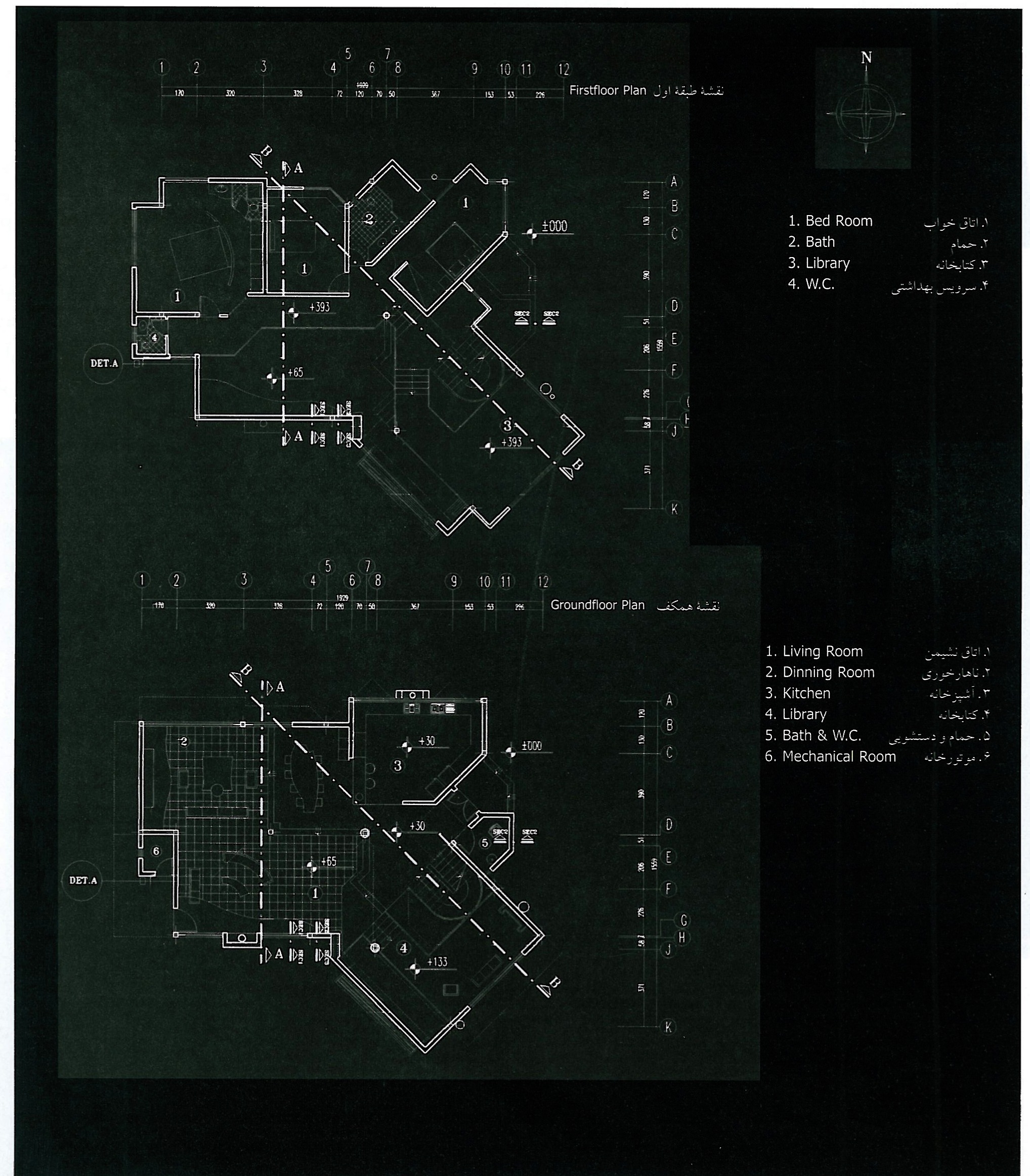
In truth, the volumetric relations in Iravanian's works strenuously evade any kind of compositional connection. Geometric proportion is not seen as the rule of binding, but as exception in the corners and edges of the work.
Material, texture, colour, and light
Attention to material, texture, colour, and light shows the architect's mastery in the deployment of spatial elements. A point that, in Iravanian's case, can mislead the surface-level observer is that his works, in spite of being heavily figured, have less of a decorative character: details in his work have a figurative role; each part resembles a piece of a visual artwork.
As I have said, Iravanian attends to space, but he never sets us before a totality called 'space'. The human being, in a very real way, comes at every moment into contact with a fresh element, which can be grasped and recognised as an independent spatial episode. It is for this reason that his works have a narrative character — and this quality is seen most particularly in the urban-landscaping project of the Sa'l-e Boland Khomeini (the Khomeini Tall-Year project, Memar 7).
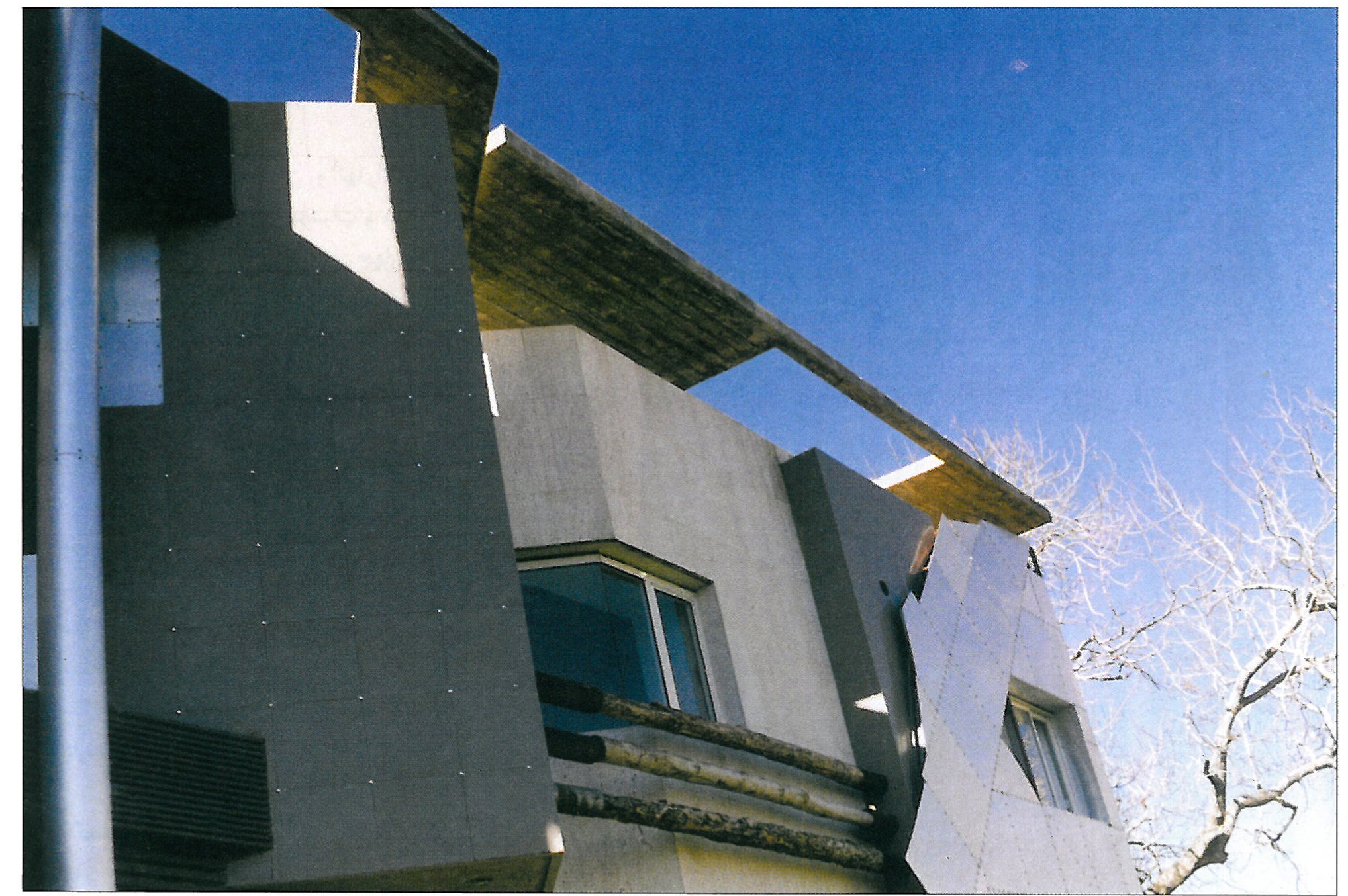
Pop Art and the resistance to abstract seriousness
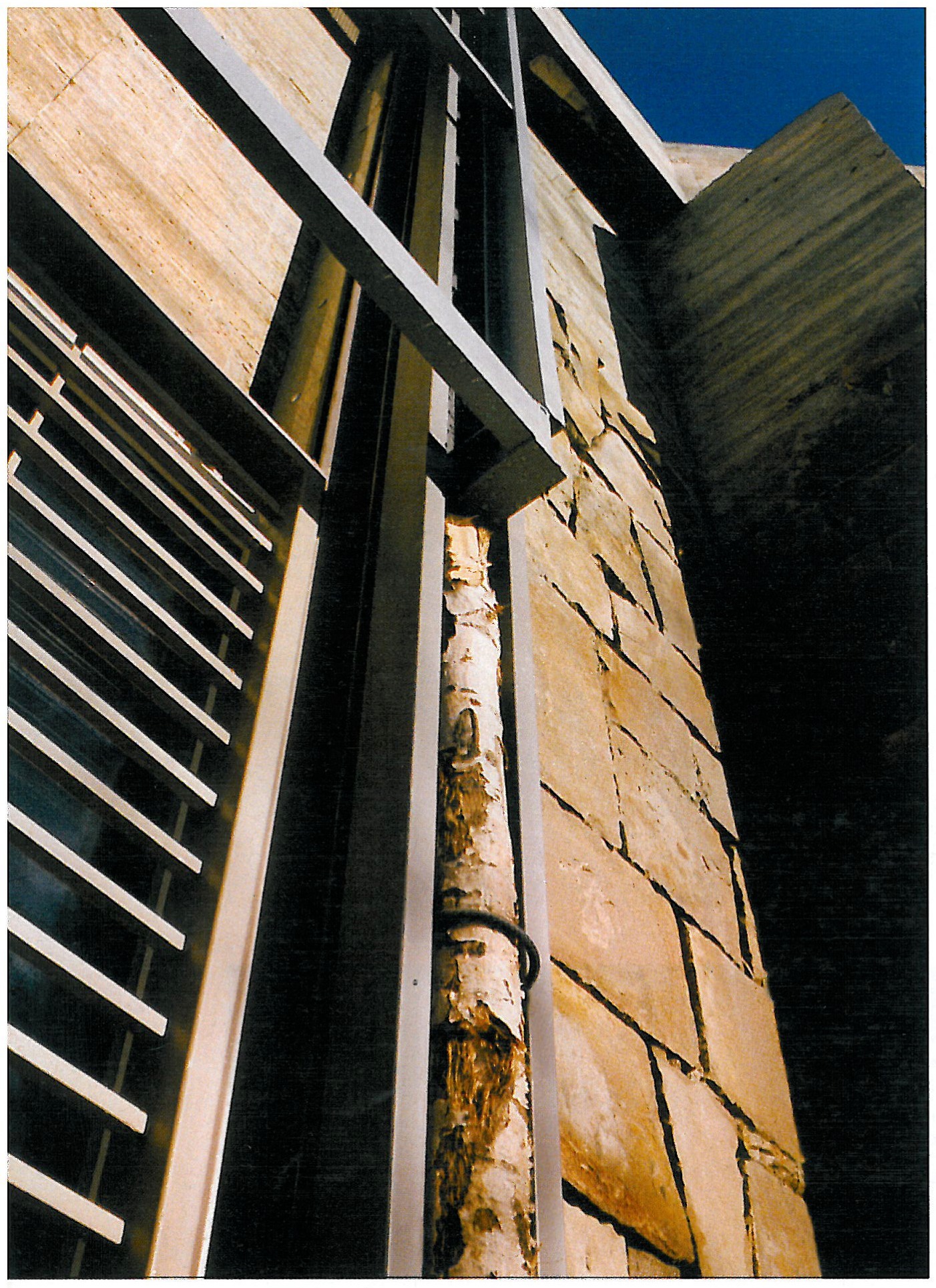
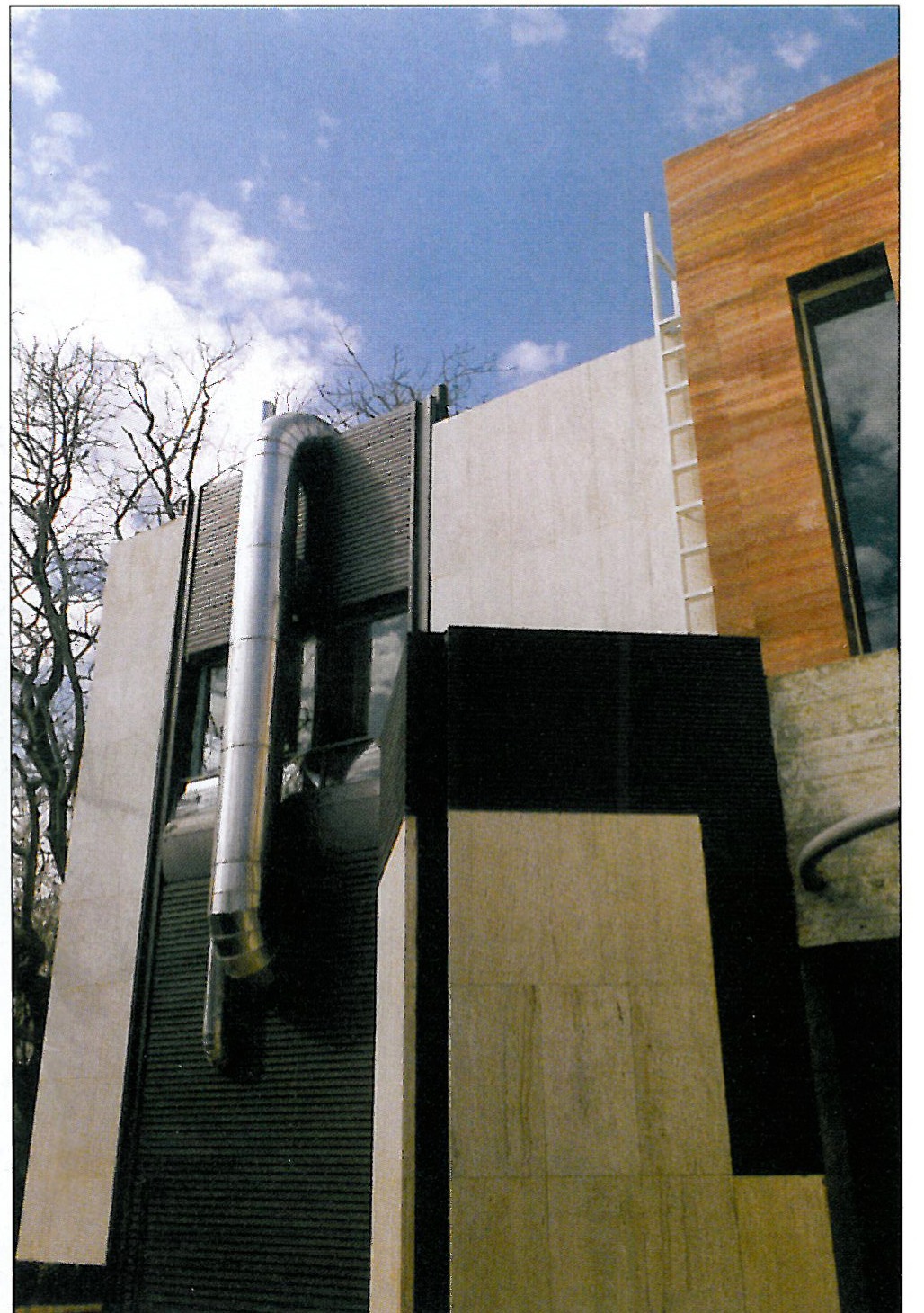
Iravanian's architecture is profoundly experimental, and within that experiment a great effort is made to make tree-trunks, stove-pipes, broken stone, and bare steel sections do the work. The use of such 'common' and 'unfashionable' materials shows his ideological belonging to Pop Art. His architecture oscillates between the bounds of unaffectedness and an occasional deliberate scruffiness, all the way to a rationalistic delicacy and gravity.
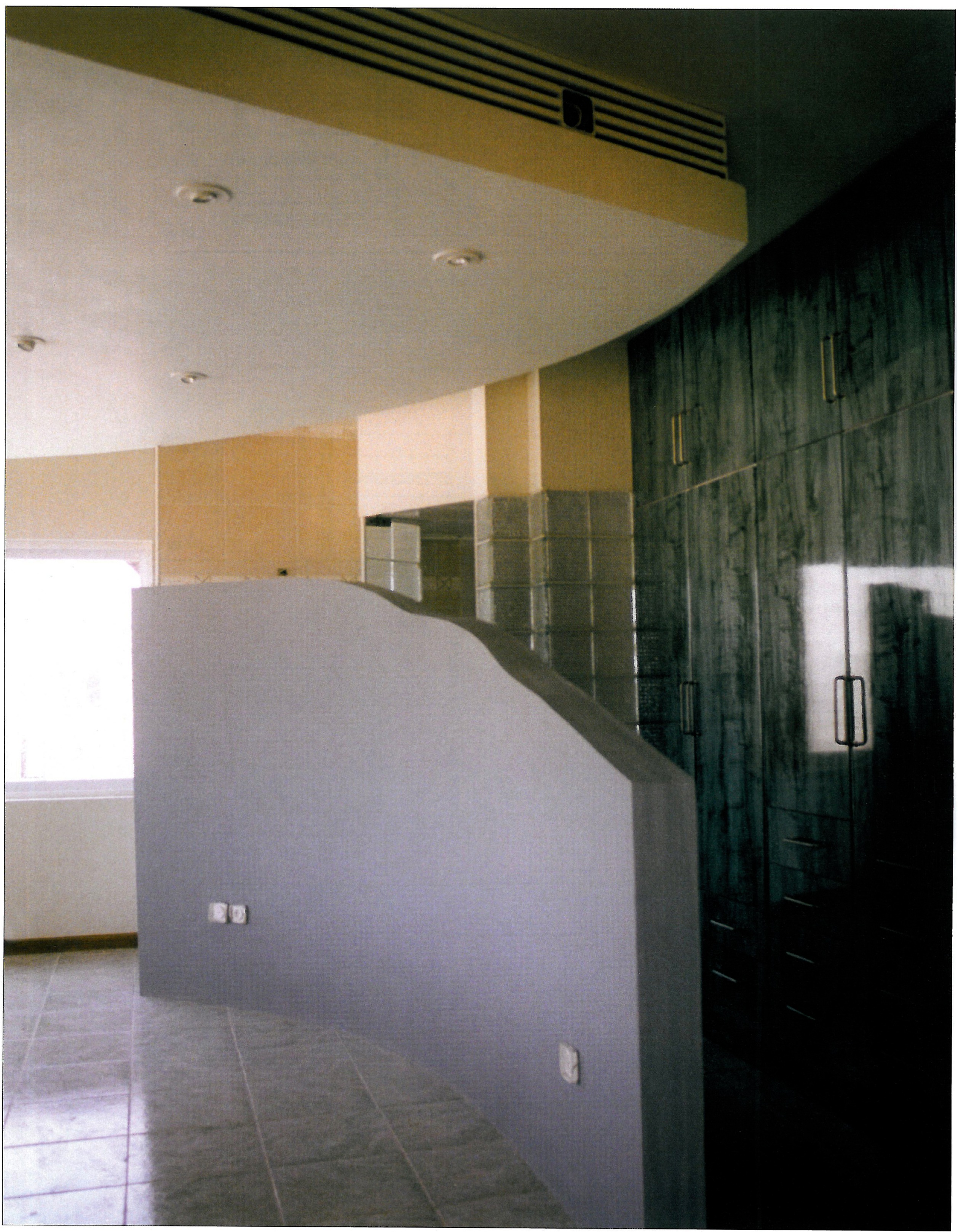
Iravanian rises against the false seriousness of today's abstract architecture, showing that the substance of architecture is objective, and that creativity and improvisation play a substantial role within it. In the work presented in this issue, we see a wonderful exactness in the execution of details that are deliberately broken by the use of seemingly accidental and unfinished elements and materials. The work in question is, for that reason, intensely provocative — as if it would make us aware of an event.

Language and rules
This work, like the others of Iravanian's, has a narrative quality. Although today the discussion of architectural language and style has been declared old-fashioned, that is no matter. Iravanian's works have their own particular style and language. In his language, not only do the words (the irregular windows, the brick-and-white surfaces, the unworked tree-trunk repeated again and again) come forward as semantic elements, but the rules of composition and what Chomsky calls 'deep structure' and the rules of 'transformation' play an important role.
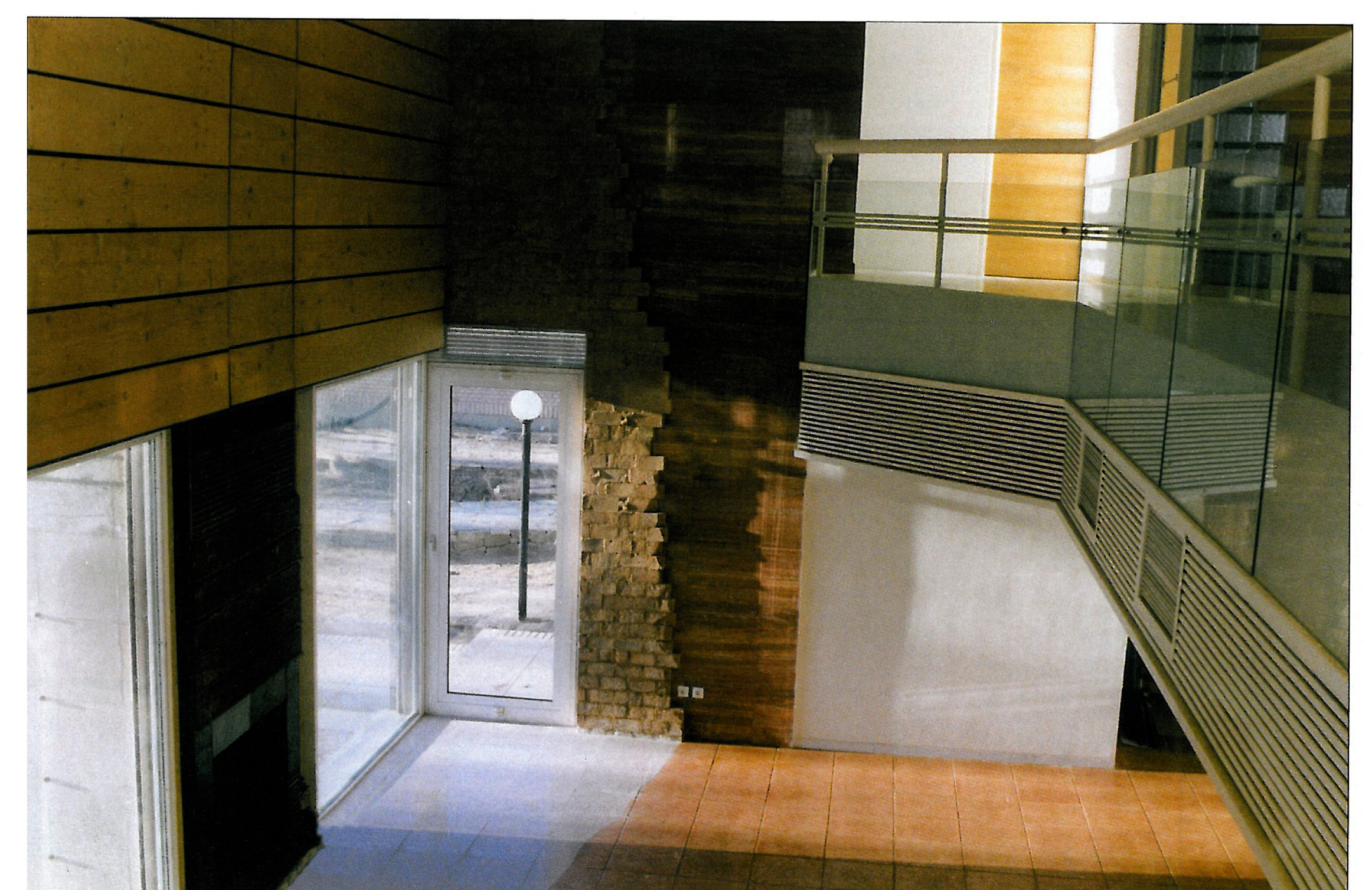
The recent work, whether deliberately or as a matter of instinct and the unconscious, takes on a metaphorical air. The face of destruction, of the unfinished, of an order born of disorder, is a mirror of the reality of the built environments — urban and rural — of this country. The seemingly accidental side-by-side placing of steel section and tree-trunk timber, of concrete and brick surfaces, looks like a distillation of the contemporary built scenes of Iran. This is a kind of conceptual art that conceals its own meaning with cunning, beneath a face that seems childish and unreasoning.
Contradiction, paradox, and the non-classical way of composing and side-by-side placing of narrative elements remind me of Timurid and Safavid miniatures — though I hold that architecture, in its dramatic expression and strong aesthetic sense and its control over formal elements, can never reach the miniature.
An artistic style in Iranian architecture
On the whole, as I noted at the start of the discussion, Iravanian has brought a particular artistic style into architecture. In this style, the skills of craft, the variety of texture and material, and the non-classical compositions — among the deep-rooted and accessible values of Iranian culture — are at work. For that reason, I would think the cultural effort to nurture and continue this path useful and effective.