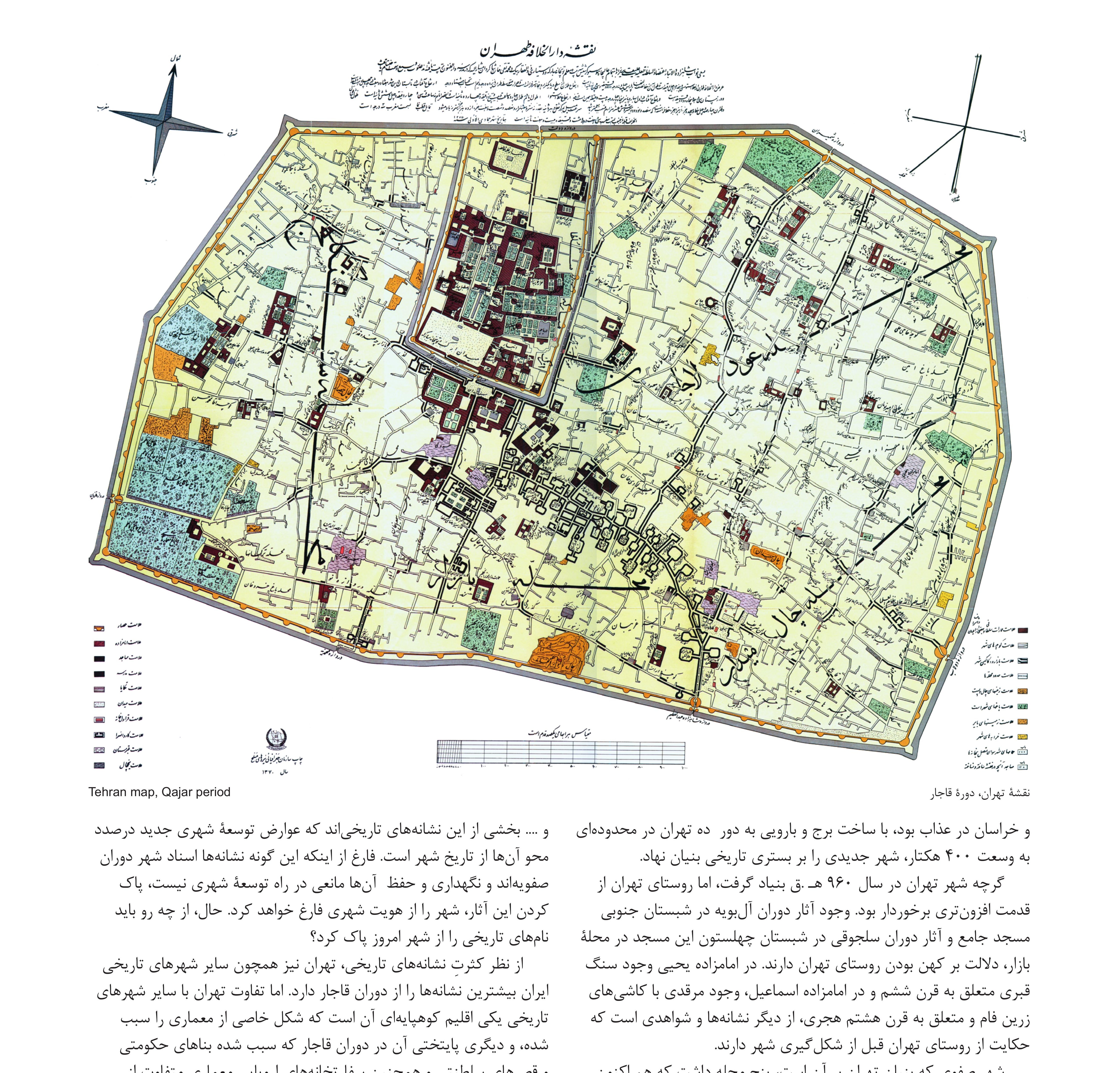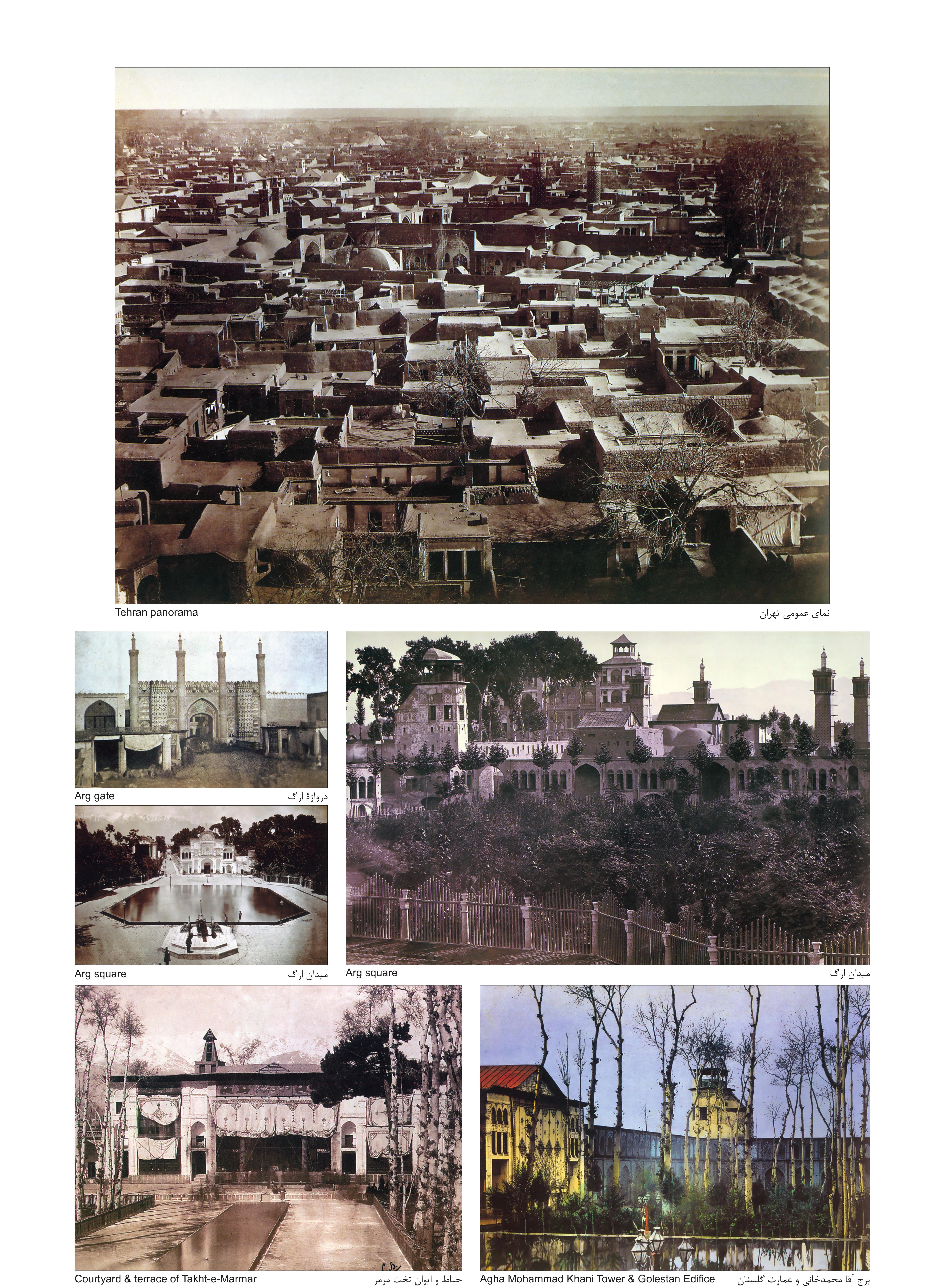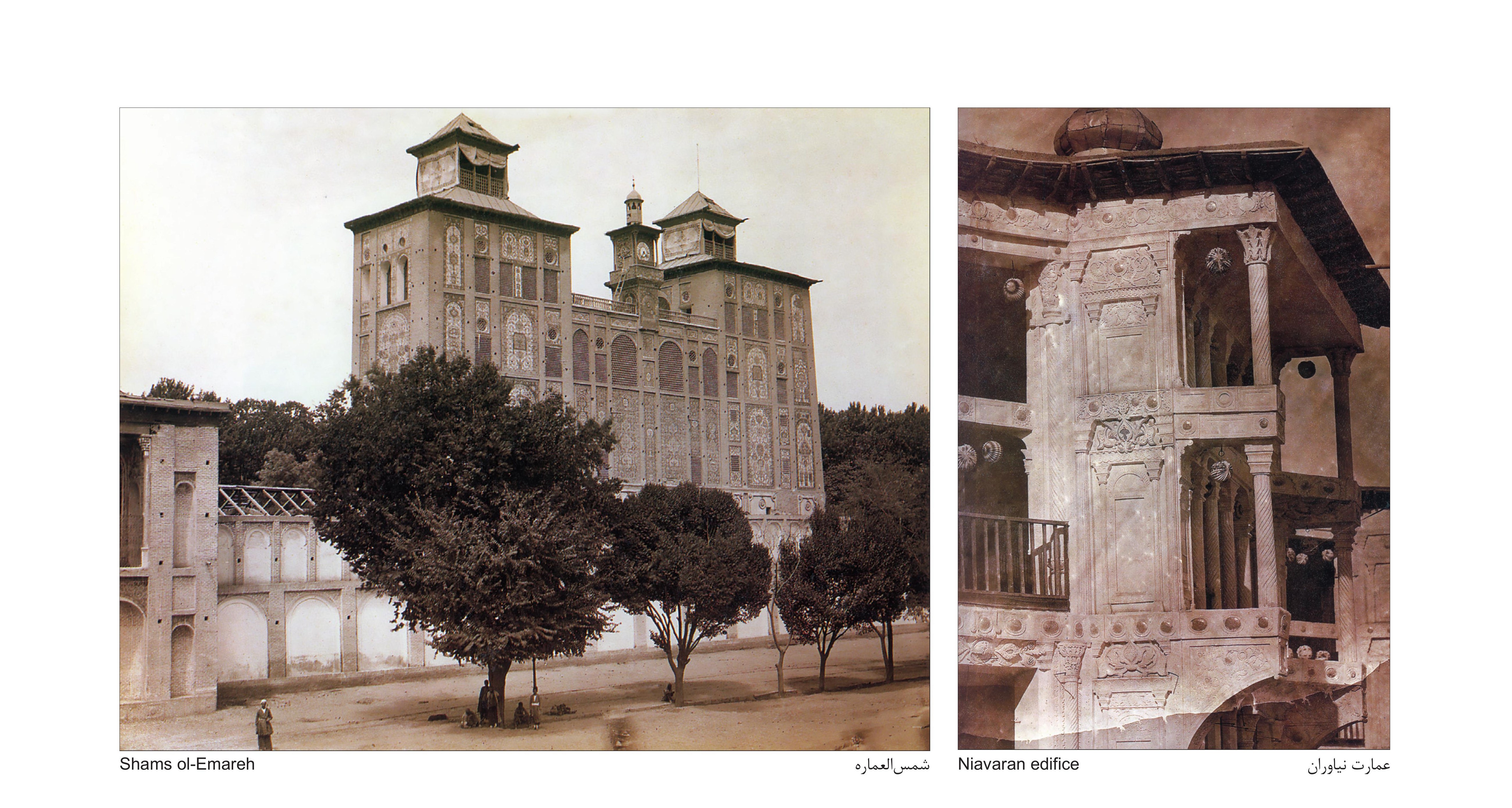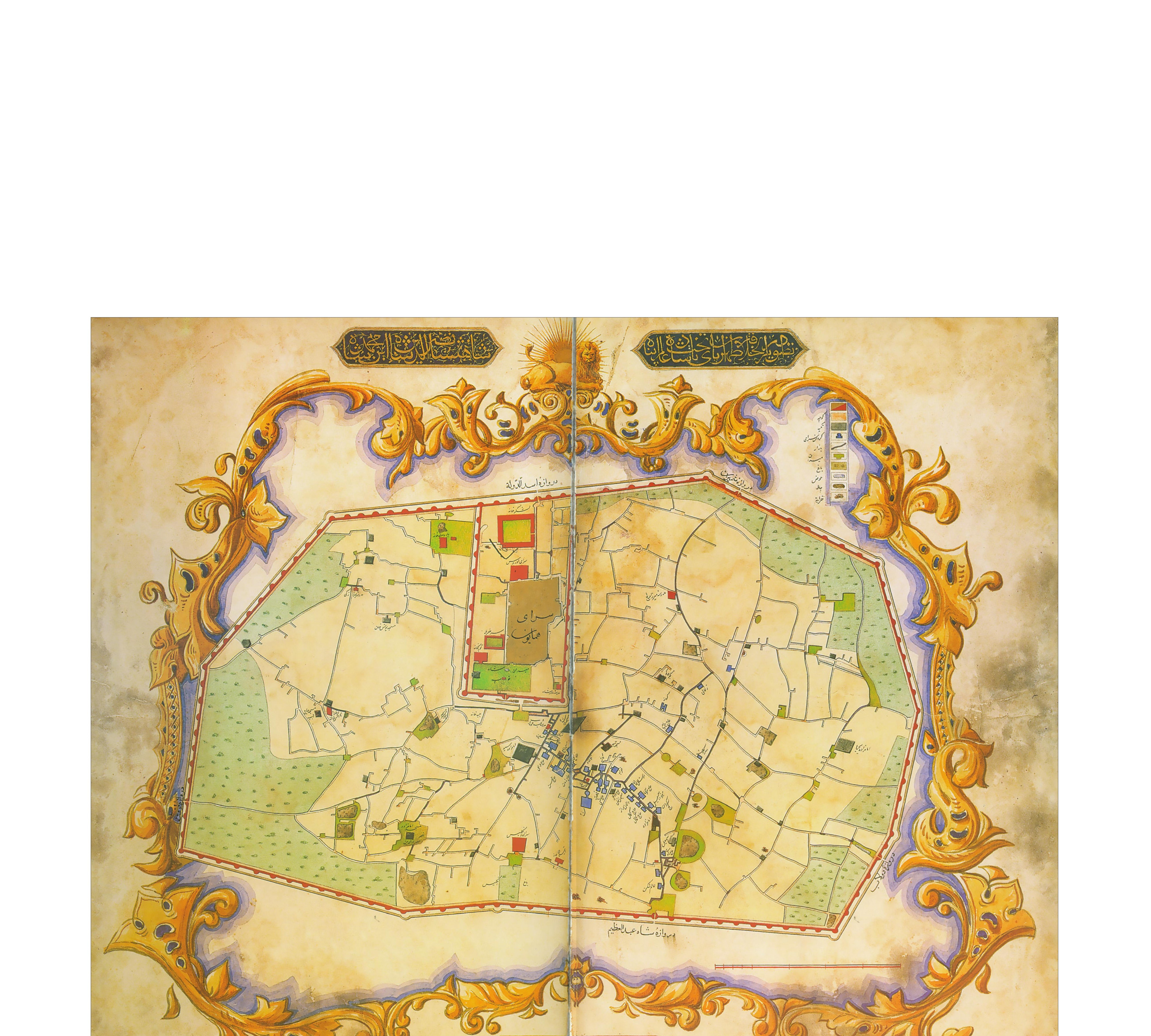
The history of every city is reflected in its buildings, urban spaces, streets and passages, and bazaars. Each city has its own history; the tale of what people have created and destroyed, and to which the city has been a witness. The history of settlements in the historical city of Tehran goes back to the sixth millennium before Christ. Tehran has also been a dependent of the Ancient city of Rey, one of the most important cities on the Silk Road. It initiated its urbanity in the sixteenth century, during the reign of Shah Tahmasb of the Safavid Dynasty, who had his own capital in Qazvin. Then, became Capital of Iran under Agha Moham- mad Khan Qajar, 200 years ago, because of its fantastic geopolitical situation for the Qajar tribe. Tehran had 5 neighborhoods, which are still considered today the impor- tant central neighborhoods of the metropolis, and embrace the old palaces and buildings of Old Tehran. Unfortunately we are losing all this heritage at an unprecedented pace, due to mismanagement and pure neglect of the city and its actors; and all signs of history are disappearing from the face of the city, while all these monuments are not really an obstacle to the development of the modern city of Tehran. Tehran has, like all historical cities of Iran, most of its existing historical buildings from the Qajar period. But the mountains circuling the city, and being the Capital city of Iran during the last 200 years, has effected the style of the numerous monuments built in the city, such as Government buildings and European Embassies, as a different style special to Tehran, with many western influences that have made Tehran architecture a very Unique style in the country and in the world. The Qajar Architectural Style in Tehran can be divided into 2 periods: during the 1st period the architecture is somehow the continuation of the traditional Persian Archi- tecture, without influences from the west; such as the Marvi mosque and school, the Iwan of The Marble Throne in Golestan Palace, the Argh Square, the Entrance port of Bab e Aali, and some parts of the Royal Complex and palaces. The second period consists of buildings belonging to a more modern era, with visible influences from European Architecture of the 19th century. The Shams-ol-Emareh building is a good example of these times. In the second half of the nineteenth century new urban plans started for Tehran. The first Public Park, named Bagh-e-Golshan, was opened in the south of Royal pal- aces. The Toopkhaneh [Canons] Square, with its 6 streets coming from all directions, was built in an urban space between the Old city and the new quarters, and the town which had an organic form, was designed in geometric manner[1850, Nasser-eddin Shah]. The New city walls had 12 Portal gates, and with the inauguration of the first railway in Tehran, another gate was added. Today none of those City Gates remain. But there are still some important buildings of that era which have resisted to distruction: the Ghavam House,
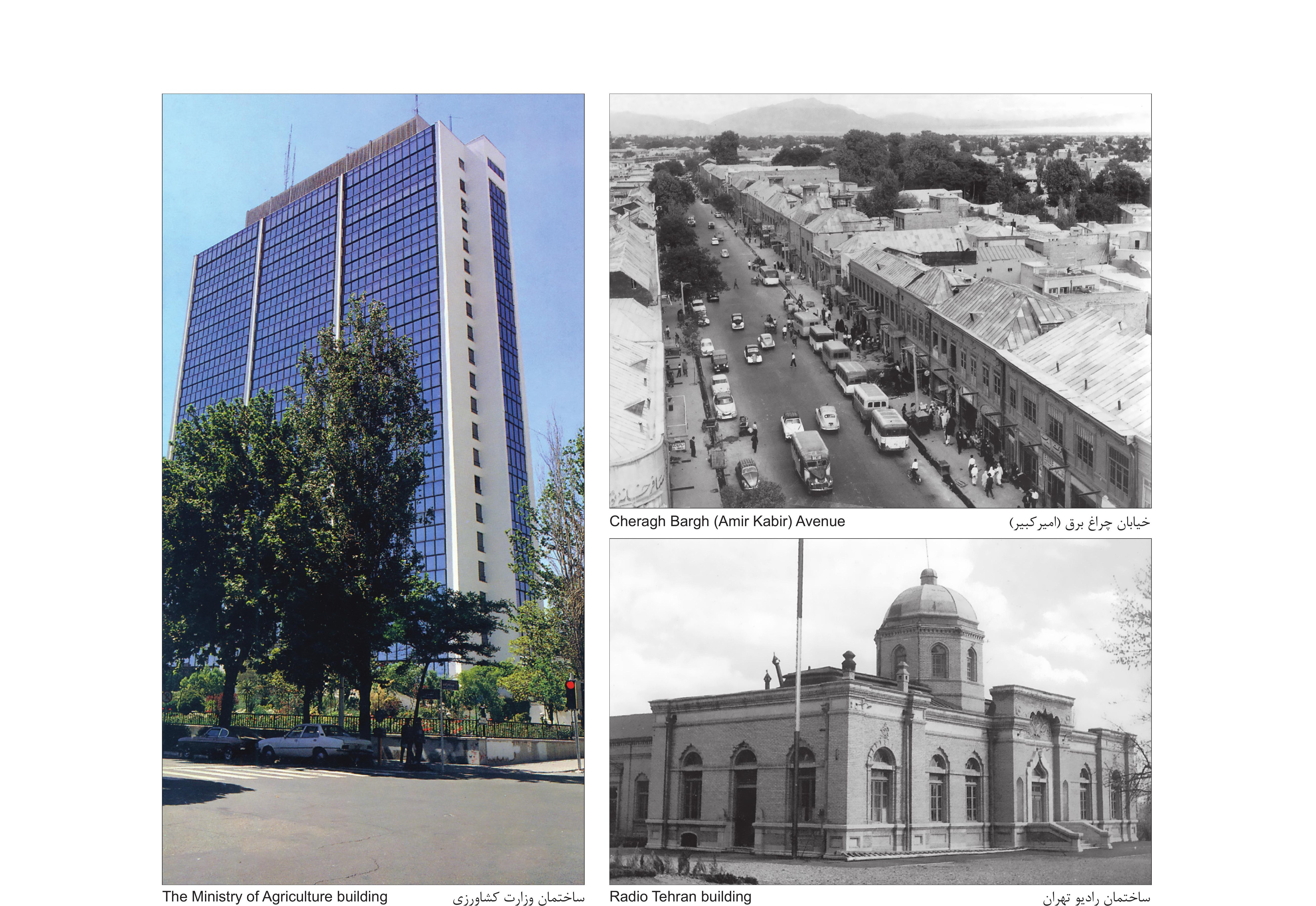
which served for some years as Egyptian Embassy and then was transformed into the Glass Museum during Pahlavi the second. Another remarkable building is Teimurtash House who is now being used by the Army Head quarters. The architecture of these buildings is what distinguishes the Tehran Qajar Style from other buildings of the same era. Another Period of Urban Change comes with the mod- ernization Period of Reza Shah dynasty at the beginning of the 20th century. The ditches and the gates of Tehran city were destroyed to give way to the presence of automobiles in the city. The streets of Tehran changed character with two-storey buildings with shops facing the streets, and the formation of the modern city with its theatres, cinemas, ho- tels, and new houses, that changed the image of the city. Another distinction was the presence of modern ar- chitects who became very active during the moderniza- tion period. All the monumental buildings made Tehran an Architectural museum where one could follow the History of Architecture and Urbanism of Modern Iran. The question is: can one really see this museum easily?
Unfortunately today in Tehran, Development and De- struction are taken as synonyms, while it is well known that technology is not the only sign of progress, and that the con- servation of the city’s identity which is related to the history and its historical icons is fundamental for a real development of the city. In order to conserve properly the identity of the city, we would need a Good Governance Plan, and citizens who would back the right procedures with their love for the city. This would be our only way towards a city of quality.
* Eskandar Mokhtari born in Tehran in 1956, Mokhtari has graduated in Archeology and History of Art, and conservation of monuments from Tehran University. He has carried out many works of restoration while working for the Org. of Heritage, and directed the Base for the Historical City of Tehran, and the Salvation Project of Bam in the 90s. He has pub- lished many articles on the subject of conservation, especially of the Architecture of the Modern Era, in Iran. He is now teaching at the faculty of Art and Architecture in Azad University.