



In Tir of the current year [June–July 1998], during a brief visit by Paul Andreu to Iran, we conducted an interview with him, the text of which follows below. Paul Andreu is the renowned French architect who has gained notable distinction through the design of numerous airports, including Charles de Gaulle in France and Shanghai in China. He is currently in charge of designing the terminal for Imam Khomeini International Airport in Iran. The interview was conducted by Kamran Afshar Naderi.
Memar: Airports everywhere are very similar in terms of function, but airport users are generally citizens of diverse lands. The international airport is the first and also the last place that travelers encounter. In your view, how can one reconcile the international character of an airport with its national identity in its design?
Of course, the most interesting thing about an airport is precisely this: it is a place of transit — for going from one point to another. It is not a place where anyone stays for long. Everyone passes through, and for this very reason it represents a kind of displacement, from one world to another. At the same time, the airport is the place of flight and landing, of an aircraft that is, from a technical standpoint, a thoroughly global phenomenon — completely global, even international. Of course, today this also applies to weapons, but the airplane has had this character since its very inception. It is a vehicle whose design and use is an international practice, operating from airports situated in specific lands. The international airport is in fact a border — a crossing point between different places and the world, between the particular and the universal.
Beyond all this, the airport is also a cultural phenomenon, because a land in one sense means a culture. With all this in mind, I must say that in airport design the first consideration is functionality. If there is no functionality, there is nothing. An airport where travelers cannot easily reach their aircraft, and that cannot provide proper services, is unacceptable anywhere.
Sometimes in universities they forget this subject. Someone comes along and says: “This, not that.” They want to skip directly to the advanced stages without passing through the first. But this is not possible. Functionality alone, however, is also not sufficient. In no type of architecture is mere functionality enough. The second step is the understanding of categories such as the sense of place and local culture. As far as I can see, two particular tendencies come into play here. One is the tendency to design a closed system for the airport — just like the airplane itself — which, in my view, rests on the argument that airports everywhere in the world are the same and can be the same, which is not very meaningful. And likewise, copying from existing airports, which brings the work to a dead end, is not architecture; it is a kind of industrial production.
The other tendency is one that seeks not merely to be a builder, but to discover how life flows in the place where the airport is established — what factors determine the direction of things: water, air, nature, the types of vegetation, people’s sense of space …
In my view, many factors are at play here that cannot all be captured in a single formula. You cannot calculate the percentage of influence of each factor the way you do in the empirical sciences. Here, only a pure intuitive sense comes to your aid.
Your aim is not to impose yourself or show off. The point is simply that in your view the work turns out right. Of course, it is possible to make mistakes, and you must accept this risk. But I believe that if you carry out the work honestly, you will not go wrong. Where you go wrong is when you try to build for yourself.
Therefore, in designing an airport, I work in this manner: first, I think about the conditions of the site where the airport is being built; I think about the human beings, the water, the air, and all the natural factors. I don’t claim to be an expert in all of this. I am only an architect — not a geographer or sociologist — but I try to understand these things so that I can devise a plan.
For example, when I was designing the Jakarta airport, insofar as the choice of forms was concerned, I took care not to use overly complex forms. I preferred the vernacular architectural forms that I had seen in the simplest houses. I tried to understand how these people — not people of high culture, but simple people — related to these houses and forms. They were people who lived in a kind of harmony with nature. The basis of this project’s design was precisely this.
An Indonesian is culturally very different from a Frenchman, and understanding them is in one sense difficult. But their relationship with the nature around them, their friendship with trees, was comprehensible. So I thought it would be good to work on this theme and build an airport that could be a garden. In France or England, one cannot build such an airport. The more I went there and the more I tried, the more I opposed the so-called postmodern architectural ideas, which are practically dead. The argument that postmodern architects have put forward is correct, but their answer to it is wrong. The question of what culture is and what we should do is a good question. But merely returning to the past and choosing this or that form is not creativity. It is fear — fear of what exists and fear of the future. But architectural creativity should not be afraid of anything. It should be careful, but it should not be afraid.
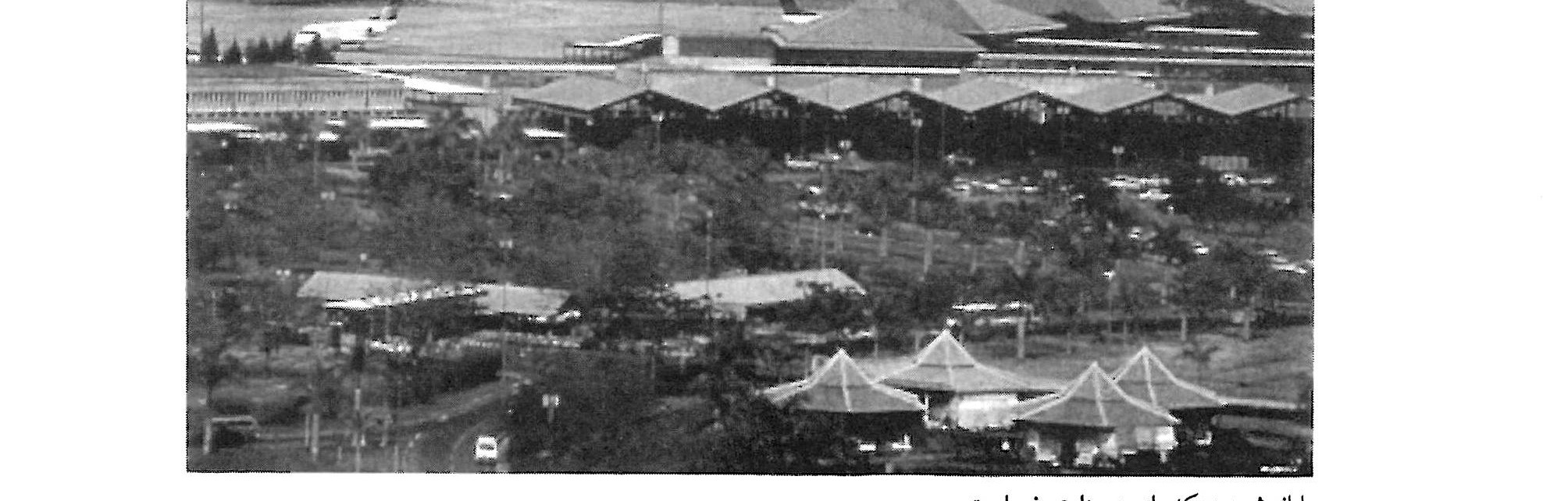
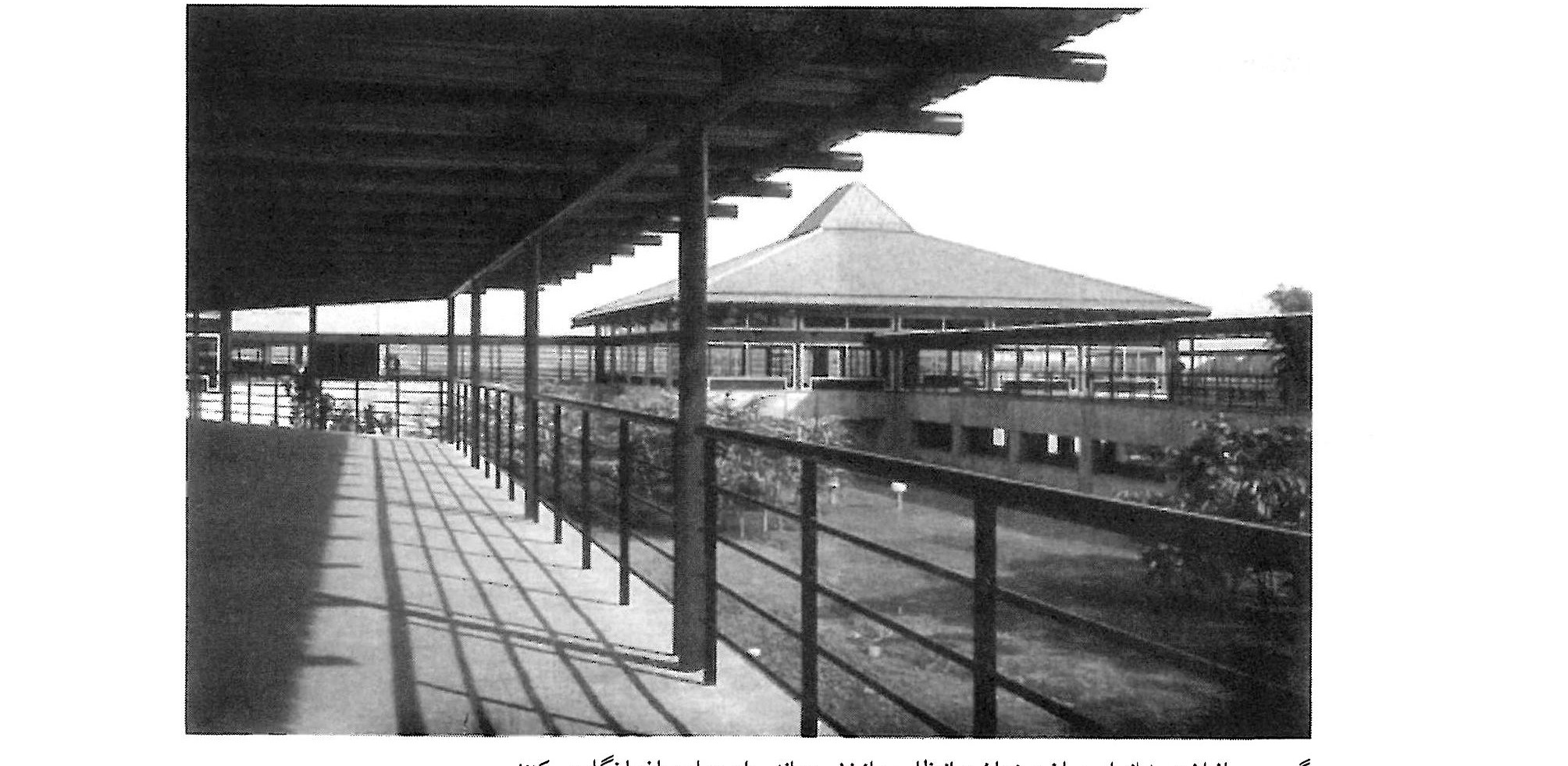
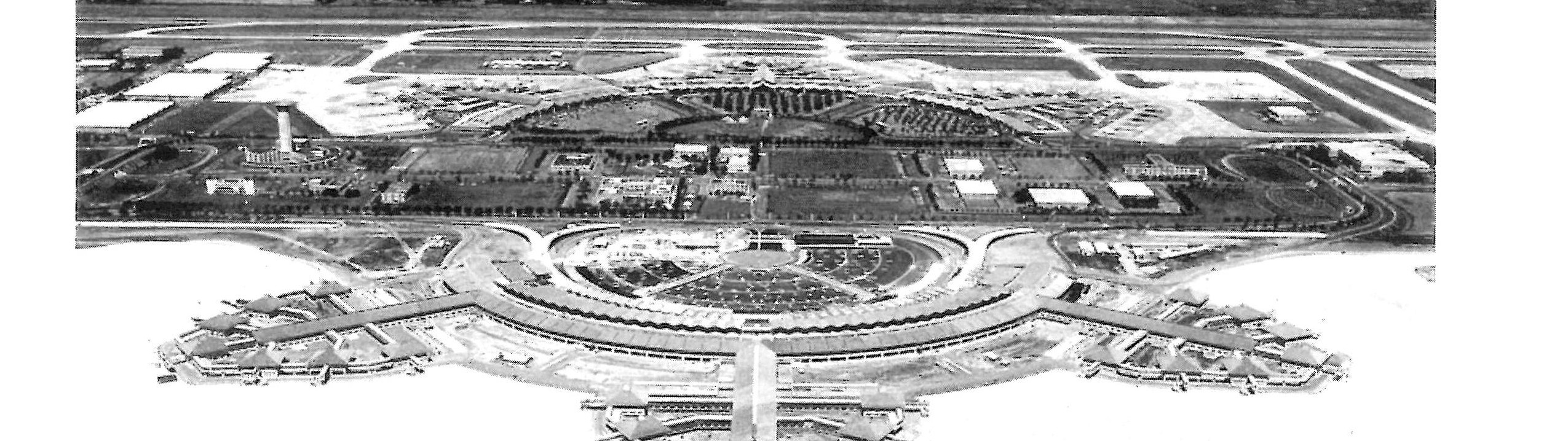
In discussions with the authorities of the Tehran airport, this issue also came up. They would ask me what inspiration I had drawn from Islamic architecture. I said that the answer to this question is very difficult. I have no recipe according to which I can tell you how I have worked. For example, I have been to Isfahan. It was very interesting and stimulating for me, but I cannot say what inspiration I drew from what I saw there for the airport design. Drawing inspiration is like eating good food — you don’t know where it takes effect. I don’t know in which of my works the inspirations I drew from Isfahan’s architecture have left their mark — perhaps in China. Besides, the architecture of Isfahan is a shared heritage of all humanity. It is not only the heritage of Iranians. The architecture of France also does not belong only to the French; you too can go to France and draw inspiration from its architecture. But surely you would not copy the Place de la Concorde. Nor would I imitate the Blue Mosque. And after all, what truly inspires? Many things. What specifically? Nothing specific. The clearest thing one can say is this: when you go somewhere and you like it, you absorb the sense of place, you perceive the people’s relationship to it, and you internalize these perceptions and feelings. When working on a project, you work with these feelings.
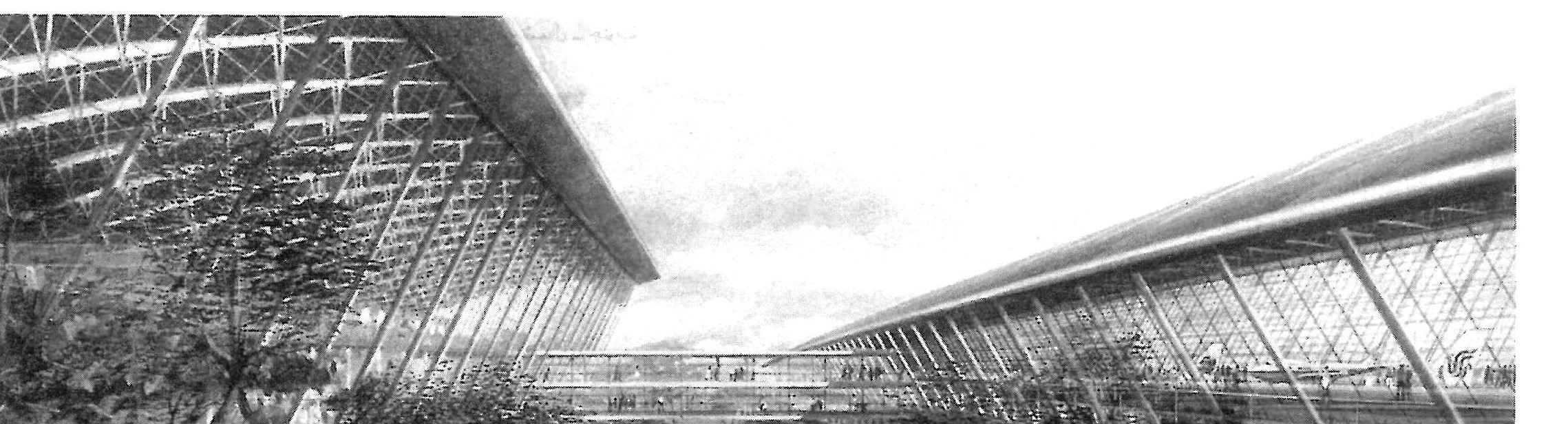
Regarding the design of Tehran airport, I can say that it is a great roof, a great curving roof. Of course, this is nothing new. You have seen similar things elsewhere and in magazines. Perhaps in one sense this is even a universal icon of modern architecture that we have seen in exhibitions, airports, and many places around the world. But more important than that, perhaps, is that this roof is a two-level structure in which both departing and arriving flights take place under a single roof. We placed the services on the lower level, departing flights on the uppermost level, and arriving flights somewhere else. The ramp can very gently go up and down along with the roof. All of this is under the same single roof. We have not separated departures and arrivals.
But I can imagine that a vast space above one’s head is somehow connected to the vision of ancient Iranian architects, or perhaps due to climate or the people’s sense of space, this is how it has been. The high ceiling and great height do not contradict this tendency, and I am satisfied with this. Perhaps this way of being — this harmony — is more important than imitation. I hope people will find something in this design that I would later consider not badly done.
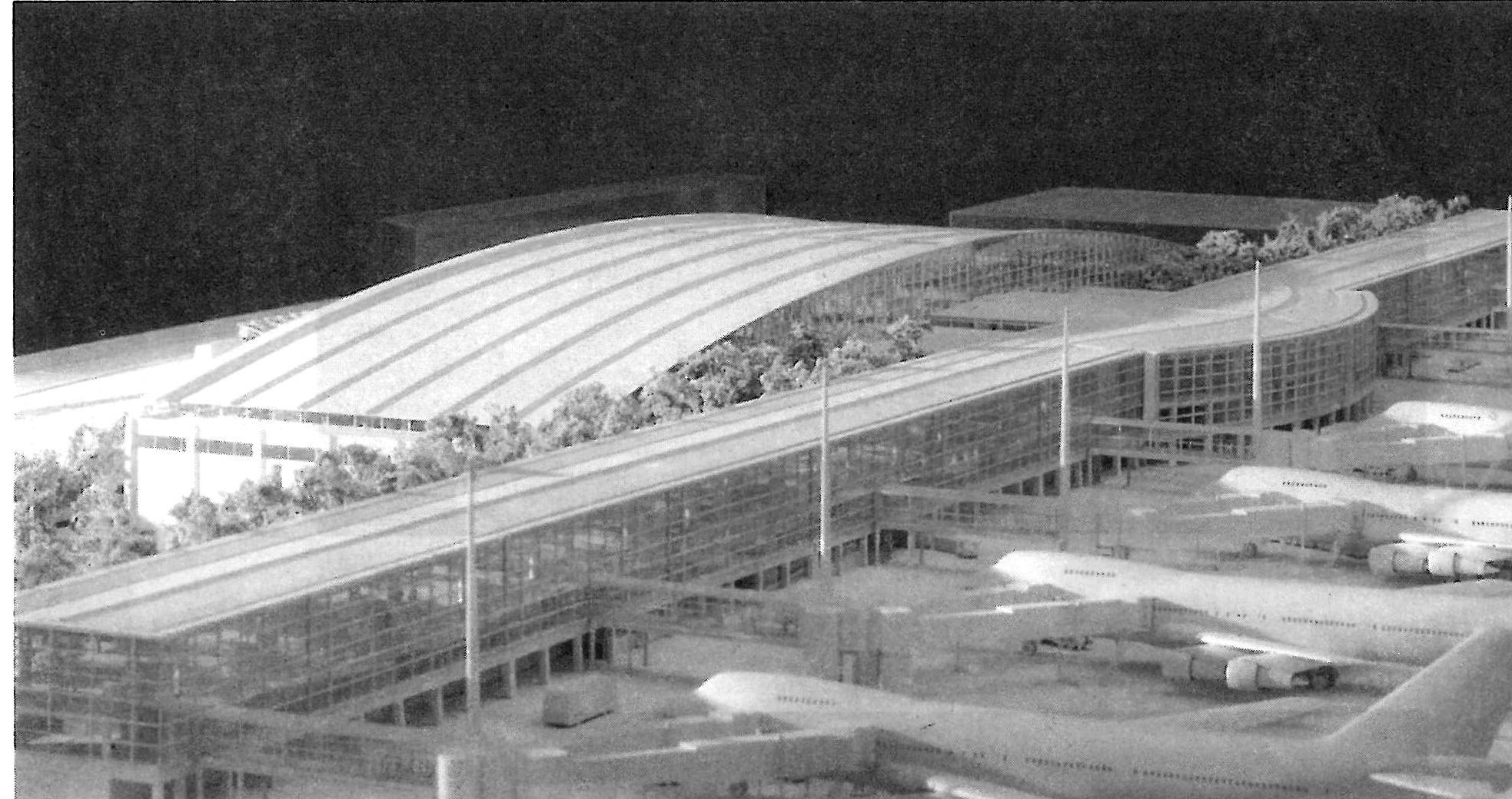
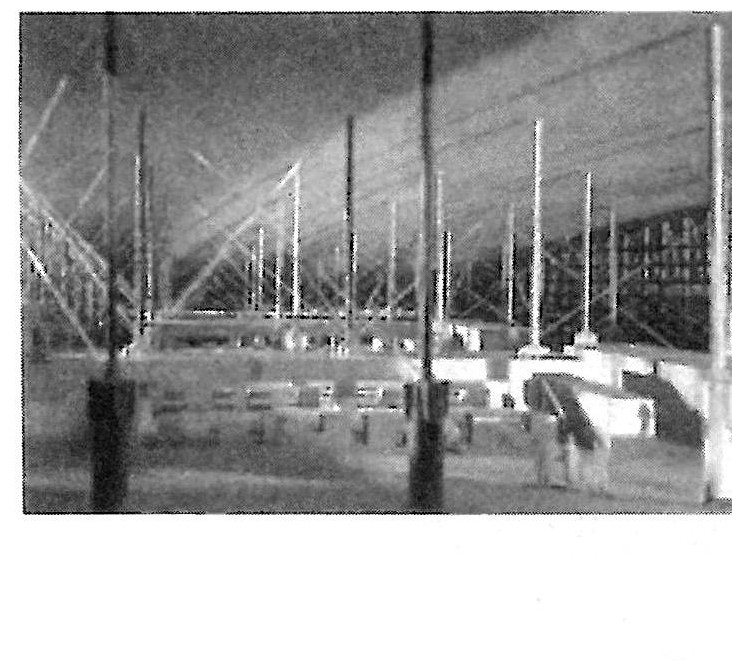
There are also many columns inside the hall, for various reasons including economic ones. I told the airport officials that columns, like many other things, are either eliminated entirely — in which case you must have very wide spans — or you increase their number. I don’t like a small number; I prefer either none or many. Of course, I thought that a large number of columns could carry meaning in people’s memory — for example, they might recall old buildings or forest trees. And of course this also resonates with Iranian architecture.
But this does not mean that you should, for example, take the Chehel Sotoun building and say: “I’ve found it! This is it.” If I were to say otherwise and specify a recipe, I would be committing fraud.
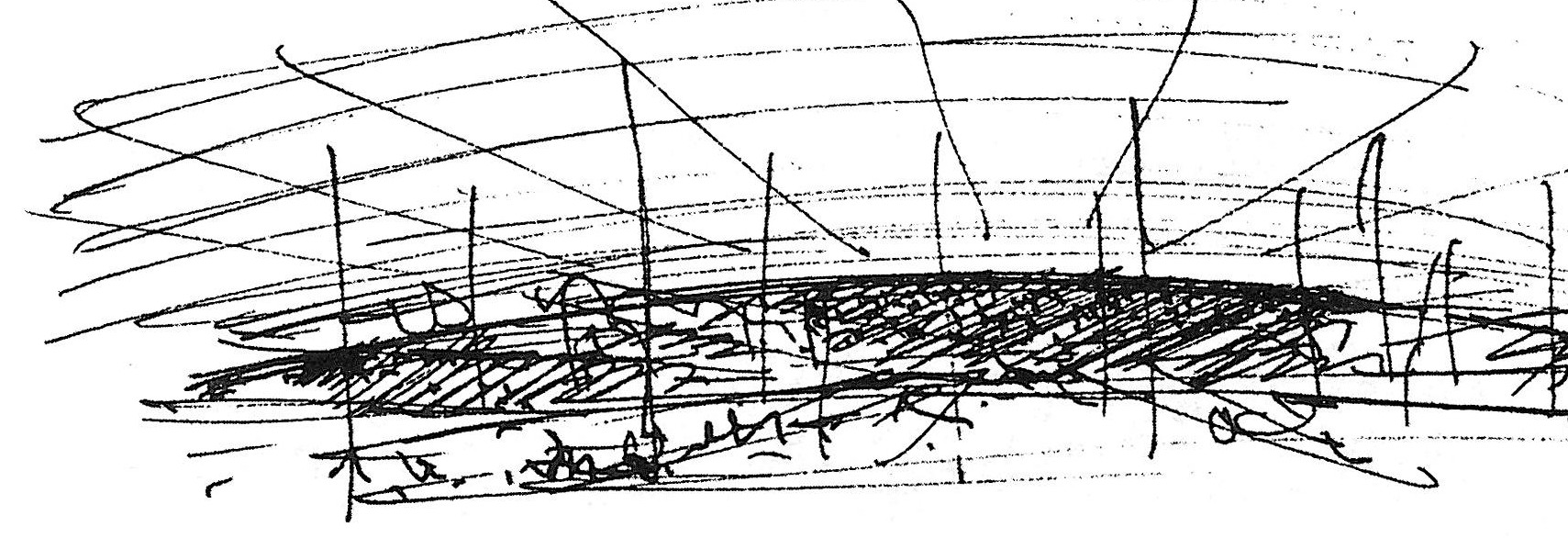

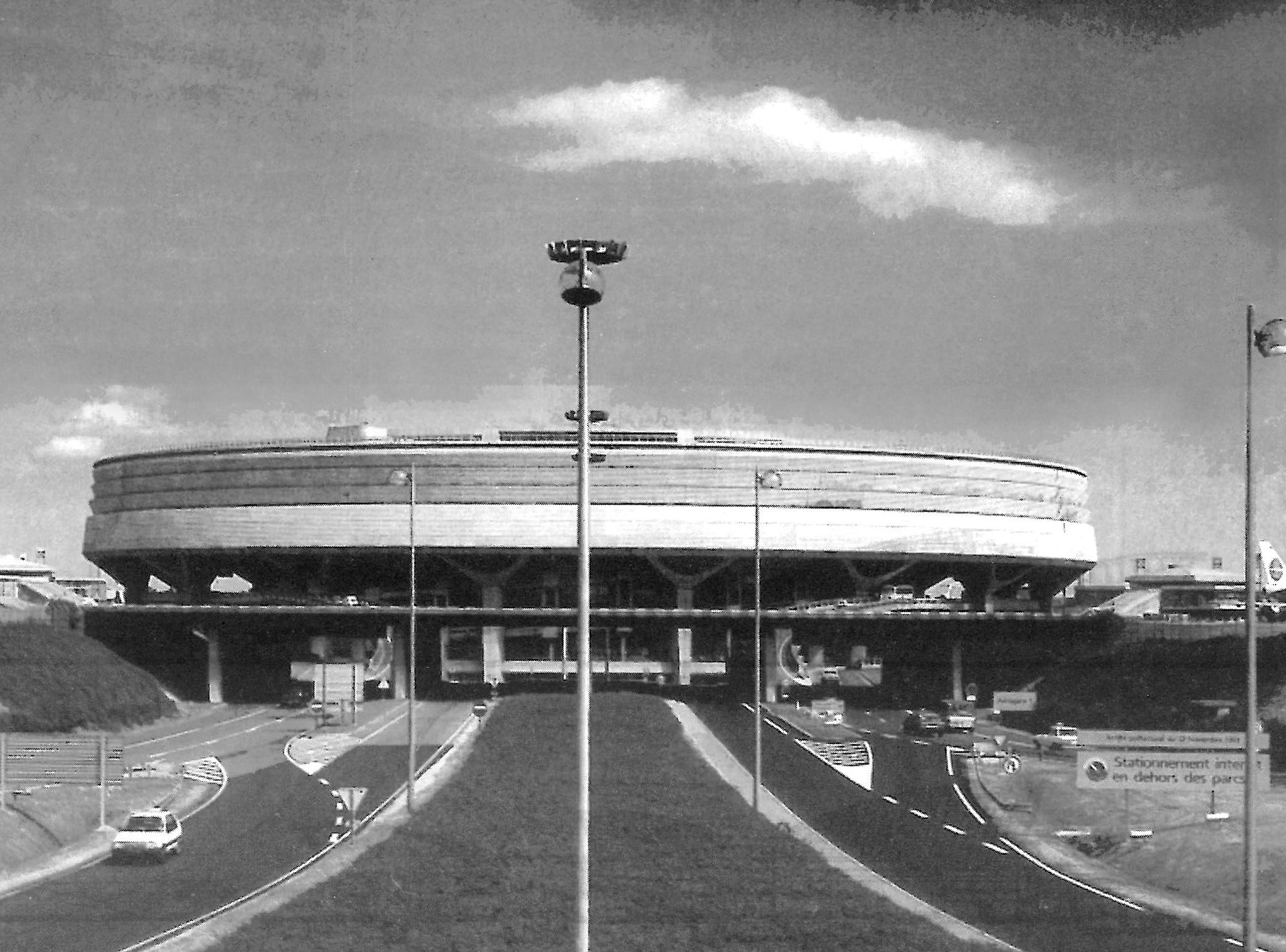
Let me tell you a story. When I began the Charles de Gaulle Paris project, the French would constantly tell me: please design a French project. I would ask: what does “French” mean? If this work is good, France will be known by it. If it is bad, nothing will happen. Of course, in my youth I was somewhat proud, but I truly believe it is the exchange of culture and the possibility of manifesting creativities that builds a nation’s architecture — not specifying where the inspiration comes from. If a project is bad, it is cause for regret. If it is good, it becomes something that carries beauty and other virtues; it becomes a hallmark of that land, and people speak of that work and that land.
Memar: You have had interesting experiences in airport design, urban design, and architectural design. Today, the question of spatial organization is considered the principal issue in these fields. Rem Koolhaas has used the airport metaphor to explain the main characteristics of new metropolises. What is your view on this?
In my opinion, the airport, because of its entirely modern aspects — and the fact that it must at the same time be situated within the existing fabric of a specific land and expand — raises particular issues that in a way have an urban planning dimension. In my view, development is an endeavor grounded in time. I have come to understand through experience that in the process of development, we must seriously take into account both time and space. In many modern development plans, the question of time has been denied and ignored. Even Le Corbusier did not deal correctly with this matter. Merely considering building units and adding to or subtracting from them amounts to ignoring the question of time. Time means uncertainty, it means the unknown — things you cannot control. This is not the time your watch shows … Time means transformation and metamorphosis. I have come to the conclusion that in building, the two fundamental categories are space and time. That is, you must treat buildings as you would treat living beings. The essential characteristic of living beings is that their system is open.
An open system has its own particular rules and develops according to those rules, but it is open and accepts outside influences; it internalizes them and can adapt itself to external conditions and change along with them. But for all of this, there is also a plan. This does not mean that anything can happen; the point is that we identify the variable factors. This is the very work we do in airport design — when we say: this is the access network of the airport, and these are its building units. The access network is of course fixed, but the building units can be designed flexibly and can change completely. At Charles de Gaulle, the building units change and are dynamic.
Of course, I know that the problem of many cities is the lack of necessary structures or the existence of too many structures, many of which cannot adapt. Many have been built by chance. But in this domain, there may be simple rules that give us hope for solving the problem. But if you ask: how? My answer is this: it is certainly not necessary to know a predetermined method, but you must certainly try. In my view, one of the most important requirements of being an architect is good health. Architecture is truly difficult work; you must constantly go back and forth, constantly question everything, think about everything … then forget it all and see in practice what you can do. For designing large buildings, even good health is not enough — you must be a champion.
Memar: In your interview with Le Monde in 1994, you said that the airport is a small laboratory for experimenting with processes and forms. Could you elaborate further?
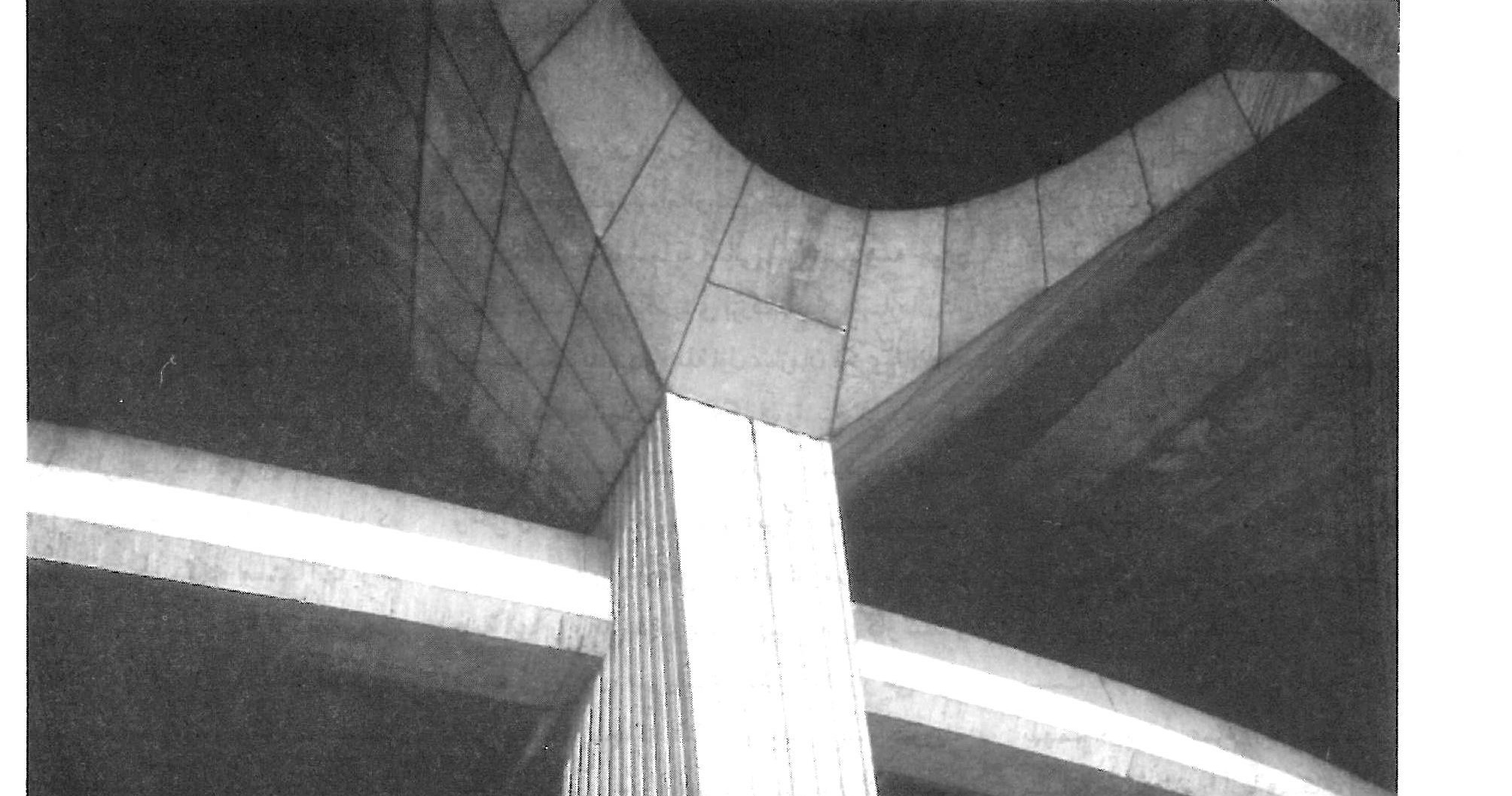
Yes, I said that the airport is a good laboratory for experimenting with urban forms, because complex urban categories are presented within it in a smaller and simplified form. The first building I designed and became interested in was the TWA Terminal in New York by Eero Saarinen, which is a fine example of this subject. Piano, Foster, Rogers, and many other architects have also designed airports. Their work constitutes important experiments on the subject of space, because their scale is large and they raise new questions. I hope my work is similar. The special conditions of the airport allow you to think differently. For example, we are currently building a sports stadium in China. I know that a stadium is not an airport. But my experiences in airport design have influenced me, because their new challenges have compelled me to think of new solutions that I can apply in other cases as well.
Memar: As an architect of large-scale projects, what do you think are the differences between the design process of large projects and ordinary urban buildings?
Well, you know, in one sense there is no difference. An architect is an architect. They must think, analyze, synthesize, and settle matters. So in principle, there is no difference, but in practice, yes. In a small building, you can easily control everything, but in a large building, you must take the organization of the work seriously — first the organization of your own thinking, and second the organization of your team. Therefore, in a large project, very different issues must be considered and resolved. In a large group, each specialist wants to pursue their own solution, and your job of getting everyone to work in a single direction, while both positive and productive, becomes extremely difficult. You cannot cut and sew wherever you please. Therefore, much effort, thought, and time are required.
The same situation also arises in your own mind. When designing a complex building, you must think about many things systematically. This is why I always say that one of the most important requirements for being an architect is good health. Architecture is truly difficult work.
Memar: In your interview with Le Monde in 1994, you said that the airport is a laboratory. From your perspective, how can the question of landscape, environment, and the requirements of infrastructure development be resolved?
The environment is very important, and I try not to forget this matter. But we should also not forget that the environment is fundamentally a cultural category as well — at least in a place like our country. In France, every piece of land has been plowed, planted, and organized, and what we call nature is nature plus a great deal of culture; in a sense, history and geography have merged. We should remember this. Of course, infrastructure development in the natural environment must be carried out with caution, but we should not be afraid of this work. We must respect nature and its beauties, and not perform certain works in specific spots, in the most beautiful landscapes of the world. But when the work requires a road or a bridge somewhere, it must be built while maintaining respect for nature.
Respect means a kind of connecting relationship that can also be strong; but in my view, if you show too much respect for something, you cannot speak with it or have a relationship with it. Just as between people — between men and women, between adults and children — things are not always gentle and mild. They may be pleasant, but they are not always calm and trouble-free, nor can they be. It is in these very collisions that something is gained and something is created.
In any case, if I find myself working with a natural environment, I always seek guidance from landscape architects; they have a culture I do not have, a perspective on time that I lack. Perhaps I understand what they say, but I have spent most of my life thinking in a different way. Therefore, I try to collaborate with them and take their views into account. And I always try to ensure that the result of my work is a road in the landscape — not a road hidden within it or something that negates the landscape. Both must coexist.
Memar: You are interested in the relationship between mathematics, physics, and architecture. In your opinion, is this relationship symbolic and schematic, or structural?
As far as I can recall, in the very days when I was studying mathematics, it seemed to me that there was a kind of beauty, a kind of intellectual organization, and a current of discovery in mathematics. This feeling exists in architecture as well — not that it is exactly the same, and not that I want to say mathematics and calculation are useful for architecture. Structural calculation is something else entirely. But a kind of beauty, intellectual organization, and the pleasure of discovery that exists in mathematics and physics also exists in architecture, though it is different. And I love it.
For example, the way of thinking about topics related to topology, and thinking about catastrophe theory or crisis theories and the like — I love these. You know, these are subjects of interest to philosophers, physicists, mathematicians, and architects. They even use similar terminology, though they don’t understand each other; one thinks of concepts, another of intuitive perception … but there is something common among all of them.
Of course, for these very reasons I am interested in mathematics and science, but I actually like poetry more. In any case, I think architecture is an independent subject. And poetry or mathematics are each independent subjects too. But all of them are connected to one another, and I am interested in this connection.
Memar: What are your views on the architecture of the “third millennium”?
Well, to be honest, I don’t know. I accept that one cannot avoid raising this question, but I really think that the architecture of the third millennium will be made by the people of that millennium. If I am alive at that time, I will do something. Of course, this question can be raised about what trends should be addressed and about poverty and the crisis of commuting. But this question cannot be separated from this: what specifically do you do at a given moment?
Memar: As you know, Iran has an exemplary architectural heritage. But the Iranian contribution to contemporary architecture has been virtually nil. Most Iranian architects have adopted a stance of denial in the face of the question “modern or traditional architecture?” Given the fracturing of the evolutionary trajectory of architecture in Iran, how do you assess the situation of contemporary Iranian architects and their problems?
Well, what can I say except that they should work and be humble. I am not opposed to ambition, of course. You can be both ambitious and humble at the same time. Of course, I accept that finding progress is difficult for you, but it is truly difficult for all architects in all countries, for all renowned architects too. Moreover, the star-making system and the proliferation of publications that have caused books and magazines to reach every corner of the world have reduced architecture to a number of recognizable icons or theories. This subject is useful in some ways and problematic in others, because in any case people tend to imitate them, and this is an issue for all countries. Recently, in a book by Deleuze, a French philosopher, I read that the notion of “the outside” and “the people” — the indigenous notion — has always been raised in all eras. So in this matter, we are dealing with the question of taking and setting aside. One should not take too much. One should not set aside too much either.
Also, I believe that progress in architecture occurs in wealthy countries that are growing wealthier by the day. For example, currently the most famous buildings are being constructed in Japan. This wealthy country can build more important structures or employ better-known architects, some of whom are among the best in the world. Therefore, the fundamental issue is always economics. This is not the whole story, however. One of the best examples is India, where there are architects who are truly Indian — that is exactly what you want too. I saw the work of Doshi, an Indian architect, in Jakarta. Well, you cannot publish a magazine about his work — it is so modest, small, and compact — but it was extraordinarily interesting too. Because it was truly designed for poor people, and for me, the question of how poor people relate to architecture is really fascinating. So we must accept that in this world, there is also a place for these kinds of architects.
Another issue that is apparently on the table for you is whether you must copy Western architecture or return to Islamic architecture. In my view, this is a wrong question. If Islam is alive, you have no need to imitate old Islamic forms, and if the current of progress is alive, you have no need to imitate the West either. Nor is it necessary to hate the West, because that is childish. You must find your own path. I only want to add that in my view, being a star is not very important, and wasting a lot of time on becoming a star is futile. You may become a star today, and tomorrow they may forget you. Fame does not last long; that is why it is not important. Young people should not think too much about this. They should work and work.
And a final point: what truly matters for the progress of architecture is freedom. Good creative work needs freedom. A person who is not free cannot create. Any kind of pressure obstructs creativity, and for this reason everyone must fight for creative freedom — they must fight to bring about the freedom to create, they must fight not to be deprived of that space; they must work, and nothing else can be done.
Memar: Perhaps during your visits to Iran you have developed particular ideas about Tehran, which in this country is both an exception and a model. In your view, what approaches to urban design could be applied in Tehran?
Answering this question would be madness. When it seems that everyone has thought about this subject and no solution has apparently been found, I must therefore be cautious. I will only point to one thing. Tehran’s important characteristic, which is very prominent and visible, is the natural setting — the mountain panorama, the snowy winter, and the desert just a step away. What do you want to do with these?
You know, I think the most important problem of Tehran is the problem of financing the city, which is also the main problem in Paris. For this shared problem, you cannot find a solution specific to Tehran. For the housing problem too — even if the question could be properly posed and trends suggested — it is the fundamental problems of cities that must be addressed: transportation, poverty, and a host of urban issues — architecture itself. Tasks that need to be properly done at the right time by the right person.
Memar: As you know, Iran has an exemplary architectural heritage, but Iranians’ contribution to contemporary architecture has been virtually nil. How do you assess this situation, and what is your view on the question of whether one should imitate Western or Islamic architecture?
This is a wrong question. If Islam is alive, you have no need to imitate old Islamic forms, and if the current of progress is alive, you have no need to imitate the West. It is not necessary to hate the West either, because that is childish. You must find your own path.
Memar: Please tell us about your new projects.
I am still working on the expansion project of Charles de Gaulle Airport. We have also begun building a maritime museum at Osaka Airport, which takes the form of a glass bubble, part of which — the metal part — is submerged underwater. Besides Tehran Airport and an airport in the Philippines, I am also engaged in the Shanghai Airport project, which is very large and is being built at an astonishing pace.
Of course, I also participate in design competitions for buildings like opera houses, stadiums, and the like; because even though I have designed many airports, I don’t want to limit my work to this field. I don’t want to be known as an airport architect. Whenever a word is added to your title, something is also lost. “Architect” is already enough; “female architect” carries less weight, and “airport architect” even less. An architect does not want any other title. Of course, I also participate in airport design competitions, because I have given this a lot of thought and it is a subject that engages the mind, but I would like to do other things as well, and in the intervals between them I do nothing at all. I am gradually getting old.


Memar: You mentioned that you have seen Isfahan. While thanking you for granting us this interview, could you elaborate on the striking impressions that, in your own words, you found there?
The first time I went to Isfahan was in 1974. Twelve years later, I returned once more. That third time, the city was far more colorful than I had remembered. I should say that I had in mind that Iranian architecture is mostly brick and red, and I myself, for various reasons, prefer the more grey tones. In Isfahan, I encountered a colorful world of materials that was supremely elegant in style, with perfect harmony among all its parts. This was striking and a great lesson for me.
The second was the bazaar of Isfahan. In my view, there is a deep modernism in the Iranian bazaar. Here I would add that of course one cannot imitate it. The overall organization that has been able to accommodate different types of shops and other functions in such a way that their distinctions remain evident while also being able to adapt to changing conditions everywhere — moreover, functioning as a commercial center with efficiency and capability of the highest order — and finally serving as a place for people to meet, stroll, and pass through.
The third was the astonishing order and disorder of the city’s fabric and the manner in which mosques are positioned and connected to this fabric, which has been accomplished with great delicacy.
Memar: What other place in Iran would you like to visit?
To be honest, I would like to see the old villages and remote regions. It suits me; I have always loved seeing distant areas. I believe that if you want to understand architecture historically, you must turn to vernacular architecture. I am very interested in this type of architecture — architecture without architects, so to speak. You know, it is very interesting to me when I see simple people, in specific climatic and geographic conditions, with the same simple materials at hand, doing so many things and creating all kinds of spaces.
Of course, I don’t mean that we can live in these types of buildings today, but I think they have a great deal to say and they are beautiful — truly beautiful. In Morocco, I saw much of this kind of architecture. An entirely different architecture. Of course, polished and refined architecture is also fine, but I myself have always been more drawn to this kind of architecture and to the older periods. I am not at all certain that I understand Renaissance architecture. Medieval architecture, and even the architecture of Egypt, Greece, and classical European architecture …
But honestly, what matters to me is what you love and what can inspire you. After all these travels and loves, when you are alone with paper and pen, you must do your own work. How much you know and how much you have seen is not important. What matters is how much you love what you love. I always tell my students: don’t rush about so much trying to see everything. See less, but when you see a building you love, look at it properly and try truly to understand what it is that you love about it.