Historical Architecture

Rock Art of Greater Iran

Reza Amirrahimi·Photos: Hamid Akbari·Memar 147
Rock Art of Greater Iran

Scientific estimates suggest that for at least sixty thousand years, humans -- in the sense we understand today -- upright and intelligent, possessing the physical capacities (particularly cerebral and neurological, if not yet cognitive) of modern humans, have lived in the mountains of Greater Iran.

These intelligent cave-dwelling humans were equipped with stone tools. In small groups, on rocky slopes, amid forests and thickets, and near springs and streams, they hunted and fed on plant seeds. It seems they did not possess an advanced spoken language, let alone a written script. They were so pressed by the demands of survival that little opportunity remained for cultural and artistic endeavours.

Perhaps it took tens of thousands of years for them to make their stone tools more efficient, to develop patterns for hunting and gathering, and to find the leisure to seek meaning beyond material existence -- to contemplate death beyond the horizon of life. At a time when they still had neither advanced language nor written script, the first artists and image-makers, with their primitive stone tools, set upon the rock faces and expressed what they saw and thought in the language of imagery, in the form of pictographs.

Petroglyphs are not the work of a single person or a single generation of artists. Over thousands of years, and in proportion to the material and spiritual advancement of human beings, they evolved: from naturalistic depictions resembling animals, plants, and humans themselves; to complex images in which the artist has distorted the natural proportions of the subject -- horns rendered larger than usual, or hands depicted oversized -- as if phenomenology was already at work even then! And ultimately, abstraction and stylisation into symbols and repeatable, simplified forms, and the birth of geometry.

One might assume that the minds of these earliest artists departed from nature only in symbolic or exaggerated images. Yet reflection upon even the most naturalistic depictions of ibex tells a different story: these images are formed from curved lines. Nature has no lines. Humans began image-making with the line, which in its evolution became written script, geometry, and architectural drawing. Written script was not invented in Sumer or anywhere else; it is the product of the evolution of abstract thought and stylisation.

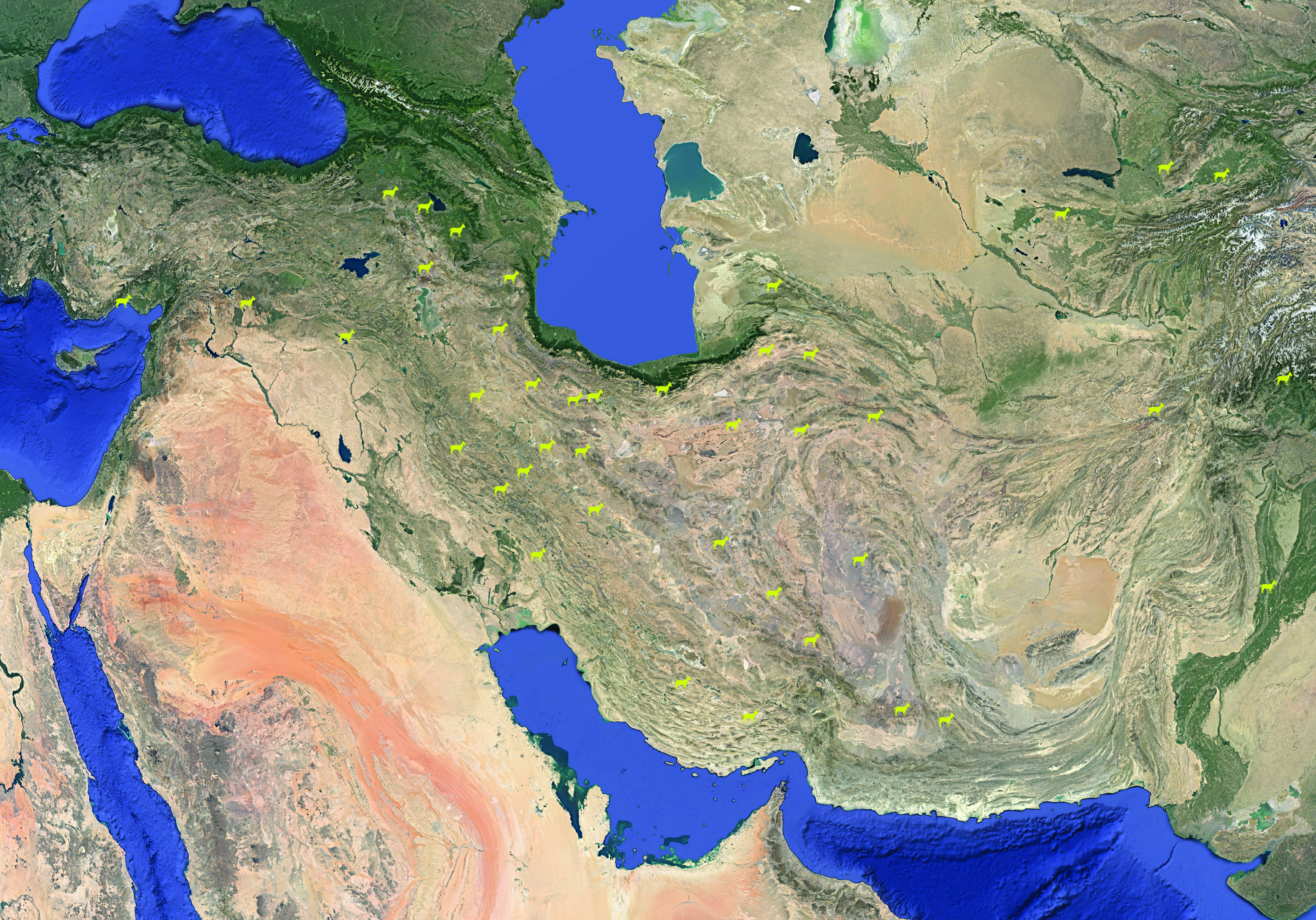
Iran's rock art, in terms of the number of images, the number of regions containing these pictographs, and the artistic quality of the images, is unparalleled in the world. The total number of pictographs is estimated at more than fifty thousand. Among them, Teimareh (near Golpayegan) is the most extensive and complete -- in effect, a grand gallery of Iranian rock art, with perhaps around twenty thousand pictographs. As shown in Table 1, approximately 87 percent of Teimareh's images depict the ibex. Other rock art sites, though smaller, generally follow the same frequency pattern.

The reasons are partly clear: the remarkable equilibrium that ibex displayed in climbing rocks; the horns they possessed for self-defence, and from which perhaps the first musical instrument was fashioned; and most importantly, the ibex was among the first animals that humans domesticated. Some studies suggest that it was in Iran where the goat and sheep were first domesticated in the world. Humans, other animals, and plants appear in the petroglyphs with far lesser frequency. The ibex later found a special place in the ancient myths and legends of Iran.

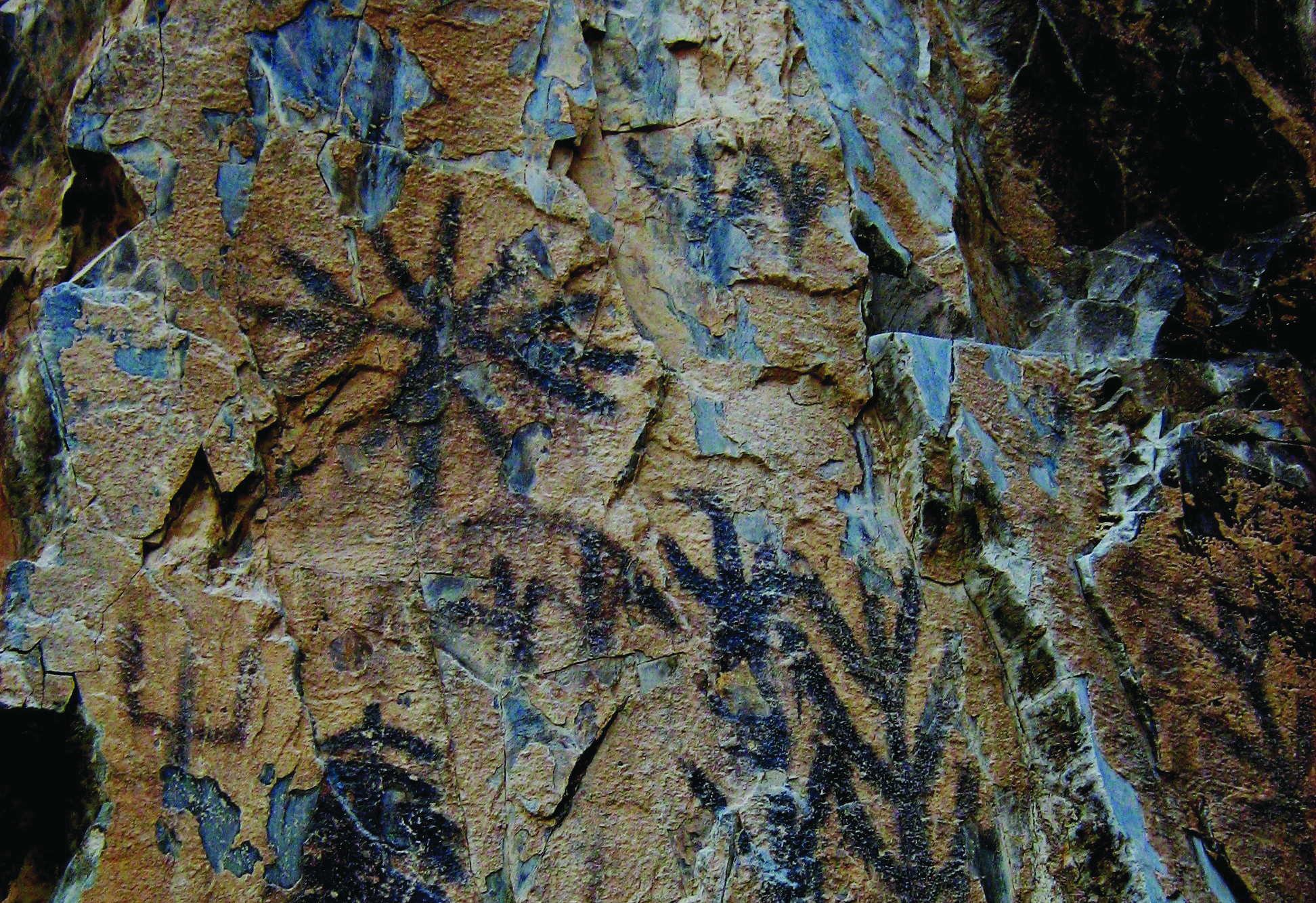
Most petroglyphs are engravings, and if colour was ever applied, it has faded over time due to erosion. Some painted rock art has survived; the pigments were made from ochre clay and the red juice of rhubarb1, which also served a medicinal purpose. Perhaps for this reason, rhubarb, like the ibex, holds a special place in Iranian myths and legends.

Table 1: Approximate Frequency of Rock Art Motifs at Teimareh
# Motif Percentage
1Ibex87%
2Humans in various poses3.5%
3Symbols and geometric designs3%
4Horses in various poses2%
5Camels and cattle1%
6Felines and canines1%
7Other animals1%
8Unidentified animals1%
9Plants (haoma, etc.)0.5%
◆ ◆ ◆

General Views of the Rock Art Sites

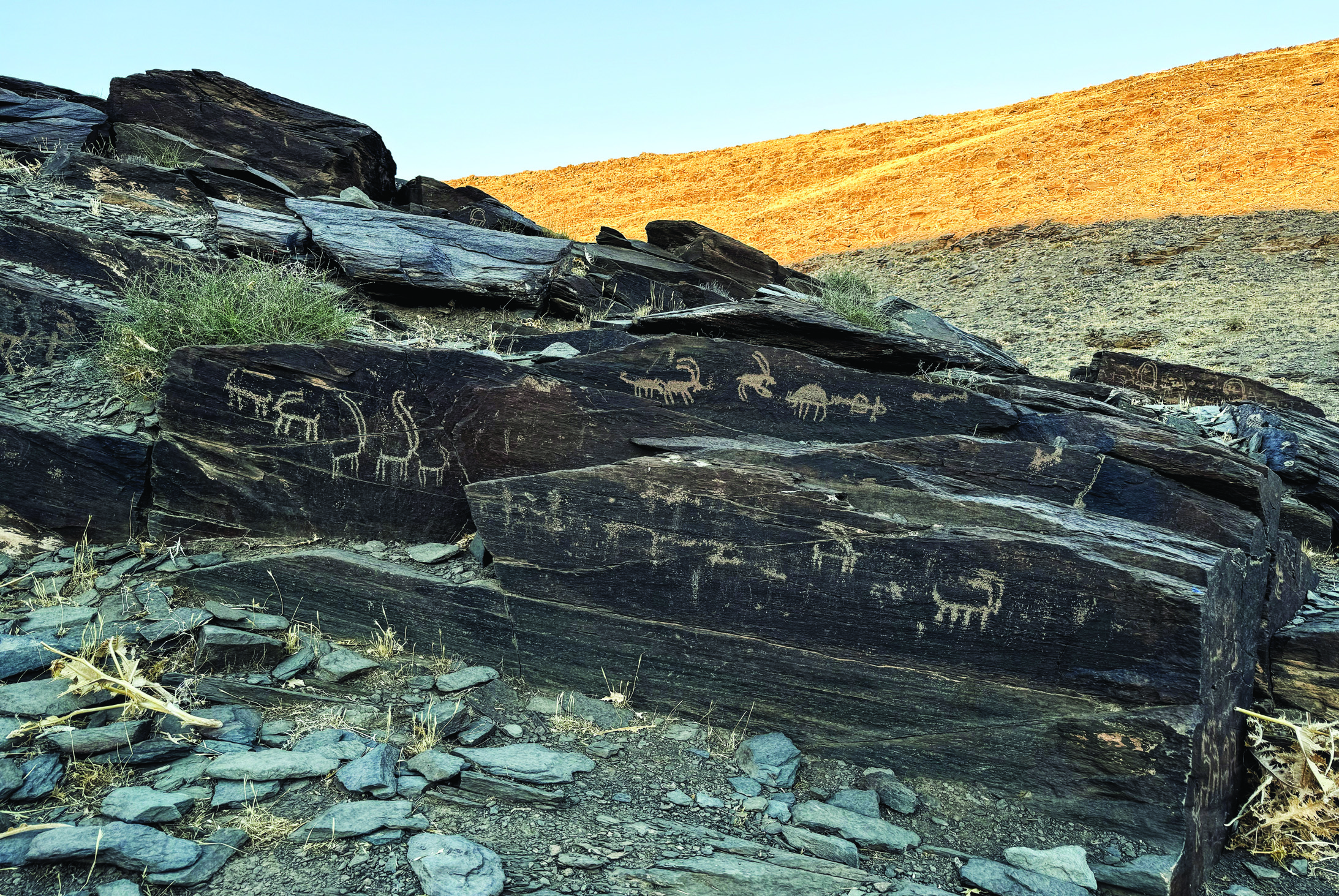
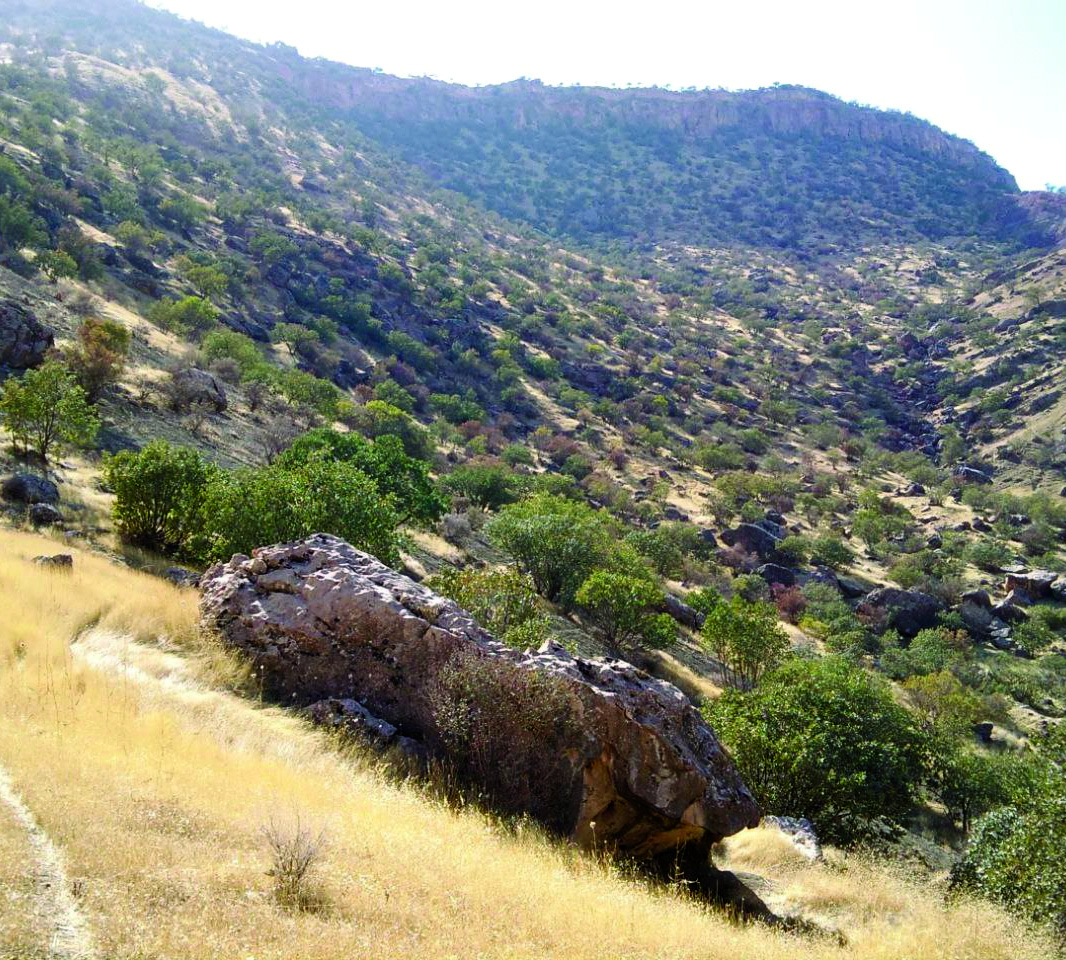
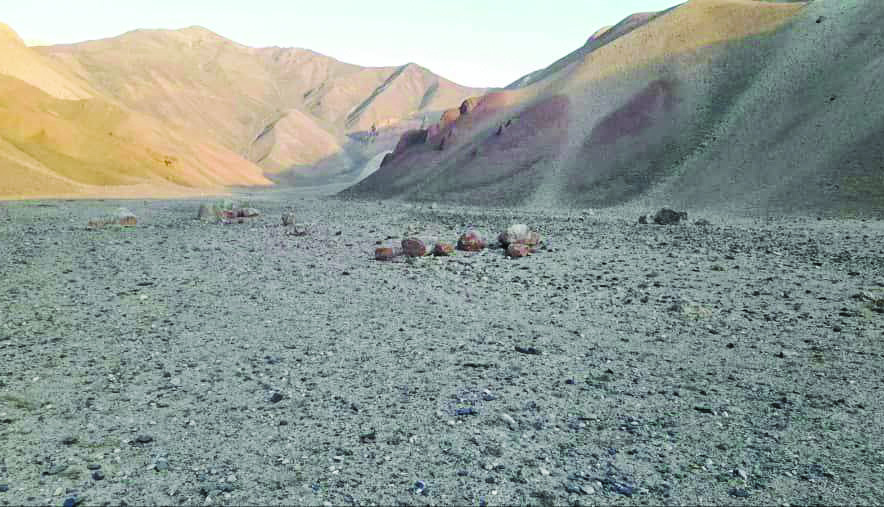
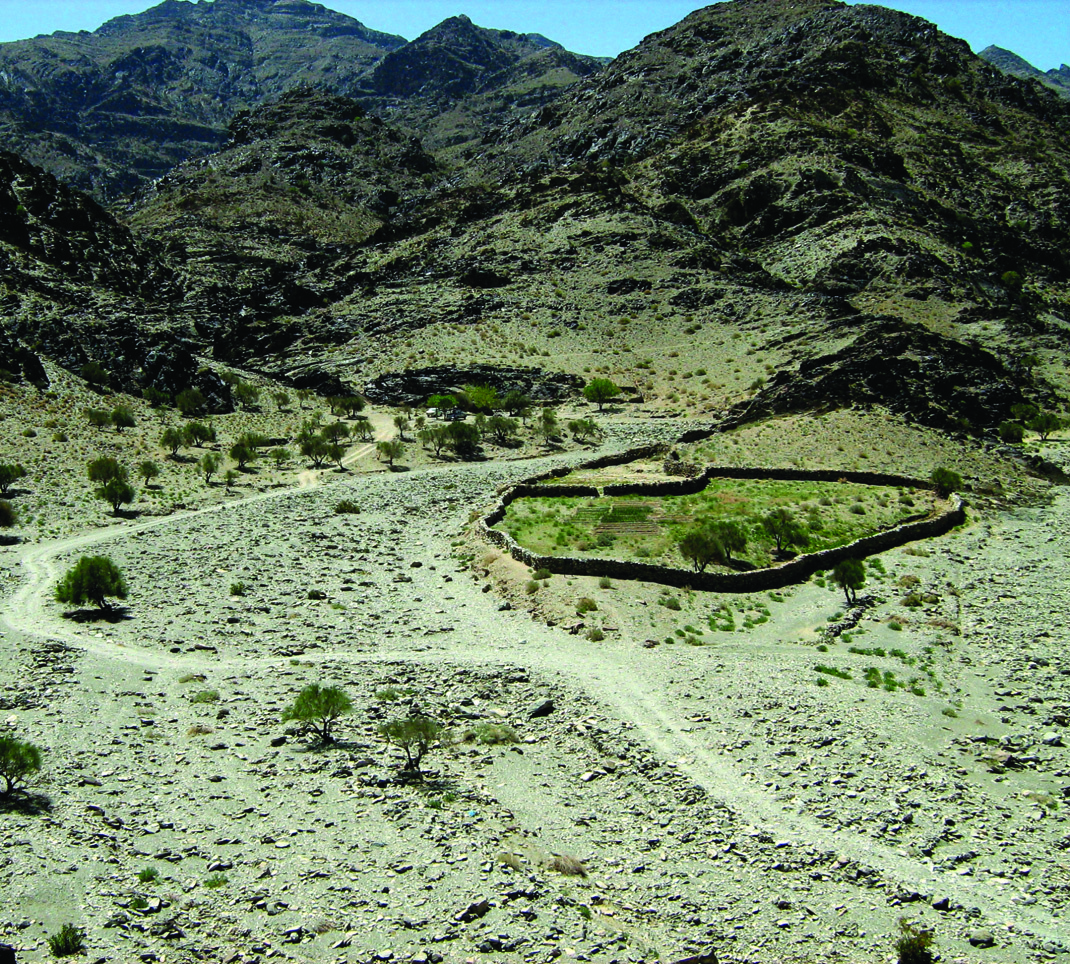
General views of some of the rock art exhibition sites of Greater Iran. The petroglyphs are estimated to be between three and several tens of thousands of years old. Some images indicate that the petroglyphs are situated beside ancient rivers. As these rivers gradually dried up, the cave-dwelling artists migrated from these locations.
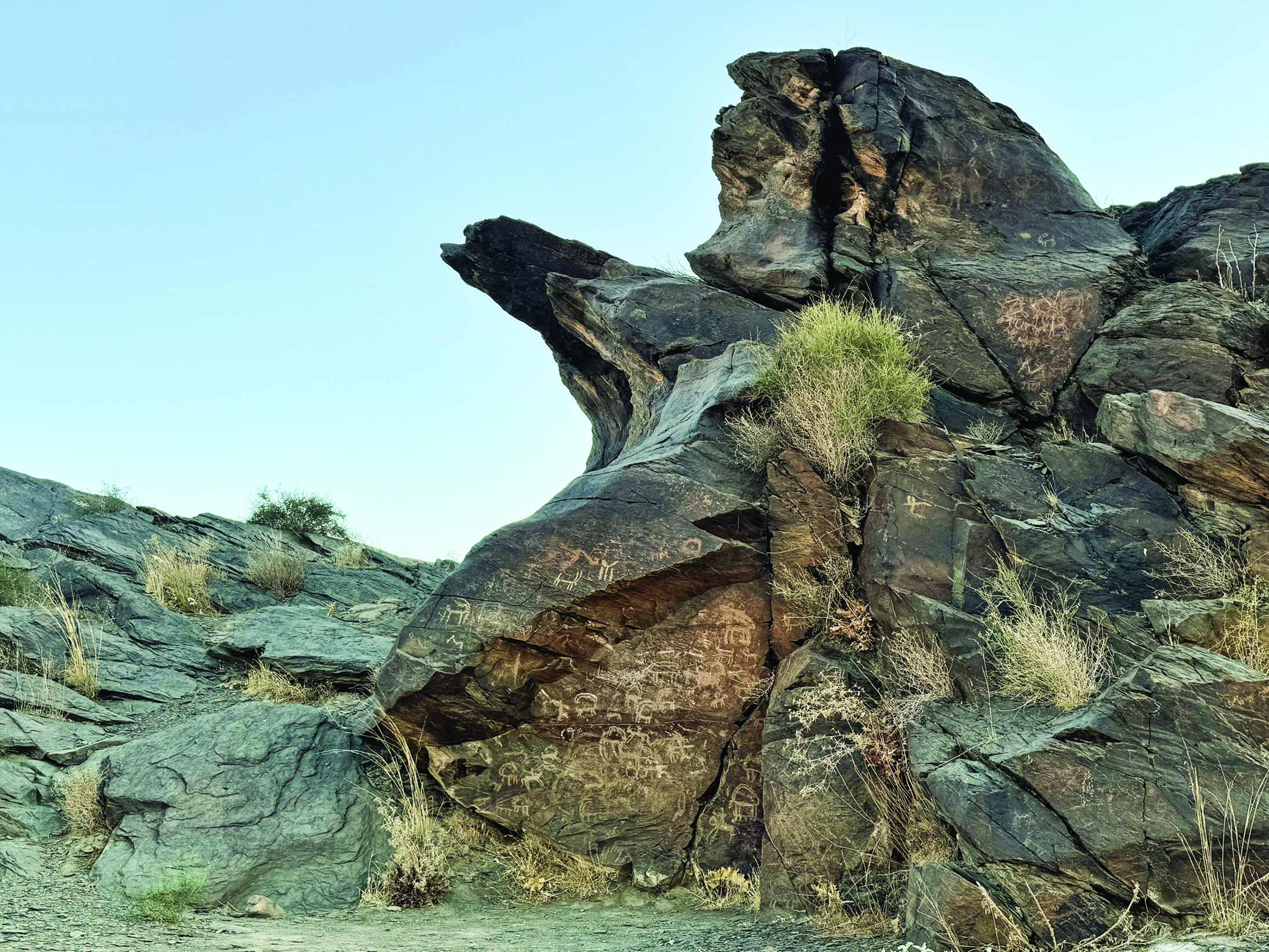
Large dark rock face at Teimareh covered in ancient petroglyphs, with carved ibex and other figures visible on the surface
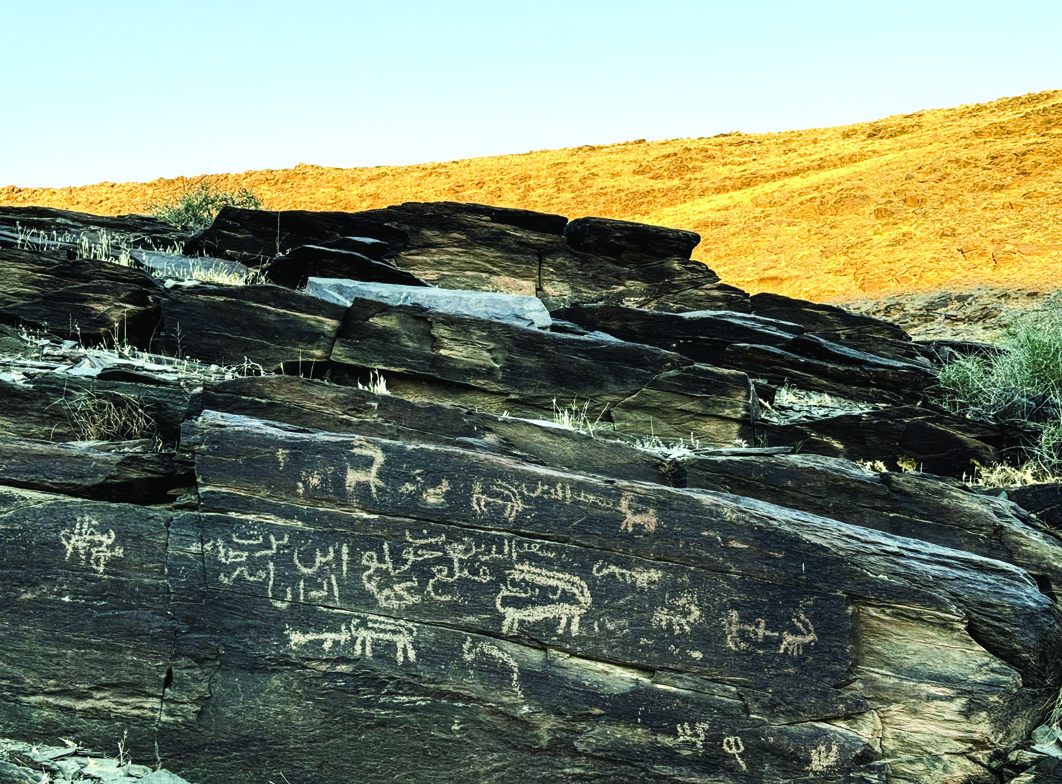
Teimareh -- the largest and most comprehensive rock art site in Iran, near Golpayegan.
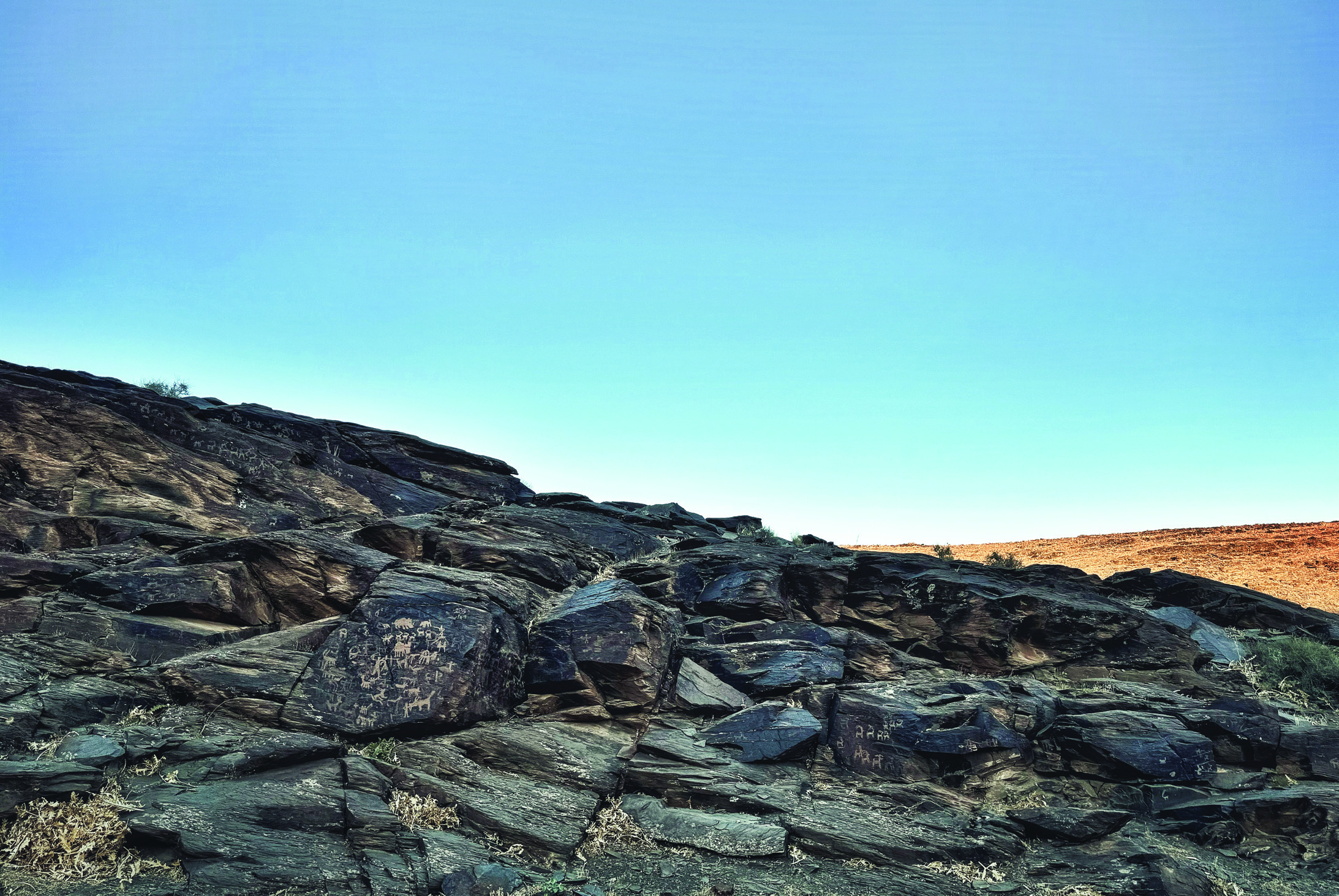
Wide view of the Teimareh landscape showing scattered dark rocks across a hillside under blue sky
Teimareh -- panoramic view of the scattered petroglyph rocks across the landscape.
Rock face at Teimareh showing a herd of ibex petroglyphs carved into dark stone, with golden hillside in background
Teimareh -- a remarkable panel of ibex petroglyphs with the golden hills of Golpayegan in the background.
Green mountainous valley at Kouhdasht showing the Sang-e Mehrdad rock art site with Houmian Mountain in the background
Kouhdasht, Sang-e Mehrdad -- viewed from the north, with Houmian Mountain in the background.
Barren desert landscape of Badakhshan with scattered boulders and colourful mountain slopes
Badakhshan -- a barren landscape with scattered rock art boulders.
Mountainous valley of Darreh Negaran in Baluchestan with a green oasis surrounded by rugged peaks
Darreh Negaran, Nahook, Baluchestan.
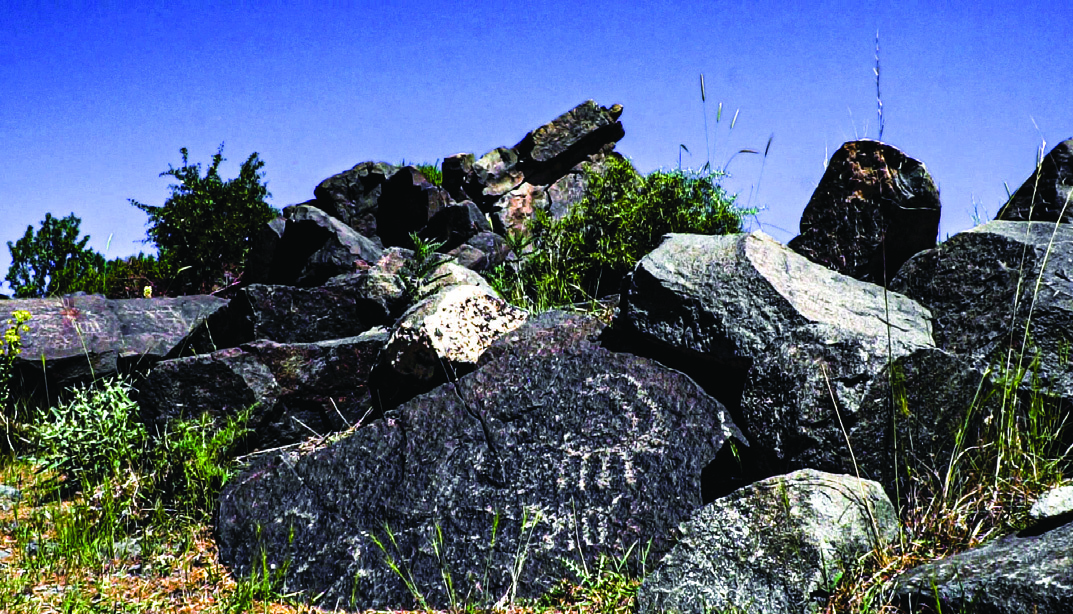
Dark rocks at the Hamedan petroglyph site amid vegetation with faint engravings visible
Hamedan -- petroglyphs amid vegetation.
◆ ◆ ◆

Naturalistic Depictions

In all probability, the first generation of rock artists were naturalists. Natural proportions are observed in their work. But the striking point is the passion of these artists in conveying movement in nature. Although abstract and conceptual thinking is not evident in their works, we must note that the very creation of curved lines represents a form of abstract thinking. In nature we have no lines -- we have edges.
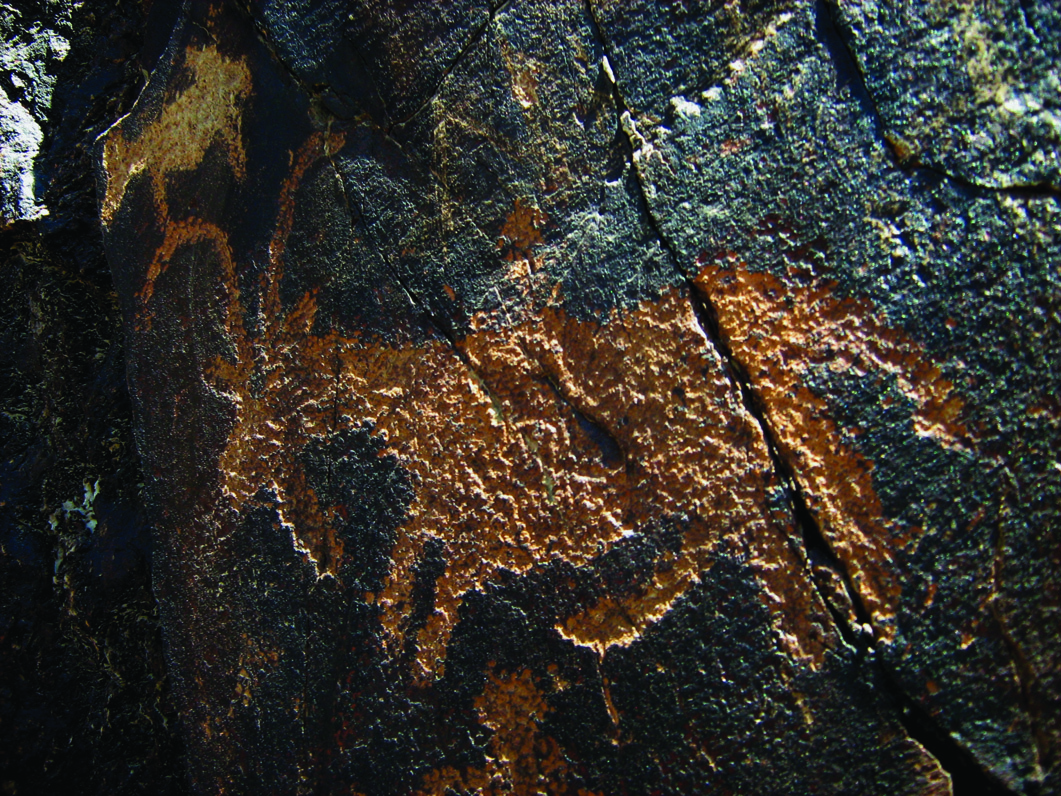
Close-up of a deeply engraved ibex petroglyph at Teimareh showing naturalistic proportions and curved horns on dark stone
Teimareh -- a naturalistic ibex engraving with remarkable attention to the animal's form and movement.
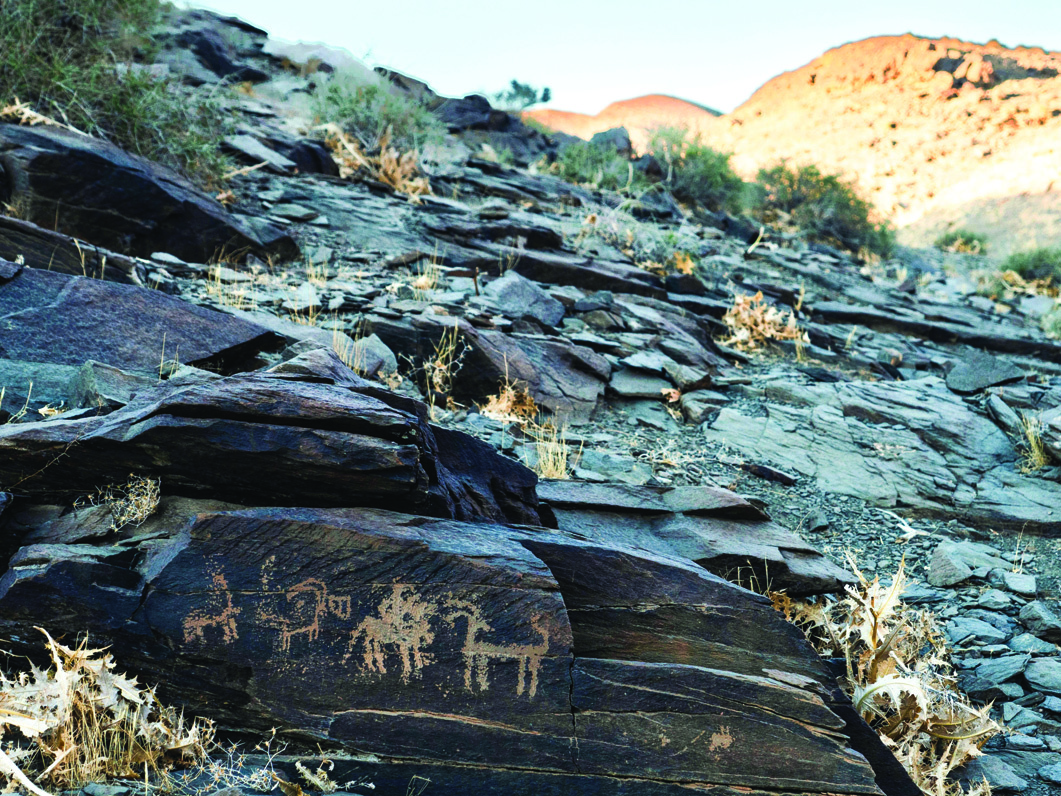
Petroglyphs at Darreh Negaran showing a caravan of animals including camels engraved on dark slate
Darreh Negaran, Nahook, Baluchestan -- a caravan scene with naturalistic animal figures.
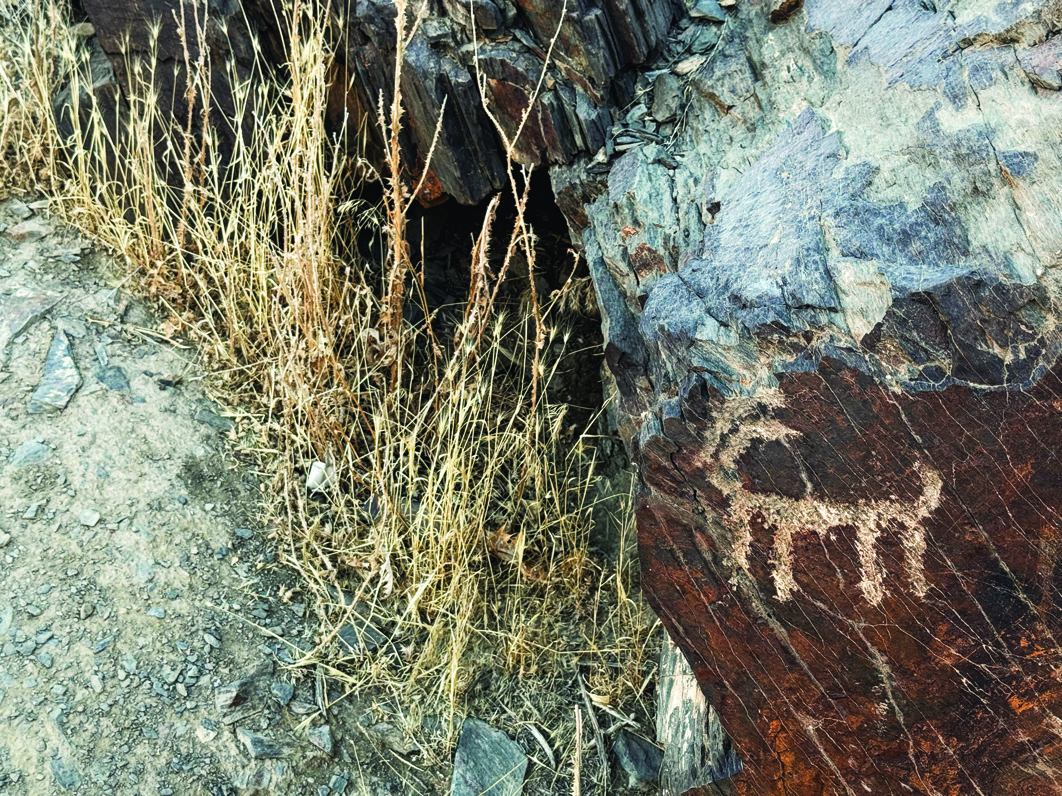
A single ibex petroglyph on dark rock at Teimareh, partially obscured by dry vegetation
Teimareh -- an ibex among the landscape's vegetation.
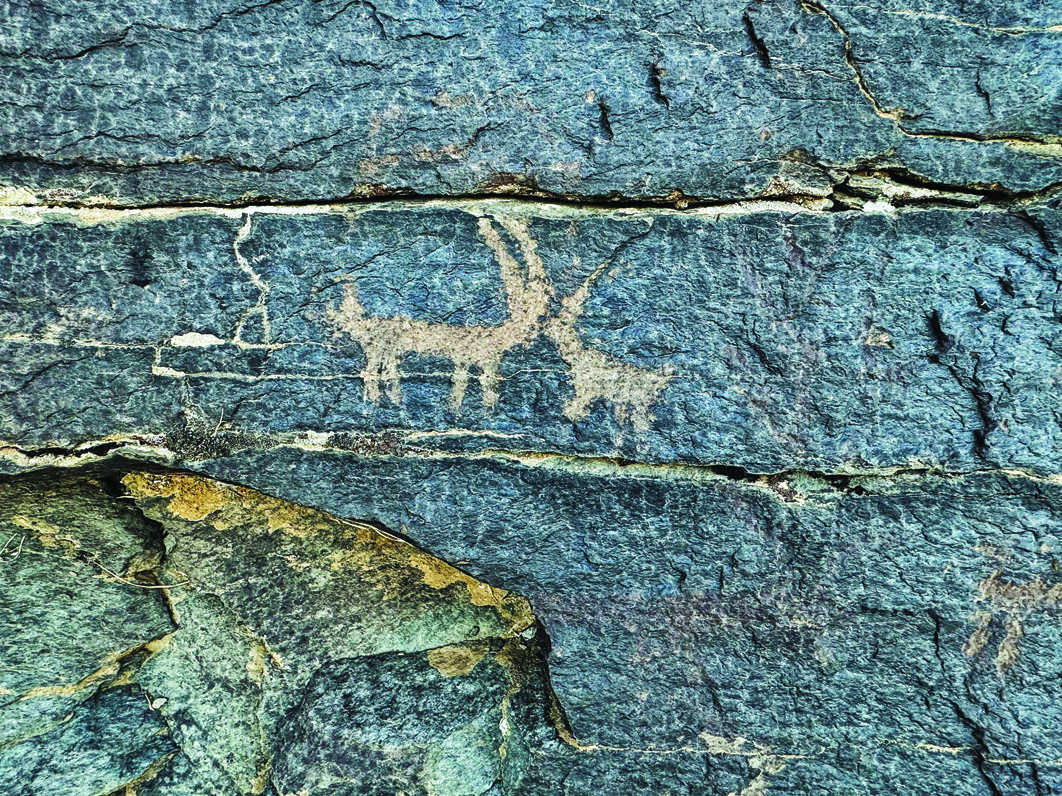
Two ibex petroglyphs carved into blue-toned rock at Teimareh, showing naturalistic proportions
Teimareh -- a pair of ibex on blue-toned stone.
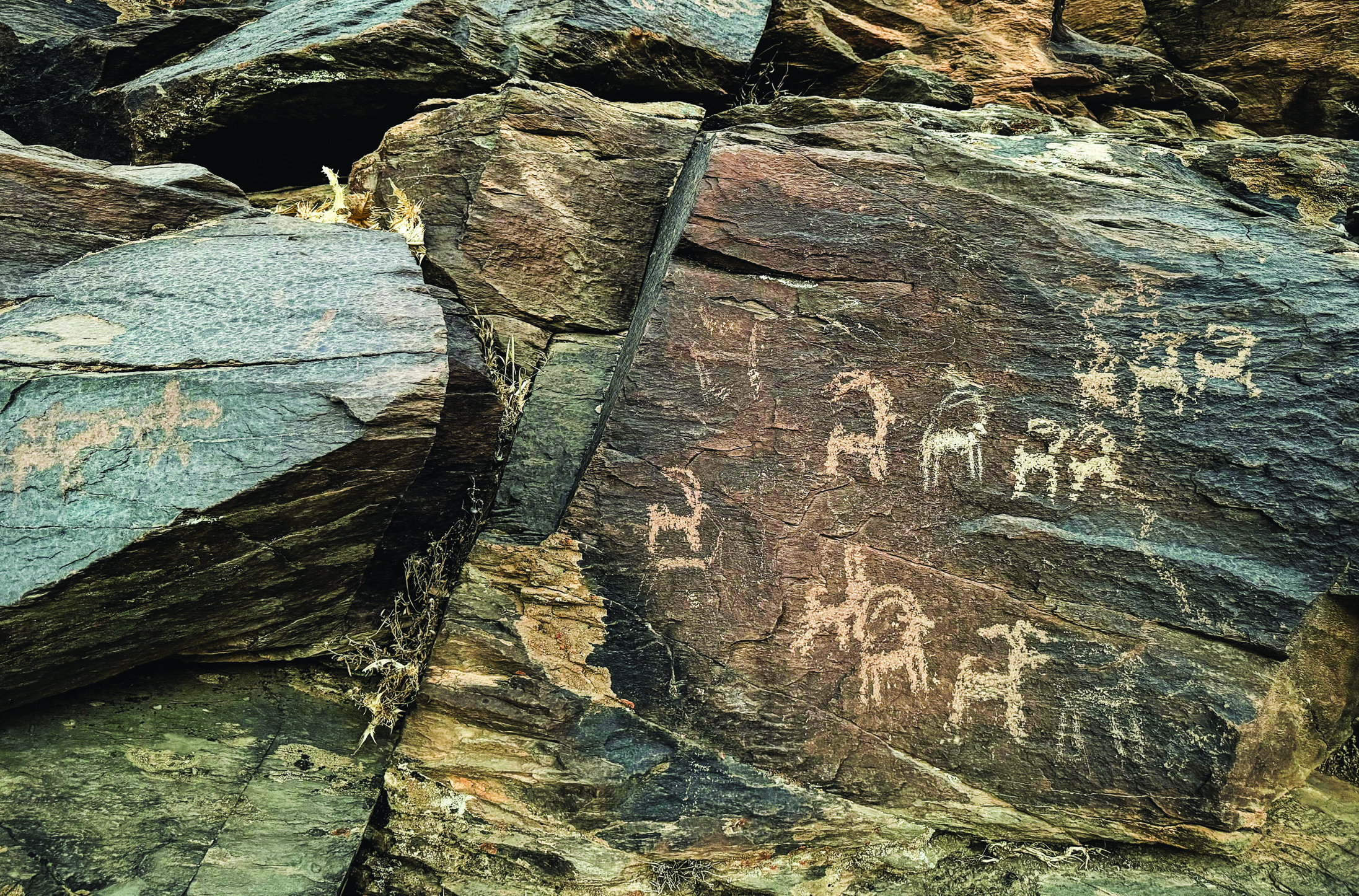
A large rock panel at Teimareh with multiple ibex and other animal petroglyphs carved across its surface
Teimareh -- a panel bearing multiple ibex and other animal figures.
◆ ◆ ◆

Conceptual Departures from Naturalism

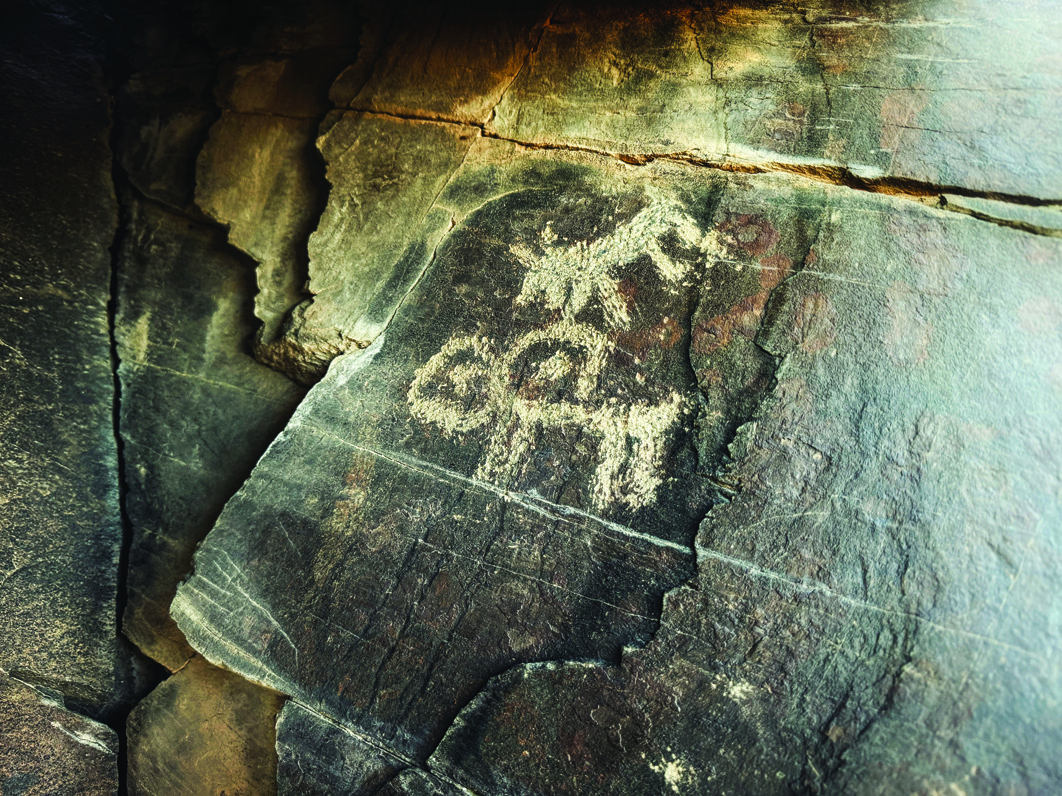
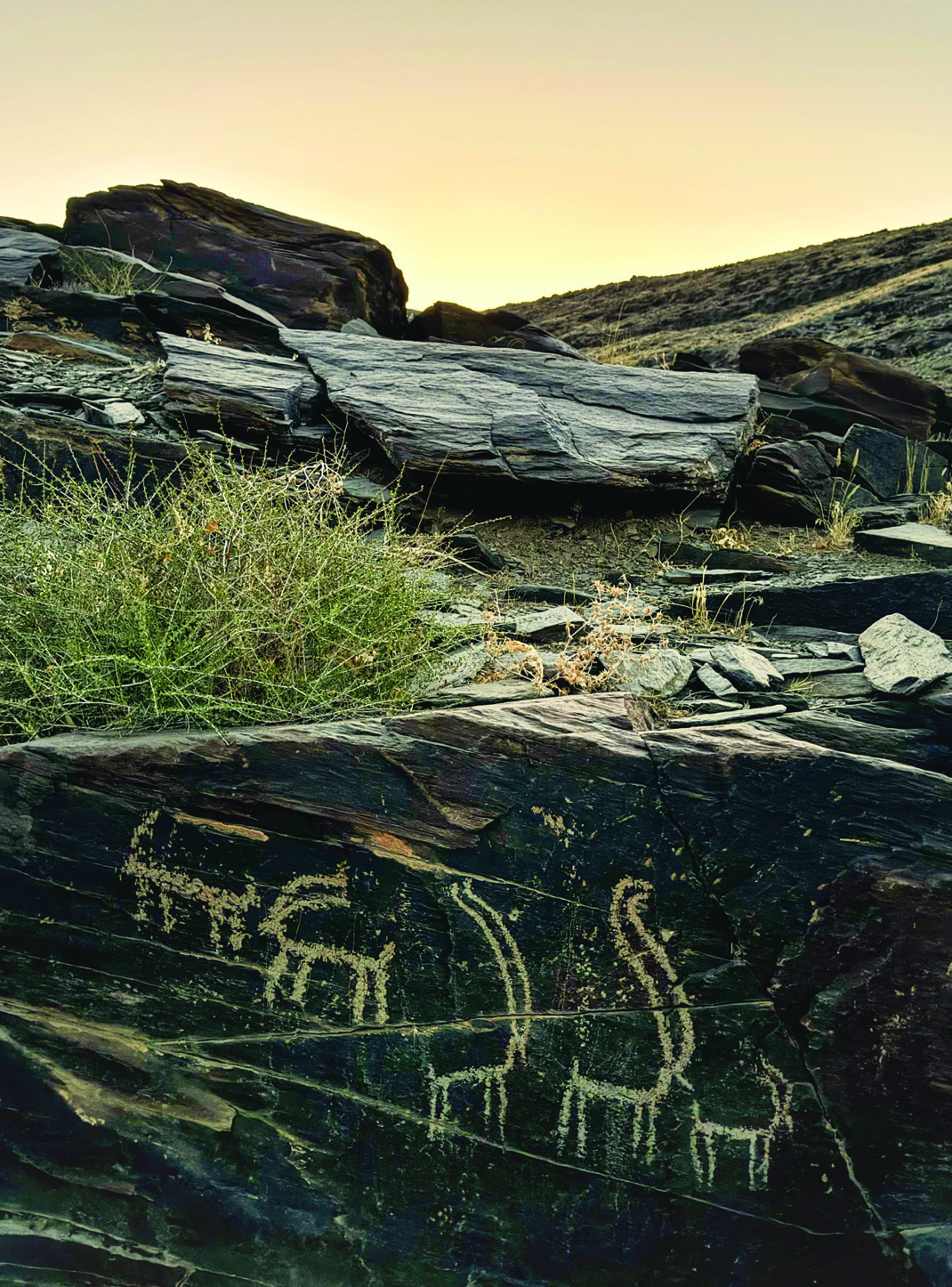
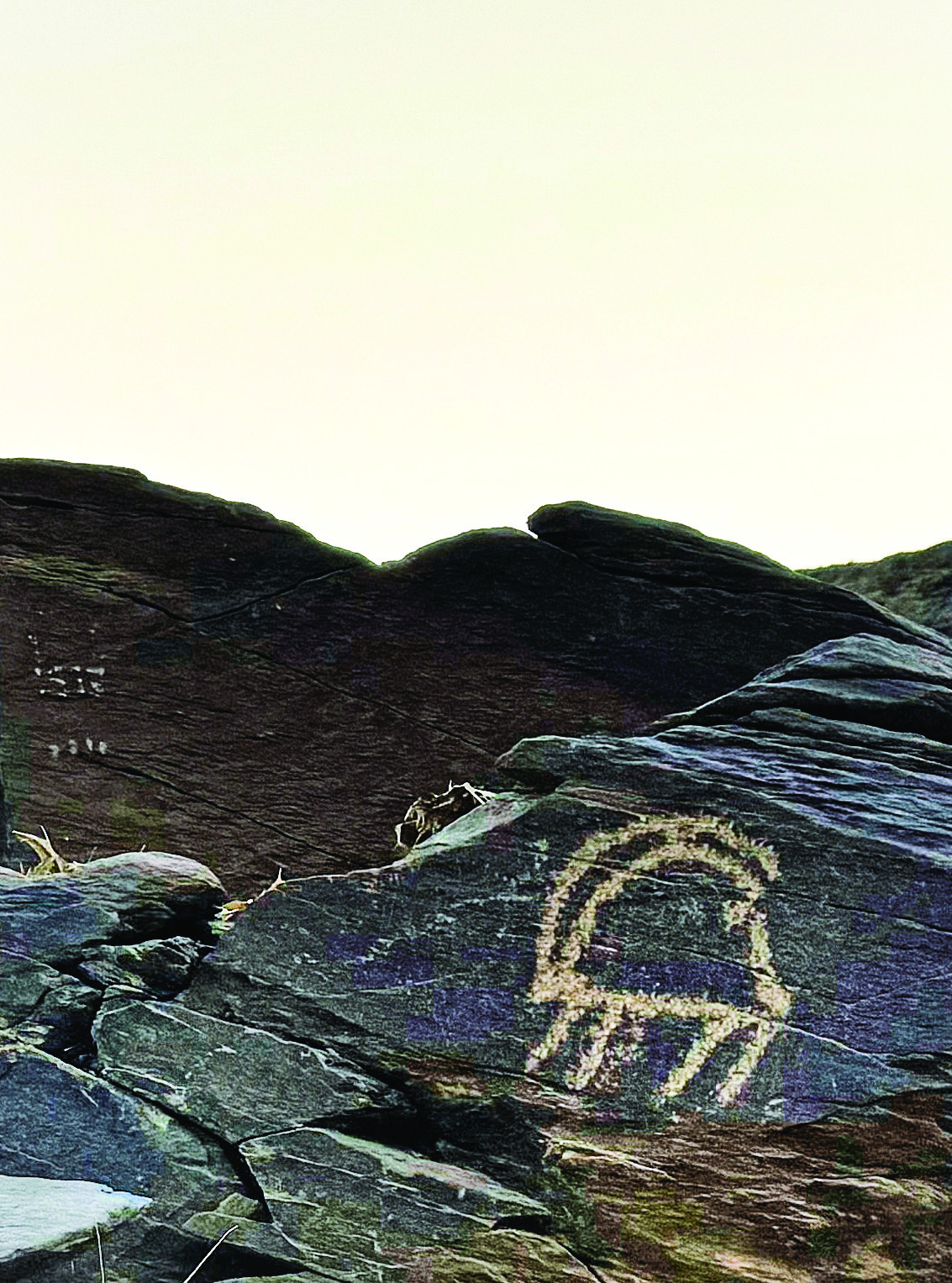
Later, the ancient image-maker departed from naturalism and, in accordance with the conceptual values assigned to the limbs of humans and animals, enlarged or reduced them. For example, the horn of the ibex represents the concept of protection, and given its importance, it has been carved larger than life. Images placed between the horns and the body of the ibex are depicted as being under the protection of the horns.
Teimareh petroglyph of ibex with dramatically enlarged, sweeping horns carved into dark rock at sunset
Teimareh -- ibex with exaggerated horns, the horn symbolising protection.
Petroglyph at Teimareh showing an ibex with oversized curved horns dominating the composition on dark rock
Teimareh -- the horn rendered far larger than natural proportions.
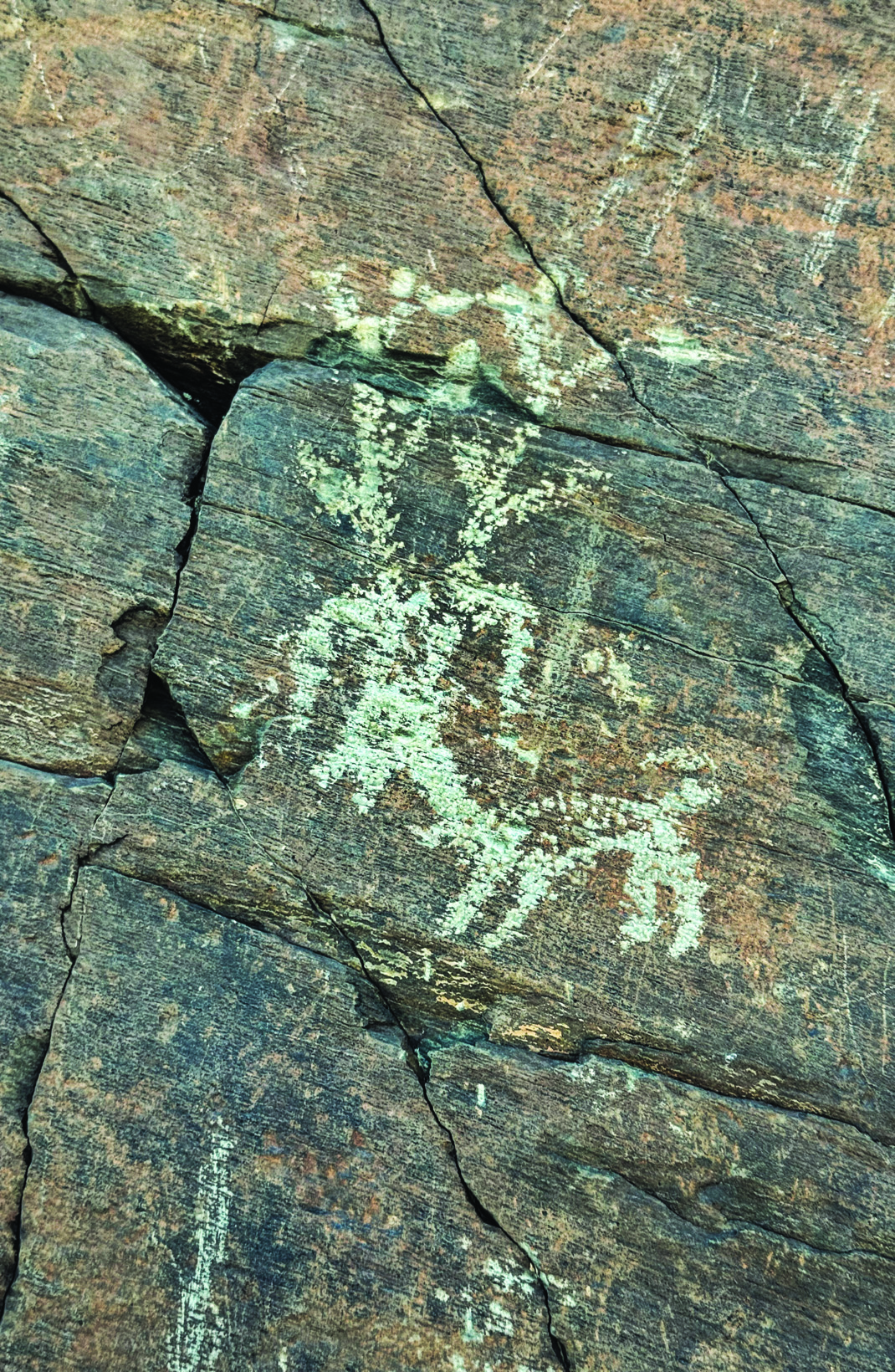
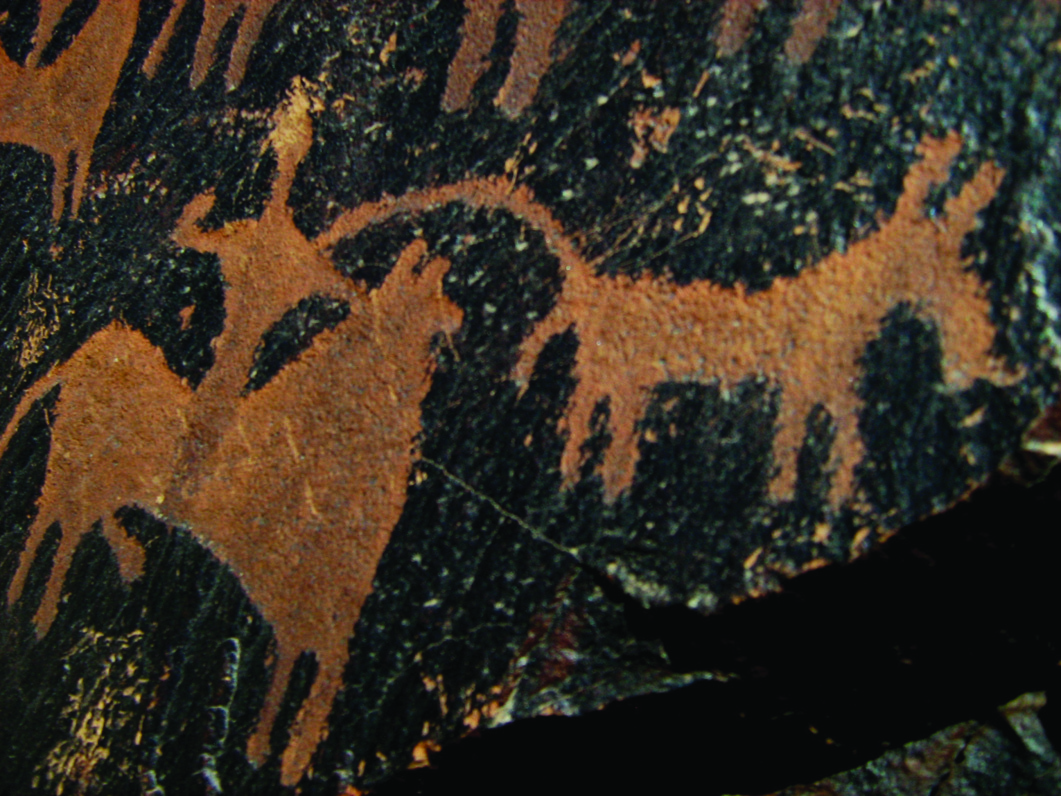
Petroglyph at Darreh Negaran showing a human figure alongside a deer-like animal with exaggerated antlers
Darreh Negaran, Nahook, Baluchestan.
Teimareh petroglyph showing smaller figures nestled between the oversized horns of an ibex, symbolising protection
Teimareh -- figures under the protection of the ibex's horns.
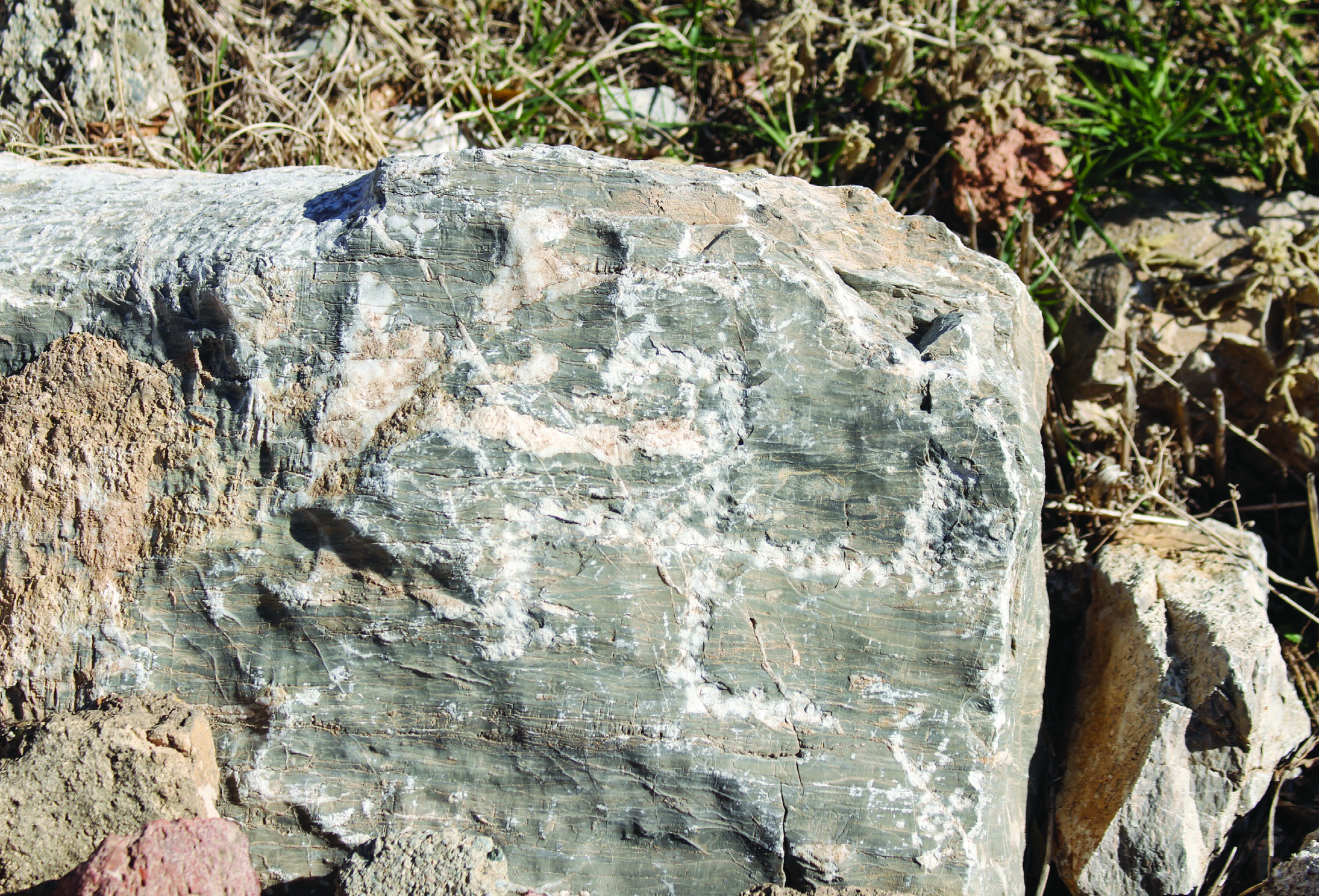
Close-up petroglyph at Teimareh of an ibex with conceptually enlarged horns and dotted-line technique
Teimareh -- conceptual ibex with enlarged horns.
◆ ◆ ◆

Human Presence in the Petroglyphs

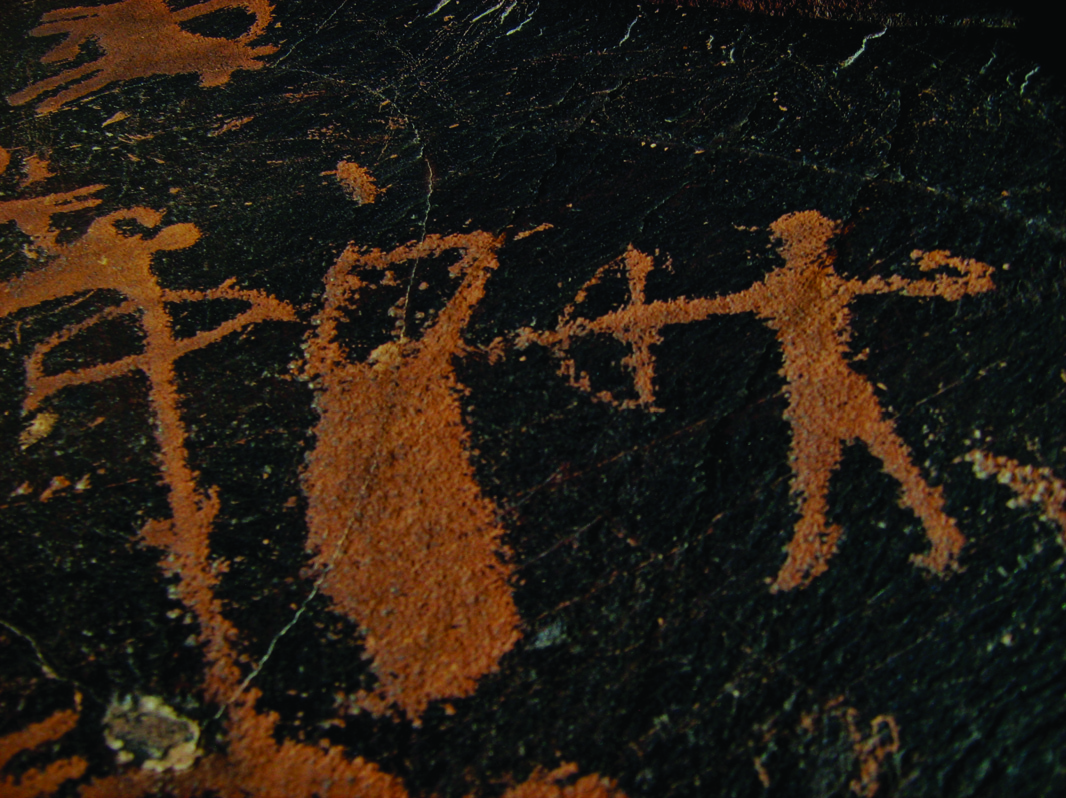
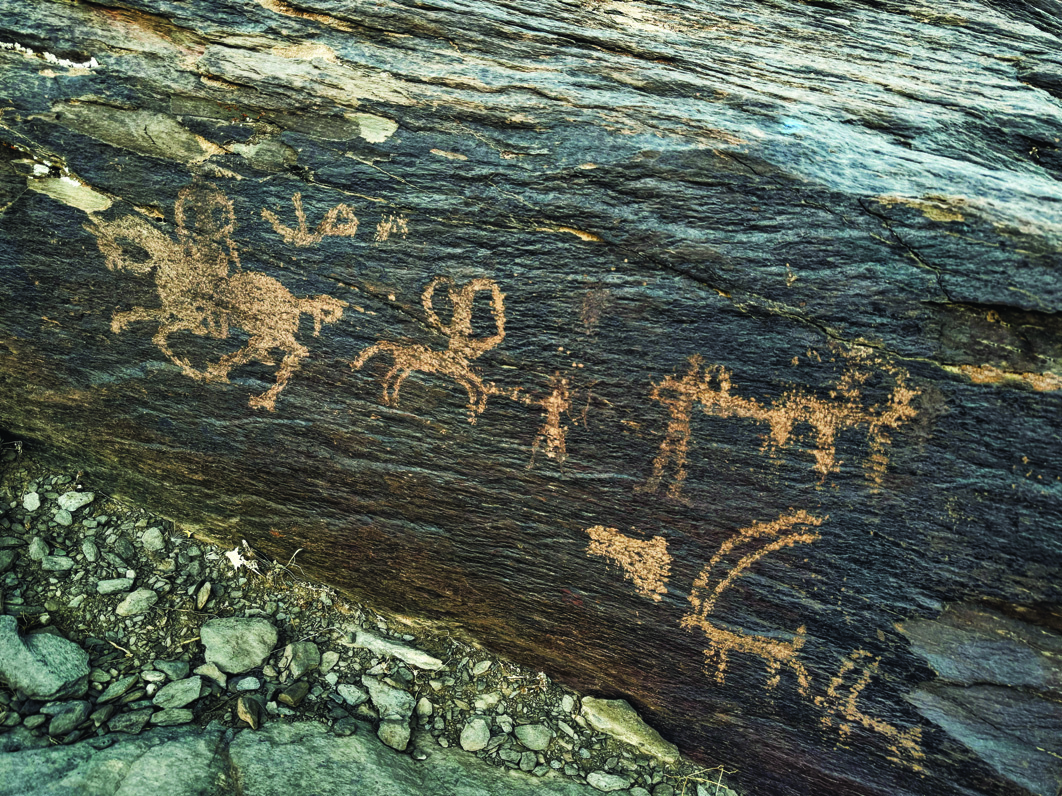
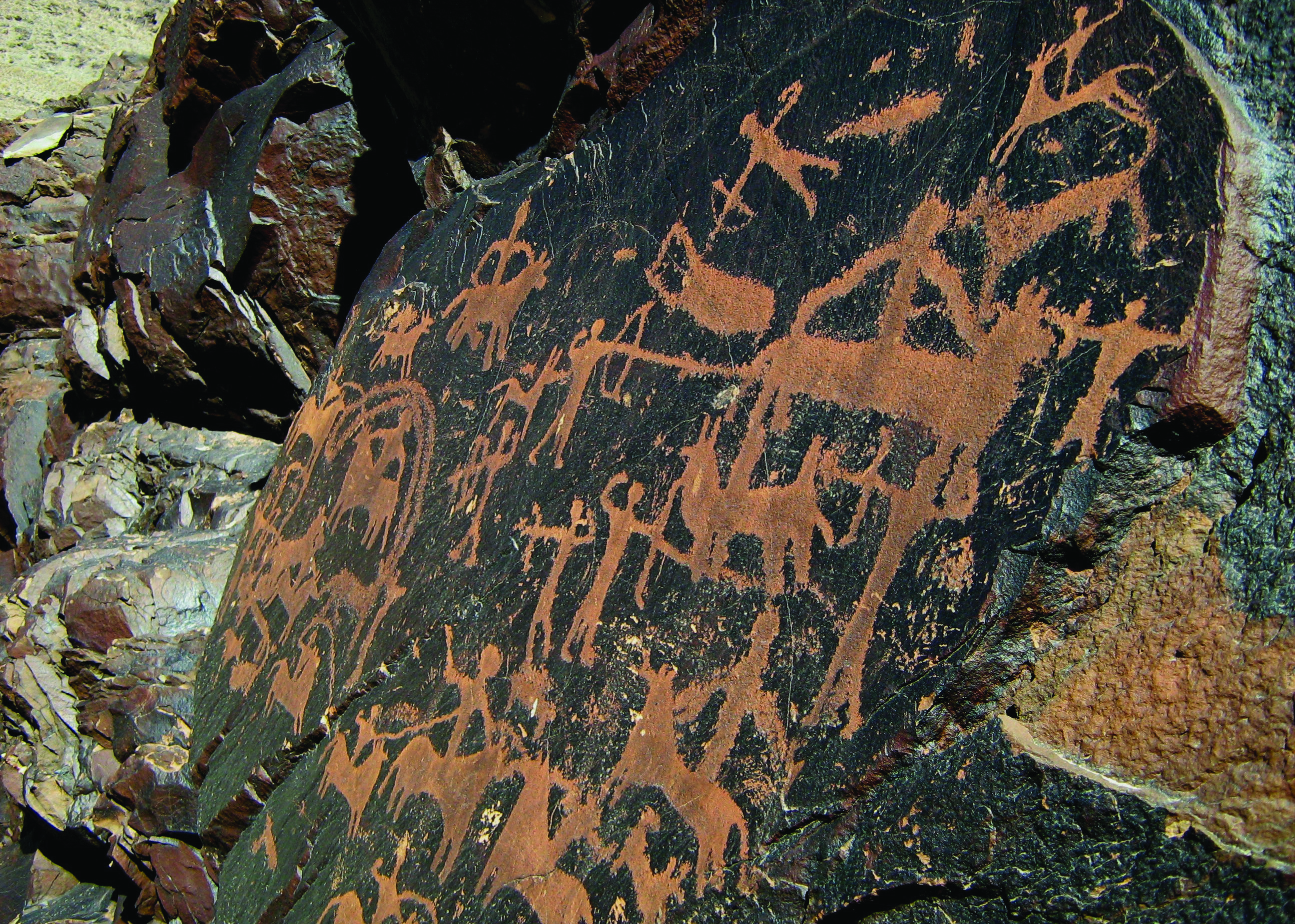
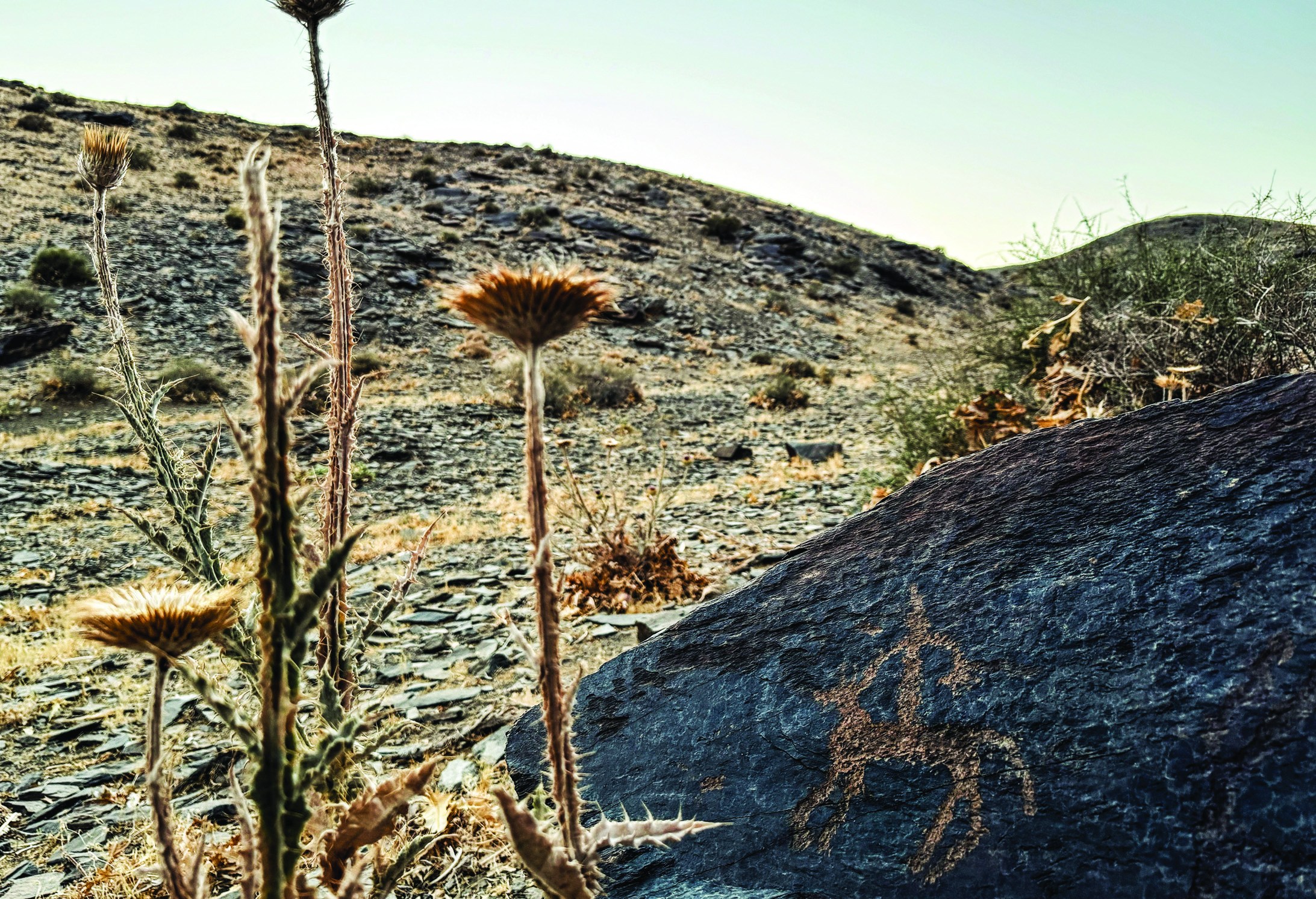
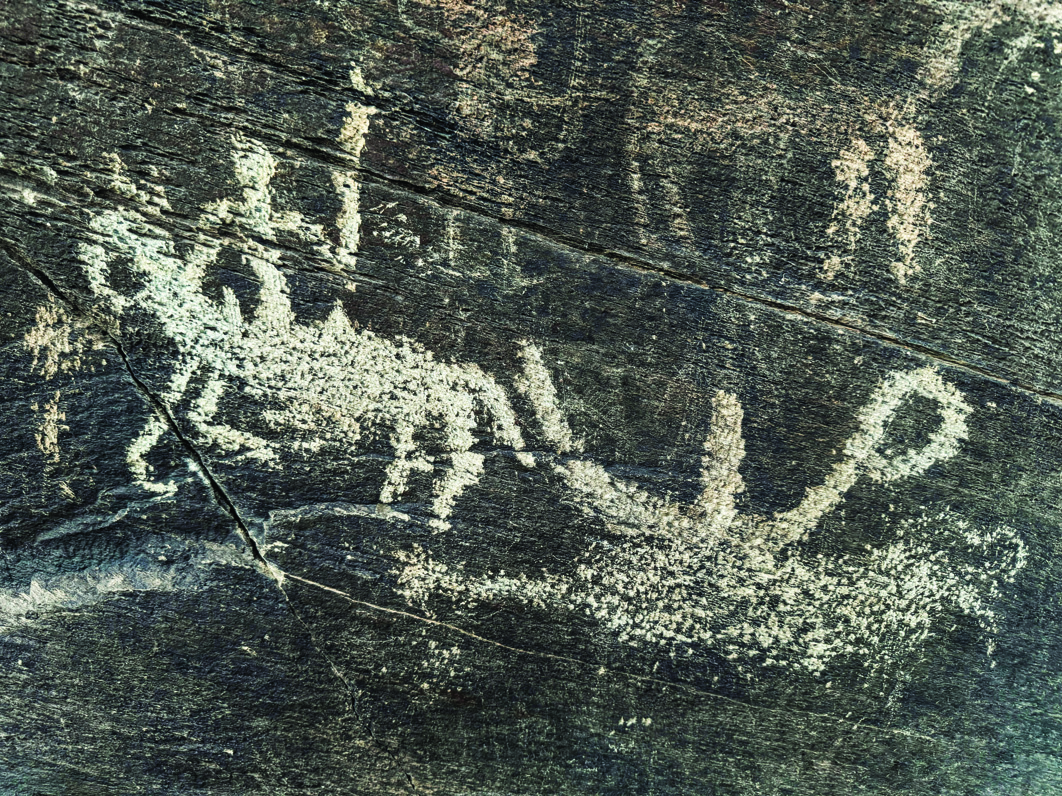
The presence of humans in the petroglyphs: shooting arrows and hunting; lassoing to capture alive those animals that could be domesticated.
Large rock panel at Teimareh showing a hunting scene with human figures wielding bows and arrows, surrounded by ibex and other animals
Teimareh -- a dramatic hunting scene showing archers pursuing ibex.
Petroglyph at Darreh Negaran showing human hunters confronting large ibex with long curved horns
Darreh Negaran, Nahook, Baluchestan -- hunting scene.
Teimareh petroglyph showing a human figure lassoing an animal to capture it alive
Teimareh -- lassoing an animal for live capture and domestication.
Close-up of a large ibex petroglyph at Darreh Negaran with prominent horns etched into dark stone
Darreh Negaran, Nahook, Baluchestan.
An ibex petroglyph on a dark boulder at Teimareh with a dried thistle plant in the foreground
Teimareh -- ibex among the wild flora.
◆ ◆ ◆

Horseback Riding and Communal Dance

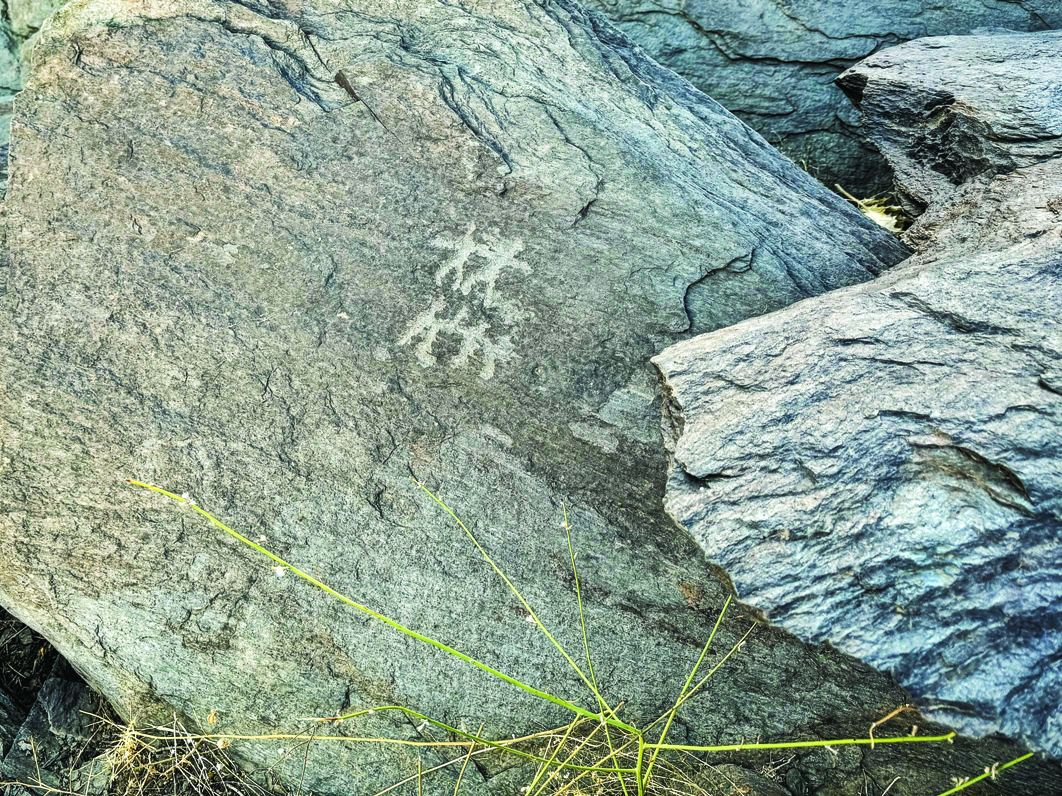
Humans riding horses, which they had managed to domesticate, and communal ritual dance in daily life for the purpose of coordinating hunting and collective living.
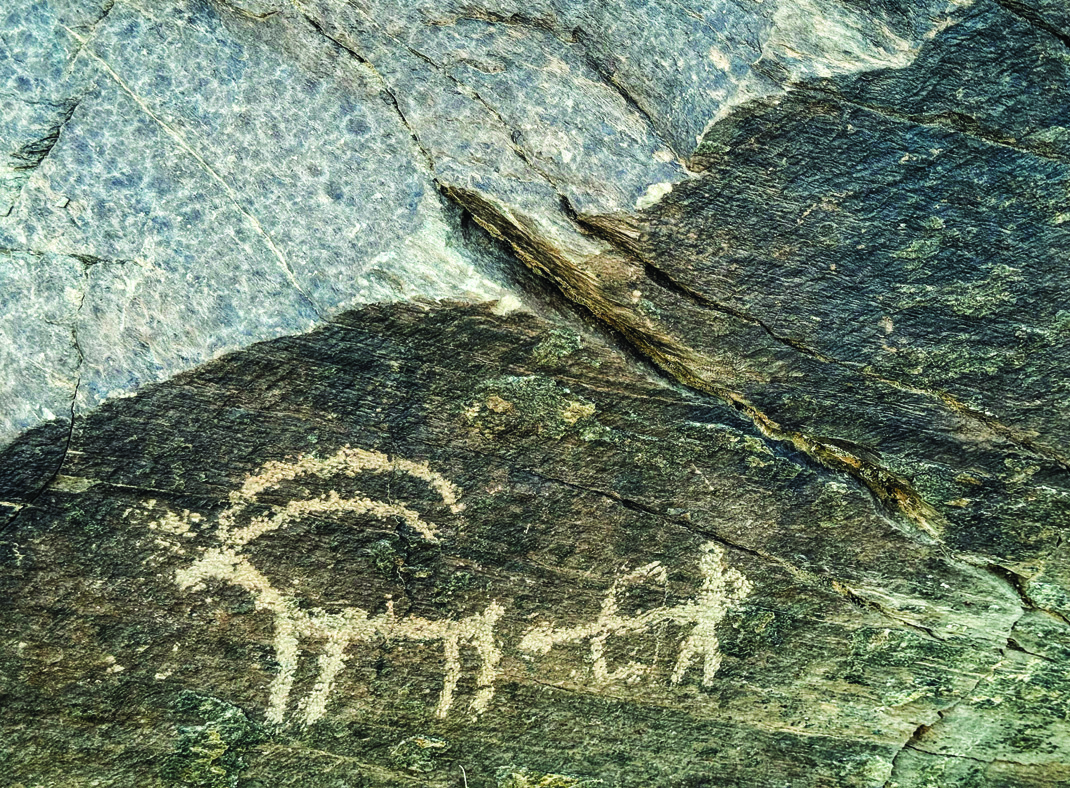
Teimareh petroglyph showing a large ibex with a smaller ibex kid beside it on blue-grey rock
Teimareh -- an ibex with its kid.
Teimareh petroglyph showing two small human figures in a dancing or ritual pose on grey rock
Teimareh -- human figures in a ritual dance pose.
Petroglyph at Darreh Negaran showing a detailed scene with a horseback rider and other animals on dark rock
Darreh Negaran, Nahook, Baluchestan -- horseback riding.
A standing human figure petroglyph at Darreh Negaran with ochre colouring on dark rock
Darreh Negaran, Nahook, Baluchestan -- a standing human figure.
Teimareh petroglyph showing a horseback rider with animals in a hunting scene on grey-green rock
Teimareh -- horseback rider in a hunting scene.
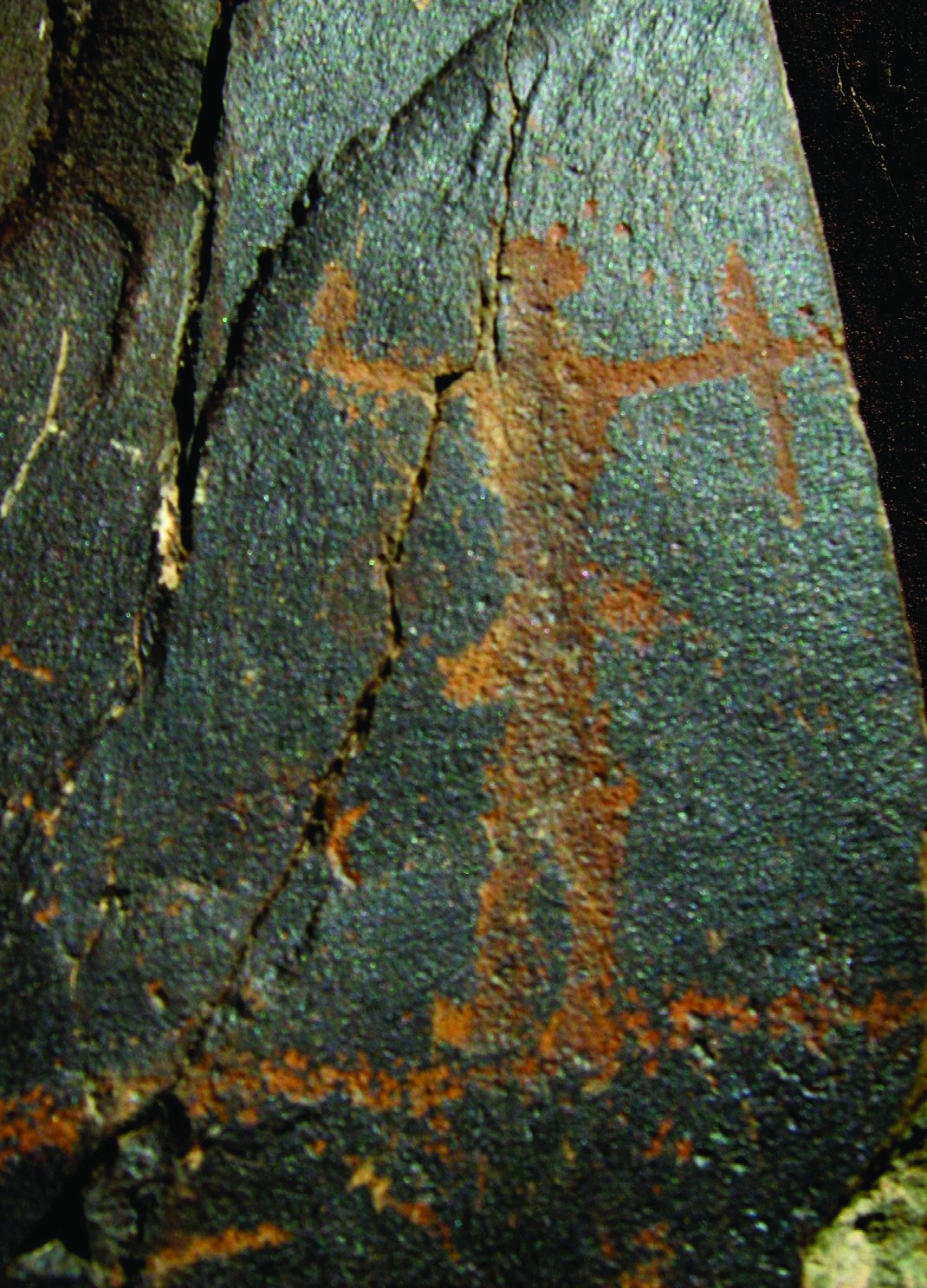
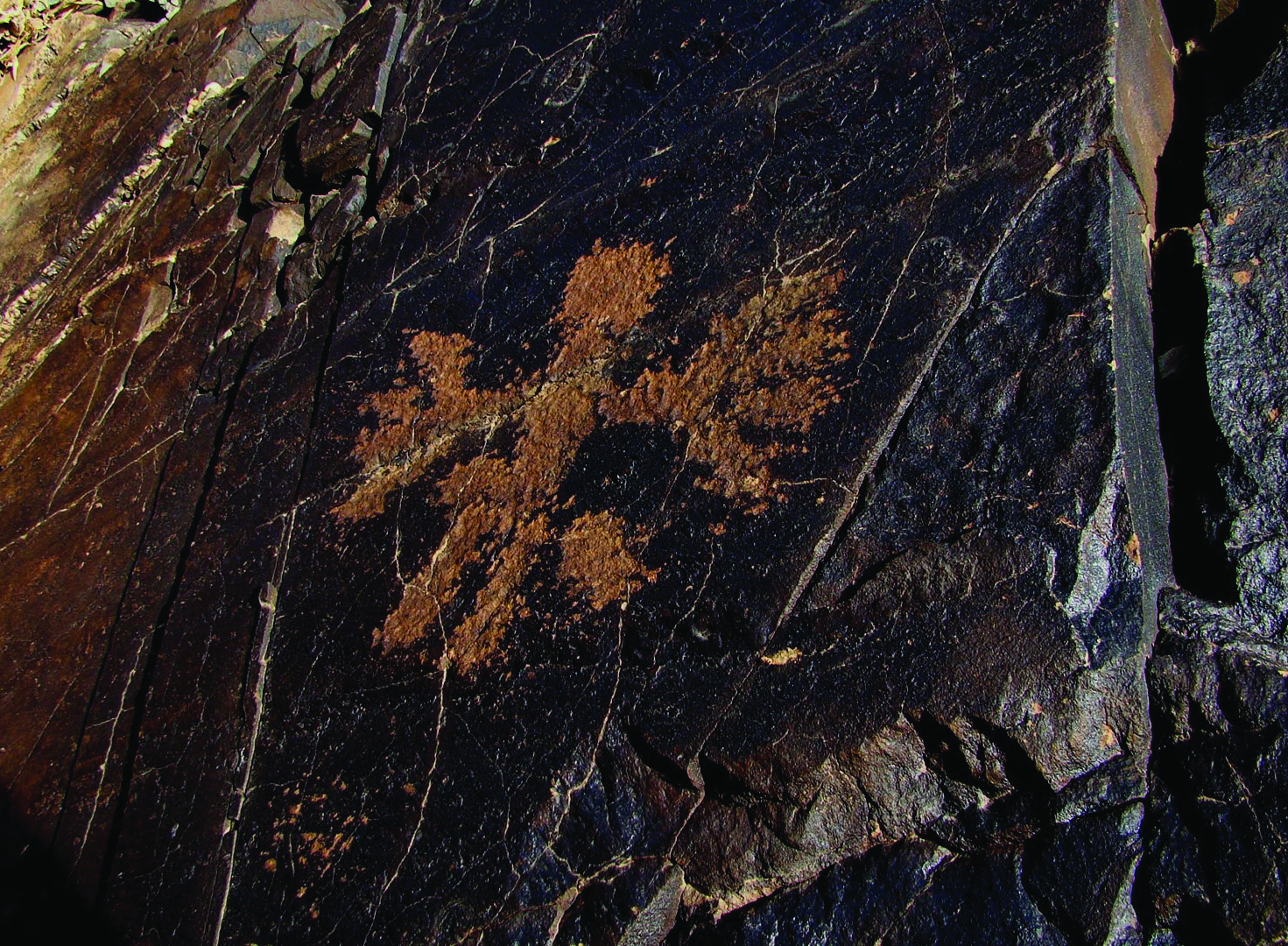
Petroglyph at Darreh Negaran showing a human figure with arms spread in a star pattern on dark rock
Darreh Negaran, Nahook, Baluchestan -- a human figure with outstretched arms.
◆ ◆ ◆

The Growth of Abstract Thought

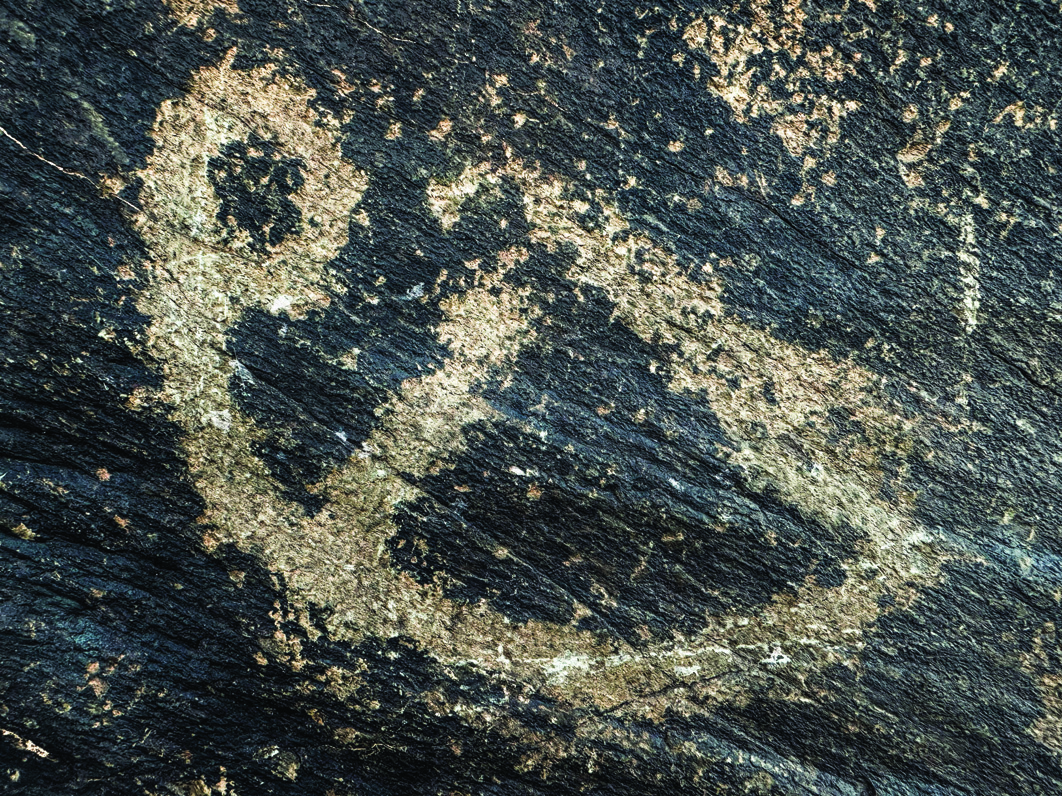
The growth of abstract thought has manifested in the form of symbols in rock art. The topmost image is the Mithraic cross (chelipa), which for thousands of years was the most important symbolic image of Mithraic ritual.
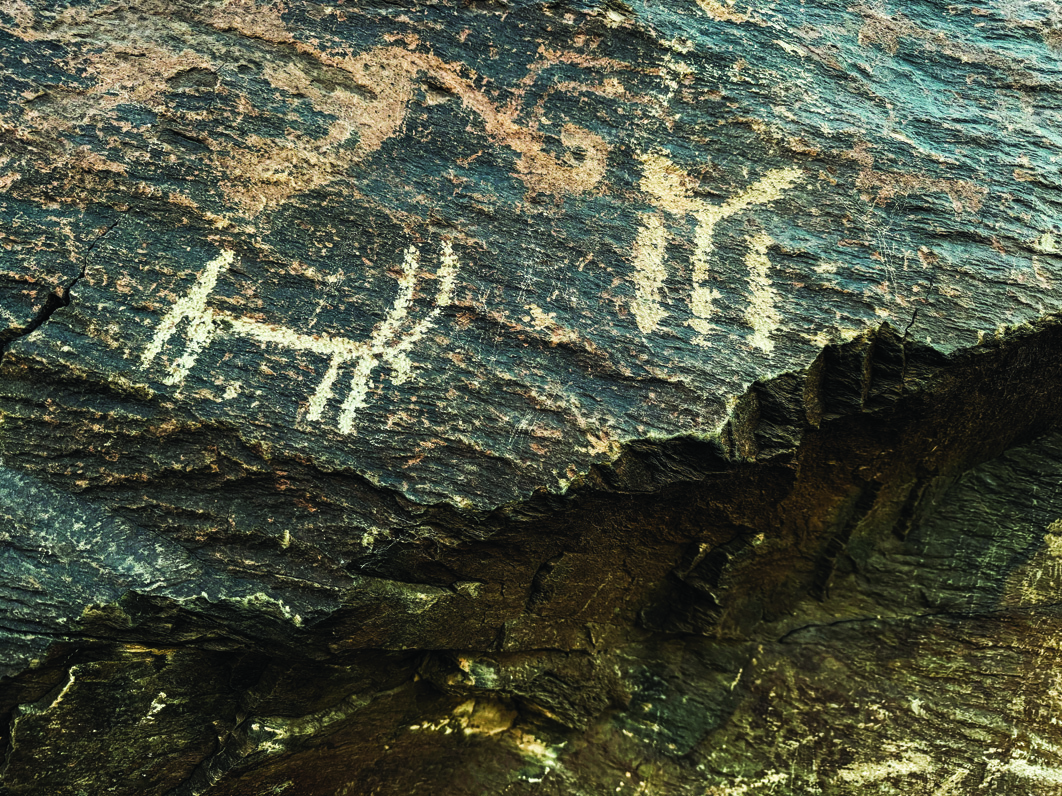
Teimareh petroglyph panel showing abstract ibex forms alongside geometric symbols on dark green rock
Teimareh -- abstract ibex forms and symbolic motifs.
A large, deeply carved naturalistic ibex petroglyph at Teimareh with well-defined body and curved horns
Teimareh -- a large ibex carved with naturalistic detail.
Teimareh rock panel showing a mix of animal figures and circular symbols etched into dark stone
Teimareh -- a panel combining animal figures with abstract circular symbols.
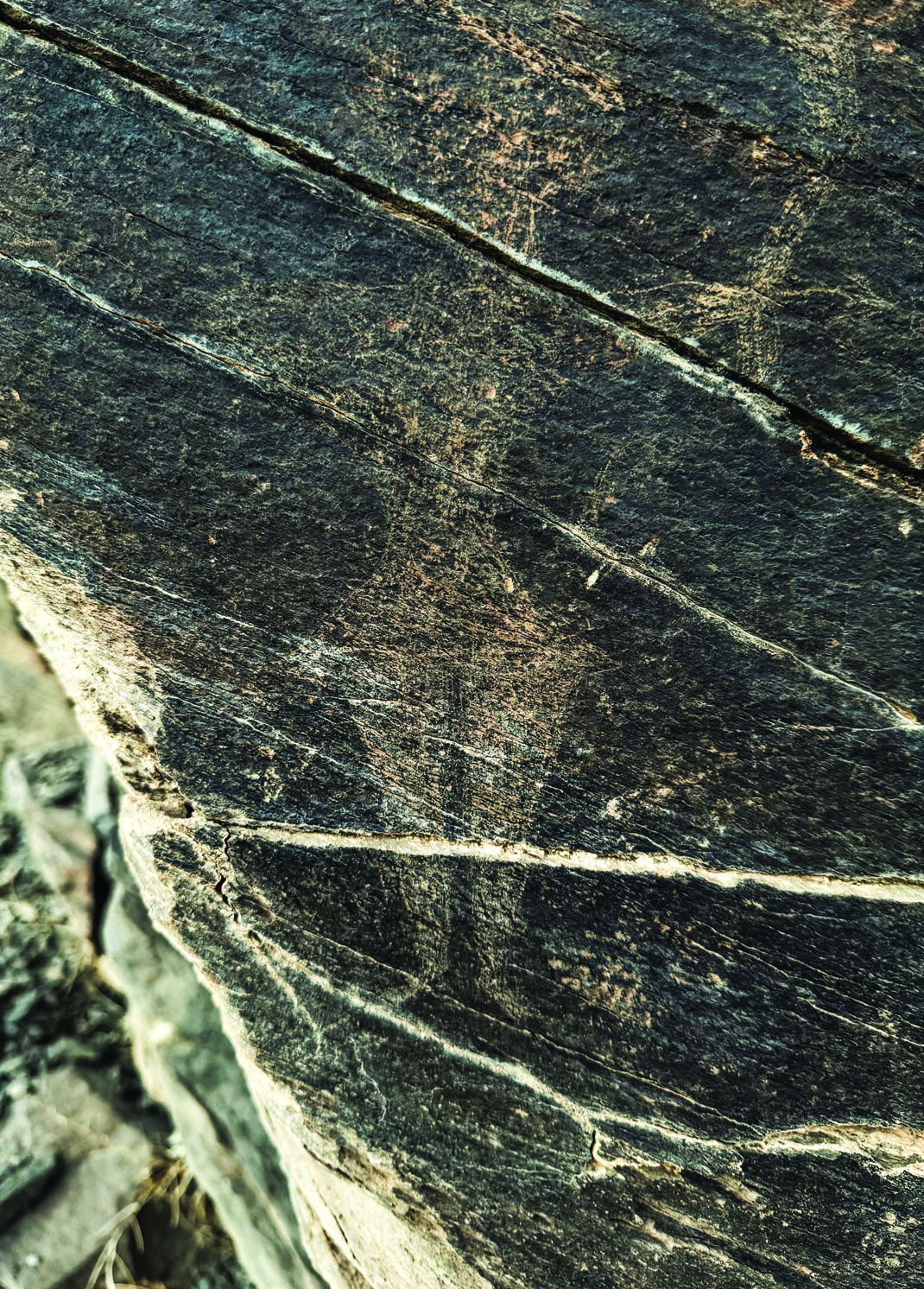
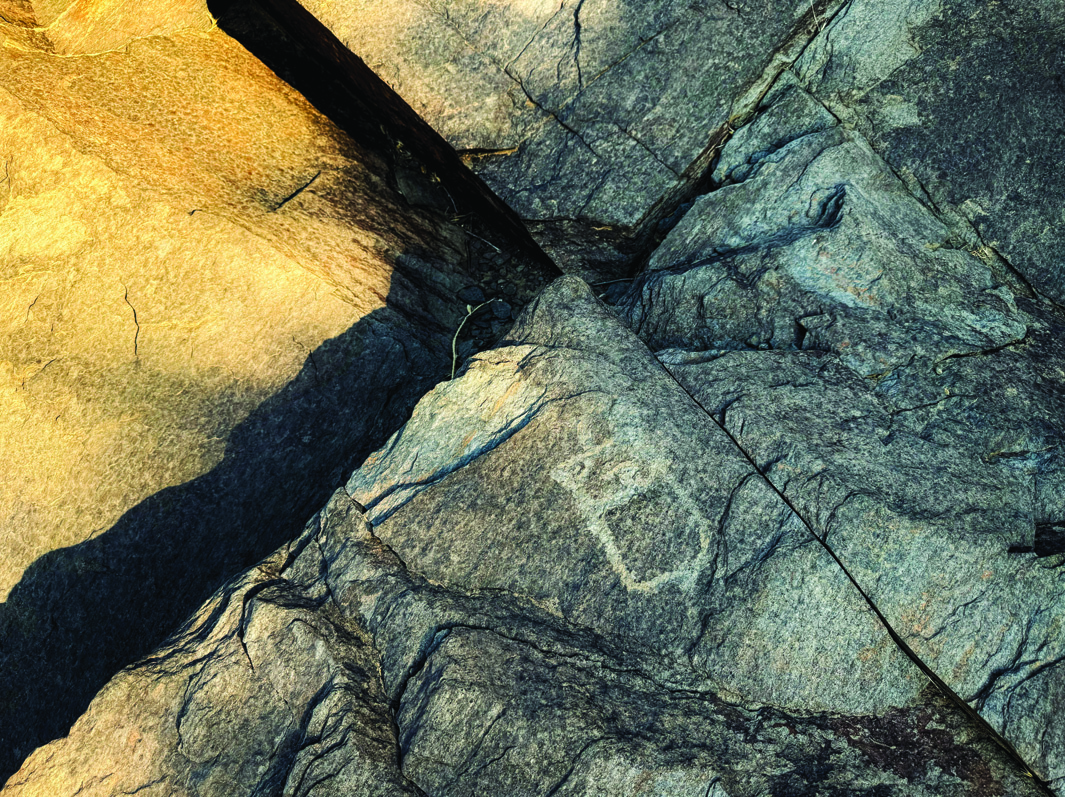
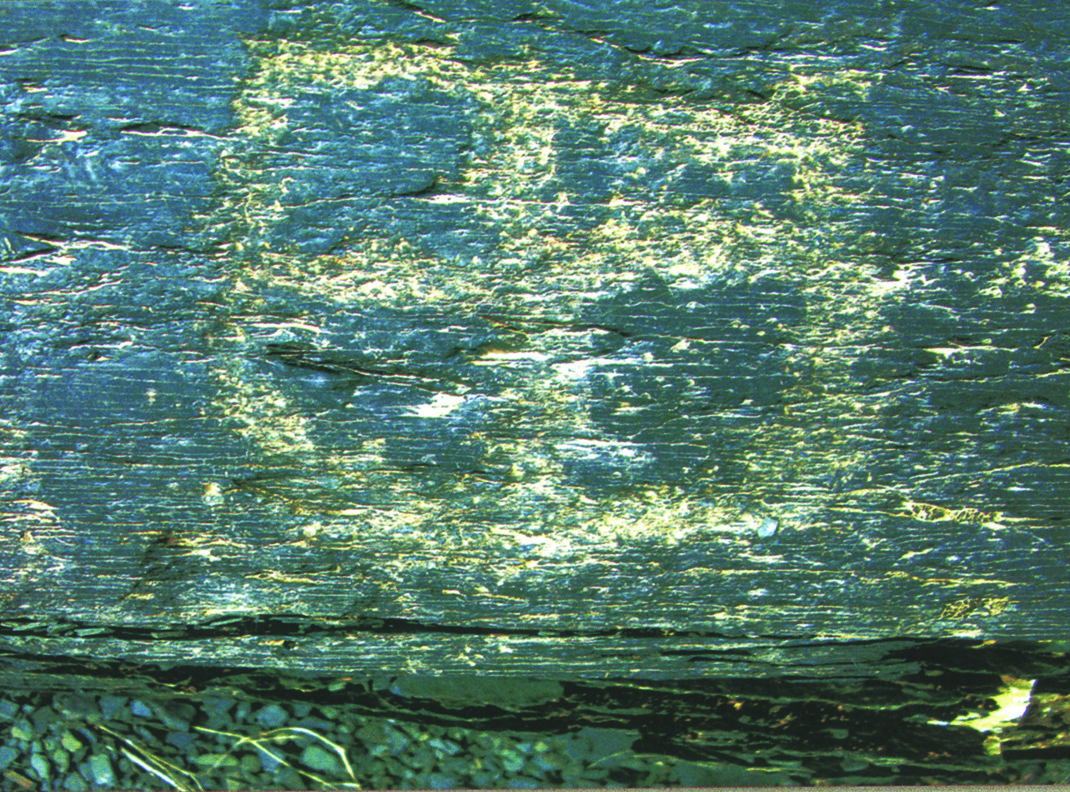
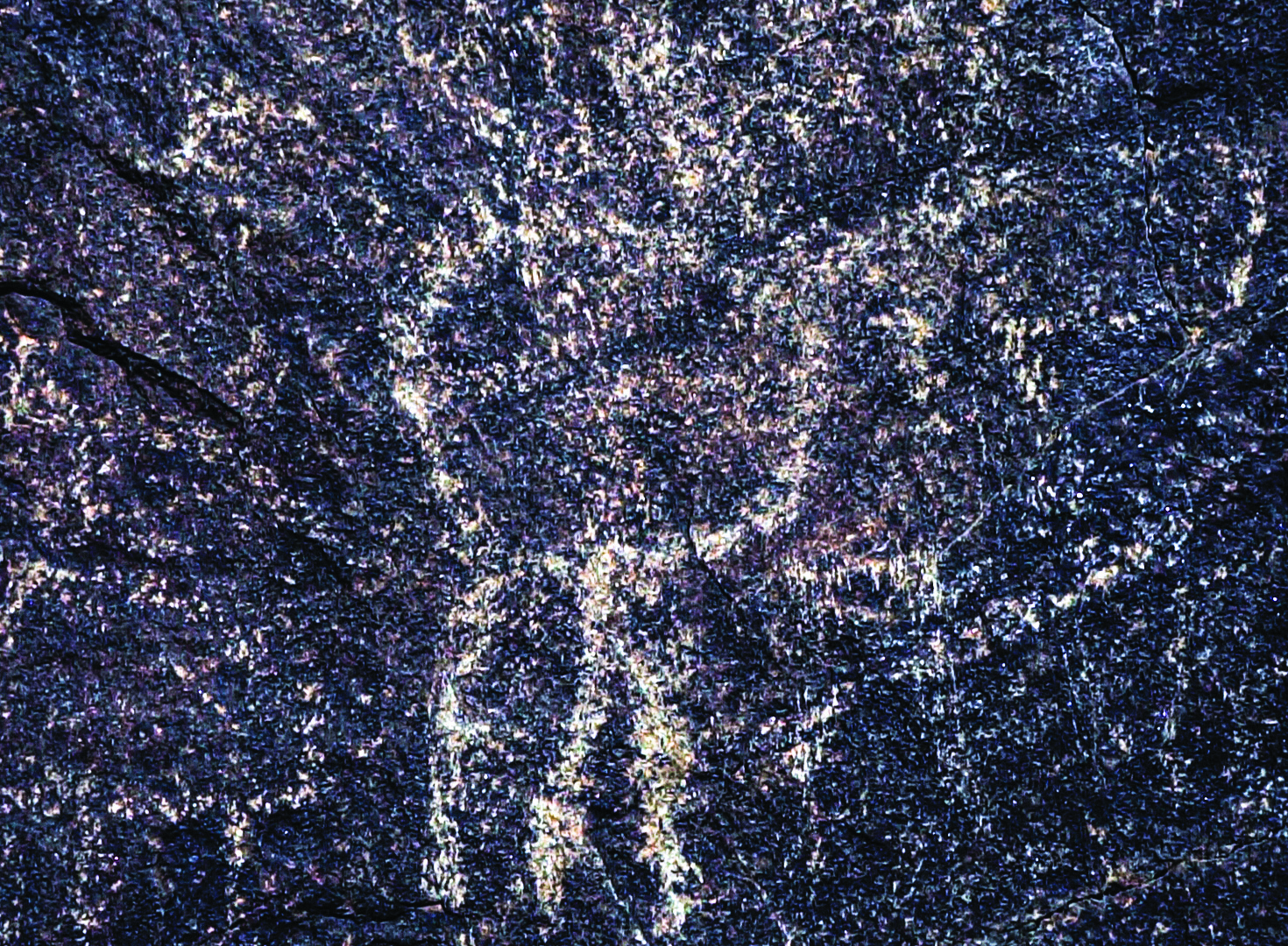
Close-up of the rock surface texture at Teimareh showing the interplay of light and shadow on the engraved surface
Teimareh -- rock surface showing engravings in shadow and light.
Ancient carved rock shelter with graffiti and cup marks at the Anahita Temple site in Kangavar, Hamedan
Anahita Temple, Kangavar -- photo by Hossein Ronaghi.
◆ ◆ ◆

The Birth of Geometry

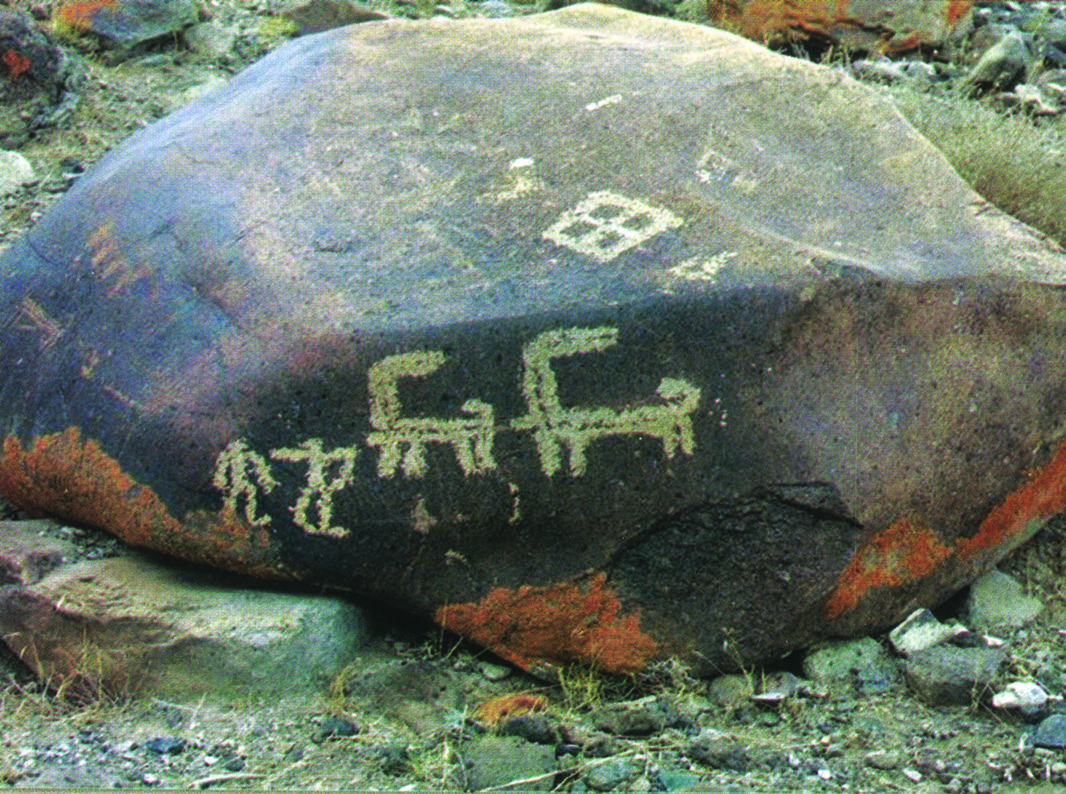
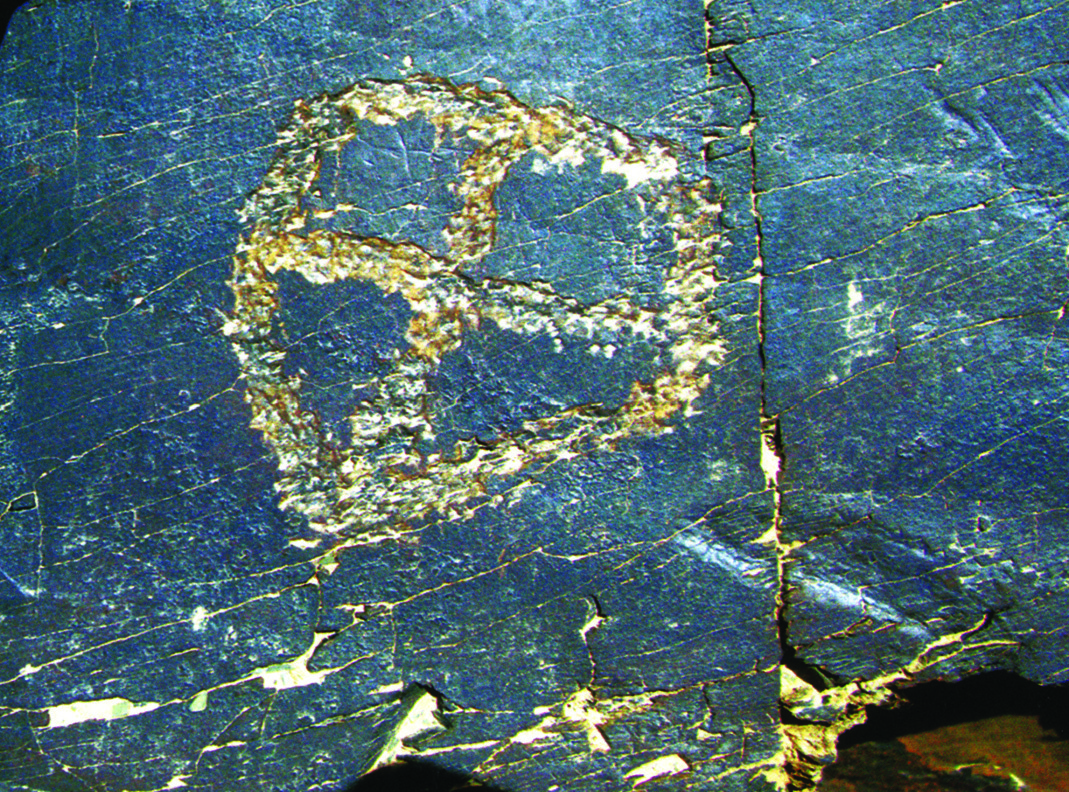
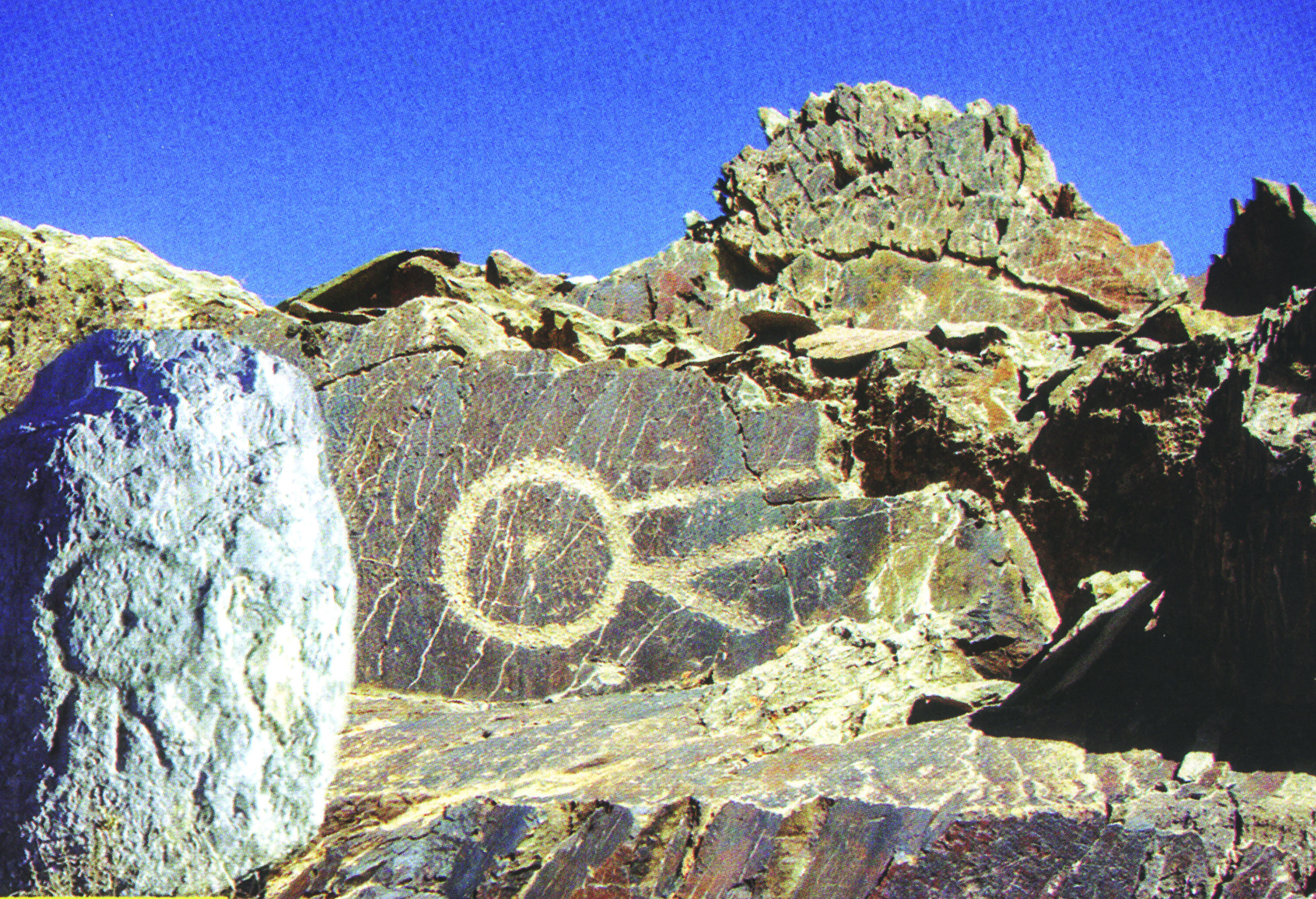
The birth of geometry: the point, the straight line, the circle, the square, and the composition of squares with addition or multiplication signs.

A boulder at Meshginshahr bearing carved ibex figures alongside geometric symbols and possible proto-writing
Qaleh Qahqaheh, Meshginshahr -- geometric symbols alongside ibex figures.
A deeply carved Mithraic cross (chelipa) symbol on blue-toned rock at Teimareh
Teimareh -- the Mithraic cross (chelipa), the most important symbolic image of Mithraic ritual.
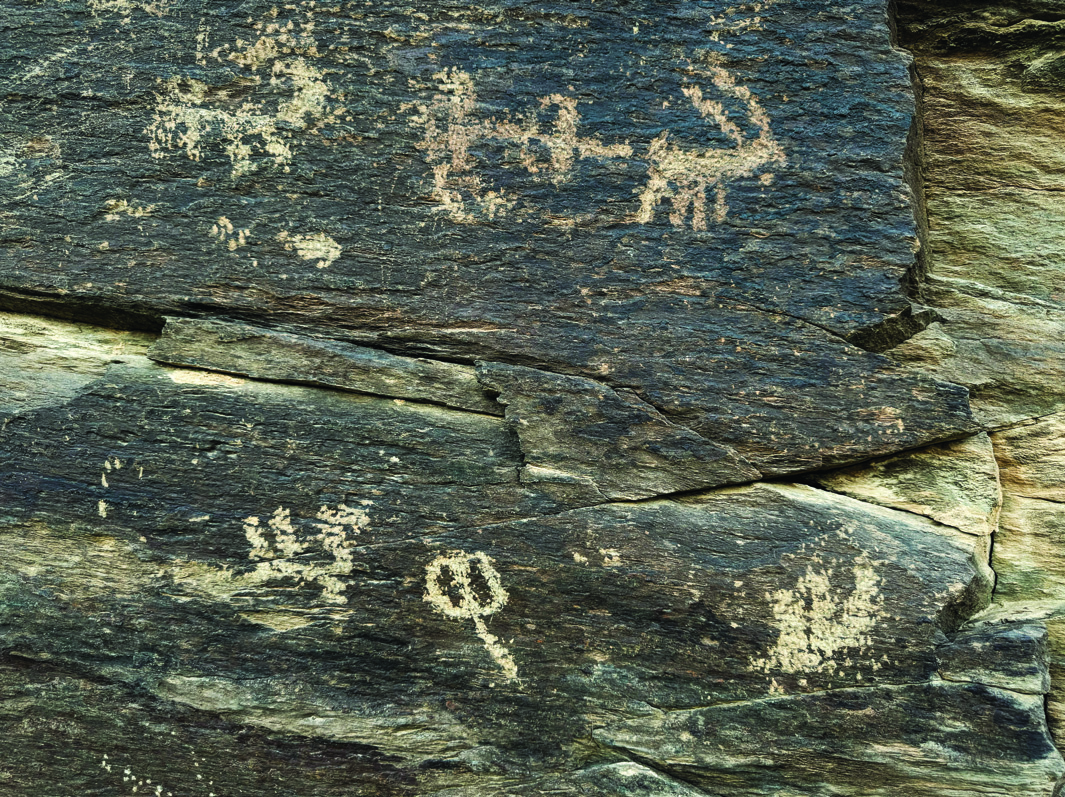
A carved circle with internal divisions on a rock face at Teimareh, showing the emergence of geometric thought
Teimareh -- circle with internal divisions, the emergence of geometric thinking.
A square grid pattern carved into rock at Teimareh, resembling early mathematical or architectural notation
Teimareh -- square grid composition, suggesting early mathematical notation.
Large stylised ibex petroglyph at Teimareh with prominent curved horns on a dark rock face
Teimareh -- a stylised ibex showing the transition from naturalism toward abstraction.
◆ ◆ ◆

Stylisation

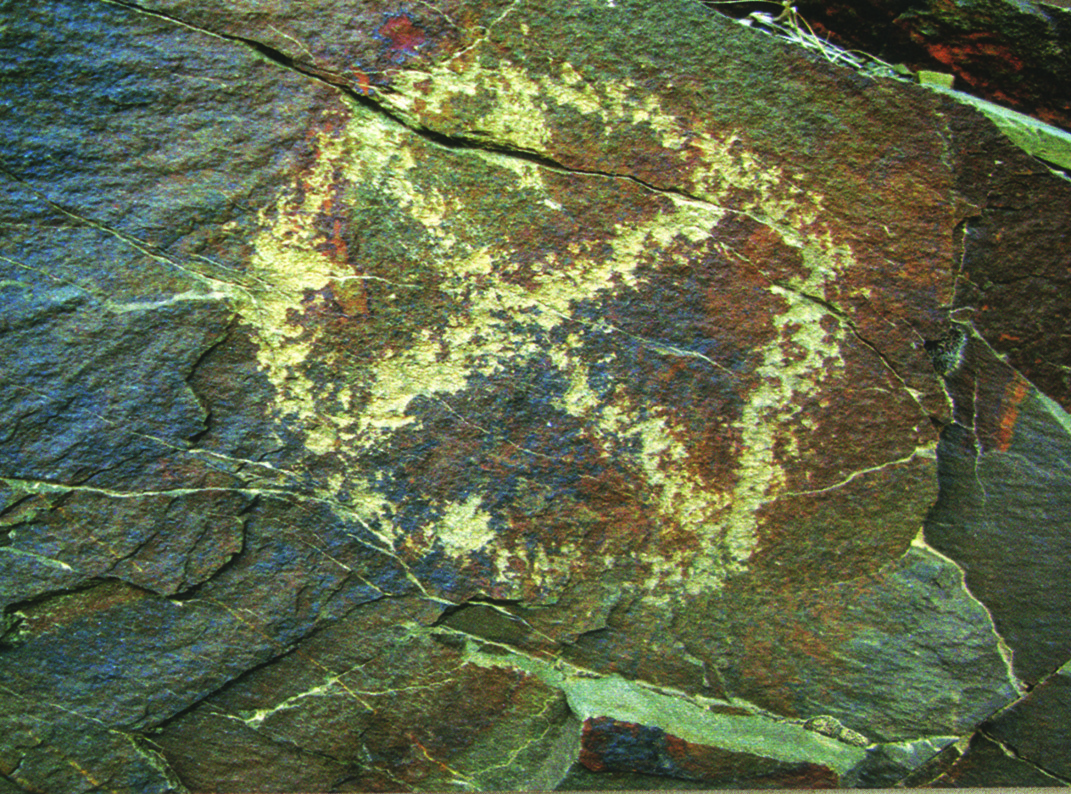
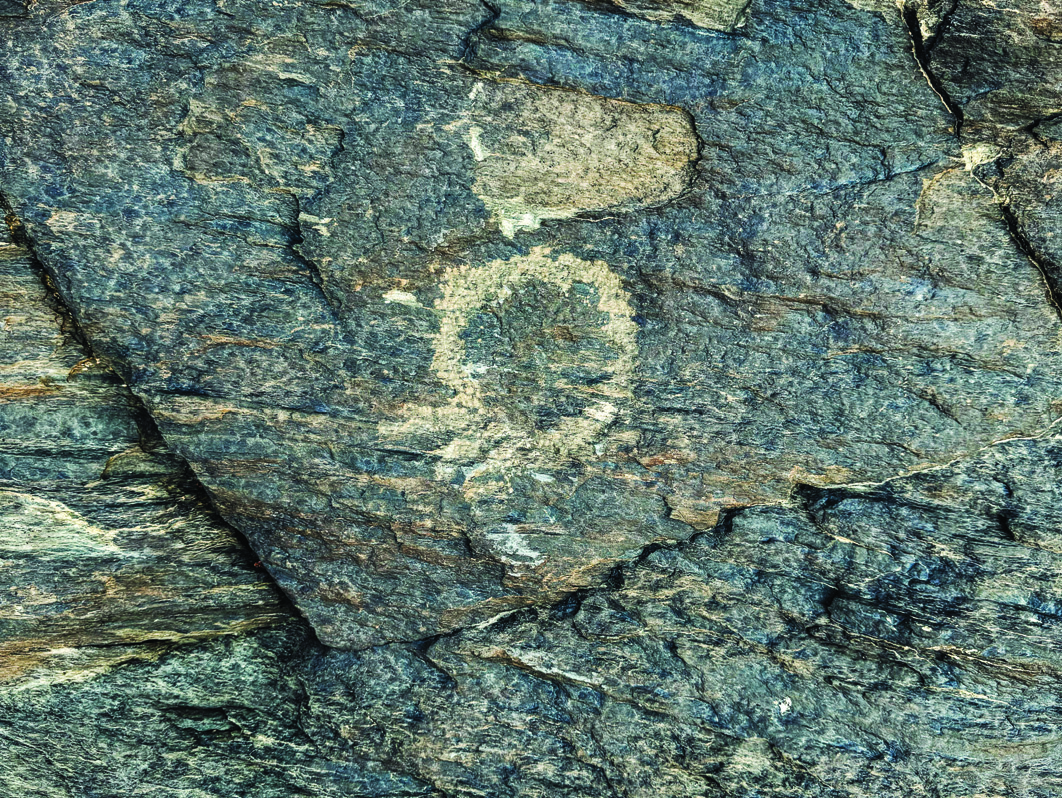
As in all of art history, after the generation of great rock artists, subsequent artists turned to simplifying and making repeatable forms -- stylisation. The ibex was reduced to its essential features: the sweeping horns, the body, the legs, distilled into a symbol that could be quickly reproduced.
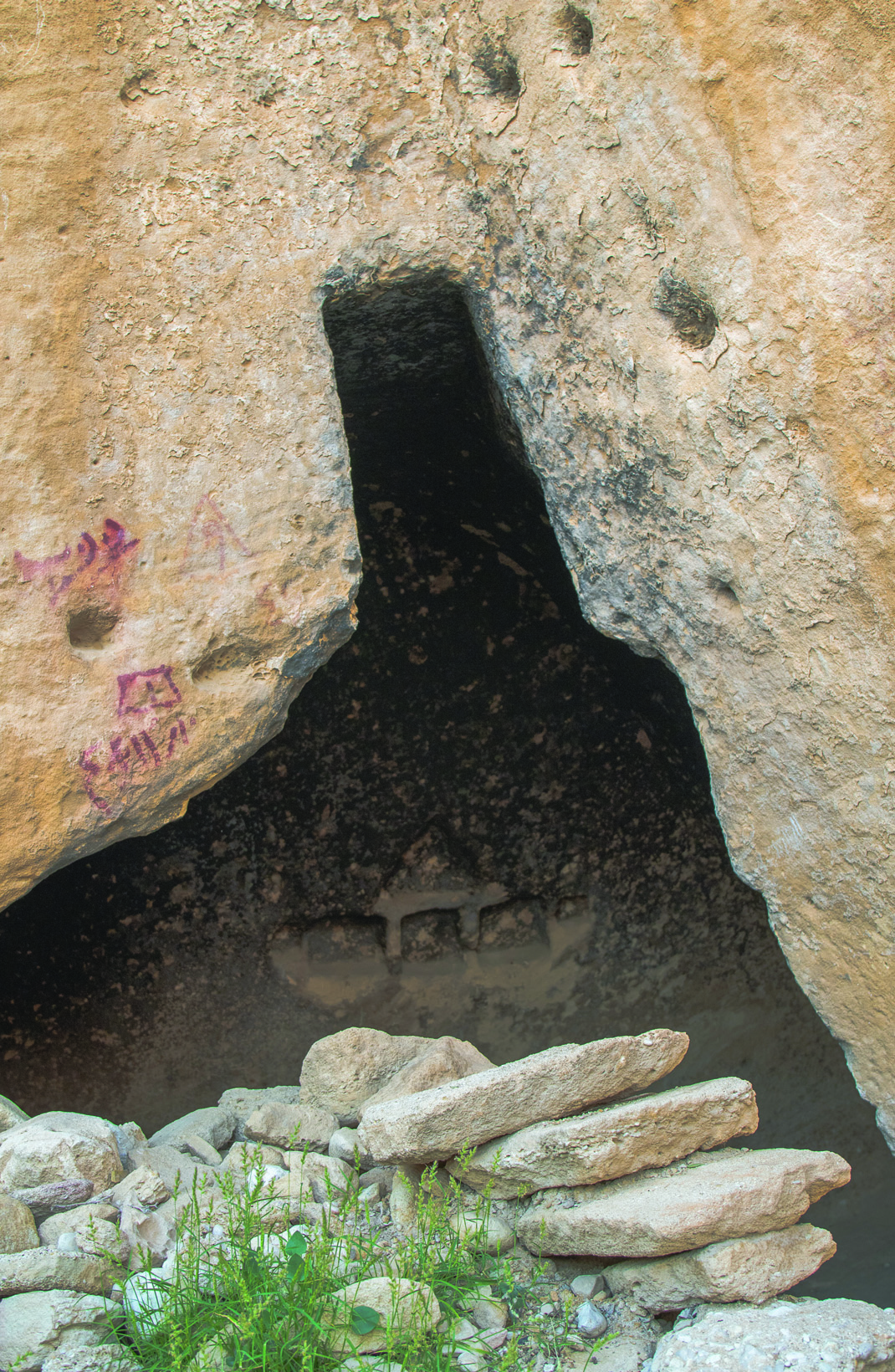
The entrance to a cave in Siraf with ancient rock carvings visible on the sandstone walls
A cave in Siraf -- photo by Hamid Akbari.
A circular sun-like symbol carved into rock at Teimareh, surrounded by weathered green-grey stone
Teimareh -- a circular symbol, possibly representing the sun.
A faded human figure petroglyph on dark rock in the Hamedan region, barely visible due to weathering
Hamedan -- a faded human figure on weathered stone.
Stylised geometric ibex petroglyphs on a large boulder at Baghbadaran, Isfahan, alongside a circular symbol
Baghbadaran, Isfahan -- stylised ibex. Source: "Petroglyphs of Iran" by Dr. Mohammad Nasseri Fard.
◆ ◆ ◆

Other Animals and the Legendary Haoma Plant

Images of animals other than the ibex, and the legendary haoma plant, which was pounded in rock cupmarks. Its juice was used as a remedy for fatigue and as a treatment for depression.
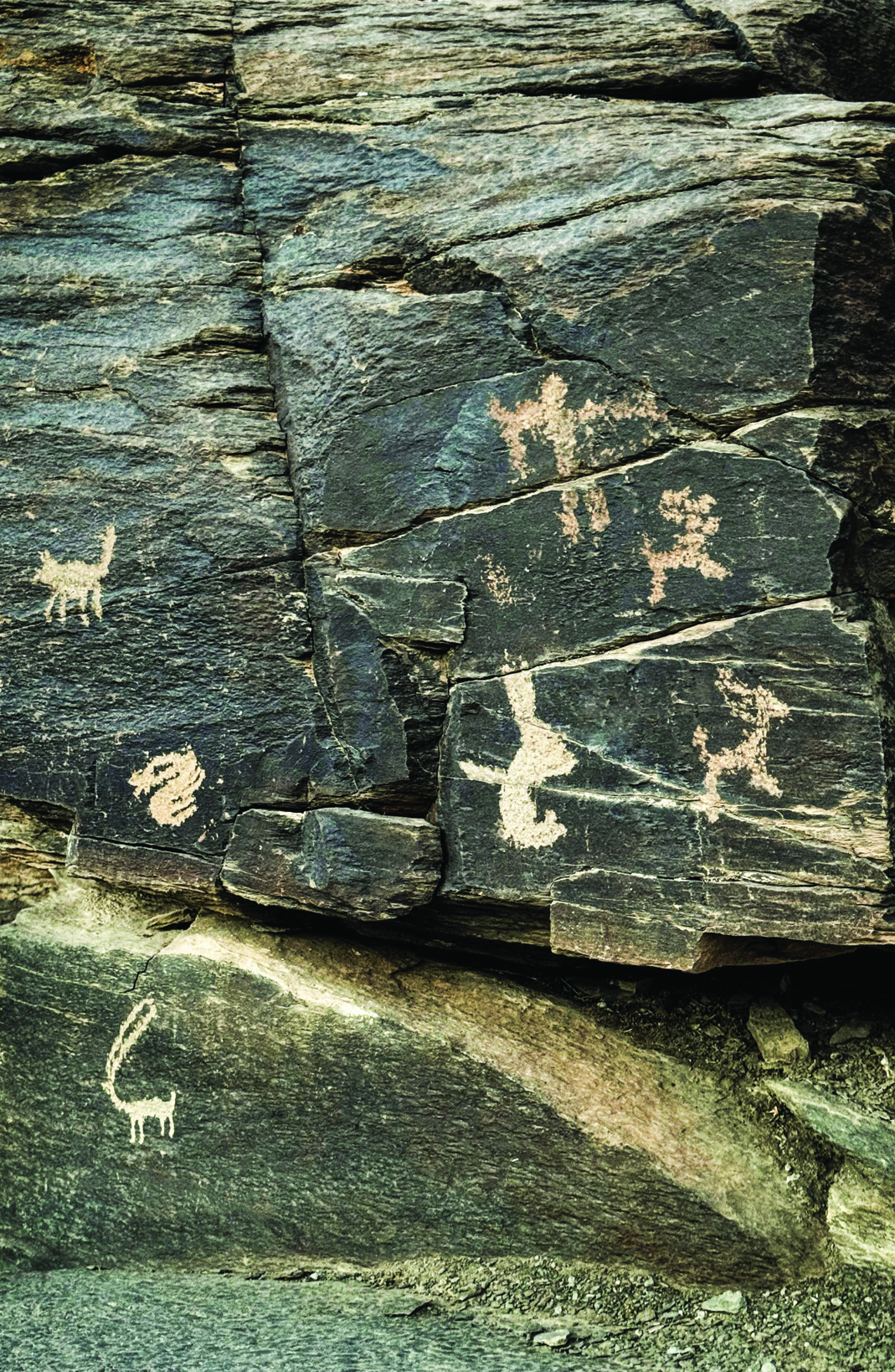
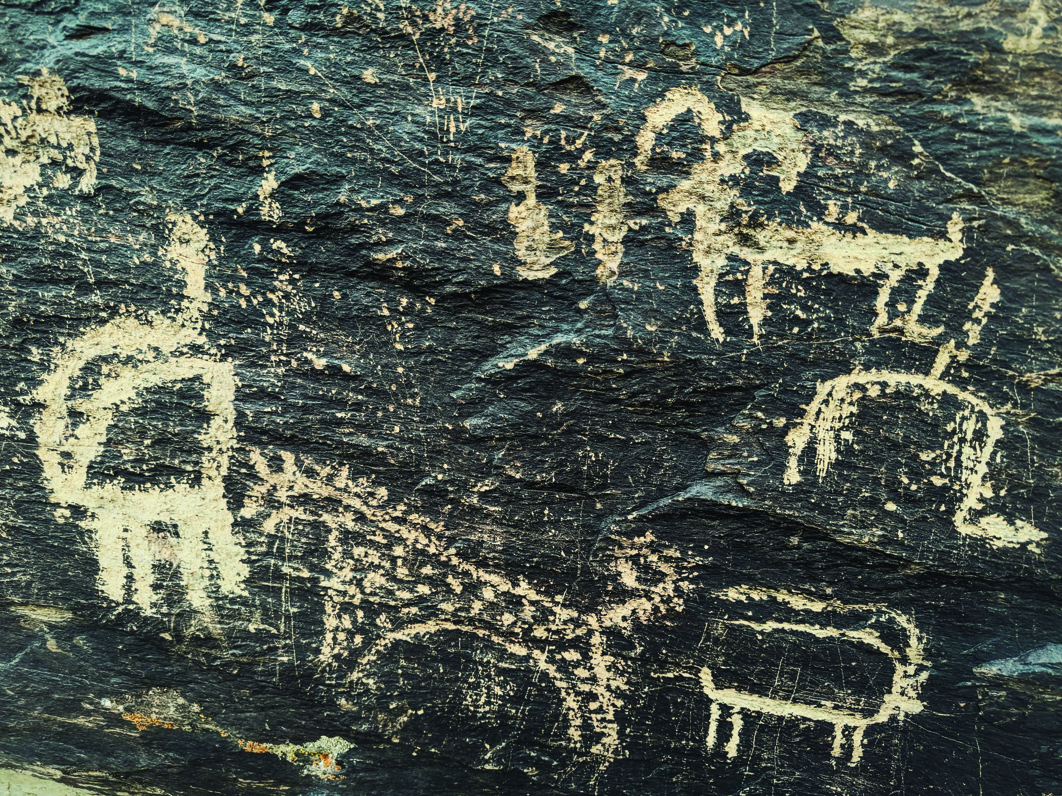
Rock panel at Teimareh showing various animals including ibex, horses, and possible cattle engraved on dark stone
Teimareh -- a panel with diverse animal figures: ibex, horses, and other creatures.
Petroglyphs at Darreh Negaran showing ibex and horse figures carved into dark slate
Darreh Negaran, Nahook, Baluchestan -- ibex and horse figures.
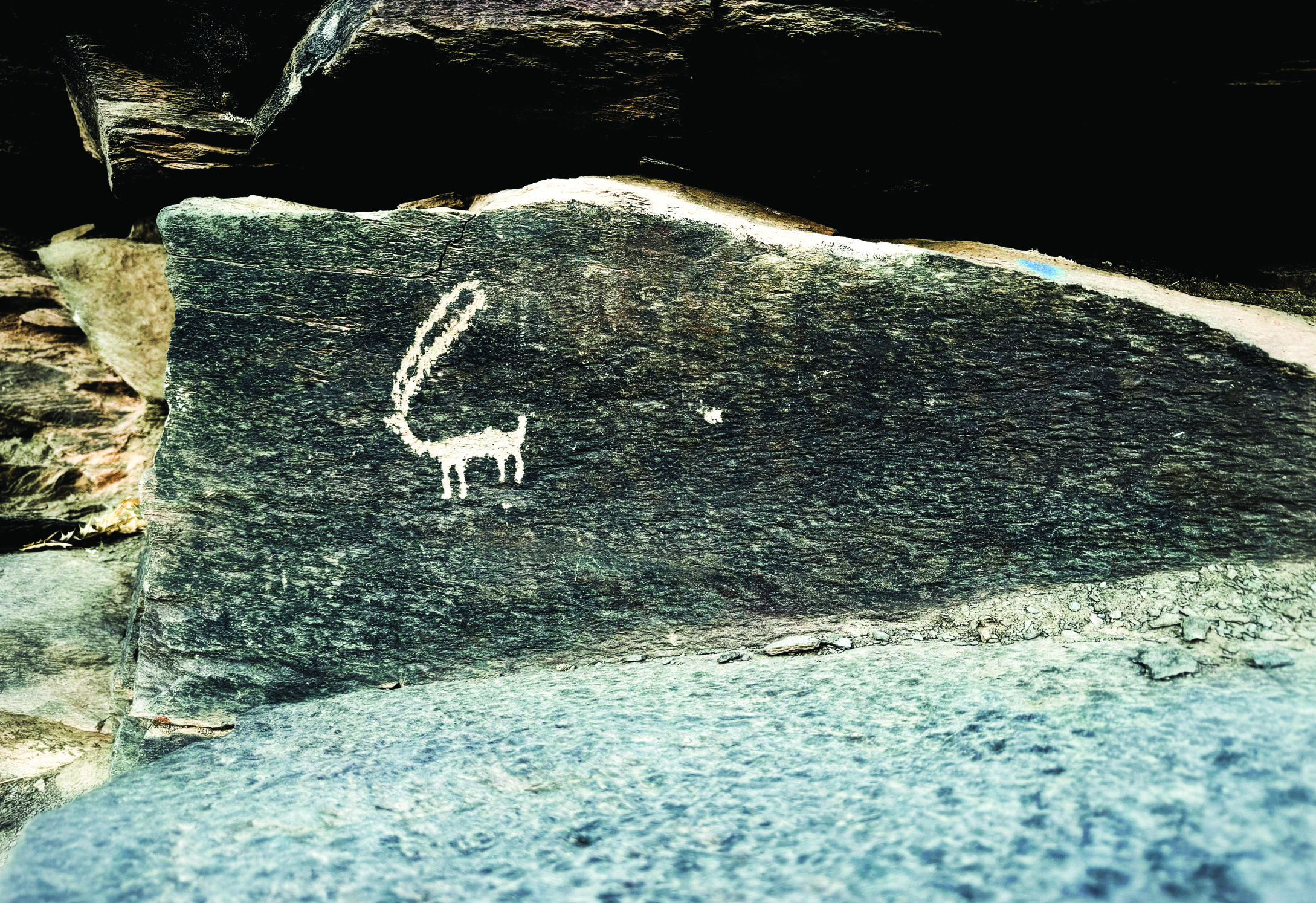
Teimareh petroglyph showing a feline figure and what appears to be a hand print or plant motif on dark rock
Teimareh -- a feline figure and a hand or plant motif.
Rock surface at Teimareh showing carved plant-like figures resembling haoma with cupmark depressions
Teimareh -- haoma plant motifs with cupmarks used for pounding the plant.
◆ ◆ ◆

Darreh Negaran: The Second Largest Site

Darreh Negaran, Nahook, Baluchestan. After Teimareh, Darreh Negaran possesses the greatest number and diversity of petroglyphs.
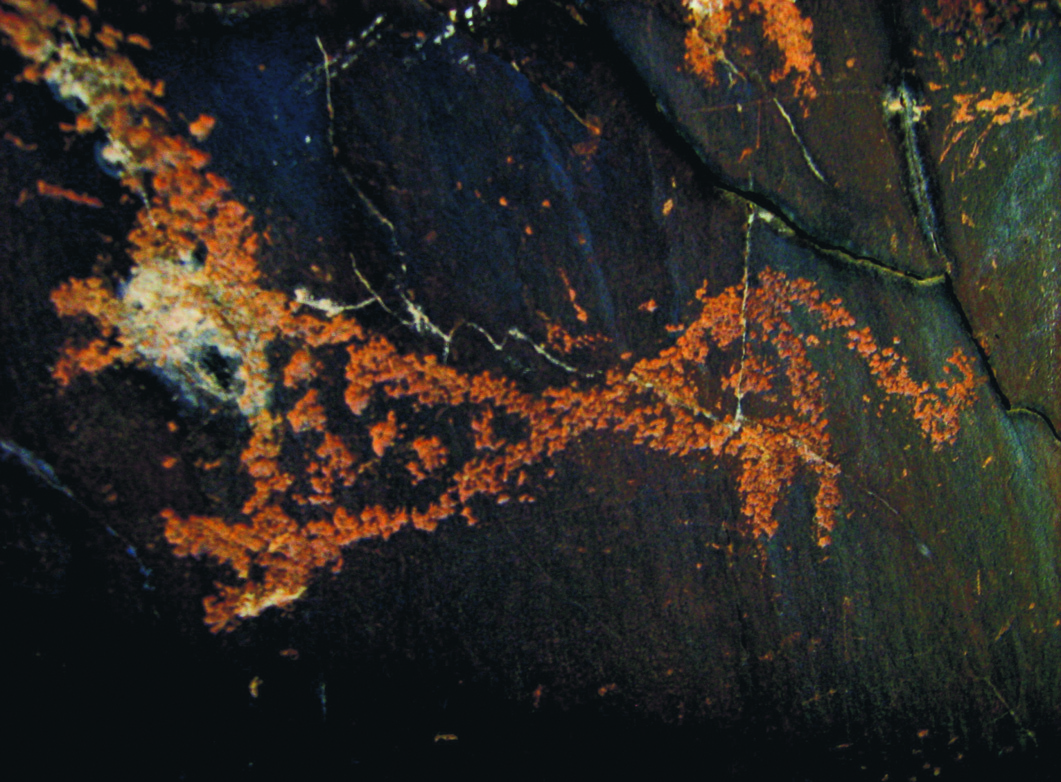
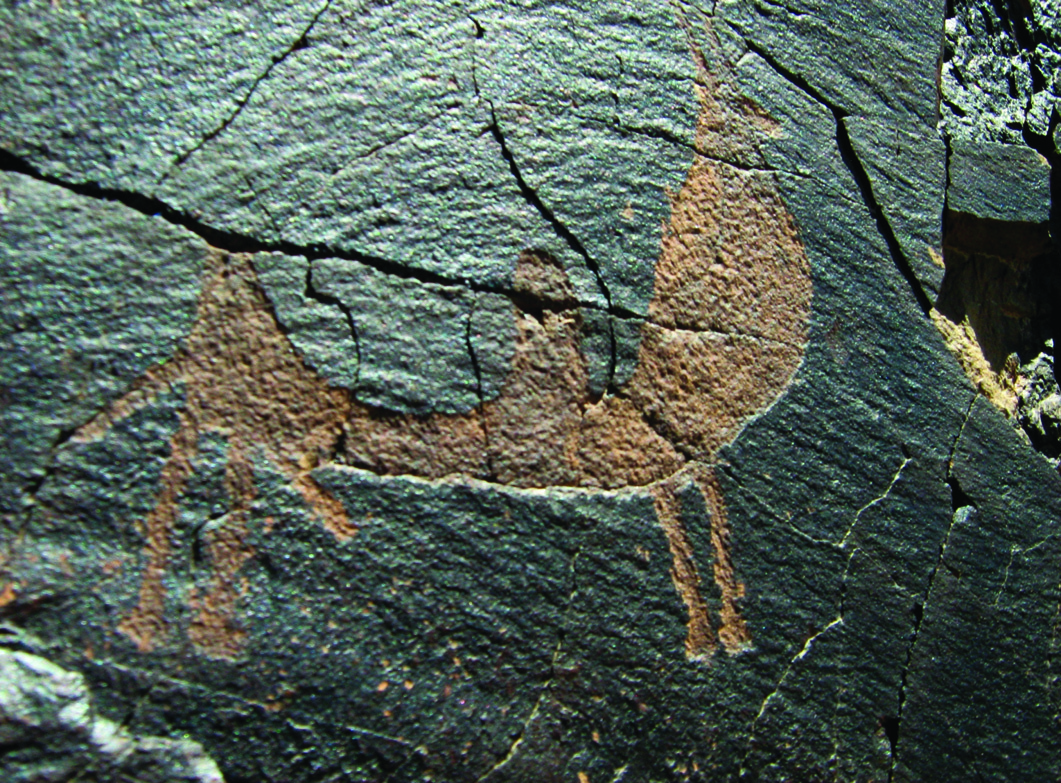
Painted ochre-red ibex and human figures on dark rock at Darreh Negaran, Baluchestan
Darreh Negaran -- painted ochre figures on dark rock.
Petroglyph at Darreh Negaran showing a large deer with its calf in ochre-red tones on dark stone
Darreh Negaran -- a deer with its calf.
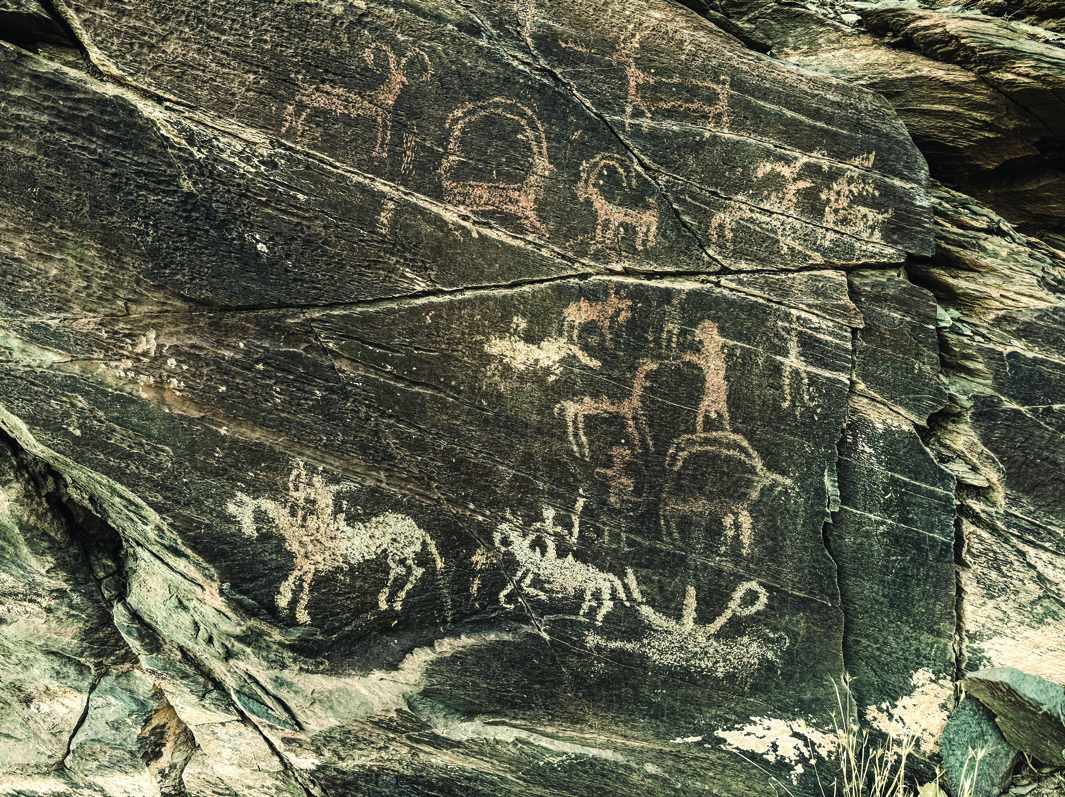
A large rock panel at Darreh Negaran covered with dozens of petroglyphs depicting hunters, horses, ibex, camels, and other figures in ochre tones
Darreh Negaran, Nahook, Baluchestan -- a large panel with an extraordinary density of figures depicting hunting, riding, and daily life. Source: Memar 117, special Baluchestan issue, article by Kolsoum Bazi.
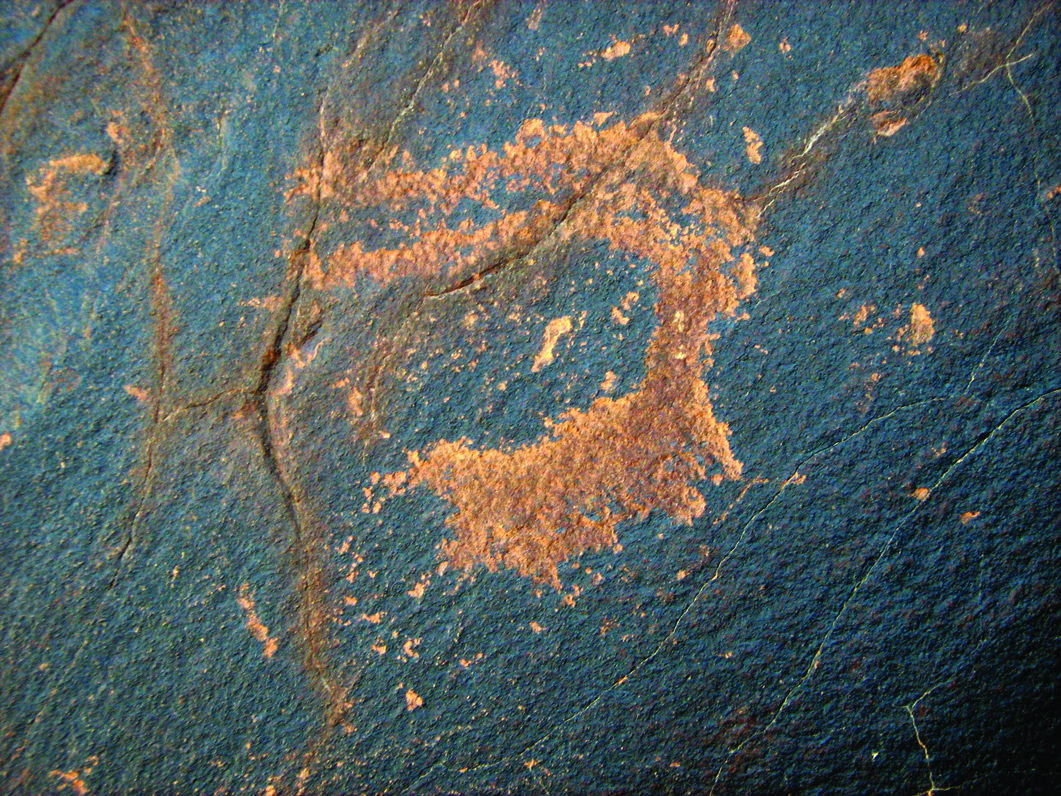
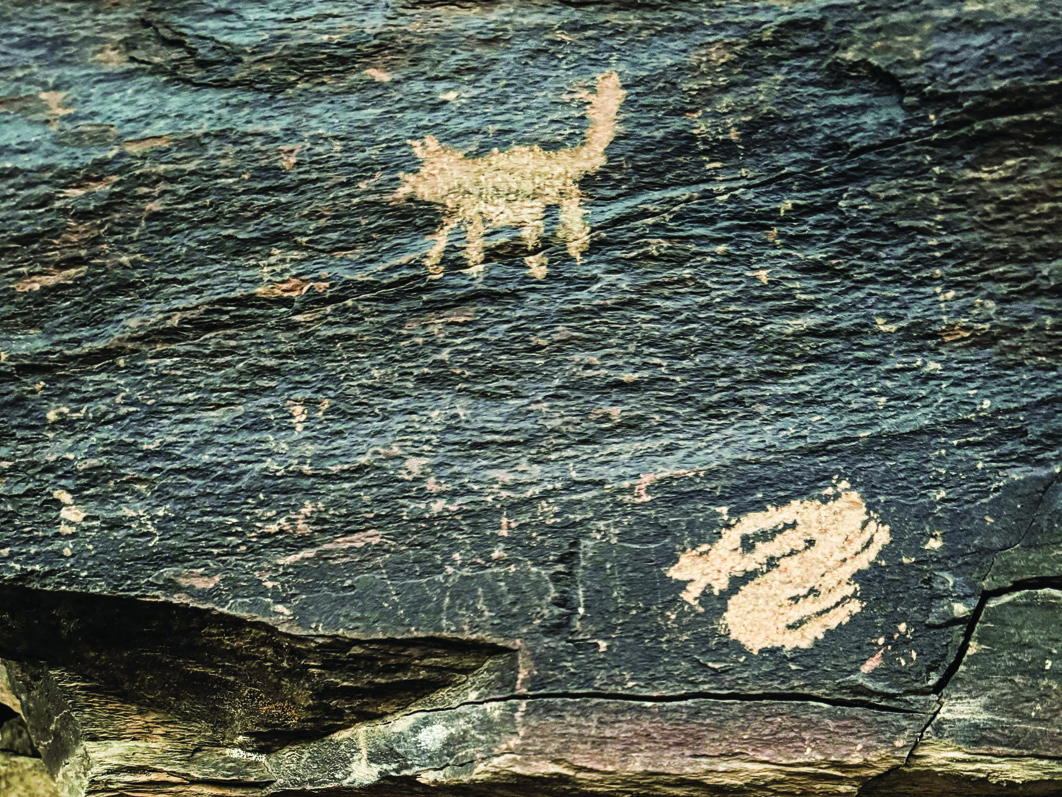
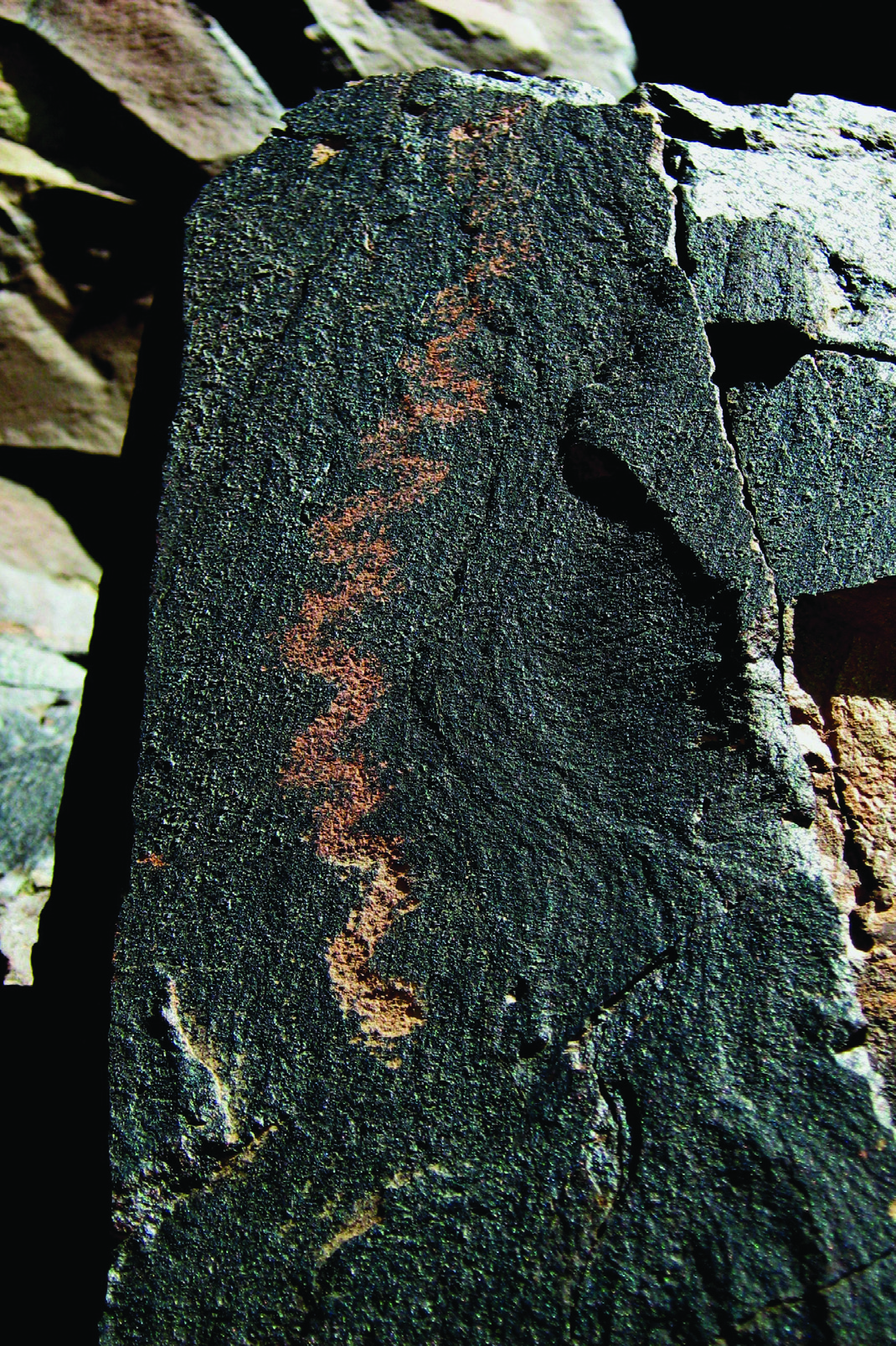
An ochre-coloured snake petroglyph on dark rock at Darreh Negaran, Baluchestan
Darreh Negaran -- a snake petroglyph.
◆ ◆ ◆

The Guardian of Teimareh

Rasoul Majidi and his daughter, who play an important role in protecting the Teimareh petroglyphs. Destruction at the petroglyph sites is very widespread.
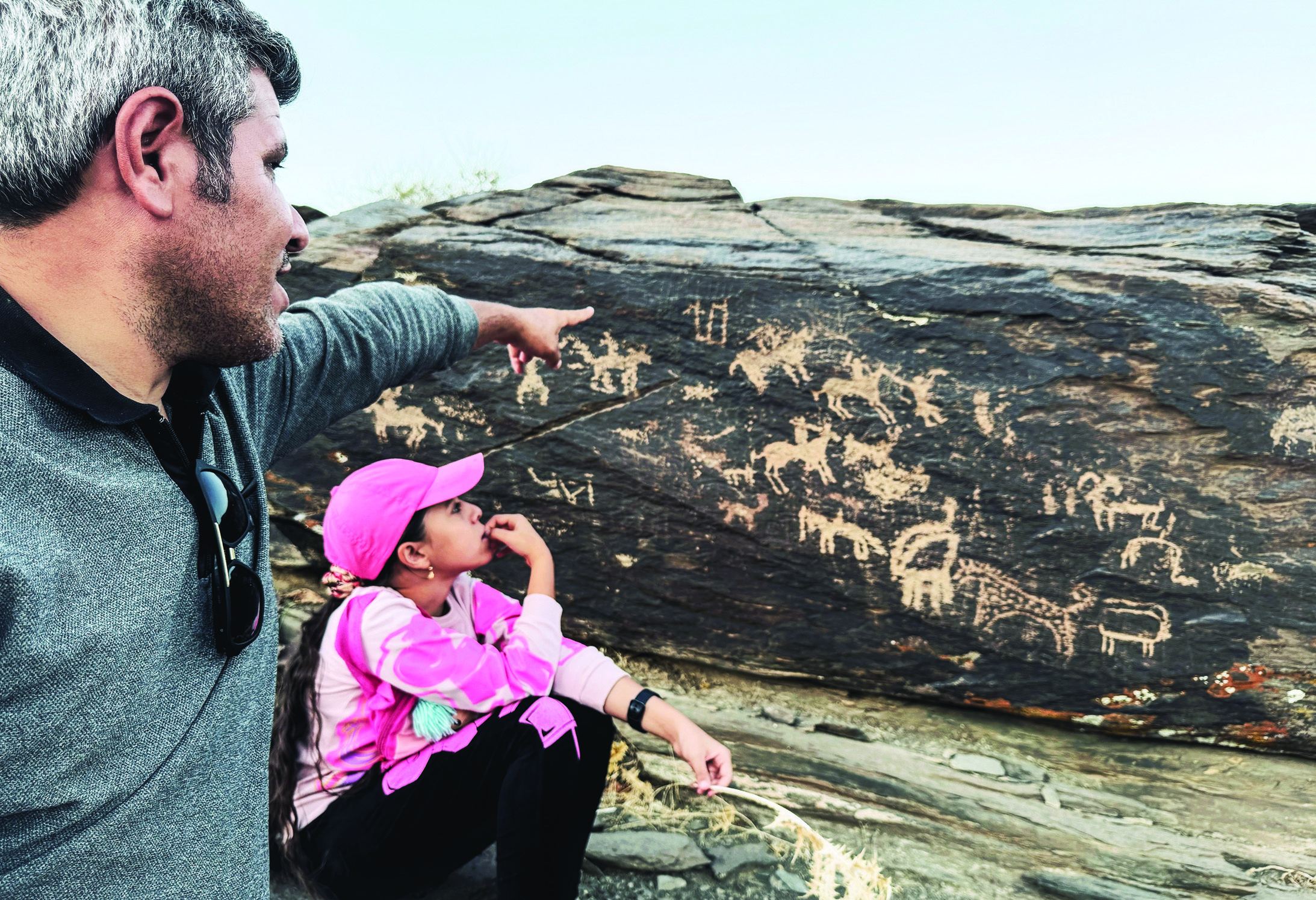
Rasoul Majidi and his young daughter pointing at petroglyphs on a large rock face at Teimareh
Rasoul Majidi and his daughter -- guardians of the Teimareh petroglyphs.
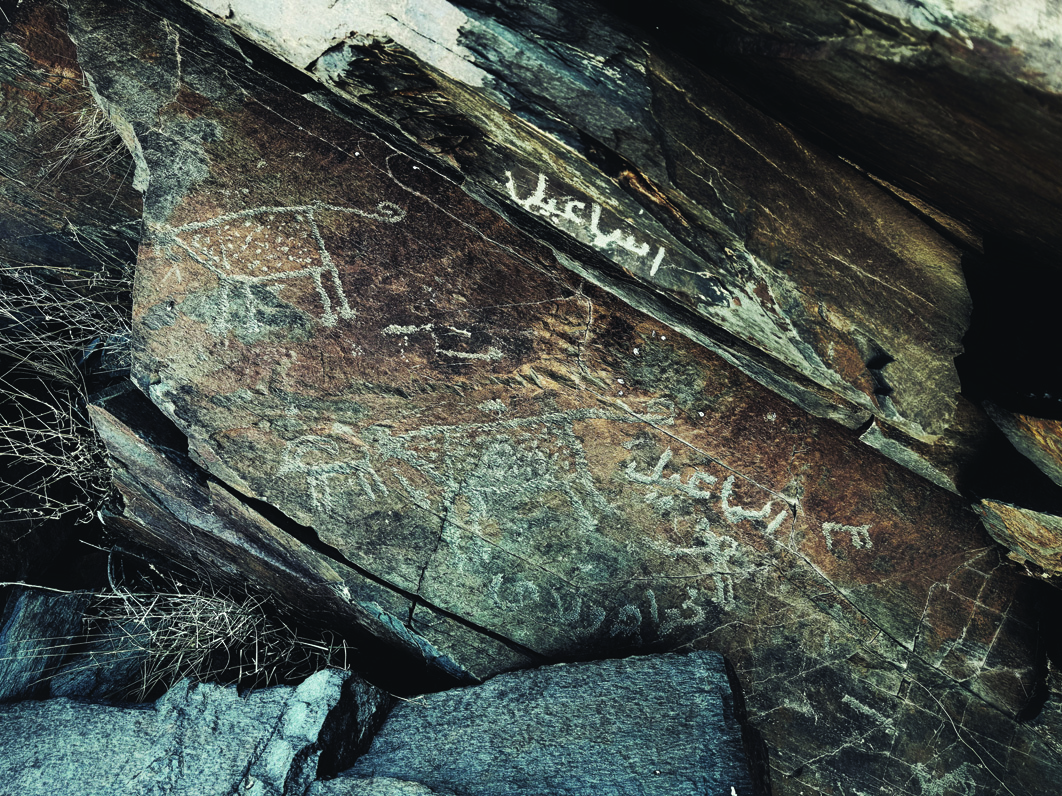
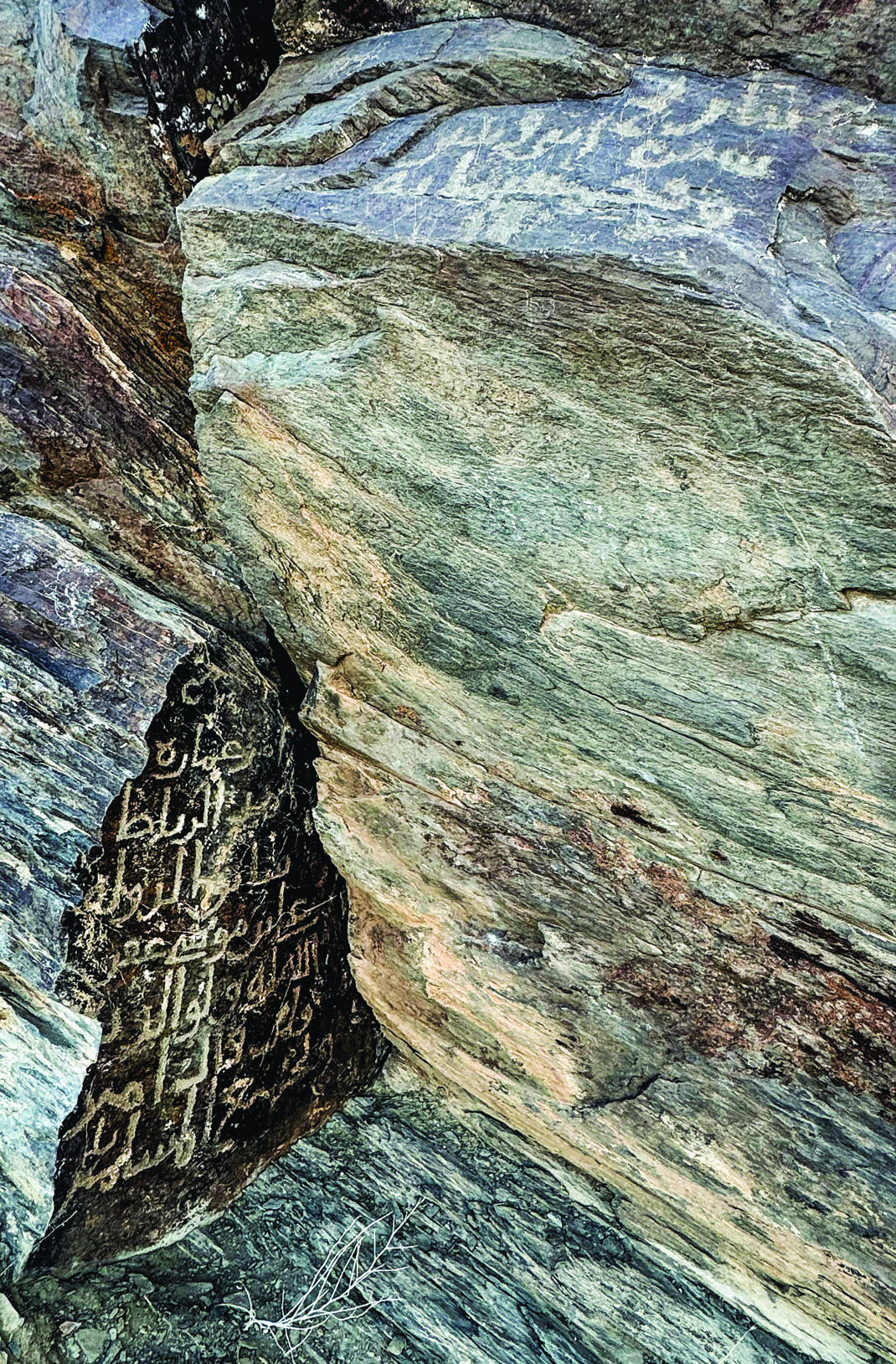
Ancient petroglyphs at Teimareh defaced by modern Arabic-script graffiti scratched into the rock surface
Vandalism: modern graffiti scratched over ancient petroglyphs at Teimareh.
Ancient ibex petroglyphs at Teimareh with a modern name scratched over them in white paint
Vandalism: a modern name scratched and painted over ancient ibex engravings.
Panoramic view of a large dark rock face at Teimareh covered with numerous ibex and animal petroglyphs against a golden hillside
Teimareh -- a panoramic view of a petroglyph-covered rock face.
◆ ◆ ◆

Sang-e Mehrdad, Kouhdasht

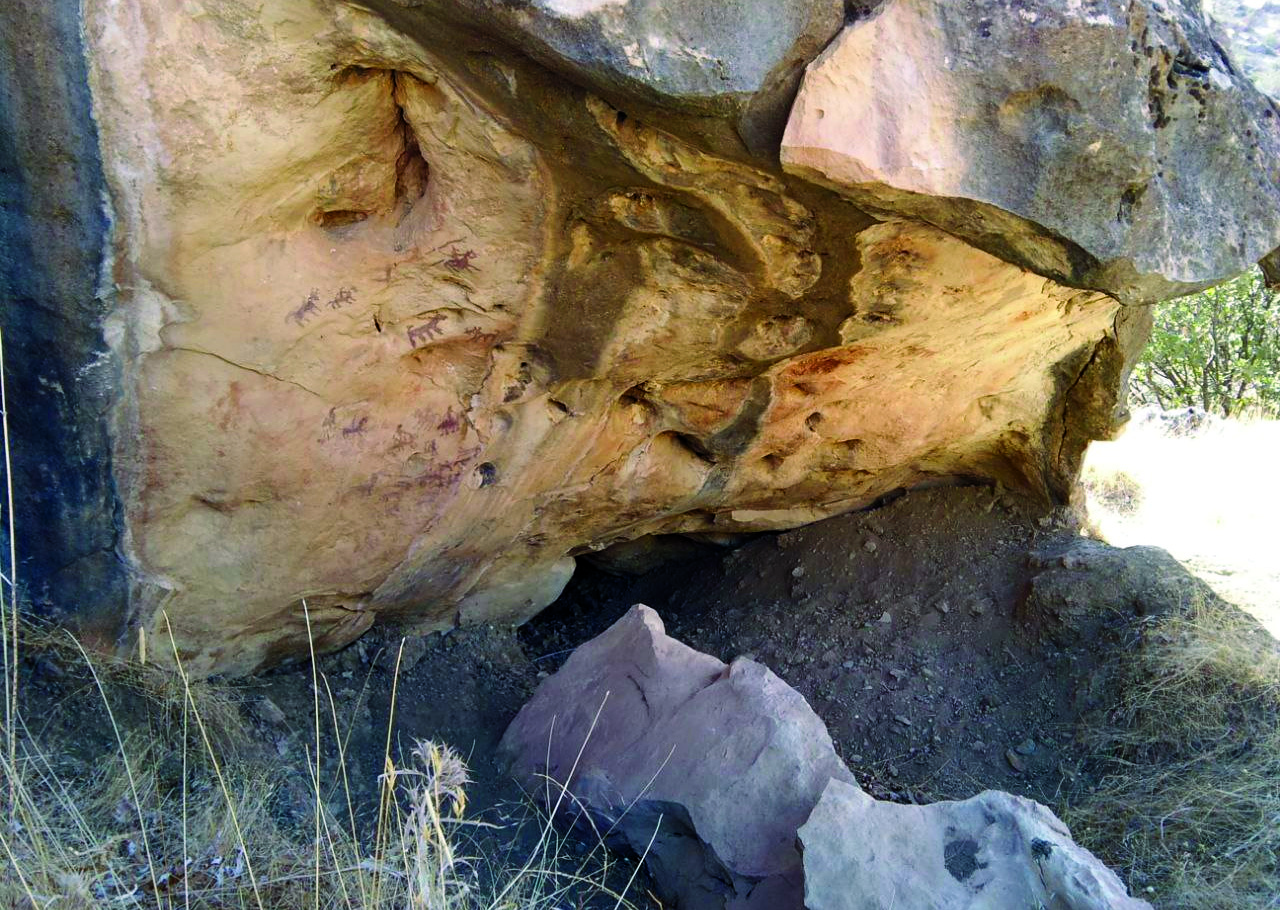
The shelter wall (western face of the rock) bears engravings. Photos from Kouhdasht by Jalal Adeli, cultural heritage expert of Lorestan.
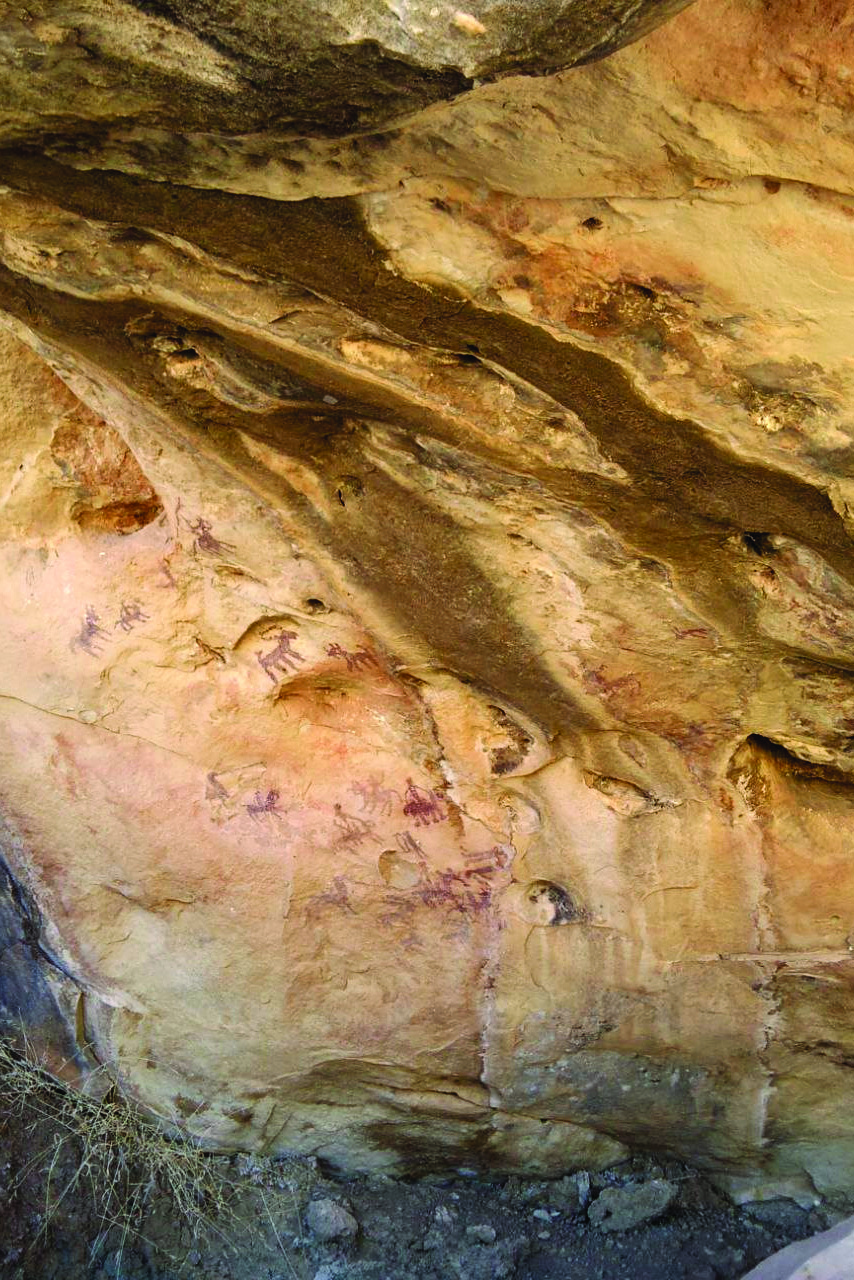
A large rock shelter in Lorestan with ochre and red painted figures of animals and humans on a sandstone wall
Lorestan -- rock shelter with painted pictographs in ochre tones.
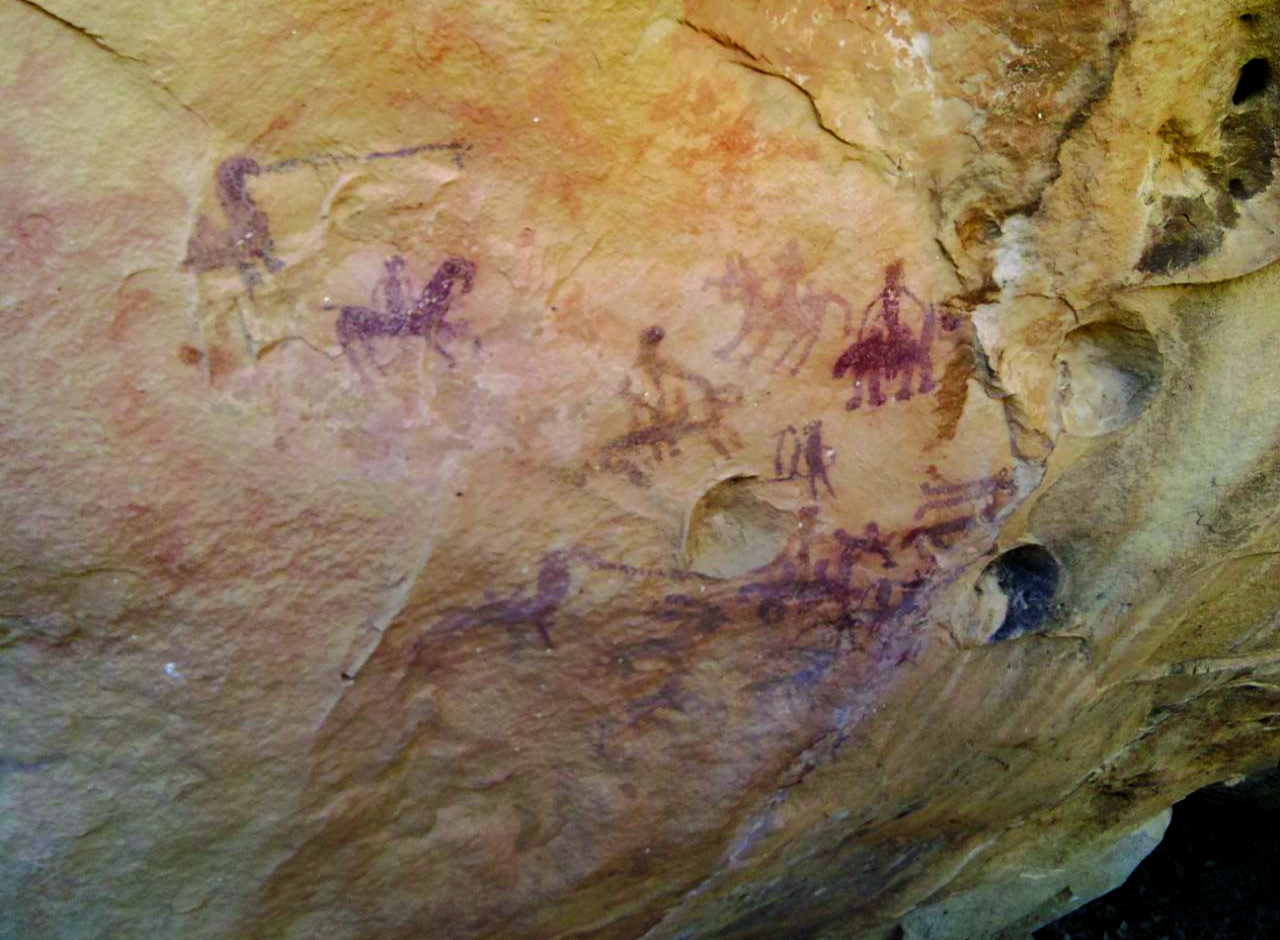
Close-up of the painted scene inside a Lorestan rock shelter showing riders, animals, and hunting figures in dark red ochre on yellow sandstone
Lorestan -- a rich painted scene with riders, animals, and hunters.
◆ ◆ ◆

The Birth of Chemistry: The First Iranian Colour

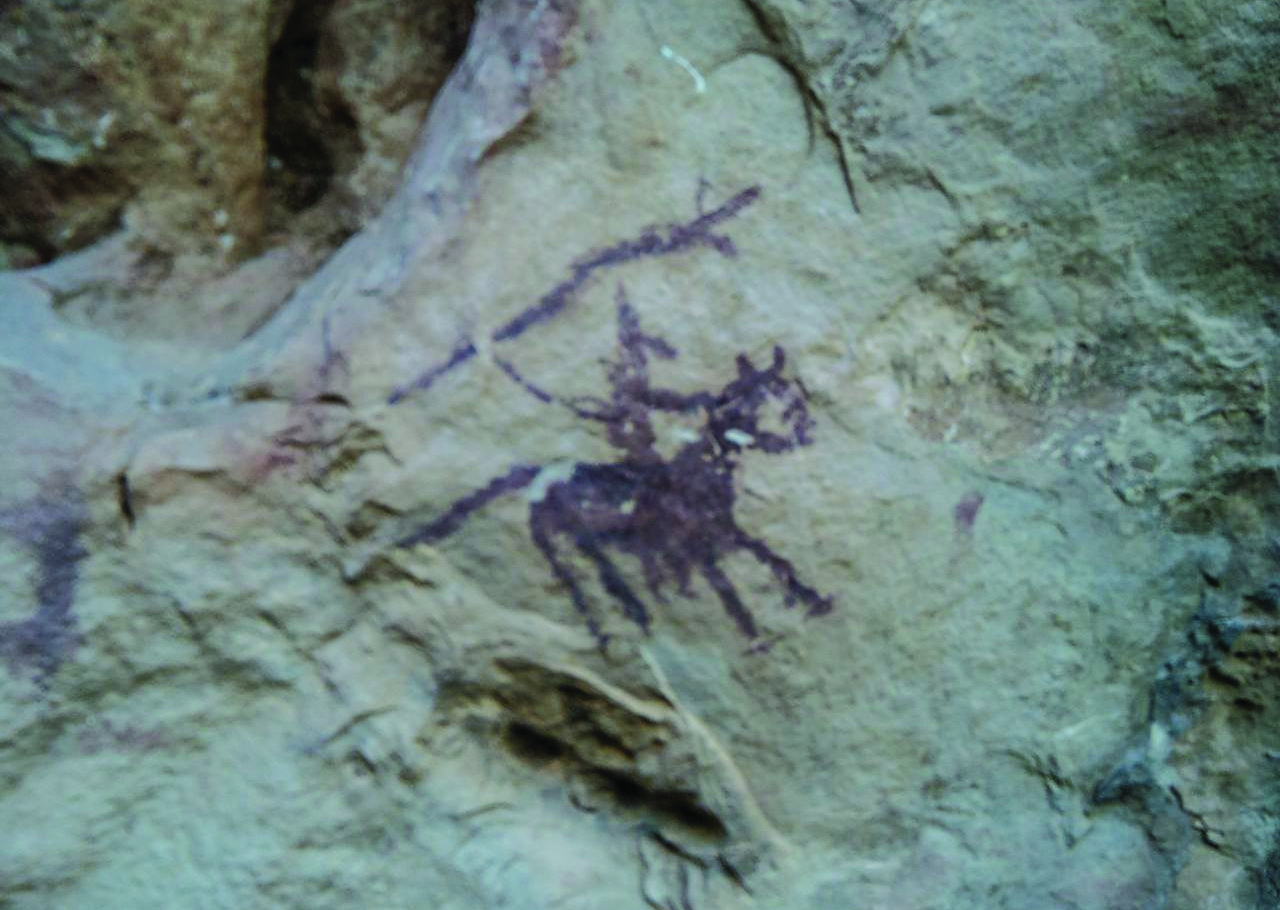
The number of painted rock images in Greater Iran is small. The pigments were made by combining ochre clay with certain colour agents, particularly the red pigment from the juice of the rhubarb plant. The ochre palette, ranging from yellow to dark red, constitutes the first Iranian colour. Besides the painted pictographs of Lorestan, some examples also exist in Baluchestan.
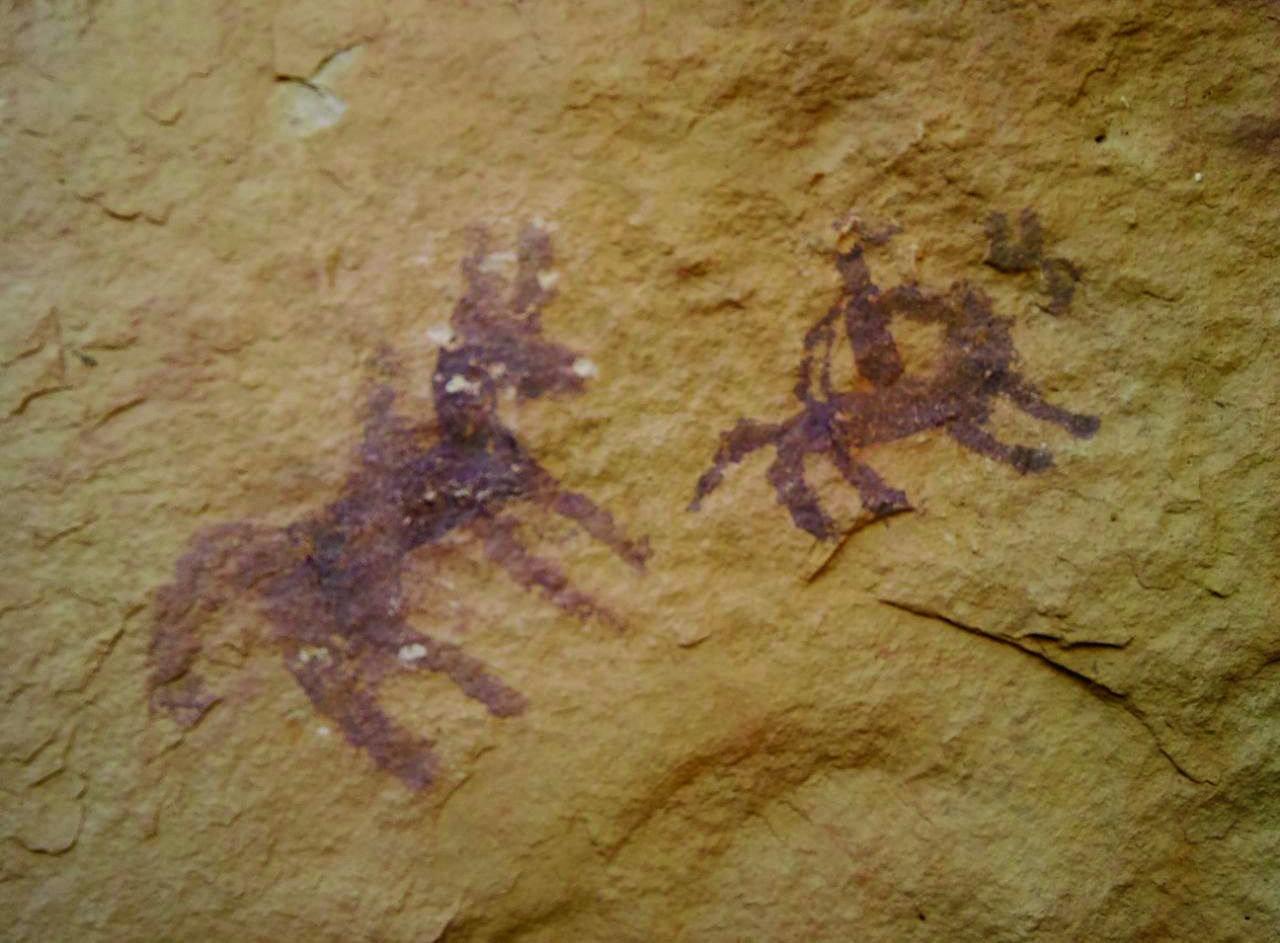
Painted rock art at Lorestan showing a horse and rider figure alongside another animal in dark red ochre on light sandstone
Lorestan -- painted horse and rider, the ochre pigment still vivid.
Painted figure of a hunter on horseback wielding a spear, rendered in dark purple-red ochre on sandstone in Lorestan
Lorestan -- a hunter on horseback with a spear.
Exterior view of a rock shelter in Lorestan with painted figures visible on the underside of the overhanging sandstone boulder
Lorestan -- the exterior of a rock shelter with painted surfaces.
Close-up of two painted animals at a Lorestan rock shelter, showing ibex-like figures in dark purple-red ochre on light stone
Lorestan -- painted animals in dark ochre-red, the first Iranian colour.

Footnotes

  1. In truth, the ochre colour -- ranging from ochre-yellow to ochre-red -- may have been the first Iranian colour (Persian Colors).

Memar Magazine

Issue 147 · October–November 2024 (Mehr–Aban 1403)

Iran's Premier Architecture & Urban Design Publication

Rock Art of Greater Iran