The material presented in condensed form in this article pertains to a theory about one of the most important methods of structural calculation in ancient Iran. This method, which concerns the calculation of the thickness of load-bearing piers for domes and was prevalent in Iran, merits examination from at least three distinct perspectives:
A: Research that goes beyond the geometric rules governing the components of Iranian buildings and addresses the design and calculation of structural elements has been extremely rare and limited.
B: The structural calculation method presented in this article is highly logical from the standpoint of the structural behavior of domed structures; and although it is a rule derived from empirical experience, it closely corresponds to modern scientific calculations.
C: With very high probability, this Iranian method traveled to Europe around the 12th century CE and formed the basis for calculating load-bearing dome structures in many European churches until the 17th century. In this regard, the theory proposed by the present author was reviewed and endorsed by the Institute of Construction Sciences at the University of Genoa, and Professor Benvenuto, a specialist in the history of construction sciences, in his book An Introduction to the History of Structural Mechanics,1 has confirmed the validity of this theory with citation of the author’s name.
This article is a small portion of a research project titled “From Idea to Project — Iranian Architecture of the 11th to 17th Centuries.” The research began in 1987 and in 1990 received the highest grade and the honorary title of Diritto di Pubblicazione. The hypotheses put forward in this research were organized around the following axes:
A Brief History of the Research
In Iranian architecture, there exist geometric proportions of a specific nature that indicate the existence of highly advanced architectural knowledge in the past. These geometric rules have not been limited merely to the construction and decorative execution of elements such as arches, muqarnas, yazdi-bandi, and the like (about which many books have been compiled), but also encompass the relationship between elements, the overall form of the building, and structural components. If these geometric rules have been capable of producing exceedingly complex buildings, they were nevertheless miraculously simple and all executable with merely a string and a plumb bob.
Although the research conducted is based on very detailed bibliographic sources, regarding its principal findings such sources are lacking. To avoid errors, the research hypotheses were tested on survey drawings from 39 historical buildings and their accuracy was confirmed. Since, through numerous and complex drafting processes, any form can ultimately be transformed into another, only very simple and precise drawings were taken into consideration as the focus of the research.
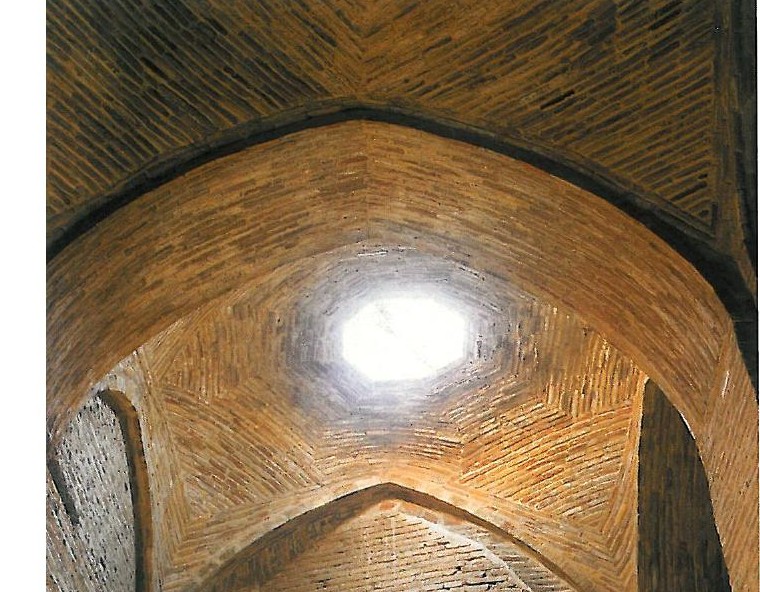
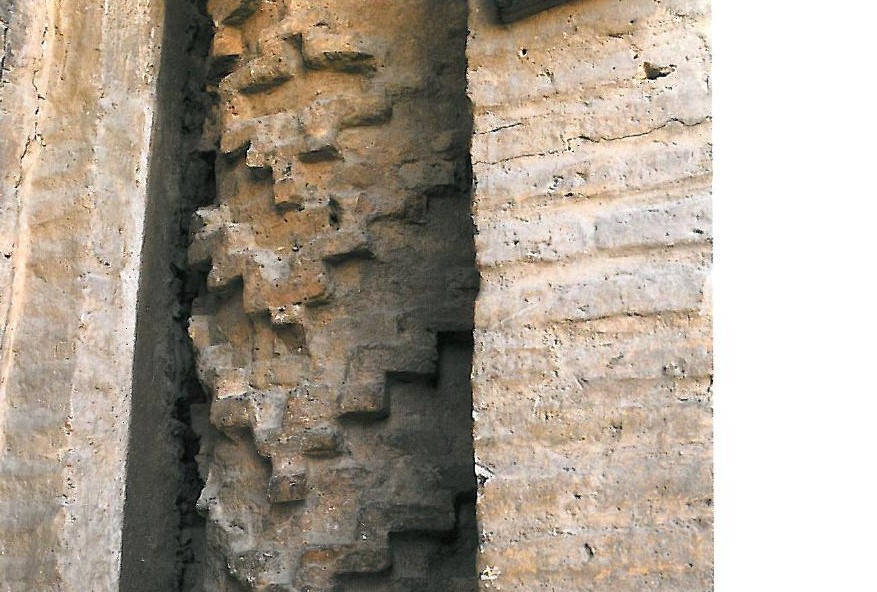
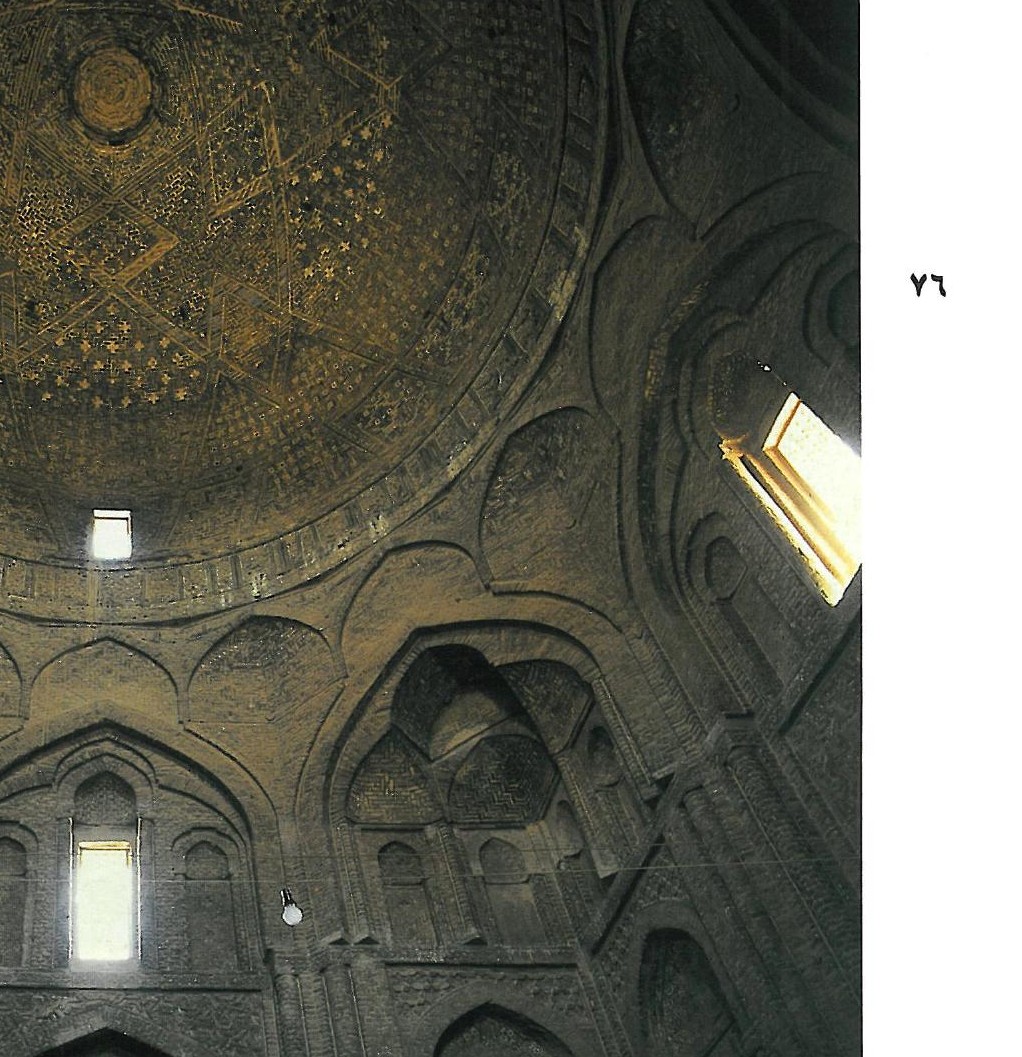
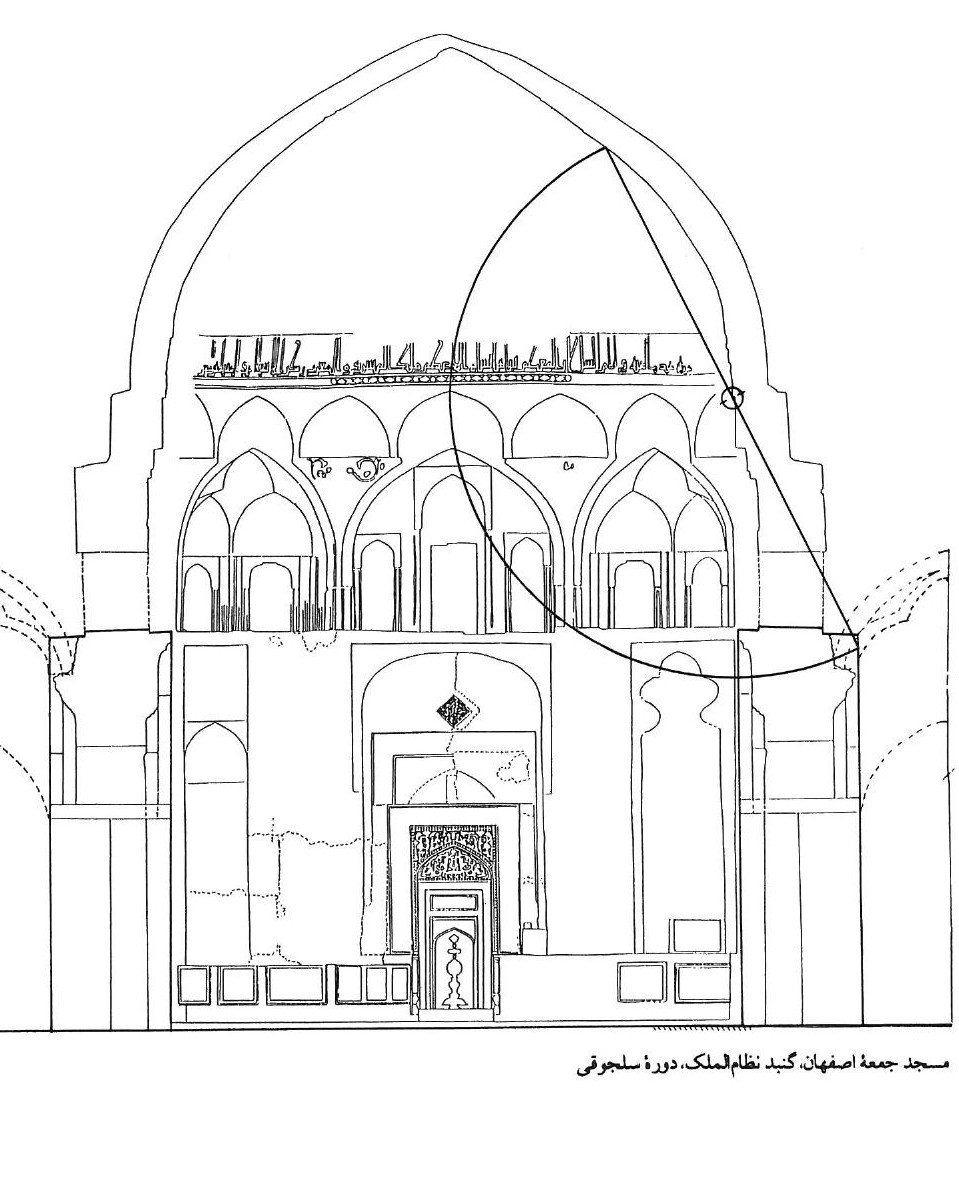
Given that this research was conducted abroad and based on plans available in the archive of the National Organization for the Preservation of Antiquities, the necessity of at least one close-up study with exceptional precision was paramount. With the collaboration of a colleague — one very precise, meticulous, and passionate — Mr. Hossein Motaqi, we undertook research on the Nizam al-Mulk dome of the Jame Mosque of Isfahan (Seljuk period). To ensure the accuracy and rigor of the work, we studied all available compiled texts about this building. We compared the general plans surveyed from various archives and carried out our own measurements of the building. One result of this work is presented in this article. With our new surveys, we tested our hypothesis — and the result, as expected, was entirely satisfactory.
The Method of Dome Calculation in Medieval Europe
The science of mechanics has very ancient origins, and from the outset, architectural structures too have been the subject of curiosity for scientists of physics, mechanics, and mathematics. Kilwardby,2 in the 13th century CE, was among the first scientists to categorize the study of architecture as a branch of the science of mechanics.
Although the technical achievements of Gothic cathedrals are admirable, it is still unknown whether the skill of architects of that era was based on empirical experimentation or on theoretical and scientific study. In any case, the interesting point is that during the 12th and 13th centuries — that is, the period of remarkable advancement in building techniques of Gothic churches — scientists of mechanics such as Nemorario3 also made important theoretical discoveries in the field of statics.
The problems facing Gothic architects were far more complex than those of the classical era, because the churches were very tall and were built without mortar. The increase in building height was accompanied by concentrated loads at specific points. The architecture of the Gothic period is a skeletal architecture. The diagonal vaults and the vaults of the main central hall of the church neutralized each other’s lateral forces and, like the pans of a scale, maintained equilibrium. The reduction of the area occupied by load-bearing piers — in order to free the walls from the burden of bearing loads and to allocate more space to windows — was accompanied by an increase in the height (rise) of the dome, and consequently a reduction in lateral forces. The problem of the statics of vaulted structures had also attracted the attention of mechanics scientists. Those who had recognized the advantages of pointed vaults with a high rise over the classical semicircular vaults undertook to provide an explanation.
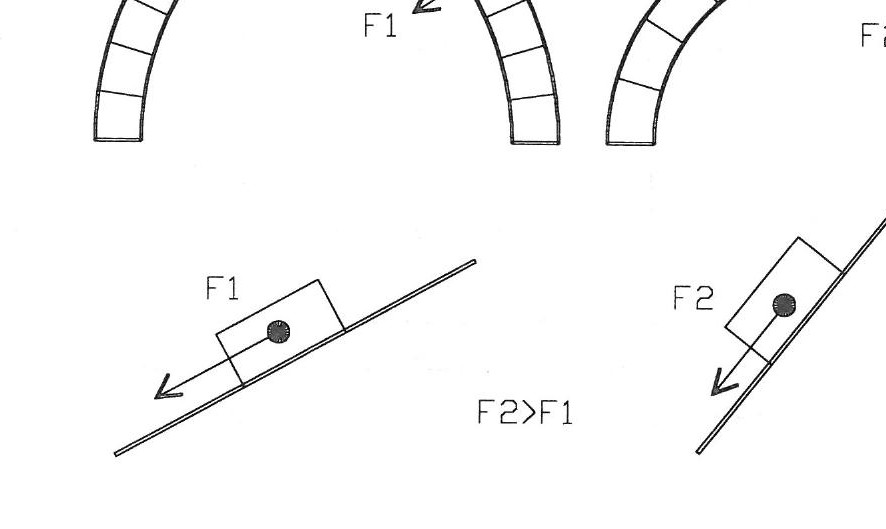
Nemorario, in the 13th century, offers an ingenious explanation for this problem. In his view, in a stone vault the factor responsible for the stability of the vault is the force of the wedge-shaped segments that comprise the vault. In his famous theory of Gravitas Secundum Situm (“gravity according to position”), he studies the weight force of an object on an inclined surface and proves that the steeper the slope, the greater this force. Since in a pointed vault with a high rise the slope beneath each stone segment is less than in a semicircular arch, this vault is better in terms of stability.4
As can be observed, this hypothesis pertains to the geometry of the arch and has no relation to the behavior and structural properties of arches and vaulted structures. The first theoretical structural calculation of vaults from the standpoint of the science of statics dates to the 18th century. Nevertheless, evidence exists proving that European architects from the 13th century onward knew empirical methods for calculating load-bearing piers for vaults and domes. In fact, this matter is of great importance to us because, with very high probability, prior to the mid-18th century there was no connection whatsoever between mechanics and construction science, and the curiosities of scientists of mathematics, physics, and mechanics remained at the level of theoretical studies. The section devoted to architecture in the famous treatise of Ghiyath al-Din Kashani is also more a mathematical treatise with concrete examples from the world of architecture than a treatise on architecture per se.
The First Empirical Method for Calculating the Load-Bearing Pier of a Dome in Europe
Derand5 is probably the first person to introduce an empirical and graphical method for calculating the load-bearing pier of domes. In his method, one must first draw the lower arc of the vault or dome. Then the length of the dome arc is divided into three parts, and using the center at the base of the dome arc and the radius of the nearest point obtained from the three-fold division, a circle is drawn. From the point where the circle intersects the dome arc, a diametric line is drawn through the center of the circle that cuts the circle at a point outside the dome. This point determines the diameter of the pier.
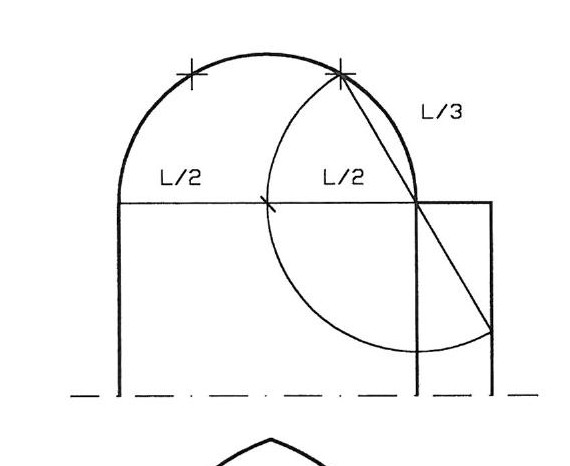
This rule is very interesting because the lower the rise of the arch and the greater the lateral forces in proportion, the thicker the pier will be, thus better containing these forces; and the higher the rise of the arch and the closer the roof loads approach the vertical line, the thinner the pier will be. The results of this simple rule for small domes come very close to the highly precise calculations of today.
Viollet le Duc6 has stated in his famous architectural encyclopedia that the above rule is much older than Derand and was first used in Gothic architecture. Of course, this is the oldest date that has been cited for this calculation rule to date, and other authors including Rondelet7 have considered it more recent. In any case, even if we accept Viollet le Duc’s view as correct, the use of this method dates to the mid-12th century, while a very similar method had been common in Iran at least a century earlier.
The Method of Calculating the Load-Bearing Pier in Iran
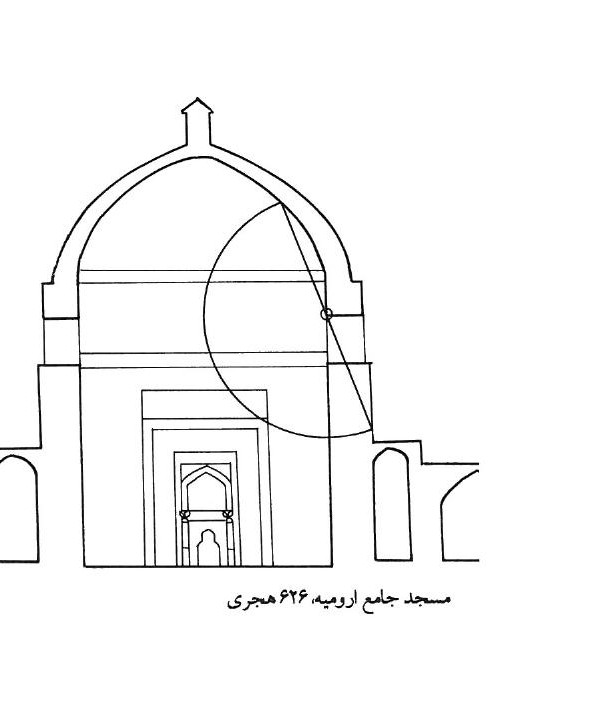
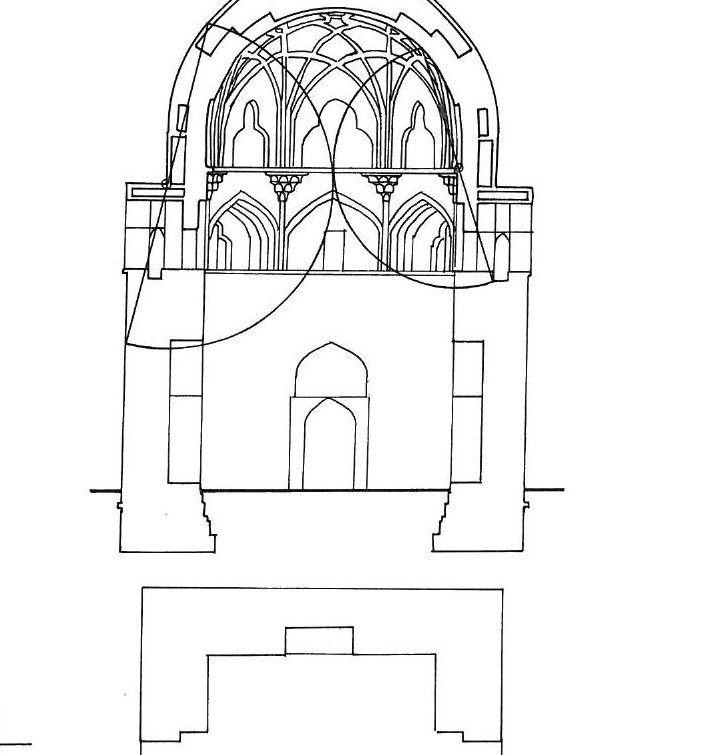
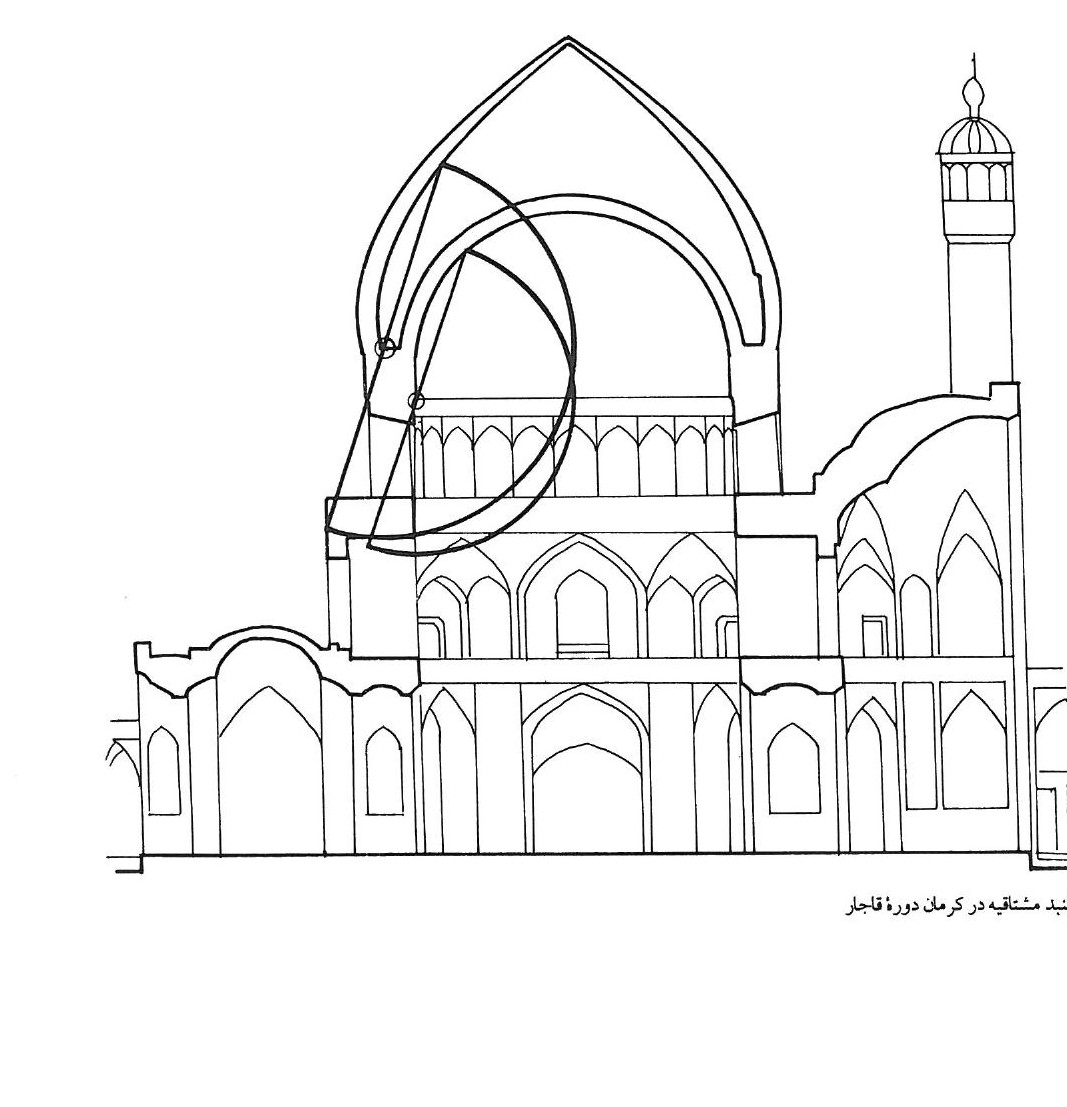
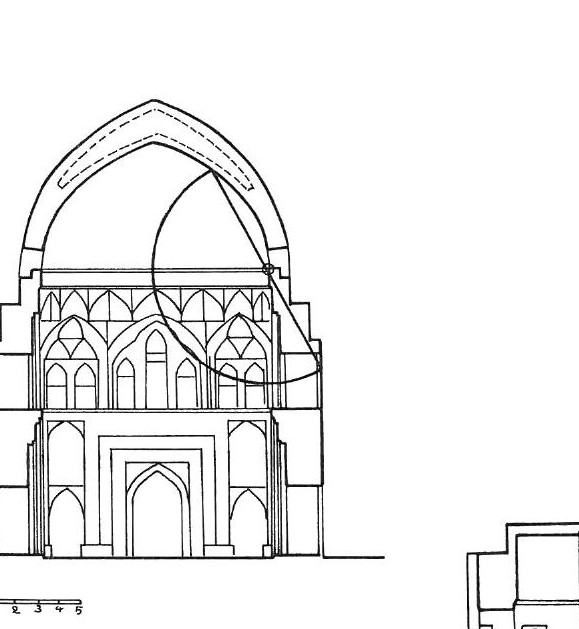
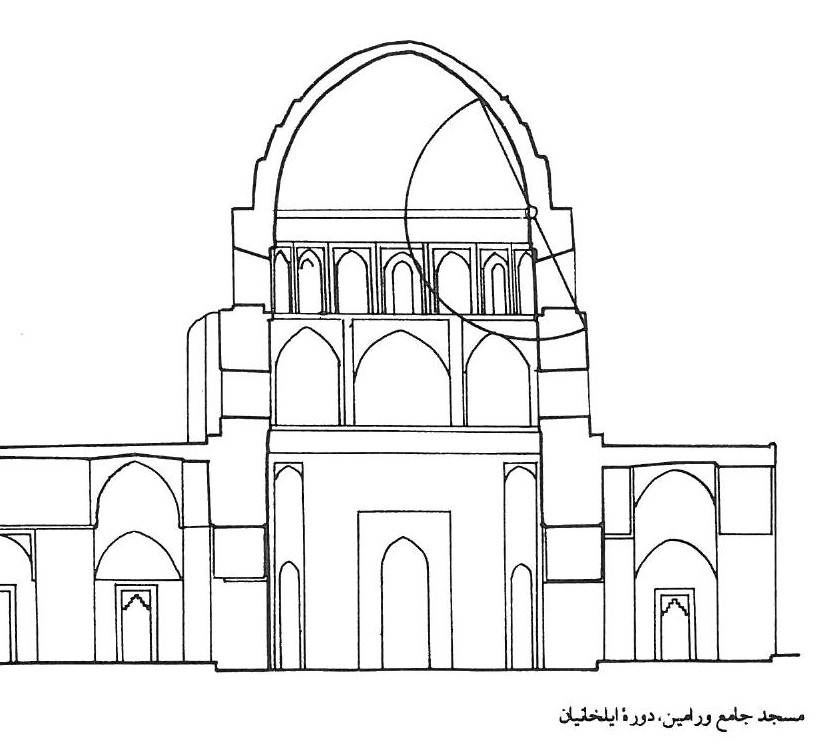
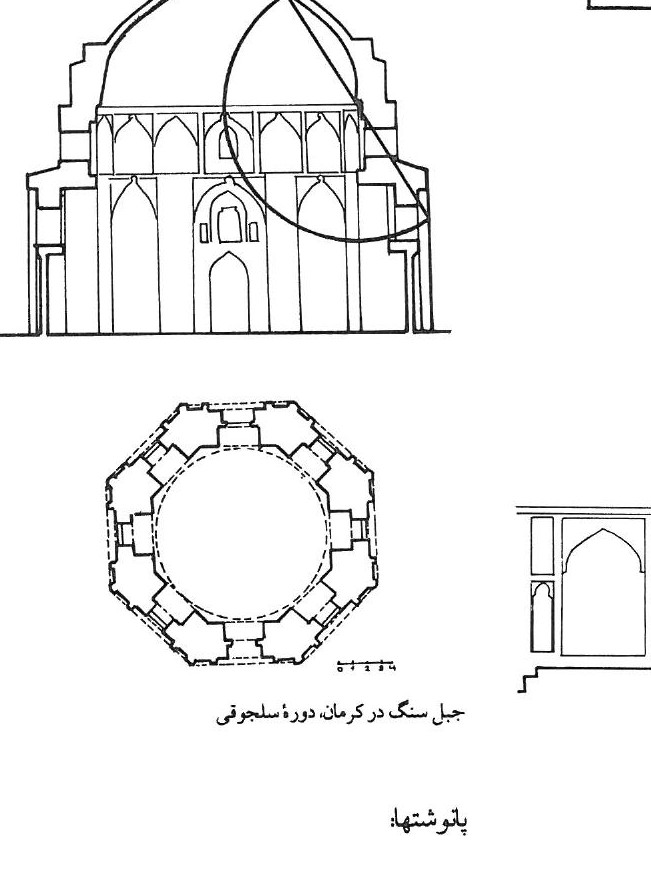
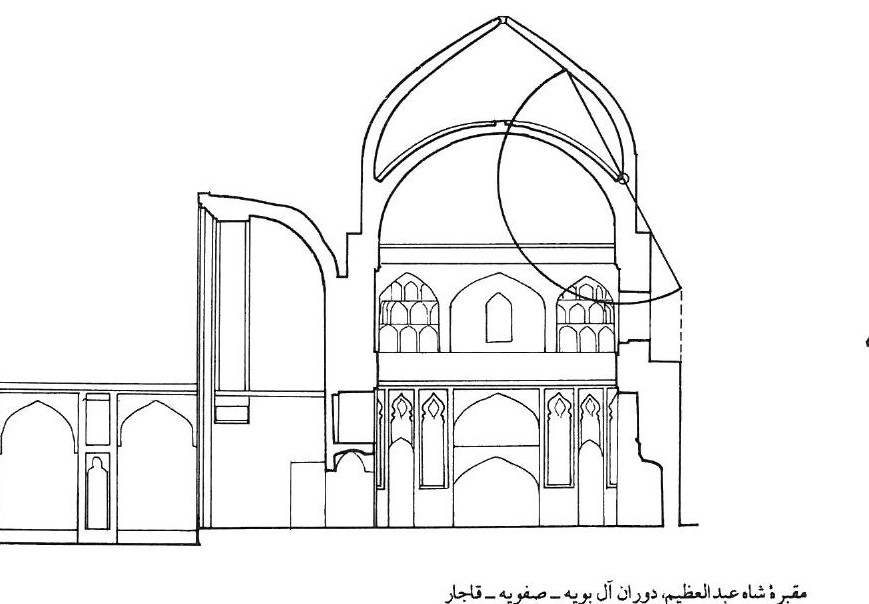
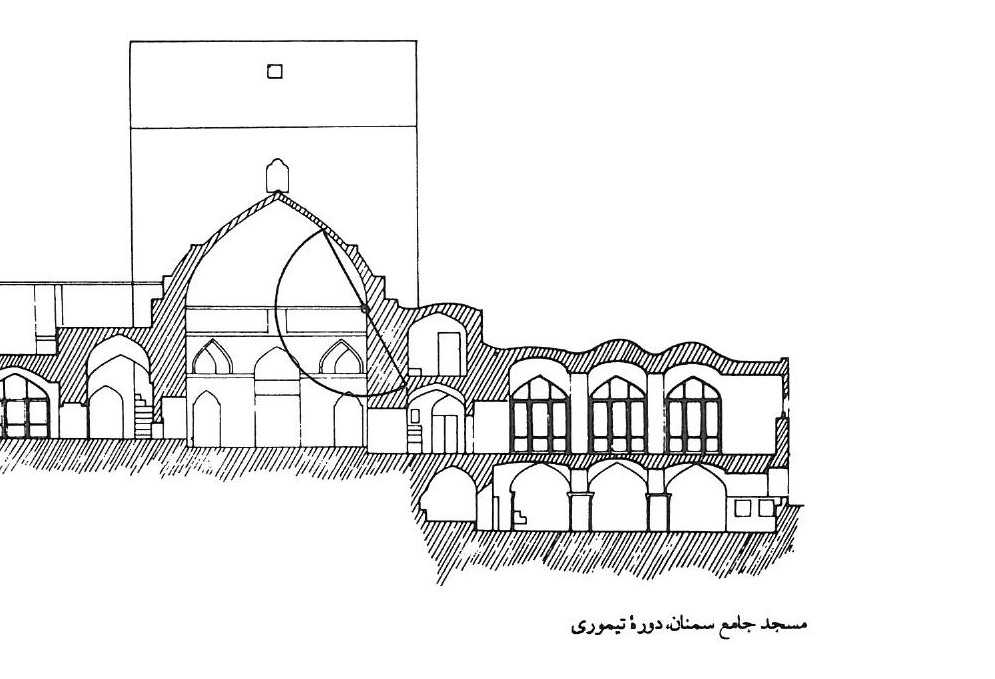
The method observed in Iran from the early Seljuk period is very similar to the European method. The difference between these two methods lies in the fact that the auxiliary radius in the Iranian method is drawn not from one-third of the arc but from the middle of the dome’s span, passing through the intersection of the dome’s profile and the center of the circle. A diametric line is drawn that intersects the circle at a point outside the dome. This point determines the diameter of the pier.
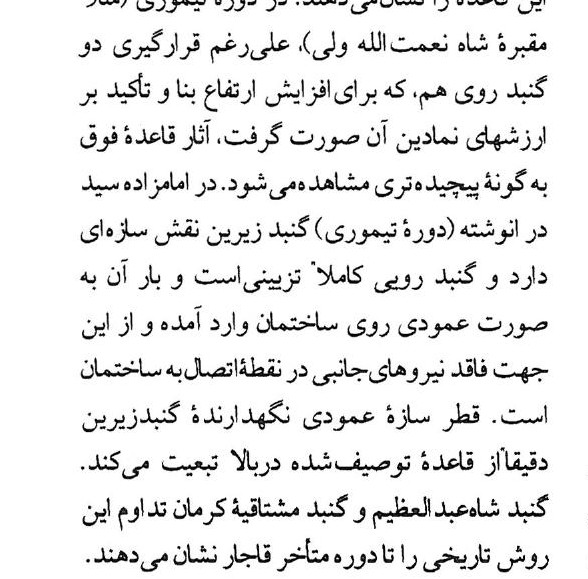
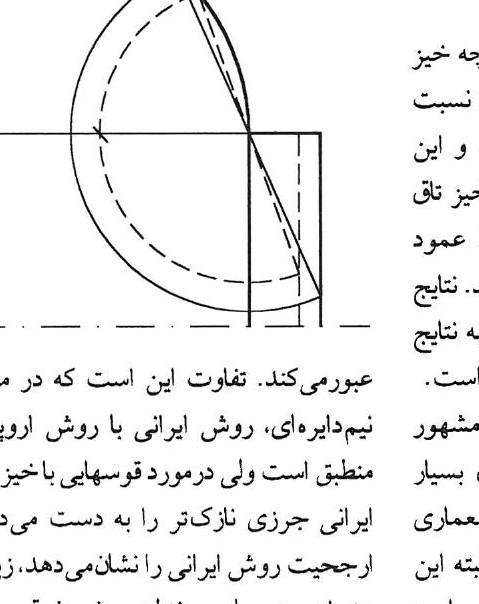
The difference is that for the semicircular arch, the Iranian method completely coincides with the European method; but for arches with a high rise, the Iranian method yields a thinner pier, and this demonstrates the superiority of the Iranian method. For since antiquity, some scholars including Rondelet8 have criticized the European method for producing piers that are excessively thick beyond what is necessary.
Evidence from Surviving Buildings
A great many buildings from the Seljuk period have survived that prove the existence of this rule. Among them one can point to the Jame Mosque of Borsian, Jabal-e Sang, the Taj al-Molk dome, and the Nizam al-Mulk dome. Buildings such as the Tomb of Sultan Sanjar in Merv, which possesses a double-shell dome, show the dual application of this rule.
In the Timurid period (for example, the Tomb of Shah Ne’matollah Vali), despite the placement of two domes one atop the other — which was done to increase the building’s height and for its symbolic values — traces of the above rule are observed in a more complex manner. In the Imamzadeh Seyyed (Timurid period), the lower dome plays a structural role and the upper dome is entirely decorative, its load falling vertically upon the building and therefore devoid of lateral forces at the point of connection to the building. The diameter of the vertical piers supporting the lower dome follows precisely the rule described above.
The dome of Shah Abdol Azim and the dome of Moshtaqieh in Kerman demonstrate the continuity of this historical method into the late Qajar period.
Notes
1. Edoardo Benvenuto, An Introduction to the History of Structural Mechanics, Springer-Verlag, New York–Berlin–Heidelberg–London, 1993, Vol. II
2. Roberto Kilwardby
3. Giordano Nemorario
4. Edoardo Benvenuto, La scienza della costruzioni e il suo sviluppo storico, Sansoni, Firenze, 1981, p. 30
5. F. Derand, L’architecture des voutes, ou l’art des traits, et Coupes des Voutes, Paris, 1643
6. E. Viollet le Duc, Dictionnaire raisonné de l’architecture Française du XI au XVI Siècle, Paris, 1854–1868
7. Y. Rondelet
8. Y. Rondelet, Traité théorique et Pratique de l’art de bâtir, Paris, 1802



