An opening
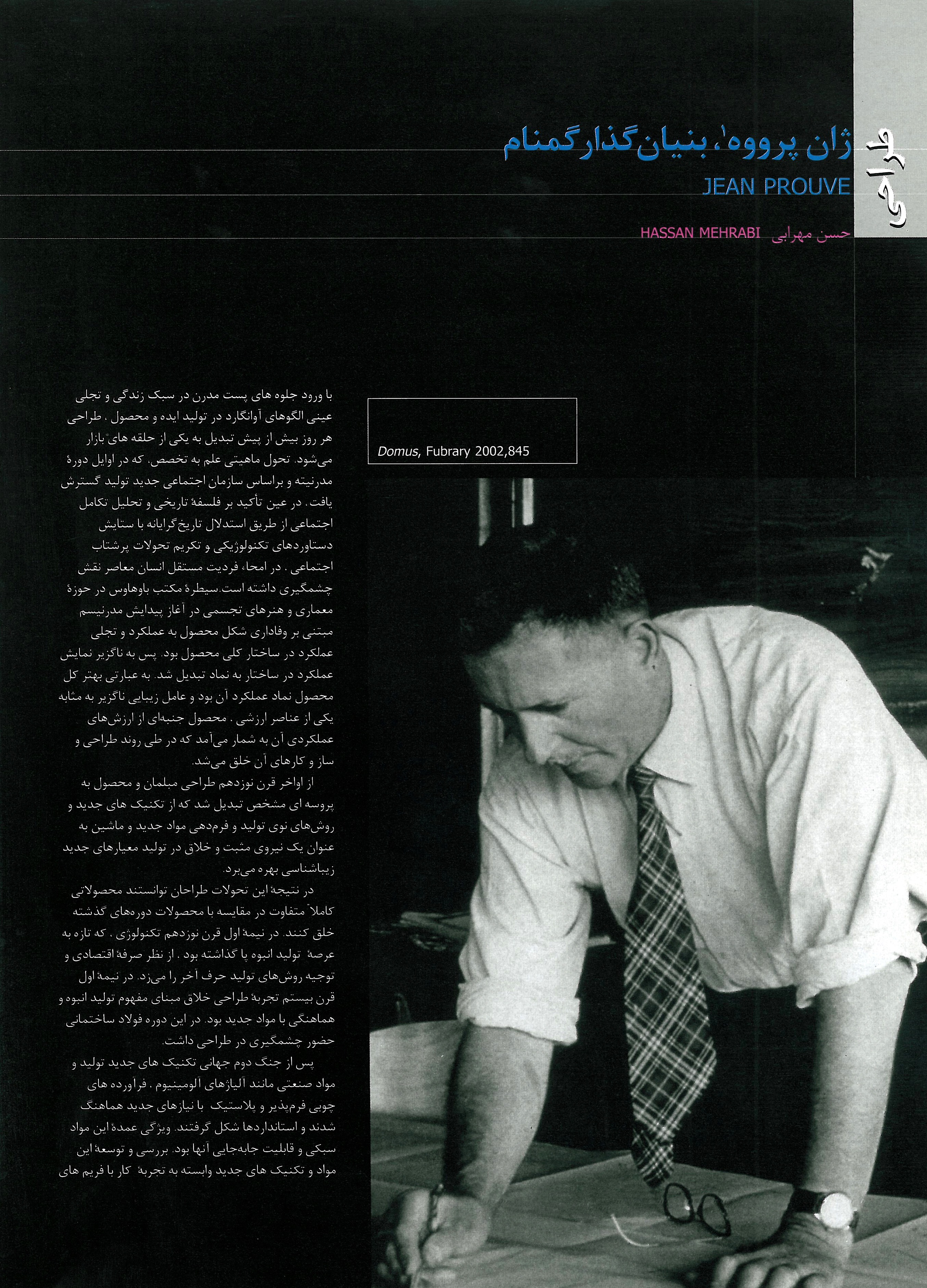
Hassan Mehrabi, Domus, February 2002, issue 845.
With the appearance of postmodern qualities in the way of life and the objective embodiment of avant-garde patterns in the production of ideas and products, design becomes ever more a link in the market. The transformation of the nature of art into a specialism — which, along the line of modernity and on the basis of the new social organisation of production, has had its social spread through historical reasoning, in praise of technological progress and in honour of the rapid transformations — is conspicuous.
The dominance of the Bauhaus school in architecture and the visual arts at the dawn of modernism rested on the form's faithfulness to function, and the manifestation of function in the overall structure of the product. The display of the product, then, became inevitably the marker of its function, and the factor of beauty — as one of the value-elements of the product — became one of the aspects of its functional values, made in the course of design and its mechanisms.
Transformations in the first half of the twentieth century
From the late nineteenth century, furniture and product design drew on new methods of producing and forming new materials, and on the machine as a positive and creative force in producing fresh aesthetic standards. As a result of these transformations, designers were able to make products wholly different from those of earlier periods.
In the first half of the nineteenth century, technology — which had only just stepped into the modernity of mass production — had the last word, in terms of economy and the justification of production methods. In the first half of the twentieth century, the experiment of design was based on the notion of mass production and the harmony with new materials — in this period, building steel and spring steel entered the part of design.
After the Second World War, fresh production techniques and industrial materials — like aluminium fibres, formable timber products, and plastic — were brought in step with the new needs, and standards took form. The principal feature of these materials was their lightness and their movability.
Prouvé: the forgotten founder
Jean Prouvé is one of the forgotten designers of this period and one of the founders of furniture design in this period. Faithful to the ideal of social justice and to the obligations that defined his task as a social designer, he set before him the dream of industrial housing as the housing-rebuilding model for the lower social classes.
Prouvé set up his first workshop in 1923. He quickly turned that smithy into a workshop fitted out for the realisation of his social ideas. The production process — managed with the participation of the firm's technicians, with the manuals, and with the workers — required the active engagement of all the production team, on the basis of their shared interest. For Prouvé, the picture of plundering labour-power held no attraction. In his workshop, ideas were turned at once into prototypes; the maturation of every project into a built product took place in the shadow of the active and creative participation of every individual involved with it.
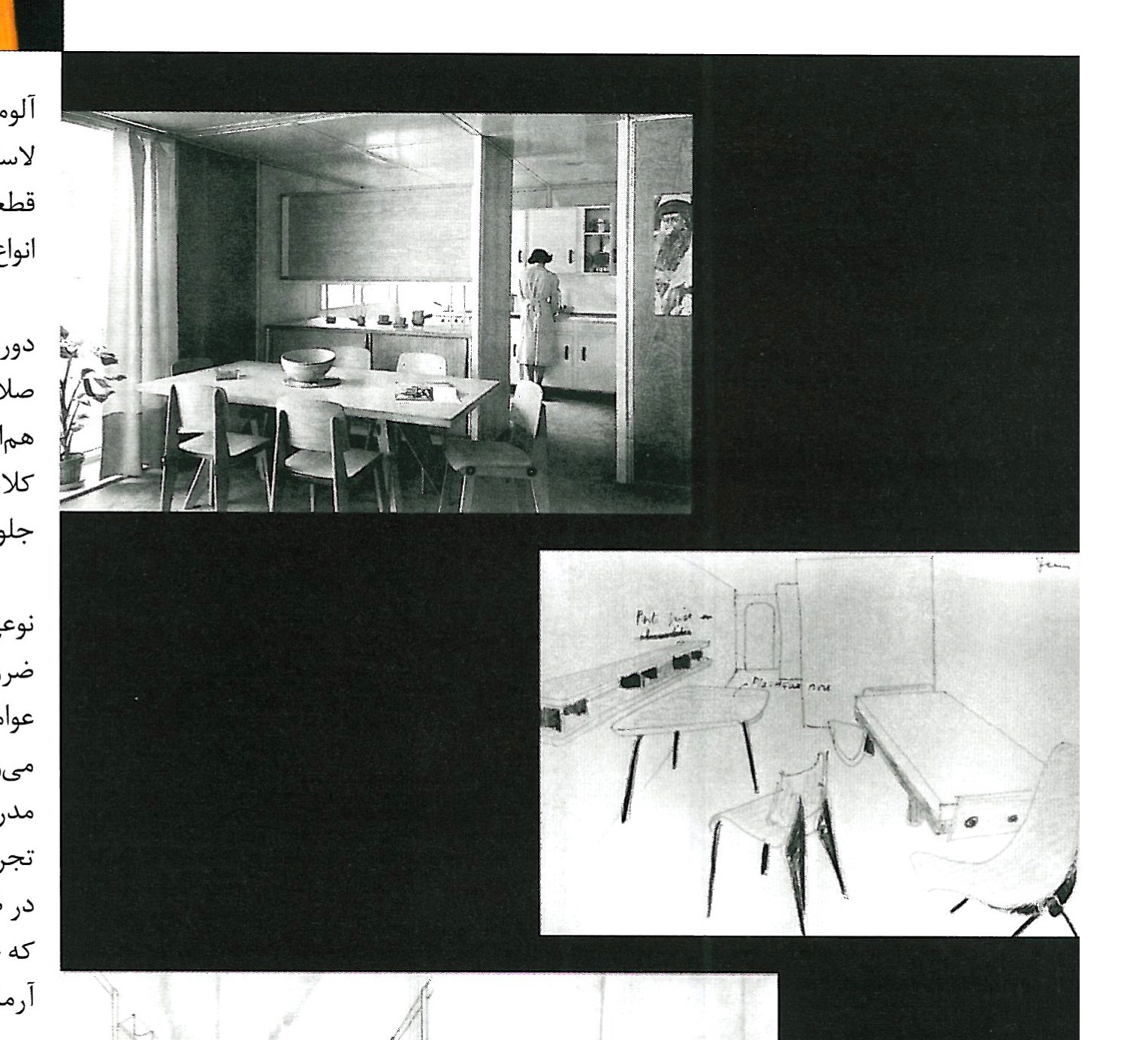
Prouvé set this process within a personal formalism on the basis of objective measures. The matters of production — the capacities of production, etc. — led to the definition of measures and rules, by which fitting forms could be brought about. This kind of grasp of the production process was, of itself, the opening to the making of objective forms independent of the temptations of formalism. He worked with forms whose theme was clear and direct, and which carried higher expressive values in mass production.
1942: the Eames and Prouvé
In 1942, Prouvé met Mr. and Mrs. Eames, with whom he shared furniture-design experiments of a similar style. From that time he turned to designing chairs and sofas which called to mind aeroplanes.
The Citroën project: collaboration with Le Corbusier
Perhaps the appeal of such a challenge drew Le Corbusier to participation in the Citroën design project, and stoked the eagerness of other designers to experiment with the design of dwellings and machine-furniture. As Prouvé said: '... and I tried, and these techniques can be in step with anything.'
Prouvé's houses: movable, modular, practical
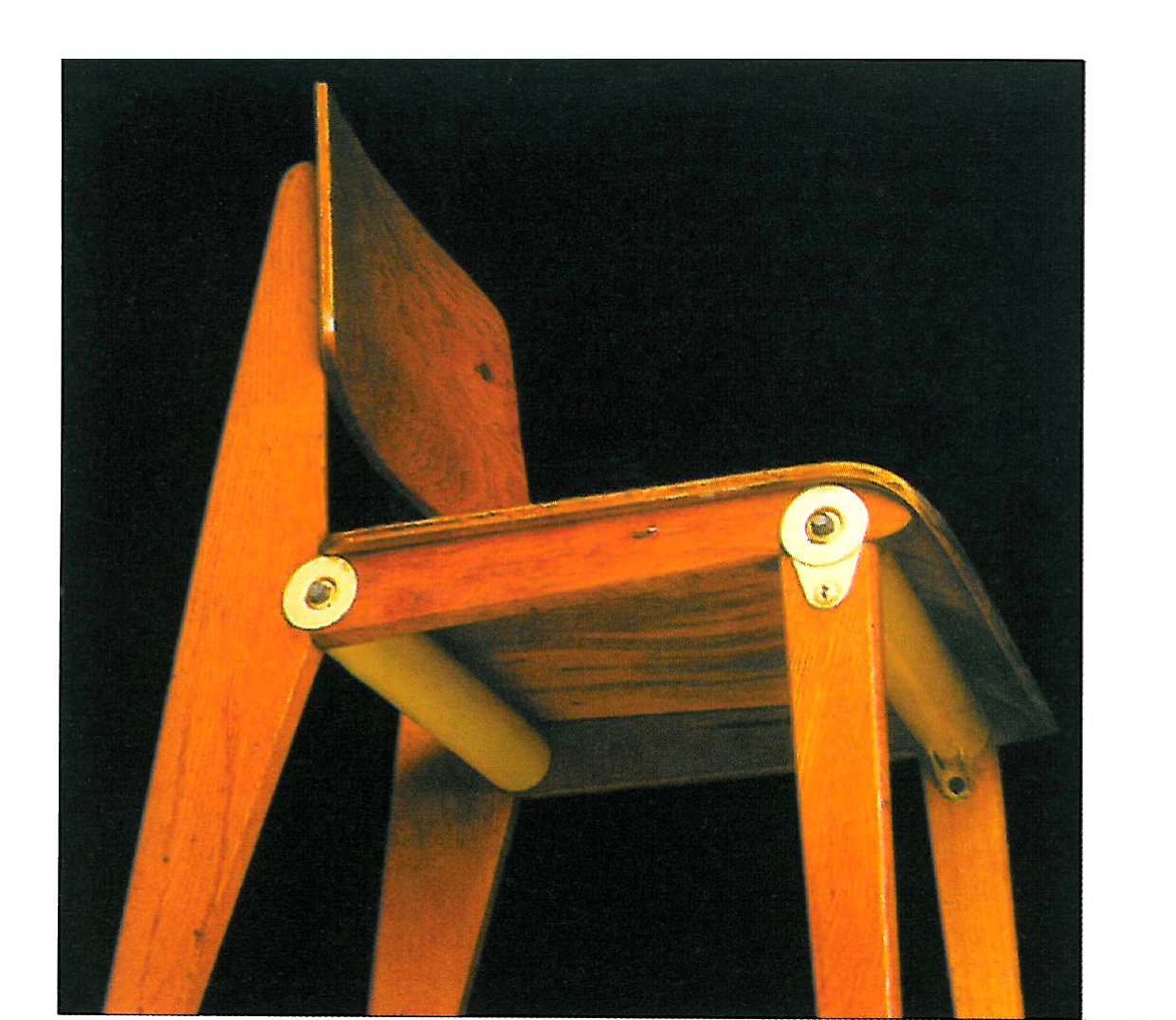
Prouvé's houses were movable, modular, cheap, practical, and usable; optimistically, they pointed to better houses of the future, and his furniture — in spite of its formal and practical solidity — were visual alternatives, painted in the bright colours of car bodies, and very practical.
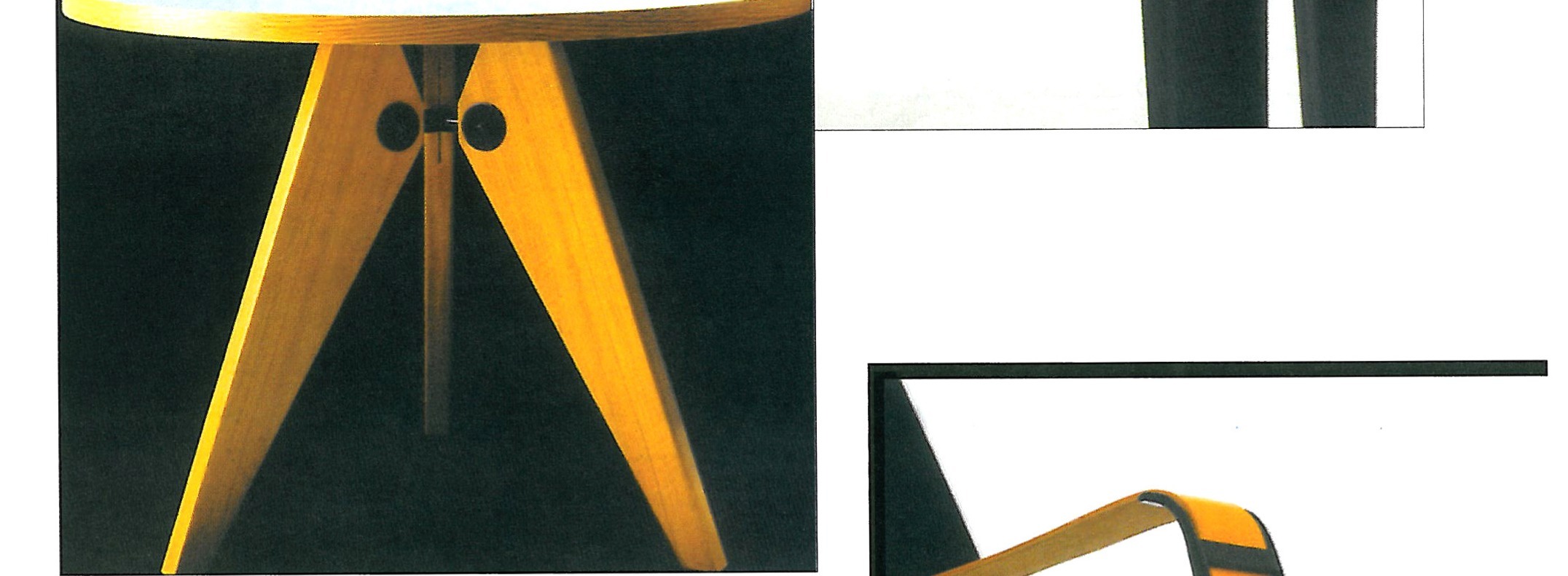
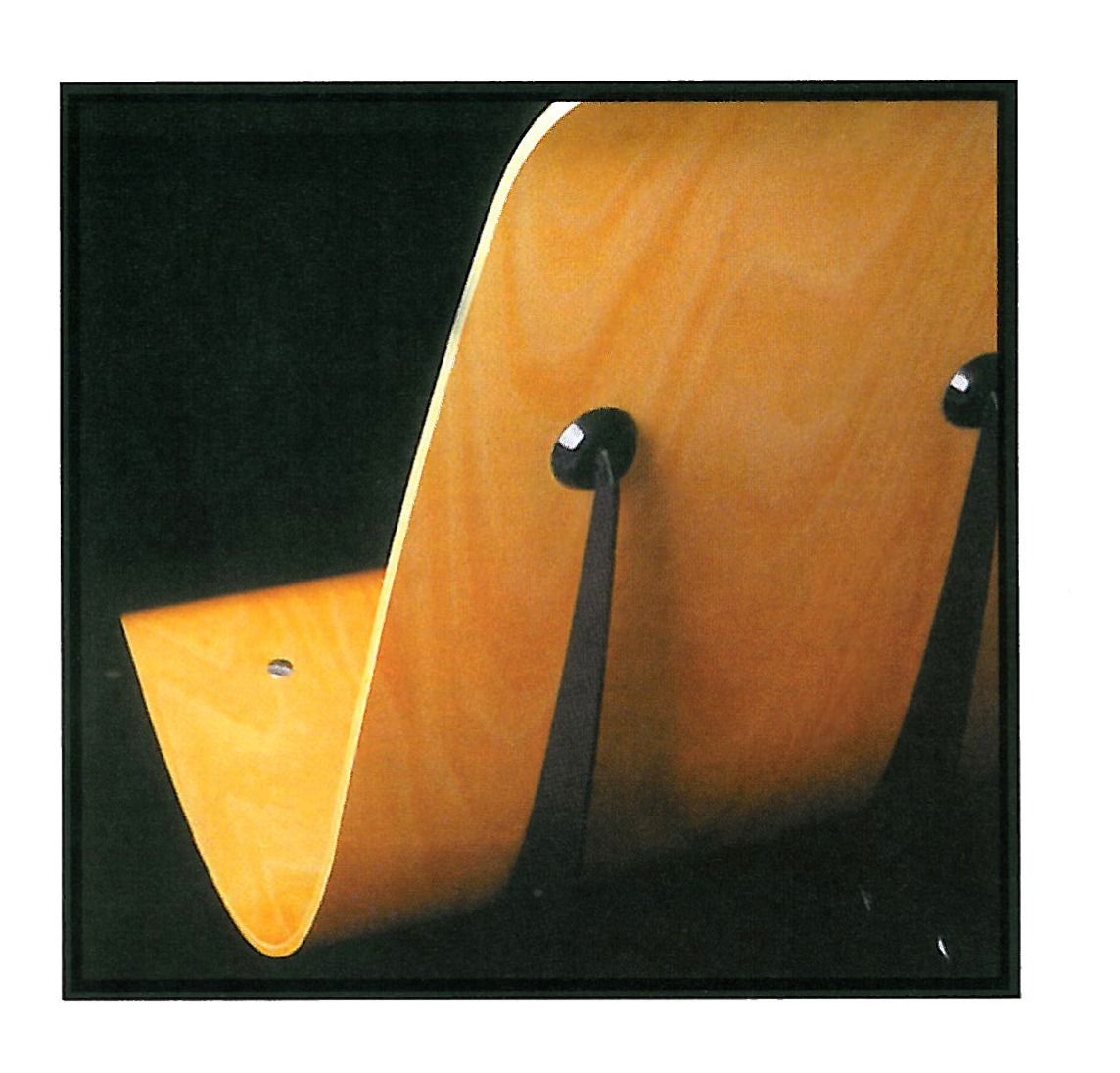
Prouvé's exaggeration in the showing of connections (visible bolts, rough welds, simple ties in the combination of dissimilar materials), while presenting harmonious, fresh forms, marked his ironic stance against the decorative character of traditional French furniture.
WAM 1930
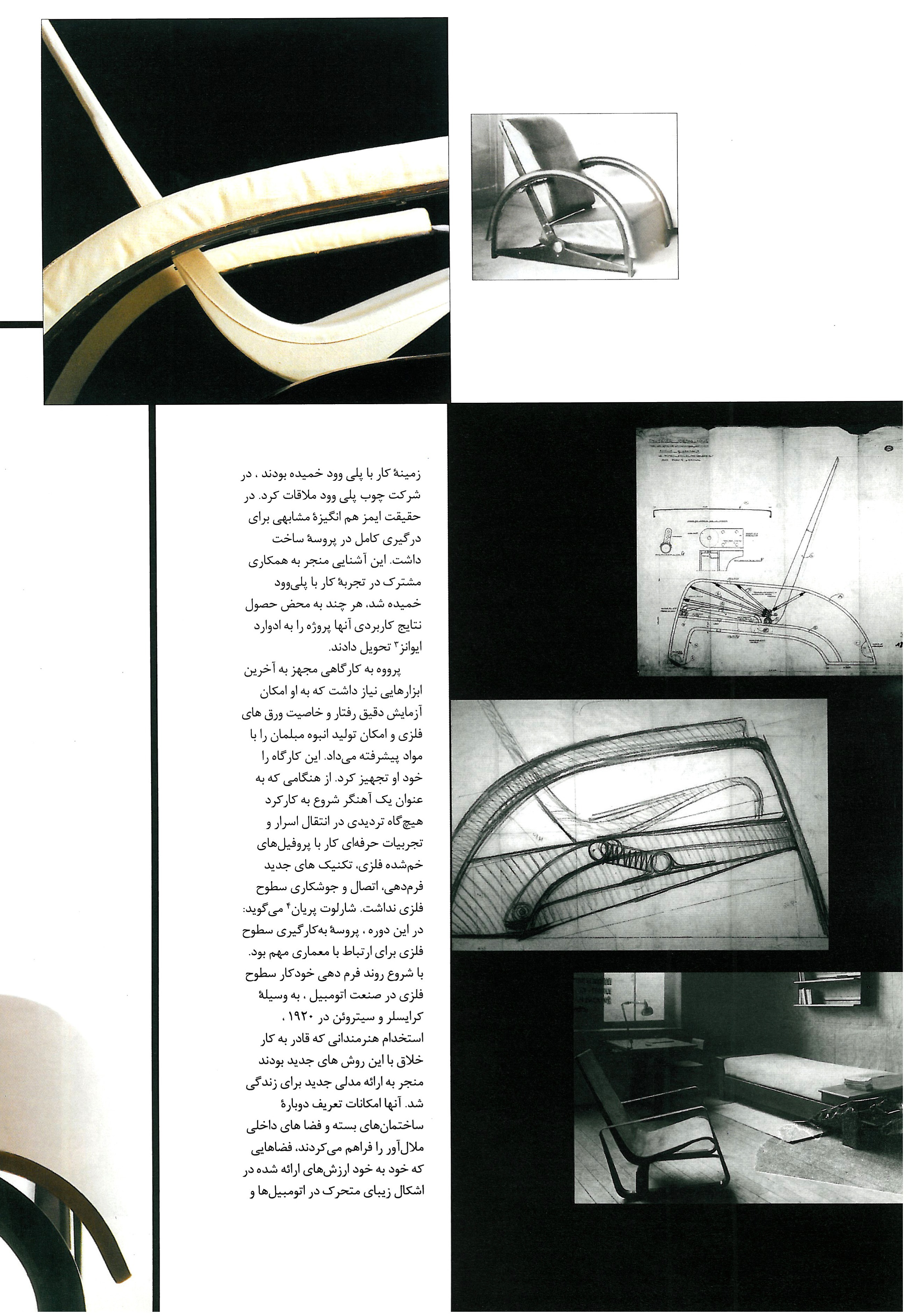
The first exhibition of the Modernist Artists' Union (WAM) in 1930 was a stage for the display of Prouvé's creative powers in turning the rigid, lifeless character of metal into a formable and flexible material — one that could be combined with leather in a delicate way, and provide the highest efficiency. The reclining chair, which he designed in 1928 for his sister's wedding ceremony, with the use of an invisible spring system and the use of a seat that, in the line of mechanical comfort, was an idea that could complete Le Corbusier's intended notion — a machine for living — is the first known piece of Prouvé's furniture, and it discredited the common prejudices about metal's inflexibility.
The workshop in place of the academy
The artists of WAM followed a leading view that had taken shape, to a great extent, outside the field of academic teaching and theory; in some sense, they were the product of their own efforts and conduct. In the shadow of continuous effort and work, by being fully engaged in the production process from design to building, and by drawing on the experience of local and vernacular craftsmen, they were able to oppose the formalism of modernity, and Prouvé's effort to do away with the various conventional aesthetic patterns held a different significance.
The prevailing climate, fed by critics like Eileen Gray, regarded the avant-garde designers' use of spring tubes and chrome plating as expensive, fragile, cold, and emotionless. In this state, Prouvé insisted on the direct and on the original of materials, and on the exaggerated showing of industrial connections and the combination of dissimilar materials, and entered the design community in the form of a sweeping transformation — showing his creative and hard-working nature.
Prouvé's lesson for today
A re-examination of Prouvé's works opens the possibility of clarifying some of the hidden corners of modern design patterns. The making of useful objects with industrial materials, with no effort to conceal their fundamental qualities, and the arriving at a delicate, poetic expression brimming with completion and beauty — which still keeps its freshness for the viewer — comes only from Prouvé. Prouvé is a forgotten example of those designers whose products' structural values were always set above the measures of the market.



