



Foreword
John Hejduk, former dean of the Irwin S. Chanin School of Architecture at The Cooper Union in New York, died of cancer last Tir (July 2000) at the age of 71. Hejduk was an influential architect, writer and teacher. His works are mostly theoretical designs expressed through sketches and writings.
Hejduk, who entered Cooper Union in the 1940s, began teaching there in 1964, became head of the architecture group in 1965, became dean in 1975, and held that post until his retirement last spring. Shigeru Ban, Elizabeth Diller, Daniel Libeskind and Toshiko Mori are among his students.
While teaching at the University of Texas at Austin, in the mid-1950s, he was part of the group known as the Texas Rangers together with Colin Rowe and others. In 1972 Hejduk's work, together with that of Peter Eisenman, Michael Graves, Charles Gwathmey and Richard Meier, was presented in the book Five Architects edited by Colin Rowe, and the five became known at the time as the "New York Five" or the "Whites" — a reference to their fascination with pure form.
Hejduk published 21 books, among them Architecture in Love, Mask of Medusa and Pewter Wings Golden Horns Stone Veils. Among his built works is an urban centre in Santiago de Compostela, Spain, recently completed. With his design for the renovation of the interior of The Cooper Union building and the creation of an architectural teaching laboratory, he produced a number of transitional spaces that could grow and change over time. His student Diller has said: "Hejduk not only invented a multi-disciplinary approach to architecture, but also founded new methods in the teaching of architecture that looked at architecture as a creative and intellectual endeavour. Three decades of his penetrating teaching turned many of his students into propagators of his approach." His other student Diane Lewis has said: "He was one of the most important figures of the tradition of freedom and intellectual life in New York. The space he brought into being will remain and will develop."
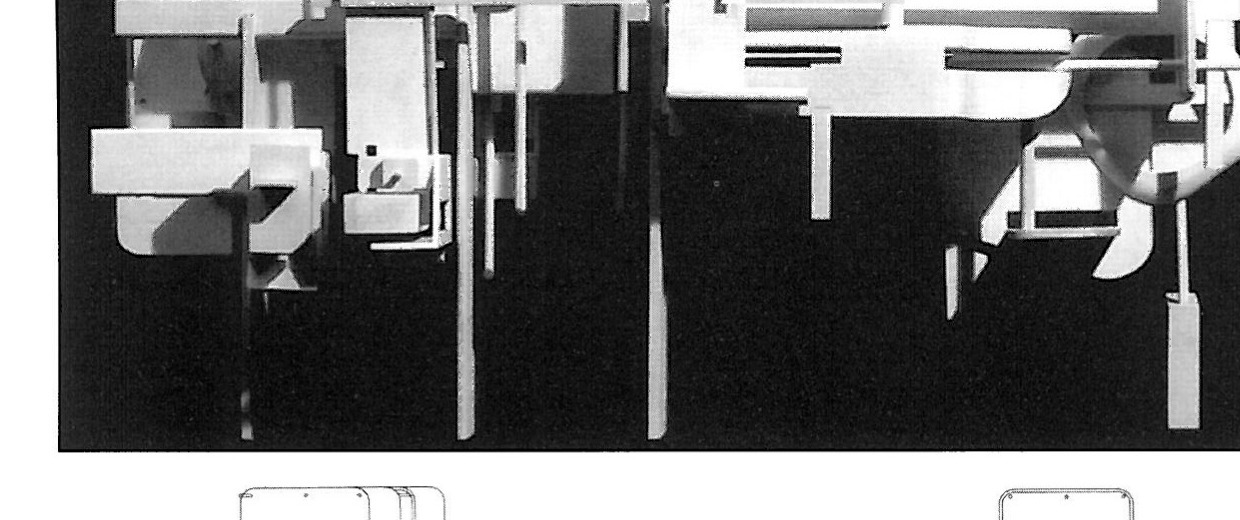
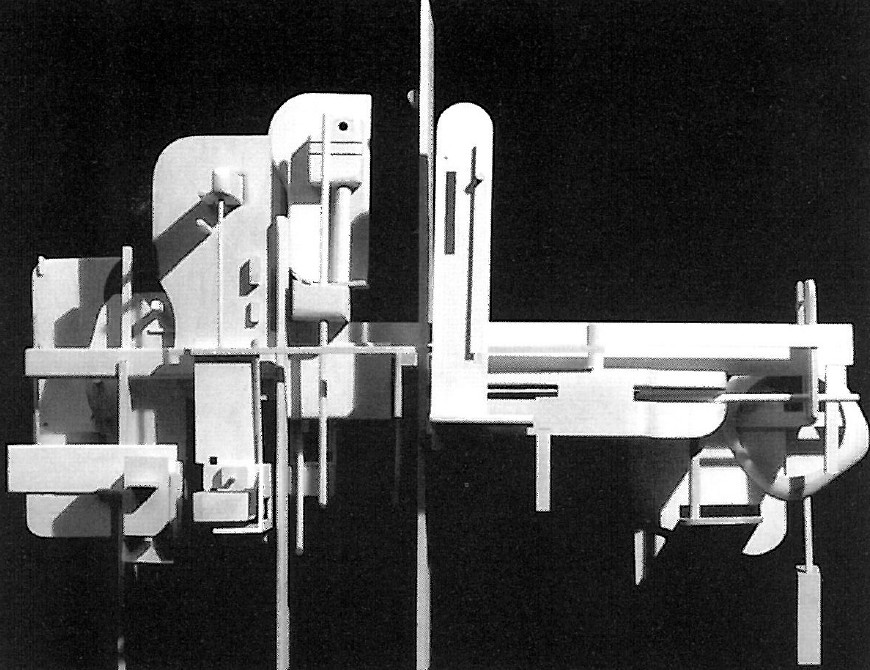
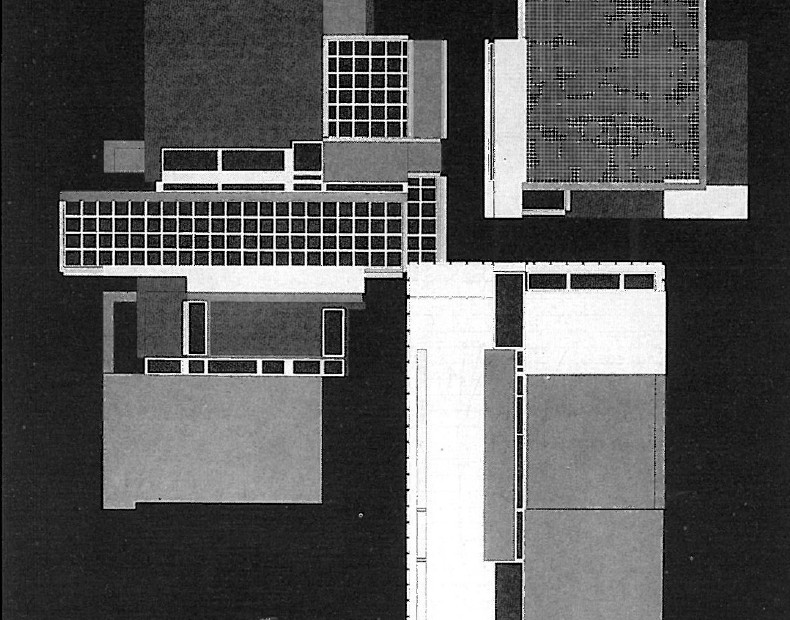
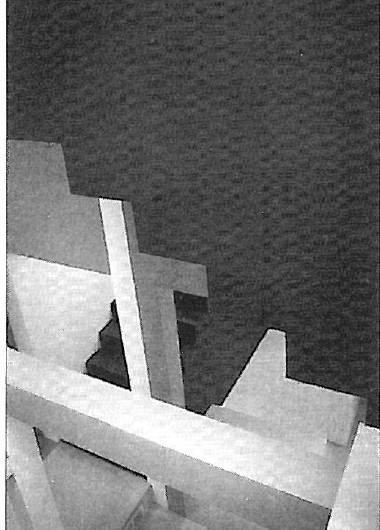
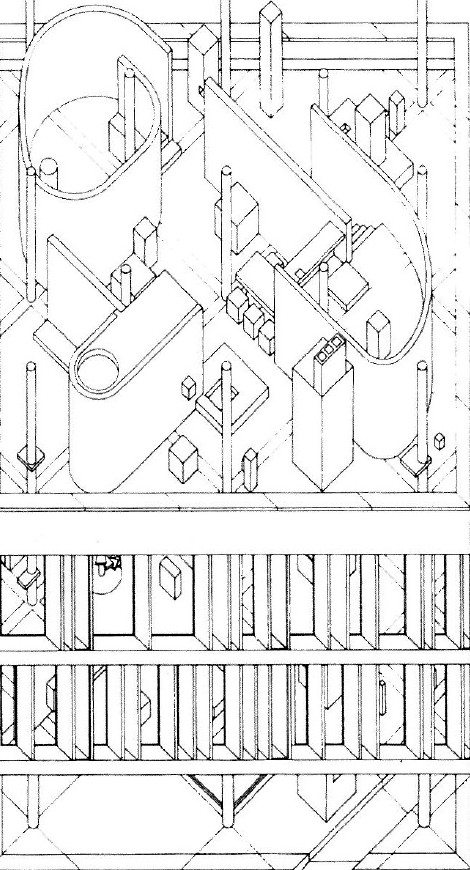
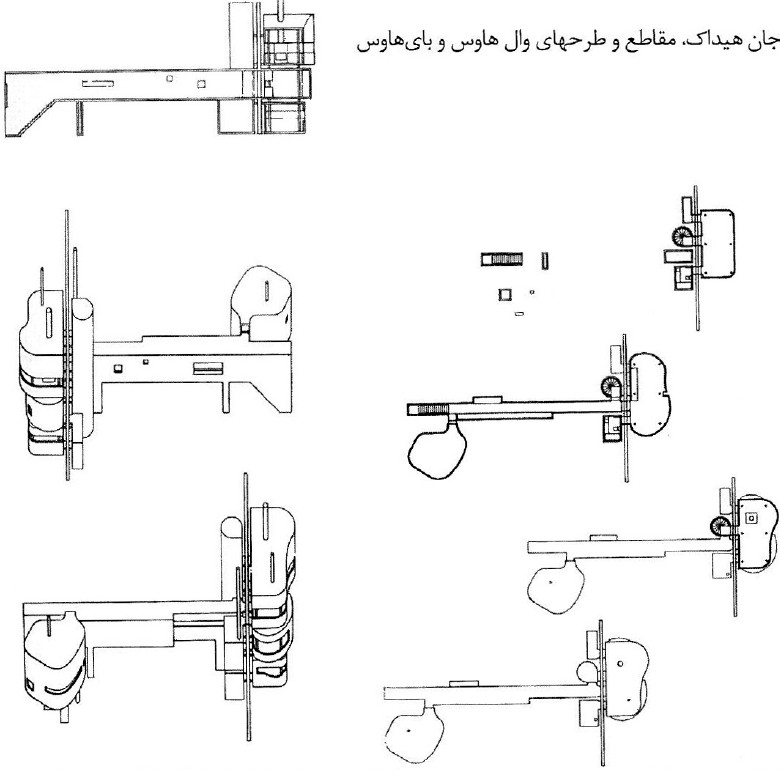
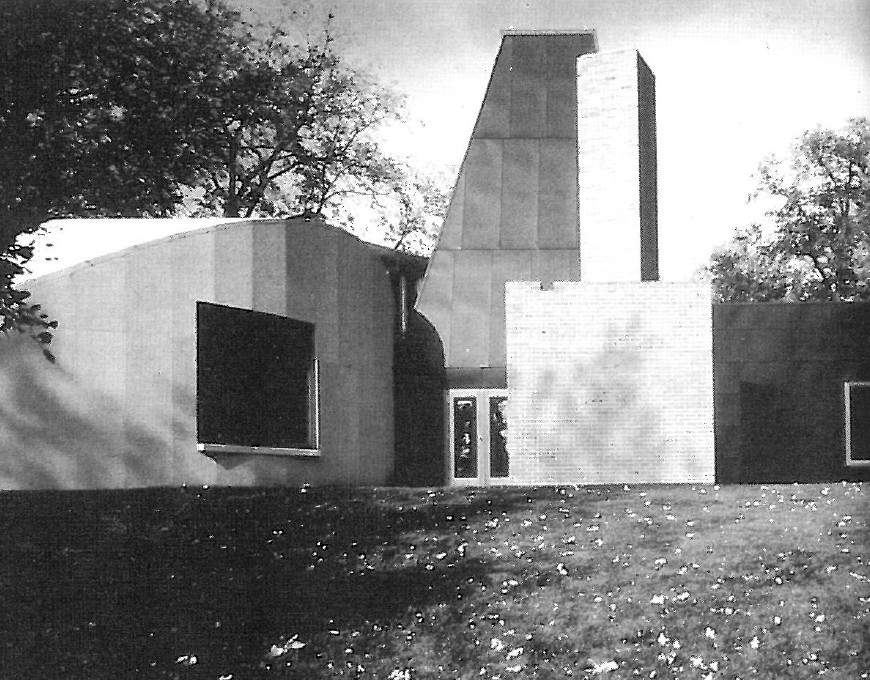
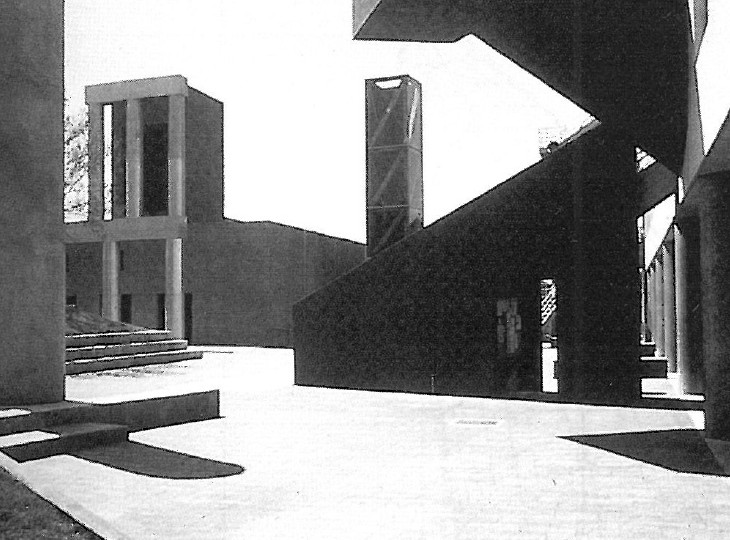
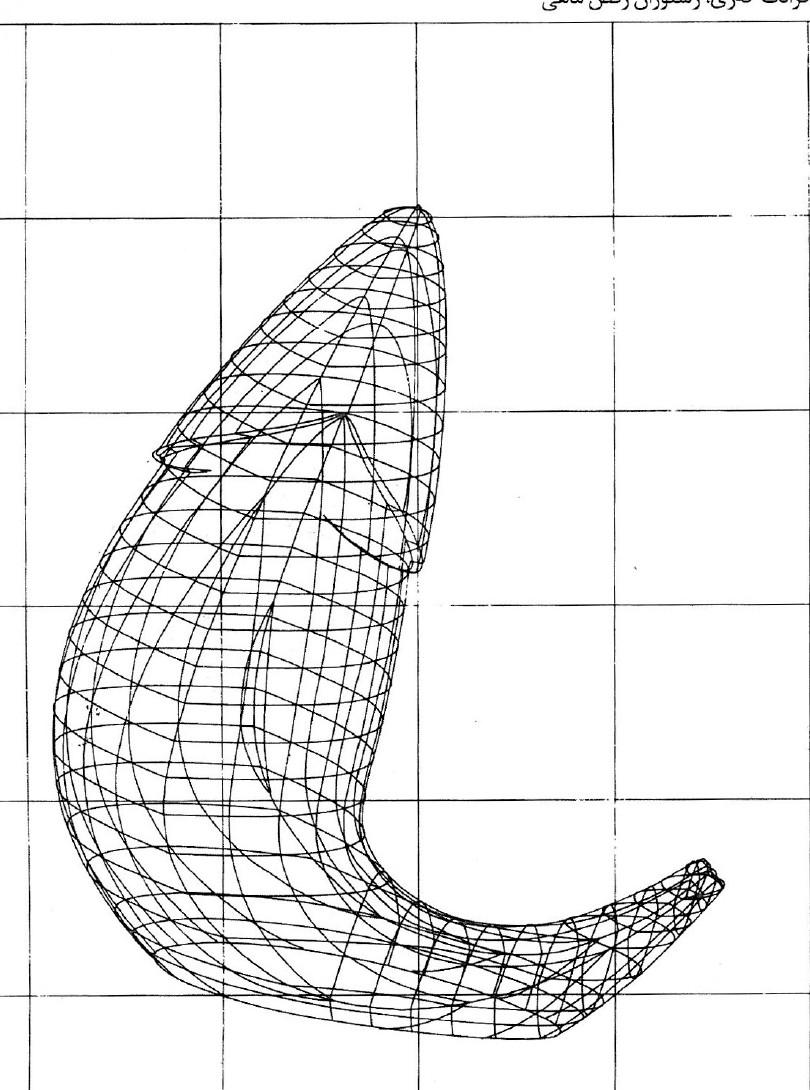
On the occasion of his death, and to help readers become acquainted with Hejduk's architectural thinking and with the quality of his influence on the architectural teaching of the last three decades, in this issue — following Bahram Shirdel's recollections of Hejduk, Aaron Betsky's essay introducing four post-modern architects (of whom Hejduk is one), and then David Shapiro's interview with him — we present images of his work.
* From Architectural Record, no. 8, 2000.
John Hejduk (1929-2000) — by Bahram Shirdel
On a trip to Venezuela for the design of the Embassy of the Islamic Republic of Iran in Caracas, while looking for Venezuelan architectural magazines in a bookshop, I came across the September-October issue of Architecture d'Aujourd'hui and learned of Hejduk's death through a short article that Peter Eisenman had written about him. On my return, when I knew that Memar was planning to publish something about Hejduk and Enric Miralles, the Spanish architect — who happened to die on the same day — I thought of writing something in tribute to Hejduk, who was truly dear to me. Now what I remember, after learning of the death of the man whose student I had once wished to be, I set down here just as I remember.
I remember in the 1970s, when I was a student of architecture at the University of Toronto, with a group of my classmates and with great interest I followed the work of two wholly different architects, caught in the thought of which one of them we should choose as our model: John Hejduk and Aldo Rossi. The school at that time was influenced by social currents and movements, and guests and lecturers were chosen according to their intellectual orientation. At Cooper Union, on the other hand, which Hejduk led — despite his personal idealism (he was a believing Catholic, opposed to the capitalist system of America, and deeply devoted to literature, poetry and philosophy) — they concerned themselves with architecture and with architecture itself, and did not replace architecture with sociology and literature. For this reason the graduates of that school were fully aware of the craft, techniques and methods of architecture.
Inviting Hejduk to lecture at the University of Toronto was not an easy matter at the time, and with much effort we succeeded, in place of someone like Herzberger — who was preferred by the school — in inviting Hejduk. In the course of that lecture, and of my later contact with him, I learned that the relation between architecture and social currents can be reversed: it is architecture that can be the source of the shaping of social currents.
I remember that my first architecture lecture was later given at Hejduk's invitation at Cooper Union. The subject of the lecture was the subject of my thesis, Country of Spectators. On the day of the lecture, I went with Hejduk and two of his colleagues to the school auditorium. Not a single person had come to hear me. Hejduk told his young colleagues: "Tell every student that either they come to the auditorium within 5 minutes, or they are expelled from the school within 10 minutes." The auditorium really did fill up within 5 minutes. Now when I think of that day, I see that in that lecture I said my first and last and best words, and that whatever I have said since has seemed extra. Hejduk himself spoke very little. He used to say: "Architecture we receive with our eyes, and we draw with our hands; and this process proceeds better in silence."
I remember in 1985, while teaching at Harvard — at the same time when Eisenman was also a visiting professor at Harvard GSD — that Harry Cobb, the dean, proposed Eisenman for the university professorship (then a very important post), which in my view his professional and teaching record fully deserved. On the very day the result was announced, Eisenman — who was always cheerful, energetic and talkative — came to me unannounced and said without preface: "Look what they have done to me!" I knew that Cobb's proposal had been rejected. Some weeks later, when I met Hejduk, I learned that he, as dean of the prestigious Cooper Union, had accepted Eisenman — for whom he had no fondness, either as a person or as an architect — as a professor at the school. This sympathy, generosity and keeping of collaboration and friendship were among the features of Hejduk's personality and the expression of his social ideals.
I remember when I was a student of Daniel Libeskind — who was himself once a student of Hejduk — I showed my works to Hejduk. He introduced me to Sassetta, the fourteenth-century Italian painter, whose architectural space, it seemed to him, resembled mine. Hejduk always watched over the works of us — the students of his students — and we too were always mindful of him, who was the master of our master.
I remember, when teaching at Harvard, trying as a teaching method to work on the work of other architects. In my view, in teaching one must teach only architecture, and the best way of teaching architecture is to work on the work of other architects — not, as is customary, on abstract projects and various typologies. At that time we worked on Hejduk's Wall House. Hejduk had designed using 90-degree axonometric projection on the plan, while the three-dimensional model of the project was an ordinary three-dimensional model on the horizon line. We tried to make the three-dimensional model based on the 90-degree axonometric projection, thinking that a different space would come into being.
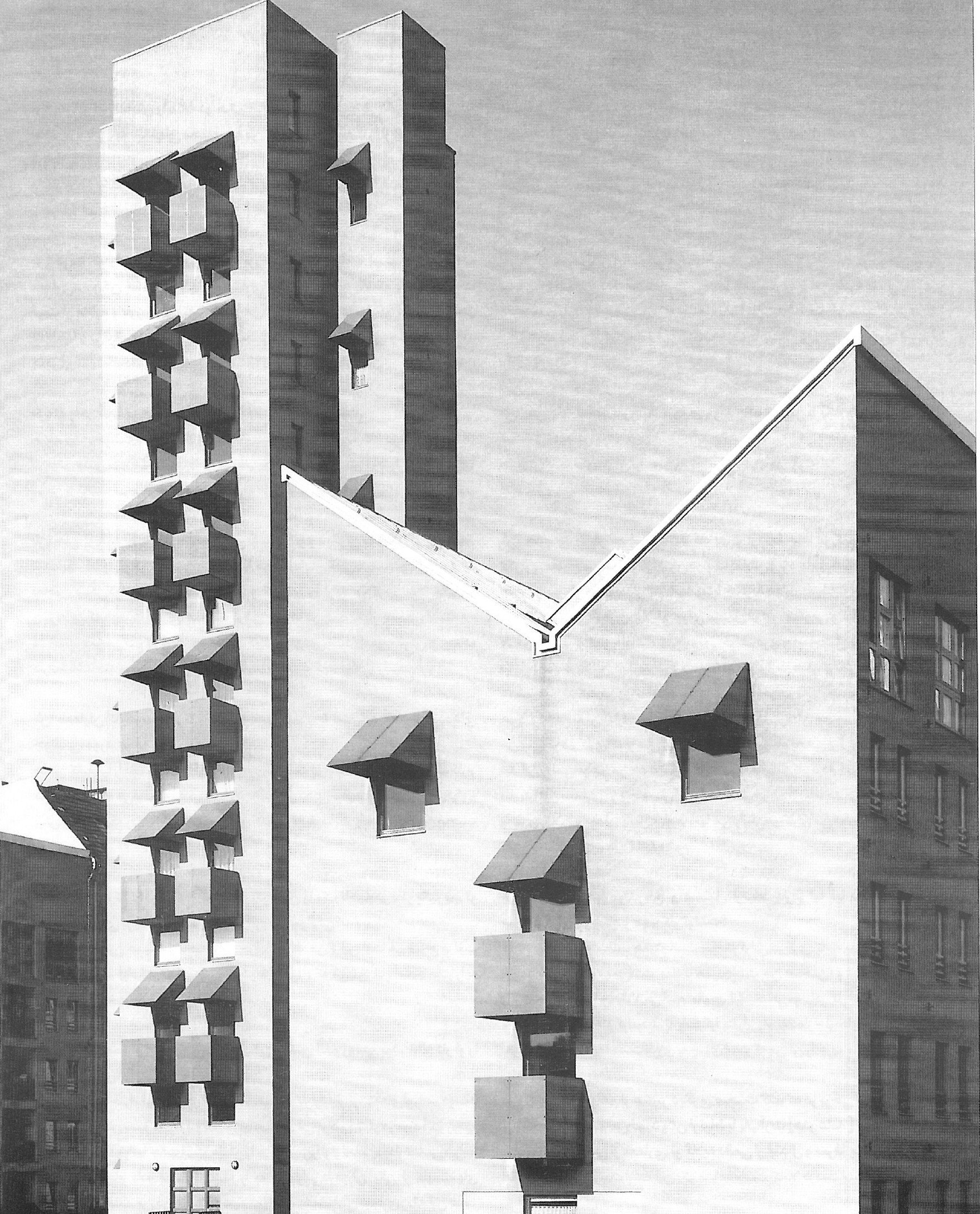
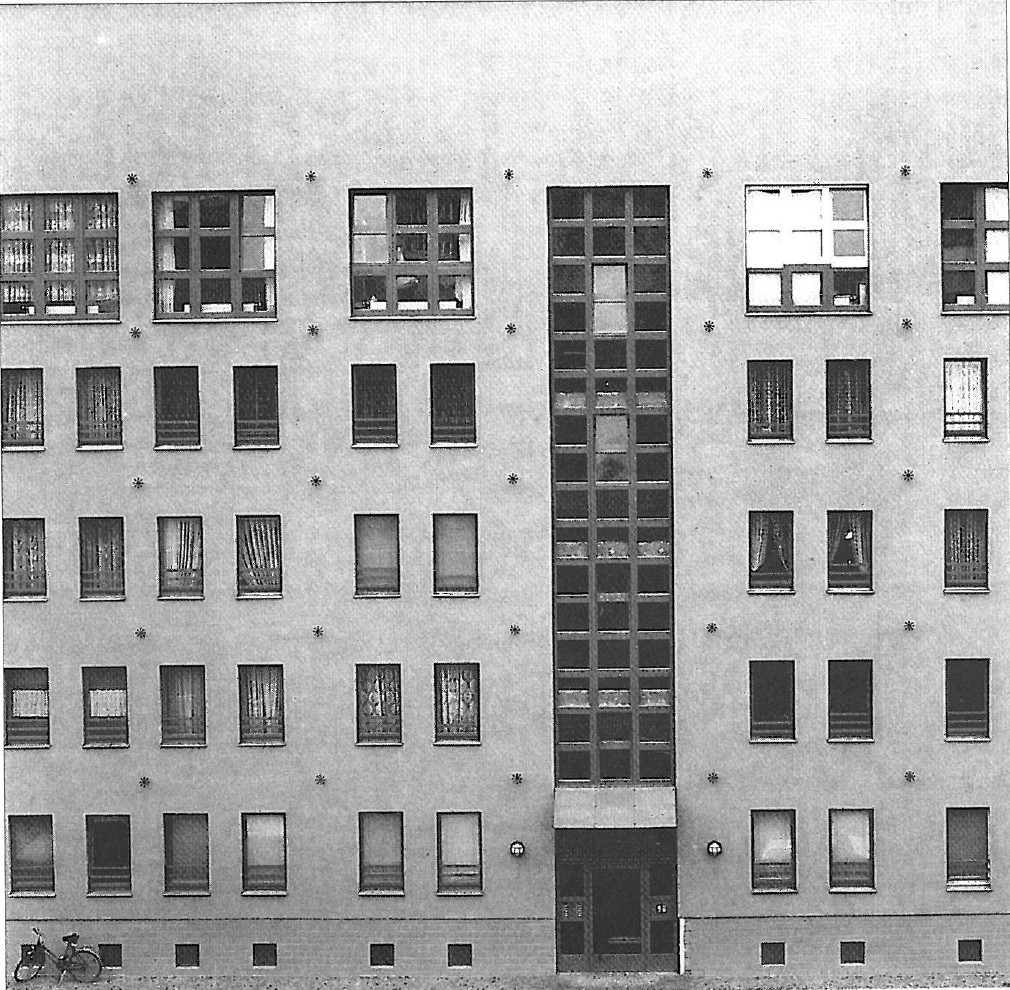
And finally, in my view John Hejduk's architecture was another architecture for another world. I hold that the new current of post-modern architecture began with the work of John Hejduk. He was in fact the founder of the new current that carried architecture from the twentieth to the twenty-first century — and that was not easy, because it took place not in a revolutionary current or at a turning point of a sudden transformation. For this work he had to build a bridge across which one could pass from one century to the next. In my view, the Wall House project and then his Venice projects were that bridge, which no one other than Hejduk — a true idealist — had the strength to build. He showed his seriousness and integrity in this work in the early 1980s, in the great Berlin IBA scheme: that organisation asked the world's famous architects to propose designs for a large housing project in Berlin. All the architects, despite differences of style, brought to mind apartment blocks of uniform design. Hejduk, however, remained faithful to his belief that "every human being has a unique personality, and architecture for the human cannot take place without regard for this personality." IBA did not know what to do with his designs, and for that reason they were not built. Hejduk's designs are indicative of the strength of his social thought. Hejduk wanted a human architecture, not the work of architects who easily sell it to everyone and everything — to the capitalist and to ideologies. Against this current, Hejduk made of Cooper Union a fortress for the defence of the values of pure architecture. In any event, as Eisenman has also said: "History will not forget him, and one day he will rise above the noise of the harmonised voices of today."
— Bahram Shirdel
Four architects after modernism — by Aaron Betsky
Robert Venturi belongs to the beginning of the post-modern era. In what is known as "the post-modern movement according to Jencks", Venturi strives to make of architecture a defensive shield of meaning, dressed in classical clothing. At first Venturi was the saviour of the modern project. He realised that architecture can no longer make an imposing idol of function and impose one theoretical sentence on all its workings; instead, he argued for a new kind of design — design that takes electronic communications as the basis of the last cycle of production and consumption, and that seeks to make measured use of this controlling tool.
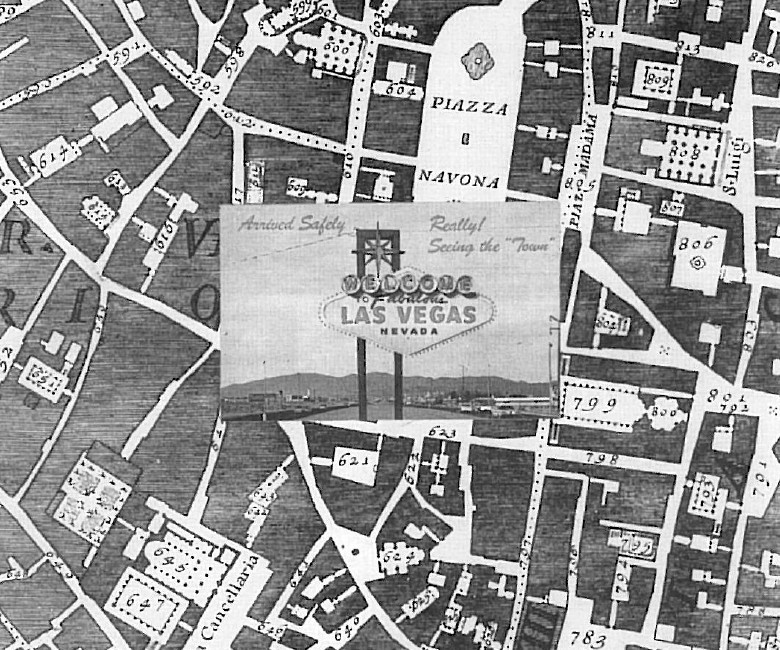
Venturi first disclosed the fact that architecture does not keep pace with the increasing complexity and contradiction of the modern world, and that its official vocabulary is no longer able to describe these complexities. Earlier, in Complexity and Contradiction in Architecture (1966), he had discussed the effect of traditional monuments and the dominance of function on every supposed cultural concept and convention. In Learning from Las Vegas, Venturi wrote: "The complex settings and programmes, in addition to the old architectural triple of structure, form, and light in the service of space, need complex media compositions. They require more an architecture of strong communication than an architecture of subtle expression." And he described a landscape that could not be measured by traditional architectural criteria: days lacking clear boundaries and nights wholly boundless; a land governed by chaos and continuously changing.
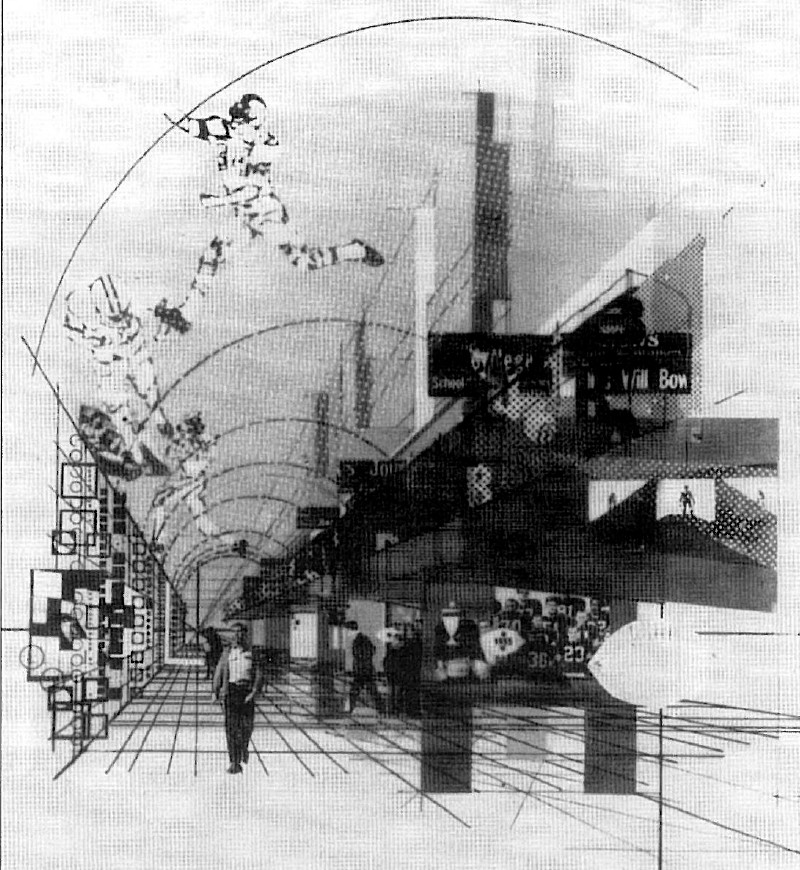
Until the mid-1970s Venturi tried to realise this brilliant analysis, which was originally prepared for Las Vegas but had the capacity to be extended to the landscape of chaos and ritual activities of the suburbs and ex-suburbs of the whole world. Projects such as the New Brunswick Football Hall of Fame (New Jersey, 1967) offered a remedy to the closed space of the classical building: the making of a purposeful, uncomfortable and unfinished form — a building one side of which is the spectators' stand, while the other side is merely framing for a great sign. The interior, which resembles a church nave, is a narrow multi-section path with scaleless electronic images and scattered display objects. Venturi was in pursuit of an architecture of pure communication and of the immaterial use of experiences.
The method of Venturi and Brown was the use of decorative and repeated patterns. In their belief, this strategy took over and made use of the essential quality of mass-produced goods: "If architecture is nothing more than advertising for a product, it must come to the fore by a (mild) interpretation of these characteristics. Repeated patterns can moderate the standard index of our industrial methods of production." In the end, this mild acuity turned merely into a joke for amusement, which in turn gave way to another architecture that covers the absence of meaning in our life with a decorative pattern that, in the patchwork of classical tradition, increasingly repeats the present state.
Venturi somewhere says: "Sometimes I think my next book should be called 'Modern Architecture: By and Large It's Doing OK.'" But this remark became the war-drum of a group of former modernists who had gathered around the circle that Peter Eisenman called the "Five New Yorkers". For them, modernism is read as a style with a particular self-awareness, and the process of modernisation is taken syntactically in Chomsky's sense.
Over a ten-year period beginning in 1967, Eisenman each year produced a house in whose setting he manipulated the architectural elements. For him, meaning arises from the syntactic relation between structural systems. Functional characteristics are allegories of those hidden structures that order our life; this allegory is created through setting several mutually contradictory systems of syntactic relation side by side. Systems, instead of being defined by their functional characteristics — for example, human entry (door) or light (window) — are carefully numbered as abstract structures. He tries to give three-dimensional form to what remains hidden, and to allow us, depending on the kind of our presence, to experience the abstract structure — but never to grasp it fully.
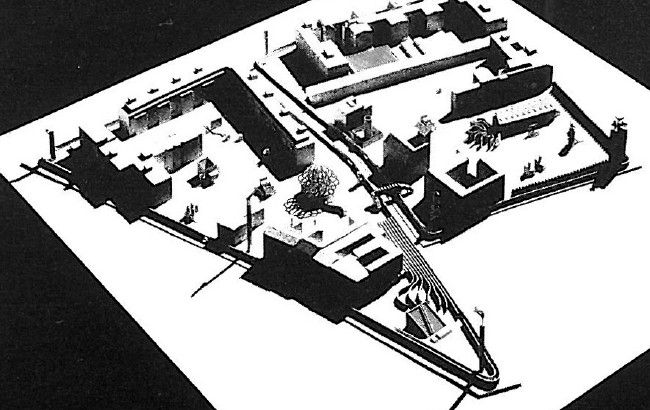
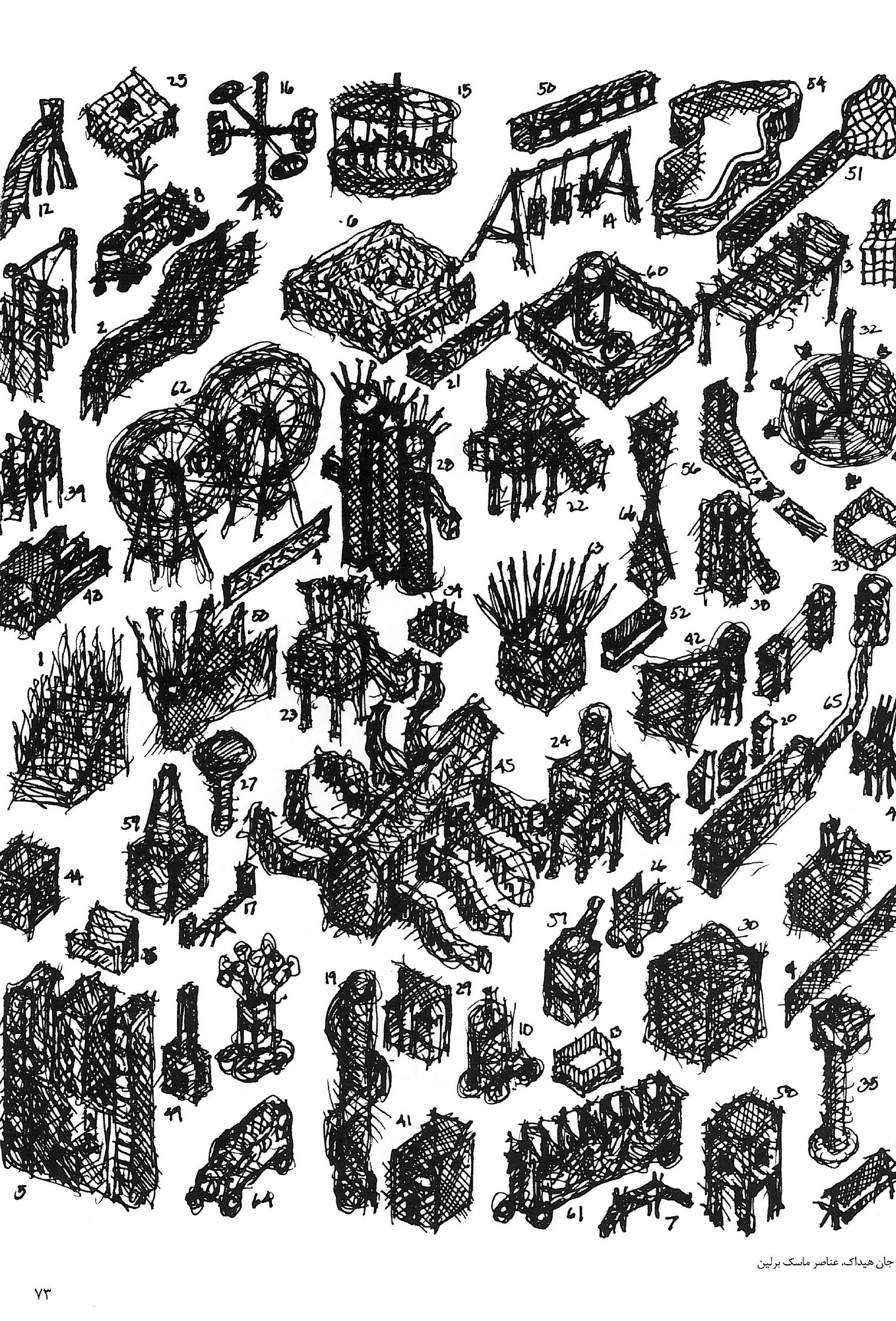
John Hejduk, the third figure of this set, left behind the elements of the Berlin Mask in a large scheme as a call to ritual. In his "Berlin Houses" (1988), "Tegel Houses, Germany", and "Clock / The Collapse of Time", he offered works in which architecture emerges as the stage for a rite — a house for presence and absence and a monument to an angelic presence. His work, from the very beginning, opened a path to which Hejduk devoted himself: an architecture that, while material, is bound to a poetic and ritual precinct.
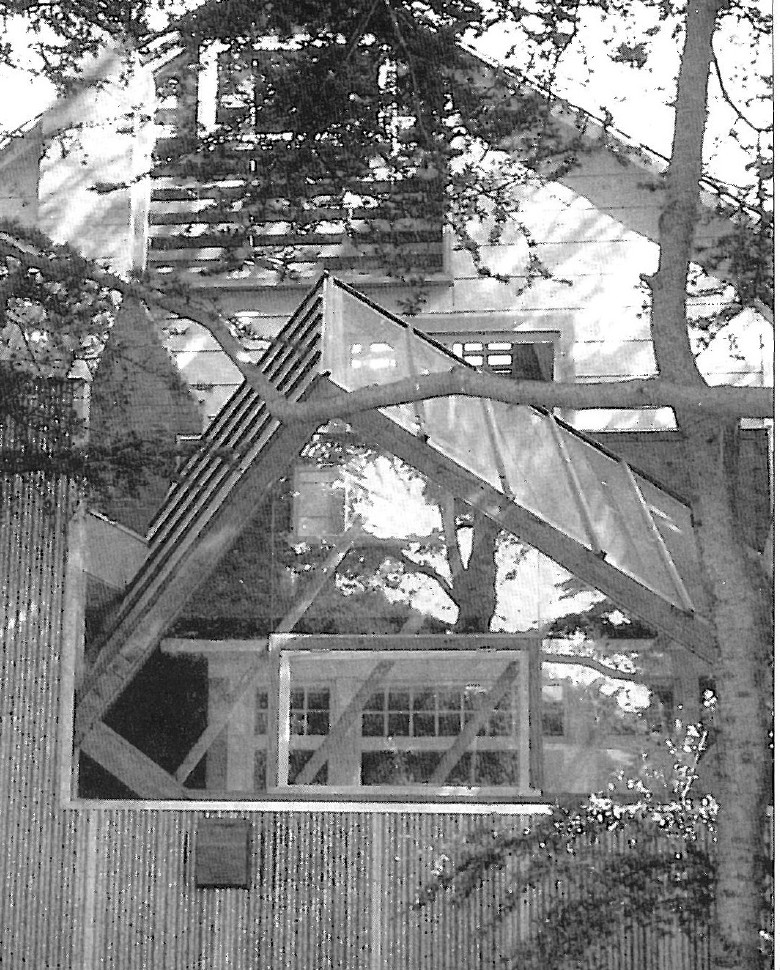
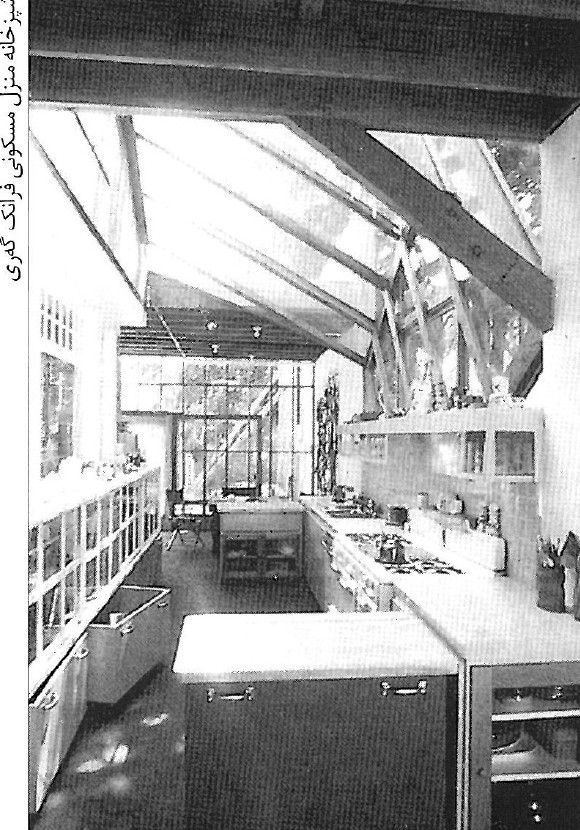
Frank Gehry — as in such buildings as the Foz Psychology Institute (1989) or the Herman Miller Western Distribution building (1989) — pushes function and the bounding of space wholly to the background. In contrast to these backgrounds, the pavilions characterise the most important activity of the building: what Gehry calls "the client's mentality about the nature of the programme and the place." Architecture becomes the making of the practical form of one of the elements that are expressed in the building blocks of the world around us, thereby bringing out the institutional coherence of programme, context and construction materials. To stress this disclosure further, Gehry borrows tactics from Gordon Matta-Clark — who made cuts in built buildings, and, to carry out this disclosure, exposed the resulting implicit shapes (circle, spiral, rhombus) in the opened space.
Gehry raises the possibility that a building must necessarily be fragmentary, riddle-like, and like a stage for human acts; and that we must continuously search for perfection through abstraction, strange-making and re-working the world. Gehry accepts neither objects nor fabrics, neither the sensory understanding of the world nor the rational understanding; he accepts only the ever-changing act of making and knowing, tied together by the thin — and perhaps only — thread of working upon the world.
Venturi, Eisenman, Hejduk and Gehry all brought distinct strategies to bear upon the continuation of the modern project. With the sum of their activities they looked toward the question of how the processes of modernisation may be represented and given body. The making of closed systems that are a sign for the present society is no longer on the agenda. The best understanding of architecture as an activity must regard it as a process that gives to the "self" the possibility of taking part in the rebuilding of the world. These are fundamental social activities that draw the self into the range of the collective; they are also imaginative representations, in the sense that they cannot be fulfilled without destroying themselves. Their schemes for an architecture beyond function, space and context have widened the field of the work.
1. Charles Jencks, in The Language of Post-Modern Architecture (London: Academy Editions, 1977), gave a name and features to this movement; the book was followed by further editions on the same subject and sought to free post-modern architecture from the tradition of humanism and the present state. 2. Close to this meaning in Iran is the term "shabih" used in ta'zieh.
A conversation with John Hejduk — by David Shapiro
S: John, why should an architect kill an angel?
H: Because he has read Rilke. Two or three years ago I came across poems by Rilke that had been translated into English by an extraordinary person named Edward Snow. Snow is a young writer from Texas who translated Rilke's later poems for North Point Press. The English translation of these poems must be counted among the most beautiful English writings. Rilke is full of angels, and somewhere I read that someone believed Rilke was a lost angel upon the earth. He came down to earth, in the earth he had lost his way, because he was always moving from one place to another. He lived in one house, then another — always accompanied by women — and made this angel-like journey. Angels travel that way. He was never silent; he is always speaking of angels. I believe he was himself an angel.
S: Why does an architect kill an angel?
H: Now is the time for drawing angels. Angels are strangely linked to crucifixion. In Flaubert's novel Salammbô you read that there was a war in Carthage. One of the armies was advancing. Suddenly dreadful animal roars reached their ears. They came to the top of a hill, and when they came to the top of the hill they saw a lion that had just been crucified. They also saw a long row of crucified lions at different stages of death, decay and decomposition. The invading army said to itself: "What kind of a nation crucifies lions?" After the lions and animals came the crucifixion of human beings, and after that the crucifixion of gods. We live in a time when we have the power to crucify angels. What has always drawn me in the old paintings of crucifixion is the shape of the cross — how the cross was made. It is in this way that angels become the concern of an architect.
S: Cooper Union, where you have taught for years, is also a building you have renovated as an architect. As you said, it is a great "building-work." Fairfield Porter once said: "Teaching is a great sin." You love teaching. How do you teach architecture?
H: I think that's an astonishing phrase, because teaching is sometimes really a great sin. In my view, sins are sometimes pleasurable, just as without sin in the world there would be no pleasure. But how do I teach architecture? By bringing out the creativity of the students. I never draw for my students, nor on their work, and I never tell them what to do. Really, I try to draw something out of them — in other words, to draw out what is inside them. I make only one specific key point clear to them, and then they can nurture their own idea. I am opposed to that kind of theoretical teaching that tells you one by one what to do all the time. Darwin began his sea voyage — that five-year journey — at 22, and the captain of the Beagle was only 25. This time of life is among the most creative, and one must meet it with gentleness, with great gentleness. I teach gently.
S: Cooper became famous for a period for "the nine-squares problem," for things that seemed to have gone back very rigorously and rule-bound.
H: Yes, that is true. But one must believe that rules must be strict and exact. Architecture is made up of very dry, very fine and very exact rules, and no one should ever lose sight of this. Our idea was to use a very simple teaching method — it seemed simple: give the students a problem and then work on it. That is the method.
S: Which of your teachers are still on your mind?
H: In the 1940s, when I was a student at Cooper Union, I had three or four excellent teachers. One of the best was a woman named Henriette Schutz, who taught two-dimensional design. Another was Robert Gatje, a teacher of drafting. Then a sculpture teacher named Cratina; he was the one who made the Parkchester sculptures — the housing project in the Bronx — in the late 1930s. I loved Cratina's way of teaching: it is easy to find a negative point in any student's work; but he taught me that it is always better to find a positive point. It sounds pedestrian, but it makes life better, not worse.
S: People say that in your architecture there is a period of everyday work — a period of everyday architecture — and that sometimes you are called a kind of architect of fantasies. What do you say about your professional life?
H: I reject that. That is the view of someone who looks at the subject from the outside. Above all, I hate the word "fantasies." It is the kiss of death. When someone labels another's work as fantasy, he is letting himself off. Everything is wholly like a ritual. I believe in the sacred and in rituals. This matter is somewhat medieval, because our age is re-reading a definite way of coming to terms with rituals and with spiritual presence in life.
S: John, we live in a time in which many critiques are made of fabric and context. Will buildings be built without fabric and context?
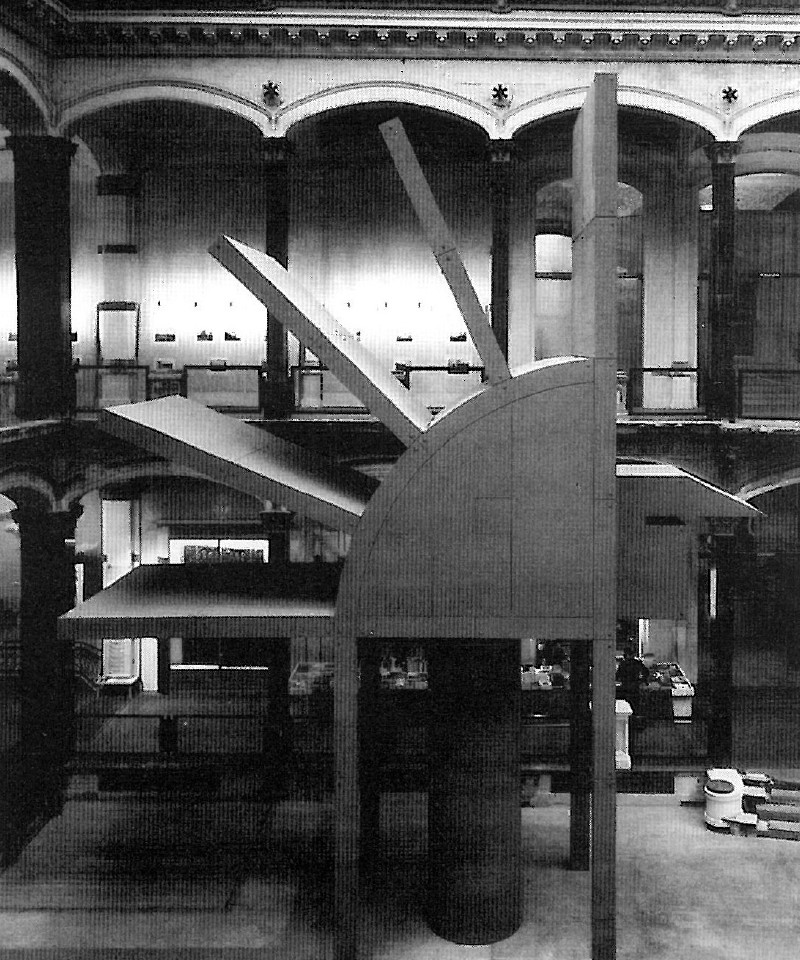
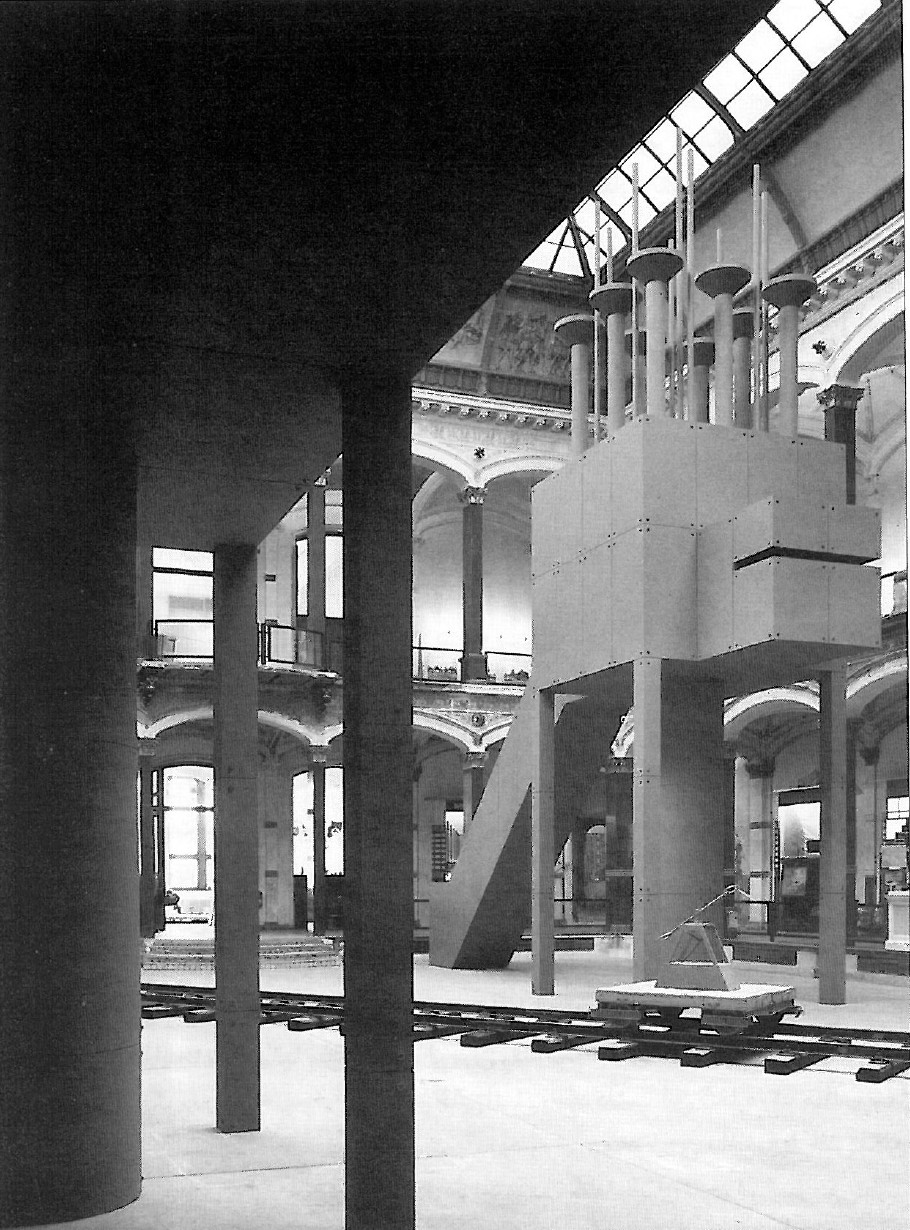
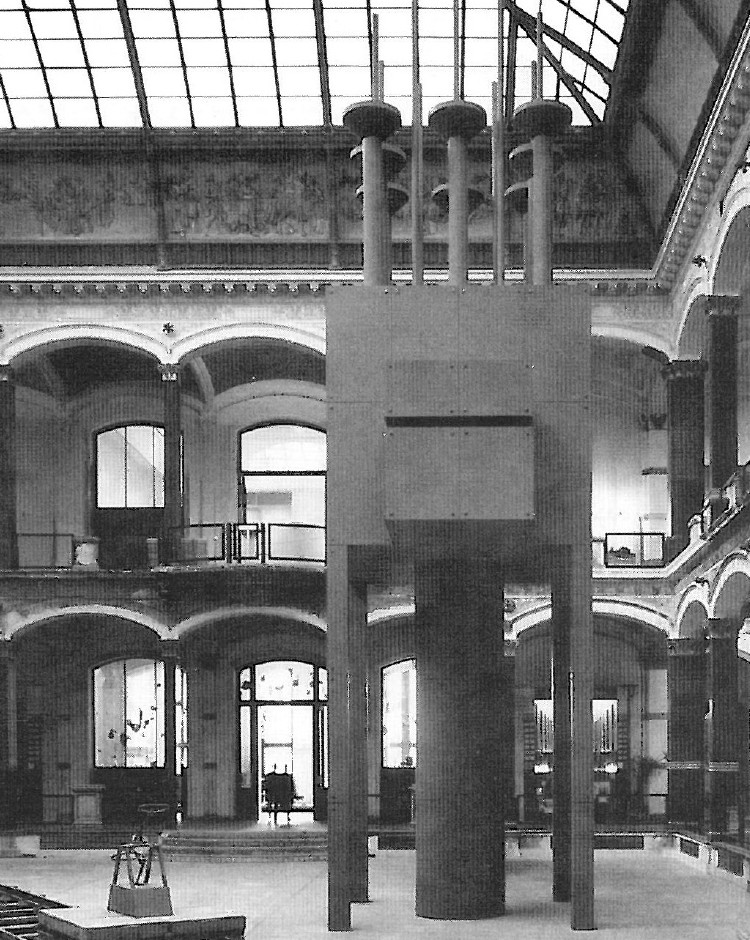
H: That is primitive, because we live in a period of primitiveness. I mean, that is idle talk. I remember Dr. Eisenman coming to Berlin and seeing these two pieces [of my work] in the great hall. They were fifty feet tall, and people, because of the attraction they emitted, would not put one foot over the other. We were talking of such a presence and space, and Peter said to me that these are not architecture, because people cannot relate to them. I stared at him and said: "You cannot relate to them." Do you understand? In other words, he was not in a position to relate to them, because he did not understand what we had in mind.
S: Let us speak of dread. We live in a time when Adorno said that after Auschwitz not a single poem can exist. You have written on rites of sacrifice. How did you manage it?
H: Victims is a book — let me put it this way — it is a book … but it is something else; it is a work I have left behind myself. I don't know how to say it. But it is only a work about that problem I have left behind. The book Victims is my distilled view — that much I can say — of terror. This rite is for all of us — no, no, not only for Berlin; for all of us in the world today there are things that cannot be spoken. Always ask architects, in addition to aesthetic questions, about the social and political aspects of their work as well. That is what the architect is. He has to deal with all these many things.
S: In the "era of homelessness", how did you react?
H: How did I react? It is a matter of shame. The whole city has not provided ordinary housing for its people. Do you know what they did in Berlin? They housed their people — within ten years. The same should be done here. I am not speaking superficially; I hold a deep belief. All forces should be turned to this direction. I am not overly optimistic about this — but for the city to recover itself to some extent, it is necessary to deal with this problem.
S: You were born in the Bronx. Once you showed New England to Aldo Rossi. How much of your work comes from Nathaniel Hawthorne and the "dark conscience" of the Puritans?
H: My wife has a major influence on my thought. A year ago I was sitting here at Cooper Union, and while looking over the students' work I said to them: "You do not even know the silent teachers you have." In our life there are many silent teachers — people from whom you do not even realise you have learned something. In this matter I have been taught by my wife, because she drew me to music and to literature, and she puts Hawthorne's book in my hands. She constantly prepares intellectual food for me: "You must read Hardy, you must read Flaubert, you must read Hawthorne." Hawthorne, Flaubert, Hardy — what a triangle! All had an extraordinary love for women. These writers' understanding of women has influenced my work, and indirectly the work of my students as well. Because now it is the feminine age of architecture. David, what an age it is: an architect woman and a weaving woman.
S: We spoke much of the past. What of the future?
H: I cannot speculate about the future. It is always hard to speak of the future. But when you look at the work of your students, you know you see something beyond a mere repetition. This is the best time for them to be architects.
S: I am thinking of asking your opinion about particular architects — for example, Louis Kahn, who in my view stands beside you in the spirit of the sacred.
H: Kahn is the great architect of the soul. It is strange that for the last fifteen years he has been stuck. But they will never succeed, because he is among the great. I still count his Richards Building in Philadelphia as one of the great phrases of architecture. I met him once, and what I loved in him was that he always had time for others. We just called him; we met him at ten and spent the whole day with him. A man who was always thinking. Everyone knows his fierce desire for architecture, but it was a real and deep love — in a sense a love affair. The old Yale Museum — its interior — has the scent of that air. So too does the other museum, the Mellon: its exterior scatters the feeling of metal in the air. Metal is not only metal; it has to do with the air of the soul. But it is real; you can feel it.
S: And Frank Lloyd Wright?
H: The Guggenheim Museum. After that grandeur, where do you see a sign of space? And to this day he is a modern architect. His building is still alive. It is very, very interesting.
S: Many people fear twentieth-century architecture because of the utopia that is apparently handed over to power. What is your feeling about utopia?
H: I have no interest in utopias. I am interested in place. That is the answer to your question. I am always suspicious of utopias.
S: Will you say why Venturi's work is not important to you?
H: I think he is wholly authentic. He is doing something authentic. Those 99 small houses of his are astonishing narrative works. So I make a distinction about him: there is a kind of authenticity in his work, and although it may not be to my taste, I have to look at it and say: yes, it's good.
S: A friend of yours, Stanley Tigerman, has recently written a book about the temple. This is an example of the revelation you also have in mind in your work.
H: That is an example of revelation. Stanley is an interesting man. I have known him a long time and I respect his thought. He is one of those people who know how to design well.
S: John, what do you have in mind for future projects?
H: I intend to do the project "Berlin Night." I plan to begin in January and work for two years on a counterfeit project called "Berlin Night." The original of this project belongs to Beckmann — the painter who painted all those night paintings. Beckmann is a powerful painter. "Berlin Night" will include architecture, poetry, literature, medicine. It resembles a great symphony. Victims was a quartet — a dry quartet.
S: You do not like the blending of the arts.
H: The arts proceed in parallel. Architecture moves on its own path, music on its own, medicine on its own, and the rest each on its own. What I love is that they do not interfere with one another. That is electronics. In electronics, the wires never cut each other. Do you know what the problem is with the telephone system today? The wires overlap all the time. With higher technology we reach nowhere. We can no longer speak. The final aim of high-tech communication is to render us speechless.
S: A final word on Cooper Union? You once told me you believe in individuals and institutions.
H: That is right. I love this place. The ghost of Peter Cooper, his spirit, still haunts this setting. I believe in teaching centres. I believe in teaching. I believe in the university. Free universities are the last station of freedom. They are being lost one after another — they no longer speak; they have been turned into other things.
S: When you renovated Cooper Union, you did one of the greatest building-works.
H: It was effective. Some things are not effective, but many are.
S: Bleezer the anthropologist says he loves teaching here. Every time he comes to teach here, he is full of eagerness.
H: I am glad to hear it.
This conversation is part of a film that Michael Blackwood was making on John Hejduk; his warm cooperation is gratefully acknowledged. Translation by Mitra Houshyar.