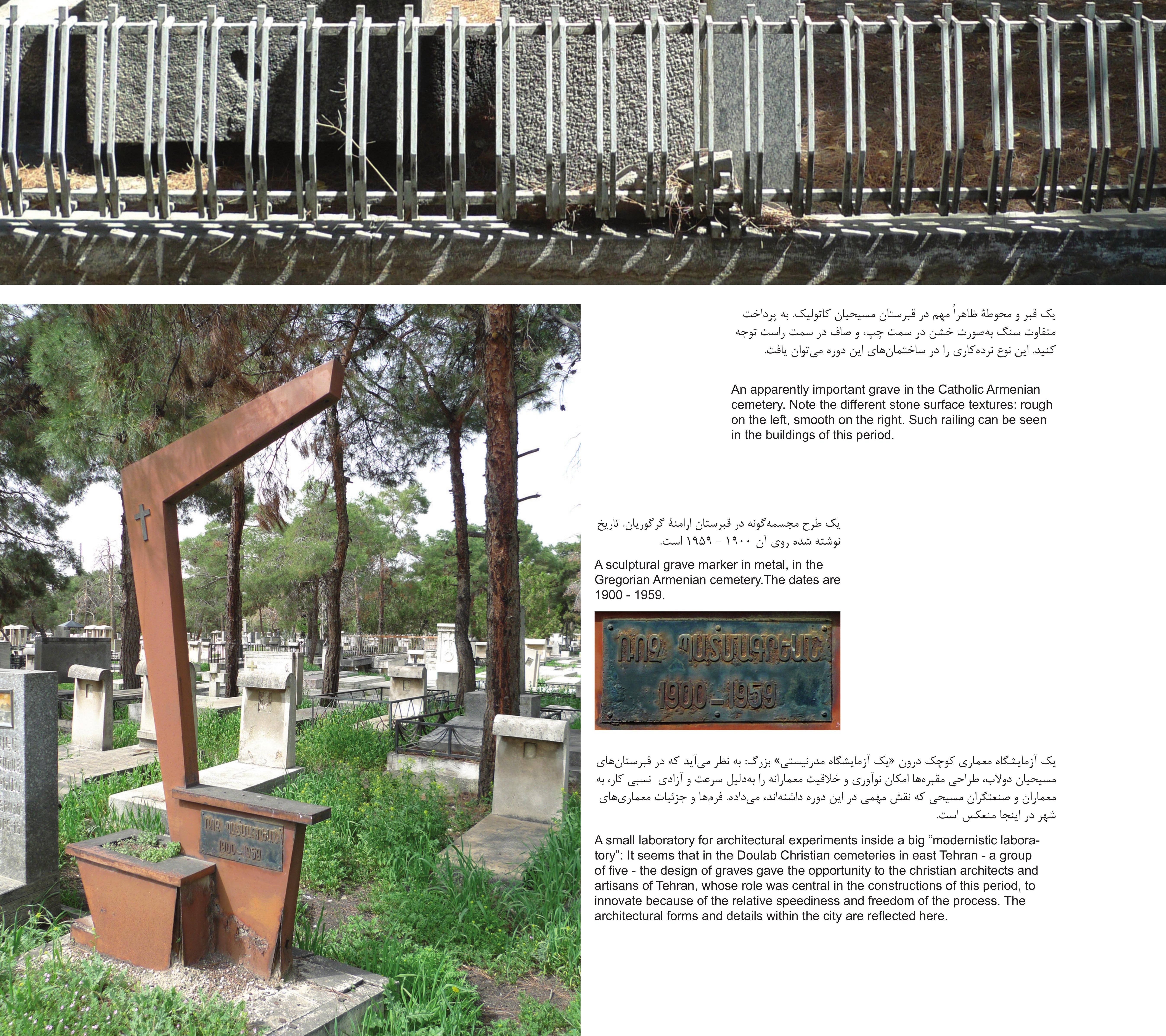
In India, Asia, East Europe, and South America modernistic architecture has developed and spread in different forms, finding a particularly fertile epicentre in Tehran between the middle of 1920s and the beginning of 1970s. This «modernistic laboratory» was characterized by a rich experimentation and personalization of forms, colours and materials, and the proficient use of metal works, wood, stones and pigments, has released a strong energy in the whole city. A positive energy, which is difficult to encounter with the same strength and array in Europe. The vibrancy of modernism in Tehran lies indeed in the shift from a euro-centric vision of the movement into the adaptation and interpretation of it in local forms and styles. A sort of anticipation of what happened at the beginning of the sixties in Europe, when the Team 10 detached from the CIAM by stressing the importance of regional elements.
Stefano Boeri is a Milan-based architect and councillor for culture in Milan. He is the founder of the international research network Multiplicity and he was editor in chief of Domus and Abitare magazines. His studio in Milan is committed to the research and practice of contemporary architecture and urbanism. He visited Tehran in December 2006.