Understanding Architecture, Robert McCarter, Juhani Pallasmaa.
The Katsura Imperial Villa and garden, on the bank of the Katsura River near the ancient imperial city of Kyoto, is one of the most flawless examples of the integration of architecture and natural setting ever built. It involves the reconfiguration of the natural setting, the design of the inhabitants' movement through interior and exterior spaces, and the careful orchestration of experience through the engagement of all the senses.
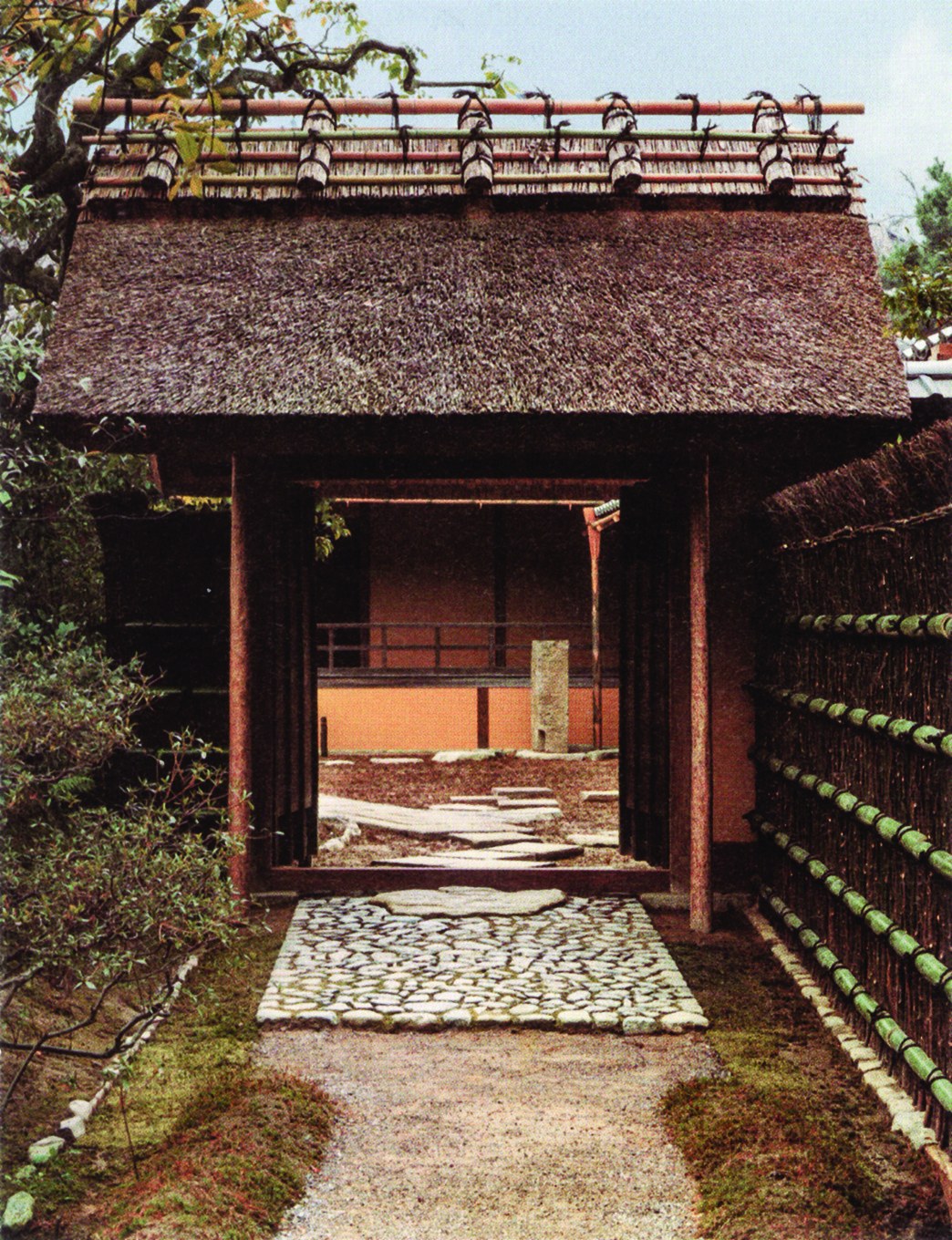
We enter the palace grounds by passing through a series of roofed gates and bamboo fences. The colour and size of the trees, hedges and ground-cover plants on both sides of the path change continually, and the path is paved with blue-black stones, laid just as they were taken from the ground. At the inner gate, the outer paving takes the form of a square platform, with a large irregular slab of stone as the threshold of the gate. Inside the inner gate, we step from a stone slab onto a threshold of square stones. Ahead, series of square stones as stepping stones, and meandering lines of irregularly shaped stones, are set into the moss-covered ground, and we step on them carefully, as if crossing the surface of a pond, and are forced constantly and skilfully to keep our balance. Aware of each of our steps, we follow the stepping stones that lead us along the eastern edge of the house, and we notice that some lines of stepping stones lead from the villa towards bridges and to the small pavilions around the edge of the pond.
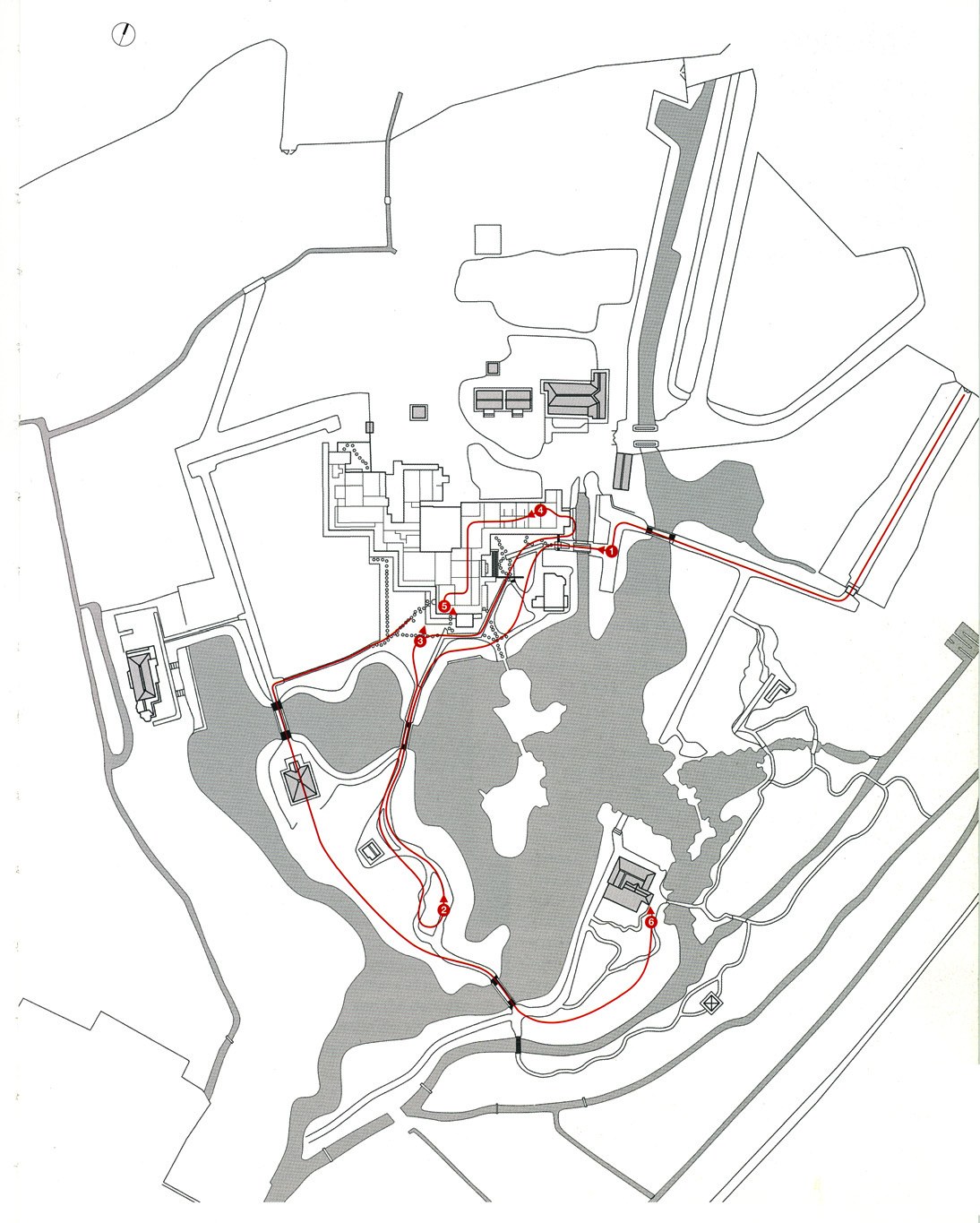
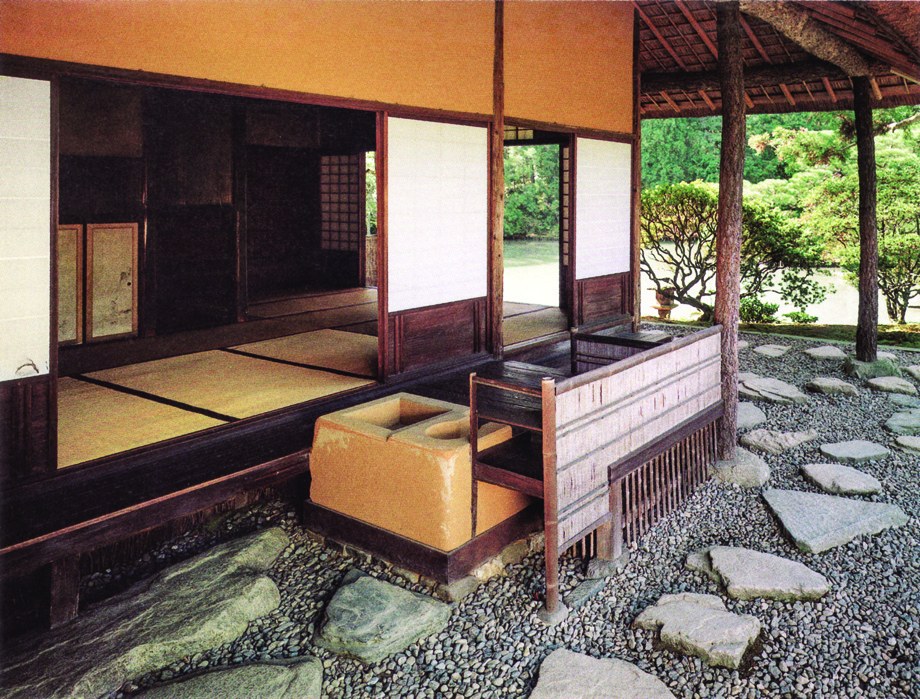
The villa consists of a series of small square pavilions that face south-east and south-west and, stepping back and forth, move away from the edge of the pond. The projecting timber-framed roofs, covered with thin wooden shingles, shelter the dense texture of the white shoji1 (rice paper) skin of the screens, which are framed with thin wooden mullions. The timber-framed floor of the villa is raised above the ground on square timber posts resting on large stones, the tips of which project from the compacted clay ground slab to separate the wood from the damp earth. At the eaves line, a wide rainwater channel made of small round stones separates the compacted earth beneath the house from the grass and moss of the garden. While we presume that the weight of the villa is carried to the stones through the timber posts, the lightness of the shoji screens, the thinness of the posts and the way they stand delicately on the stone footings show that the building is almost weightless and floats above the natural setting.
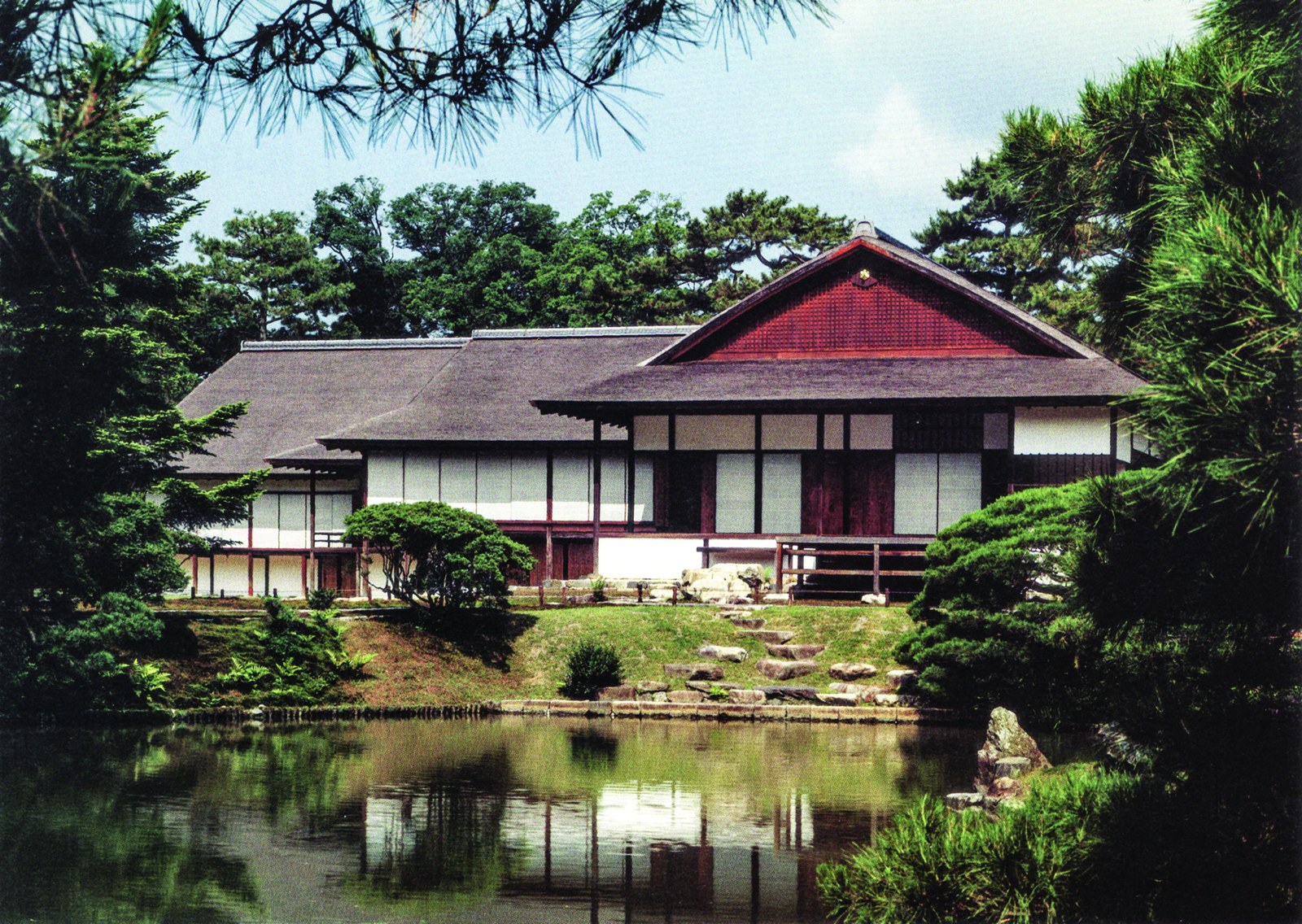
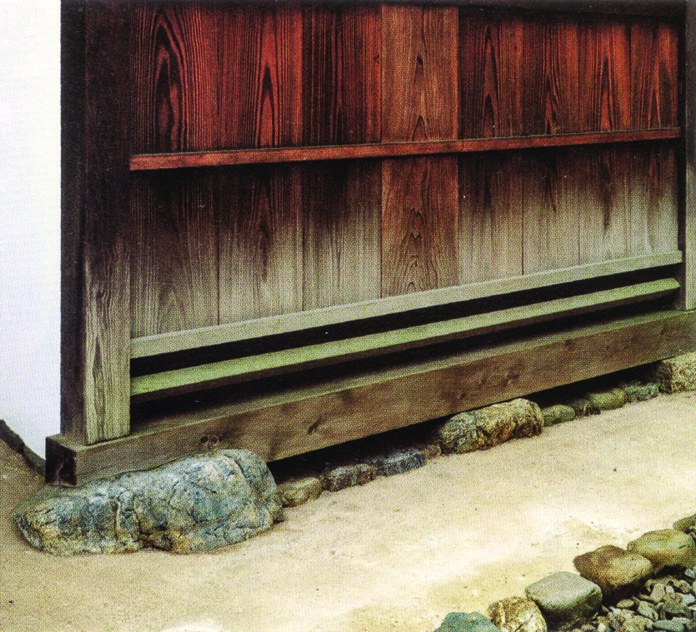
Returning to the inner gate garden, we climb the wide entrance steps, made of large square slabs of stone. At the top of the steps, the wooden floor of the entrance sits above the paved landing, with a stone as a shoe rest on which we take off our shoes. Stepping up, we set foot on the wooden floor of the continuous veranda, feeling its roughness with the soles of our feet, and step onto the tatami2-covered floor inside, which gives under our feet.
The space that opens before us is a continuous level surface made of tatami, each piece a double square of 90 by 180 centimetres, woven of thick straw and yellow-brown reed with hemp thread and edged with a band of black cloth. The ceiling is a continuous horizontal surface above, which, like the floor, flows from one space to the next, and is made of dark wooden panels divided by thin floor-boards. There are no fixed walls reaching from floor to ceiling, only sliding screens covered with white and gold silk that slide in wooden grooves set into the floor, and delicate vertical wooden railings, white plaster panels and shoji screens in the upper wall. Both vertical surfaces – the sliding screens and the upper wall – meet at a horizontal timber beam that runs uninterrupted around the room at the height above the door. The timber posts supporting the roof overhead can hardly be made out, and as we move through the overlapping and interwoven spaces, they appear and disappear.
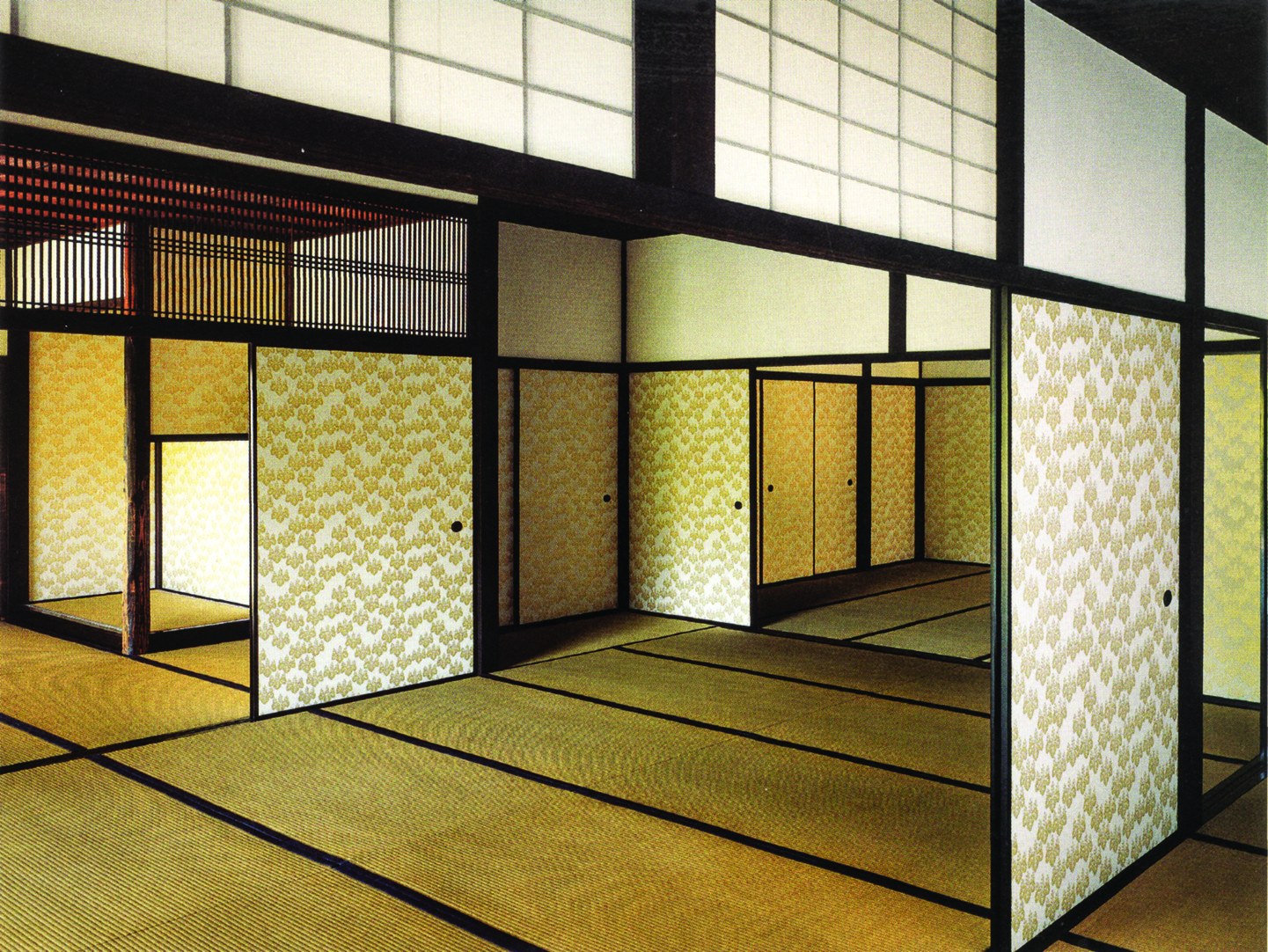
Walking through the Katsura Villa is quite like walking through a forest, and in moving from one side to the other, we find ourselves relying more on our peripheral vision than on a focused, distinct image. Rather than following a straight path, we walk in a spiral through the changing grid of tatami and multilayered vertical surfaces. When the outer walls of the villa are fully closed, the translucent shoji screens have an even glow, making the outer boundaries of the space seem like the end of the world and creating a powerful, astonishing sense of seclusion and enclosure, as if we were suspended in a kite. When the outer walls are open, the space inside goes out, into the garden, and the garden outside comes in, and we feel the breeze and see the wide views of the surrounding natural setting, carefully framed in the large openings. The shoji screens now appear even more transient and luminous, their multilayered skins floating at the edge of the space, and we go out to the continuous wooden-floored veranda, under the projecting roof. We feel ourselves floating above the ground; the soft green surface of the garden – interrupted by the lines of stepping stones – gently falls away to the pond.
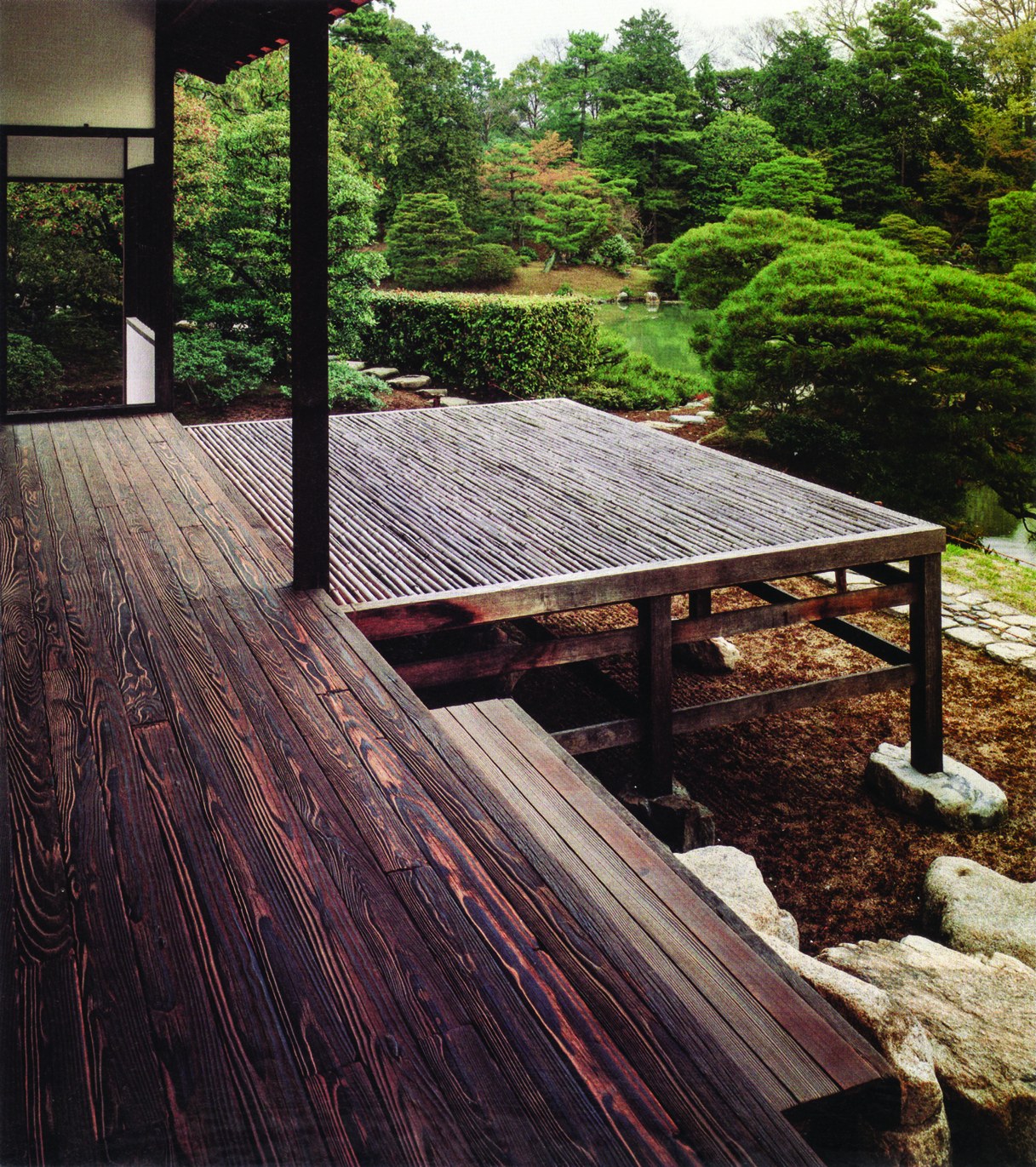
Our experience of the Katsura Villa also includes moving from the main villa into the carefully arranged grounds, visiting one of the half-dozen pavilions set on small islands along the shoreline of the pond, and then returning to the villa, each time by a different path. Each smaller pavilion houses a particular ritual, including the important tea ceremony, and each hill and valley, grove and lawn of the garden has a different mood. The bridges, with floors of earth, stone or red-lacquered wood, require us to be aware of each of our steps, because each floor has a different height and, as we climb, rises steeply, flattens towards the top and becomes steeper again on the way down. All the garden paths we walk are made of stepping stones similar to those we had seen at the entrance, yet no two paths are alike, because of the constantly changing pattern of the stones, the slope and texture of the ground, the kind of trees and plants around, the closeness to water, and the destination of each of them. Sensing the most subtle rhythms of nature, we come to dwell in the natural setting so intimately that we embrace it and make it our own.
Notes:
1- Shoji
2- Tatami