Contemporary Architecture

Khan Khaneh, Khansar

Se-Bær Studio, Mohsen Khazdooz, Adib Iravani·Photos: Ehsan Haji Rasouliha, Ali Masoumi·Memar 154 — 25th Memar Award
Khan Khaneh, Khansar
Location: Khansar, Isfahan Province · Client: Momeni family · Design associates: Mahsa Moradi, Maryam Tooyserkani · Graphic: Mahsa Moradi, Maryam Tooyserkani, Mehdi Zare · Supervision: Adib Iravani, Mohsen Khazdooz · Construction: Behnam Momeni · Structural reinforcement: Arash Mostajeran · Photo: Ehsan Haji Rasouliha · Aerial photo: Ali Masoumi · Area: 420 m²

Khan Khaneh is the product of the interaction between the existing structure of a building and the probable lifestyle of a Khansari family with the dream of “a house for living.”

The subject is an encounter with a masonry house roughly forty years old that no longer answers contemporary needs. This house belongs to a local family in the city of Khansar whose children reside in Tehran and commute to this house on a weekly basis.

They wanted an independent space within the heart of the ancestral home; therefore the principal desire was not merely renovation but the re-creation of a multilayered and contemporary space, together with the addition of a new floor for the children.
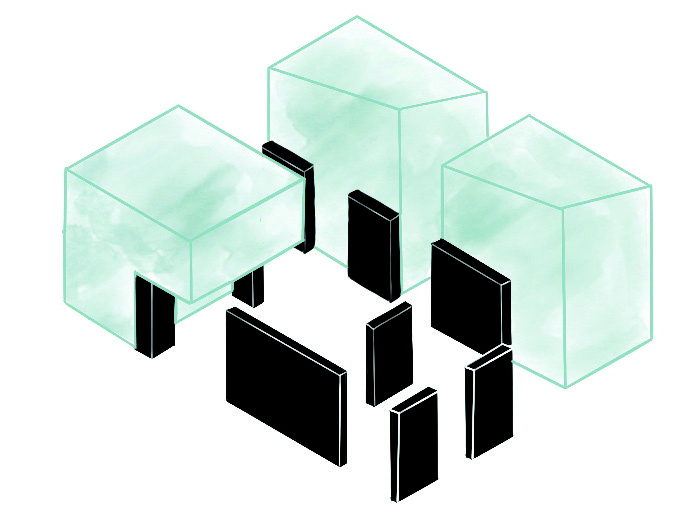
Axonometric concept diagram showing dark load-bearing walls in a grid formation with translucent green volumes inserted between them
Design concept — the existing load-bearing walls define a grid into which new green volumes are inserted

We decided to transform this house — whose structure resembled a single-storey apartment — by subtracting portions of its original mass, converting it into a house with interior courtyards. Our effort was to present this approach as a model for dealing with this category of houses — which are not few in number in the city — an approach grounded in two principles: first, subtracting from the original mass to open up spaces and create interior courtyards; and second, adding density in a minimal fashion and utilising the roof as a new, usable courtyard.

♦ ♦ ♦

Discovering the Structure

The basis of the design took shape around a nine-square grid that was overlaid upon the existing structure, including its load-bearing walls. This alignment made it possible to carve voids within the dense mass — spaces emptied of matter that admitted light, air, and rain into the intermediate layers of the house, improving its liveability.

Space-Making Walls

The geometry of the existing load-bearing walls in the building had already created layers; we preserved and exposed these walls within the space, and were then able to insert the necessary spatial boxes — pure volumes placed between these very layers.
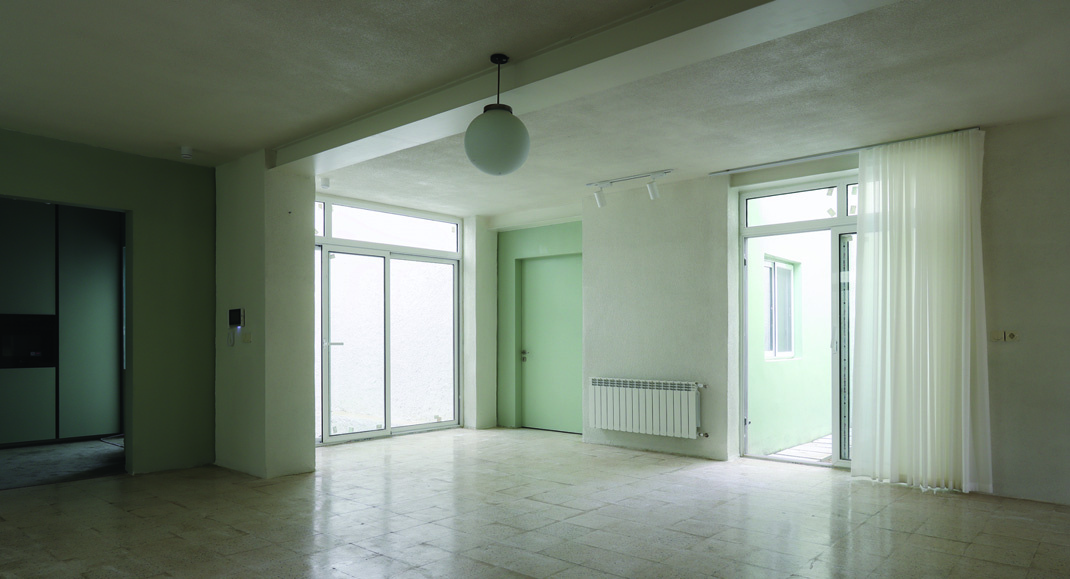
Interior of the ground-floor living room showing white textured walls, a green door to one side, pendant globe light, and full-height glass doors opening onto the courtyard
Ground-floor living room — white textured cement walls, green door, courtyard beyond
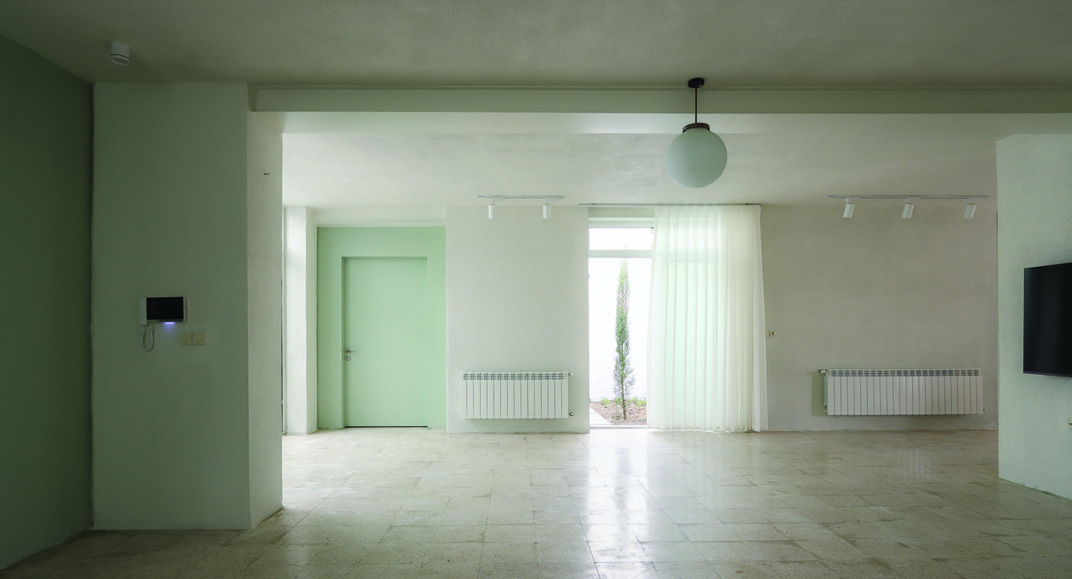
Ground-floor living room from the opposite angle: white walls with green door visible centrally, sheer curtains filtering daylight, a TV mounted on the right wall
The same living room looking toward the courtyard — a cypress tree visible through the curtains
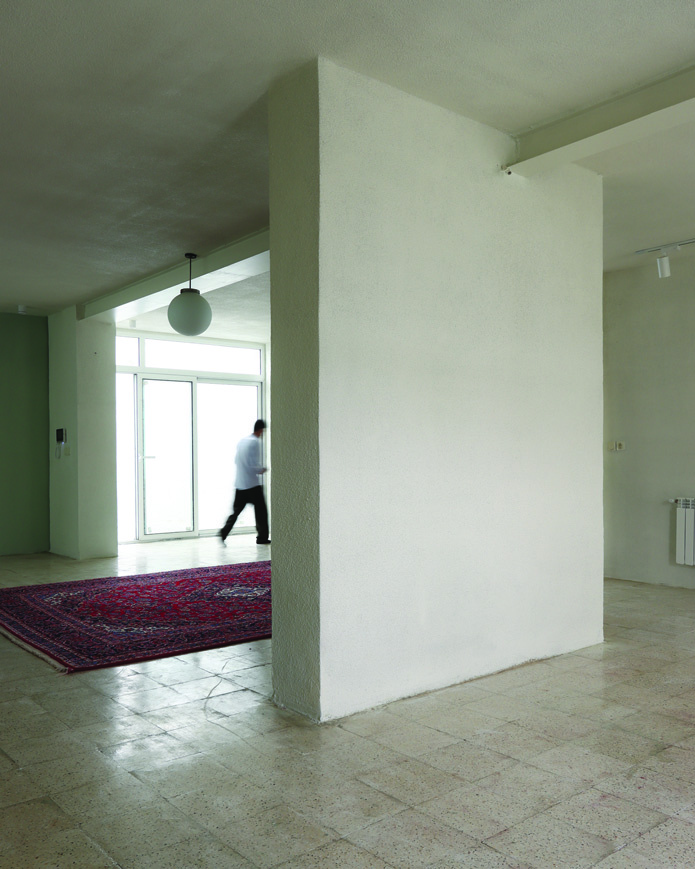
Interior view showing a thick white load-bearing wall dividing two rooms, a red Persian rug on the floor, a blurred figure walking past the glass courtyard door
The exposed load-bearing walls define spatial layers — a traditional rug anchors the space

Swelling the Mass

Next, by inflating portions of the mass on the roof — following the same structural grid below — the voids between them were activated and the rooftop was transformed into a usable surface: a courtyard that houses small, independent units within itself.
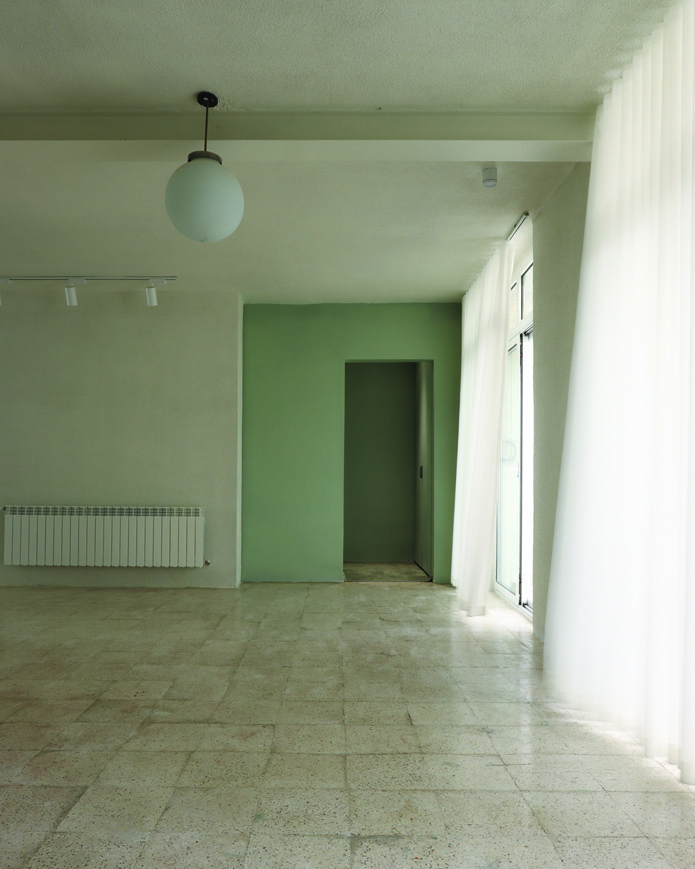
Interior room with soft green walls, a pendant globe light, track lighting, sheer curtains billowing with breeze from the courtyard window
Green-walled room with natural light filtering through sheer curtains
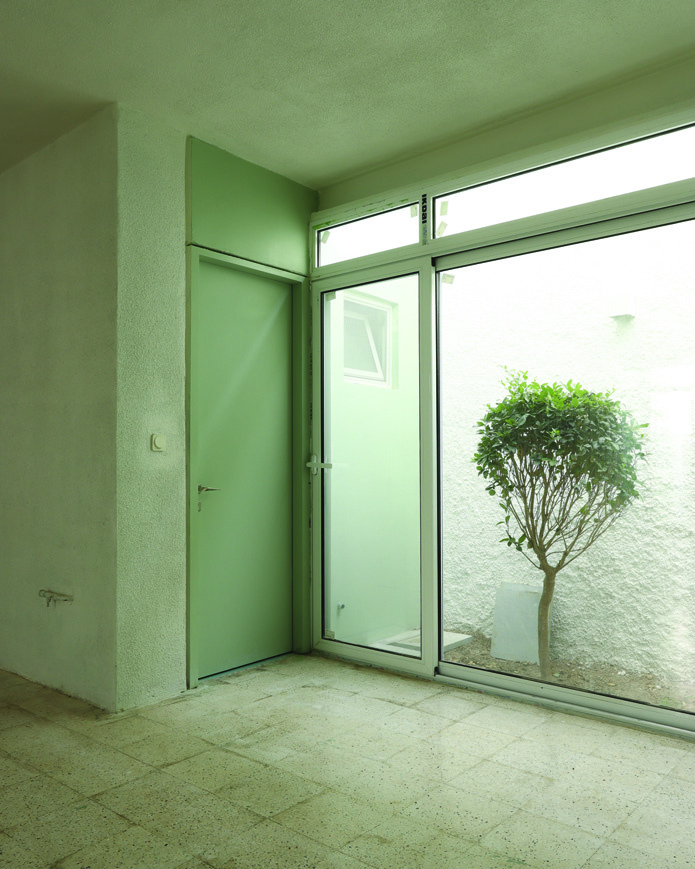
Interior corner showing a green door beside a full-height glass wall looking onto a small white courtyard with a single tree
Interior courtyard — a tree grows within the carved-out void

Cladding

The existing structure, which had been clad in a variety of materials including plaster, stone, cement, and ceramic, was uniformly wrapped — inside and out — in white textured cement, and the new green-coloured volumes were positioned among them. The upper-floor rooms were built using lightweight LSF (light steel frame) construction so as not to impose additional load on the existing structure.
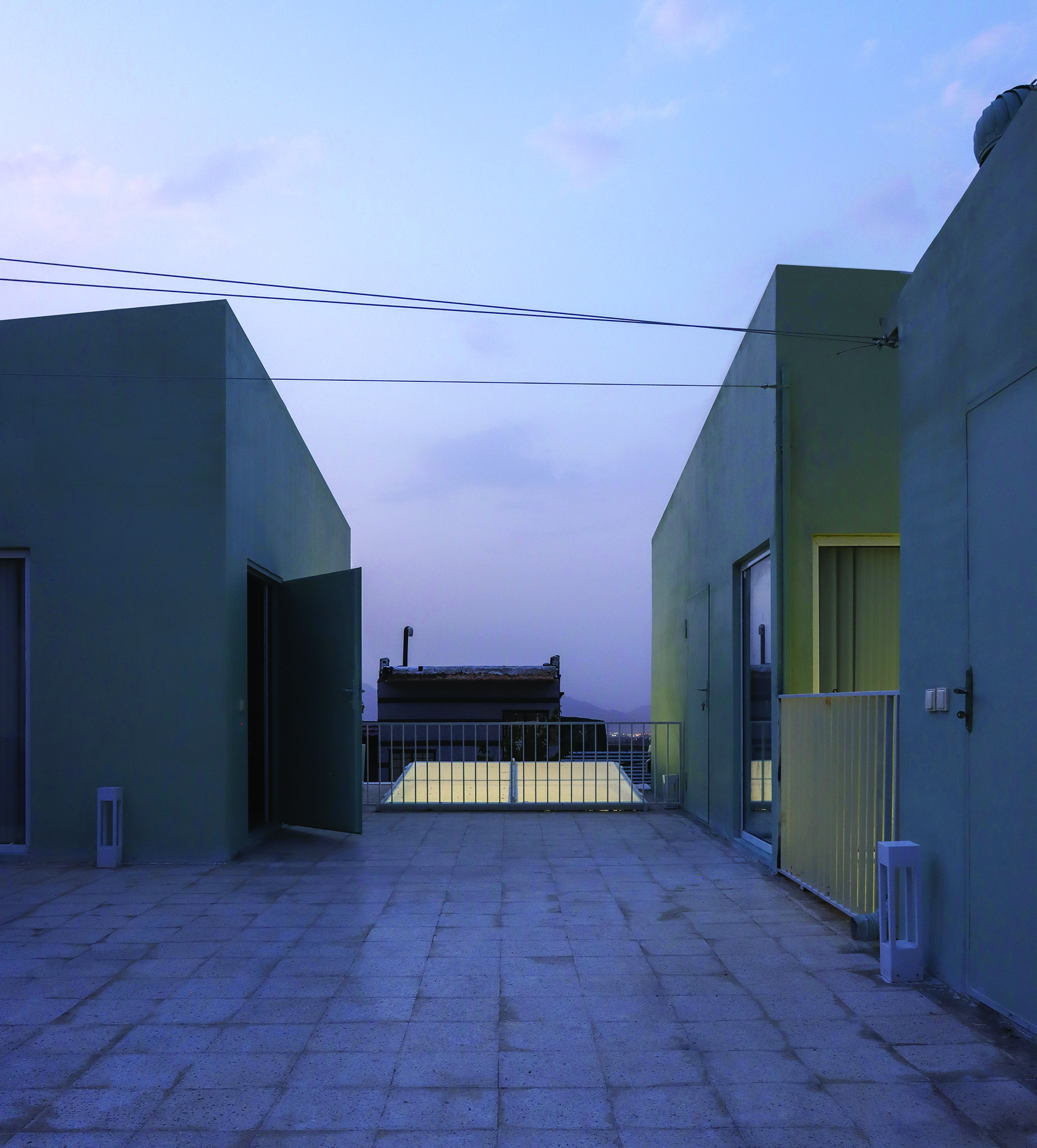
Rooftop courtyard at dusk, looking between two pale green-walled volumes toward the town and mountains beyond, stone pavers on the ground, a warm yellow glow from windows
The rooftop courtyard at dusk — green volumes frame a view of Khansar and the mountains
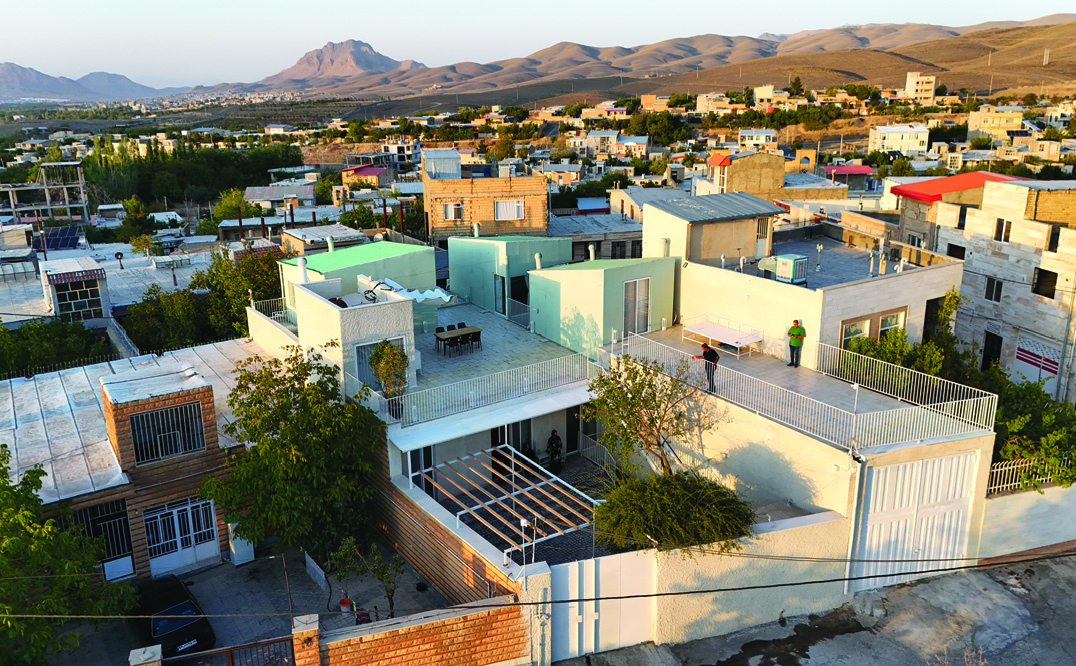
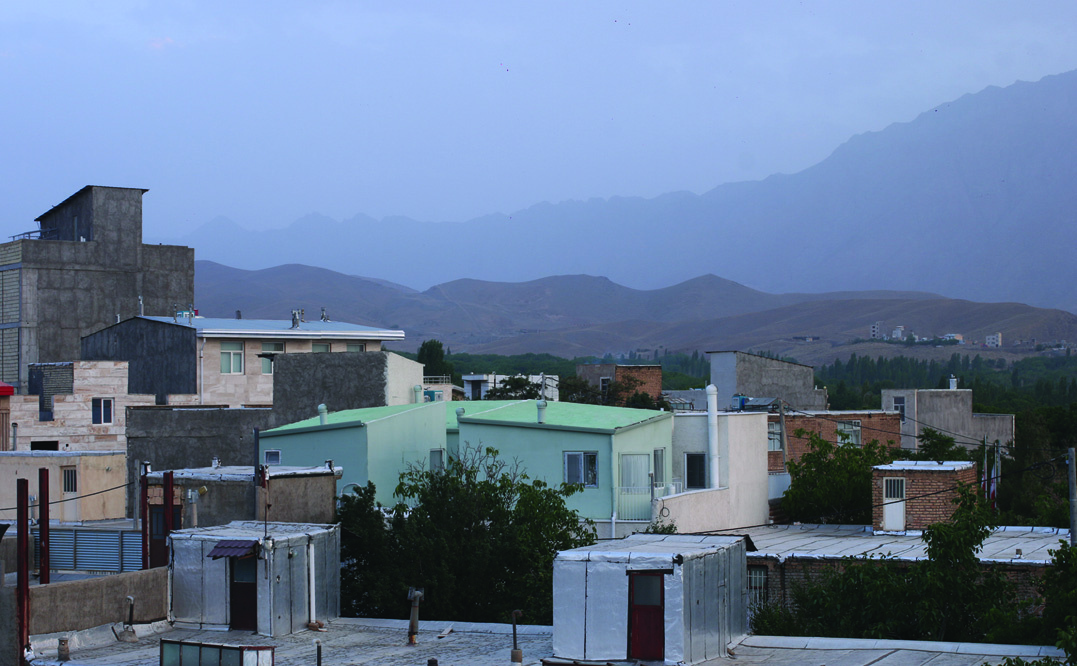
View over the rooftops of Khansar at dusk showing the green-roofed Khan Khaneh house amid the town fabric, mountains receding into mist behind
Khan Khaneh visible in the urban fabric of Khansar — its green roof stands out against the surrounding rooftops, with the Zagros foothills beyond
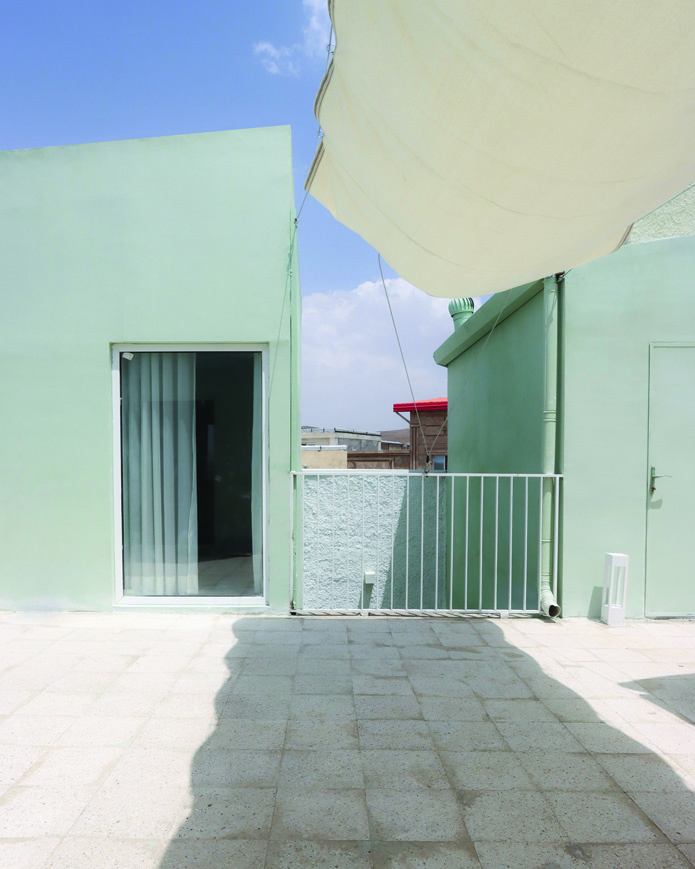
Daytime view of the rooftop terrace with pale green volumes, fabric canopy shade above, white metal railings, a view of red roofs in the distance
Rooftop terrace — green volumes with fabric canopy
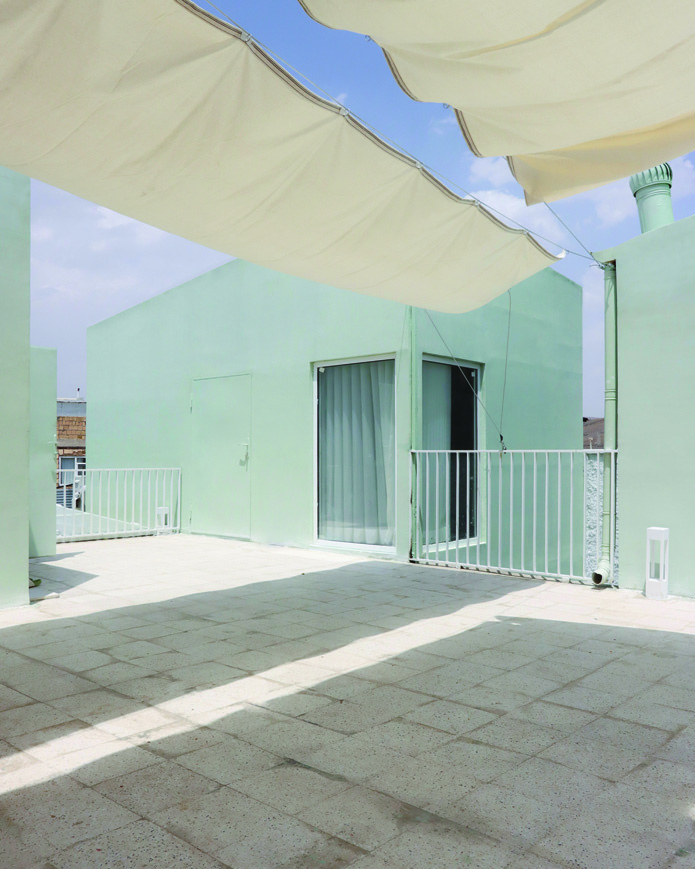
Rooftop terrace under stretched fabric canopy casting shadows on stone pavers, green volumes on either side, blue sky visible above
Fabric shade canopies create sheltered outdoor space on the roof
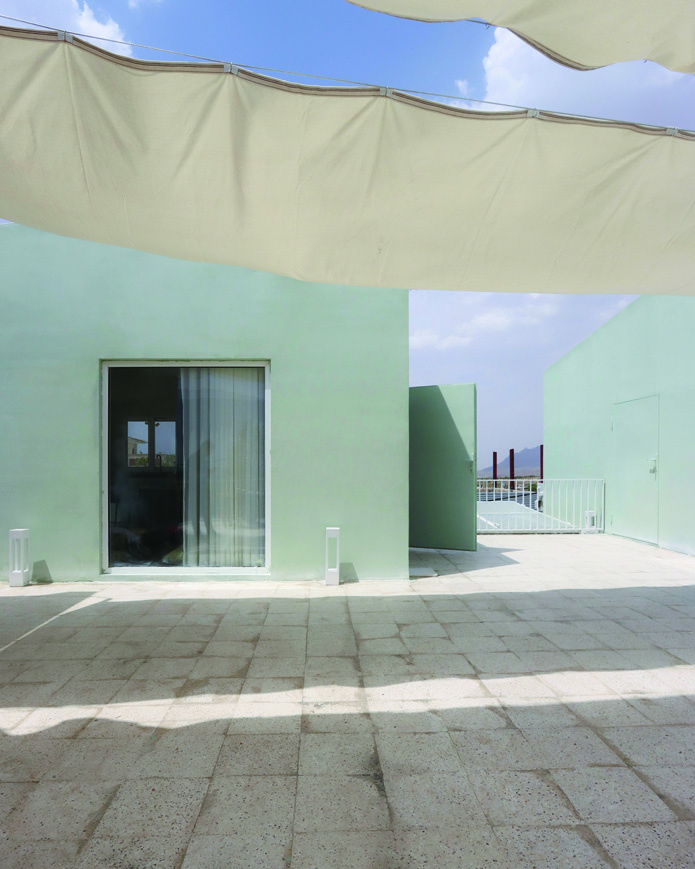
Rooftop view showing a green-painted volume with a large window and curtains, a door open to reveal a vista of the mountains, fabric canopy above casting soft shadows
An upper-floor room opens onto the rooftop courtyard — the mountains visible through the open door
♦ ♦ ♦

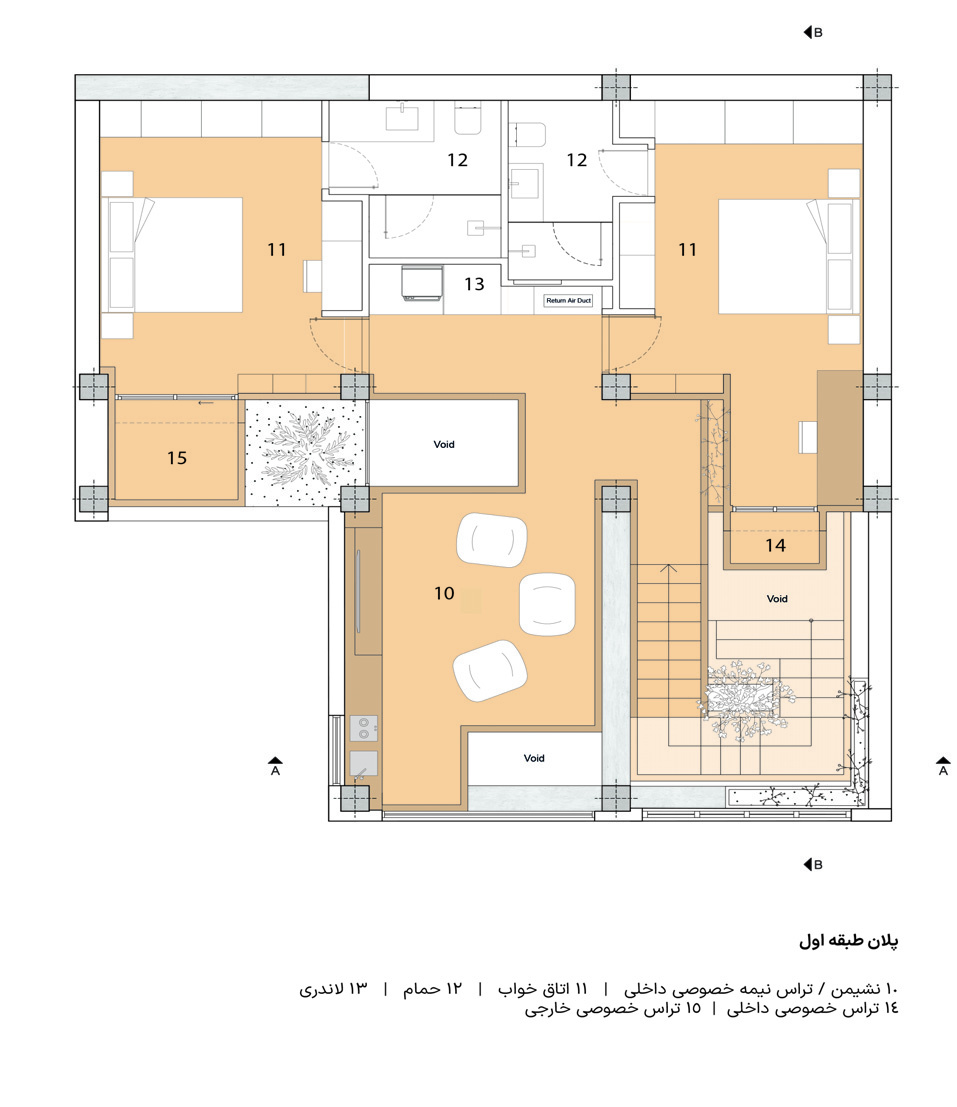
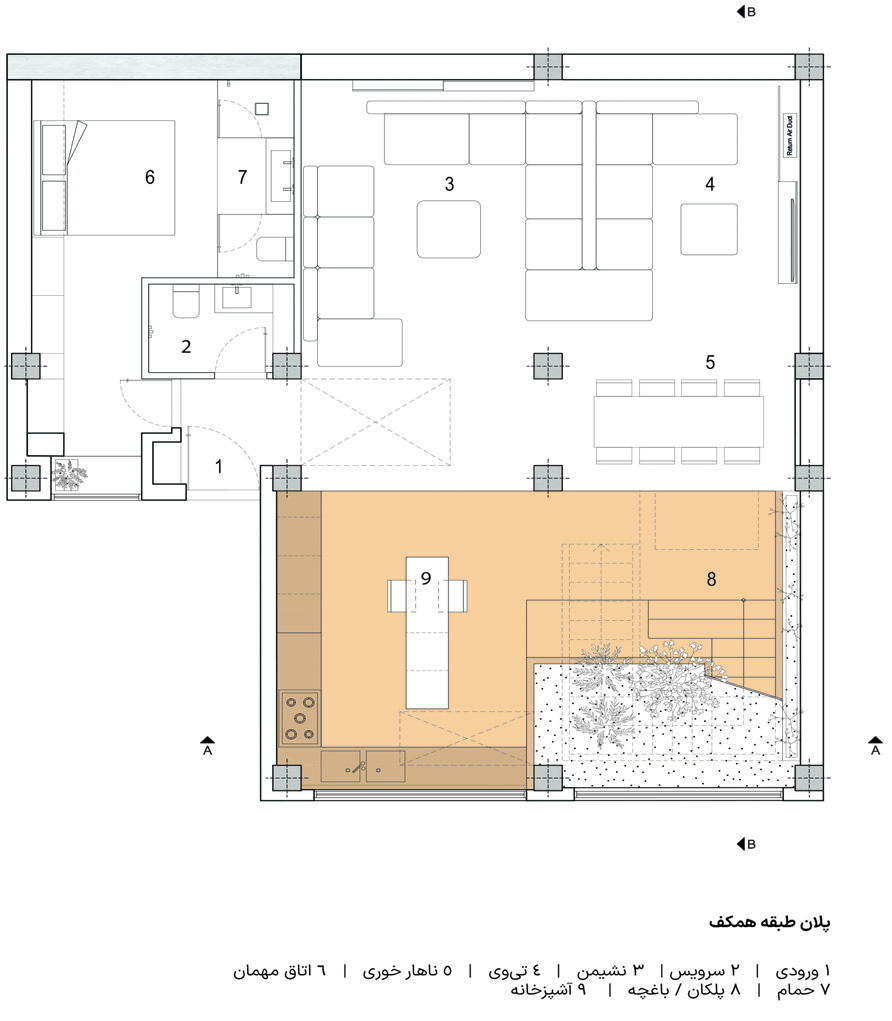
Floor Plans

First floor plan showing the after-renovation layout with green-coloured rooms arranged around interior courtyards and a rooftop yard
First floor plan — after renovation
Ground floor plan showing the after-renovation layout with living areas, kitchen, courtyard, and yard spaces
Ground floor plan — after renovation

Related in Architecture Database

Khan Khaneh, Khansar