Contemporary Architecture

Khark Multipurpose Center

Mahsa Majidi·Photos: Deed Studio, Niloufar Kaveh·Memar 142 — 23rd Memar Award
Khark Multipurpose Center

The Khark Multipurpose Center stands on the northern side of Vahdat Hall on Khark Street, District 11 of Tehran. The compound comprises three residential floors in the northern building, a garage in the southern building, and a courtyard between the two — a valuable structure from the second Pahlavi era that was once the home of Alireza Afzalipour, founder of the University of Kerman, and his wife Fakhereh Saba, the celebrated opera singer.

The building’s exceptional position within the Roudaki Cultural Zone prompted the design approach to go beyond mere preservation of the existing structure, connecting the project as an urban node to the broader revitalization plan for the district. In order to establish a visual relationship between the public and the building, and to foster interaction between the structure, the neighborhood, and passersby, the openings of the southern building were transformed into transparent enclosures.
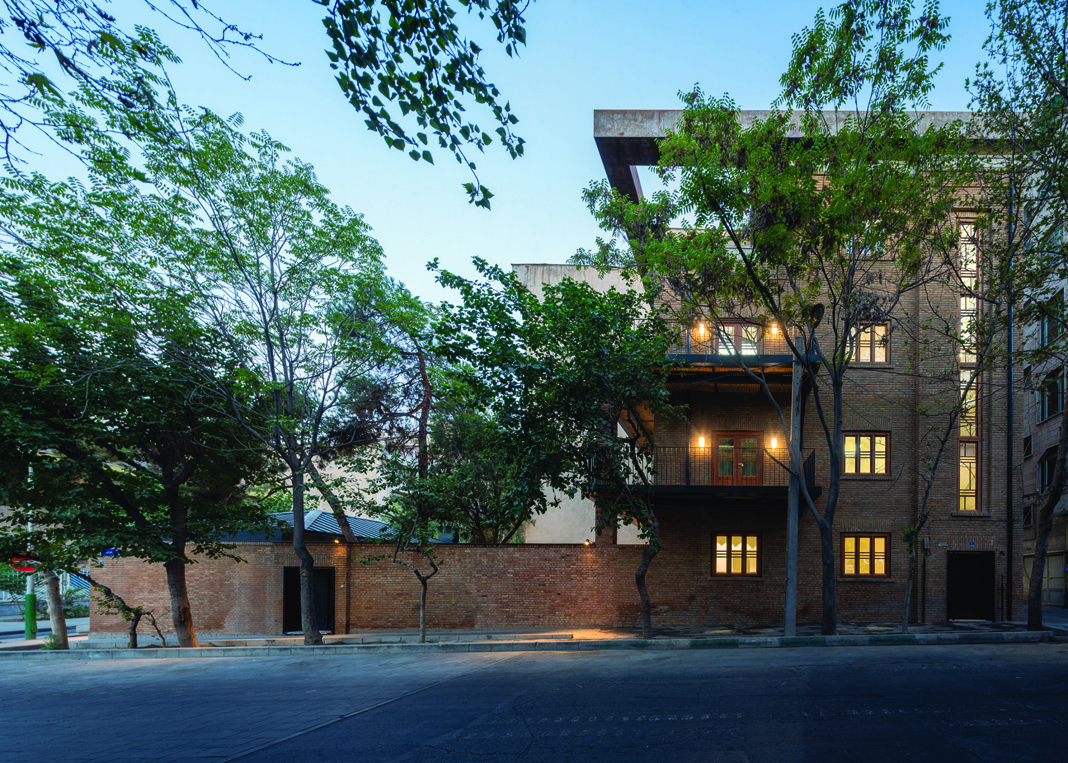
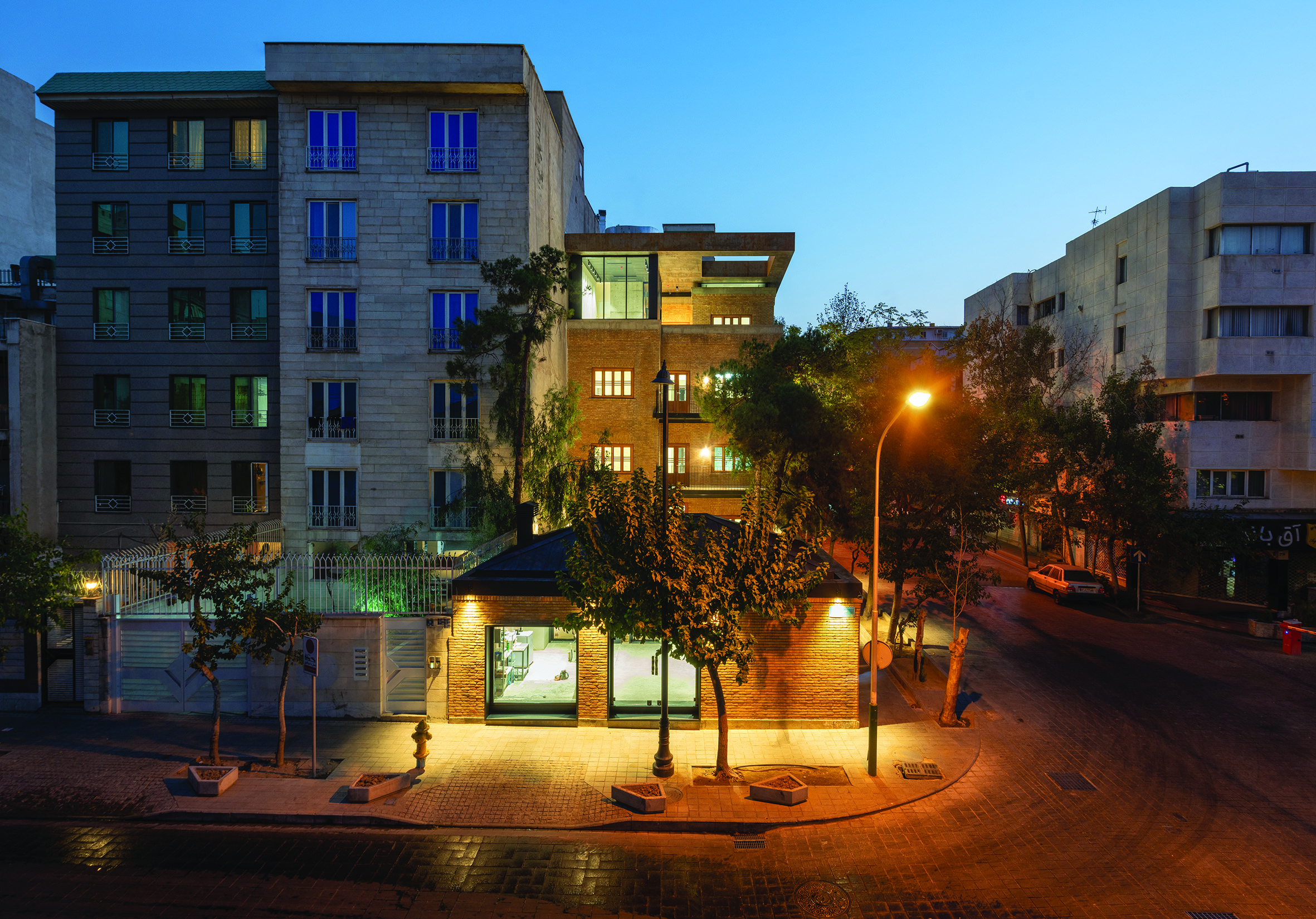
Street facade of the Khark Multipurpose Center at dusk, showing the brick building with concrete extension, illuminated interior, and mature trees lining the sidewalk
Street facade at dusk — the original brick structure and the rooftop extension
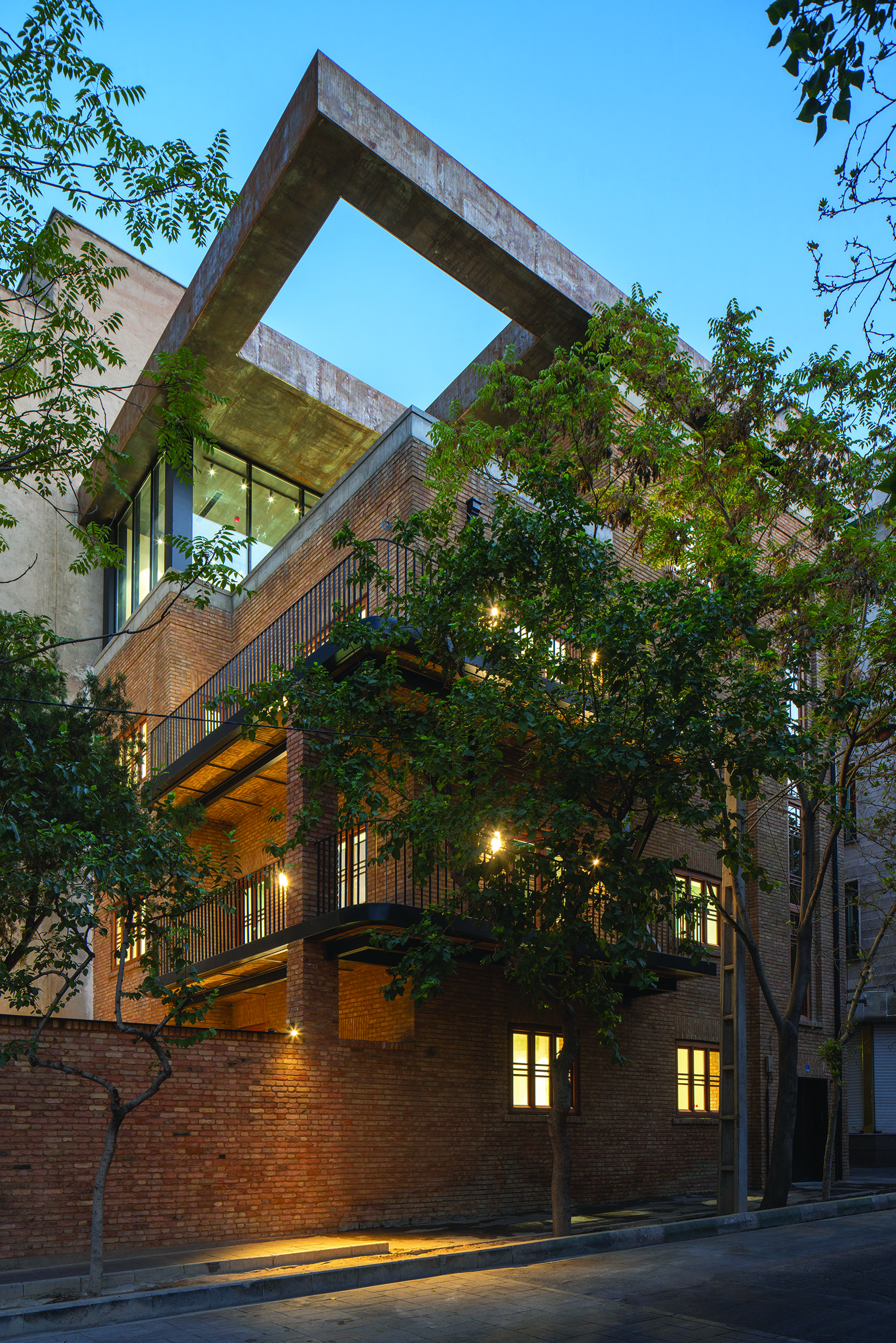
Close-up of the facade showing the bold cantilevered concrete frame extension above the original brick building, with illuminated balcony and trees
The concrete extension rising above the historic fabric — guardian and protector of the old building
◆ ◆ ◆
Structural Reinforcement

For structural reinforcement, the courtyard floor was excavated to a uniform depth of five meters, and after being leveled with the former basement floor, it was secured with a retaining structure and re-poured. The site of the original pool was reconceived as a void; emphasizing visual connectivity between the project’s different layers and sparking curiosity in the viewer, the pool was executed in glass. The basement space beneath the courtyard connects via a tunnel to the main building’s sub-level and the historic cistern, as well as to the mechanical room and elevator — providing access and circulation control to the main building.
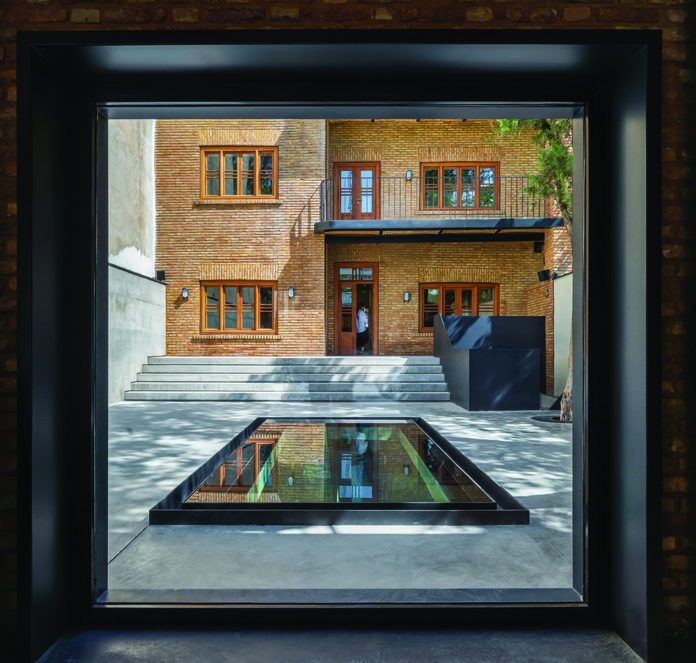
View of the courtyard through a large window frame, showing the brick facade with wooden windows, stone steps, and a glass floor panel reflecting the building above
The courtyard seen through the southern building — the original pool replaced by a glass floor panel connecting the layers

The three-story northern building was preserved, reinforced, and revitalized through the installation of eleven piles driven to a depth of thirteen meters, strip foundations connected to them, rebar ties along the walls to create continuity using the shotcrete method, and a continuous mesh network applied across the floors.
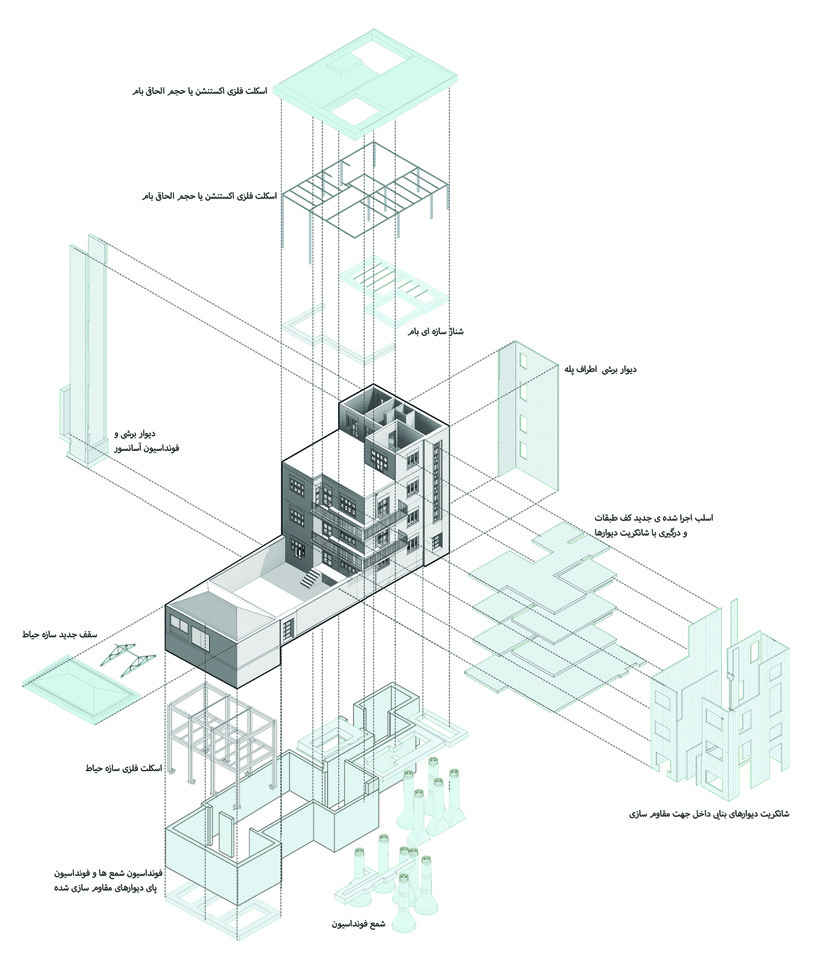
Exploded axonometric diagram showing the structural renovation components: steel frame extension, shotcrete walls, new floor slabs, courtyard steel structure, elevator shaft, and pile foundations
Exploded structural axonometric — from pile foundations to the steel-frame rooftop extension
◆ ◆ ◆
Light & Spatial Experience

Direct public access to the rooftop from the basement via the elevator — bypassing the private sections entirely — marks the culmination of the visitor’s spatial experience. The extension, added at a deliberate remove from the old building’s roof, serves both visually and functionally as the structure’s guardian and protector.
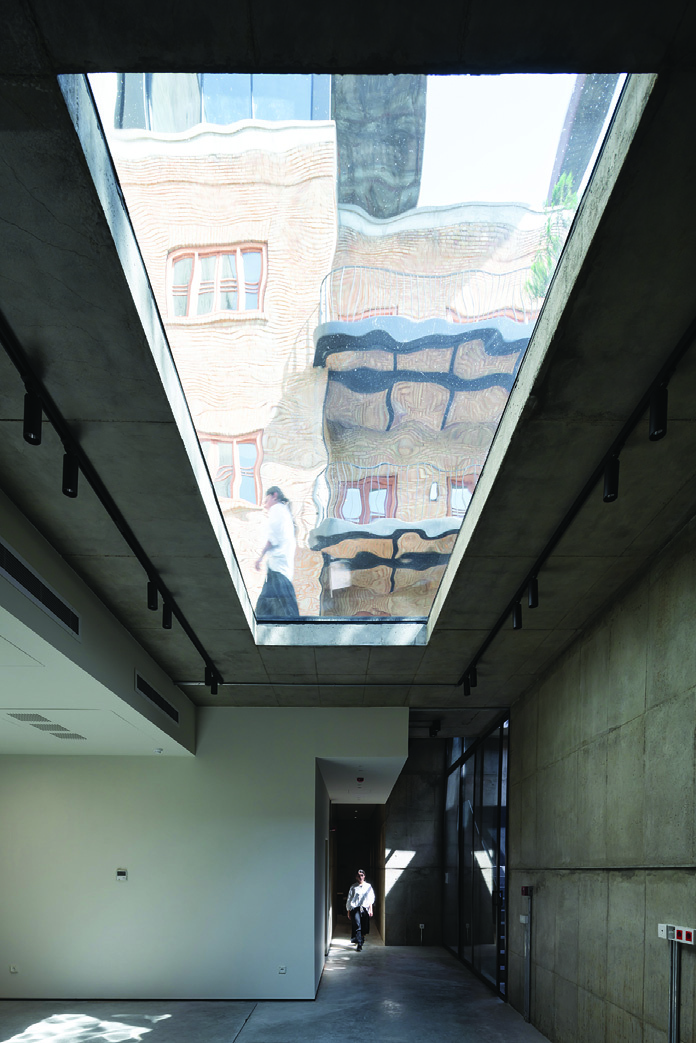
Basement corridor with exposed concrete walls and a glass ceiling panel showing the distorted reflection of the brick facade and courtyard above
The basement corridor — a glass ceiling reveals the courtyard world above
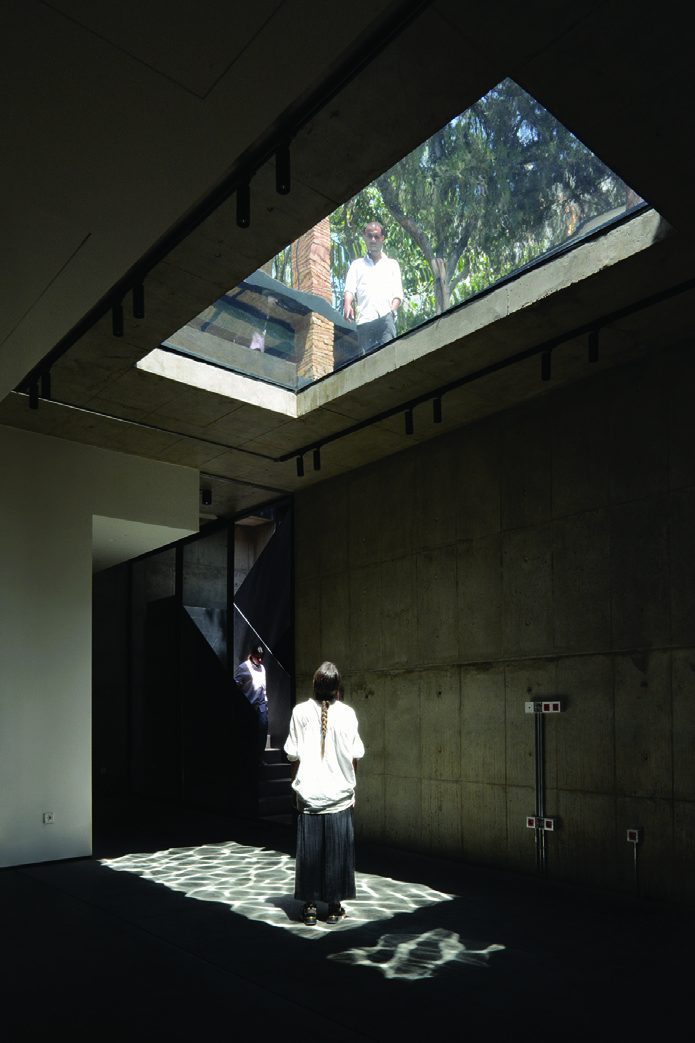
Interior space with exposed concrete walls, a large glass skylight overhead, a woman standing beneath it gazing up, and dappled water-like light patterns on the floor
Water-like light patterns through the glass skylight — connecting basement to courtyard
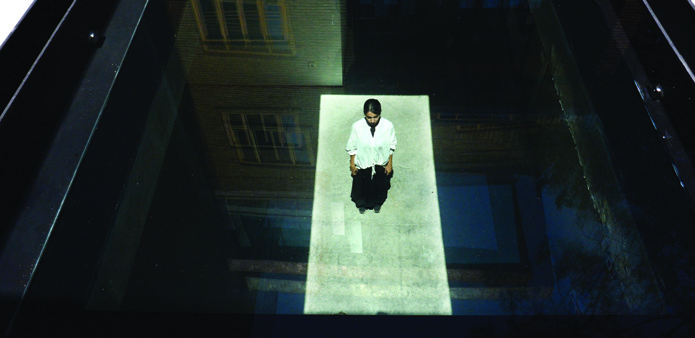
Overhead view through the glass courtyard floor at night, showing a person standing on the illuminated panel below
Looking down through the glass floor — the courtyard pool reimagined
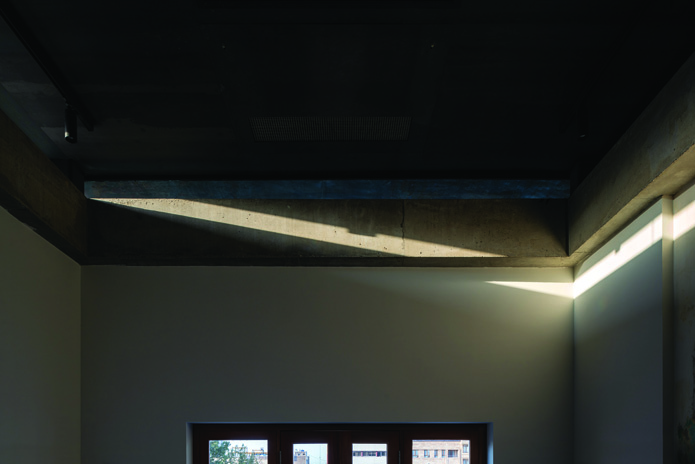
Interior room with a dramatic beam of natural light cutting across the concrete ceiling and wall, with windows visible in the background
A blade of light cutting across exposed concrete — the play of time in the interior

The experience of such a space in a district rich with cultural and historical identity cultivates in the visitor a desire to return and an imagination of what a multitude of similar projects might achieve.
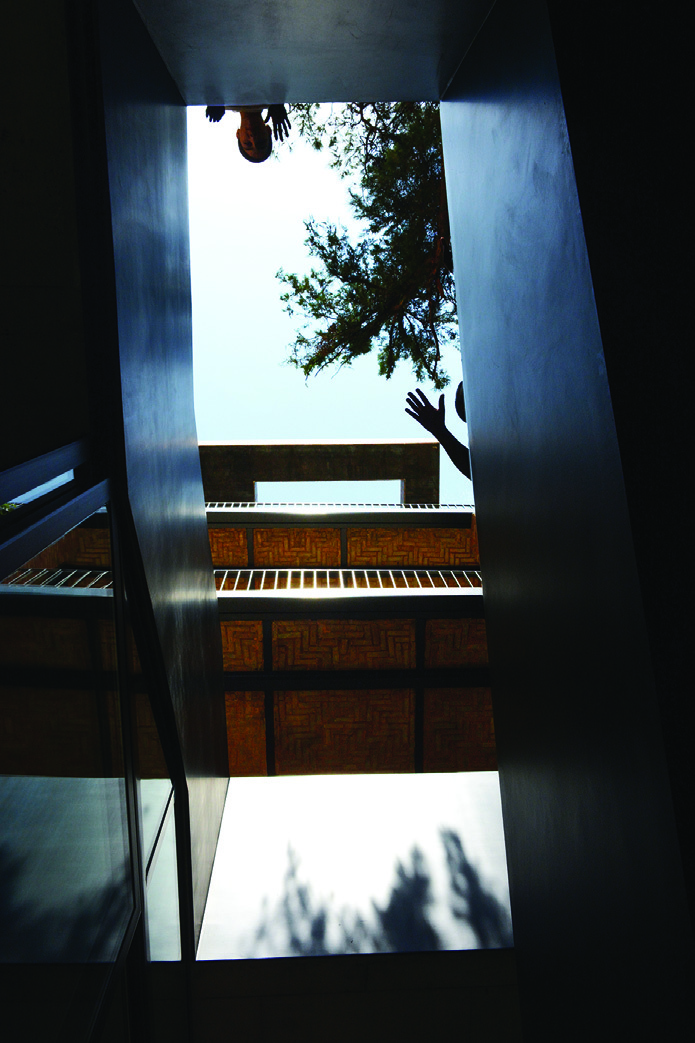
Vertical view up through the stairwell, showing concrete walls, herringbone brick detailing, a reaching hand silhouetted against the sky, and tree branches above
Looking up through the stairwell — brick, concrete, sky, and a reaching hand
◆ ◆ ◆
Interior Spaces
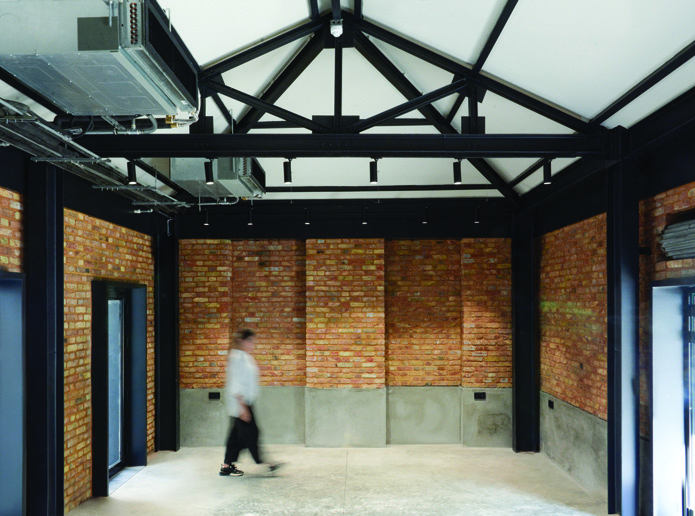
Third-floor event space with exposed brick walls, steel trusses supporting a translucent ceiling, concrete base, and a person walking through
The event space — exposed brick walls and steel roof trusses
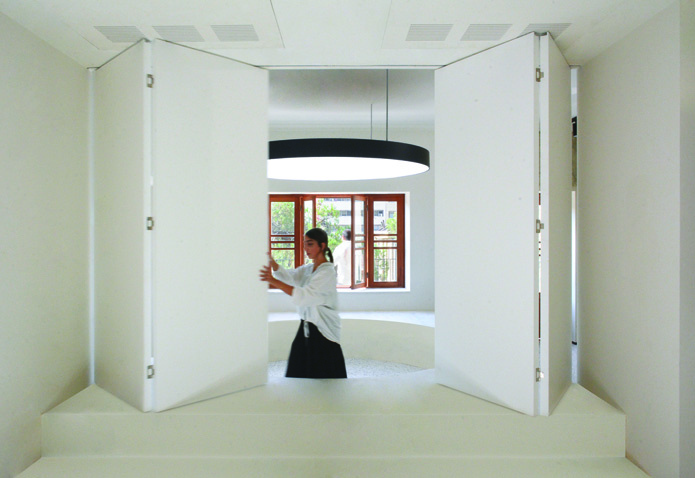
Bright white interior room with bi-fold doors opening to reveal a traditional wooden window beyond, a large circular pendant light, and a woman in motion
A white room with bi-fold doors — old and new in conversation
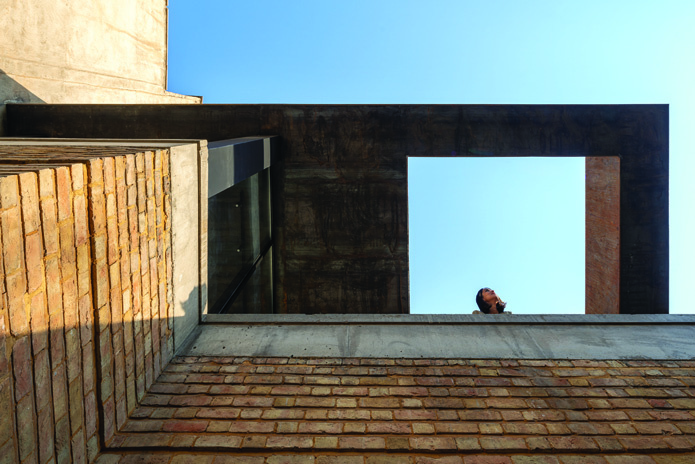
Rooftop terrace with warm brick surfaces and a bold concrete frame opening to the sky, a person gazing upward in the distance
The rooftop — concrete frame, brick, and open sky
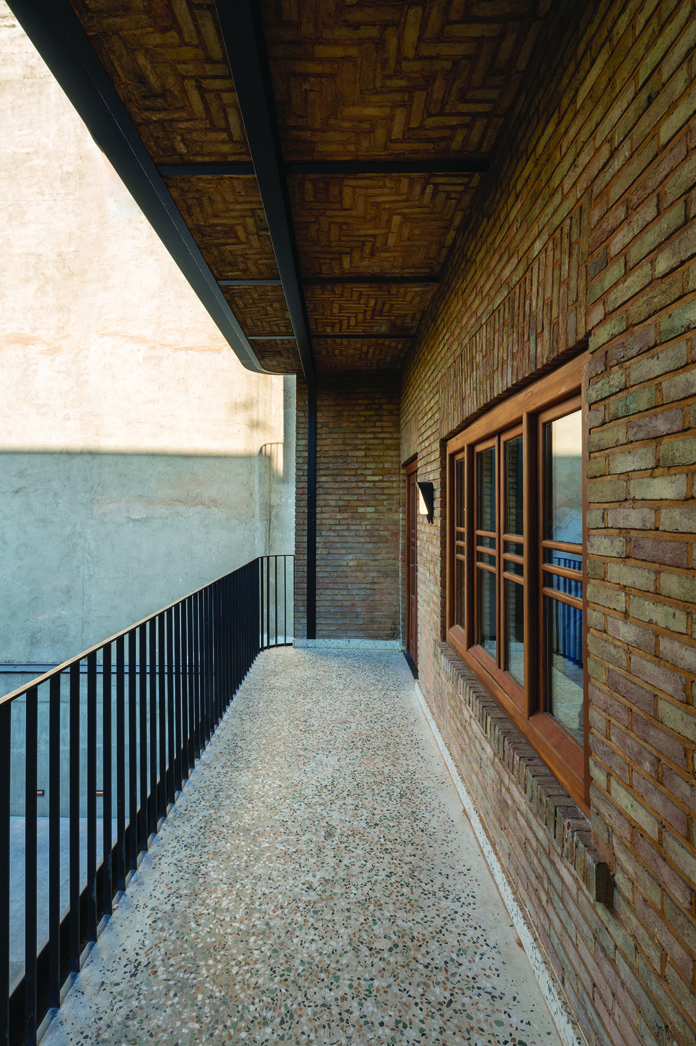
Covered terrace with herringbone-pattern brick ceiling, iron railing, terrazzo floor, and traditional wooden window with warm lighting
A terrace with herringbone brick ceiling and traditional wooden windows
◆ ◆ ◆
Drawings
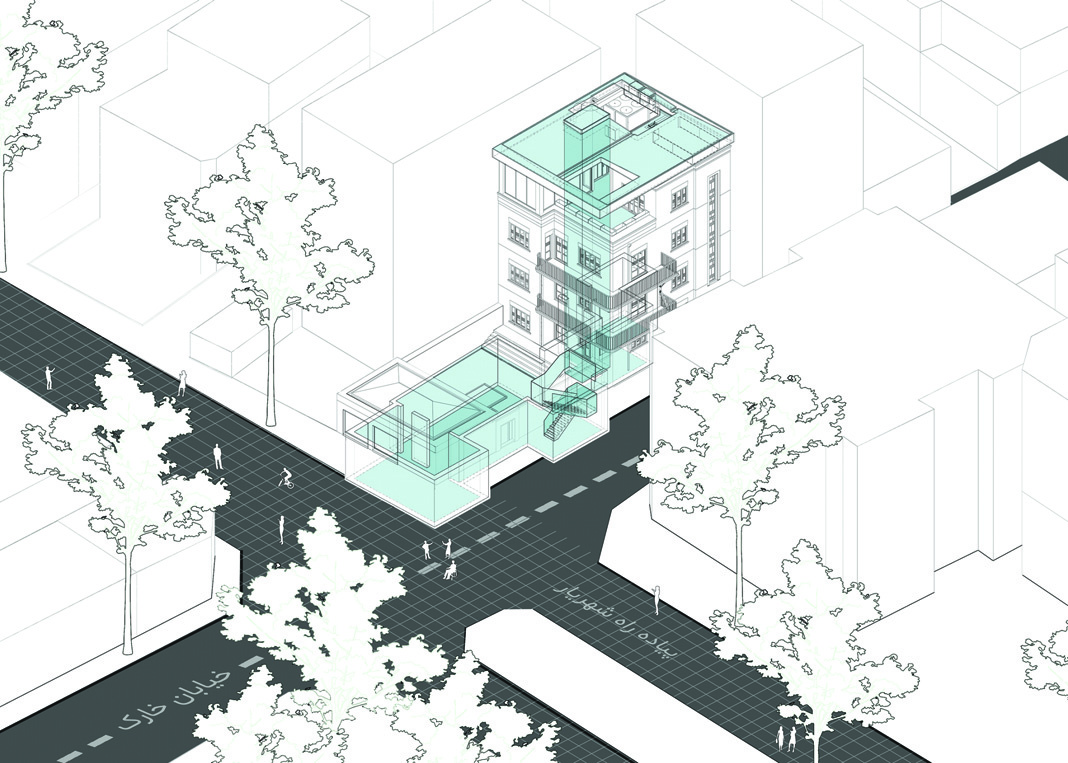
Axonometric site diagram showing the building at the intersection of Khark Street and Shahrivar pedestrian way, with the new interventions highlighted in green
Site axonometric — the building at the corner of Khark Street and Shahrivar, new interventions in green
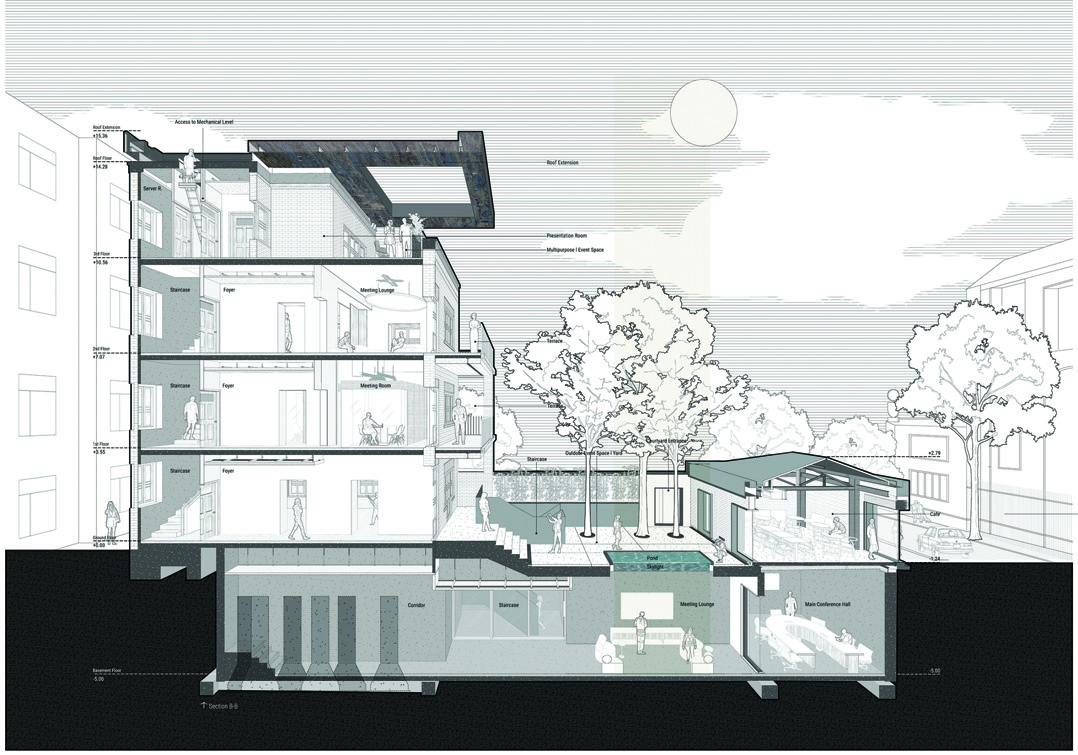
Illustrated cross-section showing all levels from basement to roof extension, including courtyard, cafe, pool, staircase, meeting lounge, and the concrete rooftop addition
Cross-section — from the basement conference hall through the courtyard and cafe to the rooftop extension
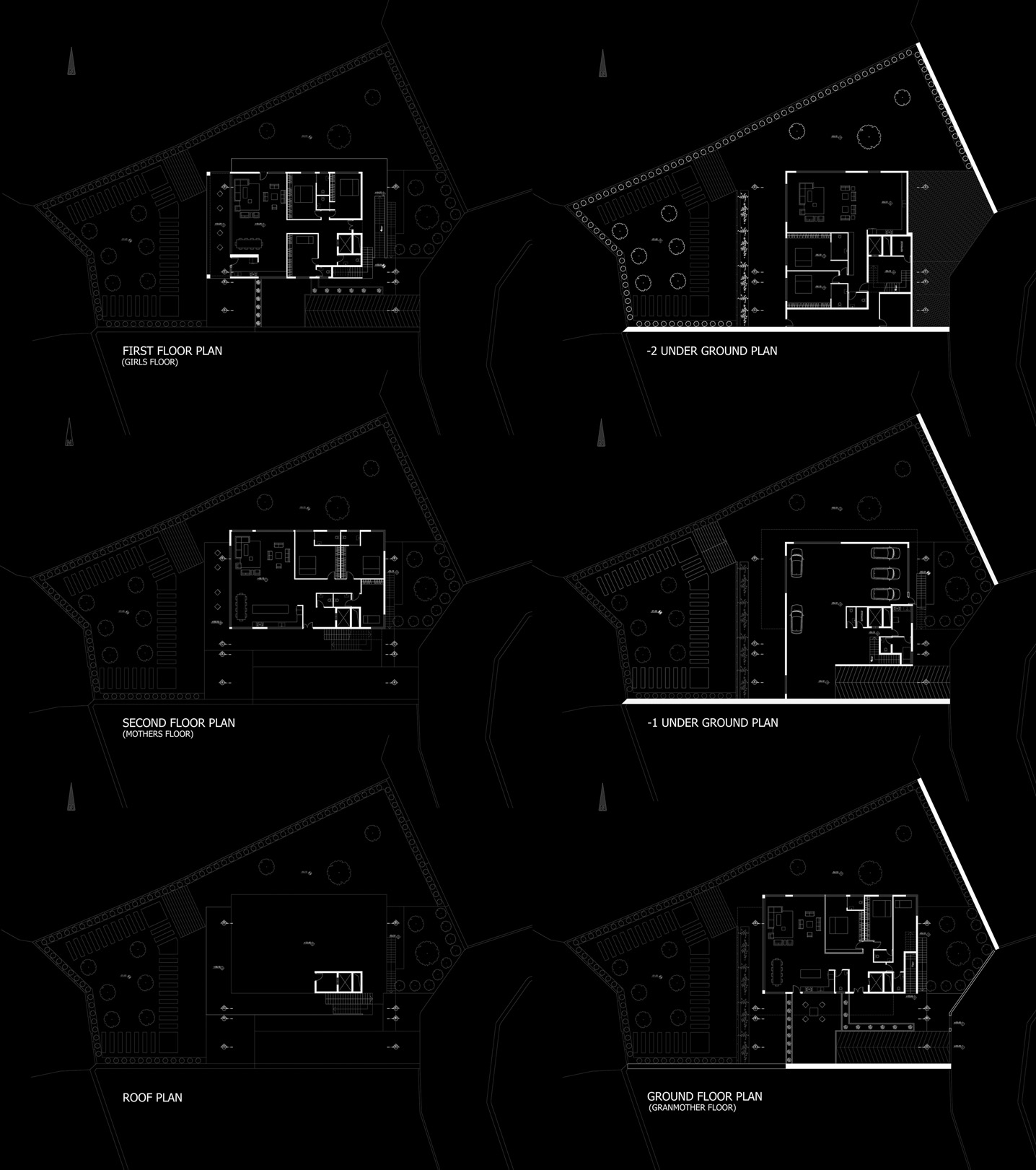
Complete floor plans for all levels from basement to roof extension, with room labels and corresponding axonometric views of each floor
Floor plans for all levels — basement, ground, first, second, third, and roof extension
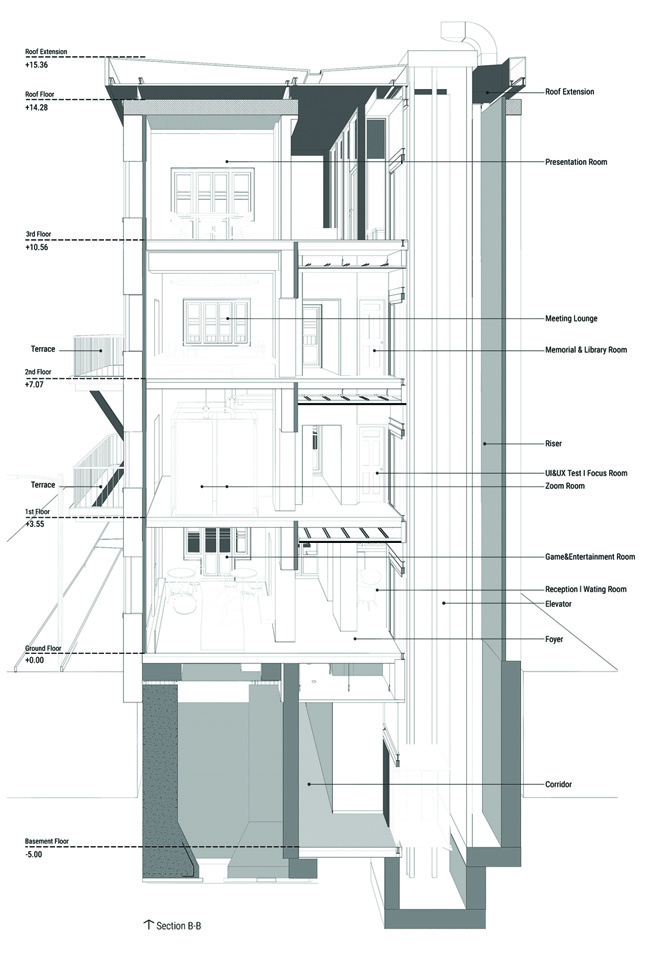
Building section B-B showing all floors from basement at minus five meters to roof extension at plus fifteen meters, with room labels including corridor, reception, game room, zoom room, meeting lounge, memorial library, and presentation room
Section B-B — the full vertical sequence from basement to roof extension

Location: Enghelab Street, intersection of Shahrivar and Khark, No. 12, District 11, Tehran

Client: Private

Design Team: Anousheh Ahmadi, Pantea Parhami, Hooman Nuri Doost, Mina Nabavi, Katayoun Tehrani, Yasaman Hamzeloyian

Construction: Persian Garden Studio, Kamran Naghi, Hamidreza Golpour, Naeemeh Beigi

Supervision: Persian Garden Studio

Structure: Masoud Daryooshi

Electrical: Ashkan Sajadi

Mechanical: Danial Komeilian

Graphic Design: Niloufar Kaveh

Photography: Deed Studio, Niloufar Kaveh

Total Built Area: 1,018 m² · Site Area: 286 m²

Memar Magazine
Iranian Bimonthly on Architecture and Urban Design · Issue 142 · December 2023 – January 2024

Related in Architecture Database

Khark Multipurpose Center