Kiasma — derived from the Greek letter chi, meaning exchange or intersection — was the symbolic code that Steven Holl had employed in defining his design for the competition for the new national museum of contemporary art in Helsinki. Although this term is most commonly used in the context of anatomy or genetics, rather than architecture, in Holl's own words, the intertwining constituted the "infrastructural foundation of the design... linking the mystery of the interior with the horizon of the exterior," two hands interlocked, a public invitation expressed in the language of architecture. The adoption of the Finnish spelling of the word as the permanent name for the completed building is testament to Holl's perceptive reading of the competition brief.
This new building sets out to redefine the art museum as an institution and to transform the image of the elitist treasure-house into the image of a gathering place for the people. A catholic collection, a wide range of activities, and extended visiting hours designed to attract the greatest possible number of visitors have all been put in place.
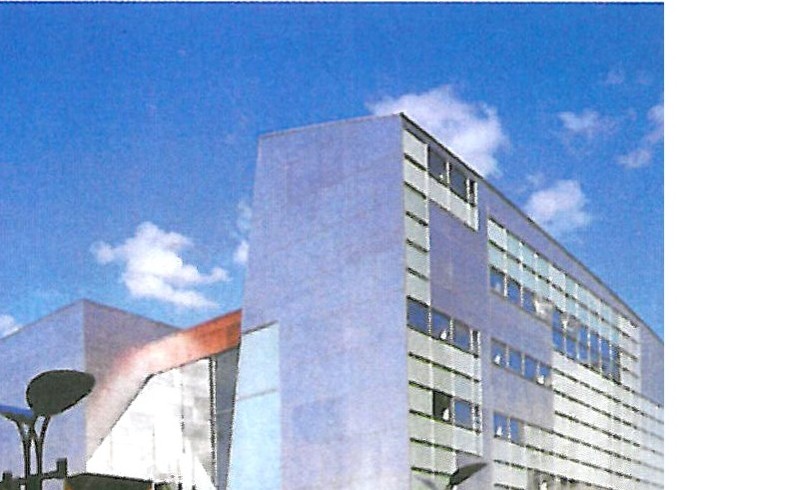
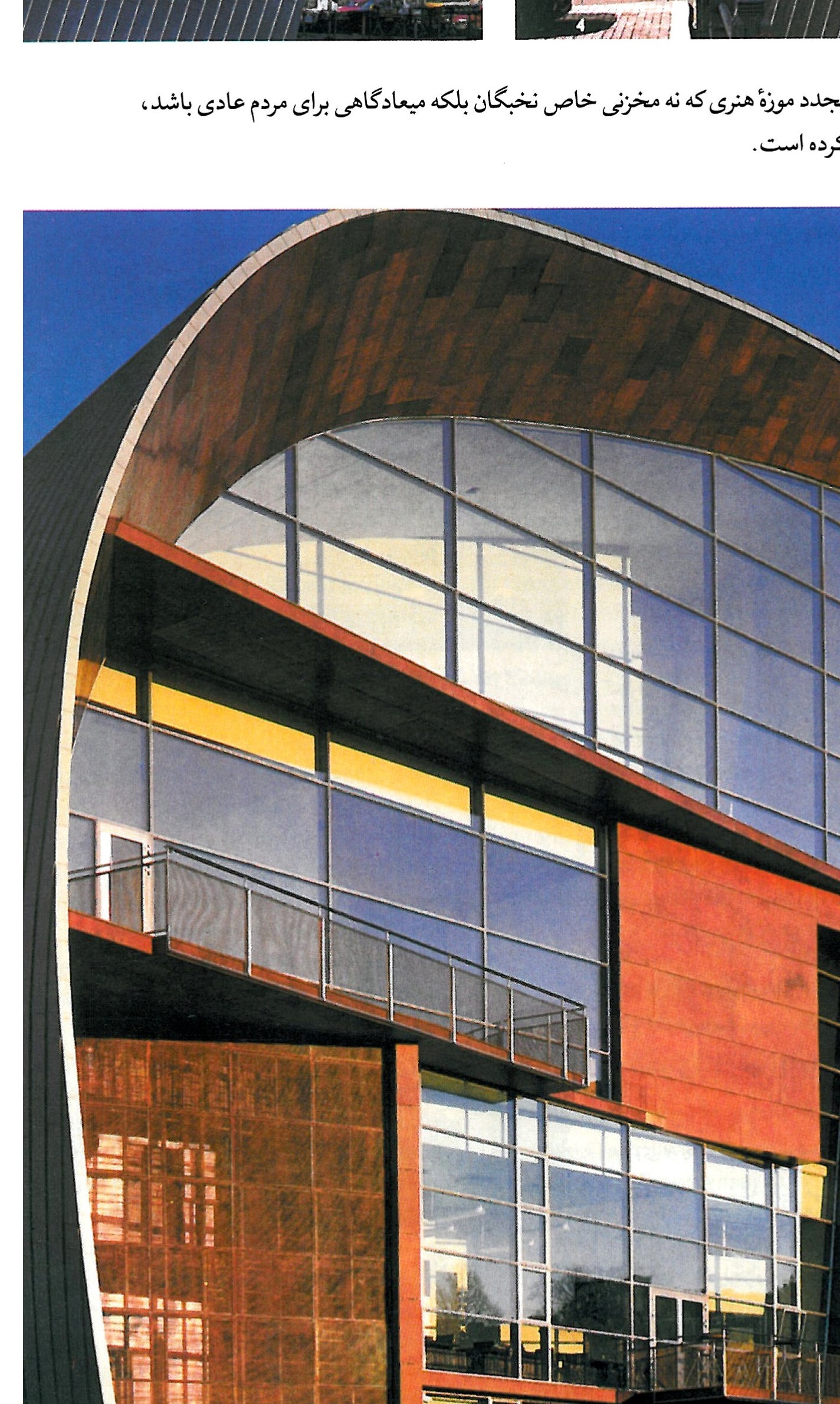
Site and Urban Context
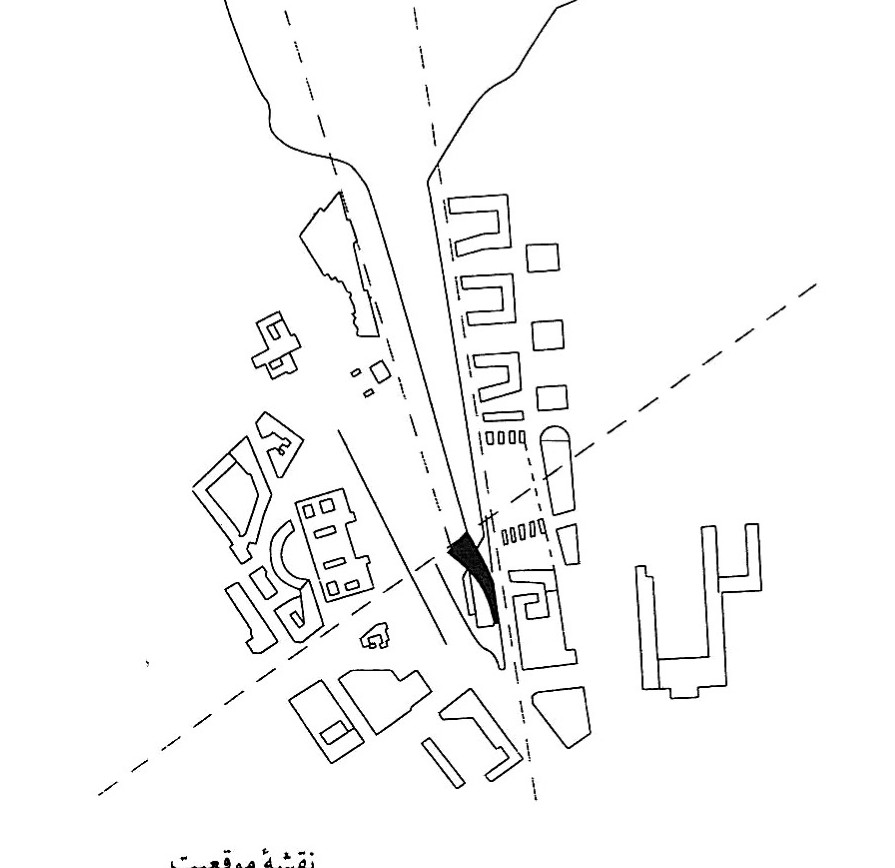
The site of the new building is well positioned to support art as a means of public engagement. This sloping triangular piece of land, with Mannerheimintie — an important vehicular route leading to the city centre — along its western edge, lies among important public and cultural institutions: the Parliament and the National Museum to the west, Finlandia Hall, Aalto's work, to the north, and Helsinki Station, by Eliel Saarinen, to the east. The statue of Marshal Mannerheim, "father of modern Finland," stands near the western boundary of the site.
The site lies at the southernmost tip of an area that, as its current state of abandonment testifies, has remained underused — the residual territory of the city's railway yards and Toolo Bay. Over the years, numerous proposals for urban planning in this area have been put forward. In Aalto's 1964 plan, the connection of Toolo Bay to the city was envisaged through a series of terraces and the siting of cultural institutions along its western shore; unfortunately, only Finlandia Hall was built. In Holl's competition design, the extension of Toolo Bay from the south to the museum site was proposed, which once again emphasized the cultural role of this area and its connection with nature.
Design Concept
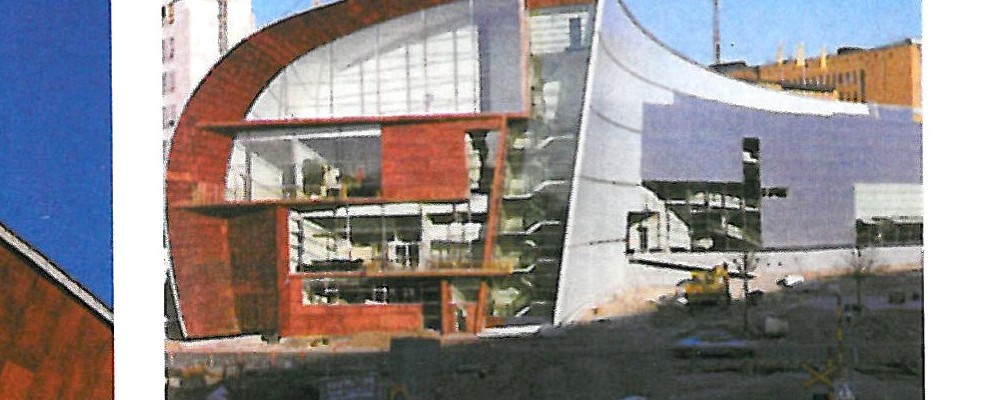
The design emerged from the synthesis of three elements: a ribbon of water and two ribbons of building. By pulling the building back to the eastern edge of the site, a new plaza was created with a long reflecting pool alongside the famous Mannerheim avenue.
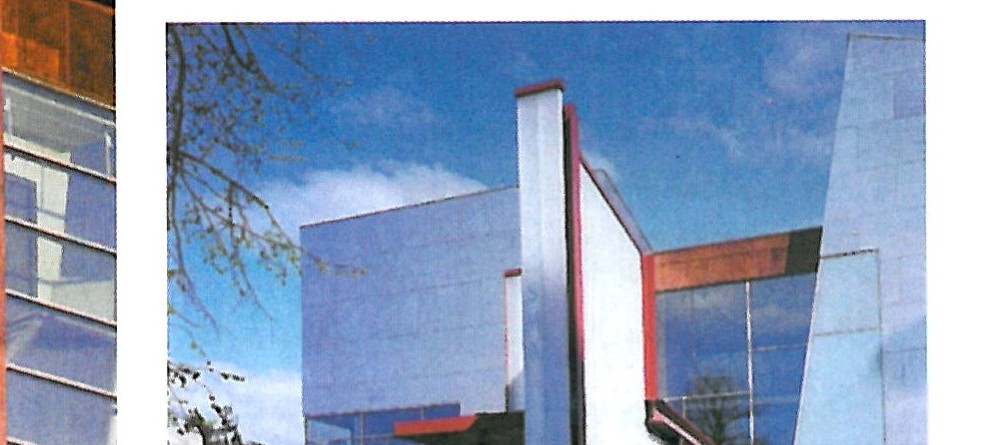
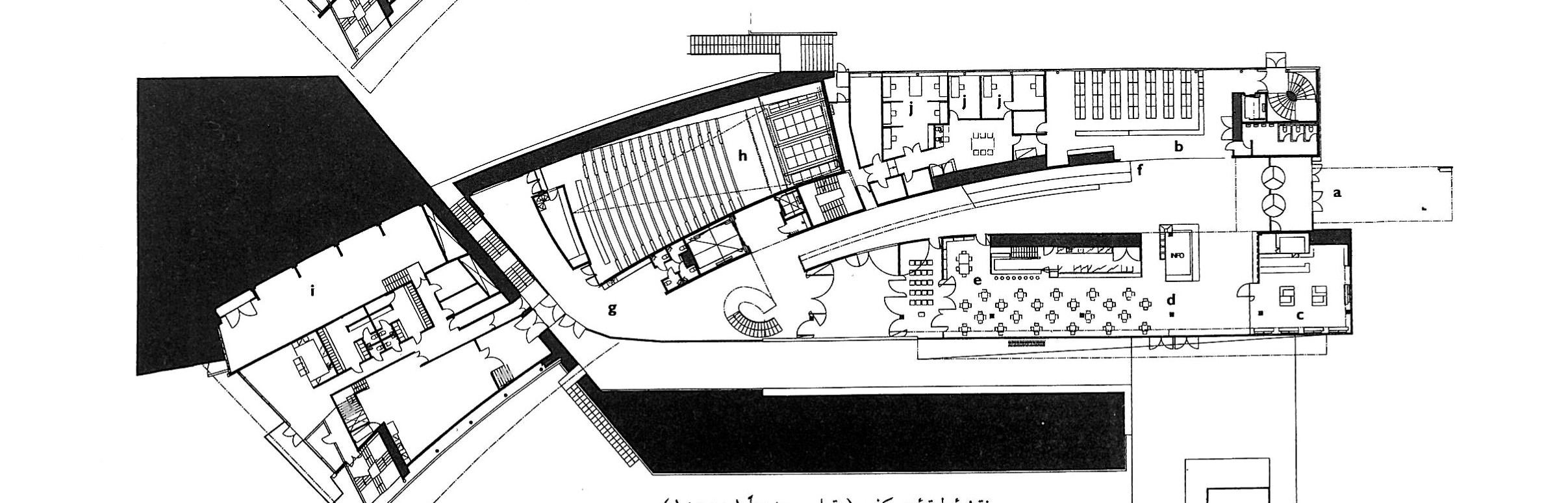
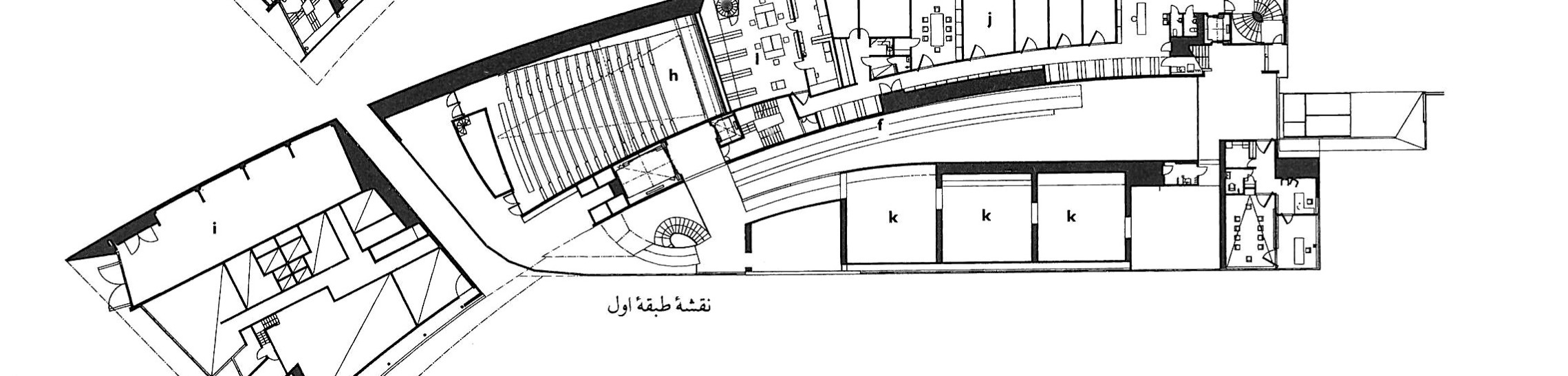
The western building bar is rectilinear, but the eastern bar, which has a curved and twisted form, is cut at its southern and eastern facades where it meets the city grid. At the northern end of the site, the three bars intersect one another. The open end of the curved volume has become the dominant form, stretching toward the natural landscape. The northern facade, with its deep recesses, stands in contrast to the flat southern facade and displays the multiple geometries that influence the entire composition.
Interior Circulation
Steven Holl's Museum of Contemporary Art, whose opening crowds had long been waiting for, has succeeded in the redefinition of the art museum — not as a repository, not an exclusive preserve of the elite, but rather in melding a rich interior spatial experience with an explicit and straightforward urban context.
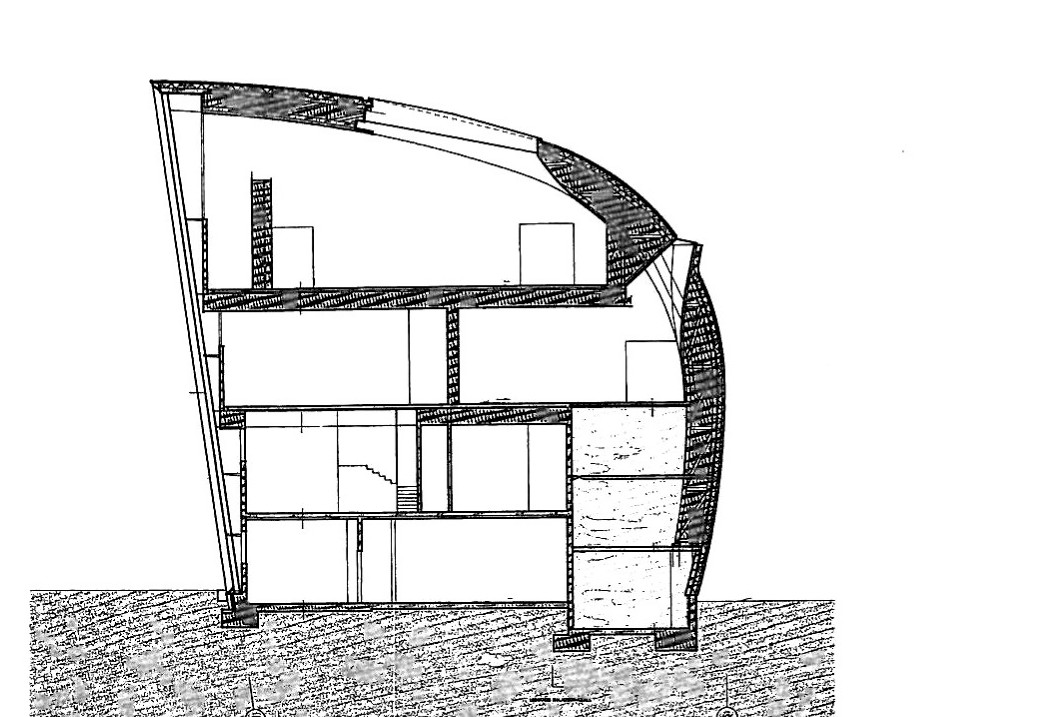
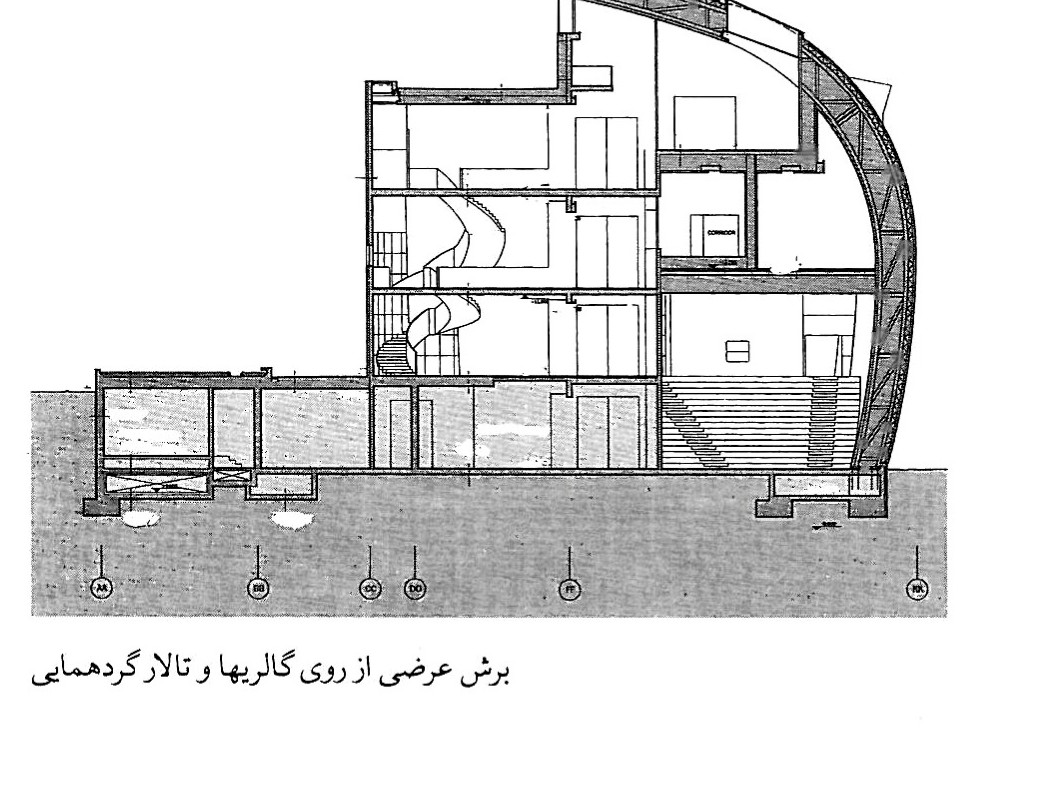
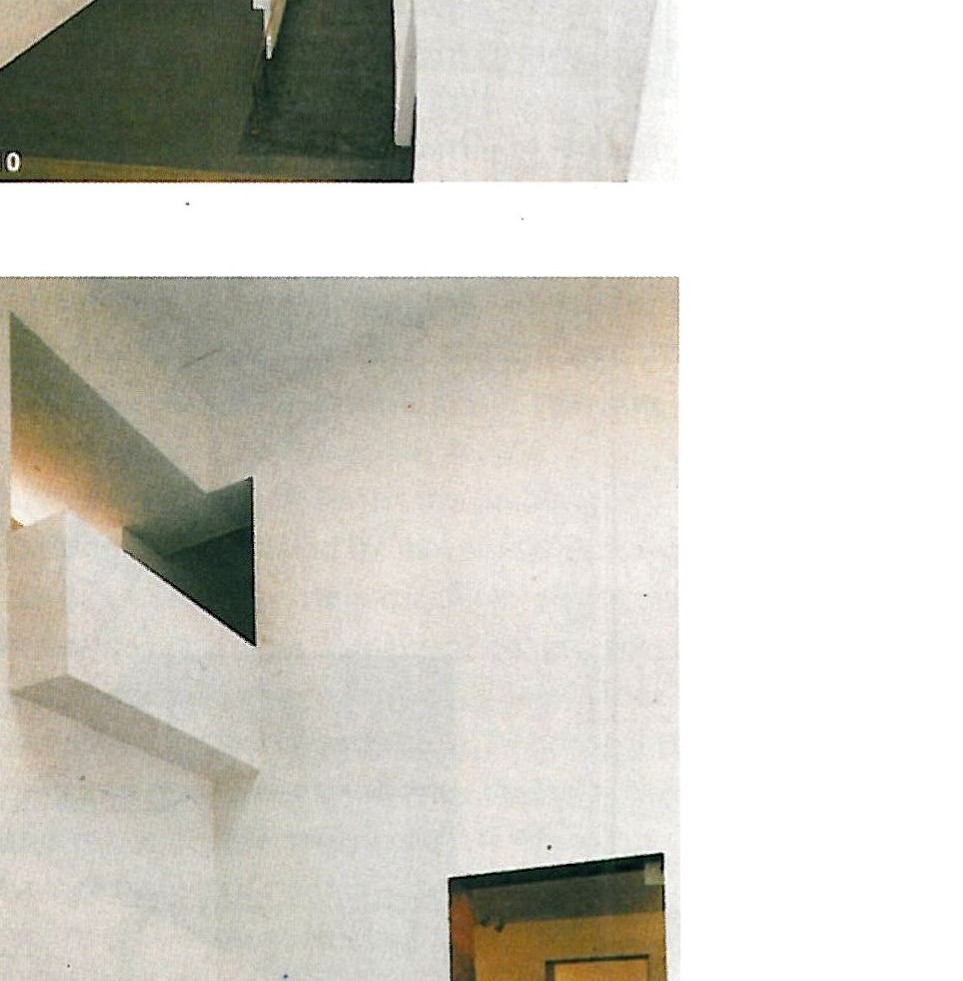
The scheme has not prescribed or privileged any particular arrangement. Elevators, staircases, and multiple ramps are distributed on split levels and combined to create several routes through the building. The passage between rooms — never axially aligned — proceeds diagonally, in a zigzag movement, or via a double-height corridor lit from above and attached to the curved northeast facade of the building. The circulation in the building always returns to the central void, which serves as a point of orientation.
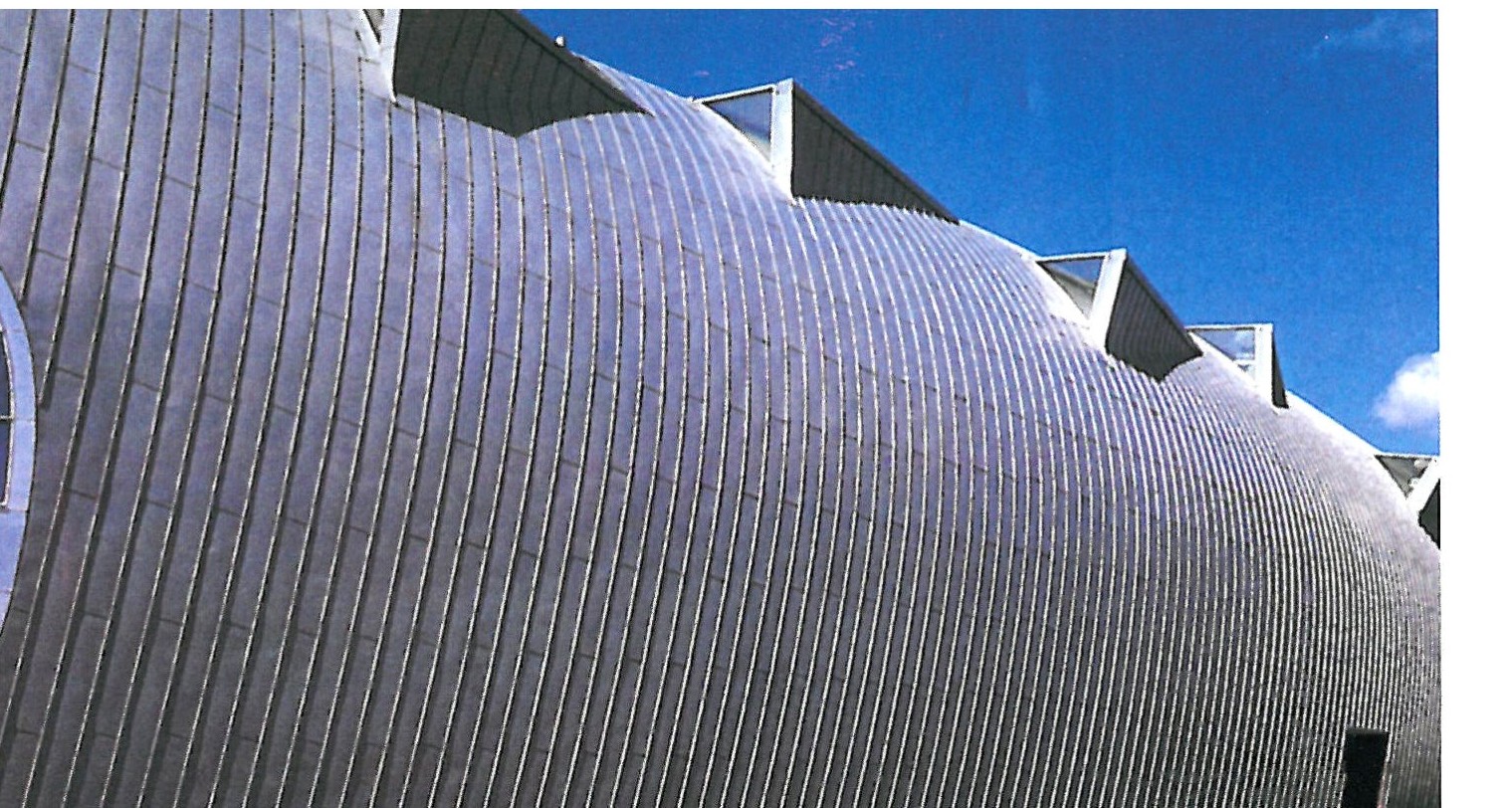
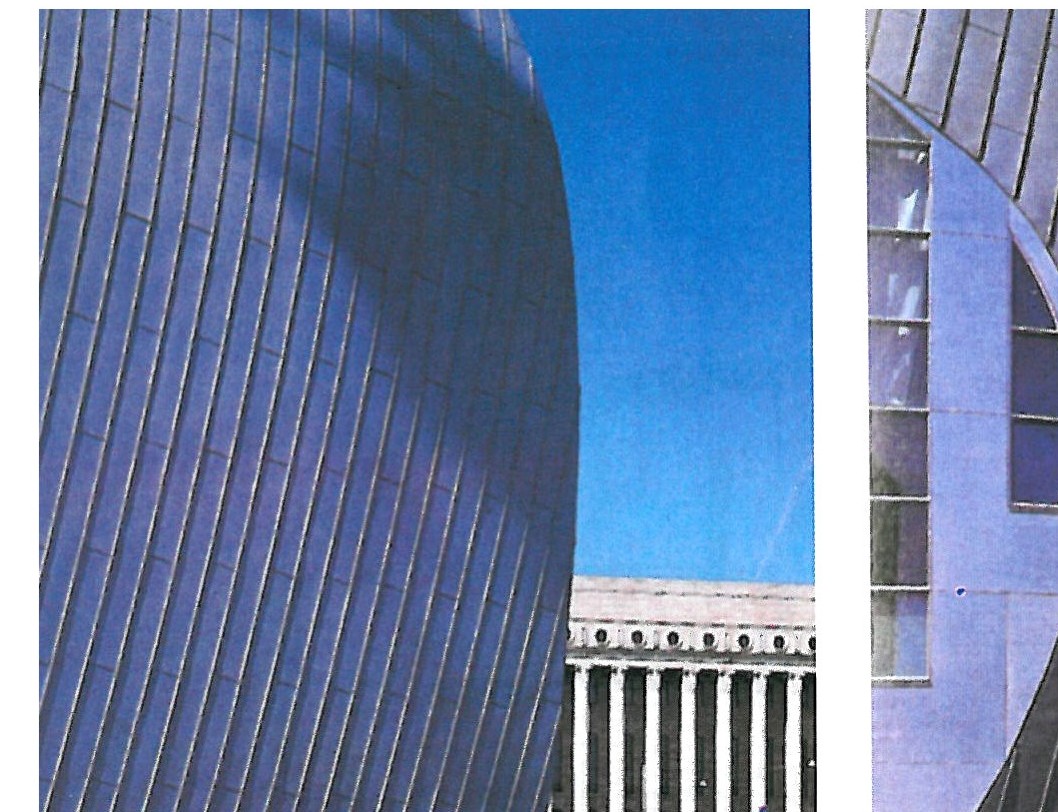
Although Holl is interested in fluidity of space, the curved wall of the eastern volume is not a deliberate gesture to create form. Within this movement, practical objectives are concealed to bring in horizontal light. This wall, shaped in plan to trace the arc of the winter sun, rotates from an outward inclination of 5.9 degrees at the southern end to an inward inclination of 5.9 degrees in the north. This bend, besides admitting light, also works well for views of the city. The northern end of the building turns toward the west, thereby paying respect to the adjacent cultural institutions while framing the new outdoor plaza.
Floor Plans
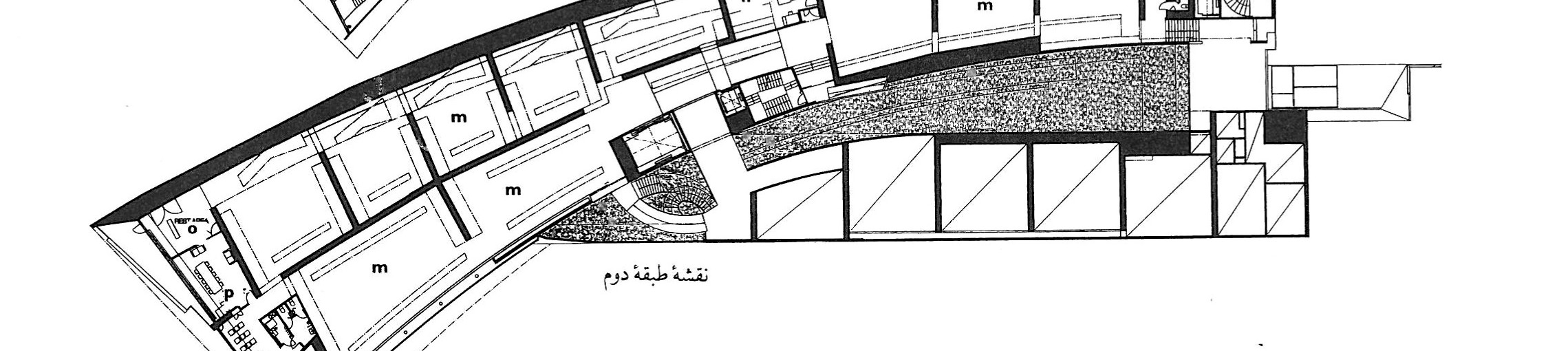
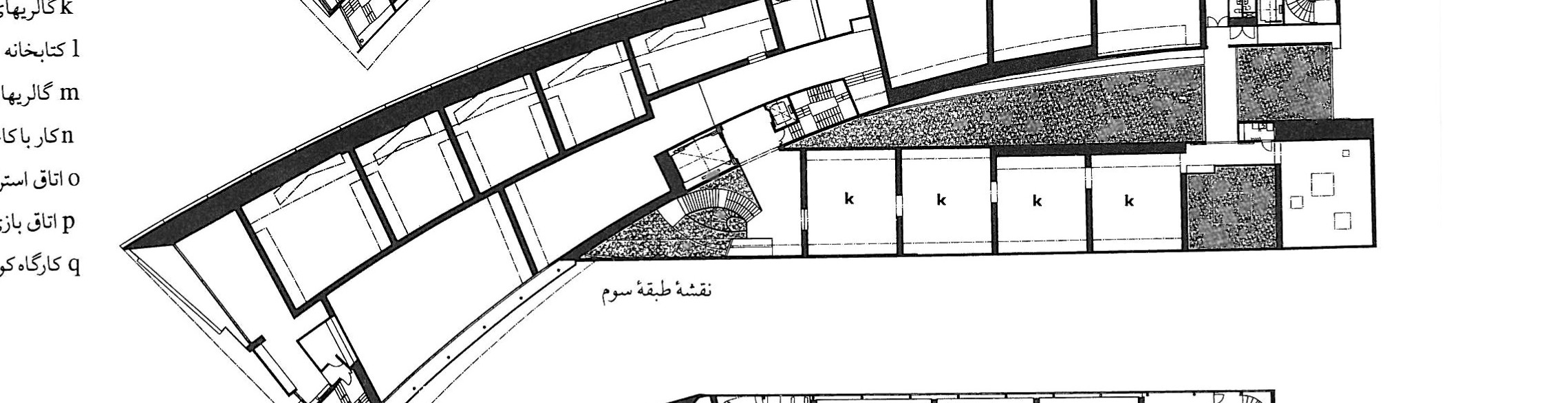
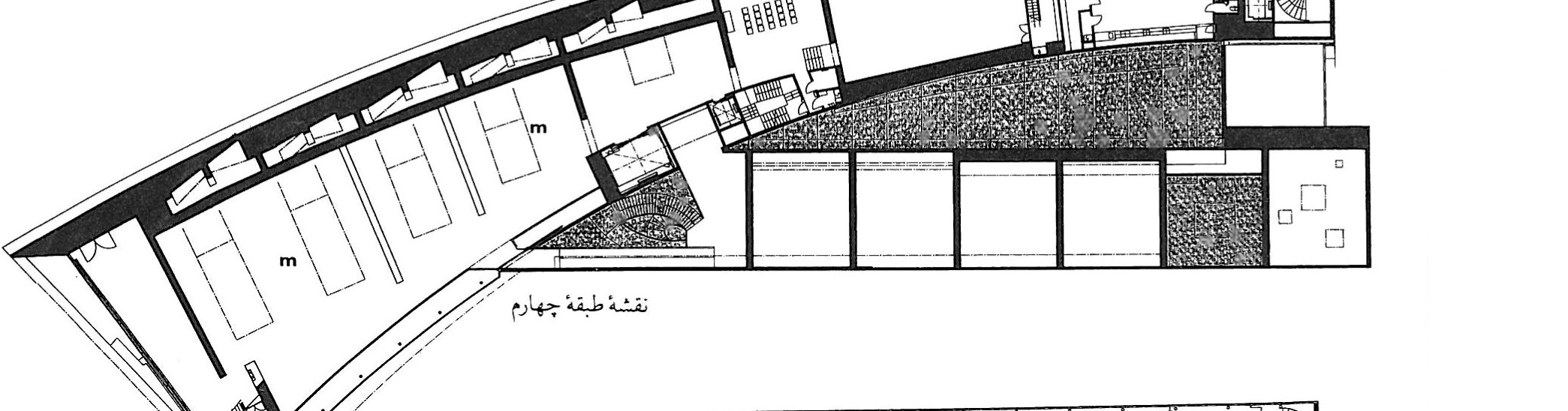
Galleries and Light
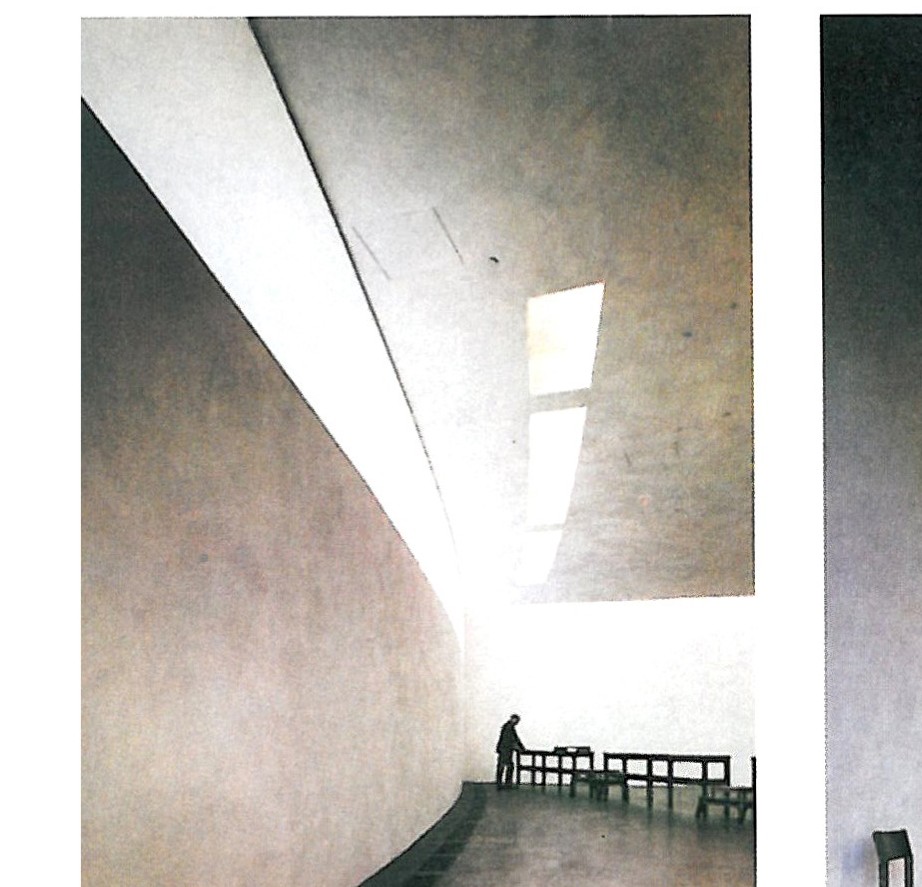
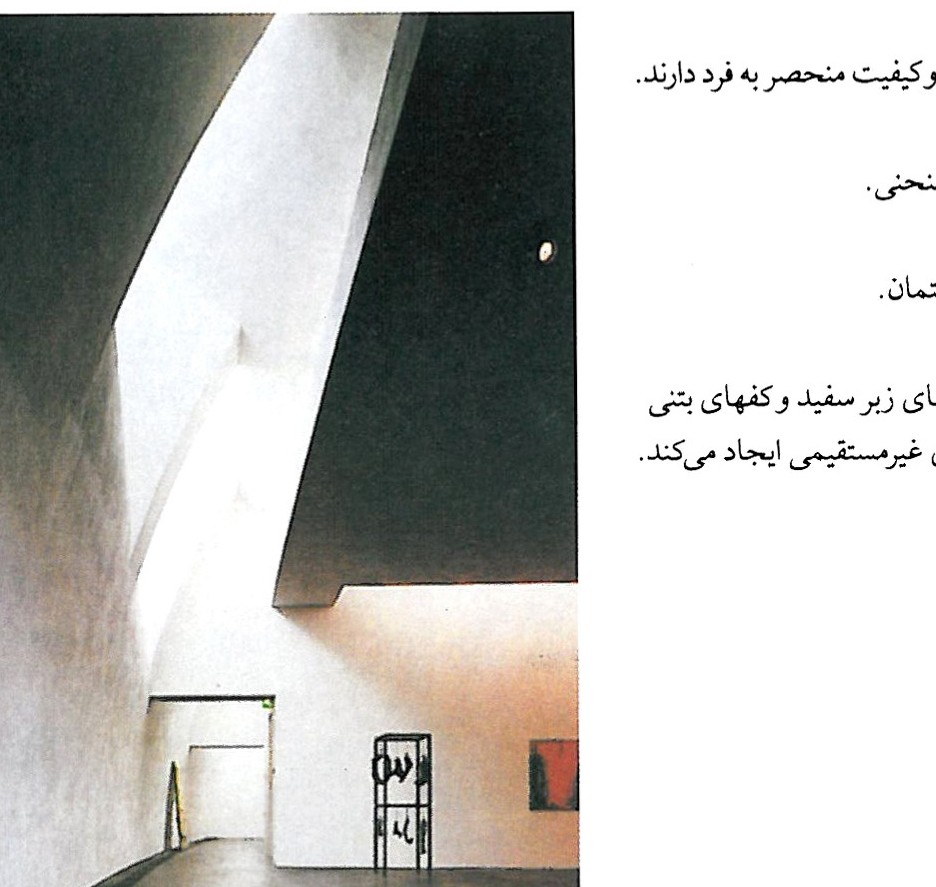
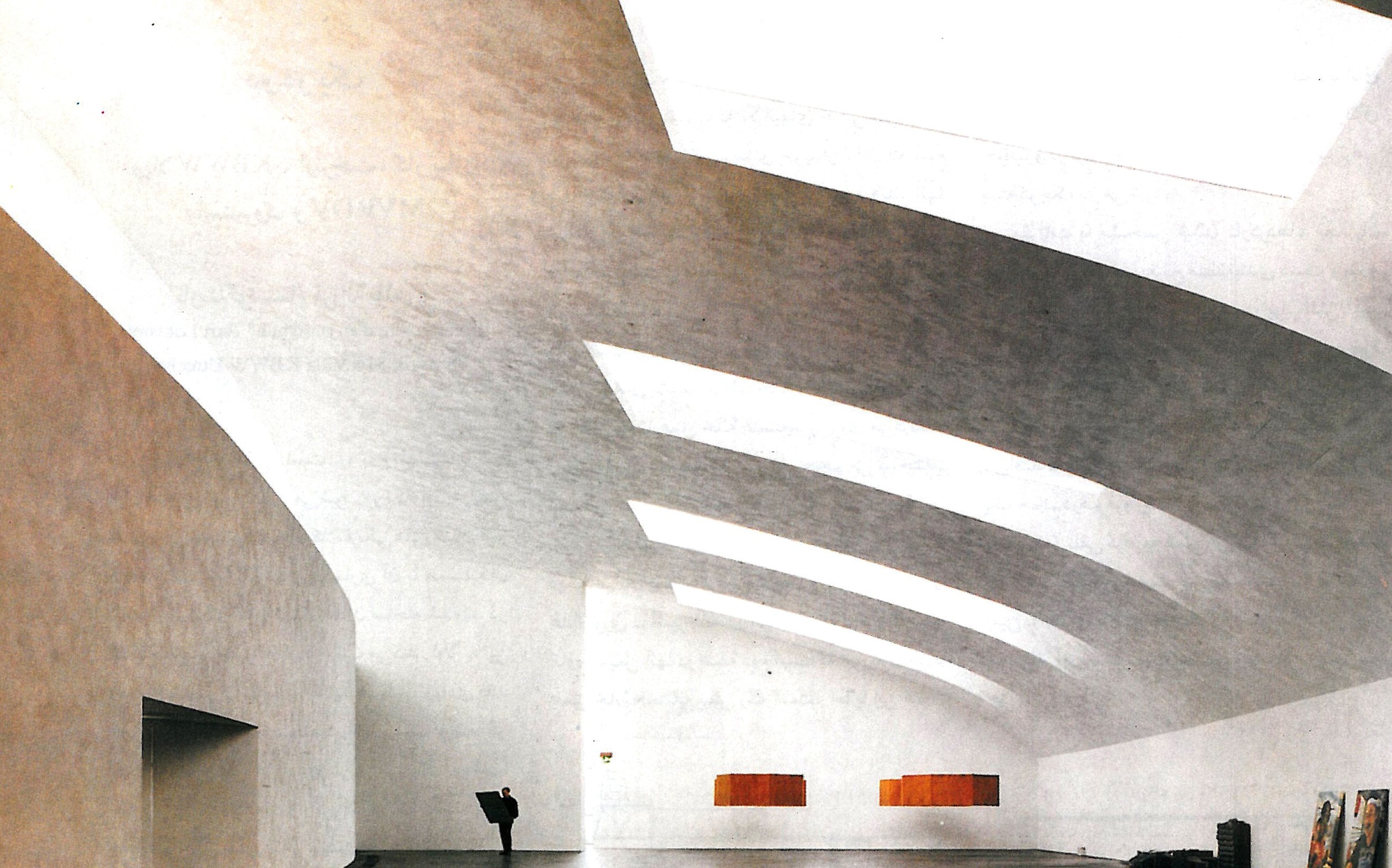
The 25 galleries in the building each differ in form and in the quality of their light. The spaces of the western bar are rectilinear, while the galleries of the eastern bar are irregular. The lower-level galleries have flat ceilings and receive daylight from the semi-translucent facade wall. As one ascends through the building, the horizontal element erodes to create a more sculptural cross-section. Deep vertical voids carved into the curved profile of the northeast corner of the museum capture sky light and introduce it unexpectedly into the upper-level galleries. The uppermost gallery at the northern end of the building is a space of extraordinary distinction, with a vaulted ceiling admitting light from above.
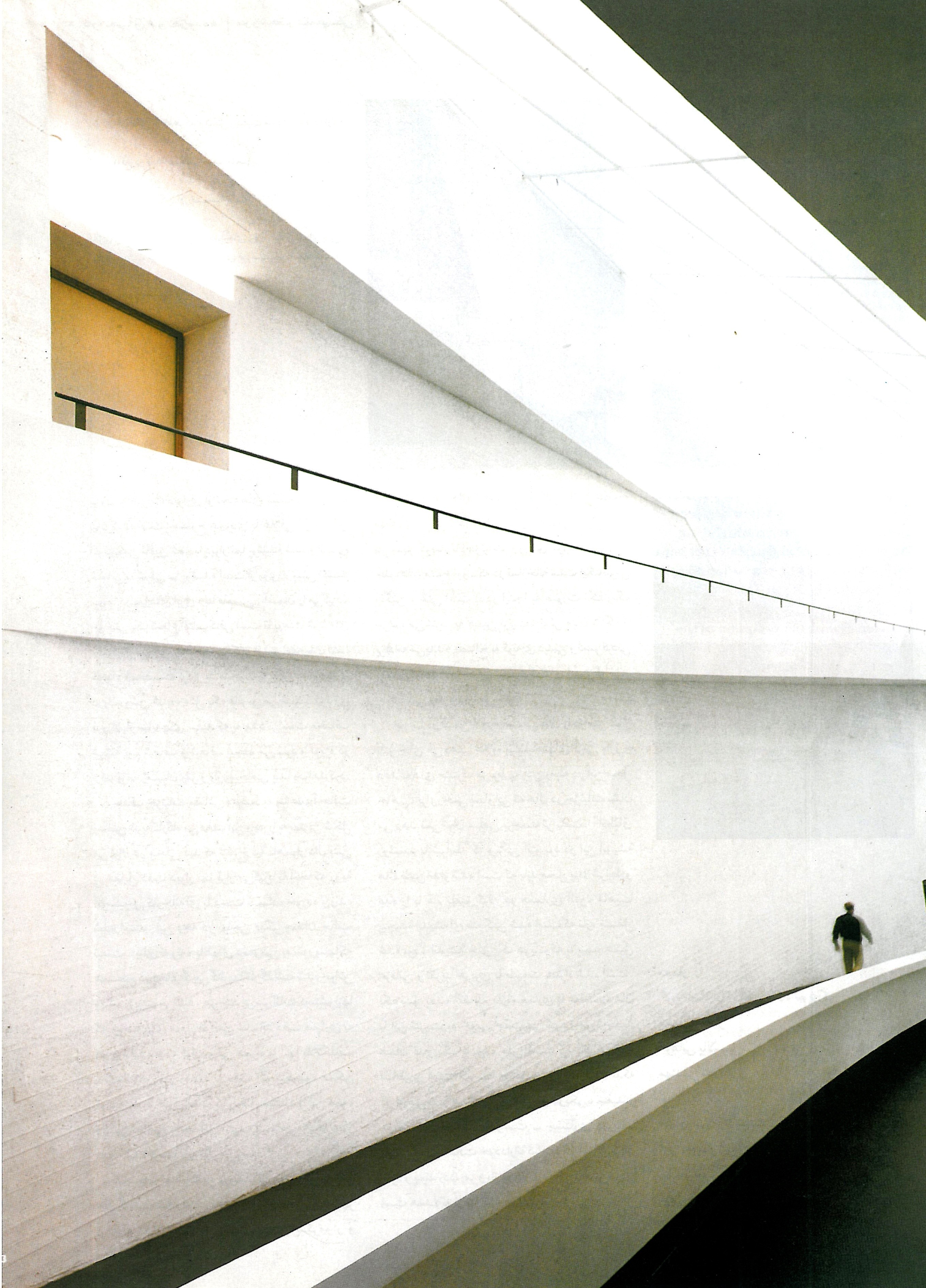
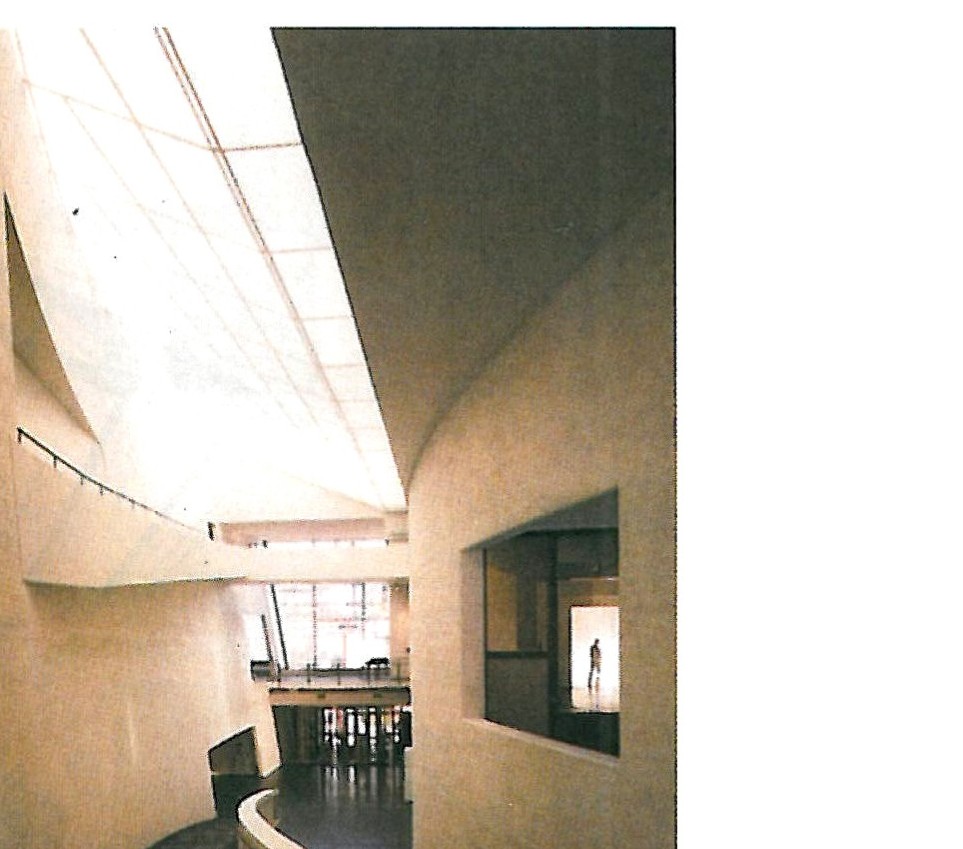
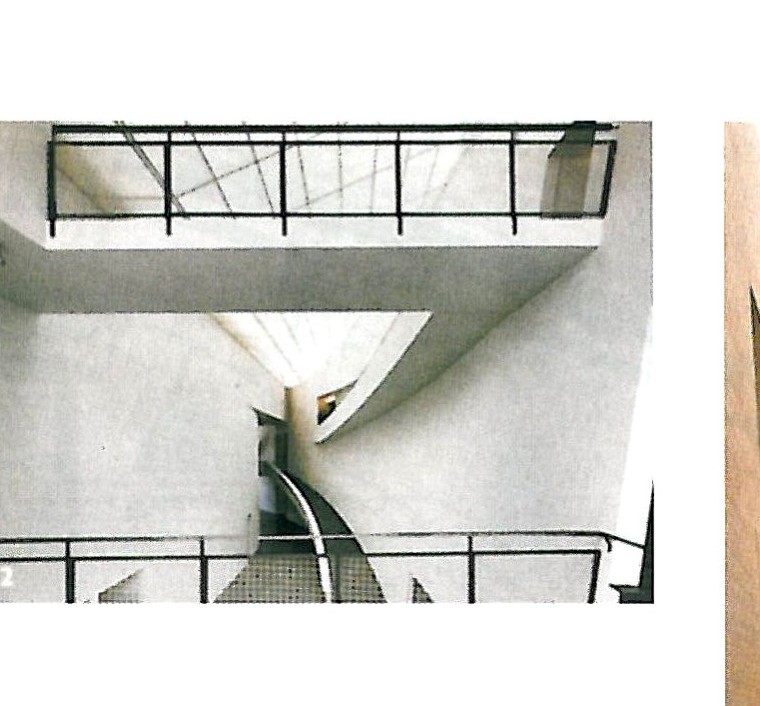
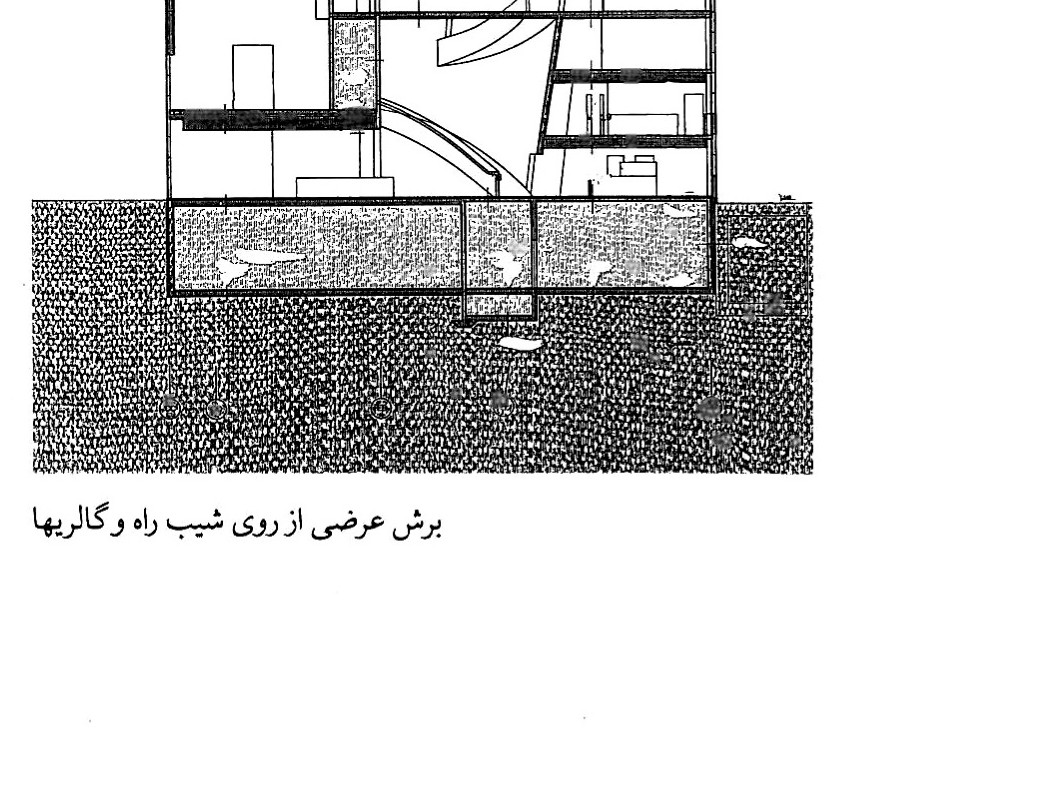
Between the two main volumes lies a narrow void traversed by a curving ramp. A ramp rises along the curved wall through this central space, arriving at the crucial point of intersection of the building's bars and the water. Entry to the first level of galleries proceeds from this landing. Collections of double-height galleries alternate on either side of the central void, ascending through the building's four split levels. The permanent collection — which changes annually — is displayed in the lower galleries, and changing exhibitions are mounted on the upper levels.
One cannot grasp this organization from a single vantage point, but as one moves through the interior, the order reveals itself cinematically to the visitor. This is the architecture of promenades par excellence, only without a prescribed path.
Light and Materiality
The greater part of daylight in the building — especially in the galleries and the central void — is diffused through semi-translucent glass which, besides intensifying the feeble light of northern lands, creates a sense of soothing detachment and separation from the life of the city. Thus movement within the building becomes a kind of introspective journey. To create a sense of release, views of the exterior can be glimpsed through clear glass placed at key points — at the northern and southern ends of the building and the point of intersection. A narrow vertical slice of the city visible through the gap in the southern facade stands in stark contrast with the expansive panorama that unfolds toward the north. The broad sweep of clear glass on the western facade, at the junction of the building's volumes, puts vertical movement on display and is reinforced by the constantly shifting reflections of sunlight from the horizontal surface of water.
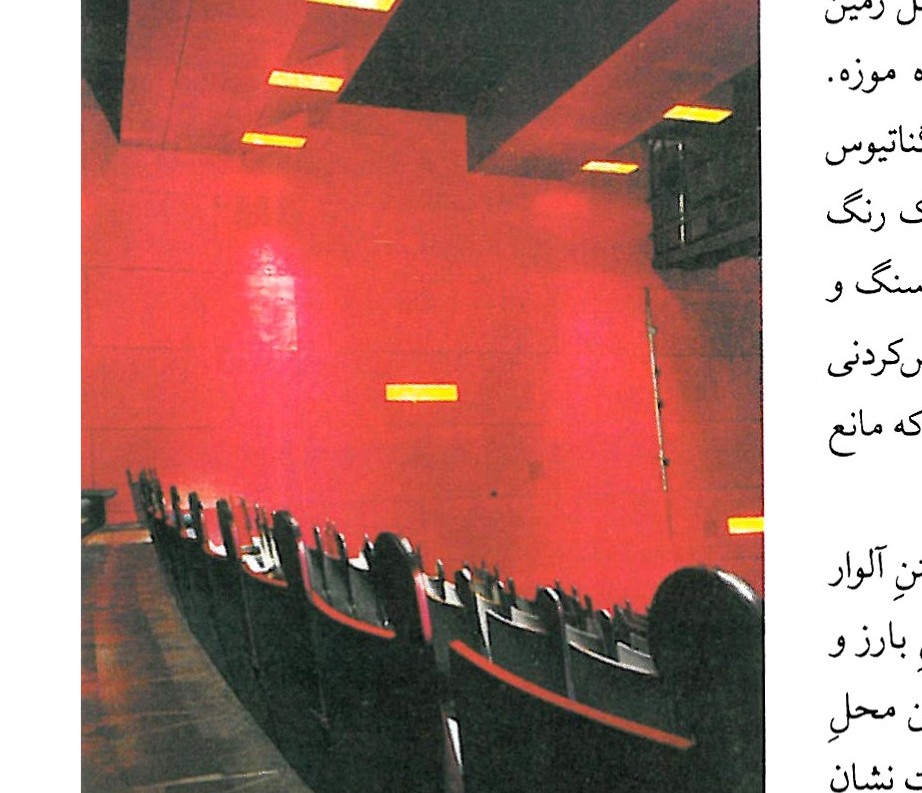
However important daylight may be in this building, at this far northern latitude it is not something one can depend on. In fact, since the museum is open daily from 9 a.m. to 10 p.m., there are successive months of darkness. Therefore, each gallery has two sources of artificial light — fluorescent lamps hidden in light niches and adjustable focused spotlights placed in a flush ceiling tray at a height of two meters. Various combinations of warm artificial and cool natural light enrich the experience of these spaces.
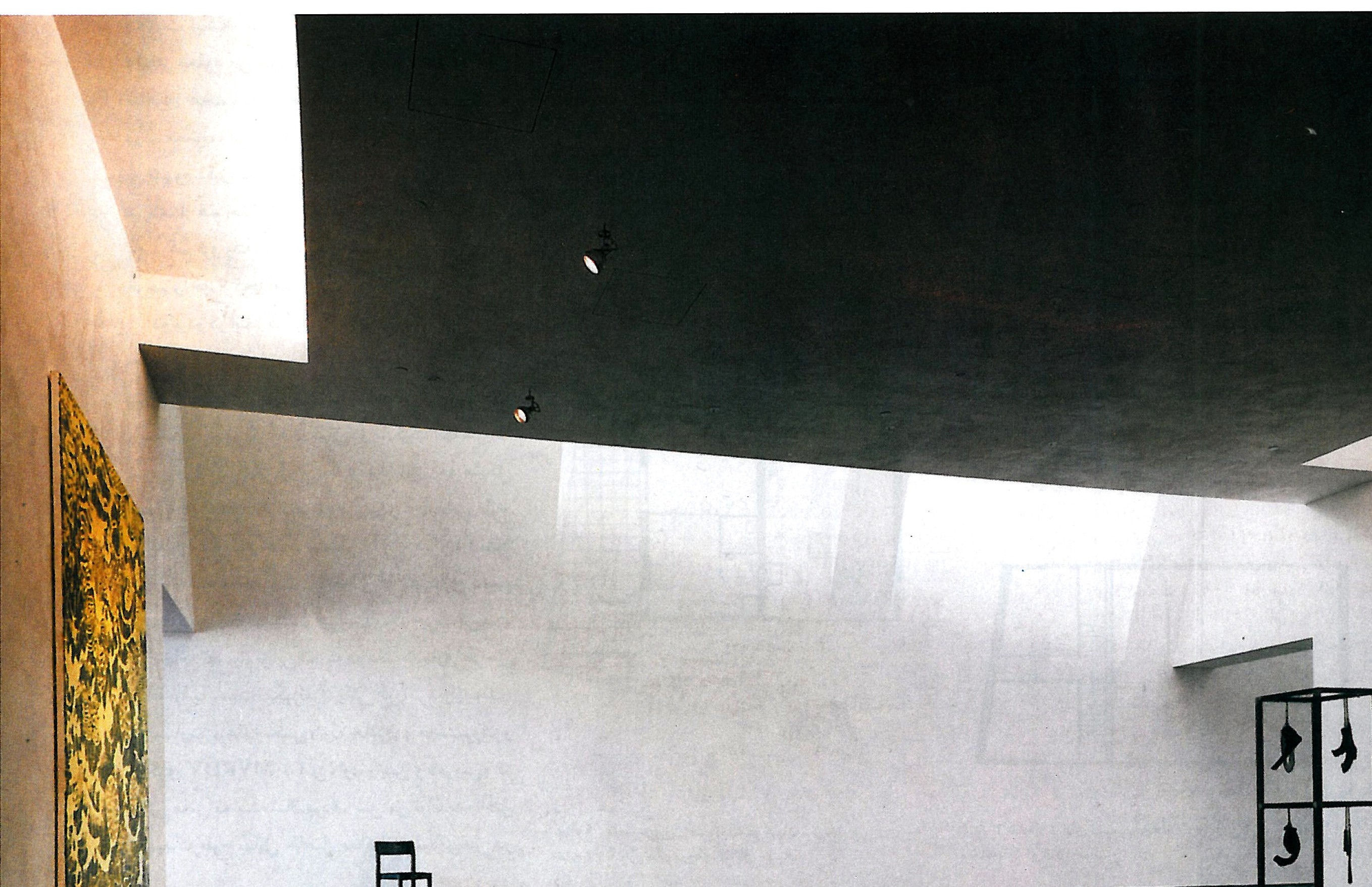
The concealment of light fixtures in the galleries signals a broader strategy for eliminating medium-scale detail in order to create spaces that direct attention to the art itself, not the building. The dual concrete-and-steel-frame structure is concealed within walls 600 millimeters thick. Services have been presented with equal discretion. Air is supplied through perforated steel grilles flush with the floor, hidden extractors in light niches are connected to concealed dampers in the thick walls, and skirting boards at floor or ceiling level have been eliminated. In the central void, there is no trace of artwork. The horizontally striated concrete walls have been cast in board-form. This subtle play of texture, combined with the thin black line of steel railings, creates medium-scale detailing that is expressed with extreme delicacy and marks the transition from the bright, lively public spaces at ground level to the quiet galleries above.
The color of the gallery plaster has been chosen with care within this game of abstraction. Walls of near-white, which come alive with light, and concrete floors dyed charcoal produce painterly compositions of pristine grey tones that bear an uncanny resemblance to the watercolor studies of Steven Holl for the project. Acid-patinated brass — applied everywhere as a thin patchwork veneer with a consistent surface — marks the key cuts in the building's volumes, especially in the automatic sliding glass doors that separate the gallery environments from the central void, and in the hardware of openings between galleries.
Exterior Expression
Patinated brass as an indicator of important cuts takes on a similar role on the exterior, where it is used to clad the south entry, the northern facade, the outdoor water feature, and the pedestrian path that passes through the building to connect the two ground levels of the site. Apart from these cuts, the building from the outside is equally calm and quiet. The double-curved eastern wall of the void is expressed externally as a wall of semi-translucent glass panels that possesses an iconic quality. The connective space can be perceived at multiple levels — from the conceptual space of the site within the city to the details of the museum shop entrance.
The varied effects of light — rich and colorful in Holl's Chapel of St. Ignatius — are presented here in monochrome. Vertical surfaces are wrapped in a sheath of aluminum panels fused with the curtain wall, and the northeast end of the building is clad in pre-oxidized zinc. On overcast days, the building takes on the leaden hue of the sky; but even a single ray of sunlight is enough to bring the glass skin to life. At night, the building's introverted character is transformed. The museum, lit from within, becomes a lantern — a luminous collage of white shadows created through various combinations of semi-translucent and clear glass, acquiring a special mystery in the snow and fog of winter.
The elimination of medium-scale detail deliberately gives the building a raw, workshop-like quality. This aspect is best seen where the rough profile of the uneven concrete slab is set against the precision of the curtain wall, or where factory-made aluminum has been hand-sanded to a living finish. This quality is less compelling in other areas: for instance, the service access panels set flush with plaster walls distract the eye. Yet, careful attention has been lavished on the bespoke washbasins designed specifically for the site, even if the electrical fittings beside them remain somewhat unresolved. The patina of time, if one looks carefully, may well enhance the extraordinary experience of the building; nonetheless, the pared-back aesthetic in some places has not yet worn down so much as already appeared faded.
Holl and Aalto
Kiasma has been elaborated on several of Steven Holl's earlier preoccupations. Although this building is woven into the fabric of the city, it possesses a sculptural and iconic quality as well. The connective space can be perceived at multiple levels — from the conceptual space of the site within the city to the details of the museum shop entrance. The varied effects of light — rich and colorful in the Chapel of St. Ignatius — are presented here in monochrome. Similarly, the tension between stone and the materials used, although their details are such as to prevent the assertion of dimension and weight.
This building inevitably places Steven Holl in the context of Alvar Aalto. Beyond the striking formal similarities and shared concerns with context at this particular site, for the tactile sensibility that Holl demonstrates in his detailing, no more distinguished a predecessor can be found. "The systematic adaptation to conditions" that was the hallmark of Aalto resonates through this building, where site, conditions, and idea had to be synthesized. In Aalto's architecture, the complex nature of thought is reflected — thought that had freshly become independent: the thought of creating an identity deeply bound to a profound, almost mystical and nearly instinctive connection with nature.
Kiasma's restrained manner of revealing itself and of "linking the mystery of the interior with the horizon of the exterior" bespeaks a sympathetic understanding of Finland and its people.
Project: Kiasma — Museum of Contemporary Art, Helsinki, Finland
Architect: Steven Holl Architects, New York
Associate Architect: Juhani Pallasmaa
Structural Engineer: M. Adler
Structural and Mechanical Consultant: Ove Arup & Partners
Lighting Consultant: L'Observatoire International
Source: Annette Lecuyer, "Iconic Kiasma," The Architectural Review, August 1998.



