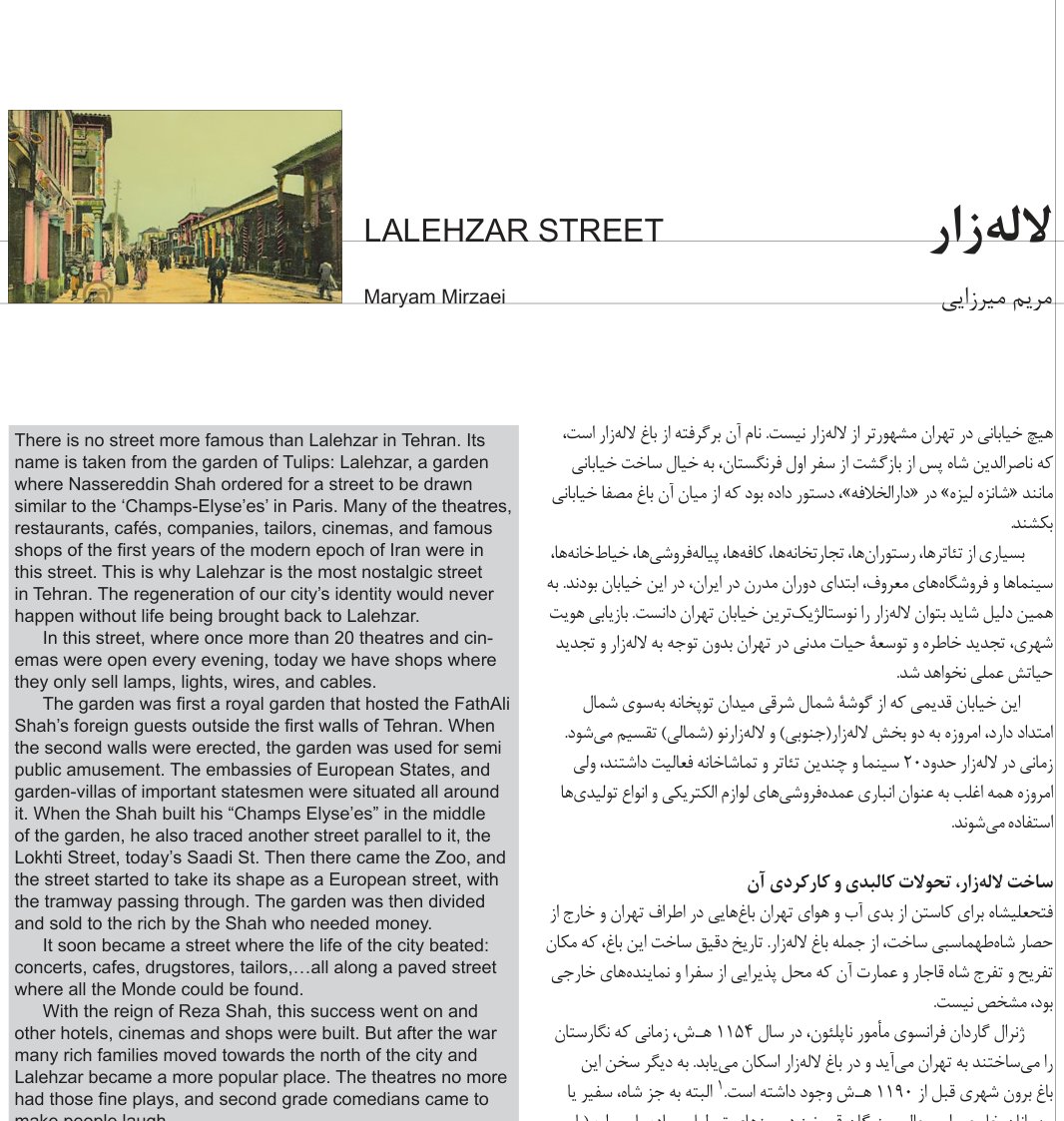
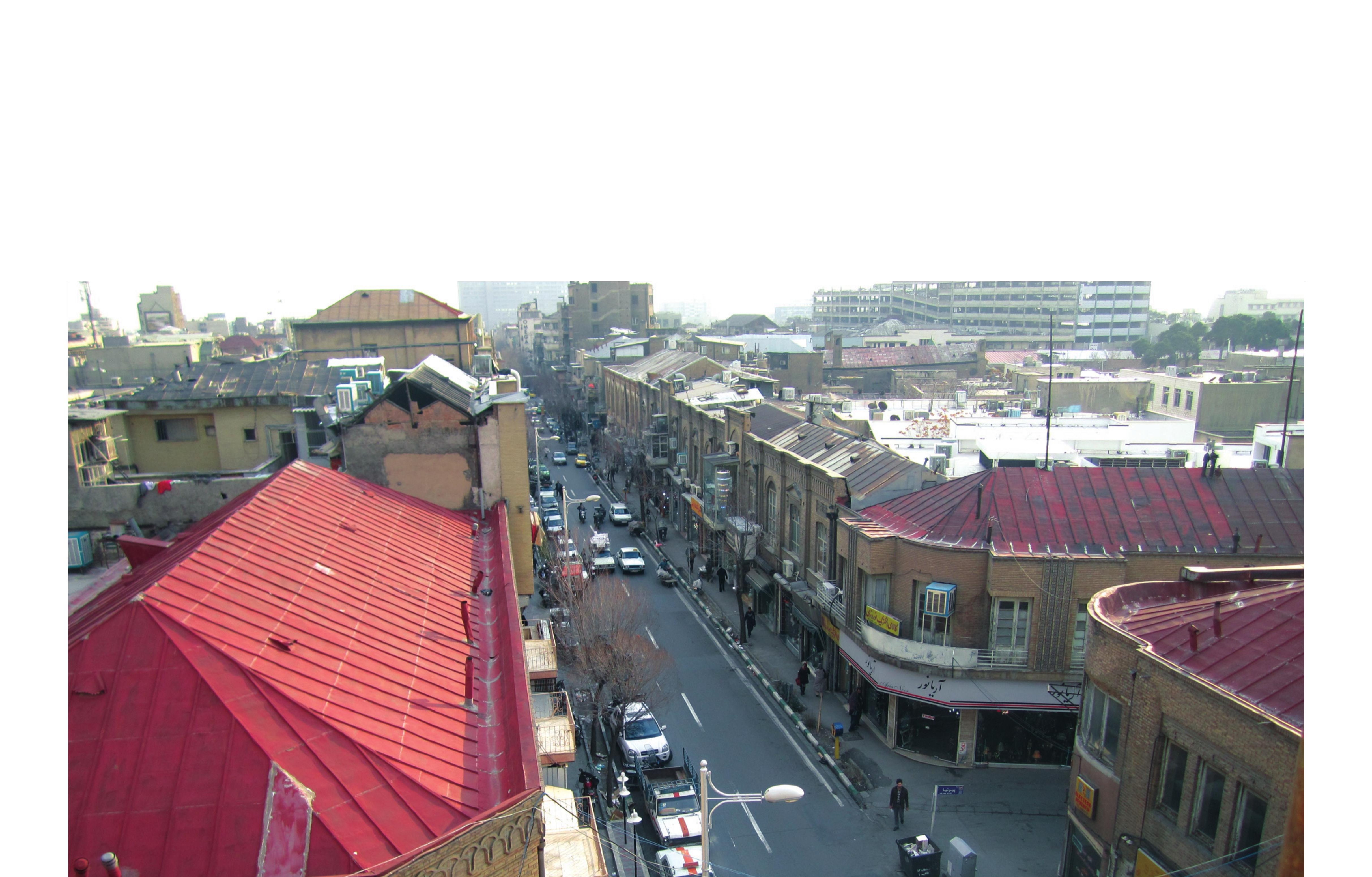
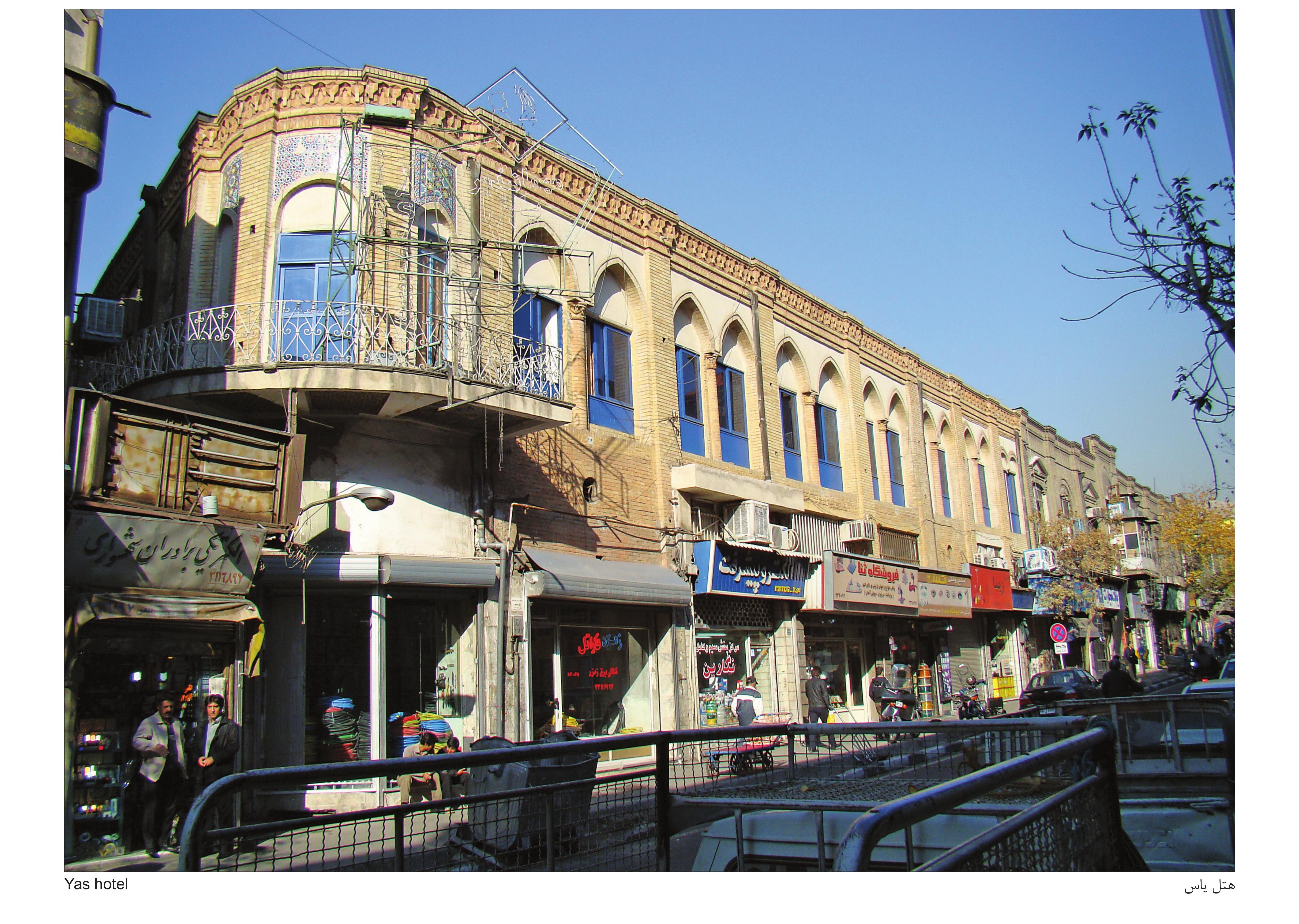
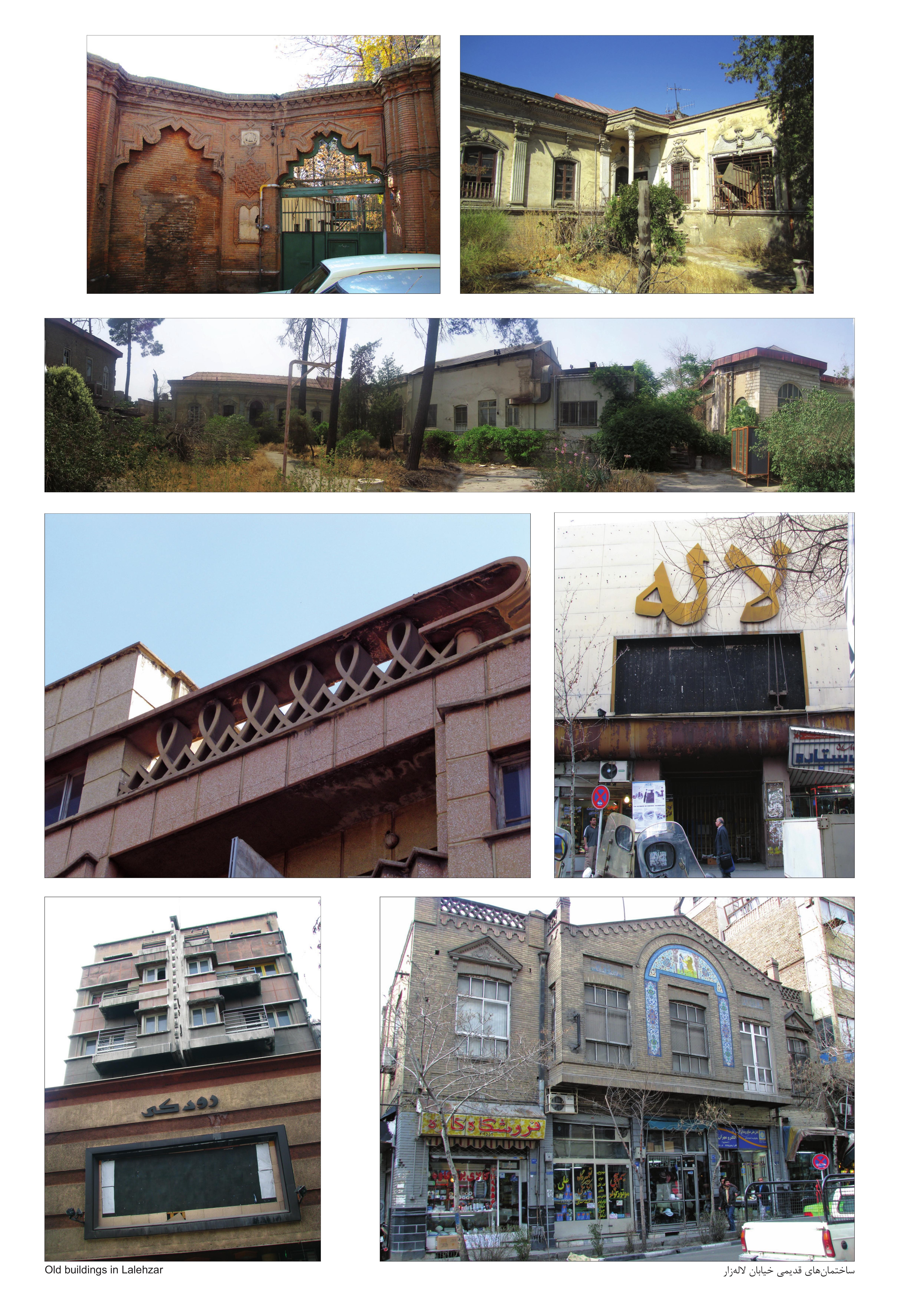
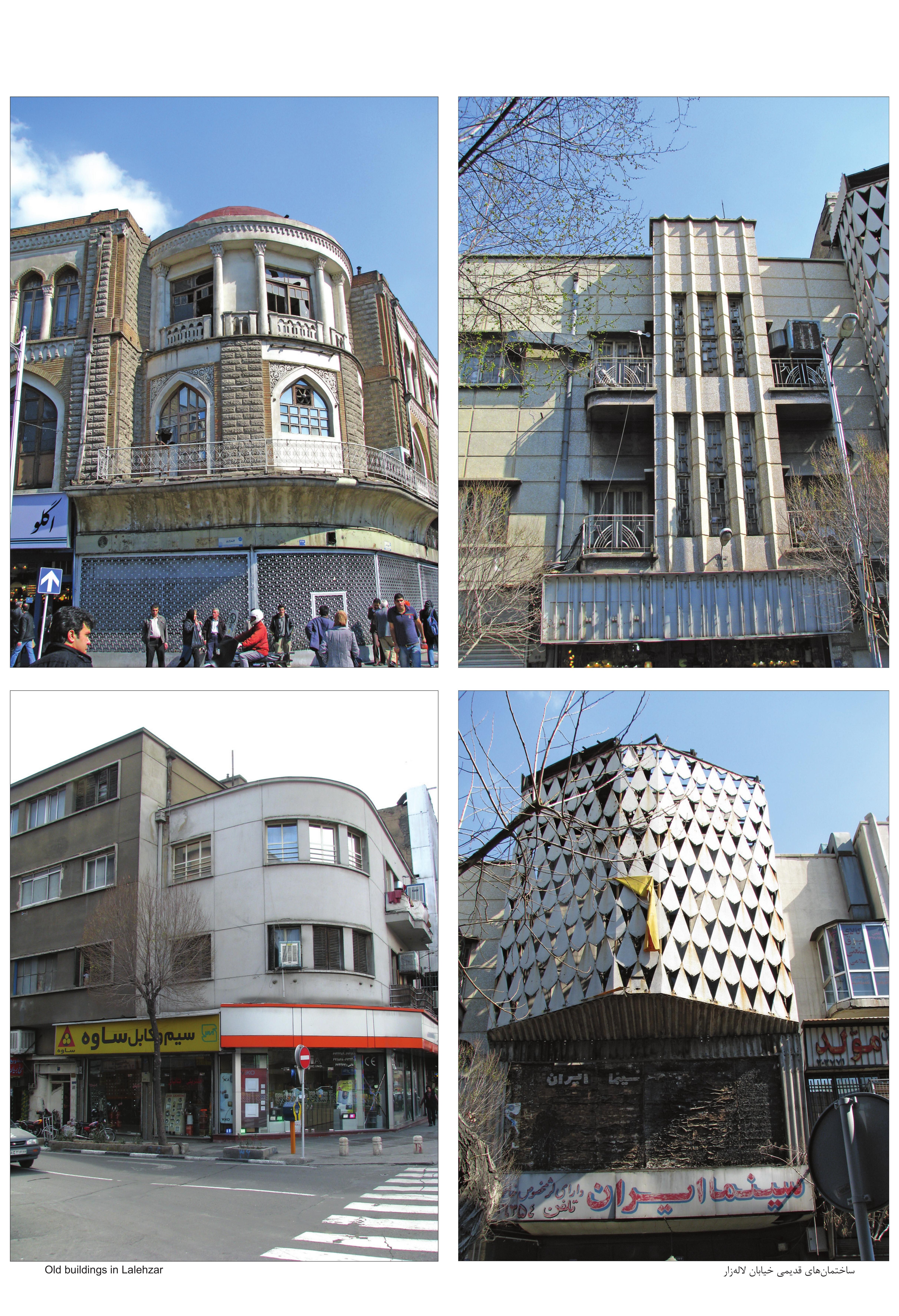
There is no street more famous than Lalehzar in Tehran. Its name is taken from the garden of Tulips: Lalehzar, a garden where Nassereddin Shah ordered for a street to be drawn similar to the ‘Champs-Elyse’es’ in Paris. Many of the theatres, restaurants, cafés, companies, tailors, cinemas, and famous shops of the first years of the modern epoch of Iran were in this street. This is why Lalehzar is the most nostalgic street in Tehran. The regeneration of our city’s identity would never happen without life being brought back to Lalehzar. In this street, where once more than 20 theatres and cinemas were open every evening, today we have shops where they only sell lamps, lights, wires, and cables. The garden was first a royal garden that hosted the FathAli Shah’s foreign guests outside the first walls of Tehran. When the second walls were erected, the garden was used for semi-public amusement. The embassies of European States, and garden-villas of important statesmen were situated all around it. When the Shah built his “Champs Elyse’es” in the middle of the garden, he also traced another street parallel to it, the Lokhti Street, today’s Saadi St. Then there came the Zoo, and the street started to take its shape as a European street, with the tramway passing through. The garden was then divided and sold to the rich by the Shah who needed money. It soon became a street where the life of the city beated: concerts, cafes, drugstores, tailors,…all along a paved street where all the Monde could be found. With the reign of Reza Shah, this success went on and other hotels, cinemas and shops were built. But after the war many rich families moved towards the north of the city and Lalehzar became a more popular place. The theatres no more had those fine plays, and second grade comedians came to make people laugh. Little by little the street was full of Electric gadgets shops, that after the 1979 revolution monopolized the street into a Bourse of electric shops. Today only two of those old gardens remain: the Etehadieh House, and the Naserolmolk garden, of which the latter belongs to Tejarat Bank, but the former is soon to be destroyed for the erection of a commercial center. Today Lalehzar can still be saved through regeneration, with its beautiful passages, and the ruins of the cinemas. It is enough to start guiding the process.
* Maryam Mirzaei born in 1982, has studied architecture and restoration in Azad Islamic University. She has collaborated as researcher with the Grand Islamic Encyclopedia, lectured in Azad Univ., in Roodehen.