Mehdi Alizadeh
Introduction
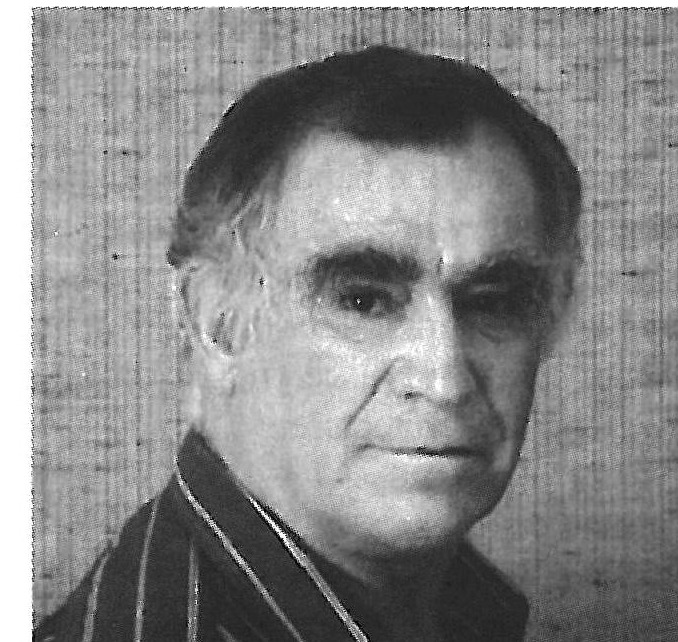
I remember, in the 1970s when I was a student, that Mehdi Alizadeh was one of the well-known and respected figures in the profession of architecture — particularly in the eyes of architecture students. Seeing his works and learning from what he built was a way into his work in design and construction; without question he was among the leading architects who helped shape the architecture of his land.
The absence of Alizadeh's professional presence in the years after the Revolution was keenly felt. Happily, for about three years now we have seen his return to professional work. Although Mehdi Alizadeh is a familiar figure in our country's architecture, presenting his work and views — and especially his recent activity — was a debt that had to be paid to today's architectural community. The text that follows is based on a long conversation with him.
Alizadeh's forty years of professional life can be divided into three distinct periods.
Period 1: Design and Build (1957-1977)
This period is concurrent with significant changes in the pattern of living in Iran, the establishment of new social relations, and the prevalence of modern architecture striving to answer the needs of a new form of living. Primarily, he was concerned with new equipment and installations and the way they should be placed in a work of architecture. The proper adaptation of architectural elements and equipment were his priorities. In his later works he finds certain ideas for adapting structure to partitions and panels, when using new building materials was experienced. The last years of this period were spent contemplating how to answer the psychological needs and common relation of the inhabitants.
His first independent experiment in his student years was the “House over the Qanat” on the western edge of Manzarieh overlooking the Hesarak valley. The house draws its cool air from the qanat, and most of its materials come from stone on the site. Fireplace, the shield over the qanat that kept the water clean, wall-niches for keeping fruit, the arches and the assortment of stones all reflect the architect's grasp of the subtleties of the space of living. He sees the work as a proper integration of service and architectural elements (worth noting: this design predates the arrival of evaporative coolers in Iran).
The “house on Naft Street” that followed uses a fountain to polarise the air and a fan to distribute it through the rooms — an inventive cooling device. In those days of sparse information on building methods, much progressed through experiment. The houses on Nejatollahi, Abu Rayhan, Ghaem Magham, Beheshti and Africa (Kuh Bar) streets belong to this period.
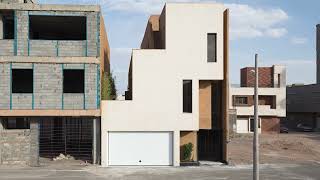
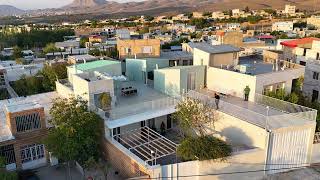
When apartment building began in the city, he turned to the question of social relations within a block and to the problem of giving every unit its own independent services. His apartment designs are not the repetition of a single plan, either in the areas of the units or in their compositions. Examples include the apartment on Tavanir Street and the one at 55th Avenue in Yusefabad, where each unit's services are carried independently on enlarged half-level landings. To make services independent is, for him, not only a gain in neighbourhood relations and unit independence but a way of reducing consumption.
During this period he was also active abroad. Besides his own office in Dubai, he worked with Ove Arup in England and with “Kurtz and Partners,” the designers of the Munich Olympic complex. In those collaborations “I never felt at a disadvantage as an Eastern architect; I could work and create without problem. Indeed I thought Ove Arup, in those days, was not a powerful group.”
In the second decade of this period he took up large-scale projects: the Faculty of Science and Industry at Ferdowsi University of Mashhad (conceived as a building for face-to-face meeting); the Olympic Centre in Mashhad; Farabi University in Karaj, planned along a single movement axis like a street while resolving the steep slope of the site; and the Sarbandar City Hall, public bath and low-income housing in Sarbandar.
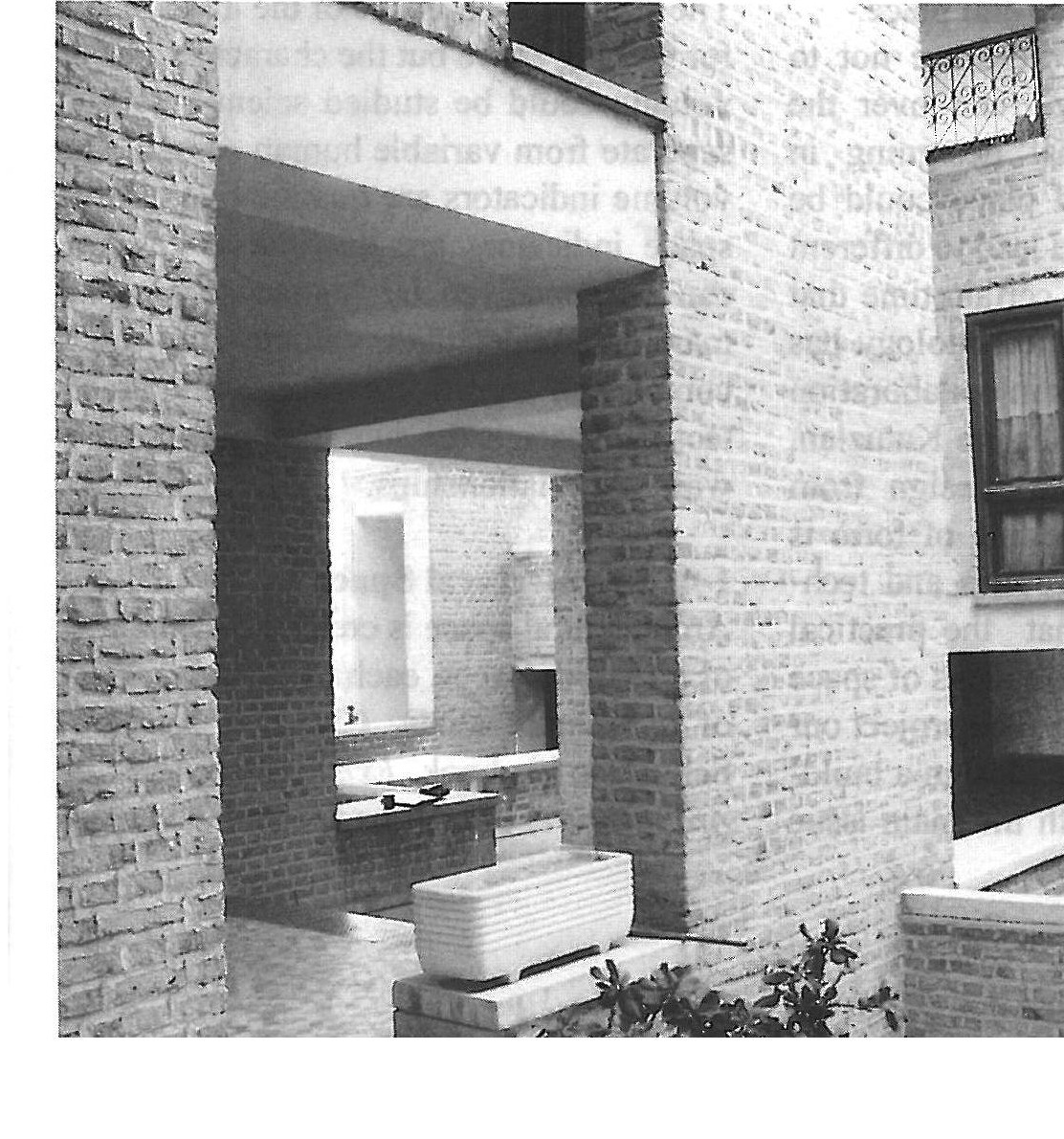
Residence on Africa Ave. (south of Bolvar), Tehran
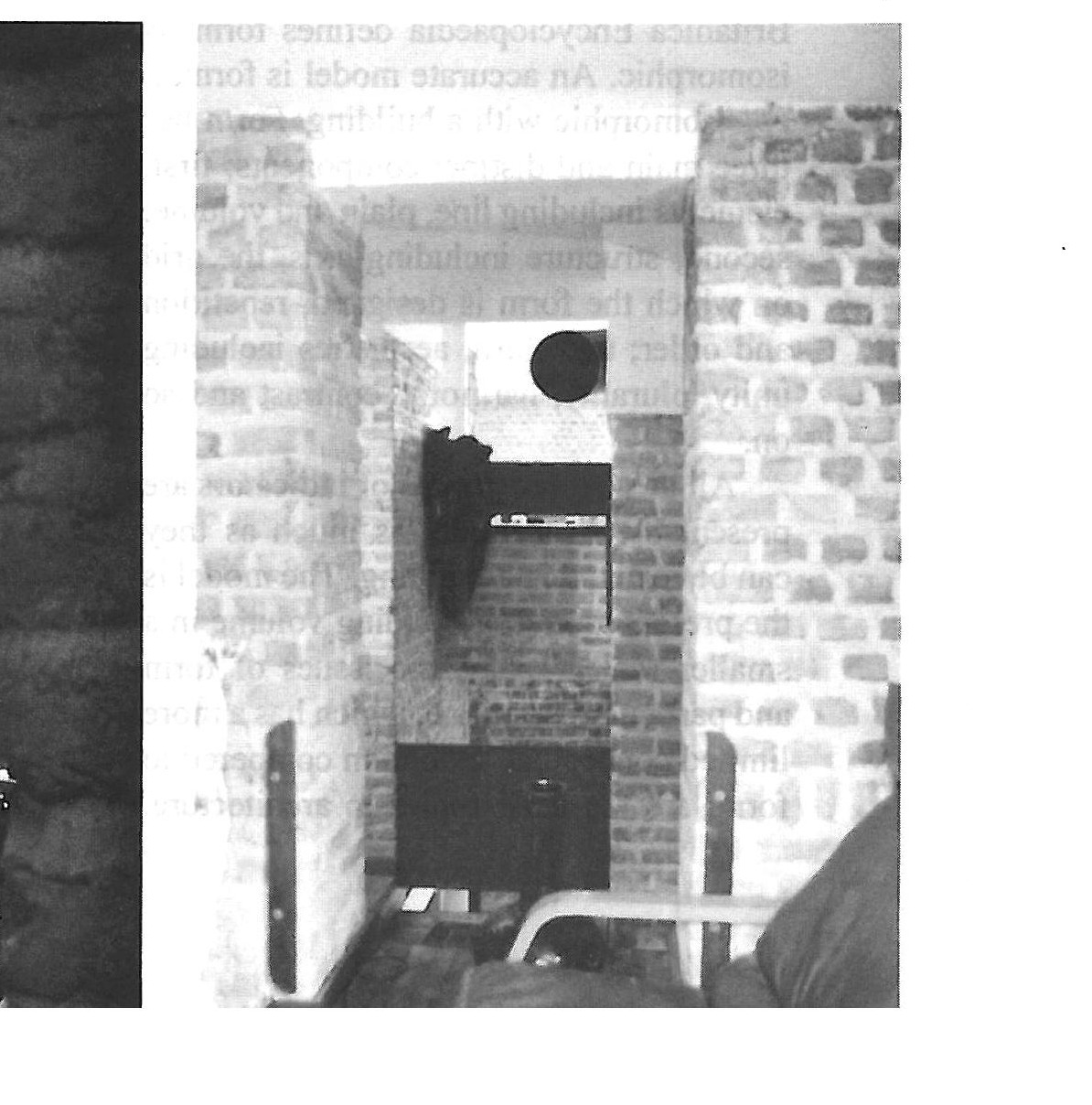
Residence on Africa Ave. (south of Bolvar), Tehran
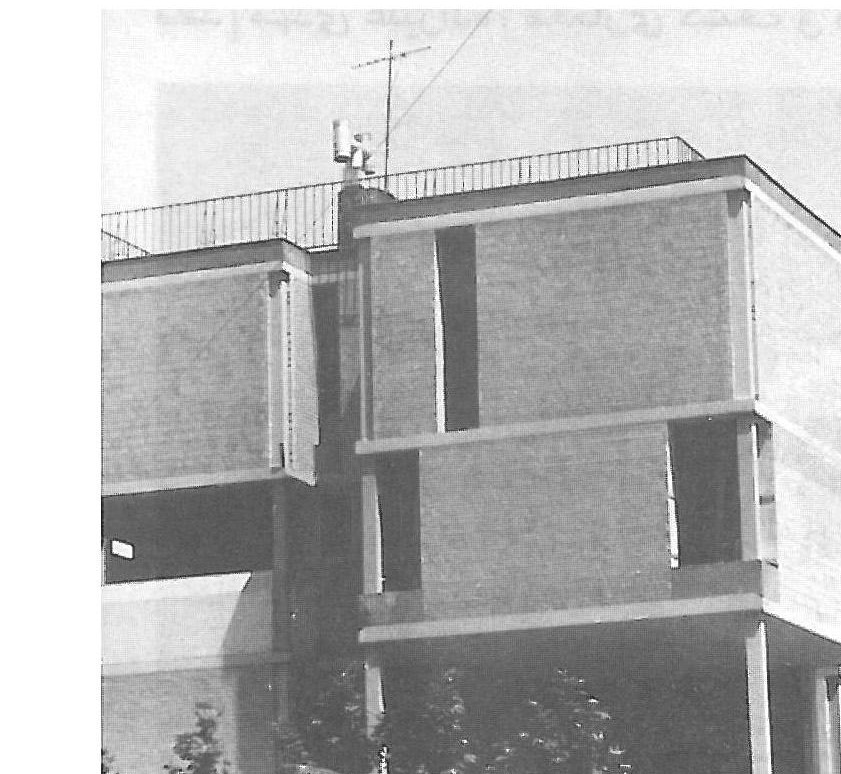
The house on Nejatollahi St., Tehran
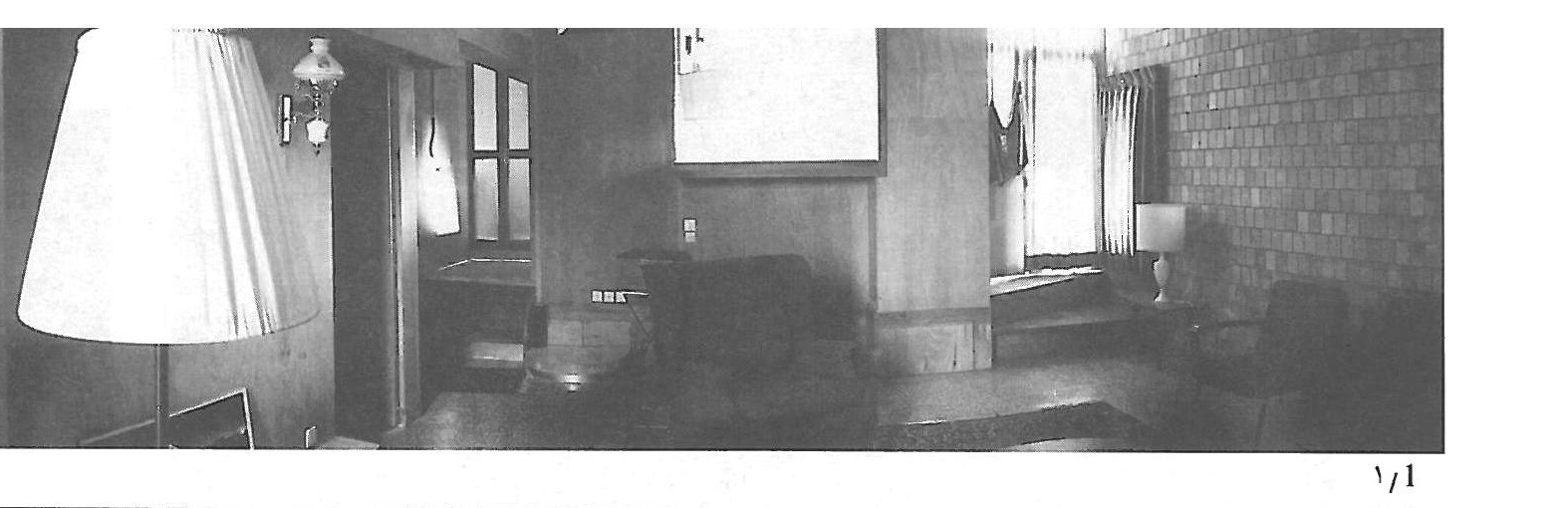
The house on Nejatollahi St., Tehran
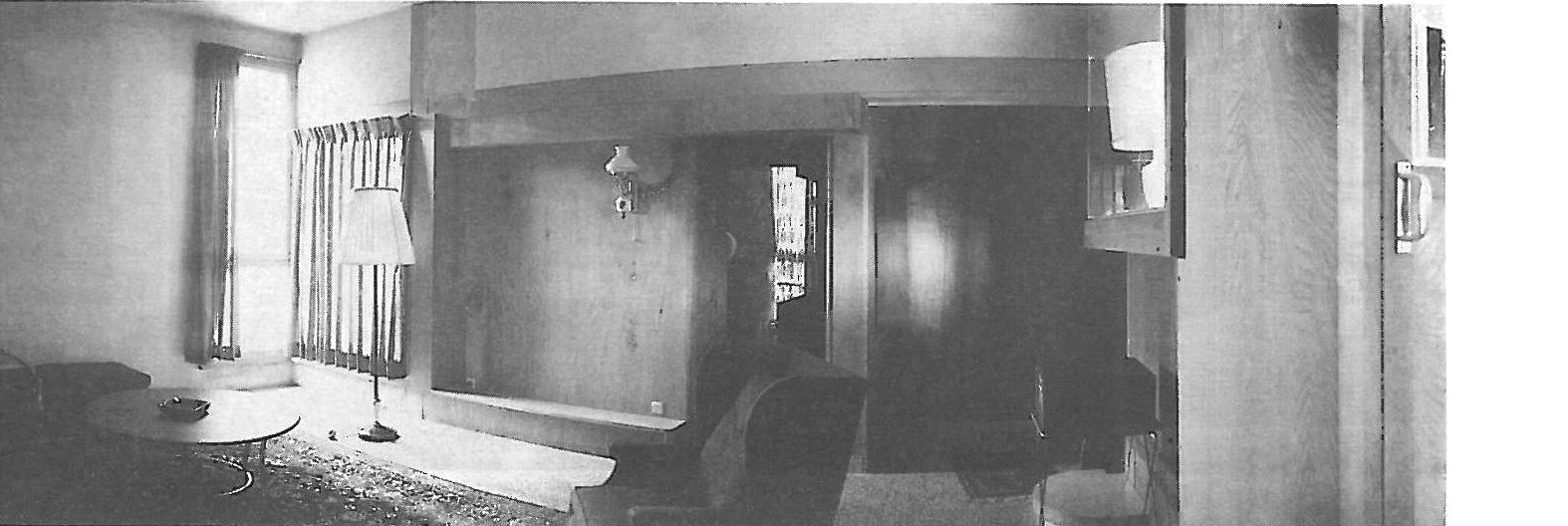
The house on Nejatollahi St., Tehran
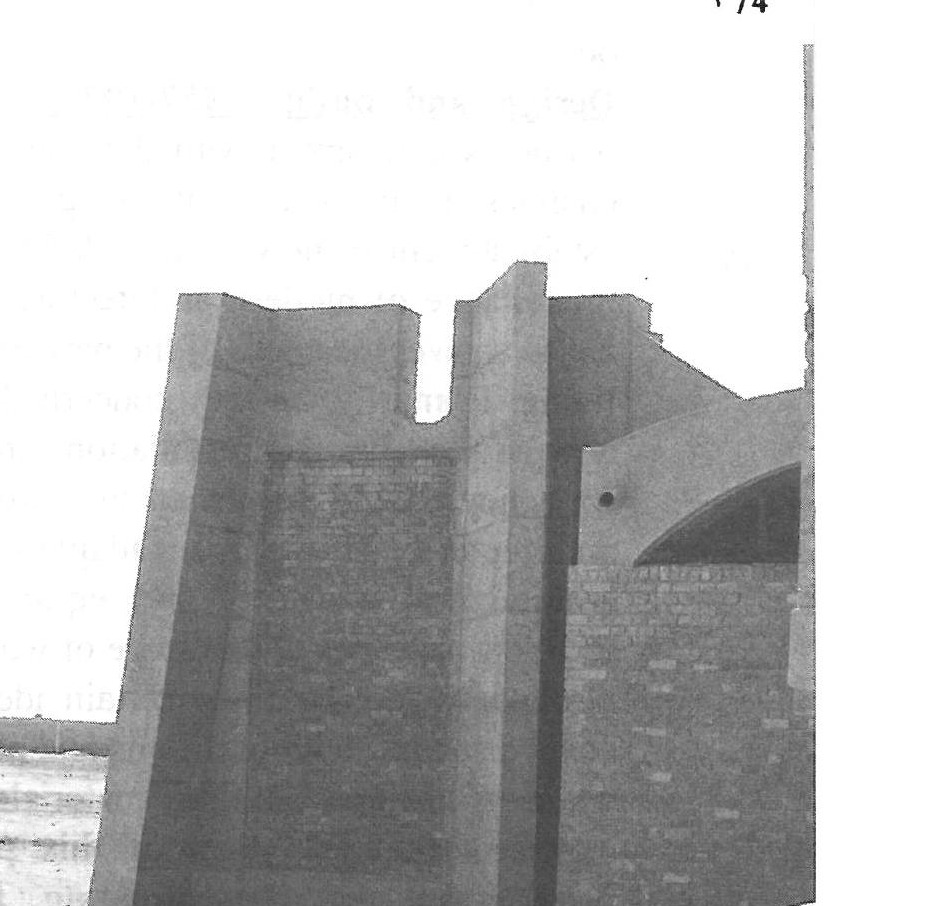
Public bath, Sarbandar
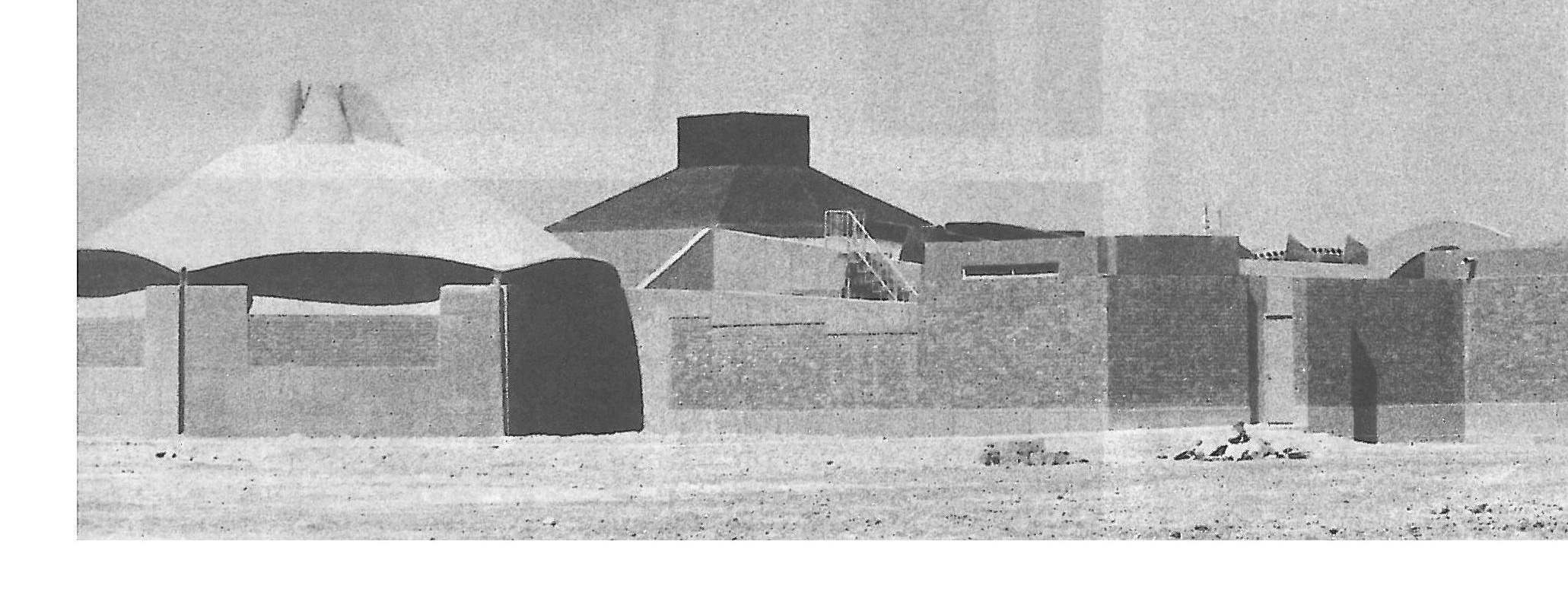
Public bath, Sarbandar
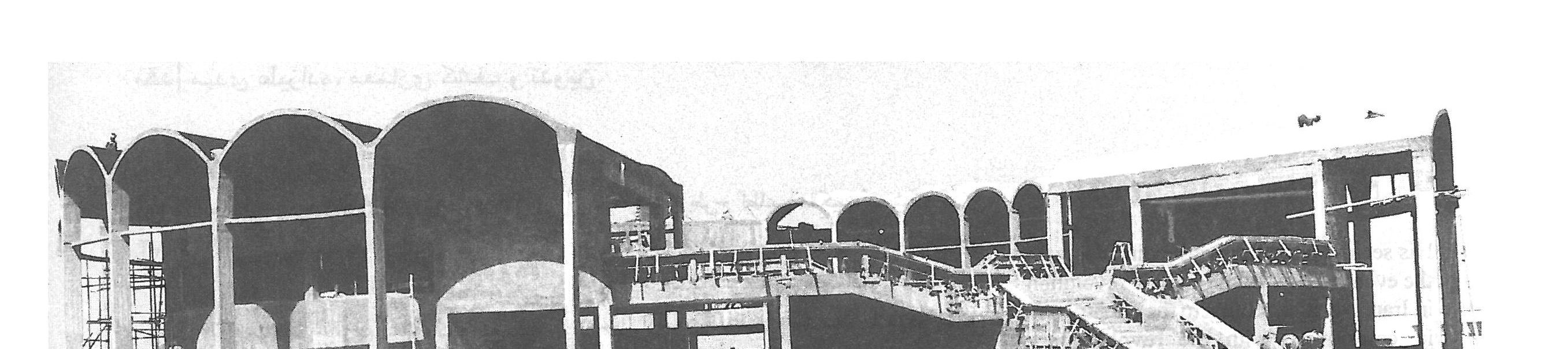
Sarbandar City Hall, during construction

Sarbandar City Hall, model
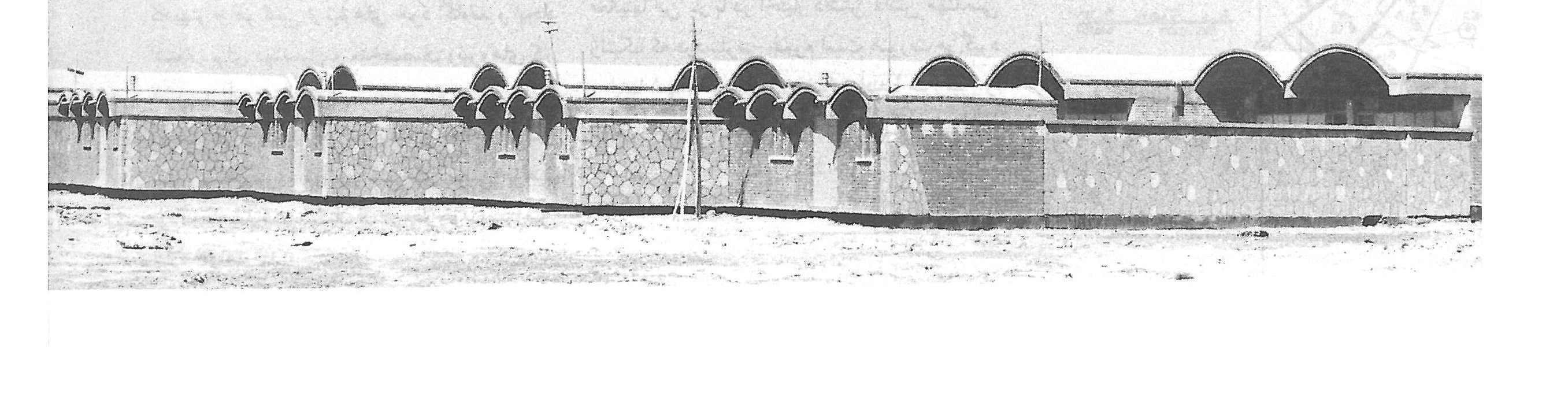
Low-income housing, Sarbandar
Period 2: The Presentation of Views (1977-1995)
In 1977, as a result of the global economic slowdown, Alizadeh closed his Dubai office and returned to Iran. The period coincides with the rise of the Revolution. “All my professional contacts had been cut, and my mother was very ill in Iran. So I closed the office and came to Iran just as the Revolution began. I spent many years working alongside the Revolution, raising various debates in the university and with a group of officials — away from the practice of building, but connected in a way to the profession and the responsibilities of architects, engineers and specialists. In those years I presented my theoretical views.” He likens those years of his life to “walking in sleep.”
In the context of the literacy drive and the extension of university education across the country, he proposed a “productive education” — work and learning simultaneously, on-the-job training under the guidance of those who practise the trades, with the trades themselves guided by the educational environment, and the training of specialists by those practitioners within production. The aim was to distribute specialists across the country for development, and to turn all places of production into places of education. The project was suspended when the government changed and officials moved; it later emerged, in a weakened and much-reduced form, as the “Kad” scheme in schools, and was not successful.
Another proposal of these years — the “Atlas of Ownership” (Atlas-e Malekiyat), some of whose groundwork even reached Parliament — dealt with public participation in the management of cities and residential complexes, and with the physical direction of the country's building and the funding of the city on the basis of a calculation of the rent created for land-owners, paid in turn by the citizens. This would create “real clients” — the inhabitants, who know their needs best — and jobs for engineers, specialists and the country's workforce, drawing forth the highest level of public participation. “We shall see, in the not so distant future, the emergence of new city-states run with the participation of their inhabitants within the framework of the nation.”
The proposal also addressed the formation of a professional body for engineers and architects: with real clients across the country, a direct link between engineers and the public is formed, and engineers can connect their offices with professional centres, universities and the makers of equipment and materials, and regulate everything by clear engineering principles — as has happened in the country's health system. Another question — the formation of a new single-person household in view of the size of national housing and the need to economise on floor-area — and the division of spaces into independent nuclei that can be combined or separated, he saw as something architecture itself had to answer.
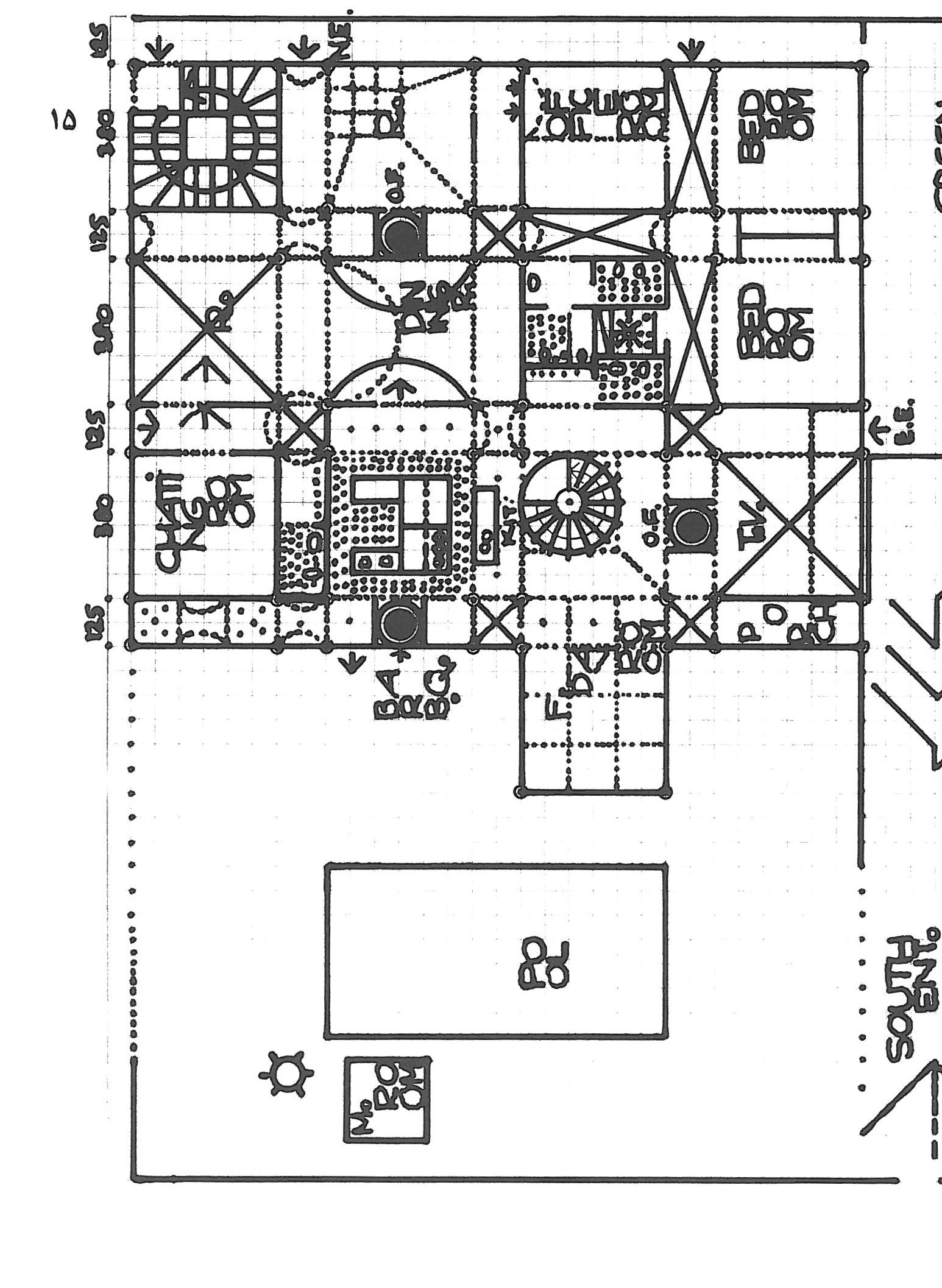
Residential building for the Lawyers Society, Tehran — ground floor plan
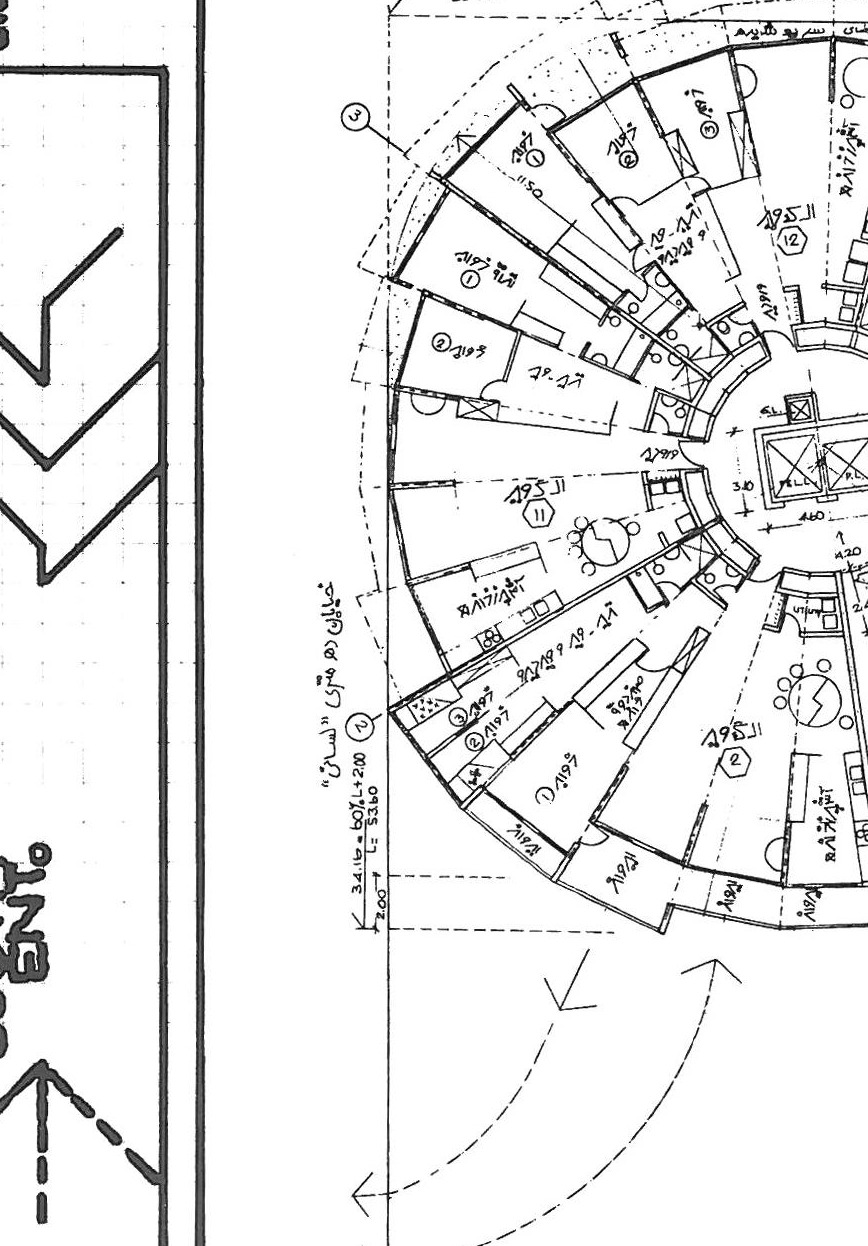
Bahar building, Tehran — ground floor plan
Period 3: Identifying Himself (1995 to the present)
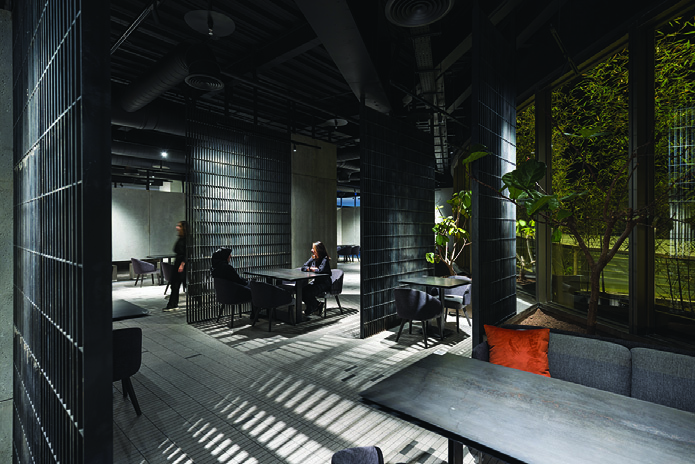
Mehdi Alizadeh returned to Iran in 1995 and resumed his professional work. In his new works he thinks of the built area of residential units and the possibilities of their inclusion or division, and of using space-units for a variety of compositions in different land uses. Significant projects of this period include the head office of Hadika Co. (part of the machine-works industries) and the head office of Sapco in Tehran. In these works he deals with the control of light, the use of manufactured and prefabricated elements on the façades, and the provision of open plans. “For me,” he says, “identity is not a pack of the past; identity is in the composition of the future.”
His housing projects of this period set out his views on the floor-area needed for housing, on dimensions, and on the possibility of separating or combining residential nuclei. Two examples are the “Bar Association” residential building and Mr Bahar's building: the first allows units from 36 sq. m to 360 sq. m on one grid; the second is a composition of 36 sq. m spaces on a 1-metre-wide chequered circulation grid that plays different roles alongside the main spaces as occasion requires. “In my designs I foresee not just the change of spaces over time but the possibility of using them differently as well.”
In collaboration with Dr Ataollah Omidvar, he also designed an office building in Ashgabat whose main idea is that visitors reach the offices through a corridor running around the perimeter of the building (gholam-gardesh), with the offices placed behind that circulation.
A sketch for a “Museum of Cinema” reflects his view of the museum's function and of simplifying its parts, and the design of a museum connected to the open spaces of the city. Its parts are an alley, a restaurant and a gathering place, where the main life of the museum takes place; the other spaces plug into these. The entire façade is of glass, and the building resembles a block of ice or a cloud. “I have not designed a novel here; this work is like a newspaper — you don't have to follow a particular sequence to take in the themes; at any moment you can turn to what interests you.”
The Hadika office building for the machine-works industries is another example: the handling of light and the use of industrial, prefabricated components on the elevation are important, and the plans allow free use. In the search for a new language for industrial and office buildings, the Iran-Khodro offices in Ashgabat, the Sapco head office, and a building at the International Exhibition are all worth study.
Perhaps his most important work of these years — built with some modifications and nearing completion — is the head office for Engineering, Design, Manufacture and Quality Control of Spare Parts for the country's machine-works industries (the Sapco head office). He considers it “after the first wave of oil industry and industrial standards, the most important industrial event in the country; it will transform our taste and technical knowledge and set in motion the second wave of industry and standards, this time with industries that make moving things and can make up the deficit even in our building industries.” The complex is about 2,800 sq. m on a site of industrial plant that formerly belonged to Caterpillar, using the existing buildings after renovation and the addition of new parts. The programme includes spare-parts warehouses and finished-parts archives, the engineering-design workshop and the research and parts-manufacture centre, the teaching, assembly and public-relations section with permanent exhibitions, and the management, administration and support services.
For this complex Alizadeh sets out accurate horizontal and vertical relationships among the parts, and makes precise, delicate separations in the access system between visitors and staff. The services were designed closely to his own brief; the structures of the new parts are steel, and he has proposed solutions to lighten the structure and improve its behaviour. In the volume and elevations the architect has sought a language for industrial architecture different from what has become the norm; he proposes two options — painted steel sheet, and a combination of steel and pressed brick on the façades.
A review of forty years of Alizadeh's professional work shows that, for him, design is a kind of “innovation and formulation.” In his architectural work, social and humanistic relations, psychological needs, scales and functions, space, building materials and equipment combine in a genuinely dynamic way.
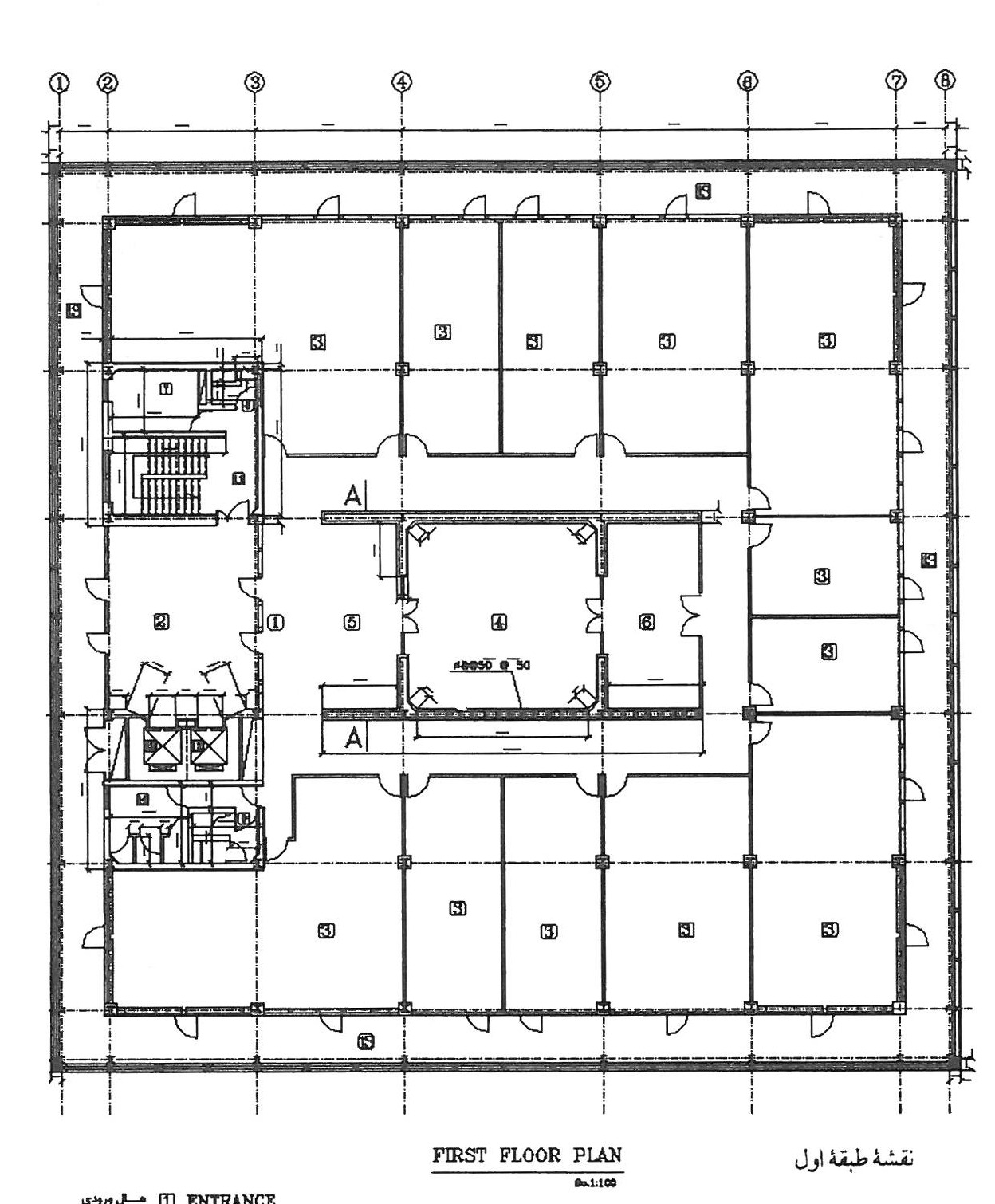
Sapco central building — first floor plan
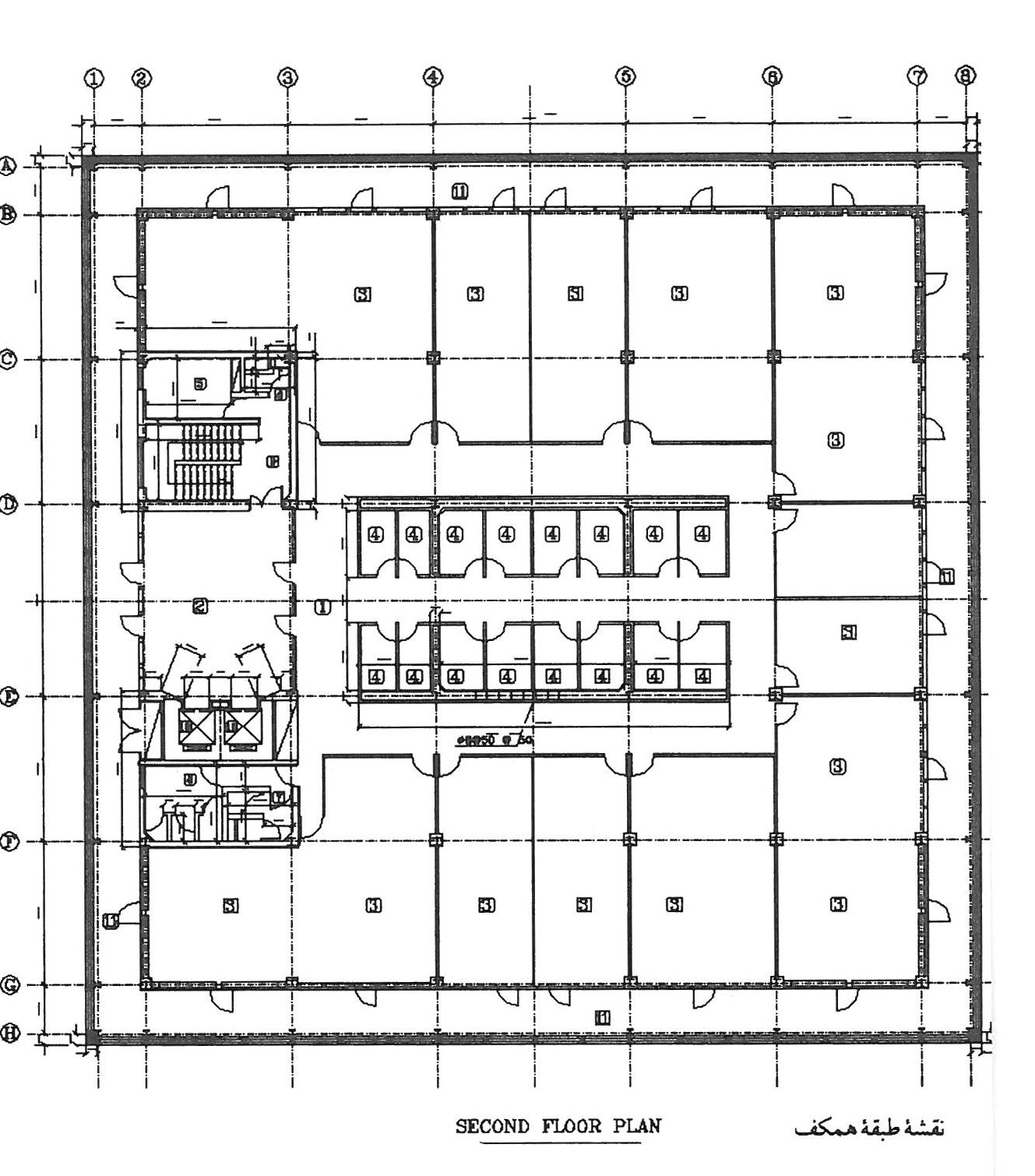
Sapco central building — second floor plan
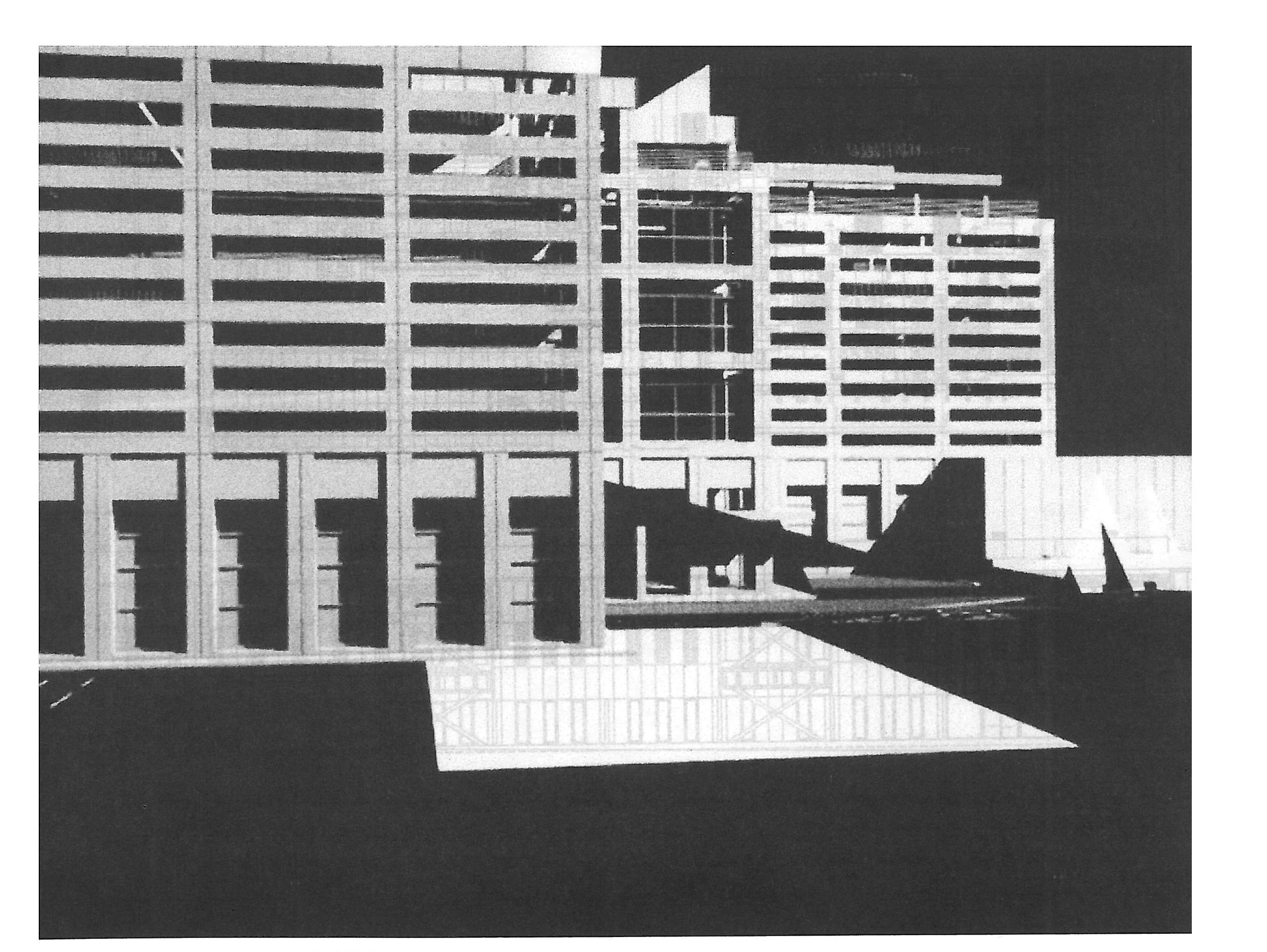
Hadika Administrative Building (Design and Manufacturing Center for Heavy Vehicles), Tehran
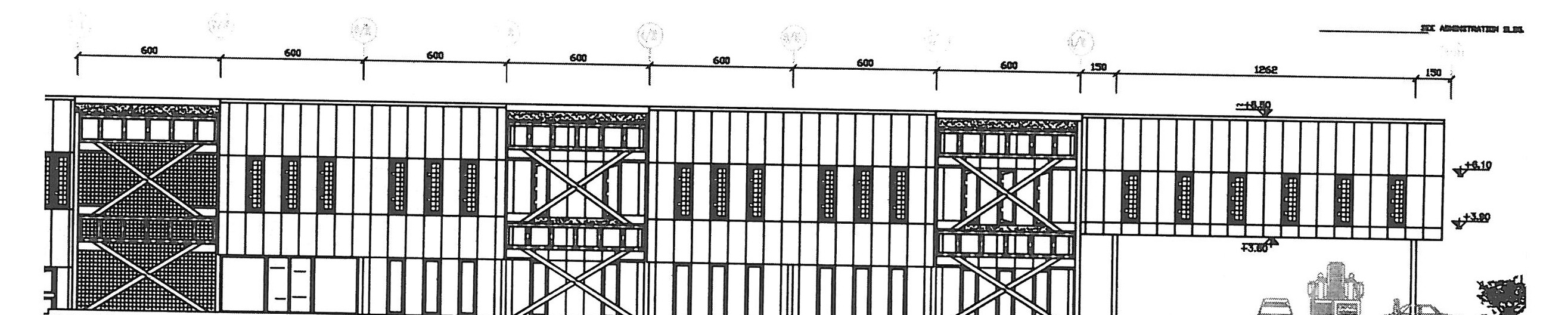
Sapco, east elevation
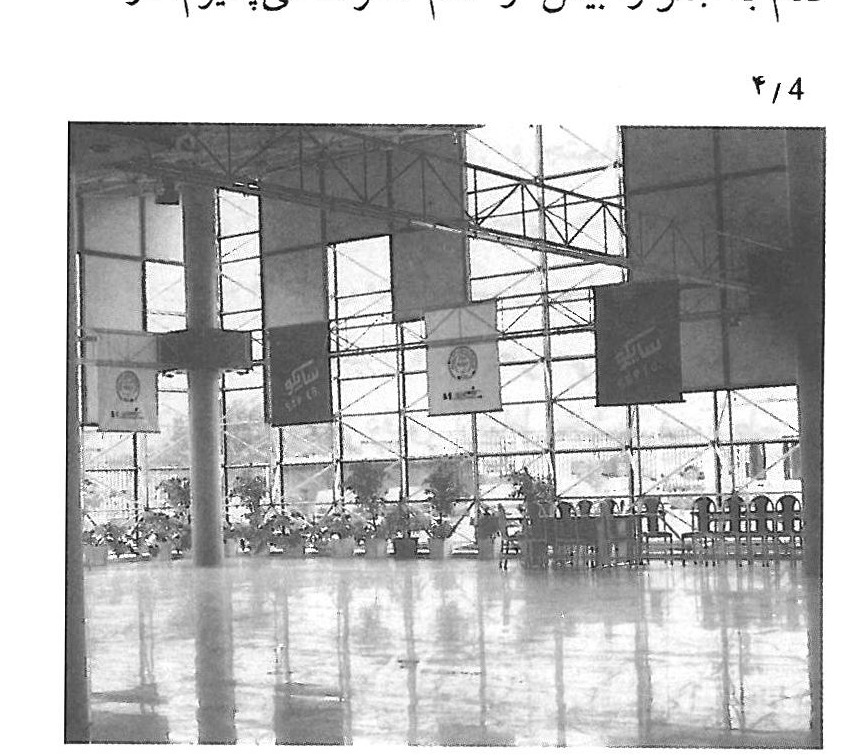
Sapco, the hallway overlooking the central garden
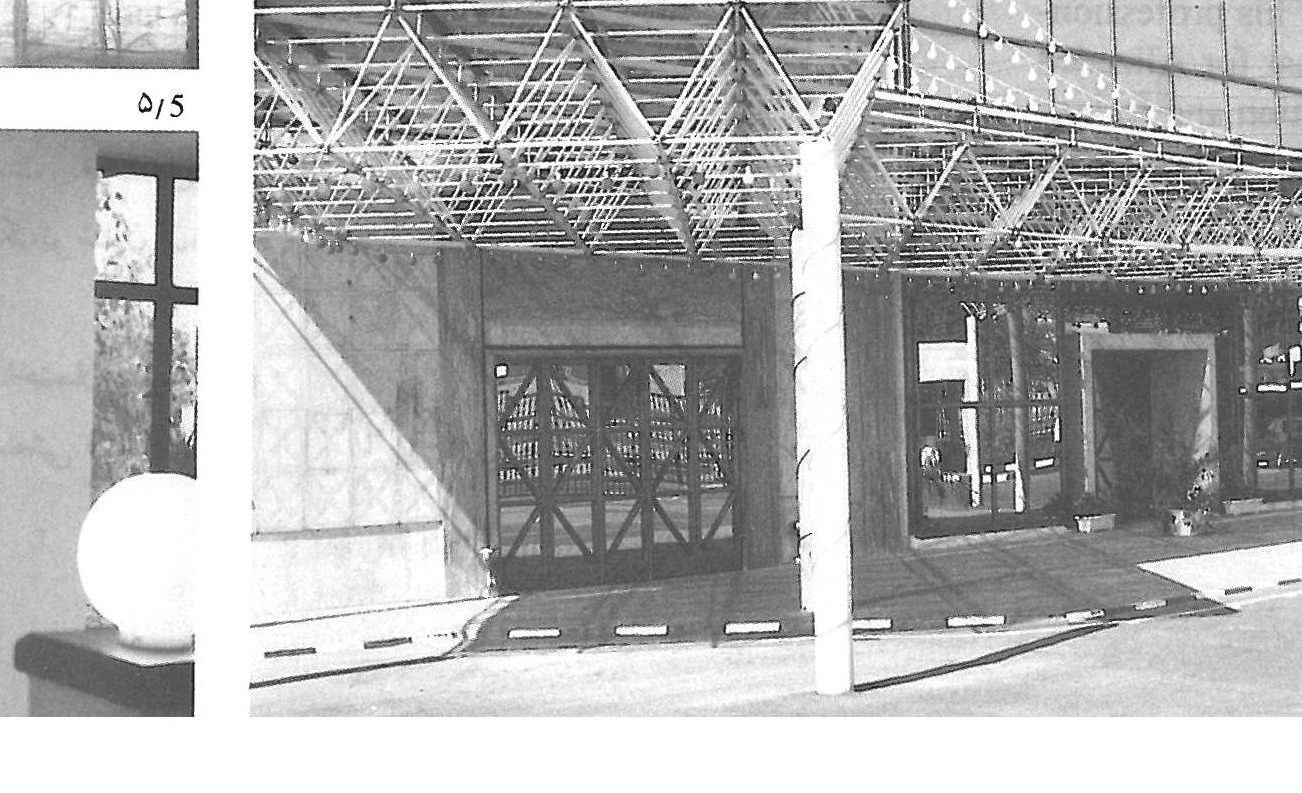
Sapco, main entrance
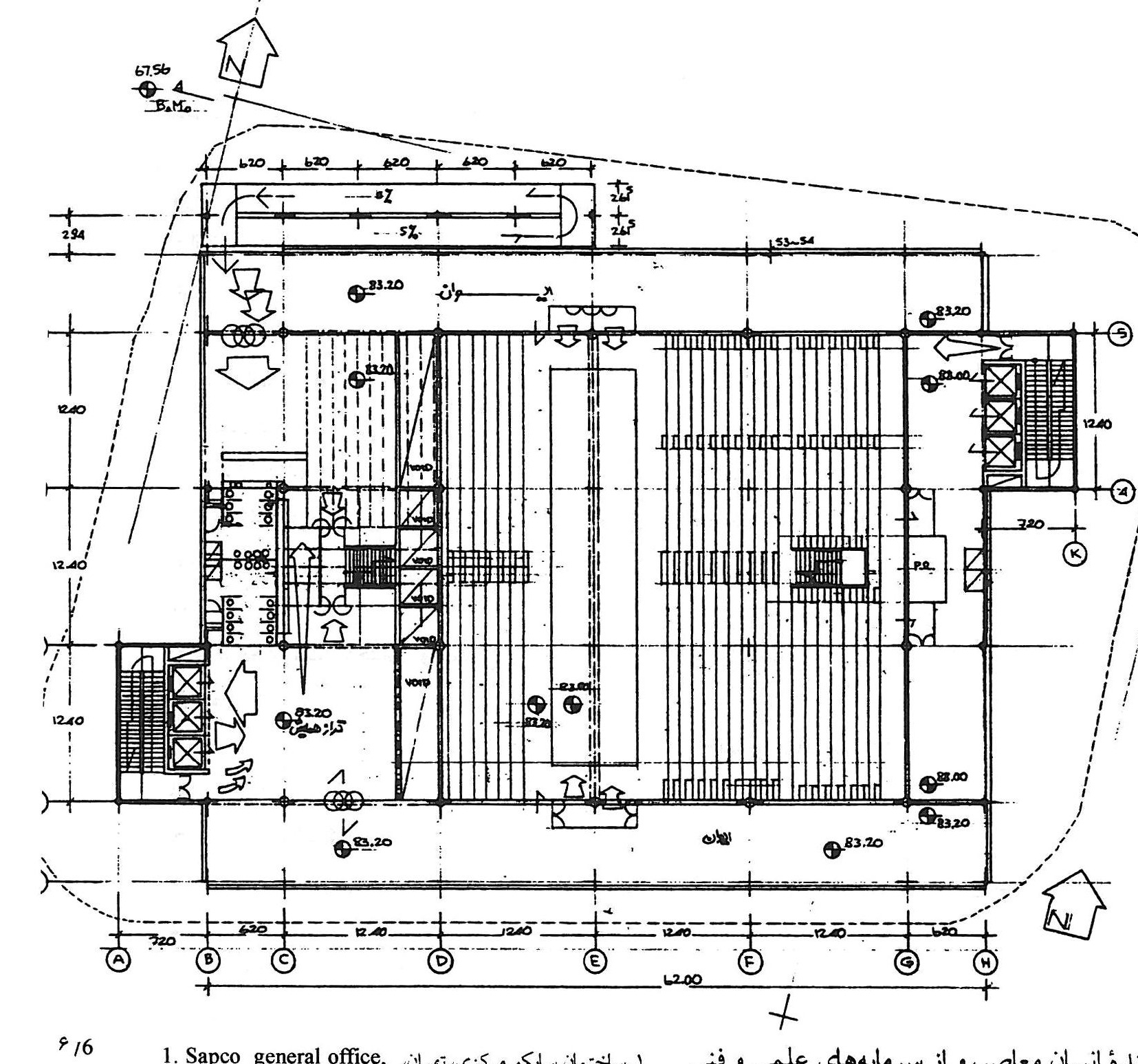
Sapco general office, Tehran — site plan
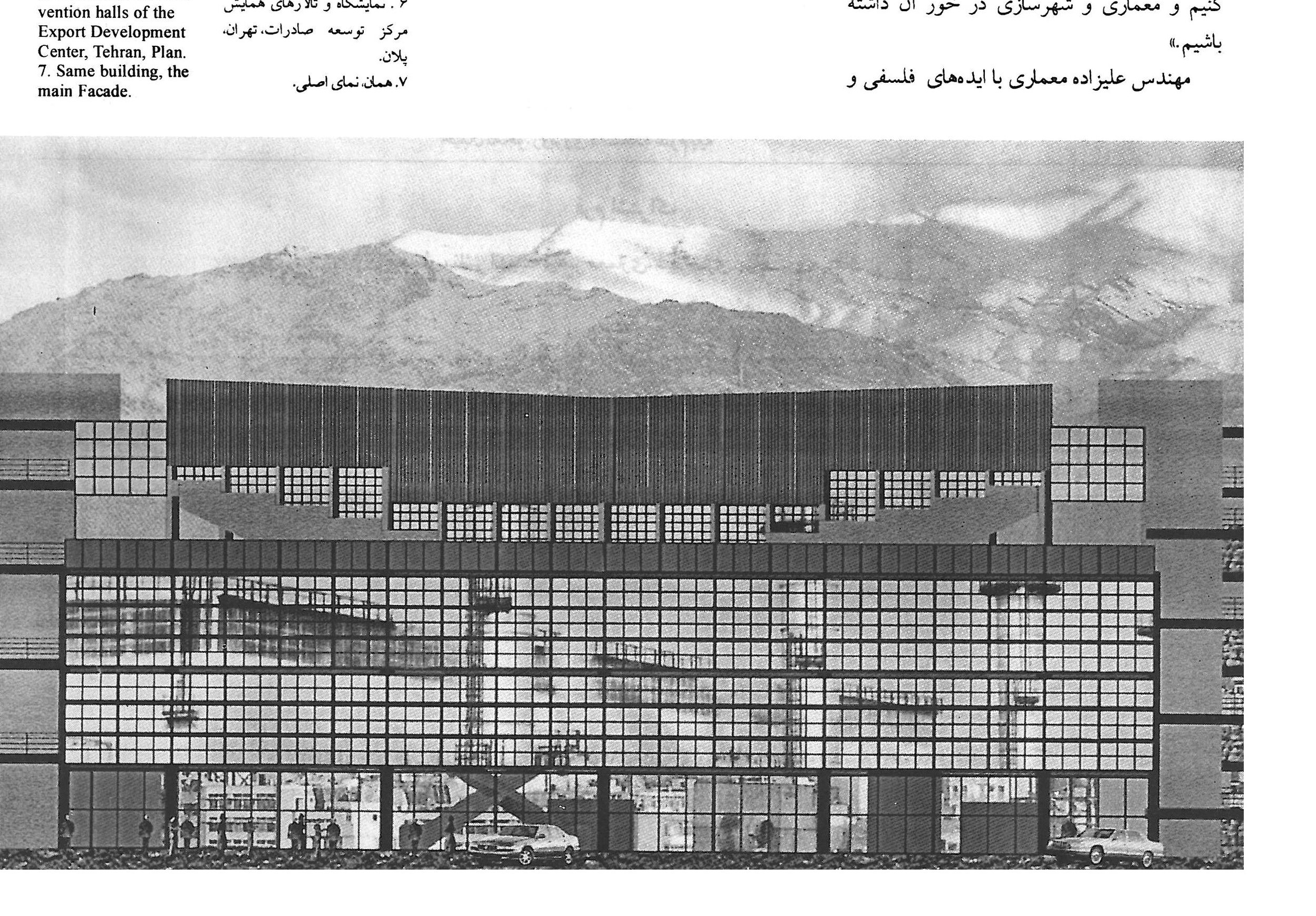
Export Development Center, Tehran — main facade