Contemporary Architecture

Mino-An Residential Apartment, Tehran

CrossArchitecture, Mehrdad Makaremi·Photos: Neel Studio, Ali SalehBeyg·Memar 154 — 25th Memar Award
Mino-An Residential Apartment, Tehran
Location: Shahrak-e Gharb, Shahrak-e Pardisan, Zambaq 4, No. 101, Tehran · Client: Payegan Group · Design team: Tina Shahnazari, Roza Bemani, Niloufar MirMohammadAli · Construction: Payegan Group · Supervision: Mehrdad Makaremi · Structure: Iman Zoji · Electrical: Yousef Ghorbani · Mechanical: Jahan Parda Co. · Graphic: Ali SalehBeyg, Bardia Kaj, Tarlan Hashemi Naji · Photo: Neel Studio, Ali SalehBeyg · Total built area: 200 m² · Area: 100 m²

This renovation is not merely a physical intervention but an endeavour toward a critical engagement with the concept of change in architecture and a re-reading of the relationship between past and present. The aim was to redefine the experience of dwelling within a thirty-year-old duplex apartment — a process founded on peeling away layers, revealing, and reinventing.

The unit’s distinctive situation — semi-private green space and independent access — disclosed the potential for a villa-like experience within the heart of a residential complex. The design began by liberating larger plan modules through the relocation of the entrance, staircase, and minor service spaces. Revealing, through the removal of layers that had concealed the structure, was not only an aesthetic gesture but a strategy for organising a fresh spatial arrangement in such a way that traces of the past remain woven into the very fabric of the spatial experience. The proposed voids, too, by introducing porosity, draw light and kinetic connections deep into the interior.
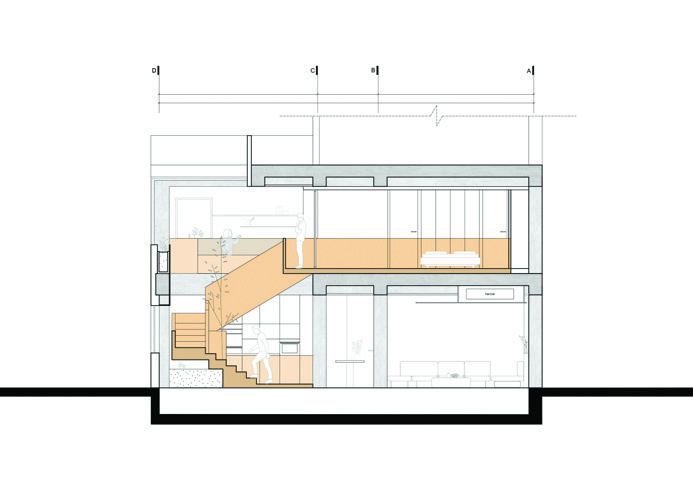
Architectural section A showing the duplex apartment with wooden staircase volume, double-height void, and upper-floor bedrooms
Section A — the duplex in cross-section
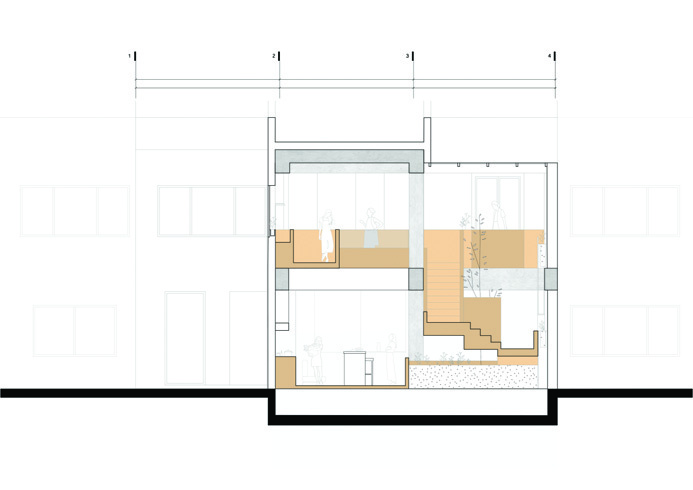
Architectural section B showing the duplex apartment from the perpendicular direction, with concrete columns, wooden volume, and skylights
Section B — perpendicular view through the apartment
♦ ♦ ♦

The Wooden Volume

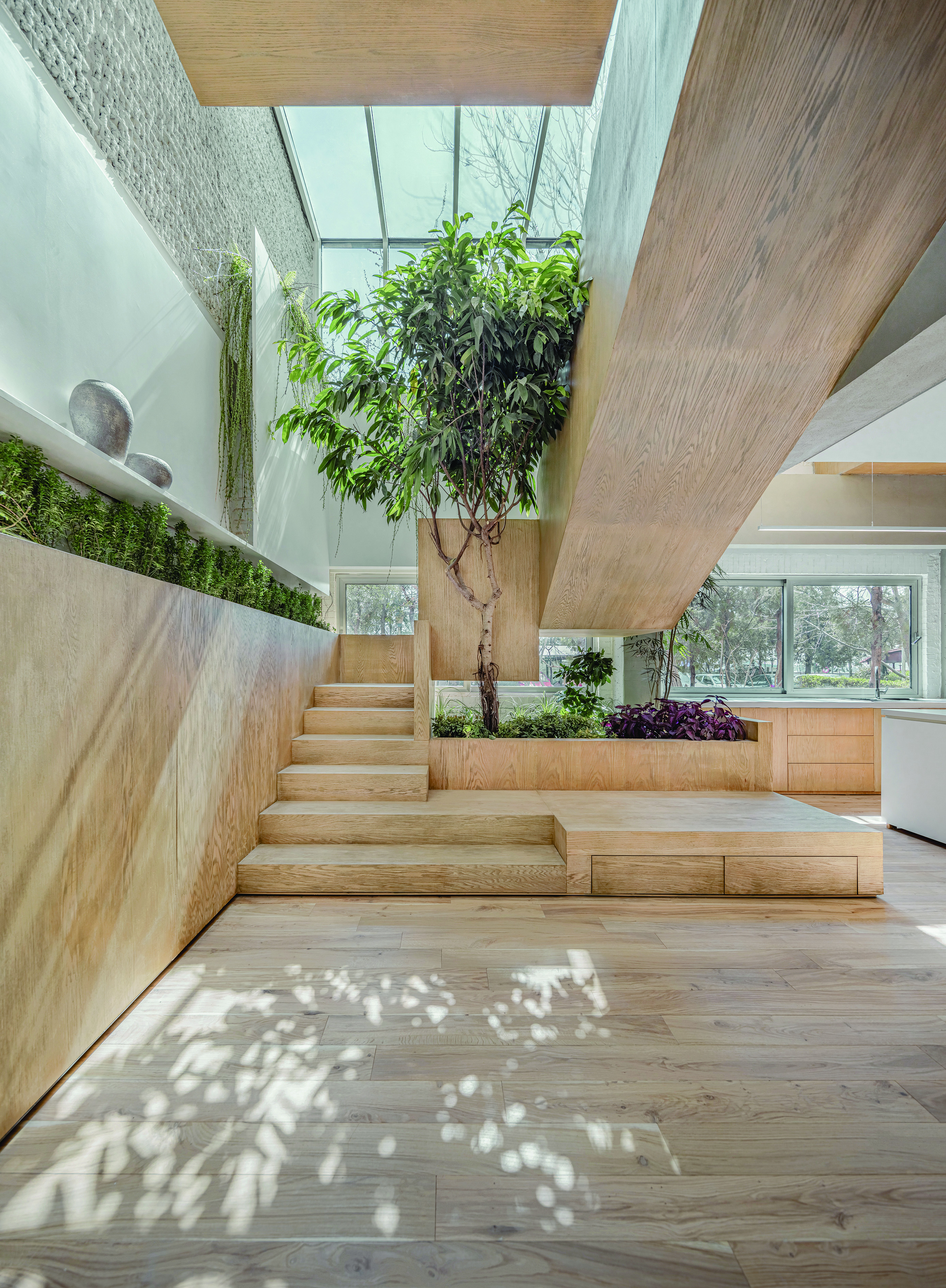
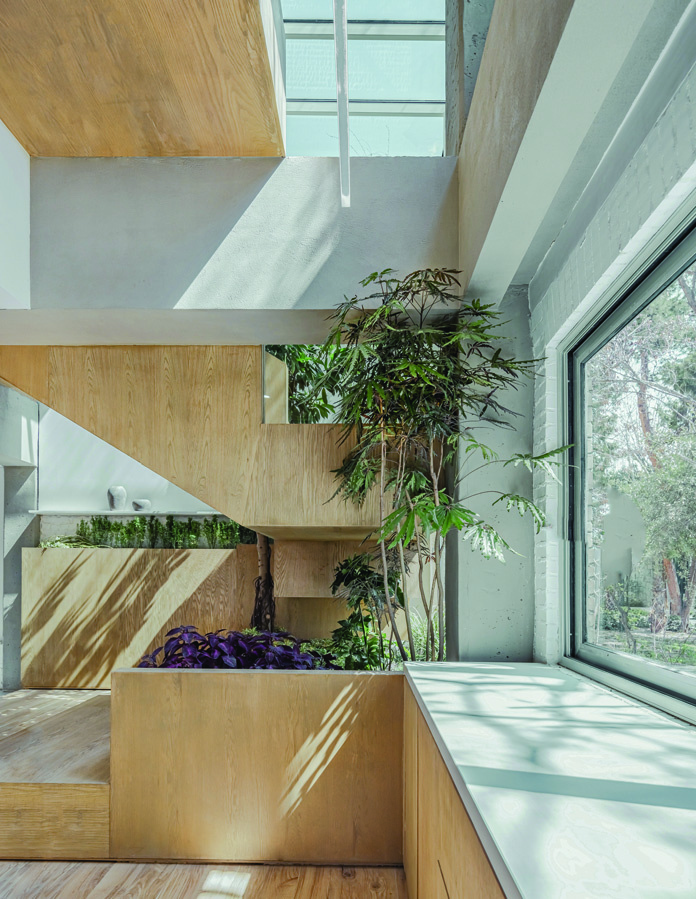
The project’s key element — the one that defines the new programme — is a wooden volume that extends across both floors, organises horizontal and vertical circulation, and distributes greenery throughout the home. Wooden baskets, like nests perched on concrete branches, envelop the house’s primary spaces while simultaneously transforming into circulation axes, gathering spots, seating alcoves, staircases, terraces, and furniture.
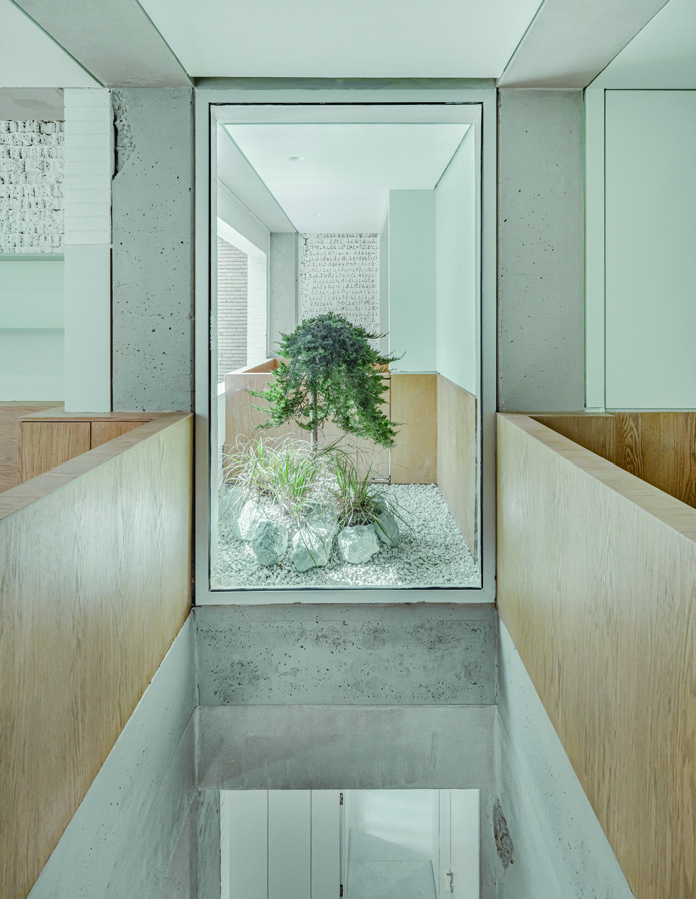
Looking down into the central void from the upper floor, with a tree growing up through the opening, white pebbles and rocks at its base, concrete walls and wooden balustrades framing the view
The central void — plants and a tree rise through the opening, connecting the two levels
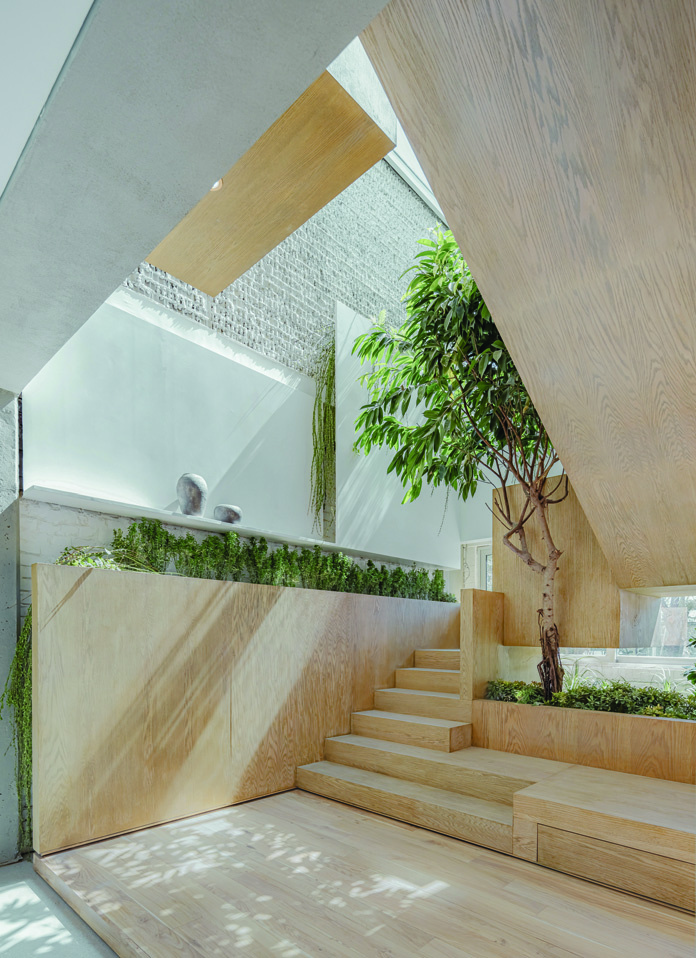
The wooden staircase volume bathed in natural light from above, a tree growing alongside the stairs, purple and green plants in built-in wooden planters, large windows overlooking the garden
Natural light cascades through the skylight onto the staircase and its companion tree
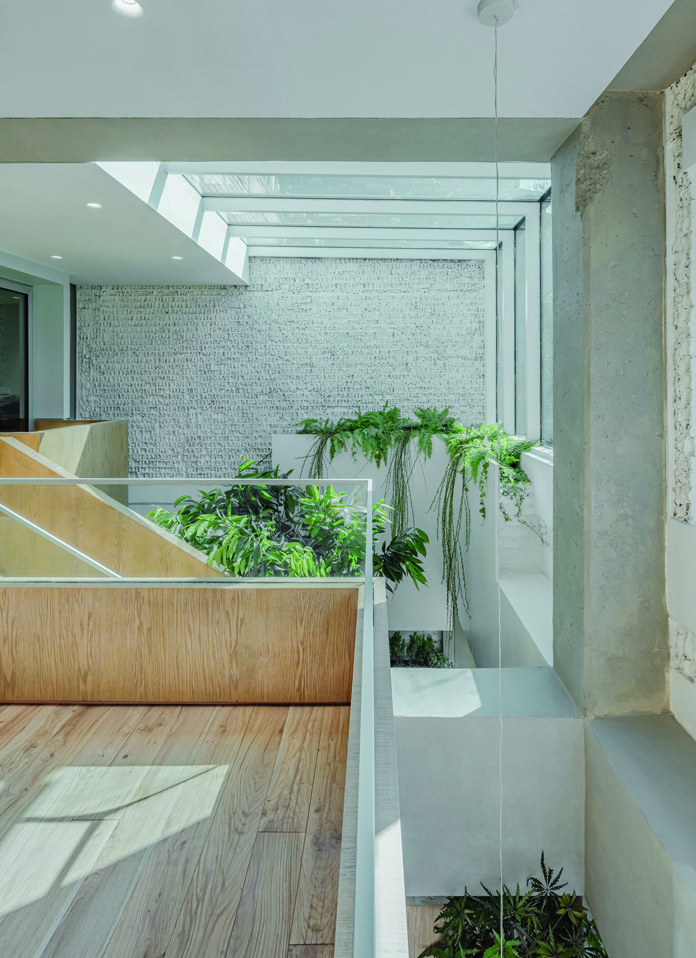
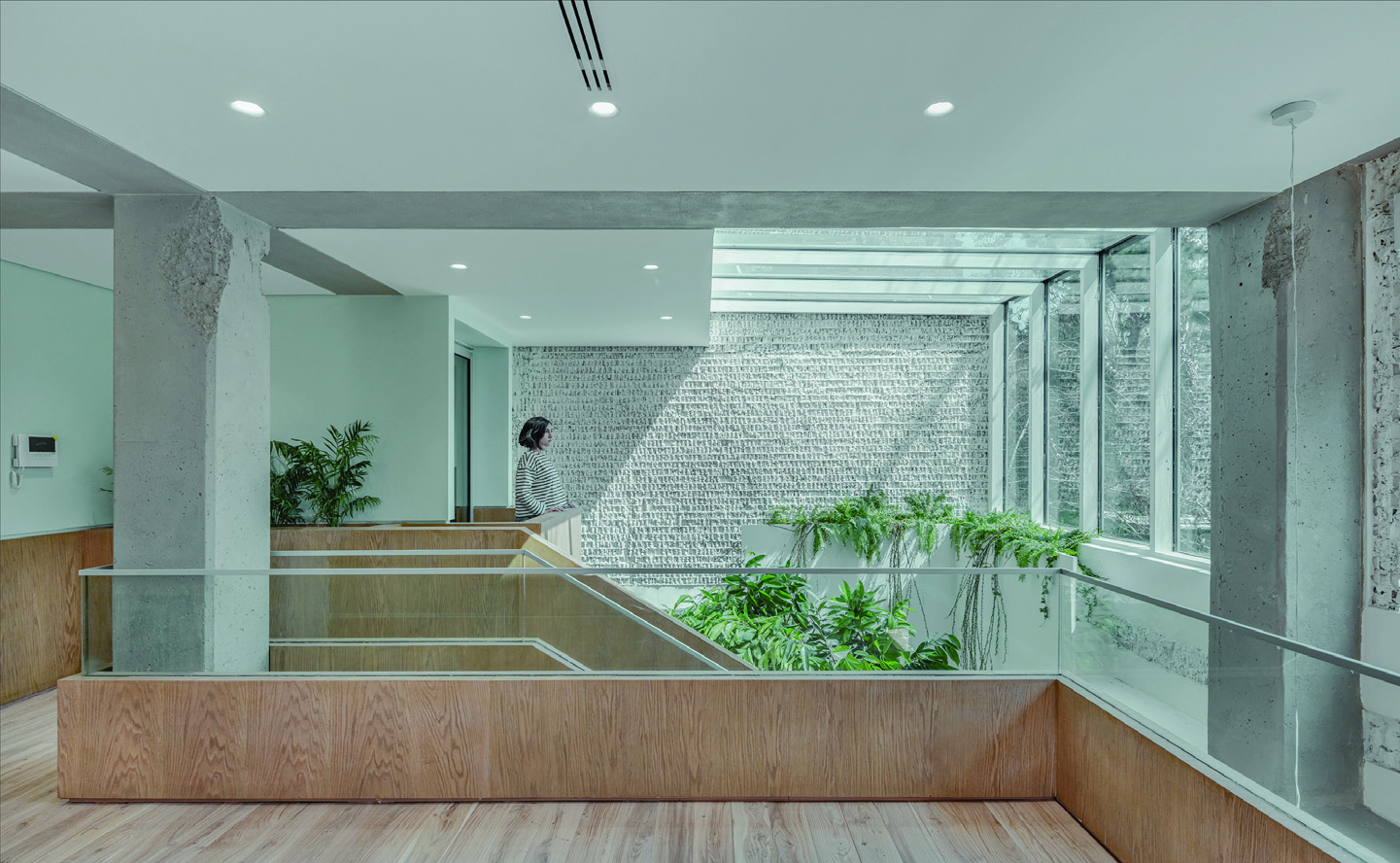
Upper floor gallery with wooden flooring, glass balustrade overlooking the void, trailing plants, exposed concrete column, and skylight above
Upper gallery — the void below, the skylight above
Angular wooden volume enveloping the staircase and tree, with hanging greenery on the balustrade, exposed concrete and brick walls, skylight flooding the space with light
The angular wooden volume wraps around the staircase and tree
♦ ♦ ♦

Materiality and Memory

The concrete structure and brick walls serve as unadorned relics of the past; the wooden volume arrives as a new guest, generating a fresh order; and metal panels act as functional complements. Together, they compose a multilayered narrative of the coexistence of memory and imagination — a companionship of past and present; an experience that rises from the raw body of the old and, cast in a new form, sets today’s life in motion.
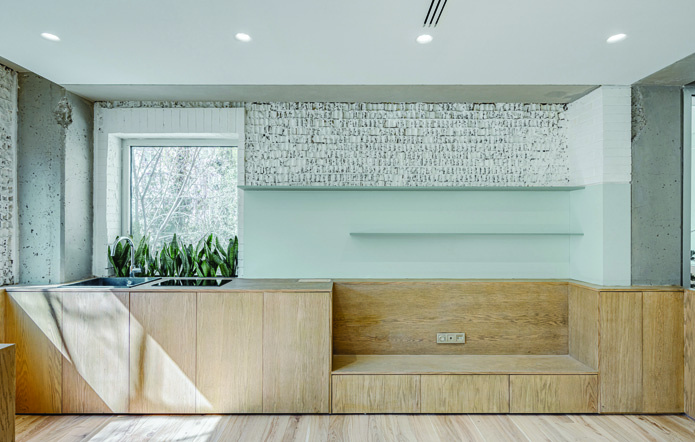
Kitchen with oak cabinetry, exposed whitewashed brick wall, concrete columns and beams, a window looking out to the garden with plants on the sill
The kitchen — oak cabinetry set against exposed brick and concrete
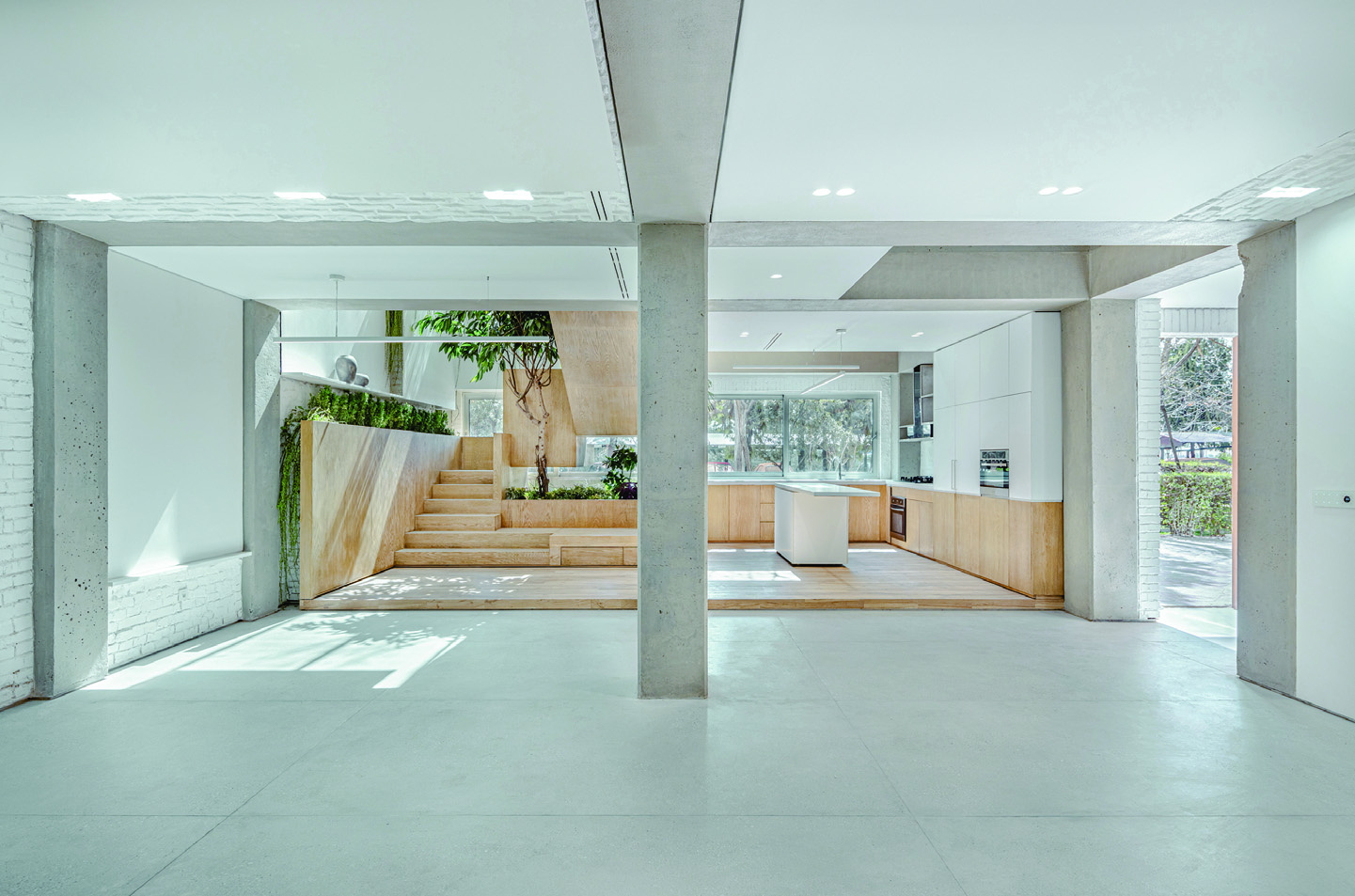
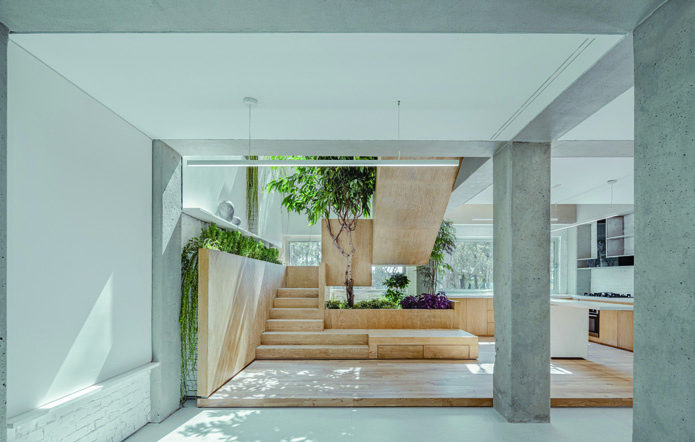
Wide view of the ground floor showing exposed concrete columns framing the wooden staircase volume with tree and greenery, the kitchen visible to the right, trailing plants on the left
The ground floor — exposed concrete columns frame the wooden volume at the centre
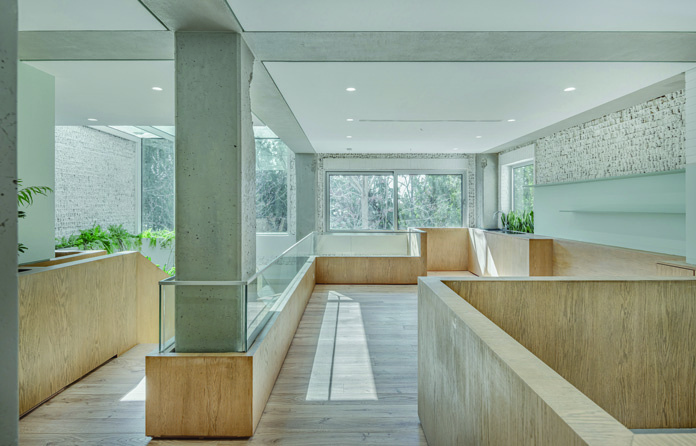
Upper level gallery with wooden flooring and oak balustrades, concrete columns and beams exposed, windows on multiple sides allowing views of the garden
The upper level — concrete structure and wooden insertions in dialogue
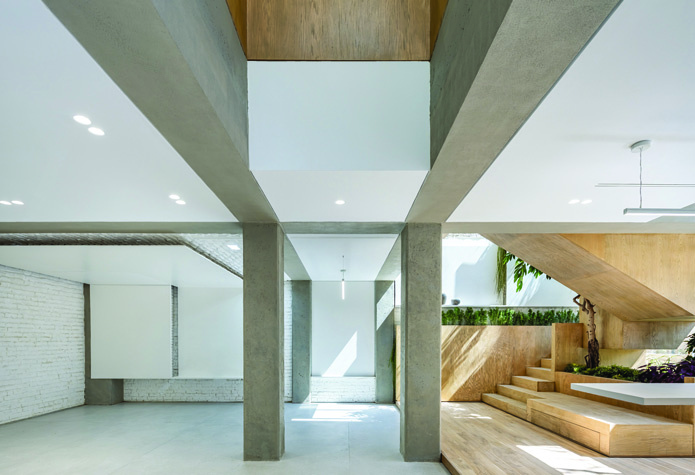
Ground floor showing the full height of the concrete structural grid with exposed columns and beams, a wooden box volume suspended above, the staircase and greenery visible to the right
The concrete grid revealed — wooden volumes perch above
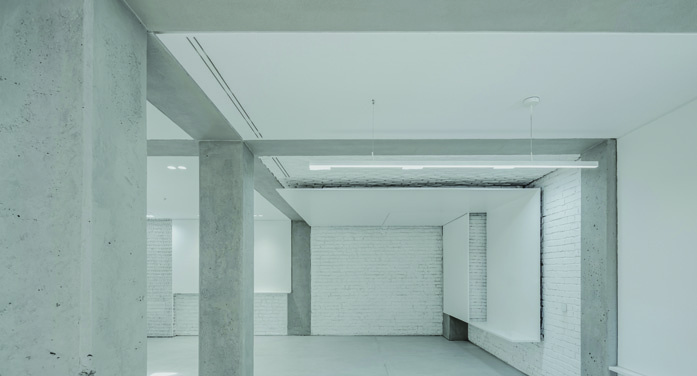
Exposed concrete ceiling with beams and columns, whitewashed brick wall, a recessed ceiling light, showing the raw materiality of the original structure
Exposed concrete and brick — relics of the original structure
A person descending the wooden steps on the upper floor, exposed concrete columns and whitewashed brick wall, lush plants in the void visible through the glass railing
Life in Mino-An — the daily passage between levels amid greenery and light
Close-up of whitewashed exposed brick wall texture with ferns growing at its base, showing the material honesty of the renovation
Detail — whitewashed brick and ferns
♦ ♦ ♦

Drawings

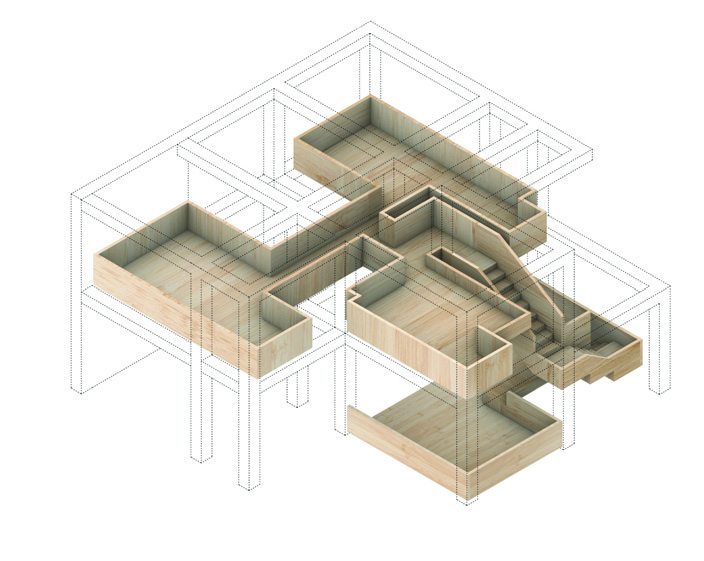
Axonometric drawing of the wooden volume element in isolation, showing how it wraps through both floors as a continuous sculptural piece connecting stairs, seating, terraces, and planters
Axonometric — the wooden volume as a continuous sculptural element spanning both floors
Wide interior photograph of the ground floor showing exposed concrete structure, the wooden staircase-garden element at the centre, the open kitchen to the right, and the entrance garden visible through the far window
The ground floor as a continuous landscape — staircase garden, kitchen, and living space flow together
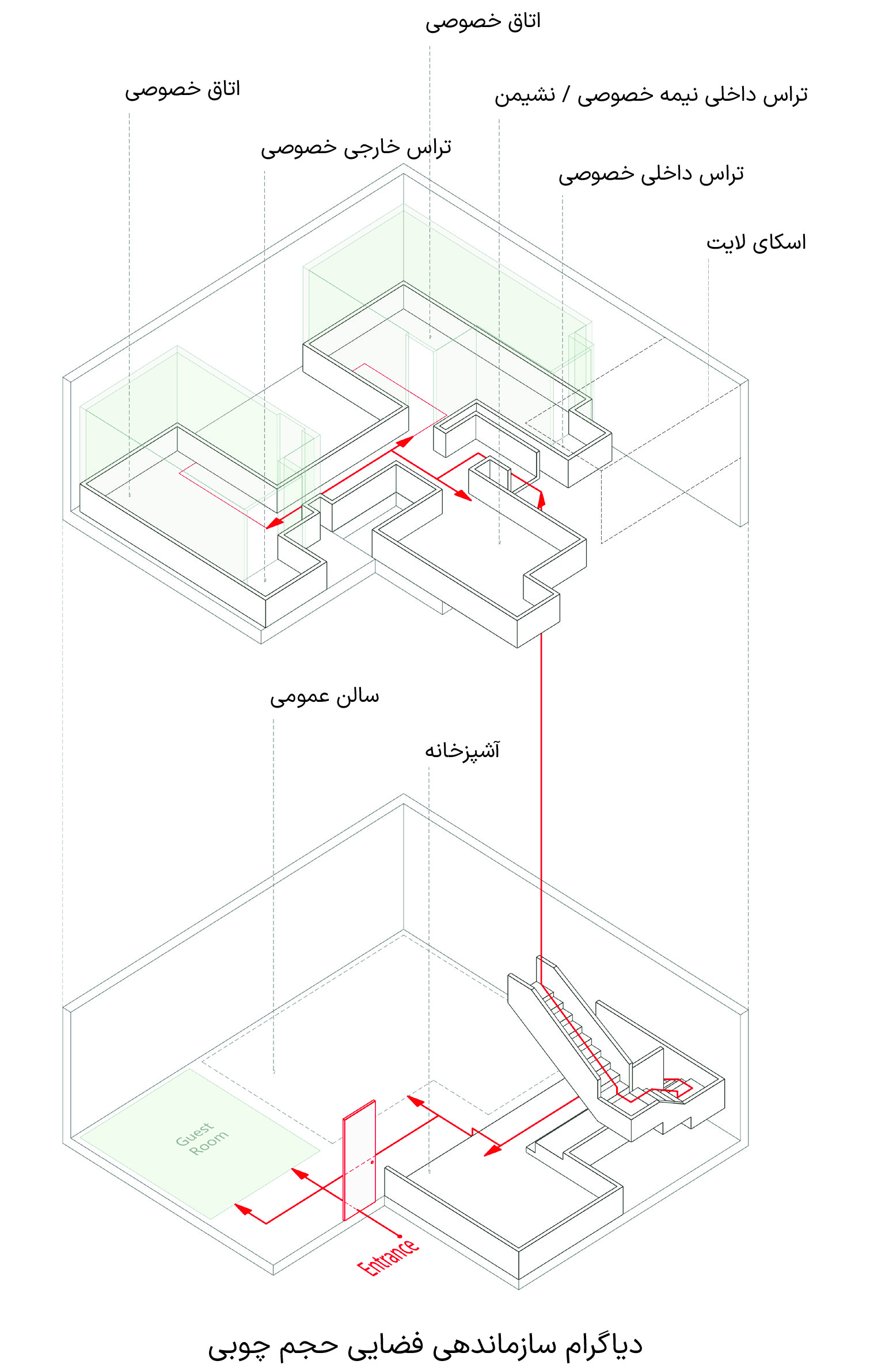
Exploded axonometric diagram in Farsi showing the spatial organisation of the wooden volume across both floors, with labels for private rooms, terraces, skylight, entrance, guest room, and kitchen
Spatial organisation diagram — the wooden volume distributes programme across both levels
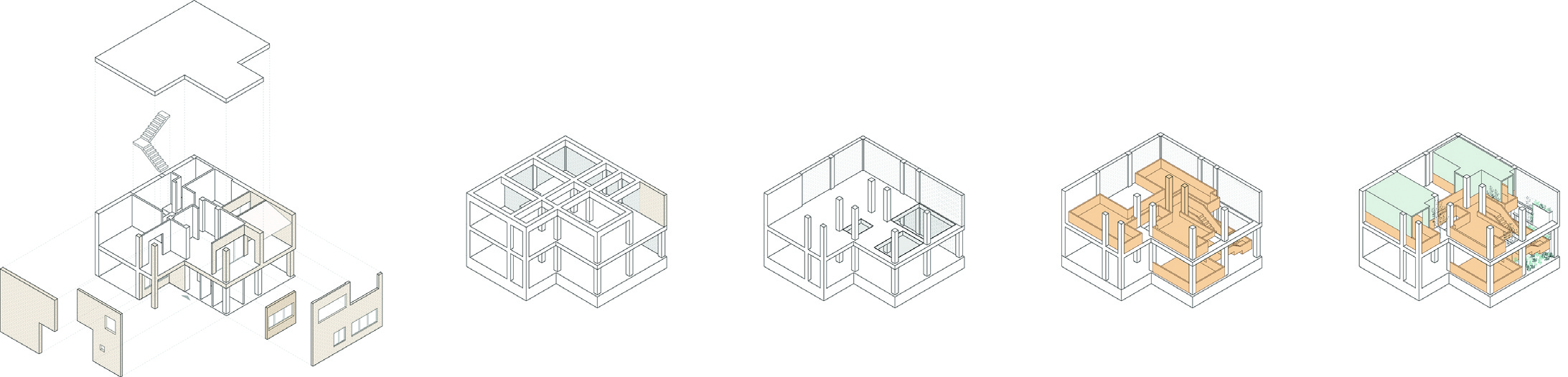
Sequence of five exploded axonometric diagrams showing the design process: original apartment, structural grid, void creation, insertion of wooden volume, and final layered composition
Design process — from the original apartment through structural revelation to the new spatial order
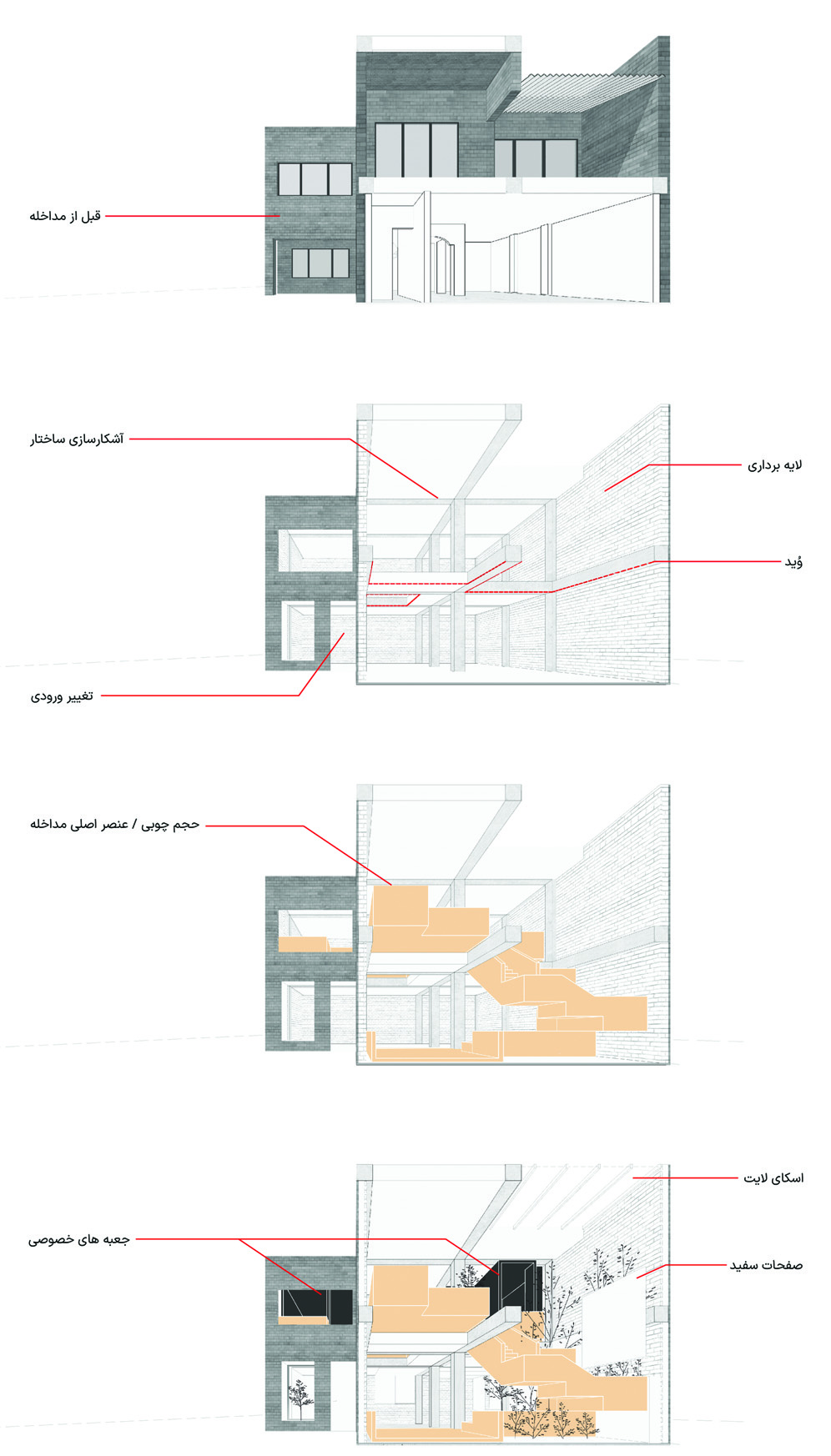
Four annotated section drawings showing the design intervention stages: before, layer removal and voids, insertion of wooden volume, and final composition with skylights and private boxes
Intervention stages in section — before, revealing, inserting, completing
♦ ♦ ♦

Before Renovation

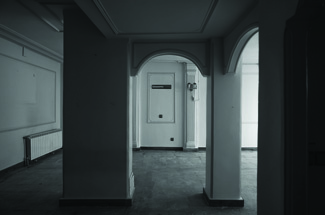
Before renovation: dark interior corridor of the original apartment with arched doorways and columns, dim lighting
Before — the original corridor with arched openings
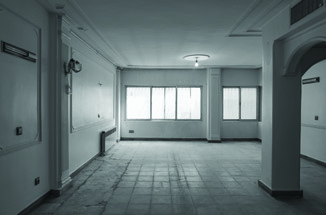
Before renovation: empty room of the original apartment with tiled floor, arched openings, and windows to the garden
Before — an interior room of the thirty-year-old apartment
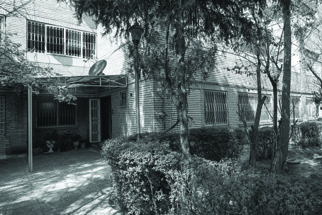
Before renovation: exterior view of the original building surrounded by mature trees and garden, showing the standard residential complex architecture
Before — the exterior and garden of the original duplex apartment
♦ ♦ ♦

Plans

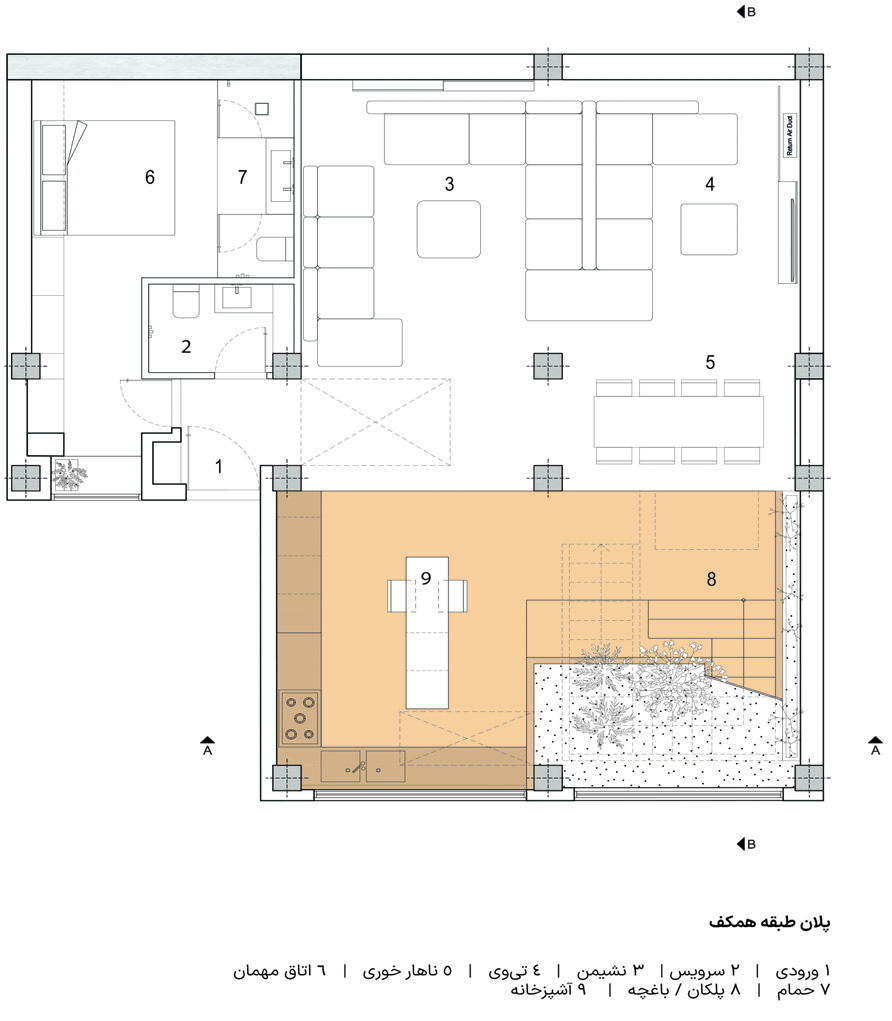
Ground floor plan showing entrance, service areas, living room, TV room, dining, guest room, bathroom, staircase-garden, and kitchen
Ground floor plan
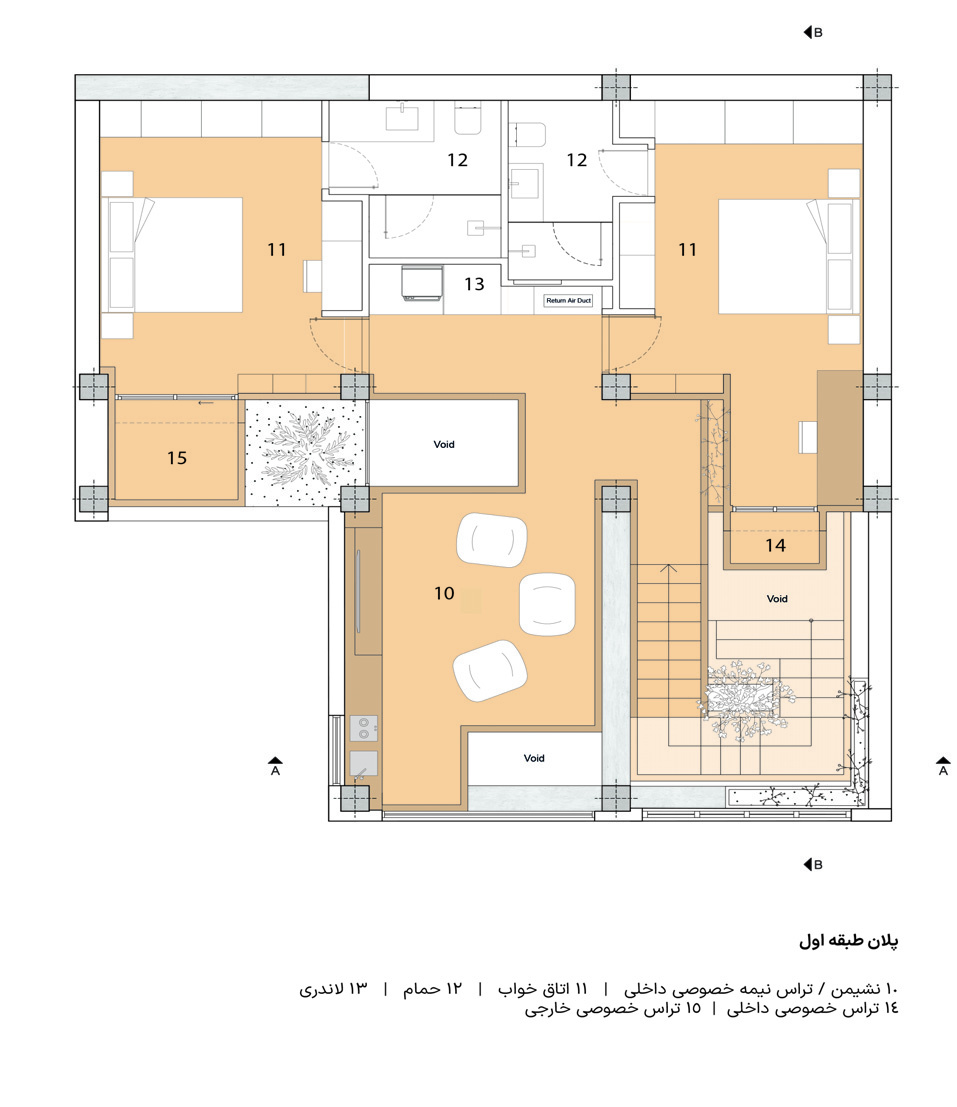
First floor plan showing the upper level with sitting area and semi-private terrace, two bedrooms, two bathrooms, laundry, private interior terrace, and private exterior terrace, with voids connecting to the ground floor
First floor plan

Related in Architecture Database

Mino-An Residential Apartment, Tehran