Coping with Deficiencies in Iran's Modern Architecture: Two Approaches
With the numerous deficiencies of the preliminary modern architecture, especially the functionalism and the monotony of the internationally mass-produced buildings, the modern consciousness in the 1960s saw a new generation of architects begin to think of ways to remedy the situation. Amidst the huge pile of literature produced by masters and critics, Robert Venturi's 1966 essay "Complexities and Contradictions in Architecture," published in the journal of the Museum of Modern Art of New York, was the most effective. Having studied the casinos and other liberally illuminated buildings of Las Vegas from the viewpoint of "the architecture of communication" together with his students, he had concluded that the only city could provide a remedy for the weary eye.
The International Response
Later published as Learning from Las Vegas: The Forgotten Symbolism of Architectural Form, Venturi's ideas divided the modern buildings into two categories. He dubbed the ones following function as "ducks" and those with applied ornament as "decorated sheds." With the second category, buildings composed of simple yet functional forms bore a culturally relevant approach. A period of the international style saw architects in different countries attempt new considerations when designing cultural buildings.
Two Approaches in Pre-Revolutionary Iran
The author identifies two distinct approaches that Iranian architects adopted in the 1960s and 1970s to address the deficiencies of international modernism. The first approach, exemplified by architects like Kamran Diba, sought to incorporate elements of traditional Iranian architecture into modern designs. The second approach, represented by figures like Abdolaziz Farmanfarmaian, attempted to reinterpret Western modernism through Iranian cultural sensibilities.
The Regionalist Approach: Kamran Diba
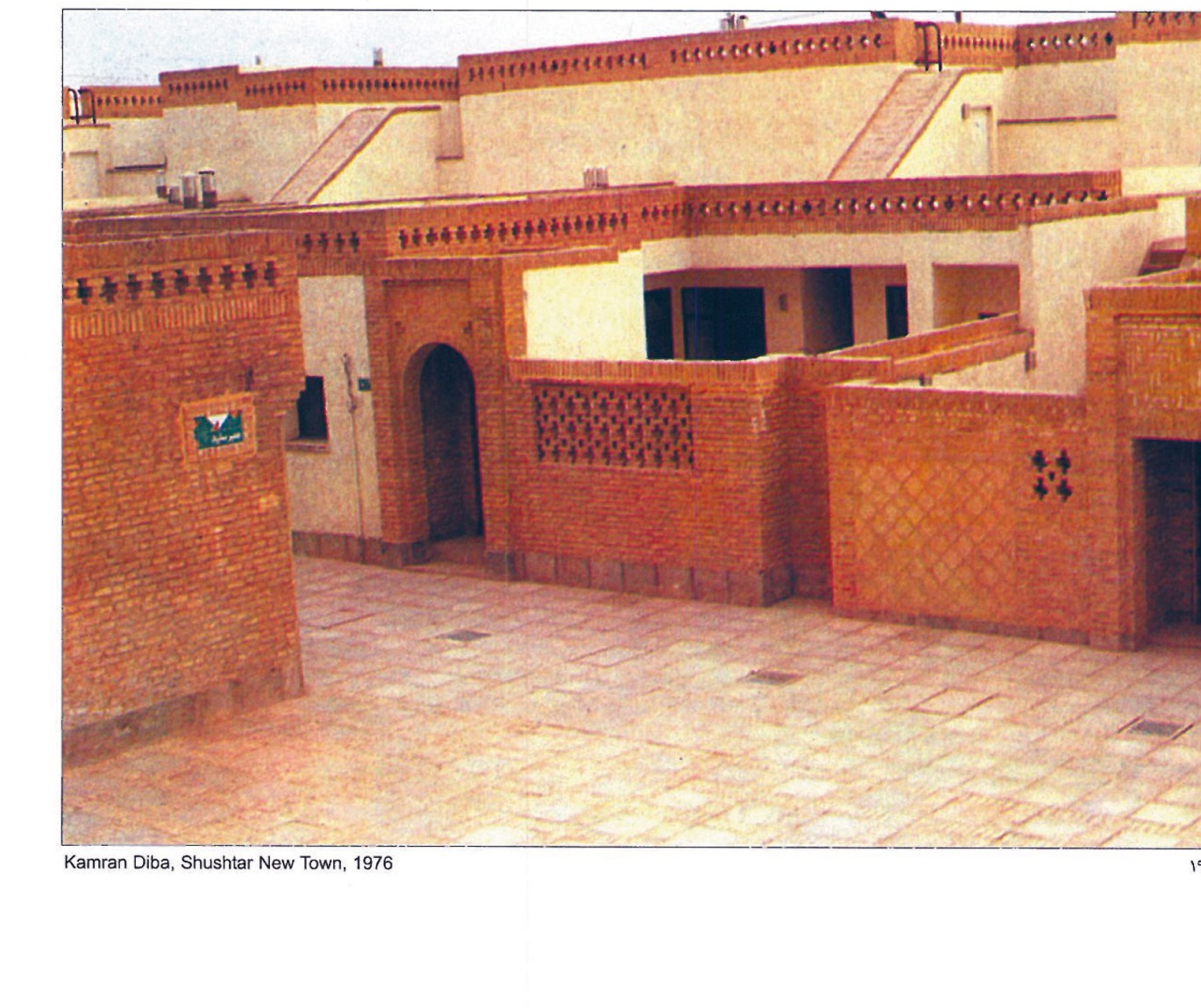
Kamran Diba's Shushtar New Town (1976) stands as perhaps the most ambitious attempt at modern regionalism in pre-revolutionary Iran. The project sought to create an entirely new urban environment that drew on the spatial qualities, materials, and climate-responsive strategies of traditional Iranian cities while accommodating modern infrastructure and living standards. The brick and earth-toned buildings, with their courtyards, narrow alleys, and layered facades, created a townscape that was both familiar and forward-looking.
The Modernist Reinterpretation: Abdolaziz Farmanfarmaian
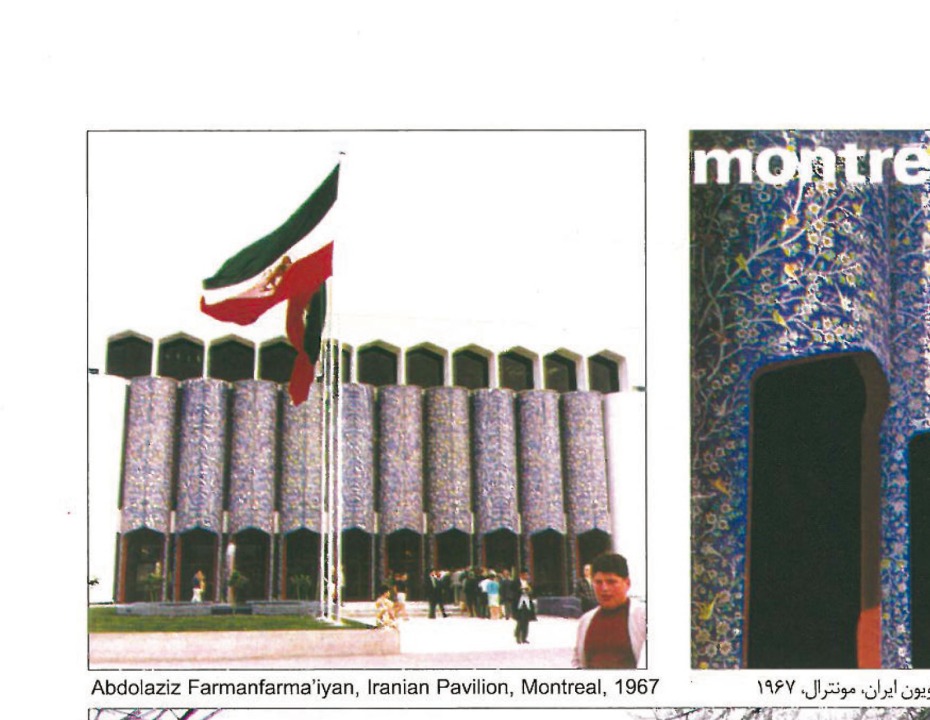
Abdolaziz Farmanfarmaian's works took a different path. His Iranian Pavilion at the Montreal Expo of 1967 and the Tehran University Mosque represent attempts to distill the essence of Iranian architectural tradition into modern forms. The Montreal Pavilion, with its cylindrical towers clad in traditional tilework, created a striking presence that communicated Iranian identity through contemporary architectural language. Similarly, the Tehran University Mosque reinterpreted the traditional Iranian mosque typology using modern structural and spatial concepts.
The Venturi Connection
The author connects these Iranian experiments to the broader international discourse on post-modernism and regionalism. Venturi's concepts of the "decorated shed" and the "duck" provide a useful framework for understanding the two Iranian approaches: Diba's work leans toward the "duck" (buildings whose form itself communicates meaning), while Farmanfarmaian's approach is closer to the "decorated shed" (modern structures adorned with culturally specific elements).
Both approaches were attempts at finding locally rooted alternatives to the deficiencies of international modernism in the 1960s. They reflect a nationally resonant image on a solidly modern base. Before the upheaval of the 1979 Revolution that left its impact on Iranian architecture, these two strands represented the most thoughtful responses to the challenge of creating a modern yet authentically Iranian architecture. As Diba himself noted about his design philosophy: "Iranian villagers do not use the same furniture as Europeans do."



