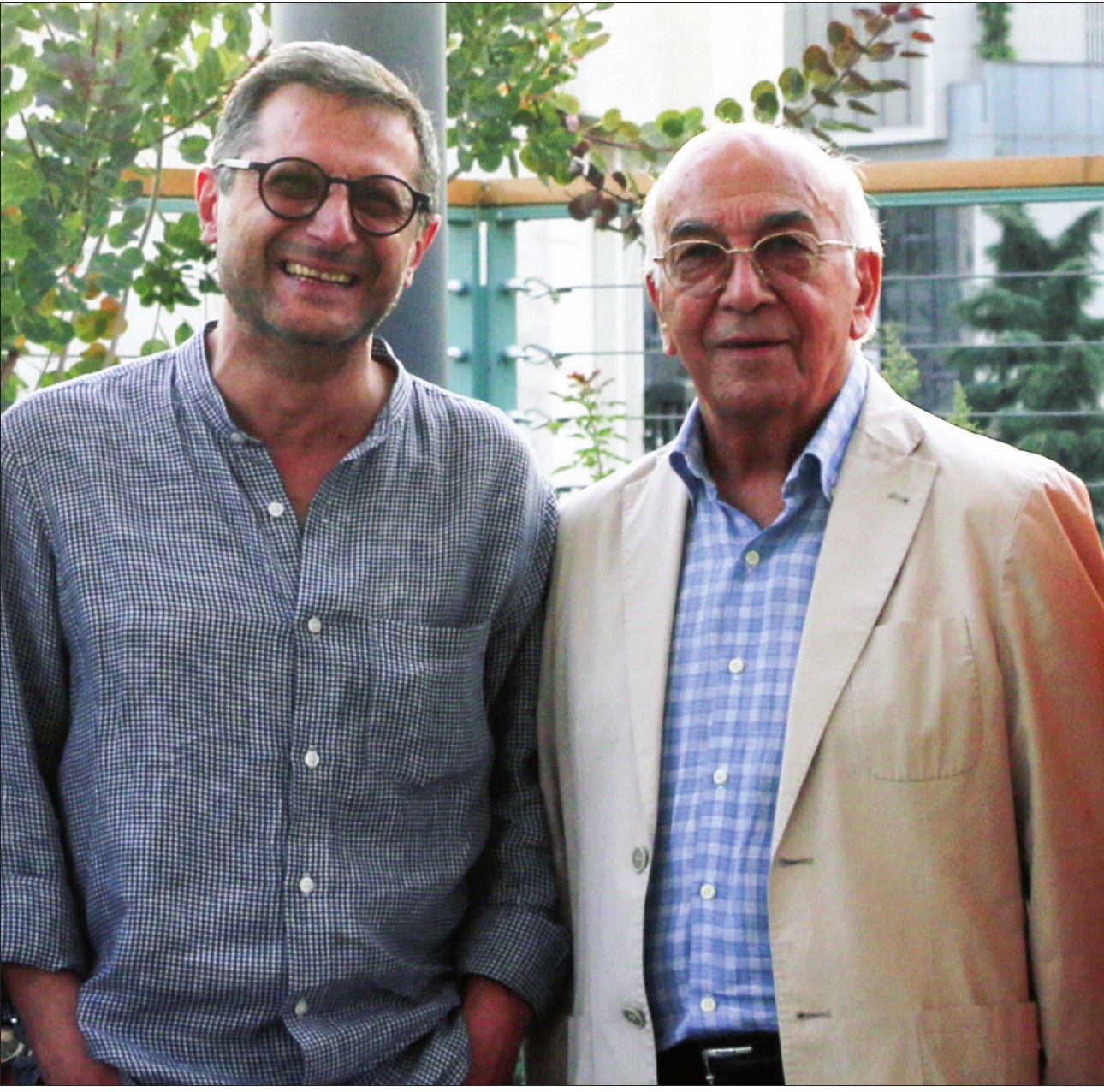
My first meeting with Sharifi was very short. Just a few moments after being hired at the first and last workplace of my life, as I came out of the office of Artiman consulting engineers, I was introduced to him, and he said: "Where did you study?" I said: "I have an associate degree from Elm-o-Sanat", and this time, more gruffly, he said: "Sir, don't make fun of us. If you think you don't know the work, don't come". Whatever the answer was, I started work the next day.
It did not take long to realise that the office's work was of two kinds. The first was the large government projects done in the atelier; to supervise their progress Sharifi came to the atelier every morning and gave corrections with the colleagues. An exchange that, if it took place in one of Sharifi's bad moods, was no surprise, and we all knew well that it was no joke. The second was Sharifi's personal work, on which he worked alone in his room. A small, dim room with a desk by the window in the quietest part of the office. Far from the office's ongoing bustle.
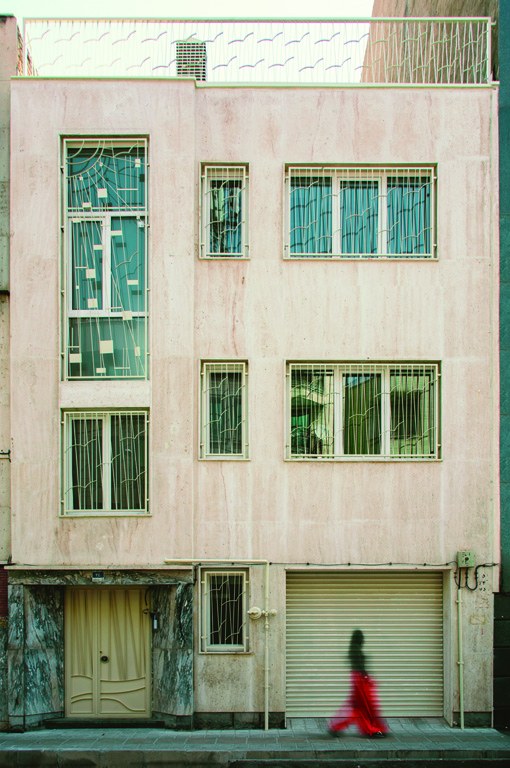
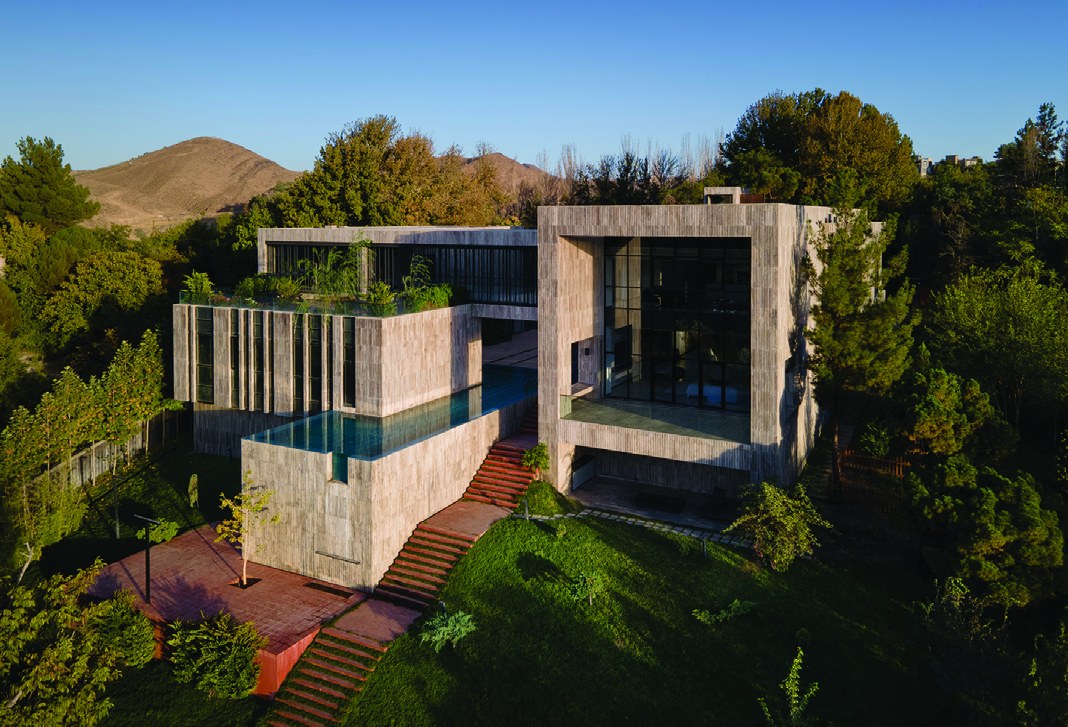
He had left the day-to-day business of the office to his partners so that most of his time could be spent on his personal projects. Private-sector projects, mainly luxury villas in the north of Tehran.
Mondays were invariably the day for supervising the construction of these projects, projects that hardly anyone in the office knew much about.
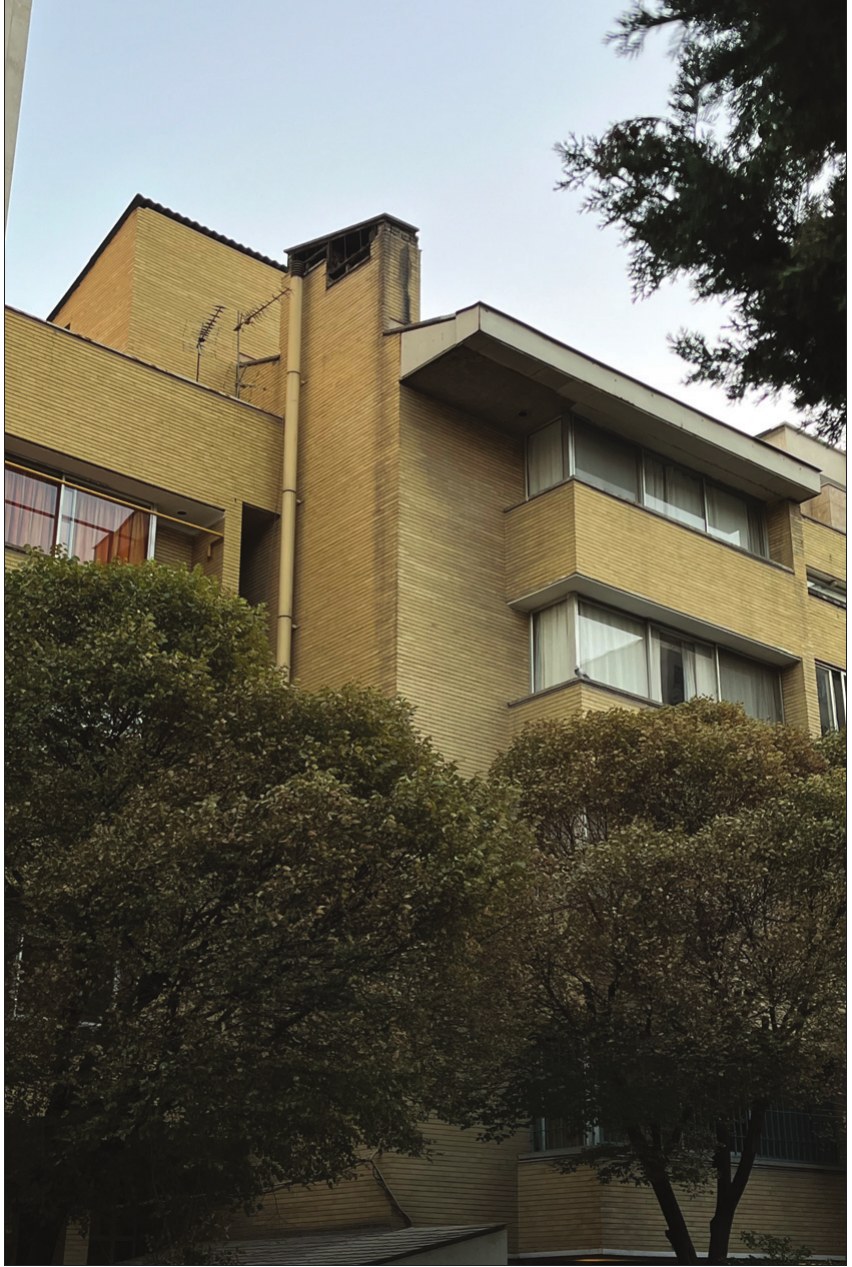
I had not been in the office for more than a month or two when he asked me to accompany him on a visit to his buildings. The appointment was set for 9 in the morning beside his house on Jordan Street.
About twenty years have passed since then, but I remember almost every detail of that day.
That 9 in the morning meant exactly 9 in the morning! I had arrived five minutes late.
That the moment I got into his car there was a very pleasant smell. A smell that promised I had been invited to discover his world.
That it was as if he were using his car for the first time.
How flawless his dress seemed.
The music he listened to and accompanied by whistling - and how well he whistled.
And his kind and generous personality, which, if I had not seen it behind his desk, I discovered behind the wheel.
Mondays were now a different day of the week, and every now and then I was invited on a building visit.
And this became the beginning of my socialising with Sharifi outside work. From the experience of going to restaurants and cafes, seeing buildings of the modern period, meeting Kalantari, Alizadeh, Ardalan and many others, all of which was very new to me, and rediscovering every alley in Tehran that might be hiding a building and seeing them through Sharifi's eyes, to talking about cars, Sharifi's favourite subject, and about the collar of a man's shirt and its relation to the height of a gentleman's neck, which showed Sharifi's discernment in dressing - and all of this happened in the interval between visiting two buildings; and seeing the buildings, too, was very effective in getting to know Sharifi's abilities. His ability in dealing with clients and in how he advanced his wishes.
His punctuality in visiting the sites, which meant that clients always apologised to him - and this itself was a secret to me of how his wishes were carried out, even though it seemed unrelated.
And his precision in reviewing the previous week's work: the contractors knew well that the smallest carelessness would not escape Sharifi's sharp eyes, and his command of the details and sequence of the work was unrivalled. Where there was not even a drawing, he guided his team in such a way as to prevent any mistake, although he was never afraid to order mistakes demolished either.
Over time I realised that the collaboration with his old partner and atelier-mate, the late Hashem Zia Ebrahimi, had made them a complementary pair. Sharifi always spoke with respect of Ebrahimi, who by then had emigrated abroad. Ebrahimi was very inventive and rational in designing details and placing spaces, and his combination with Sharifi, who drew on his ability to design and his power of drawing, had turned out very well.
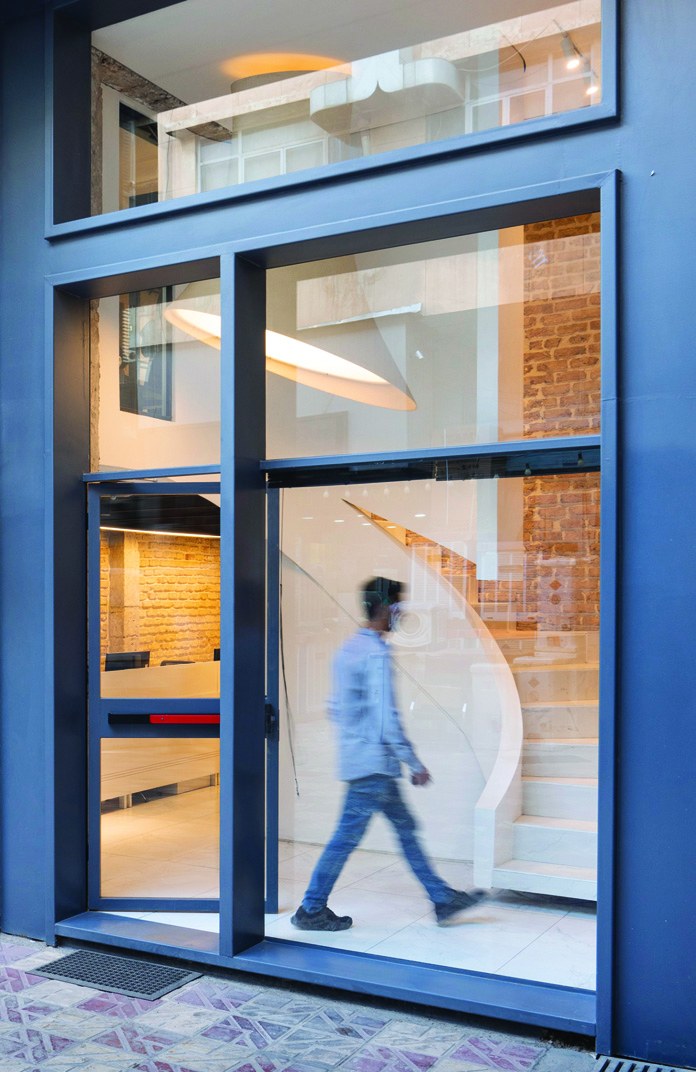
In the days when Sharifi missed Ebrahimi, Tajeddin was in charge of building one of the projects. Tajeddin's working qualities, which closely resembled Sharifi's, quickly convinced both of them that their working future could expand, and indeed this decision led to the creation of projects in which Tajeddin's role can in no way be ignored. A collaboration that has continued to this day and has drawn Sharifi from his previous field of work in villas to residential and office apartment buildings as well. The joint collaboration of an architect and a builder who share the same concerns, and for that reason the buildings built are each a reference in terms of quality of design, execution and attention to detail. Projects that, to know them better, one must be in them and live in them.
I was very fortunate that the house I live in is a product of this recent period - a complex where we have gathered with our friends, whose quality has made up for its smallness - and also the building where we work, whose other advantage is the presence of Sharifi and Tajeddin themselves in it. Now and then, when I see Sharifi in the car park or drop in on the master for coffee and a chat, I think how much I miss the Mondays. This week I must cancel my own Monday appointments!
Although my working period at Artiman lasted no more than a year or two, my relationship with Sharifi has continued to this day, and now that I think back to those days I count that period among the most fascinating and instructive periods of my working life; and I think the desire that everything, in personal life and in professional work alike, must be done without fault or flaw is Sharifi's most important characteristic - so faultless that worry about making a mistake leads to a preference for ways that have already been tried.
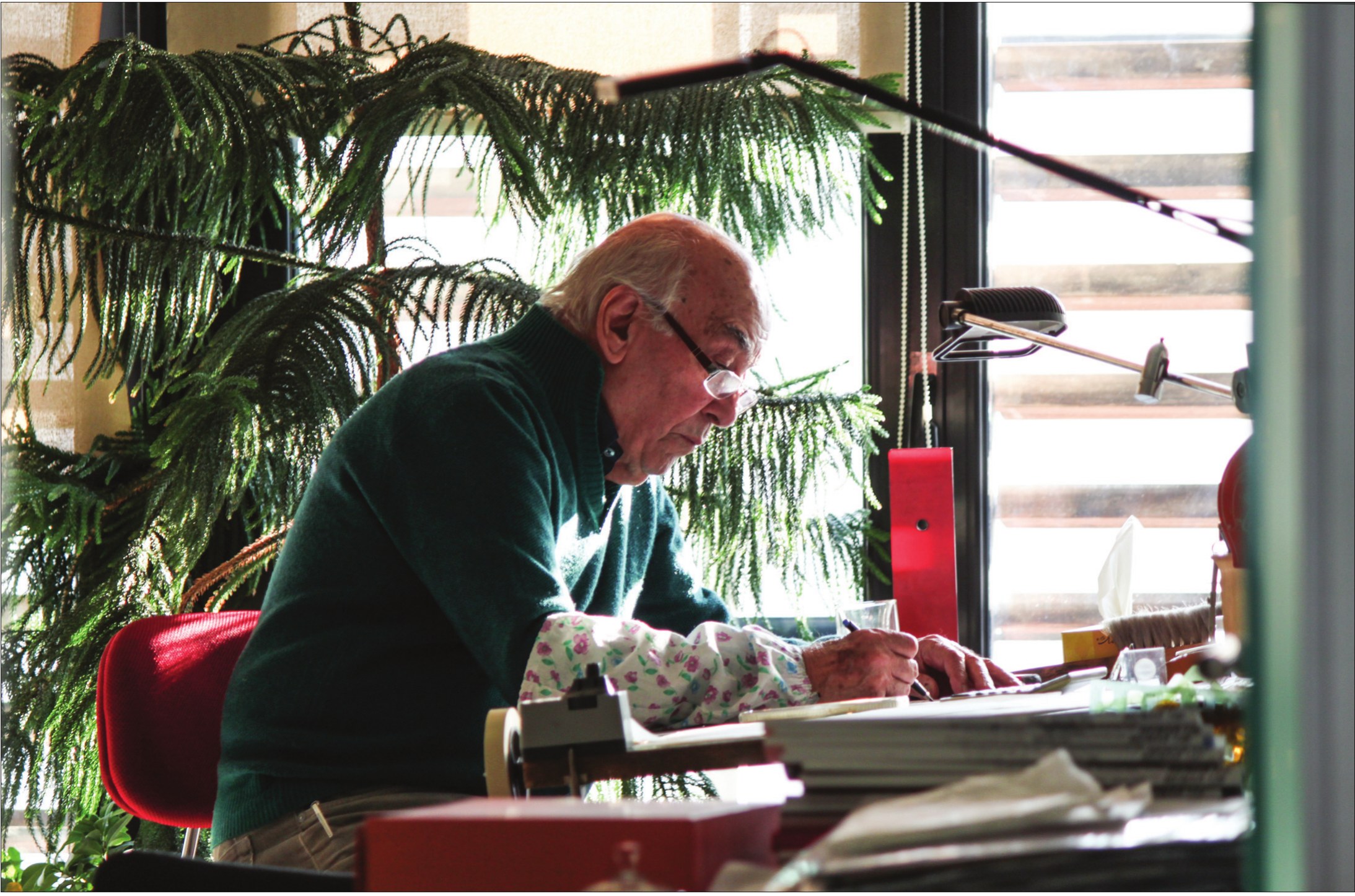
And of the images that have stayed with me, two are etched in my mind more than the rest. One is Sharifi designing at his desk and the other driving, and in both he has his own particular movements. The first image is to me a sign of his professionalism and the second a sign of enjoying the moments of life.
It seems that Sharifi has completely separated these two, and each has its own place in Sharifi's life. Although he himself connects these two images by whistling.
With great respect for him, who still practises architecture with motivation and persistence.
* This piece is taken from the book Faramarz Sharifi, edited by Bahram Shokouhian, published in 1392.