Contemporary Architecture

Nim Rokh, Kerman

Gera Architecture Studio, Hossein Namazi·Photos: Mohammad Hasan Etefagh·Memar 154 — 25th Memar Award
Nim Rokh, Kerman
Location: Hava Niru, Kerman · Client: Mostafa Manzoori, Maria E’tebar · Structure: Mehrdad Moqbeli · Design team: Erfan Ramazani, Hamid Niati, Mehrad Qaderi, Mohammad Shakori, Amir Masud Derikvand · Construction: Mohsen Manzoori · Mechanical & Electrical: Hamid Ahadi, Hamze Soltani Nejad, Hossein Zamzam · Graphic: Erfan Ramazani · Photo: Mohammad Hasan Etefagh · Area: 250 m² · Built area: 350 m²

Redefining Life in the Heart of the Desert

Nim Rokh is a single-family dwelling on three floors, on a south-facing plot in one of Kerman’s developing townships — a township governed by regulations that allow variable building densities.

This building carries within its memory and lived experience the mud bricks, the emotional wounds of earthquakes, and the ruins of Bam Citadel — losses whose void will never be filled. Nim Rokh is a poetic attempt to reconstruct the bond with history while responding to the everyday needs of life in its own time.

In its first encounter, this building chose a density pattern that retreats before the desert’s encroaching sky to find its place among its neighbours; yet subsequently, with a stepped massing, it connects itself to the sky. Nim Rokh, against the prevailing trend, has relinquished its legal building rights and, by reducing the number of floors and the built area, has answered this question: “What are the advantages of opting out of the lucrative competition for density and additional floors?” This question assumes redoubled importance in residential townships, where the fever to exploit every legal and illegal potential has overtaken the building industry.
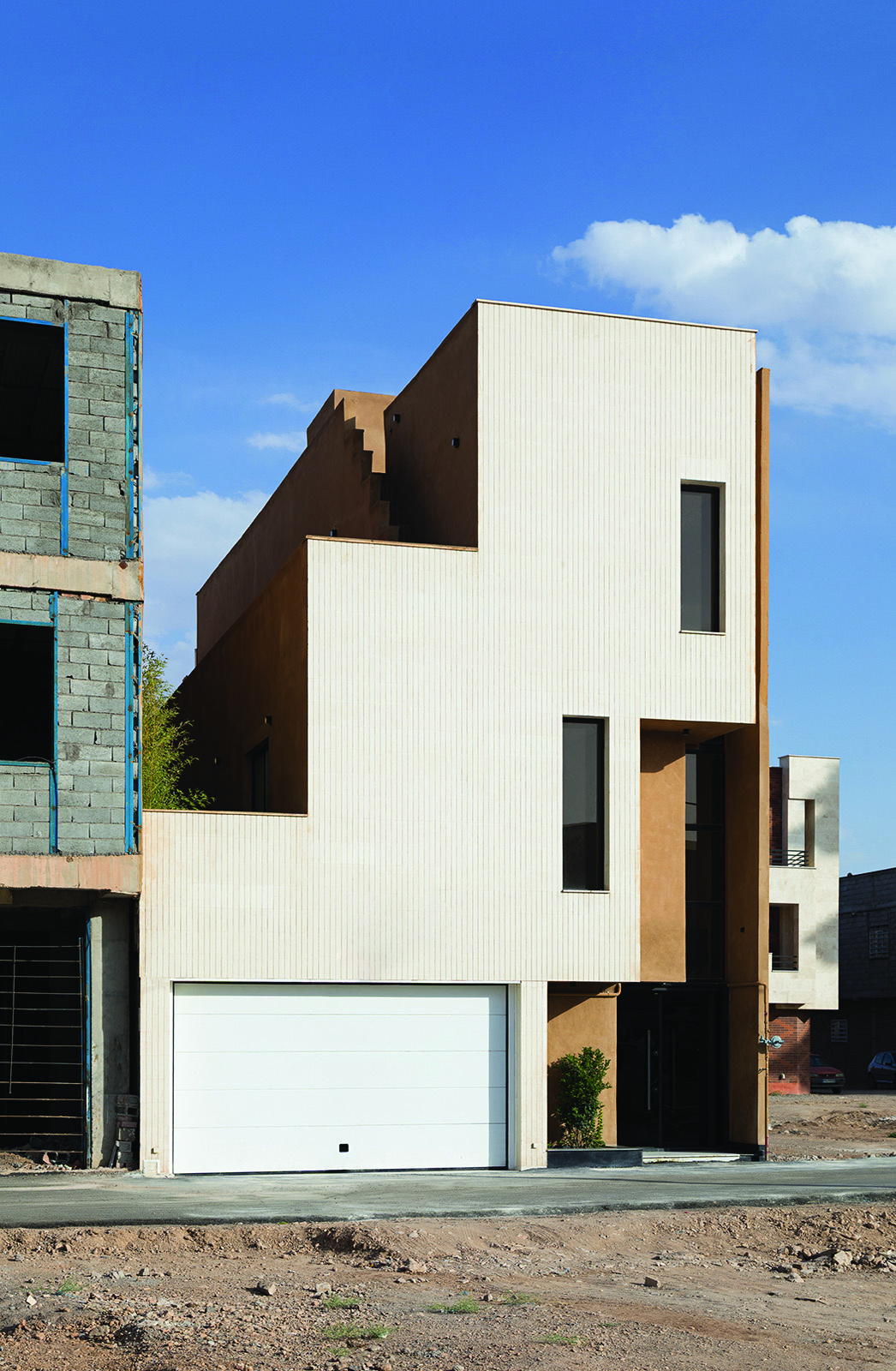
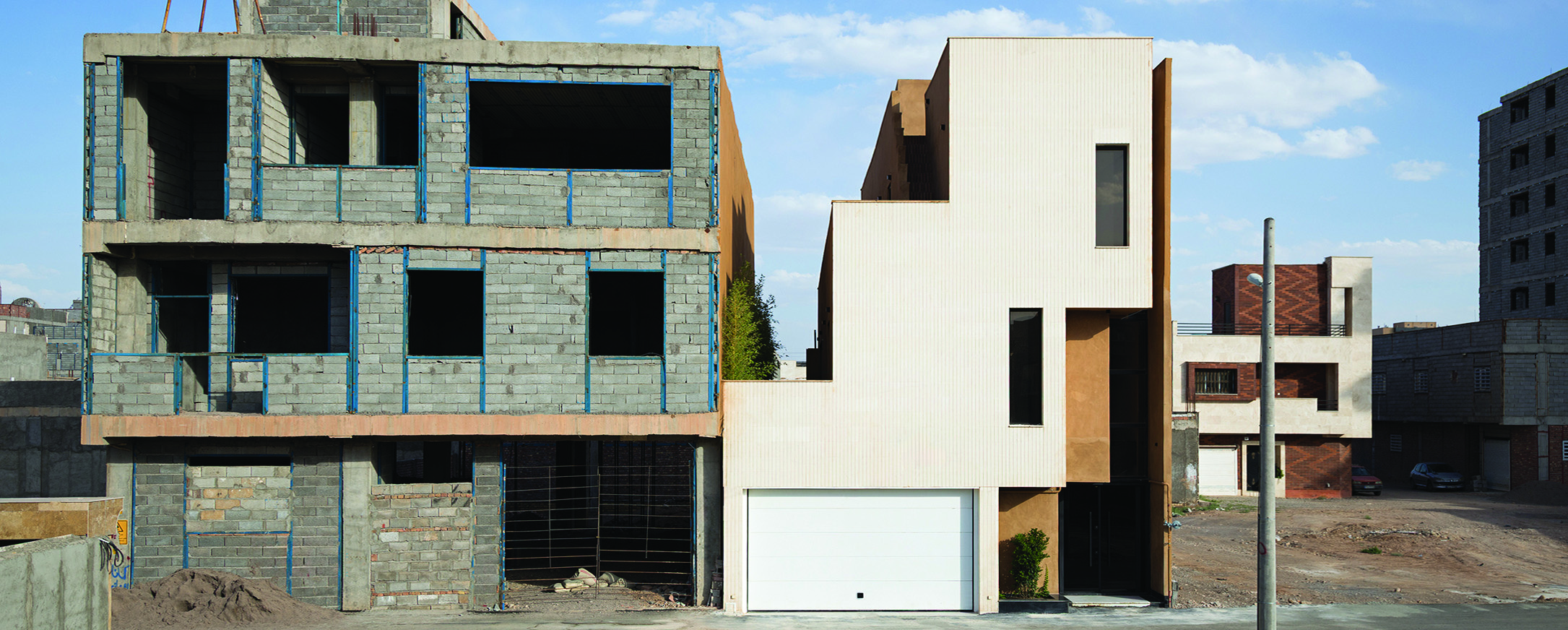
Nim Rokh main facade in daytime — white corrugated cladding with earth-toned stepped volumes, small windows on upper floors, white garage door at ground level
The main facade — stepped volumes retreat before the desert sky, with two small windows like ears on the upper floors
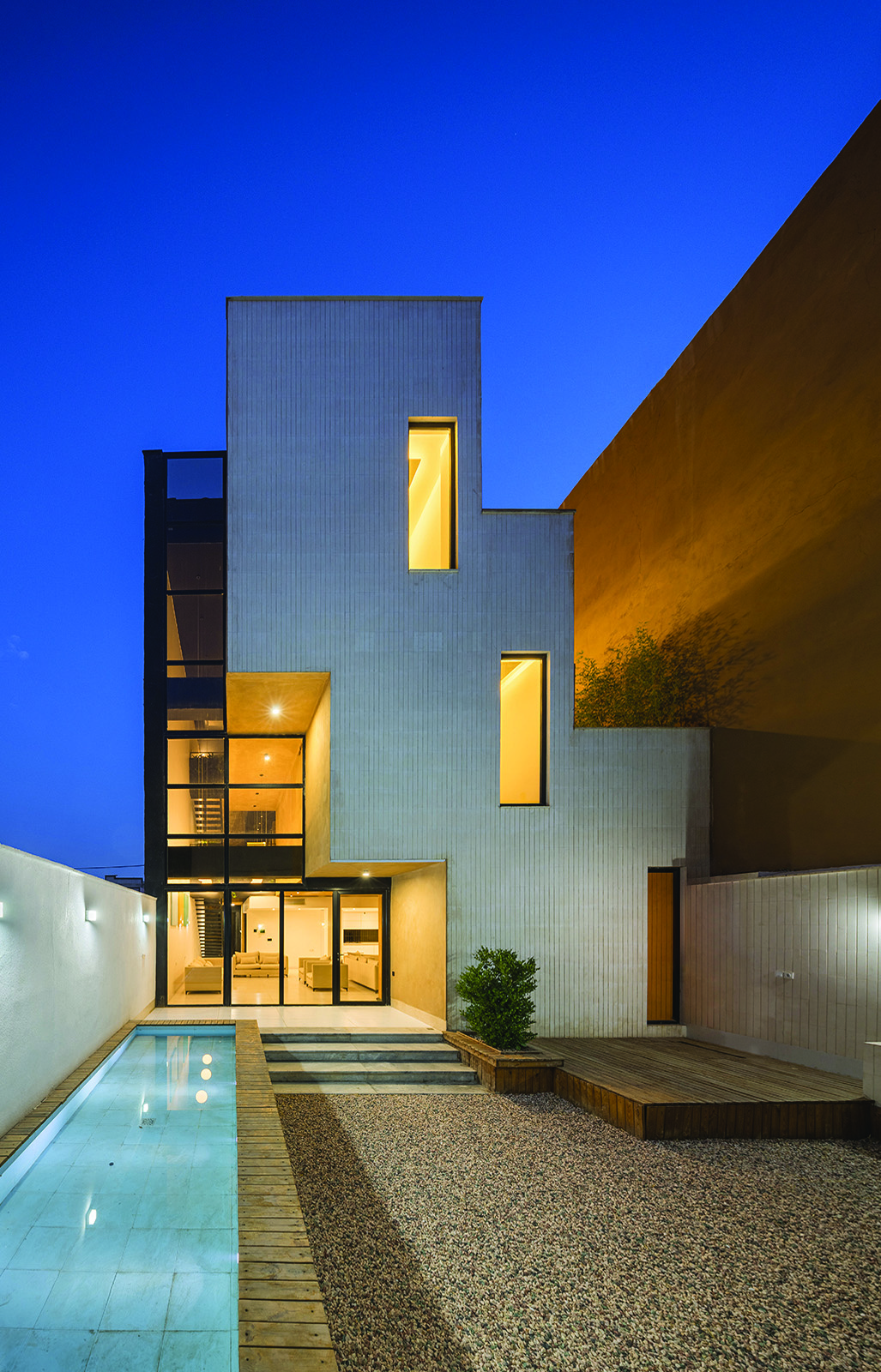
Nim Rokh south facade at twilight — the stepped building warmly lit from within, with a narrow pool, wooden deck, and gravel courtyard
The south facade at twilight — the building opens onto a courtyard with pool, wooden deck, and greenery
♦ ♦ ♦

A Bridge Between City and Sky

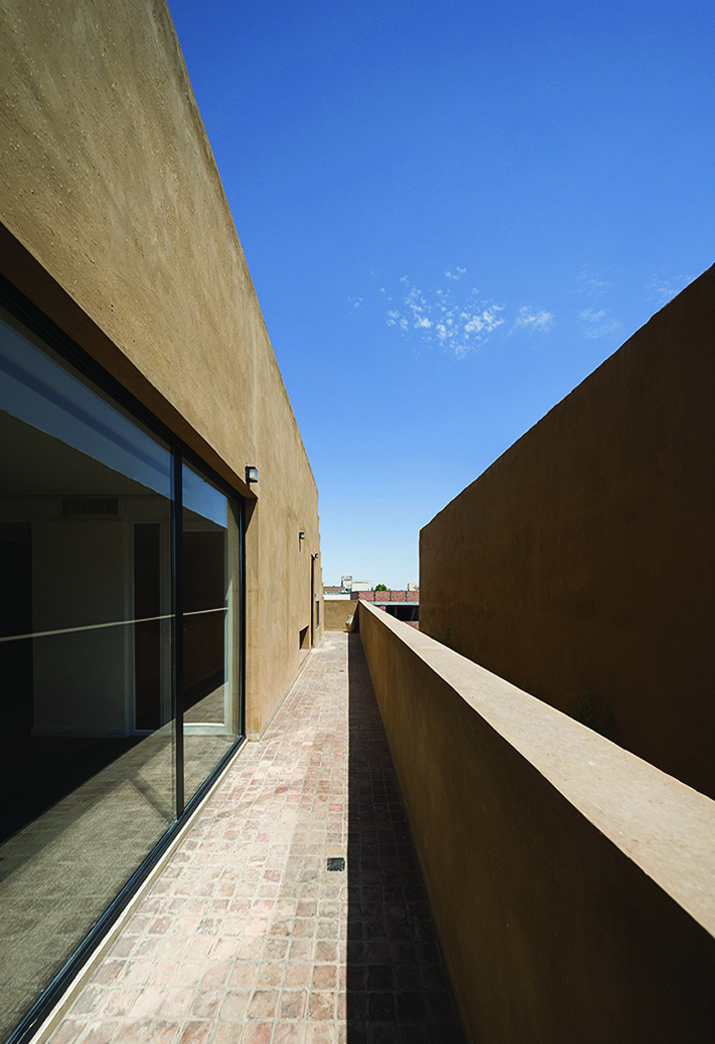
By splitting the cubic volume of the building, narrow and lively alleyways have been created that establish a connection between the passer-by and the building. This quasi-alleyway is the product of a trade-off between claiming the sky and leaving the ground unbuilt — a traditional alley that in today’s cities is being eliminated and replaced by streets.
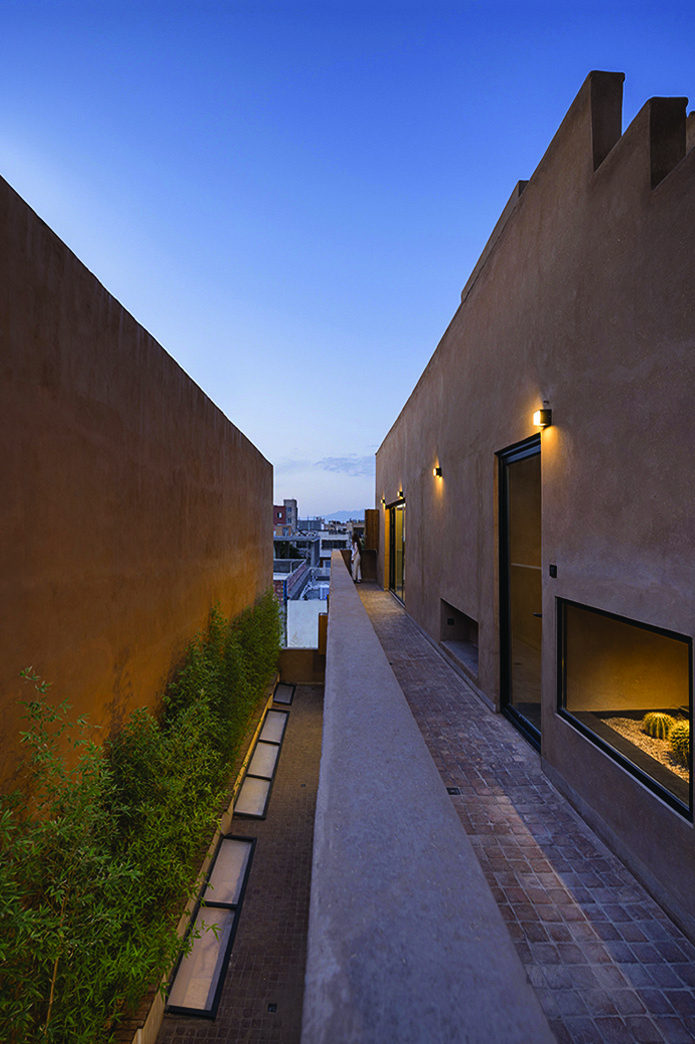
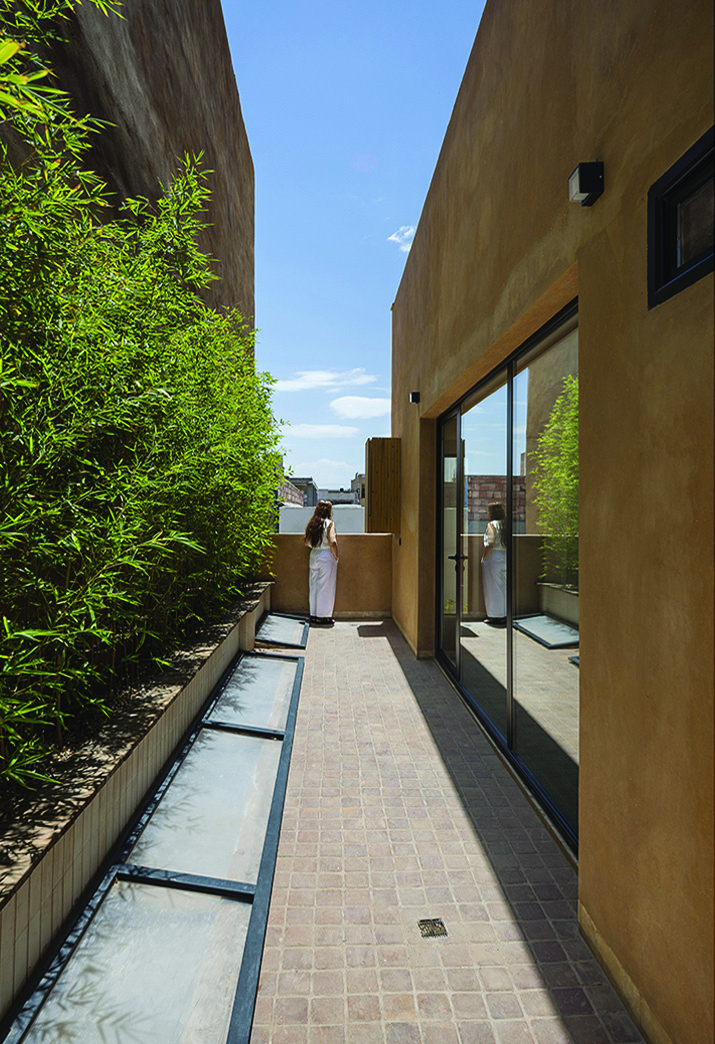
In an age of land-grabbing, Nim Rokh, by creating this quasi-alleyway, has committed an act of “sky-grabbing”: when passing by on the street, the passer-by’s gaze is drawn to a frame of sky that belongs exclusively to Nim Rokh.
The narrow side alley between Nim Rokh and its neighbour at twilight — earth-toned walls, bamboo planting, glass skylights in the floor, and warm wall lights
The quasi-alleyway at twilight — bamboo, floor skylights, and a frame of sky above
The side alley in daytime — a woman standing between earth-toned walls with bamboo, glass skylights, and a large glass door to the interior
The alleyway in daylight — a living space between building and neighbour
Looking along the narrow passage between two earth-toned walls toward the open sky, brick paving on the floor, a large glass window on the left
Owning a piece of the sky — the passage frames the desert sky above
♦ ♦ ♦

Dialogue with the Neighbour

By rotating its volume, Nim Rokh has transformed itself from a rigid, lifeless structure into a living, organic building. This building, weary of the monotonous and lifeless layout of residential townships, acts like a rebellious soldier in a regimented parade: while its comrades stare grimly ahead, it has turned its head toward the other, and only its profile — its nim rokh — is visible. The building’s facade, with two small windows on the upper floors like two ears, evokes a human profile that, with a poetic defiance against the uniformity of the neighbourhood’s lined-up houses, gazes curiously at its neighbour and strives to establish a relationship. The question is: “How is dialogue with the city possible without first engaging in dialogue with the neighbour?”
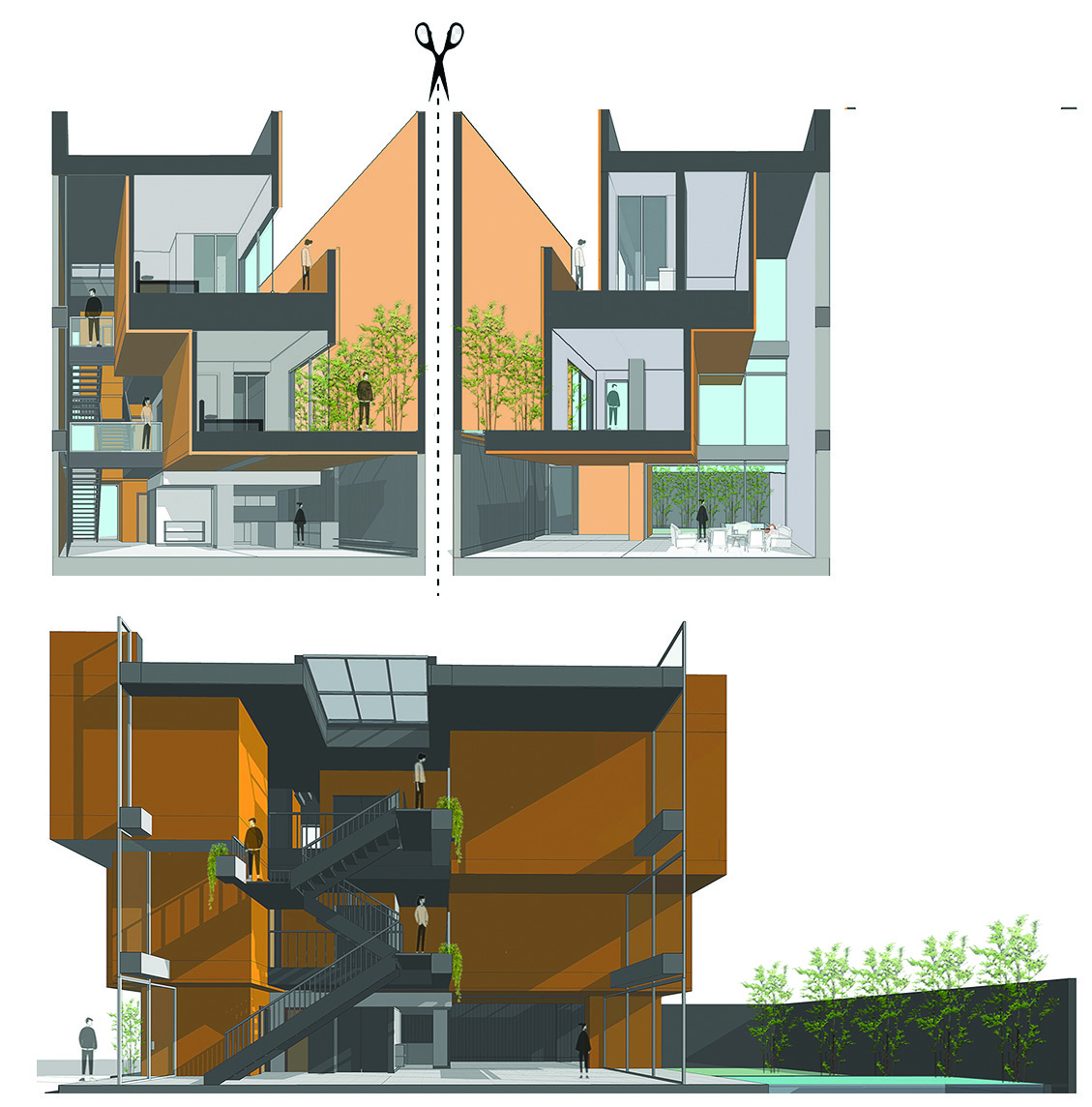
Architectural cutaway section and elevation drawing of Nim Rokh showing the stepped three-floor interior with orange-toned walls, staircase, and greenery
Section and elevation — the stepped massing reveals the relationship between interior and exterior spaces
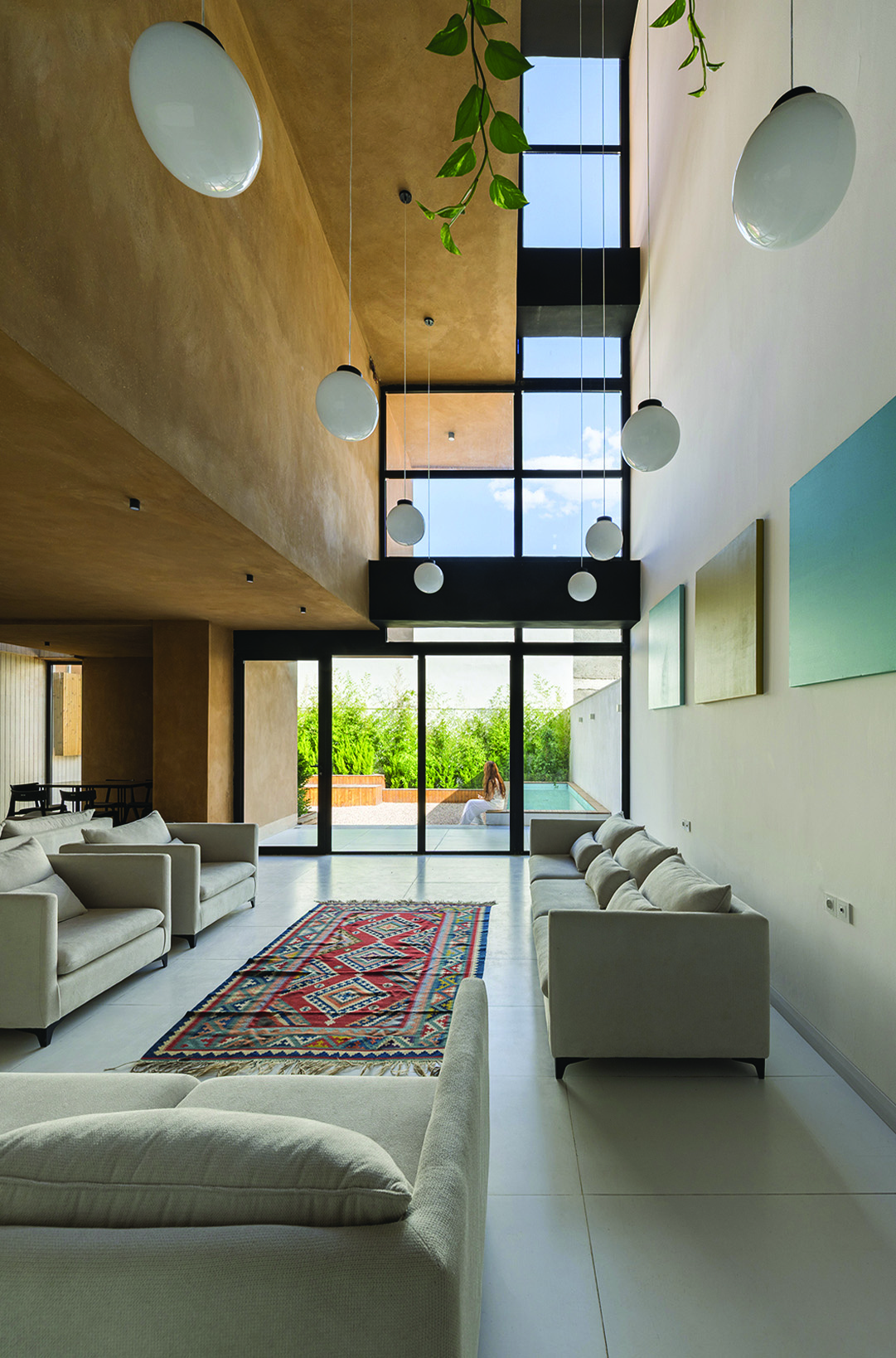
Double-height living room interior with earth-toned walls, pendant globe lights, a traditional Persian rug, sofas, and a full-height glass wall looking out to the pool and greenery
The double-height living room — pendant lights, a Persian rug, and a full-height glass wall opening to the garden
♦ ♦ ♦

The Hidden Face

By creating a living quasi-alleyway, Nim Rokh has pulled its third wall out of the embrace of the neighbouring wall, so that the third facade — as the true main facade — may find an opportunity for self-expression: a facade that was previously imprisoned in a hidden enclosure between two buildings. This facade bestows a new face upon the building and, by opening a window toward the neighbour, establishes a dynamic bond with it, transforming a silent wall into a living scene and creating fresh opportunities for a new morphological model of urban block development.
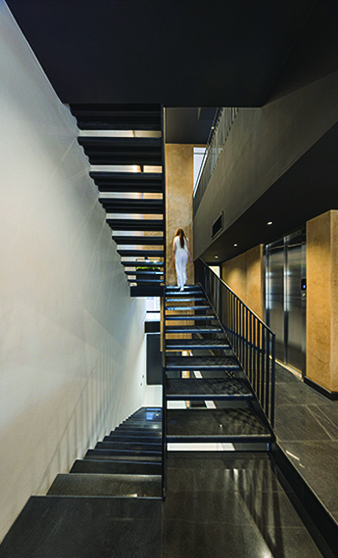
Interior staircase with a woman ascending dark floating steel treads, warm golden walls, and natural light from above
The staircase — floating steel treads between earth-toned and white walls
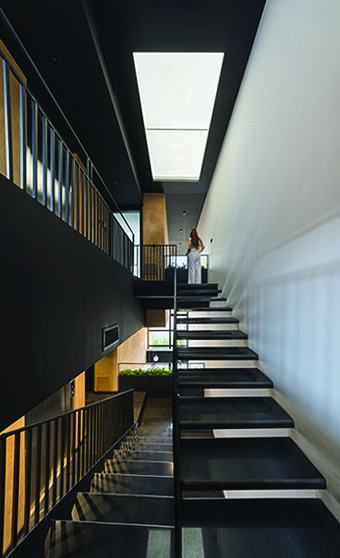
View looking up the staircase toward a skylight, dark steel treads with bright white risers against a dark wall
Looking upward — the staircase draws light from the skylight above
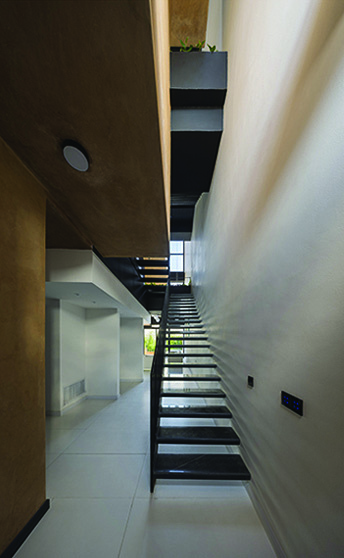
Ground-floor view of the staircase with earth-toned ceiling, white walls, floating steel treads, and daylight filtering from the upper levels
The staircase from the ground floor — connecting all three levels through a vertical slice of light
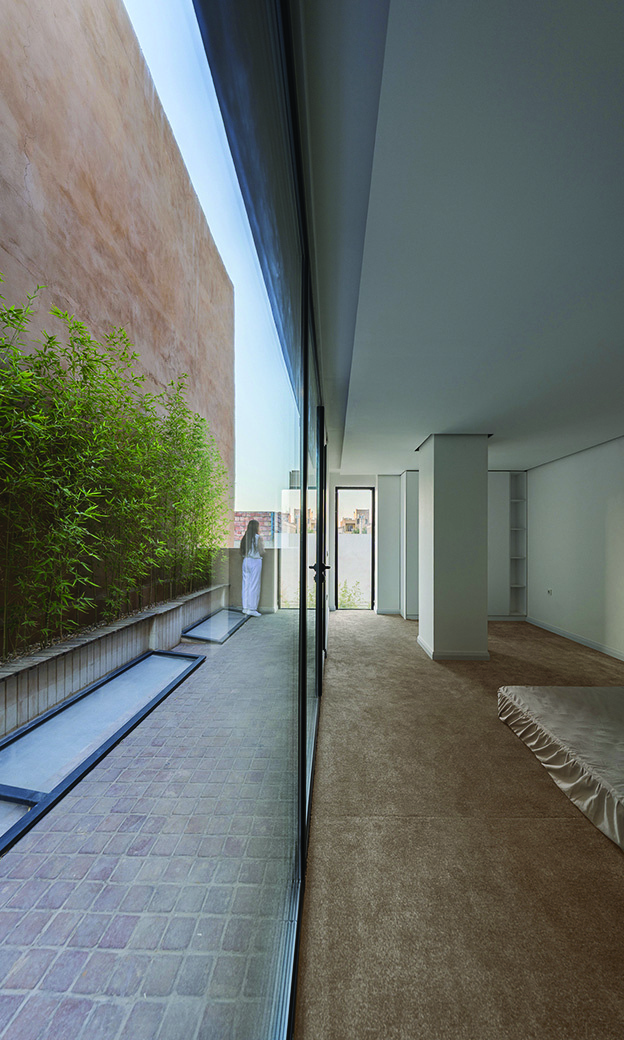
Interior view through a full-height glass wall showing the side alley with bamboo planting and a woman standing at the far end, the bedroom with carpet visible on the right
Bedroom looking through the glass wall to the side alley and bamboo
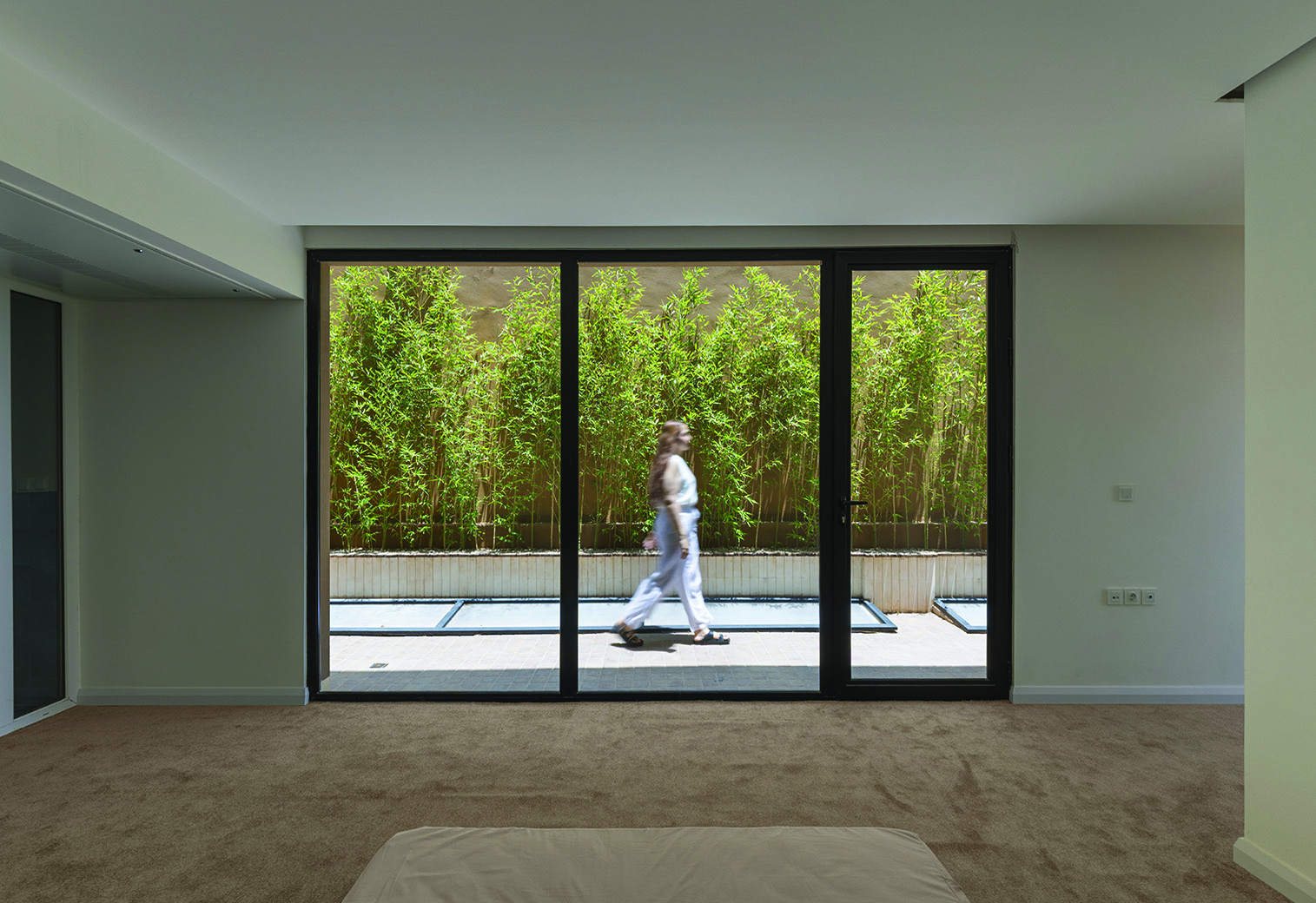
Interior room with large three-panel glass sliding door opening to the side alley, a person walking past bamboo planting outside
Full-height glass doors dissolve the boundary between interior and alleyway
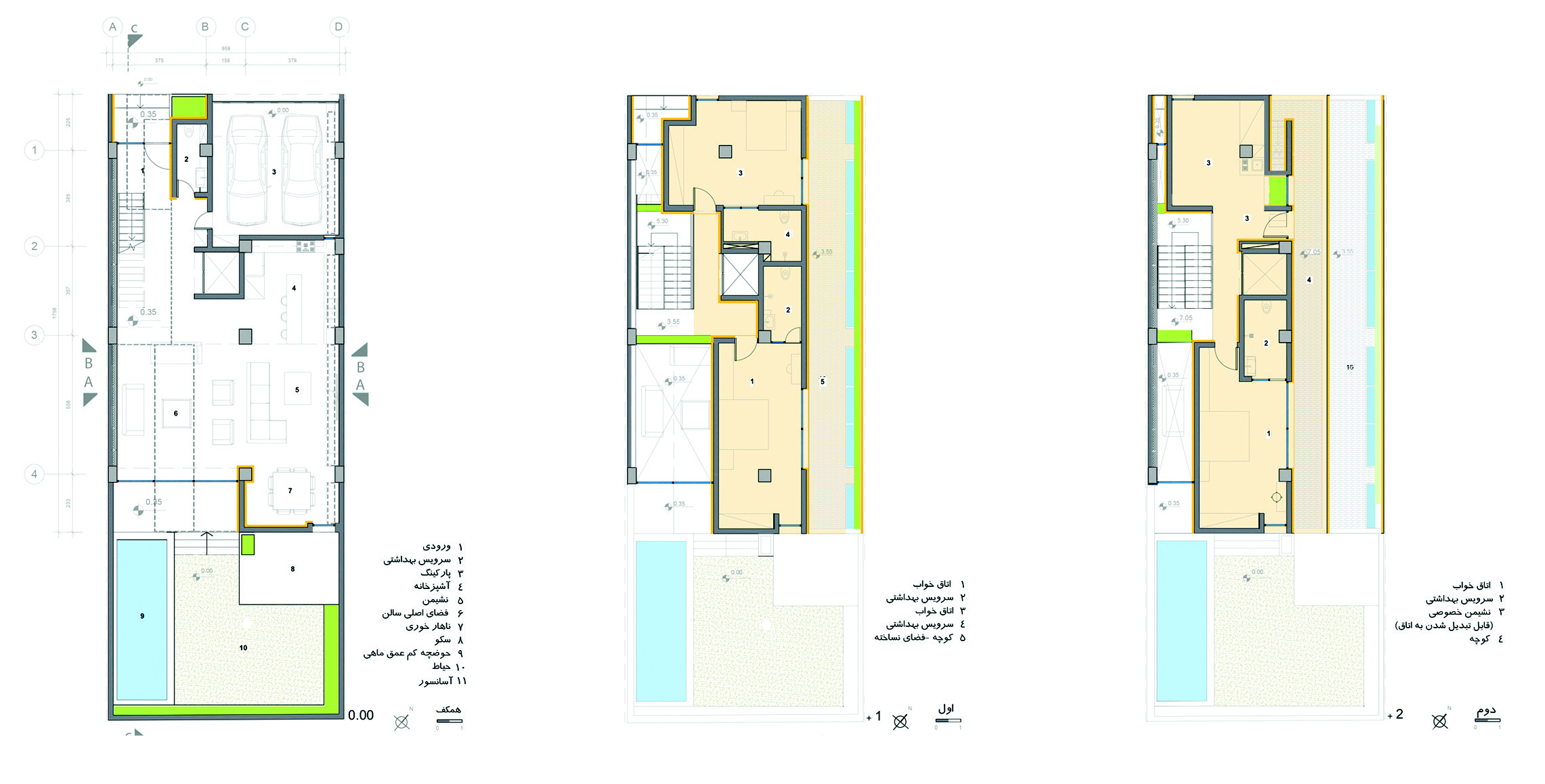
Floor plans of Nim Rokh — ground floor with parking, kitchen, living room, dining, and courtyard; first floor with bedrooms; second floor with bedrooms and terrace
Floor plans — ground floor (left), first floor (centre), second floor (right)

Related in Architecture Database