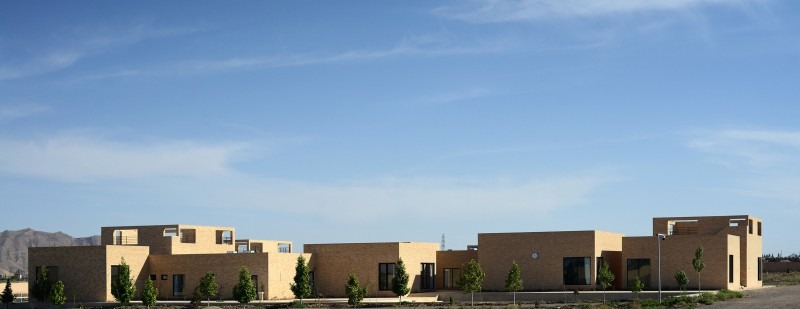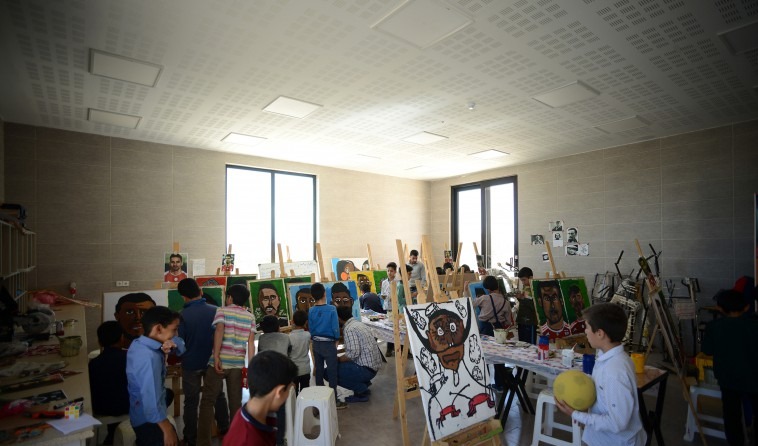
When we think about education, we usually picture schools in their traditional, formal sense. Most people believe that true learning can only take place in formal classrooms. Others think learning happens in any form and any environment. The Noor-e Mobin charity educational foundation, drawing on a particular educational system and the creation of an open learning space for children, has built a ground in which freedom of action for the foundation's students is essential. The foundation does not charge tuition and strives to reach the highest educational and developmental standards of the day.
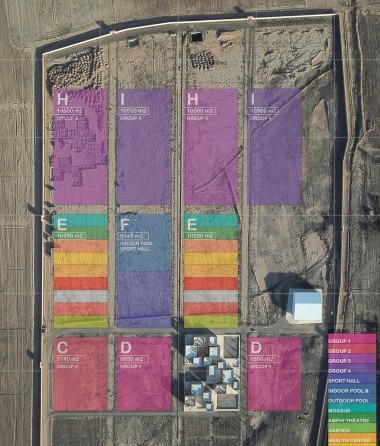
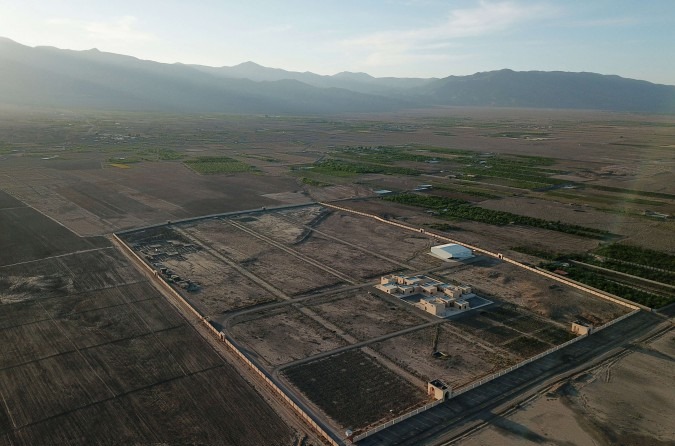
The project site lies in a 28-hectare plot in the town of Bastam, a district of Shahroud. The site has a master plan that includes a range of future uses, all in service of the formation of the Noor-e Mobin educational complex.
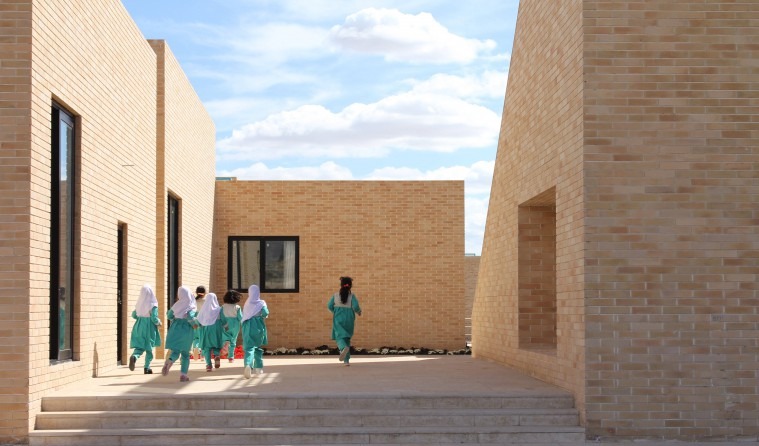
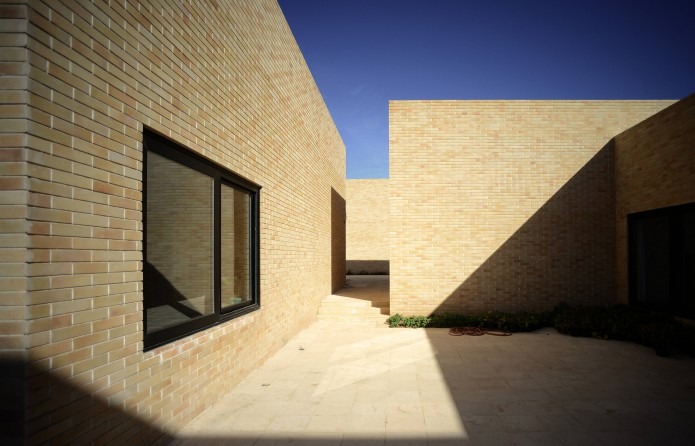
In designing this school we encountered a brief unlike any of the schools we had attended or studied. One could say that everything we had experienced of the school system at our own schools was present, but seen with a different eye. By multiplying the programme into independent, well-defined volumes, the school's educational building has been transformed into educational neighbourhoods. Like an urban neighbourhood, this educational neighbourhood includes varied views and vantages, green areas, playgrounds and rest spaces. Students in this three-class cluster enter a level of interaction tied to a sense of belonging to and ownership of space and to the emergence of neighbourly feelings and exchanges — engaging with intermediate spatial relations and with things to which they hold different degrees of attachment.
While placement at different levels offers students a variety of views, the same partition of the outlook across these levels means that, settling in at each tier, students meet a different visual variety in their environment and surroundings. Vantage and view in this educational neighbourhood thus take shape across three levels: the playgrounds, the courtyard floor and the roof.