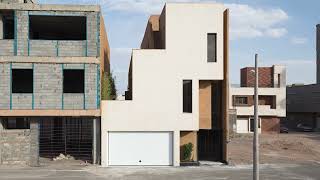
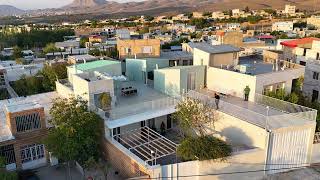
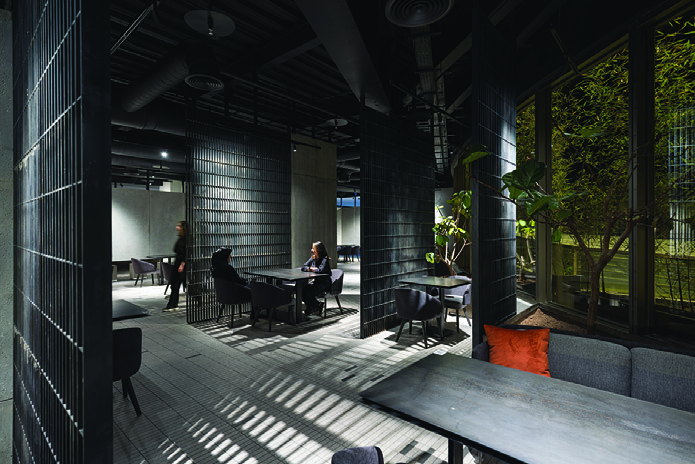
In the issue before you, in addition to some projects from the jury of the 10th Memar Award, a number of works by young Iranian architects have been introduced many of whom have received the Memar Award in previous years: two residential projects by “Bonsar Architecture Studio” and “Digar Architects”, the design and fit-out of the Memar Offices by Zav Design & Build Company, an industrial design project by Alireza Borhan Haghighi and Babak Rostamian which was selected at the Los Angeles Industrial Design Show and a number of other projects. This selection is in line with the main topic presented in this issue’s “In the World” section which introduces the winners of Architectural Review’s Emerging Architecture competition and a number of experimental projects from the Detail Journal. Further comparisons can be made through comparative discus- sions or specialised qualitative analyses between the projects introduced in the “In the World” section and the works of Iranian architects, however, one particular similarity is evident even to the non-specialist observers: the overall focus of these projects, whether here or abroad, is on resolving objective and actual issues and not theoretic and intellectual matters; objective and concrete issues that are not limited to functional matters but encompass all aspects of design including aesthetic and formal concerns, which probably rep- resent the most intellectual and theoretic side of architectural design. We experienced a deeper understanding of this approach during the design and fit-out of our office. The designers developed their initial proposal based on the following: - Our suggestion to incorporate the furniture into the architectural fabric of the office, as seen in old Iranian architecture, particularly as the new space was almost half that of our old offices - Questionnaires that had been prepared to identify required furniture and equipment, how they are used, and the space and area allocated to each person. Later when the work was complete we discovered that the formal design of all elements including walls, doors, mechanical service ducts, kitchen facilities (which was changed completely), tables and bookshelves, cupboards and partitions were designed coordinated with our activities while at the same time showing no signs of known styles as modernism, postmodernism or any other “ism”. Another important factor is that the construction of furniture, in the Zav workshop was carried through a number of experiments, which in turn demonstrates a clear tendency towards an experimen- tal creativity discussed in detail in the two articles in this issue: “The Joy of Experience” and “A Revolution in Choice”. The same trend appears on a larger scale in the winter and Summer House project by Alireza Taghaboni, Mohammad Majidi’s residential complex built on a steep hill and a number of other works introduced in this issue. This fondness for freedom from preconceptions and theories and a return to real life as a source for creativity demonstrated by our younger generation is clearly evident not only in architecture but also in other subject matters where I have more or less been following new trends and movements, such as fiction, painting, documentary cinema; it appears this trend is developing in step with the power- ful anti-ideology movement, a characteristic that is alien to, but also pleasant for our generation who was effectively brought up on theories and ideologies. It is as if one has suddenly been set free from a tight clothing.
Our Young Generation, Today