The question "where do we come from and where are we going" has always been part of human nature.
When humans fall into spiritual crises and the anxiety of the future pervades their being, they naturally revisit their childhood years. Human societies, too, in times of profound cultural crises — when the standards of good and bad have collapsed — turn to the search for their cultural roots and the course of the past.
Architecture is likewise affected by such social conditions. The architect wants to know what the standards for judging good and bad architecture are. Of course, excellent architecture holds its own special place. In all cultures, when one speaks of excellent prose, painting, design, and architecture, the quality is described as "poetic."
The earliest ancient Iranian texts, including the Yashts, are essentially poetic in nature, and were recited as hymns. In truth, the ancient Persian language was shaped by poets — the first example of modern Persian should be sought in the poems of Rudaki, not of philosophers. The Iranian worldview has been poetic from the very beginning.
In this issue, we have tried to present a general picture of the course of developments from the cave-dwelling era to approximately 3,000 years ago, when the Zoroastrian religion spread. In some cases, we have also addressed the architecture of buildings constructed after this period, but which are influenced by ideas from more ancient times. We had planned additional articles on this subject, but they did not reach the printing stage due to commitments related to the Memar Award 1403, and will be published in the future.
Finally, a piece subtitled "Yellow Light and Blue Shadow," about a work by Louis Kahn, has been included because of its relevance to this issue's theme: Kahn was among those modern architects in whose mind archetypes flowed and influenced his work.
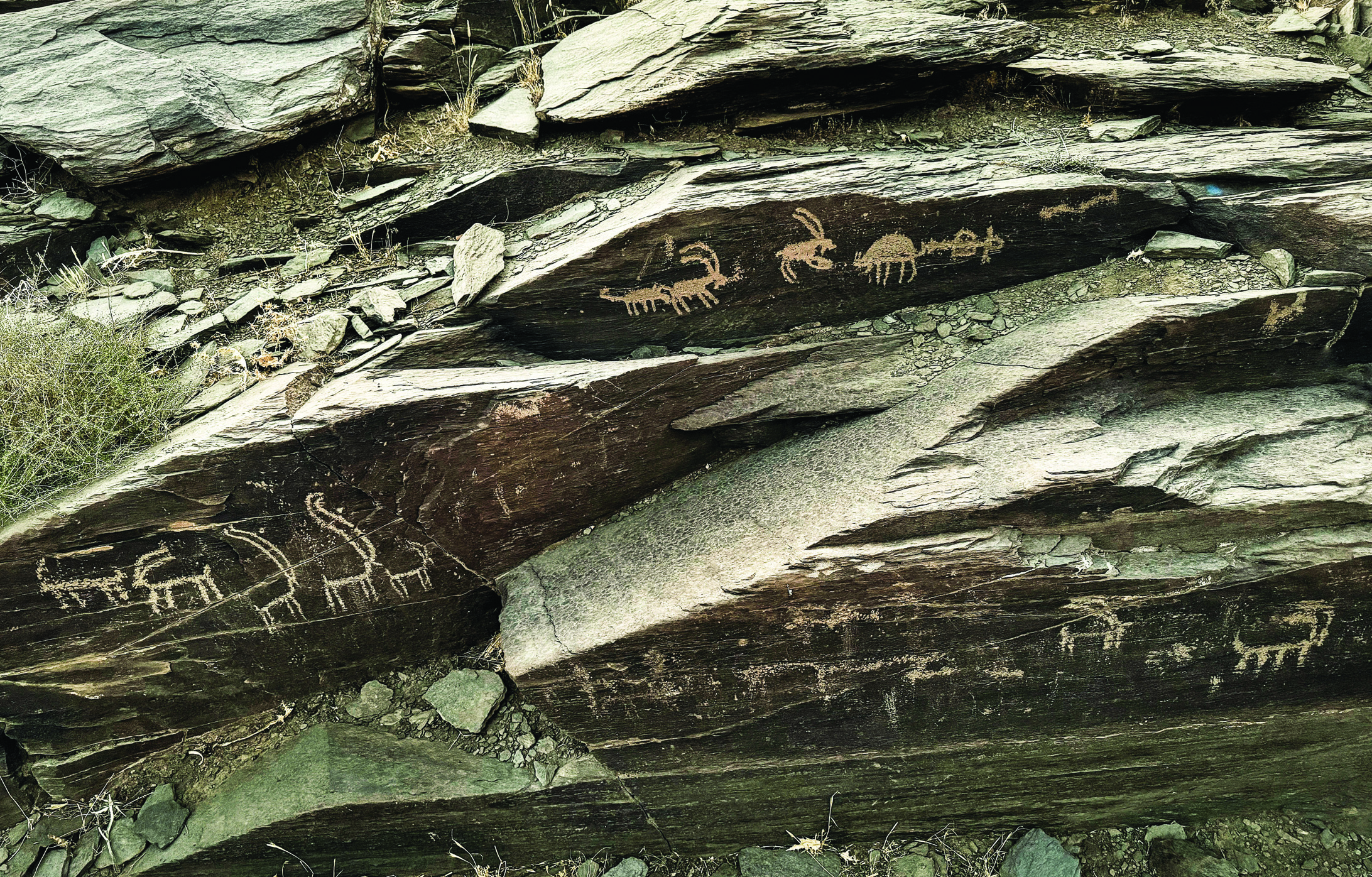
Given all that has been said, it is natural that we begin this issue with an article on the rock art of Greater Iran.

* The title is from a story by the late Soheila Beski.



