Interview by Soren Larsson, Architectural Record, Issue 5, 1998
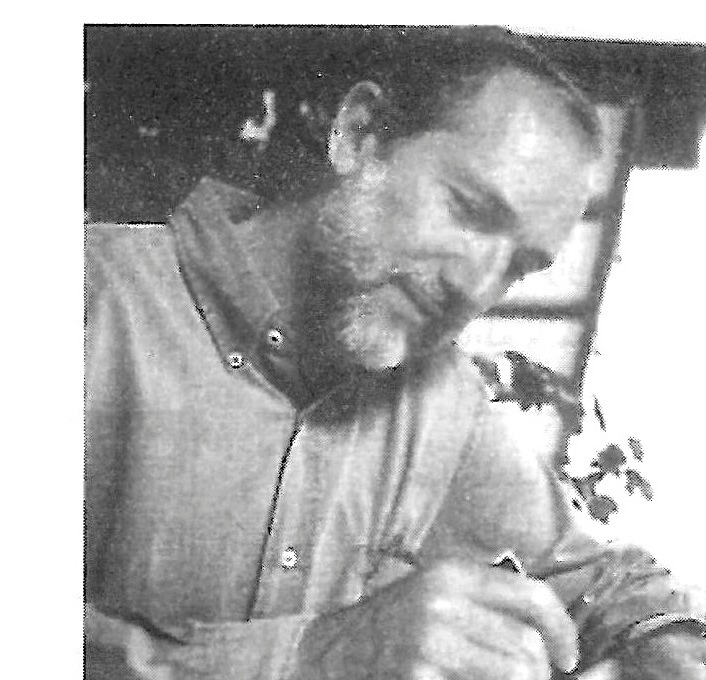
Renzo Piano, winner of this year's (1998) Pritzker Prize -- perhaps not as famous as some, but a great architect -- whose sudden fame came with the inauguration of the Centre Georges Pompidou in Paris in 1976, has since added to his reputation through remarkable endeavors in cities around the world, many of which have been described as futuristic. As he states in this interview, Piano -- who grew up in Genoa and now maintains offices there, in Paris, and in Berlin -- does not consider himself, as has been said, an industrialist architect.
Record: The Pritzker committee called your work "a rare display of the art of architecture and engineering." Are you consciously pursuing such a synthesis?
Piano: Even more than that -- not just engineering, but a love of building is what drives me. As you know, I was born into a family of builders, and I grew up with this kind of love for the large-scale building. At the time, in the late 1960s, my work was purely experimental -- quite raw and to some extent naive. Of course, as one matures, one realizes that architecture is much more than this: architecture is history, geography, it relates to topography, to sociology. But I have always kept my own sensitivity directed toward the other side -- engineering, building, and of course the craft of work.
Record: Was there any particular architect who first influenced you?
Piano: Certainly one of them was Franco Albini. He was one of the great architects of Milan -- he built beautiful things, perhaps not widely known but great. And when I was working with Franco Albini and went to his office only twice a week at most -- I went on to study, then to Paris after the Polytechnic. Later I went to London, and then the competition for the Pompidou came about. I also have great respect for Jean Prouve, and of course for Buckminster Fuller, who was part philosopher, and Charles Eames in the American West. In that era there were many masters.
Record: Which past projects do you have the greatest attachment to?
Piano: Answering this question is difficult, because you tend to feel attached to most of the projects you are currently working on, and gradually forget the ones completed long ago. Soon a cultural center that I have built in New Caledonia will be inaugurated. It is a very interesting project, built of wood. But of course, the "renovation" of Potsdamer Platz is practically complete and we are now engaged in a project in Berlin. The Daimler-Benz office complex -- this is a very intricate project, because it is not merely a building but something akin to building a part of a city.
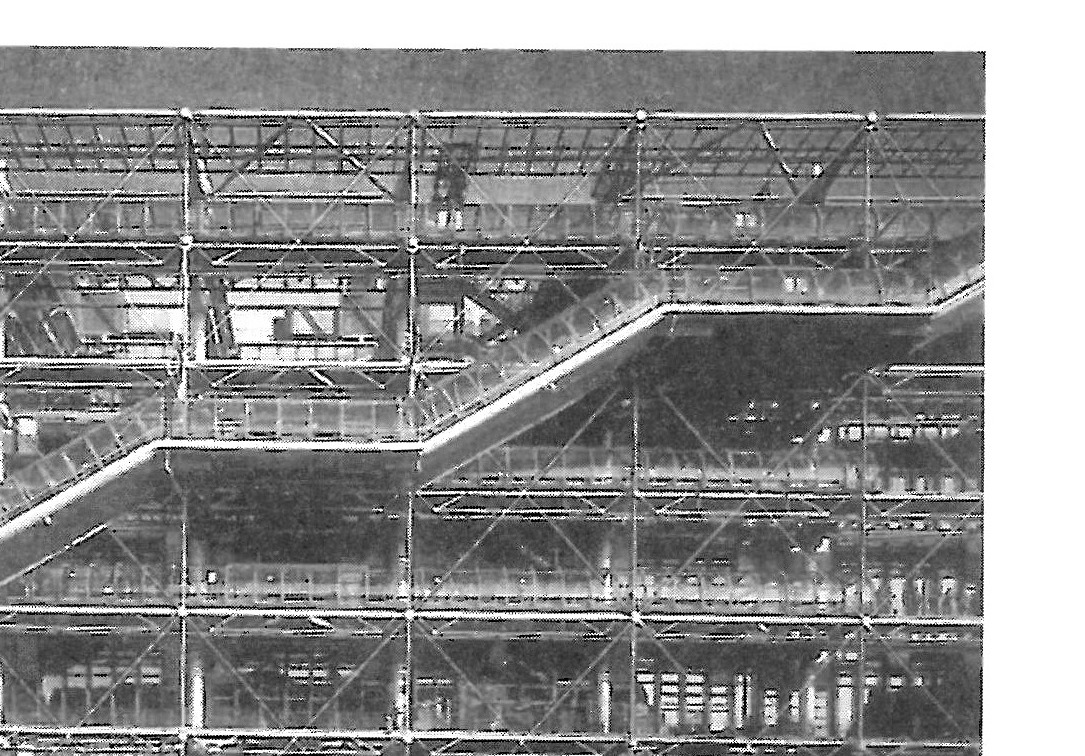
Record: And what is your opinion of the Pompidou Center now?
Piano: I think it was one of the great buildings I built. I think it was very important for the Paris of that era. It was also able to change expectations of what a museum could be. The idea of the museum was very much in flux at the time. The Pompidou Center was a fine example of that moment of change. I think for a while people regarded me as a high-tech architect. And it was the Pompidou Center that made them consider me a high-tech architect. You know how people love to label everything.
Record: And in your opinion, is this particular label accurate?
Piano: Yes, I think so. In my view, this work is more akin to playing the piano. To play the piano, even if you are very talented, you must know the technique -- otherwise you will not succeed. I believe you must master the technique to such a degree that you can forget it. Then your work becomes like playing.
From World Architectural, No. 62, 1997/1998 — Translated by Neda Lankarani
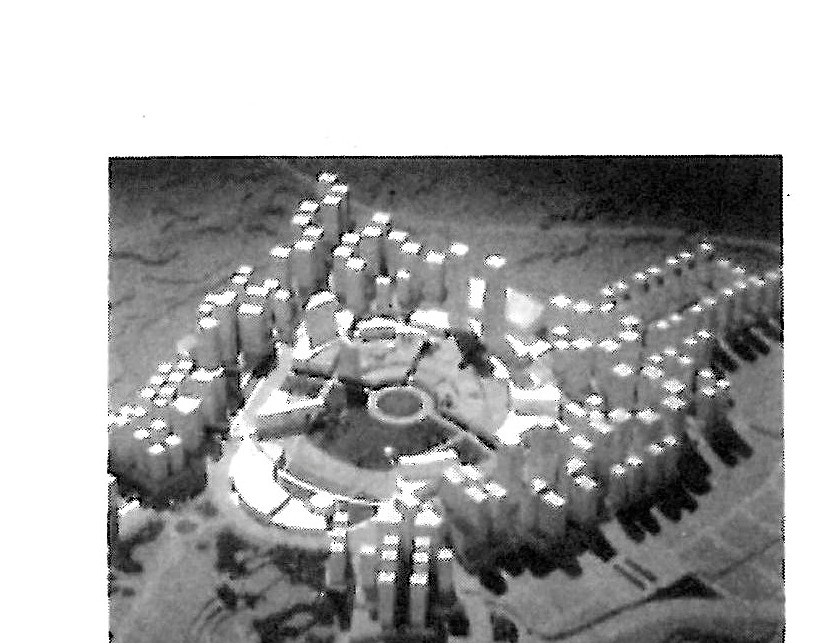
A central district in the capital of the Philippines, Manila, is undergoing a transformation into a new "global city," and this process is expected to take 15 to 20 years.
"Fort Bonifacio," which until recently was a military base in the heart of Manila, is currently being converted into a district with 12.5 million square meters of office, residential, hotel, retail, and entertainment space, with extensive communication services.
Adjacent to the central business district of Metro Manila, Makati, the new Fort Bonifacio masterplan was designed by the world's largest architecture firm, the American group Helmut Obata + Kassabaum (HOK), a company headquartered in Hong Kong. The designs of other cities such as Singapore, Paris, and Vancouver were studied in order to achieve a new city that would serve both as the commercial nucleus of the city and earn the title of the best city in the region.
After the completion of the original masterplan (1996), increasing demand led to sales of 1.1 billion US dollars for an additional 6.1 million square meters of increased density. As a result, six residential condominiums with shared ownership are currently under construction.
From World Architectural, No. 62, 1997/1998 — Translated by Neda Lankarani
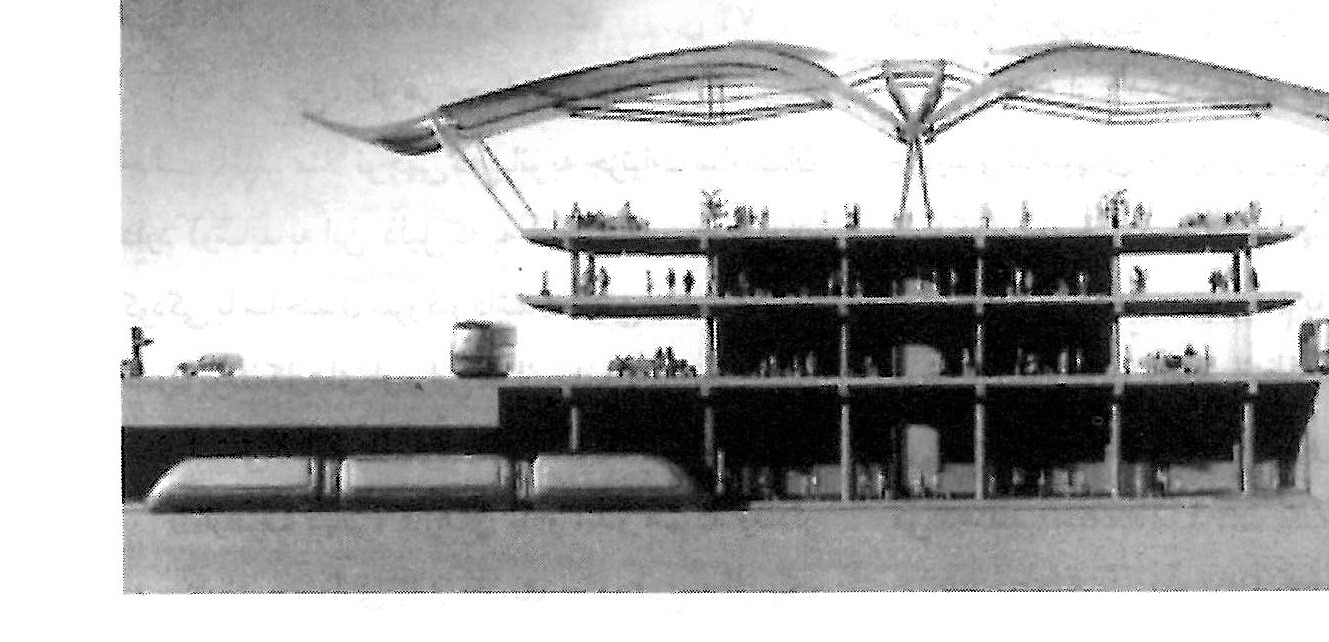
The engineering firm of Richard Rogers Partnership (RRP), together with the local architecture firm Studio Lamela, won the 13.6 billion US dollar (equivalent to 8.3 million pounds) competition for the new international terminal (NAT) at Barajas in Madrid, claiming first place.
Four designs -- from among twenty submissions -- were shortlisted for their outstanding merits. In this shortlist, two conservative Spanish architects were represented: Ricardo Bofill, for the Barcelona airport, and Miguel de Oriol, designer of the underground parking garage opposite the Madrid Opera and the Royal Palace. Santiago Calatrava also received a commendation, although his grandiose design was, according to one board member, "not accepted because the project was very expensive, its construction would take a long time, and it had operational difficulties."
From Architectural Record, Issue 5, 1998
Architectural Record magazine, in its Issue 5 of 1998, published a comprehensive report on the awards and commendations of the 1998 American Institute of Architects (AIA). These awards and commendations are given in four fields: architecture, interior design, urban design, and architectural institutions. A special award for the best 25-year-old architecture is also given, which in this round went to a work by Louis Kahn.
As described below, William J.R. Curtis, the English author of the latest book on modern architecture, was invited by the magazine to provide his assessment of what these awards and commendations reveal about the state of American architecture today.
Having recently completed the revision of his landmark 1982 book, Modern Architecture Since 1900 -- which is essentially a rewriting of his views on the history of modern architecture -- Curtis has suitable credentials for this task. Curtis interestingly describes the difference in approach and method between American architects and their counterparts in the developed countries of Europe and Asia. The most important of these observations concerns designs relating to the public realm and situations in which American architects employ (or do not employ) new forms. He also examines the relationship of American designers with history, technology, consumer awareness, and attitudes toward nature.



