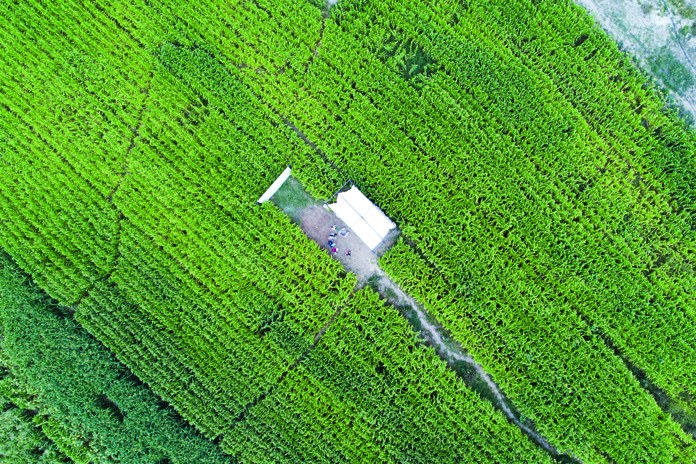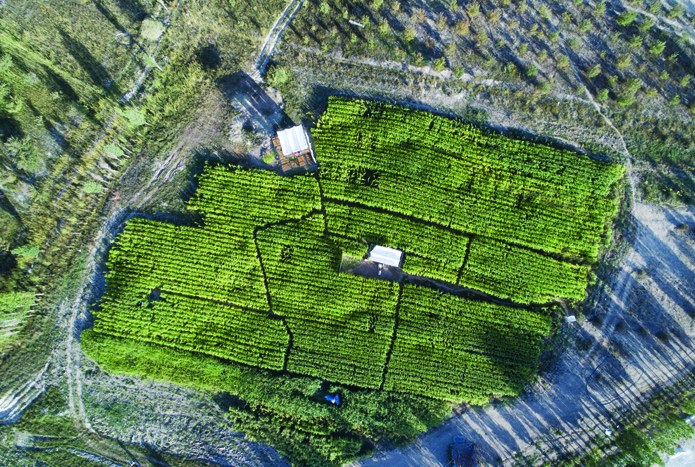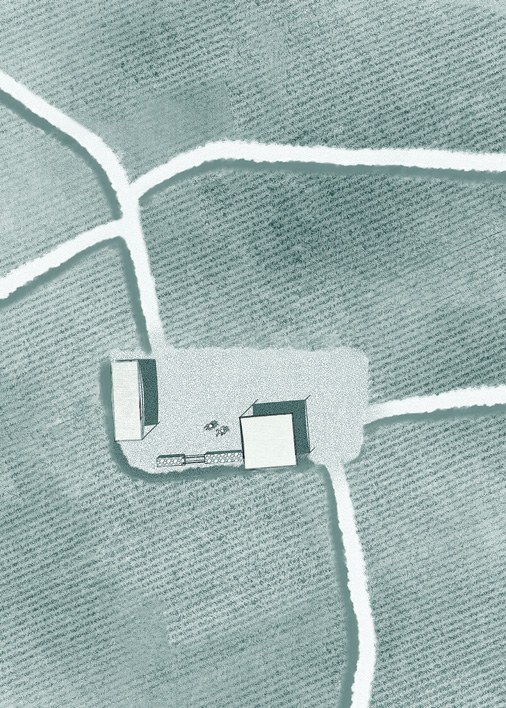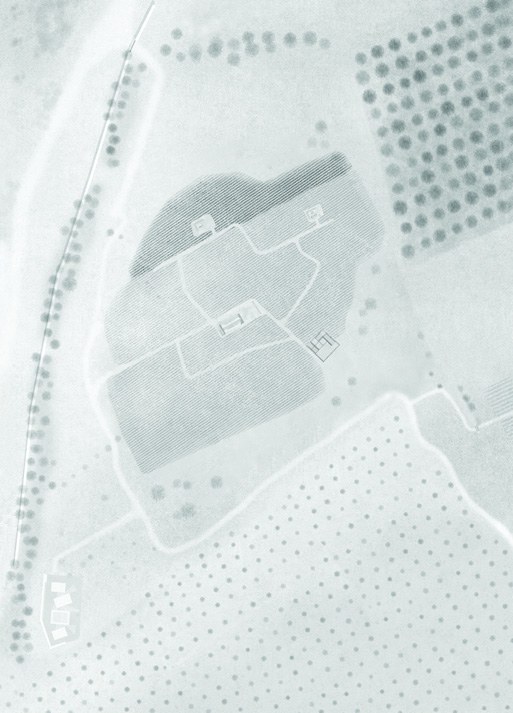
In the highlands of north-west Fars (Sepidan county), a few minutes after passing the village of Komehr, a plot called Poonehzaar, with an area of about five hectares, lies in a wide valley, where a leisure/residential project is to take shape in the form of various scenarios. Poonehzaar is formed by the amalgamation of several plots with different characters, such as an apple orchard, a meadow and a poplar grove, a spring and a farm, next to a river. Our proposal in the main project was to divide these plots and distribute different ideas among them in order to achieve the main aim of the project.
Our questions in the farm part were: how can we, by highlighting the features of this part and emphasising the natural values of the landscape, engage the users with the space there in a new way? With the aim of reducing the share of construction spread across the site and defining a setting for events and social activities to take shape, how can we take a step in favour of the long-term aims of the main project?
Next, the idea of adapting the labyrinth in the farm part, as a space for experience and discovery, was put forward. By intertwining subjects such as events, festivals or collaborative work, this idea could every year make a six-month period a setting for social interactions to take shape, and the other six months an opportunity for breathing, planning and negotiating with possible applicants and organisers of different events. Flexibility in planting and in the techniques of making space allowed it, given unpredictable conditions, to be ready to receive new forms of relationships and happenings and to stay away from repetition. So this part of the project is a temporary and flexible situation within a more general and comprehensive plan centred on the subject of leisure and temporary stay.
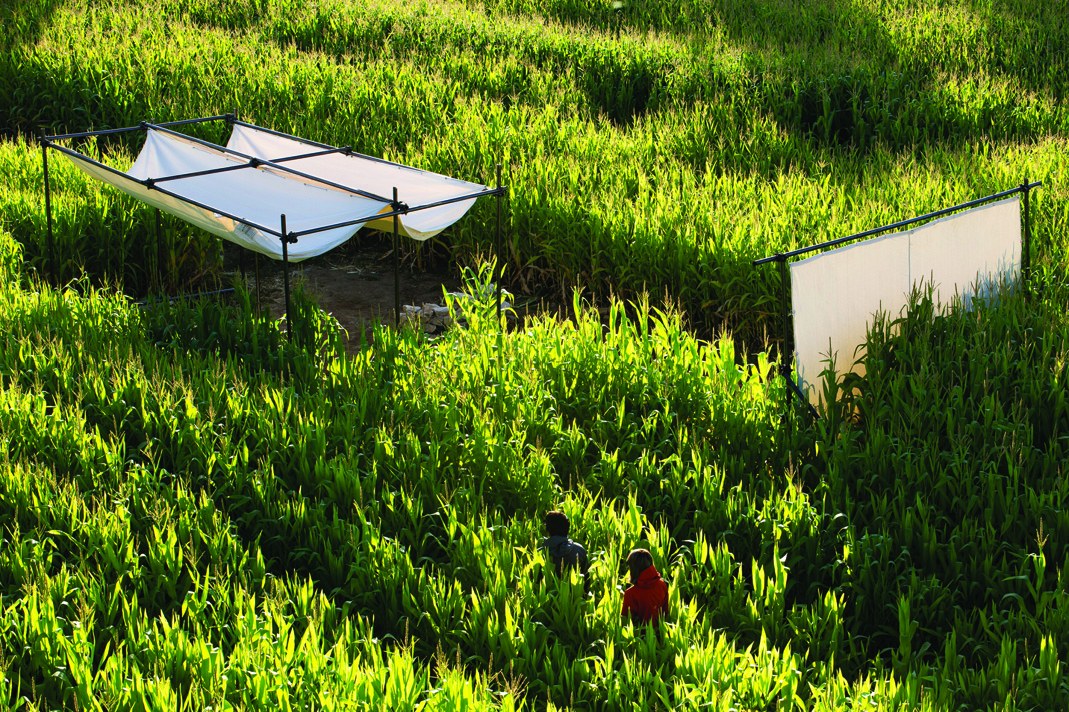
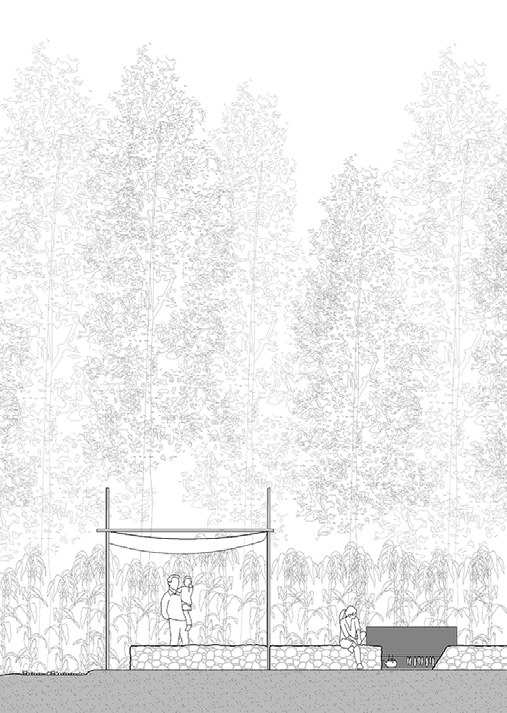
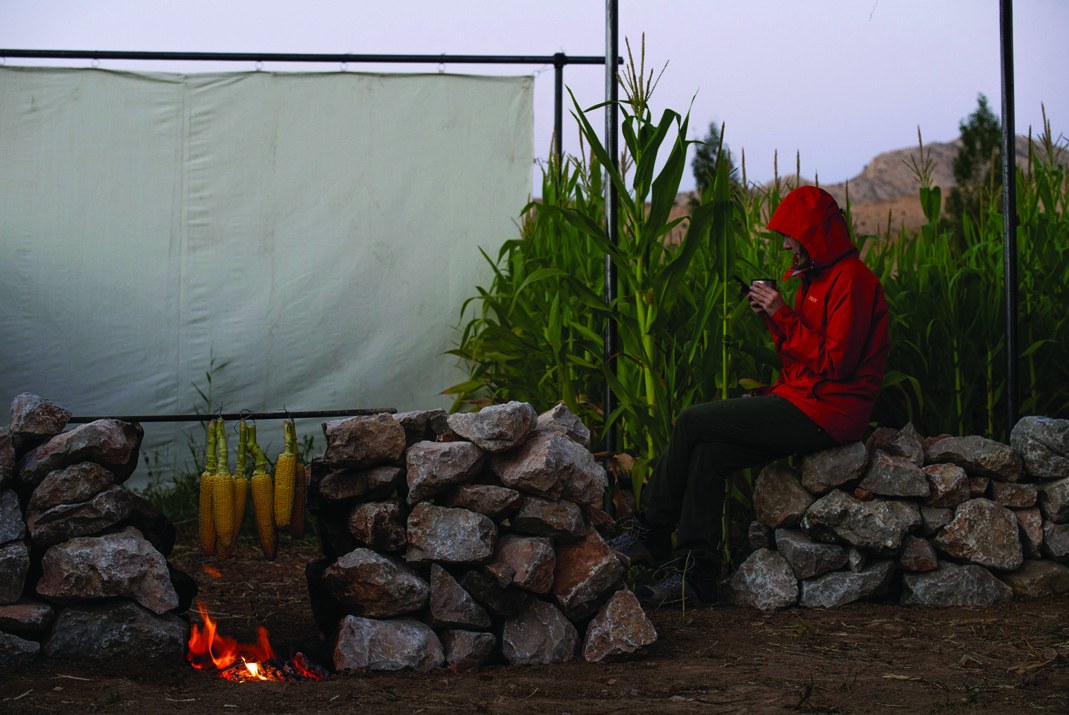
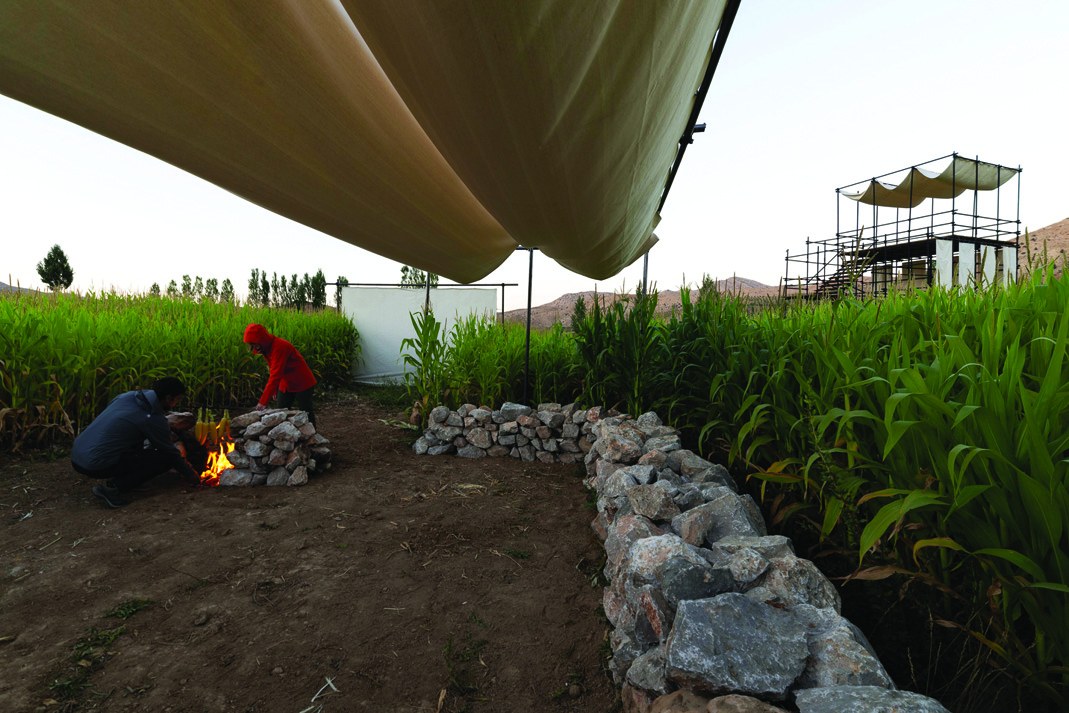
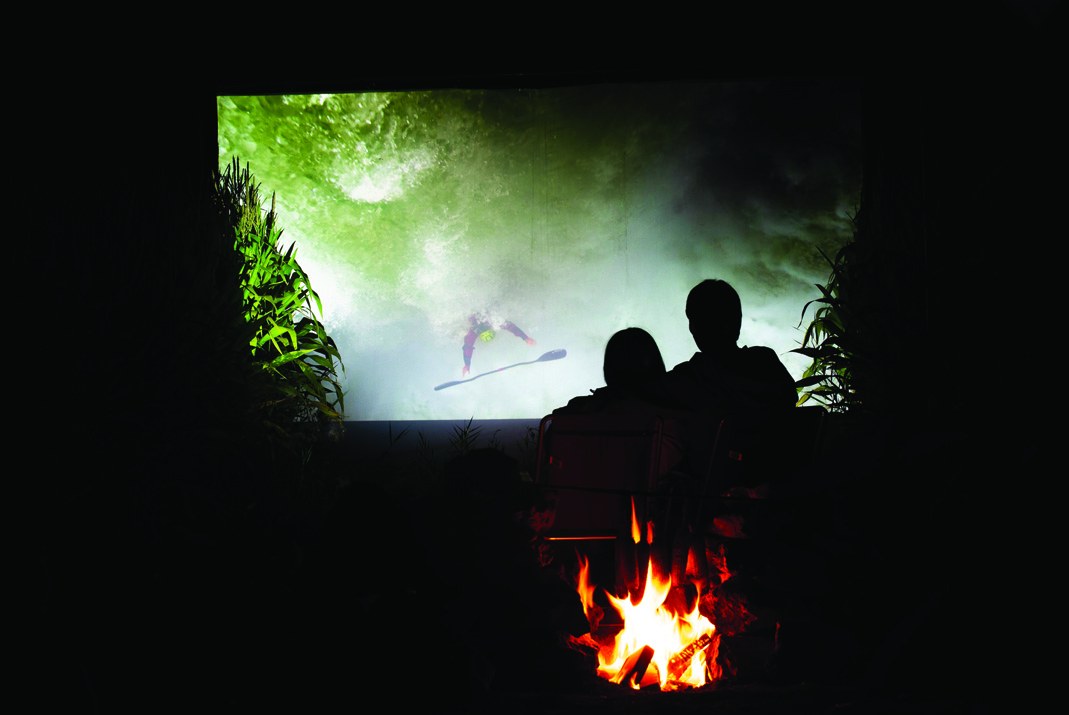
With a new definition of the room in the landscape, or in other words a "field room", we went on to shape the ideas in the farm. First we arrived at the definition of a "collective space" in the heart of the cultivated area, a place that could, with the necessary flexibility, play an active and strong role for gatherings and film screenings, by day and by night. Among our five proposals for creating voids or rooms in the farm, this part came first, and after passing the entrance part and going through the corridor we would find our way to this part.
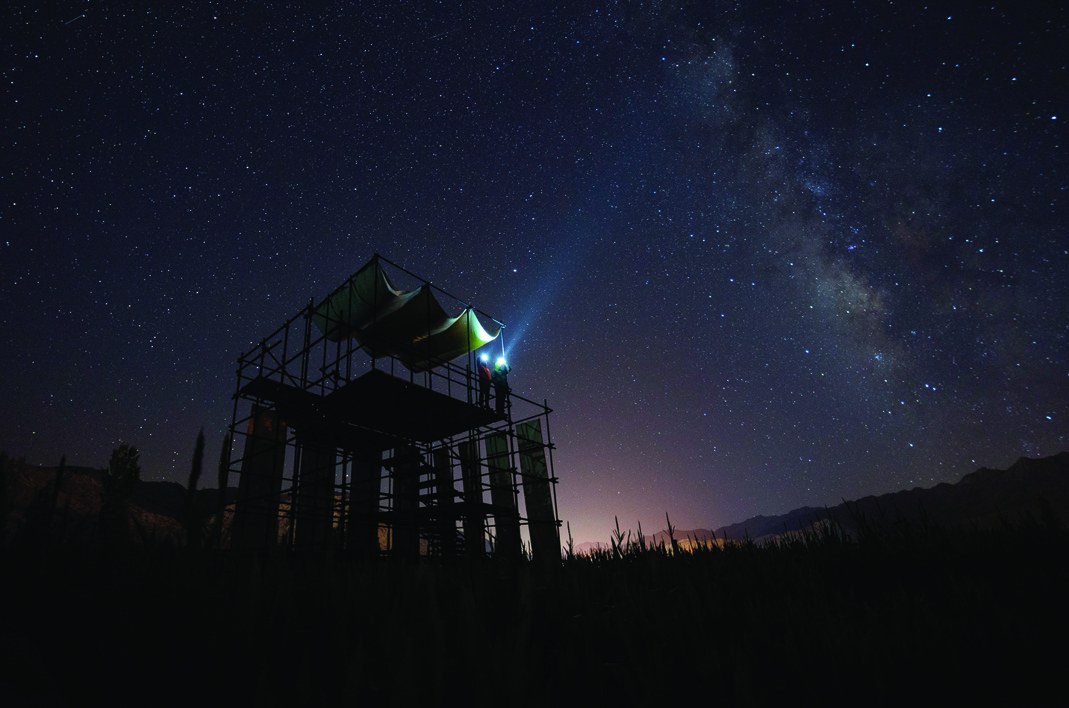
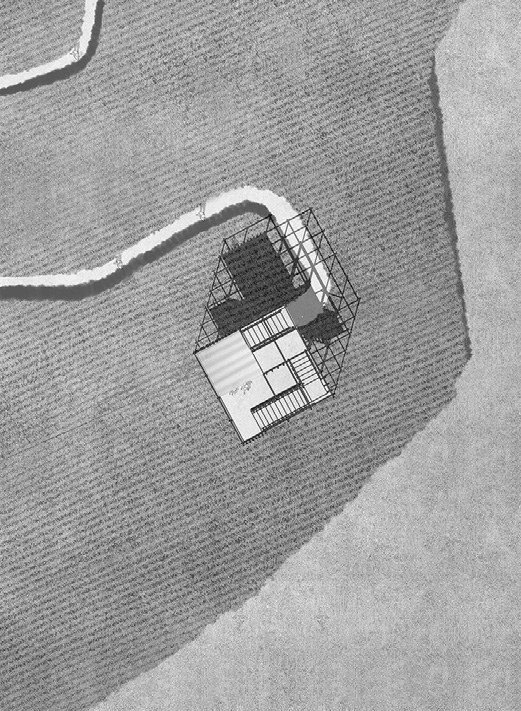
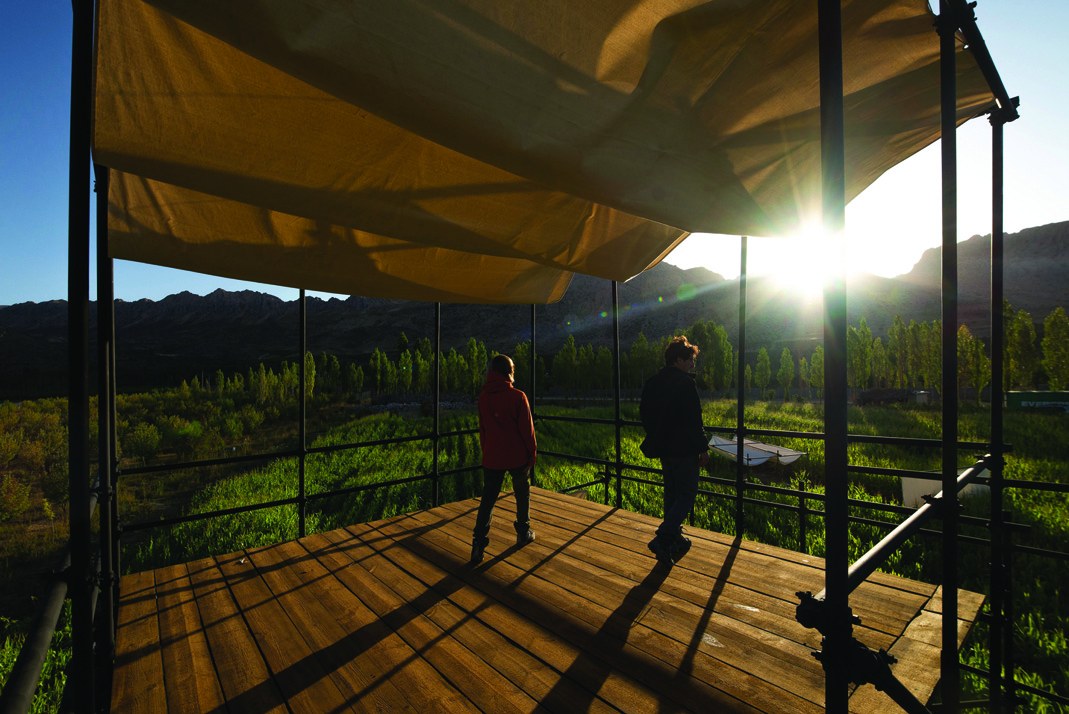
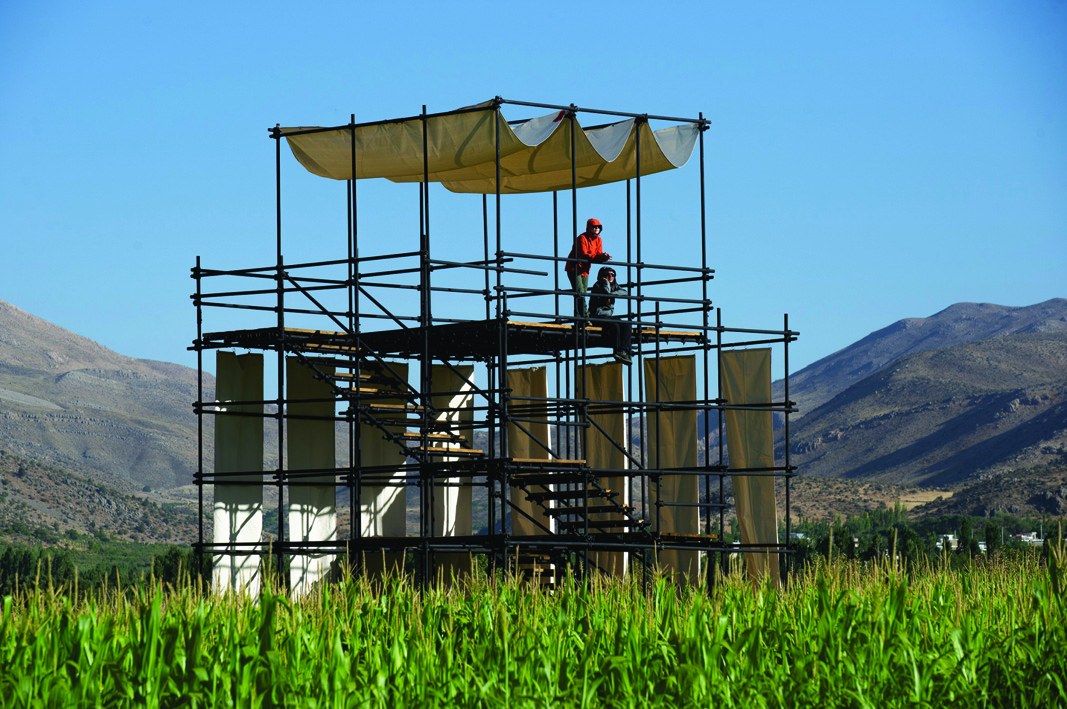
In the second part of the work, with the possibility that a metal structure (scaffolding) gave us, we could imagine ourselves in a position where we watch the landscape from a high platform.
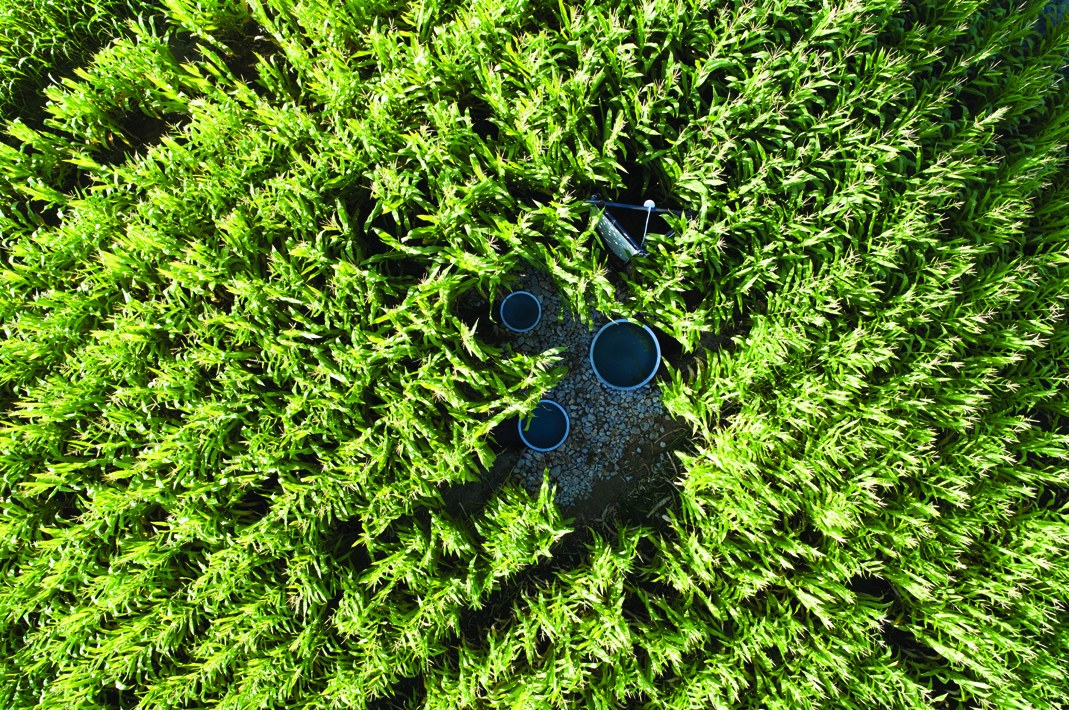
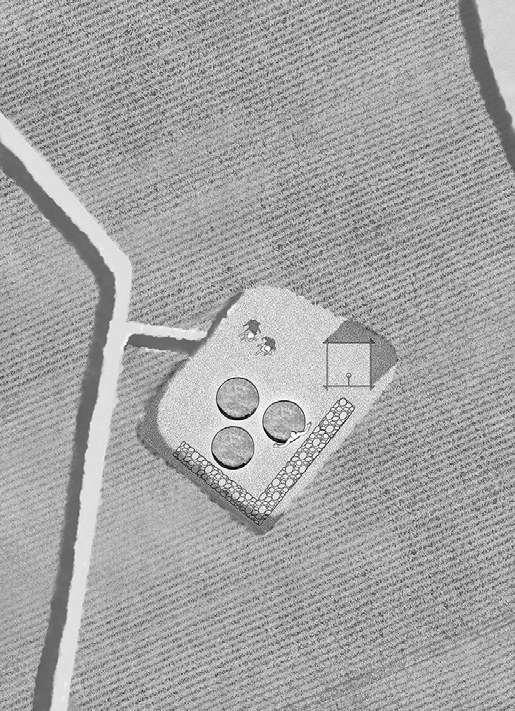
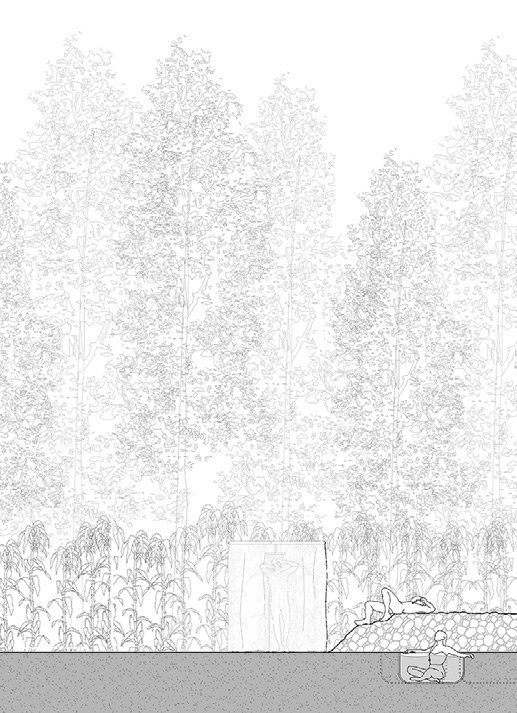
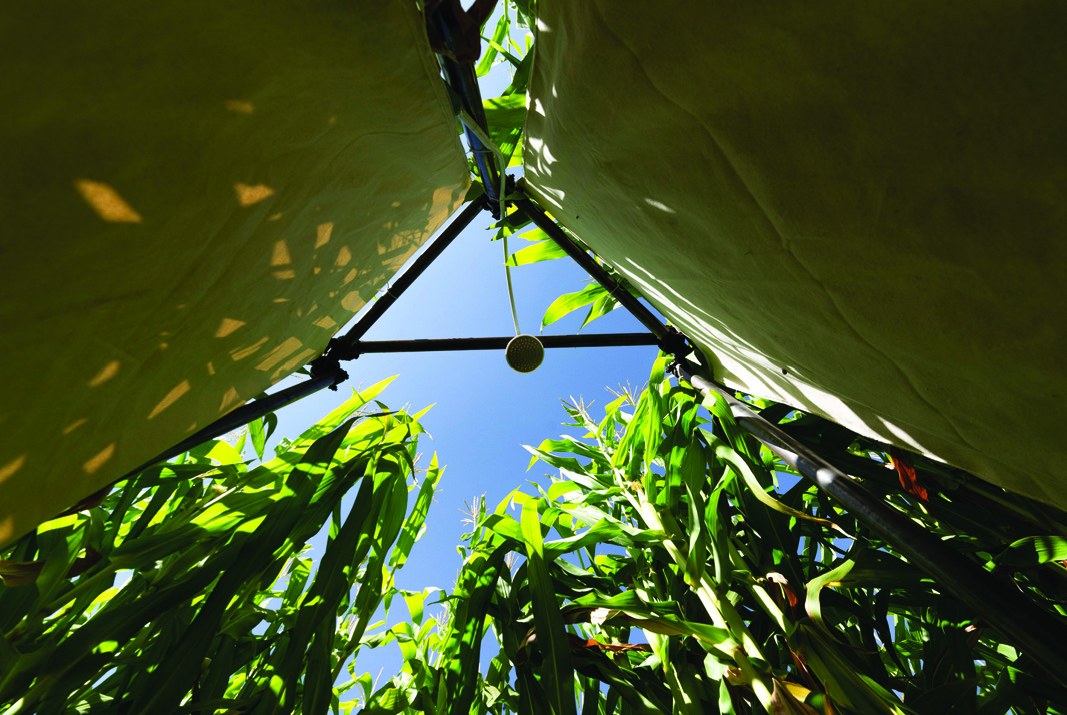
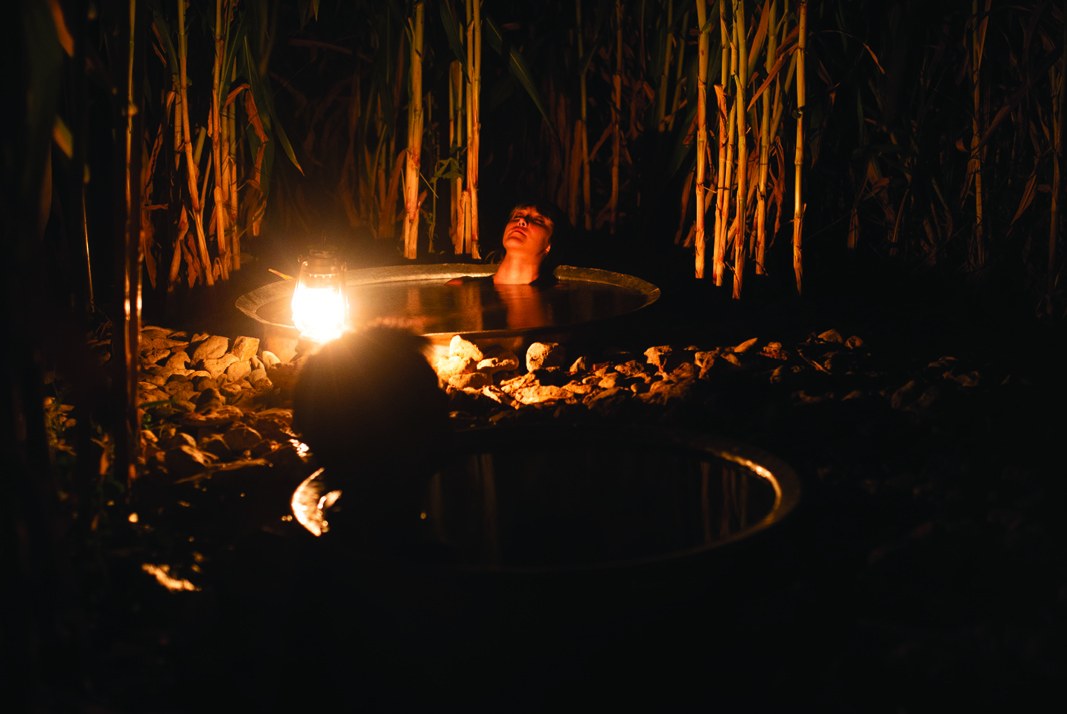
The third space is the proposal of a summer bath that makes bathing possible in an unconventional way in the farm: sitting in water-filled cauldrons buried in the soil. A place for immersion and night-time daydreaming.
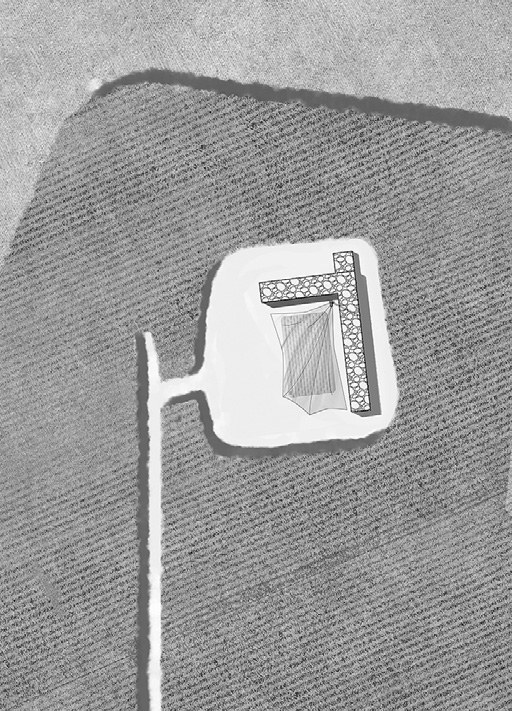
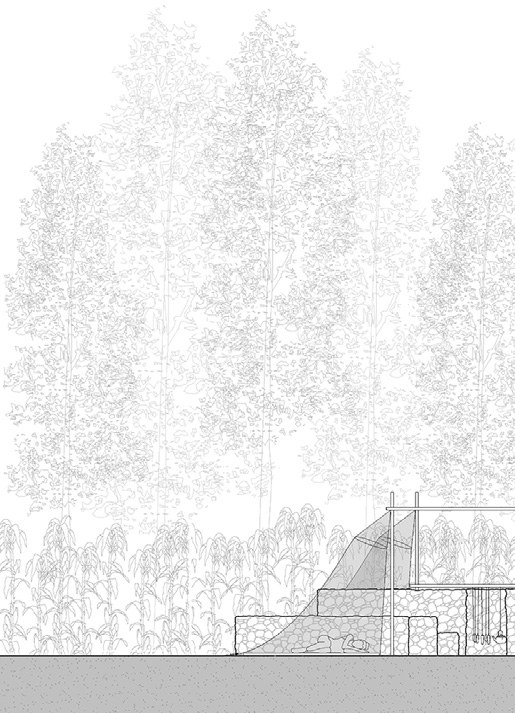
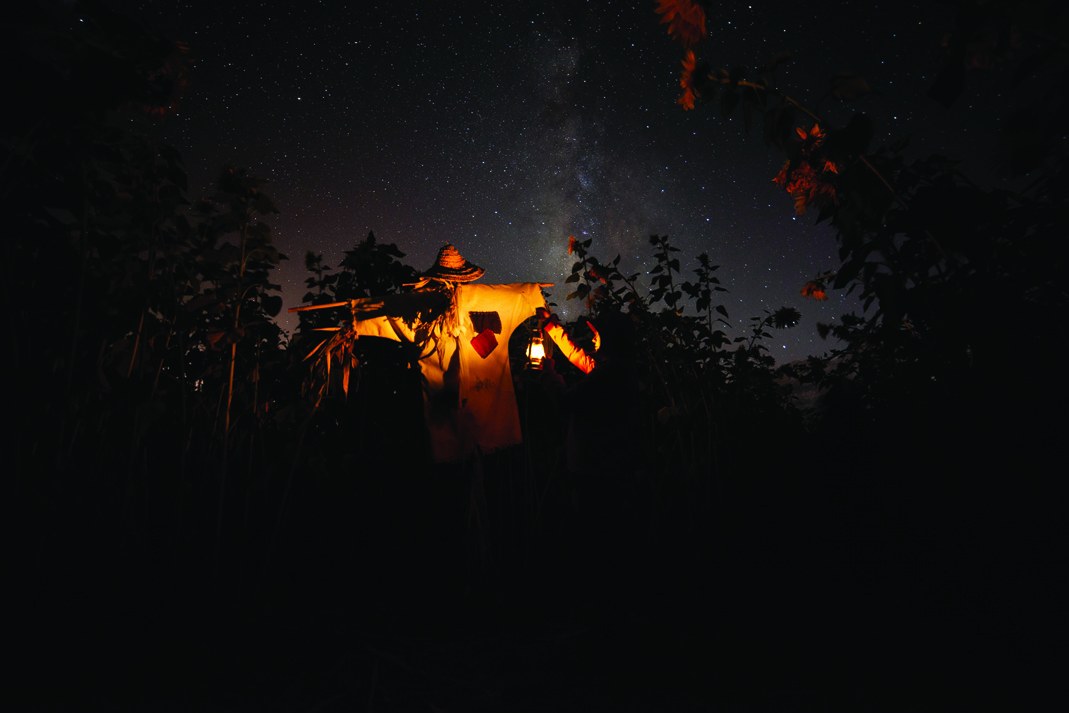
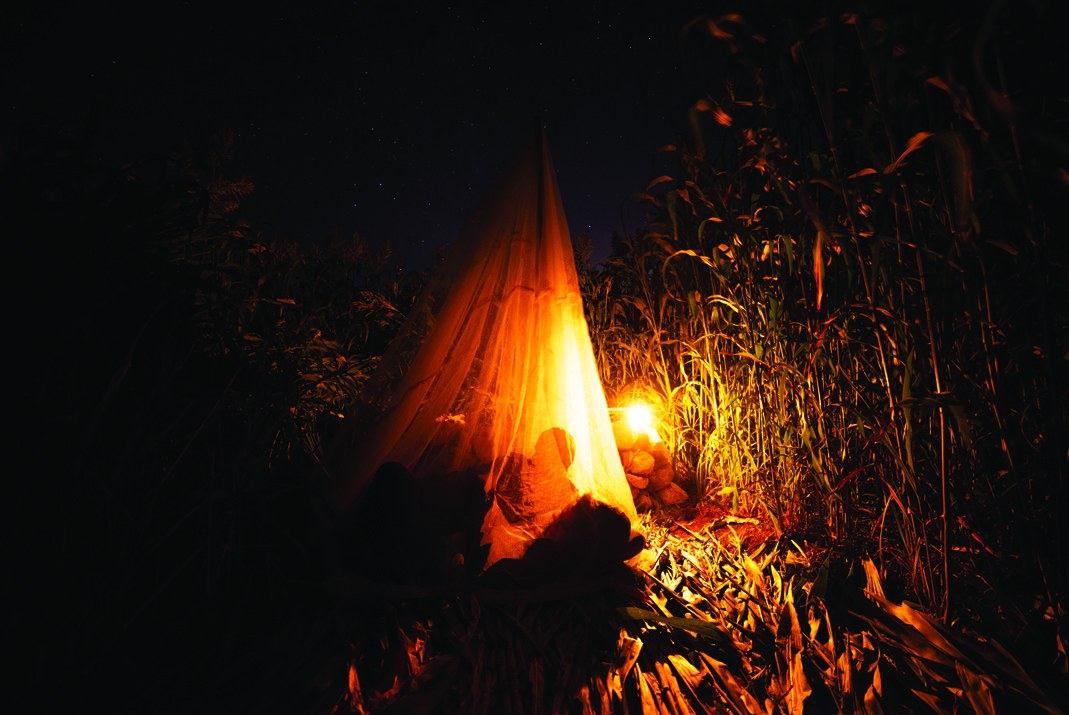
The fourth space is a place for spending the night among the corn in the most minimal way possible: a basic room with a mosquito net and a low stone wall. A chance for unmediated contact with the boundless night sky, mingled with illusion and silence.
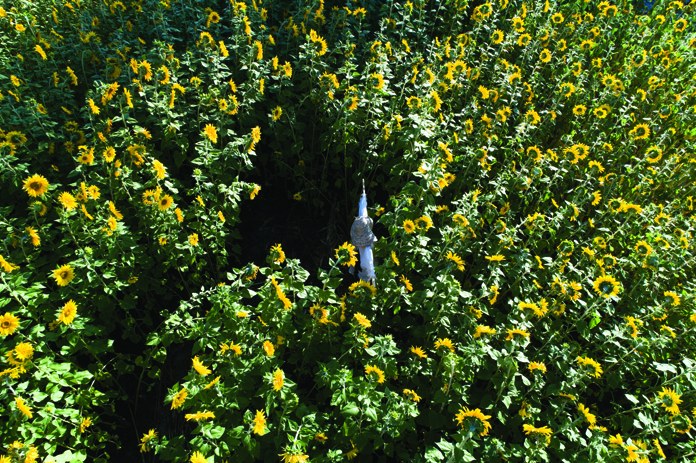
The fifth space is the sunflower field, which took shape at the edge of the cornfield. Distinct from the character of the corn, it at the same time added a magical situation to the whole of the design. A place for play and playfulness.
The method of work was that some time after the corn was planted, the spaces of the rooms were created by pruning the corn. To complete each small space we used fabric, scaffolding, netting and stone. We used the existing stones, laid dry, to create the boundary of each room. Given the uncertain and unknown state of the project, the design team took an active part in building the spaces, and the process of the work, from ideation to action, took shape as a participatory and collective activity.
Assuming that architecture can be an opportunity for opening new windows, in this crisis of collective experiences we tried, while thinking, to distance ourselves from the conventional dos and don'ts and, by challenging the logical world, to strive to discover different and unusual realms. The farm is full of new moments, and the main feature of the project is unknownness. By offering a new version of the room in the landscape, the project constantly leads the people within it into a space of searching and discovery. Given the daily changes of the farm, the project invites its users to a deeper understanding of time and of their relation to nature, perhaps something like a window onto an ever-changing world.