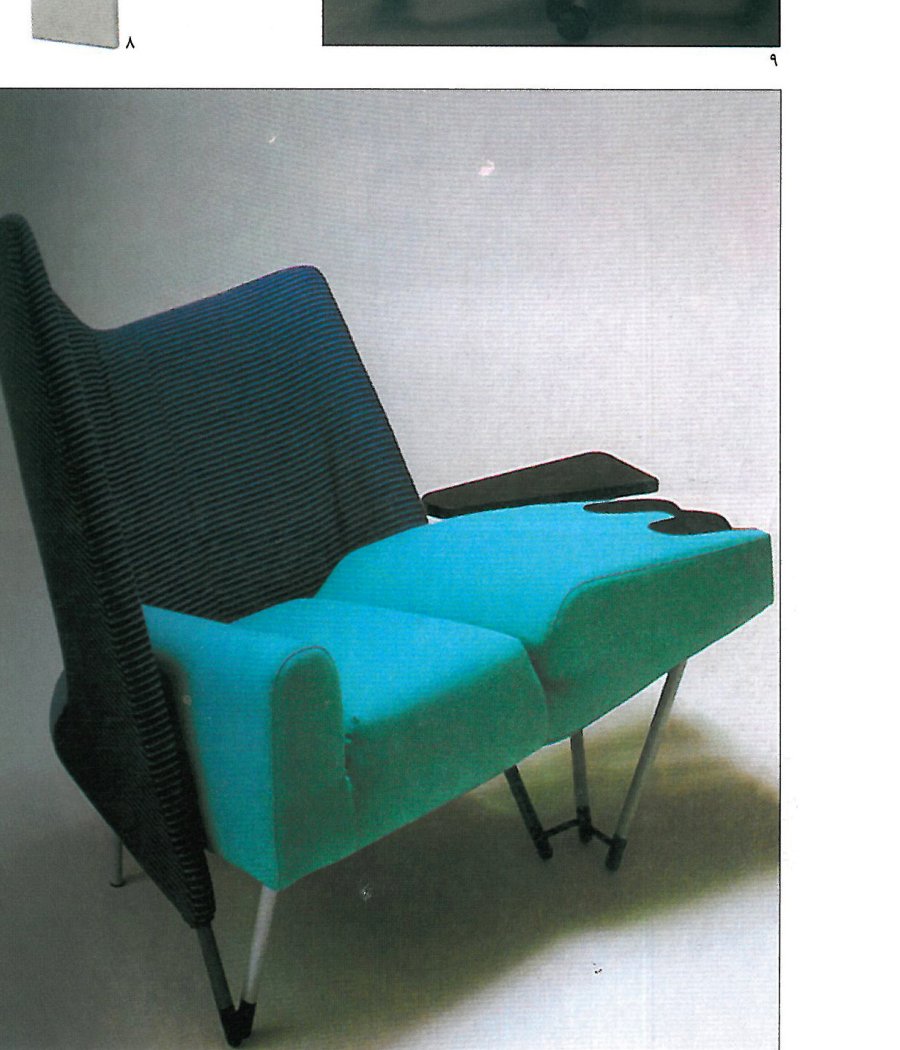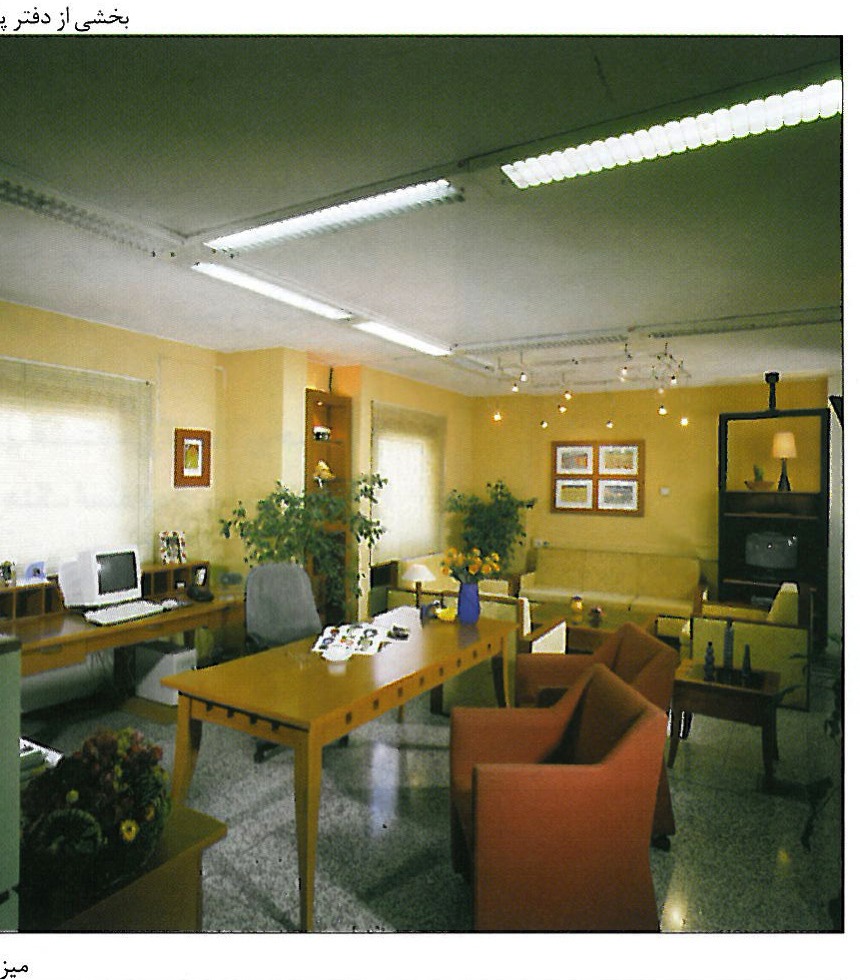
With the decline of Modernism's influence in the late 1950s and the expansion of consumer culture, the thinking that dominated design began to shift. While the Museum of Modern Art in New York was devoted to certifying and showing works of "Good Design," an alternative American culture was spreading rapidly through the industrial societies of the world by means of Hollywood films, advertising and pop music. In this period Pop Art emerged as the leading force in the fine arts and other fields of design. The movement was based on the simulation of consumerism and of the popular culture of advertising, packaging and television imagery.
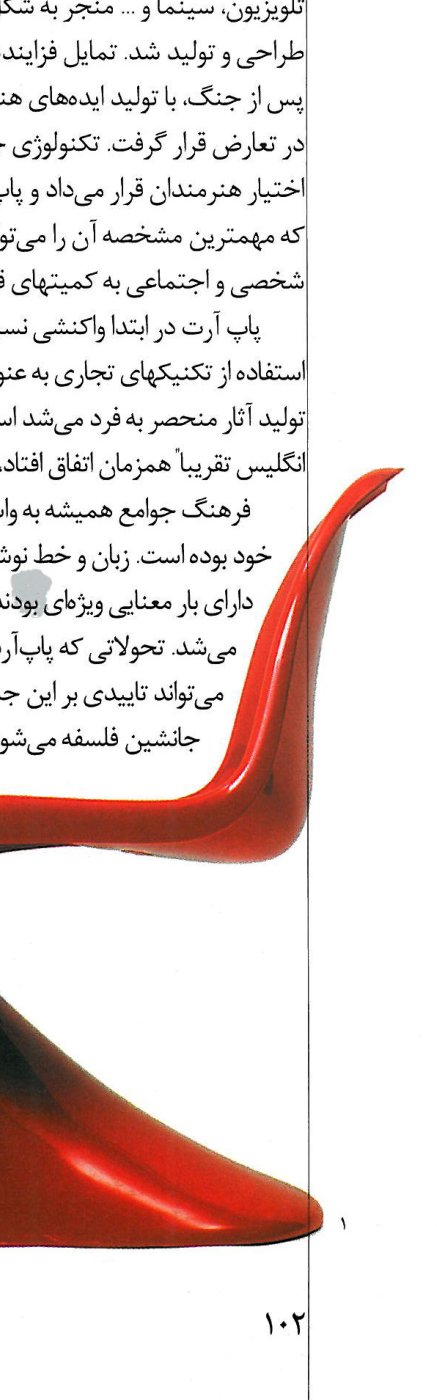
The new social structure produced by the expansion of communication tools — the transmission of the image (television), the limitless possibilities of shaping and mass-producing industrial goods in cheap new polymer materials — and the influence of new instruments such as advertisements, roadside billboards, commercial illustration, comic strips, television and cinema, led to the formation of a certain casualness towards art, and consequently towards design and production. The rising appetite for consumption — the main feature of postwar affluent American society — came sharply into conflict with the idea of producing art as unique, one-off pieces. New technology put the reproduction of art works in whatever quantity the artist wanted at their disposal, and Pop Art was in truth a headlong reaction to a market whose signal trait was the conversion of ever more qualitative sides of personal and social life into saleable quantities.
Pop Art began as a reaction to Abstract Expressionism; its followers often drew on commercial techniques as a way of resisting the idea of the art-work as producing unique, one-of-a-kind objects. Although Pop Art emerged in America and in Britain at roughly the same time, it found a much warmer welcome in America than in Britain.
The cultures of societies have always taken on the marks of the communication tools of their age. Written language — as the dominant means of communication — carried a particular weight of meaning that took in a wide range of science, philosophy and poetry. The shift Pop Art brought to the artistic expression of the late 1950s was the substitution of image for philosophy and poetry. In this period, it seemed, the expansion of communication tools had narrowed the space for attending to deeper perceptual concepts. The eagerness to exploit the potentials of new technology, and to answer markets thirsty for new goods and new needs, led the younger generation of artists to produce works in tune with the tastes of the day.
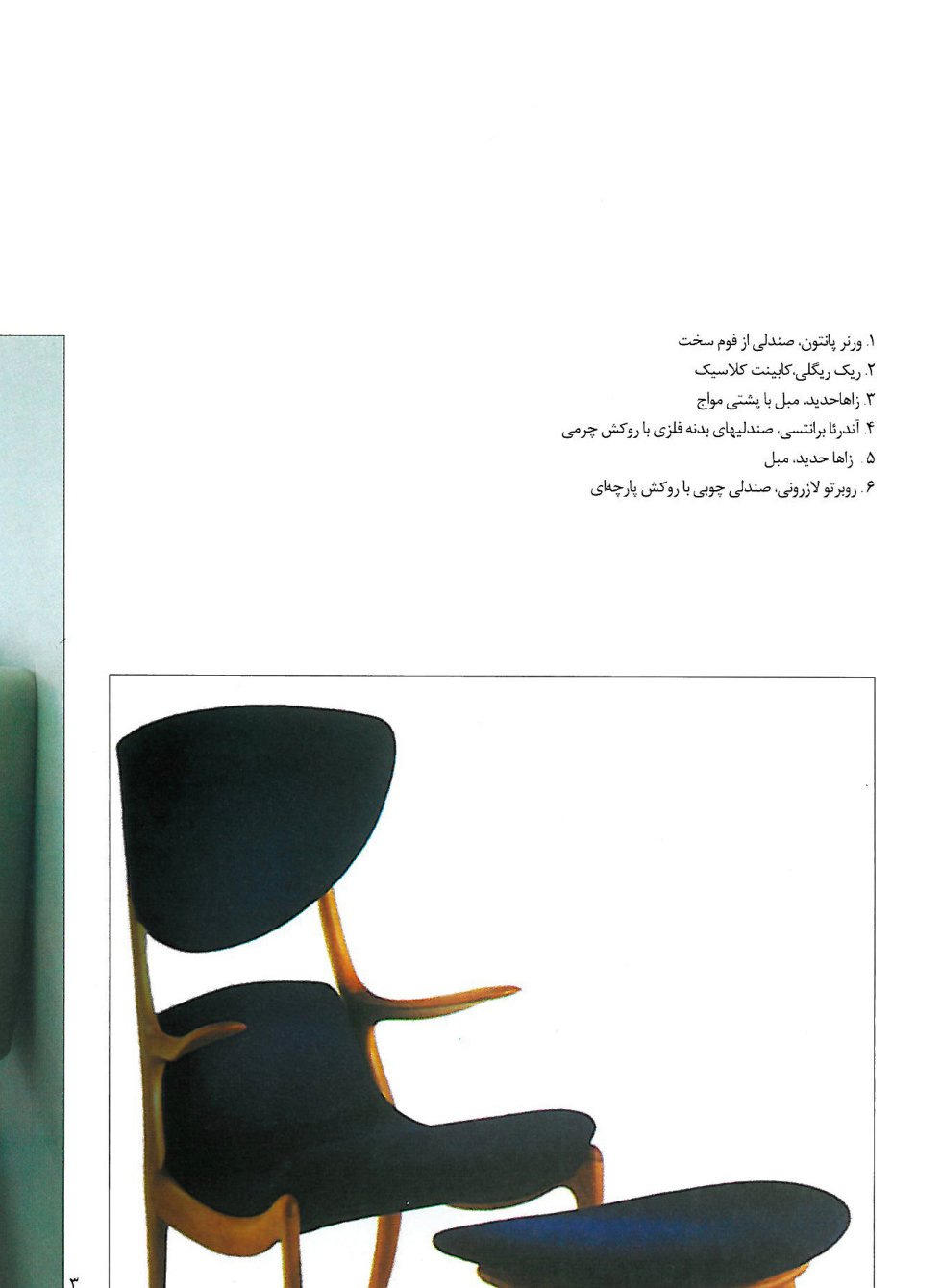
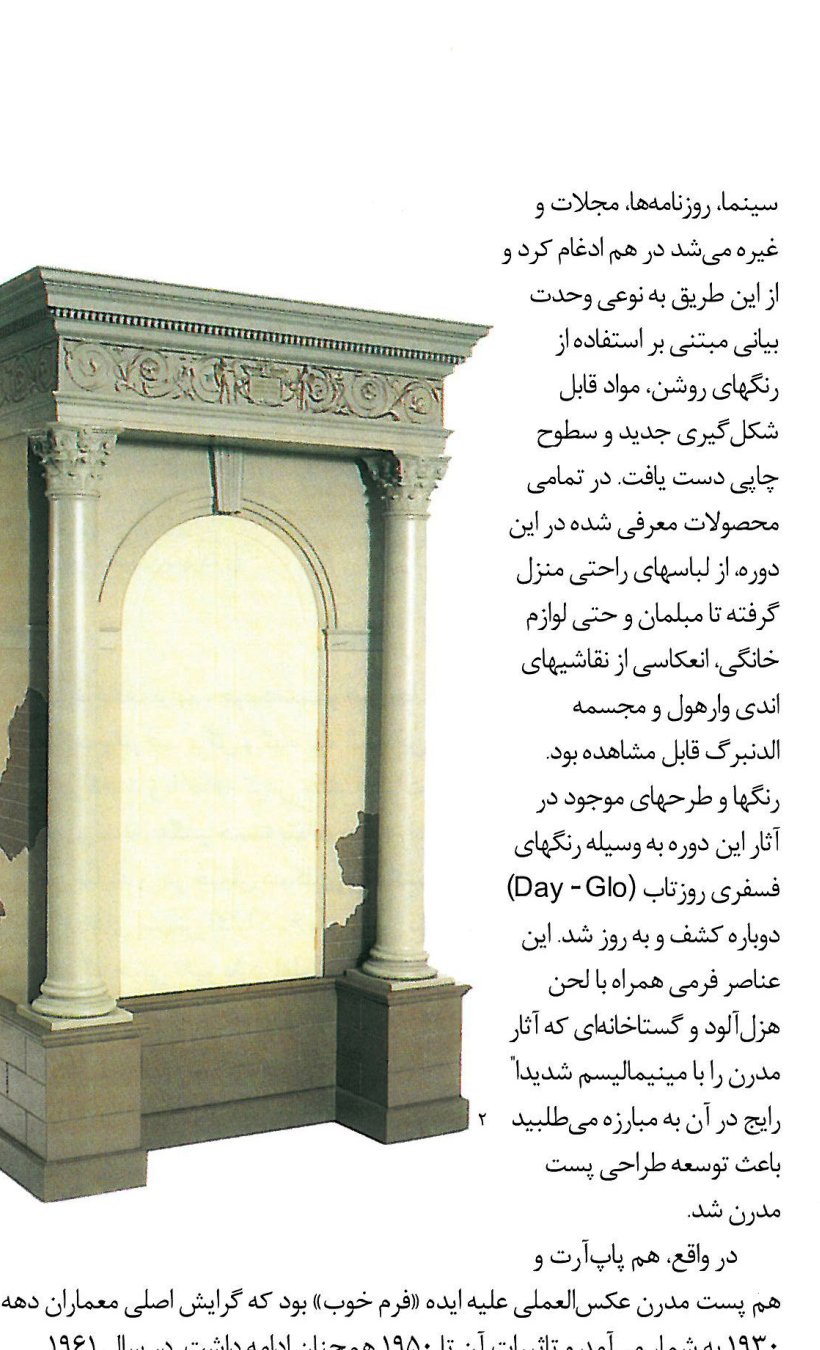
Pop Art fused the symbols of popular culture — music, television, cinema, newspapers, magazines and so on — and in this way achieved a kind of expressive unity based on the use of bright colours, new mouldable materials and new surfaces. In the products of this period — from leisurewear to furniture and even household appliances — one could see echoes of Andy Warhol's paintings and Oldenburg's sculptures. The colours and patterns of the period were re-discovered and updated through the fluorescent Day-Glo palette. These formal elements, together with a mocking, irreverent tone that challenged the severely minimalist modern work, spurred the development of post-modern design.
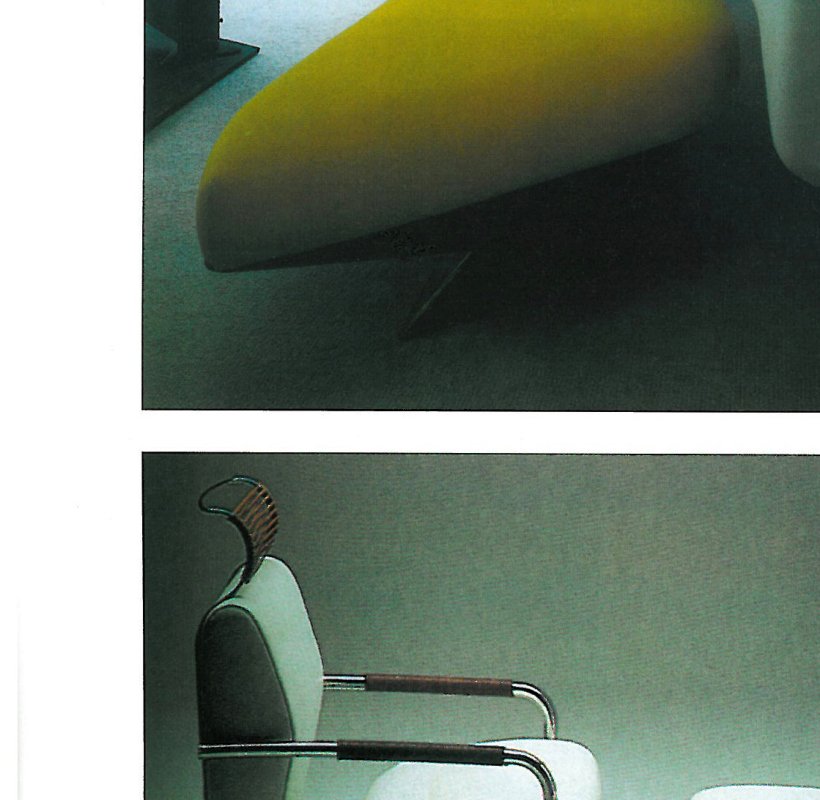
In fact both Pop Art and Post-Modernism were a reaction against the idea of "Good Form" — the dominant tendency of 1940s architects that continued to be felt into the 1950s. In 1961 a group of young British architects who followed Pop Art founded the Archigram group. The movement was continued in later years by Archizoom and Alchimia, both in Italy. Archizoom was led by the designer-architect Andrea Branzi, who later worked with Alchimia and then with Memphis.
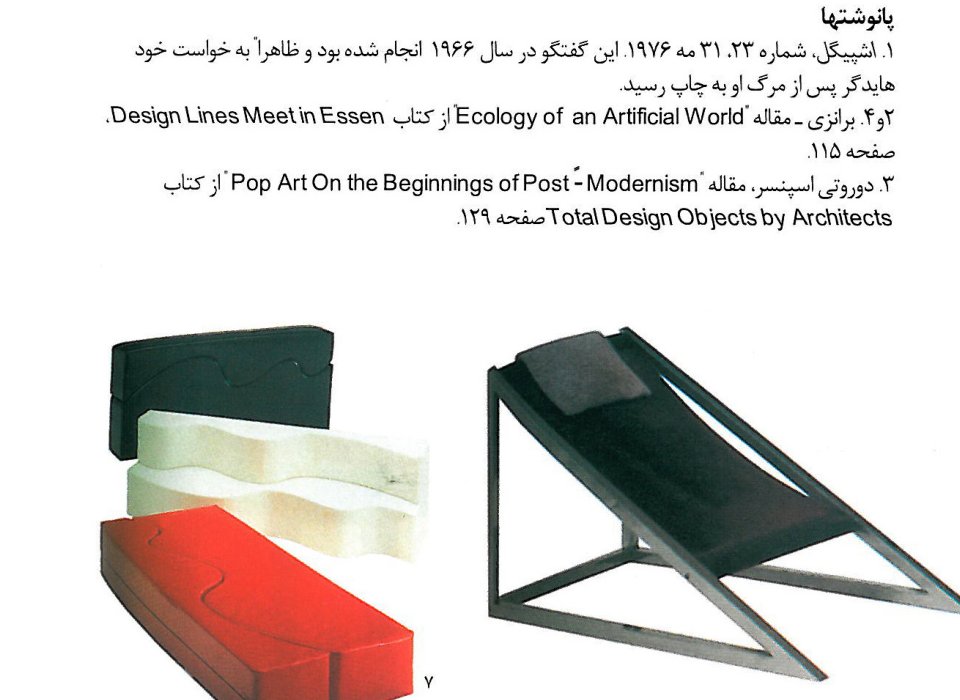
Branzi and Paolo Deganello, working at Archizoom, aimed to produce a revolutionary shift in the applications of design. Branzi later said: "My idea has always been that the process of design, if it is not tied to the graphic norms of industrial production, would be better seen from the old but interesting position of the Werkbund in 1907 — a period when artists and intellectuals were trying to transform the new industrial world in such a way that the utility of industrial production could align with the needs of human life." Archizoom designed the Dream Beds in 1967 and the Mies Chairs in 1969. Their work parodied the "Good Design" exhibitions at MoMA in the 1940s and at the Milan Triennale in the 1950s.
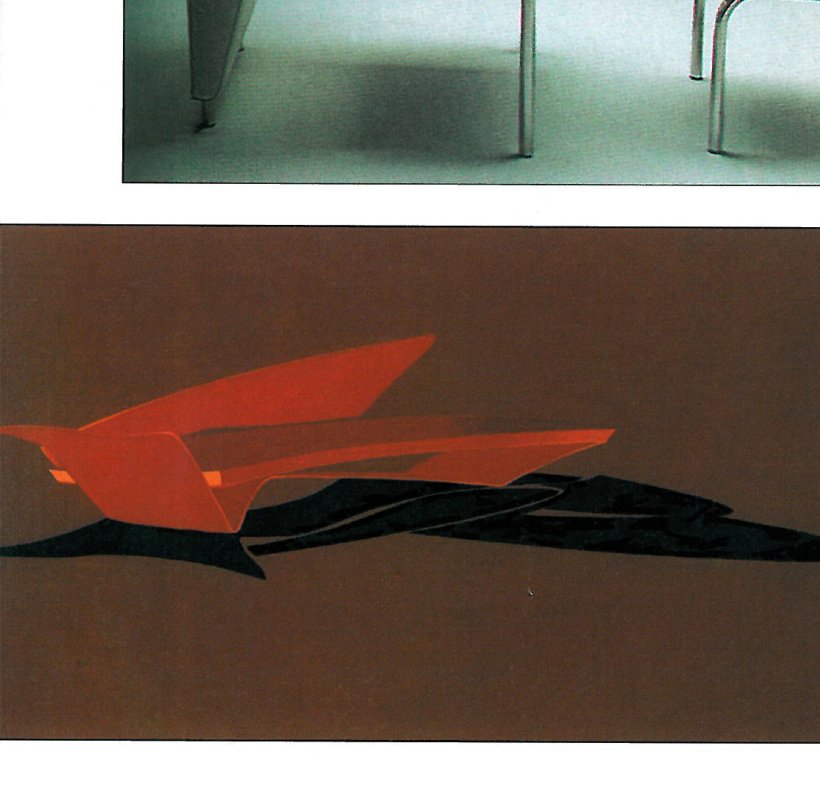
But apart from these artificial divisions, design is a continuous and dynamic current, and its structural shifts are the product of that dynamism. The real current of design is the current that ends in the production of something capable of answering a need. That current is like a living creature whose true self is very different from the biological and psychological interpretations given of it. The true aim of design, at its personal and social scales, is the recognition of the products, subjects and signs that can be used within the complex social-environmental relationships. By "complex" we mean a relationship based on uses and technological functions with qualities akin to psychological symbols and poetic resonances.
Pop Art, by breaking the existing moulds, prepared the ground for the development of design and for the updating of the subjects and signs that could be used in post-modern art.
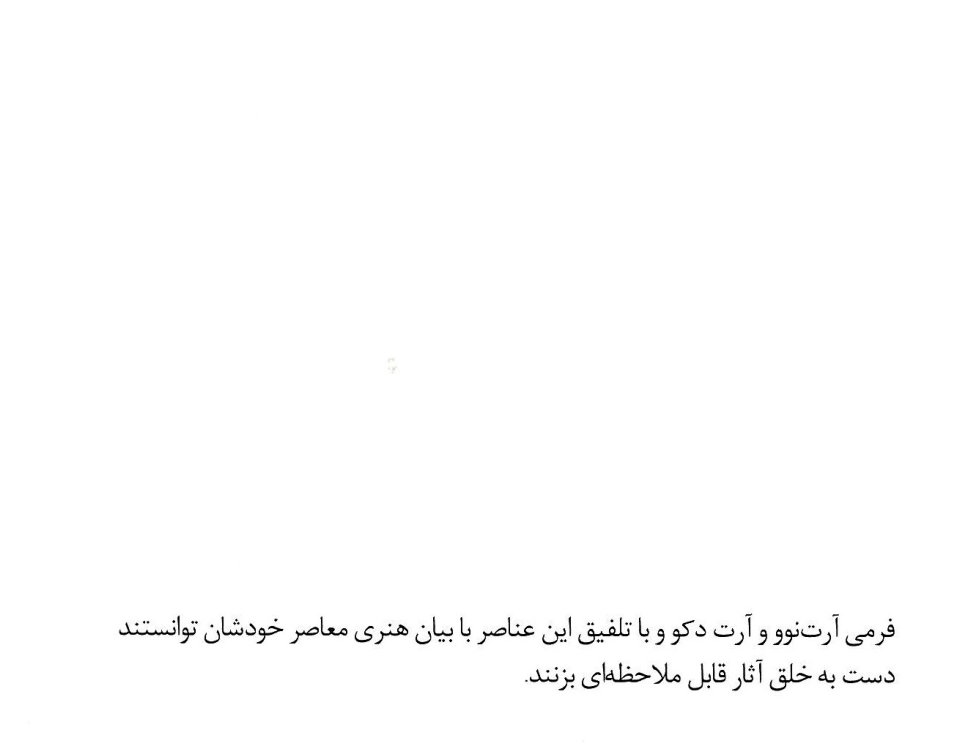
Post-modern designers and architects brought into being a kind of vernacular art related to historical allusions with definite references. Their method involved an exaggerated emphasis on new ornaments and materials, humorous idioms of expression, and a wide range of colours. By drawing on formal elements from Art Nouveau and Art Deco, and by fusing these elements with their own contemporary artistic idiom, they managed to produce works of considerable note.