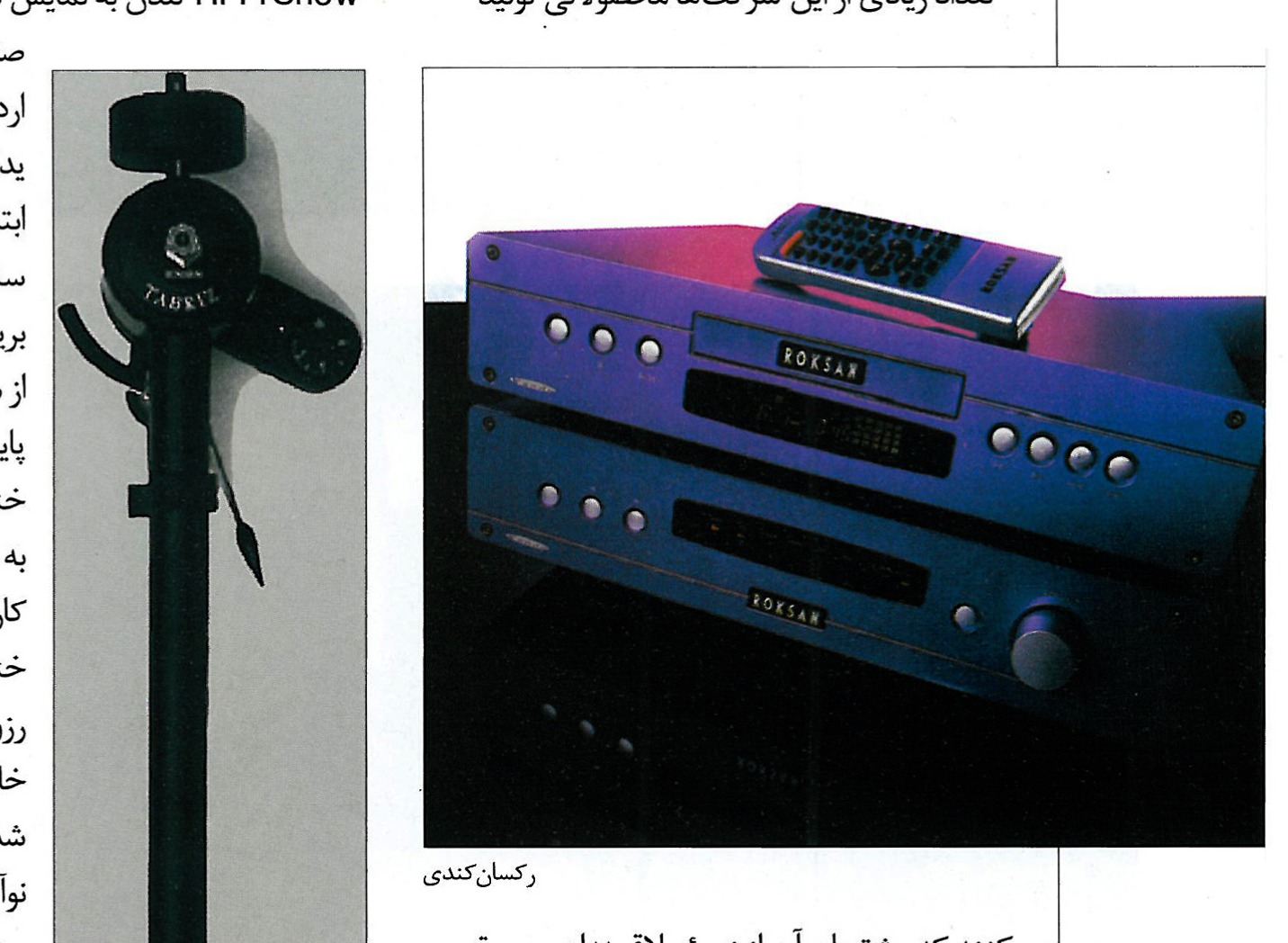
Many have come to find music as one of life's principal forces, but only a few are able to experience the listening of music with all its qualitative components. Today, in the age of digital technology, various methods of recording and playing back sound — and particularly music — at very high standards of quality have become available, and many companies and producers are at work in the world's domestic and industrial markets, using these new technologies.
England occupies a distinctive position in this field, and for many years a number of companies have been active there in the design, engineering, building, and production of high-end HI-FI audio systems. Anyone who counts himself among the keen and dedicated listeners can find samples of their products in our own country's stores as well.
A great number of these companies make products whose customers are music lovers wishing to experience music with all its qualitative components. Among them, Roksan holds a particular fascination for the Iranian listener: although the company's working life is less than fifteen years, its products have, in that time, gained a settled standing — to the degree that experts and specialised press refer to its products as 'audio systems that have drawn more praise than any other.'
Founding and founders
What is it about this company that may set it apart for the Iranian enthusiast? Audio Roksan was established in 1985 in Cambridge, England. Turaj Moghadam and Tufan Hashemie founded it with the aim of bringing about a transformation in analog audio systems — which, in those years, were losing ground in their contest with digital systems — and chose for it an Iranian name. Moghadam, a graduate in mechanical engineering from the University of Sheffield, has fresh ideas in audio design; Tufan Hashemie, a graduate in economics from the University of London, currently runs Roksan's marketing and sales.
Xerxes, Darius, and Artemis
Roksan's first product was shown in 1985 at the London HI-Fi Show. The Xerxes turntable — bearing the name of Xerxes, son of Darius — at the very outset created a revolution in the highly traditional British audio market. From its three-stage suspension mechanism to the mechanism for cancelling the cartridge stylus's reverse-thrust force (which had caused resonances in particular musical frequencies), all bore witness to the device's innovations.
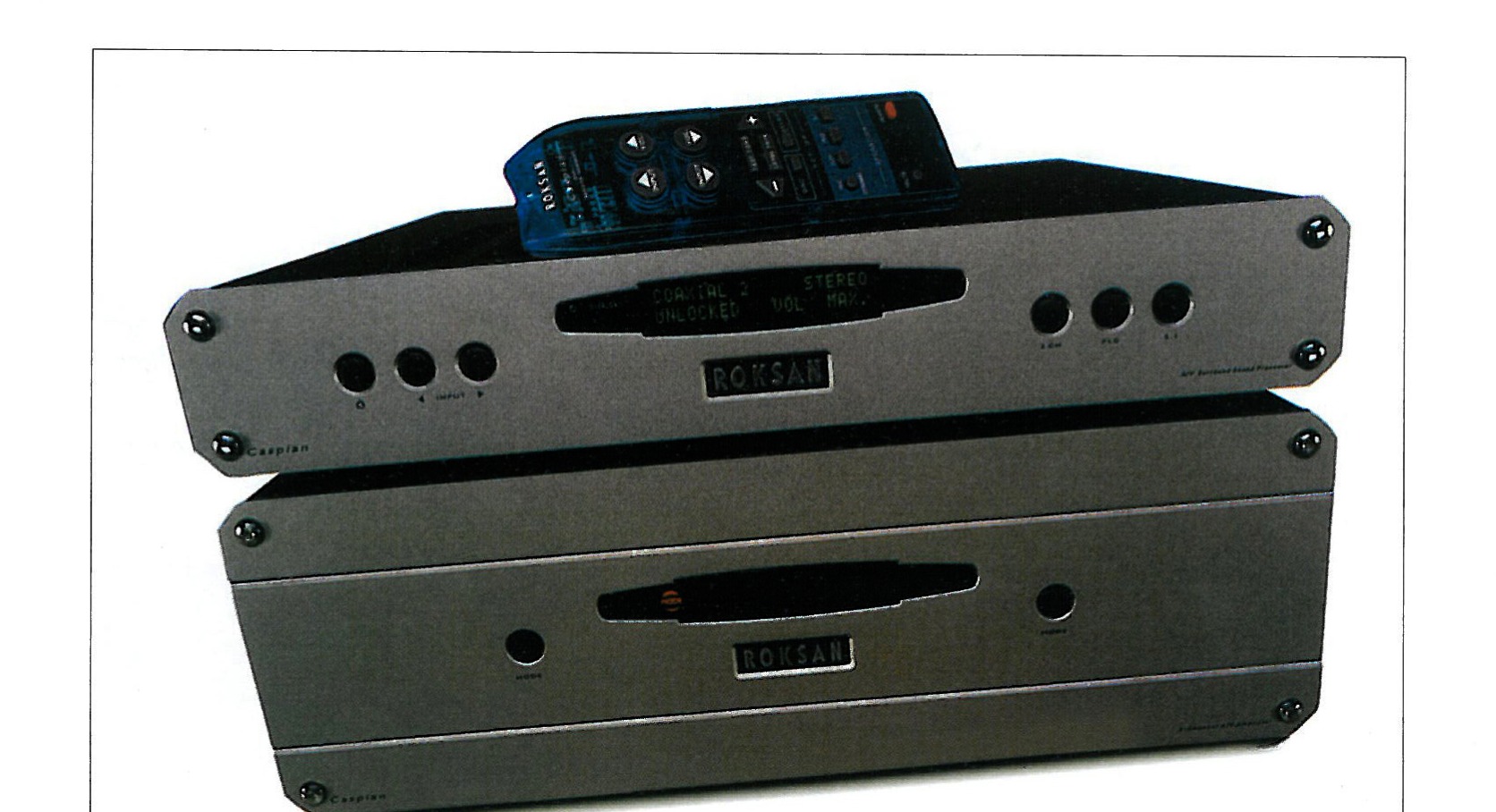
In 1988, by means of a particular suspension scheme that eliminated unwanted oscillations in the tweeter (the unit that produces high-frequency sound in a loudspeaker), Roksan introduced the Darius loudspeaker. Continuing the line of innovation, by 1989 Roksan had added the Artemis tonearm and the Shiraz cartridge to the Xerxes ensemble, raising its qualitative coherence further.
The 1990s: entry into digital
By 1990 Roksan's first amplifier series, named 'Rok' — a mono-block set — was on the market. The system comprised two completely separate units for each band of sound, each working from its own fully independent power supply, and managed the maximum suppression of supply-circuit noise interference.
At this point three salient features may be observed in Roksan's products: (1) creative design in the hardware of each product, with an innovation in each; (2) a design identity and pleasing visual quality in the external form of each product; (3) a superior build and assembly quality, both in hardware and in external form.
Roksan entered digital territory in 1990, and notably — unlike many other companies which, in passing from analog to digital, did not manage to repeat their earlier brilliance — it had fresh things to say in this field too. The Rok-DPI, a CD player, kept the power supply, the disc-rotation mechanism, and the digital-to-analog converter completely independent of one another; the device, by virtue of its sound quality (which bore a strong resemblance to analog systems), drew the attention of many an authority.
From 1990 to 1995 Roksan presented further products: the Atosa CD set, the Tabriz tonearm, the Korush cartridge, and the Akimo loudspeaker, among them.
Caspian, T.M.S., Kandy
In 1995 the firm's most outstanding product — a completed example of the Xerxes turntable — was launched as the T.M.S. 'Turaj Moghadam Signature'; in hardware design, mechanism, and industrial design it was without competitor, and it secured Roksan's position among the single-piece producers.
Until 1996 Roksan's products belonged in the upper tier of the market, and in performance, price, and production volume they put themselves out of the reach of many enthusiasts. Then in 1996 Roksan introduced the Caspian range — a tuner, an integrated amplifier, a power amplifier, and a CD player — the fruit of Roksan's experience and the maturing of its knowledge in audio systems.
That direction was completed during 1999-2000 with the Home Cinema set. In the same year, the Kandy range — in the same style and manner as Caspian, but at a relatively lower price — was put within the reach of enthusiasts.
The design language
In Roksan's product design, particularly in the Caspian and Kandy series, one sees a clearly minimal scheme; in the overall design and the front fascias of these products, there is — unlike Japanese and Korean examples — no trace of overstatement, although the control panel carries a perfectly symmetrical scheme. I think Roksan's designs show their own visual quality better than any description.
For more information, a visit to the Roksan website is recommended.
Translation and adaptation: Armand Dror.



