Contemporary Architecture

Renzo Piano: Jean-Marie Tjibaou Cultural Center

Soheila Beski·Memar 04
Renzo Piano: Jean-Marie Tjibaou Cultural Center

The construction of a center to express Kanak culture was a decision made by the French government during peace conferences following the uprisings of 1984 and 1988 in New Caledonia. The center was named after Jean-Marie Tjibaou, the Kanak leader who was assassinated in 1989. The Agency for the Development of Kanak Culture, presided over by Marie-Claude Tjibaou, organized an international competition, and the President of France personally pledged his support for the endeavor.

The site is remarkably beautiful, located approximately ten kilometers east of Noumea. The promontory takes the form of a narrow peninsula between the ocean and a lagoon—a location that creates strong contradictions. On one side it faces the prevailing winds and the deep waters of the Pacific, while on the other it looks upon the tranquil lagoon. The road extends for 230 meters along the ridge. On the lagoon side, the lower structures slope gently toward the water; on the opposite side, facing the persistent easterly winds, the tall buildings rise as a powerful visual metaphor for traditional Kanak housing.

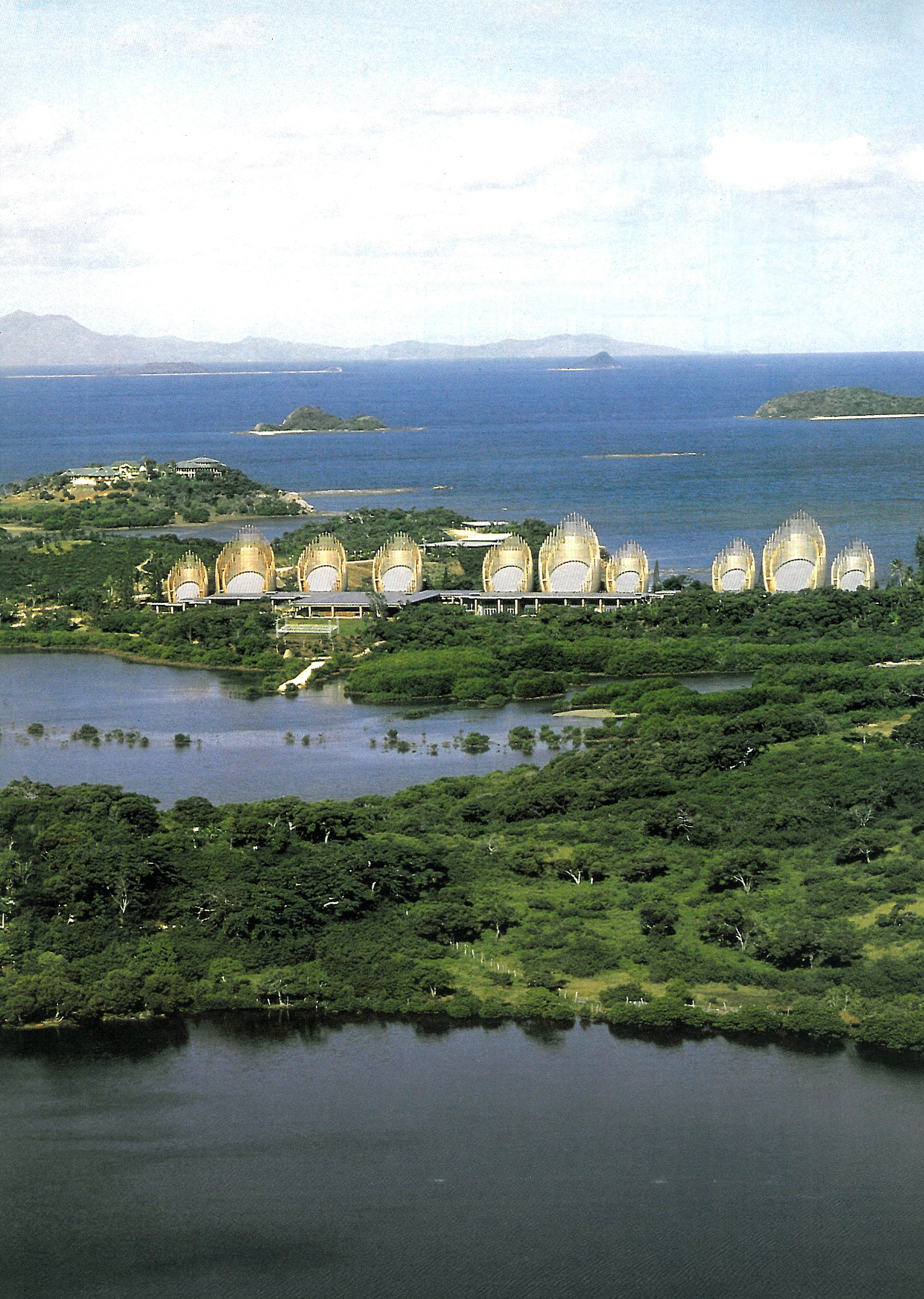
Aerial view of the Jean-Marie Tjibaou Cultural Center on the Tina Peninsula, showing the lagoon, ocean, and ten shell structures arranged along the ridge
Aerial view of the cultural center on the Tina Peninsula. The ten shell-shaped cases are arranged in three village clusters along the spine of the promontory, with the lagoon and mangroves in the foreground and the Pacific Ocean beyond.

The design of the project derives from the shape of the site and its prominent ridge. The plan extends along a central spine that follows the crest of the peninsula, much as in traditional Kanak villages where a central pathway provides coherence to the ensemble. Buildings are arranged on both sides of this spine in three groups of structures separated by vegetated clearings. In this way, three “villages” have been created, each functioning as an island with a designated purpose, containing spaces for the display of traditional and contemporary Kanak culture: an amphitheater, a library, a media library, and educational laboratories.
◆ ◆ ◆
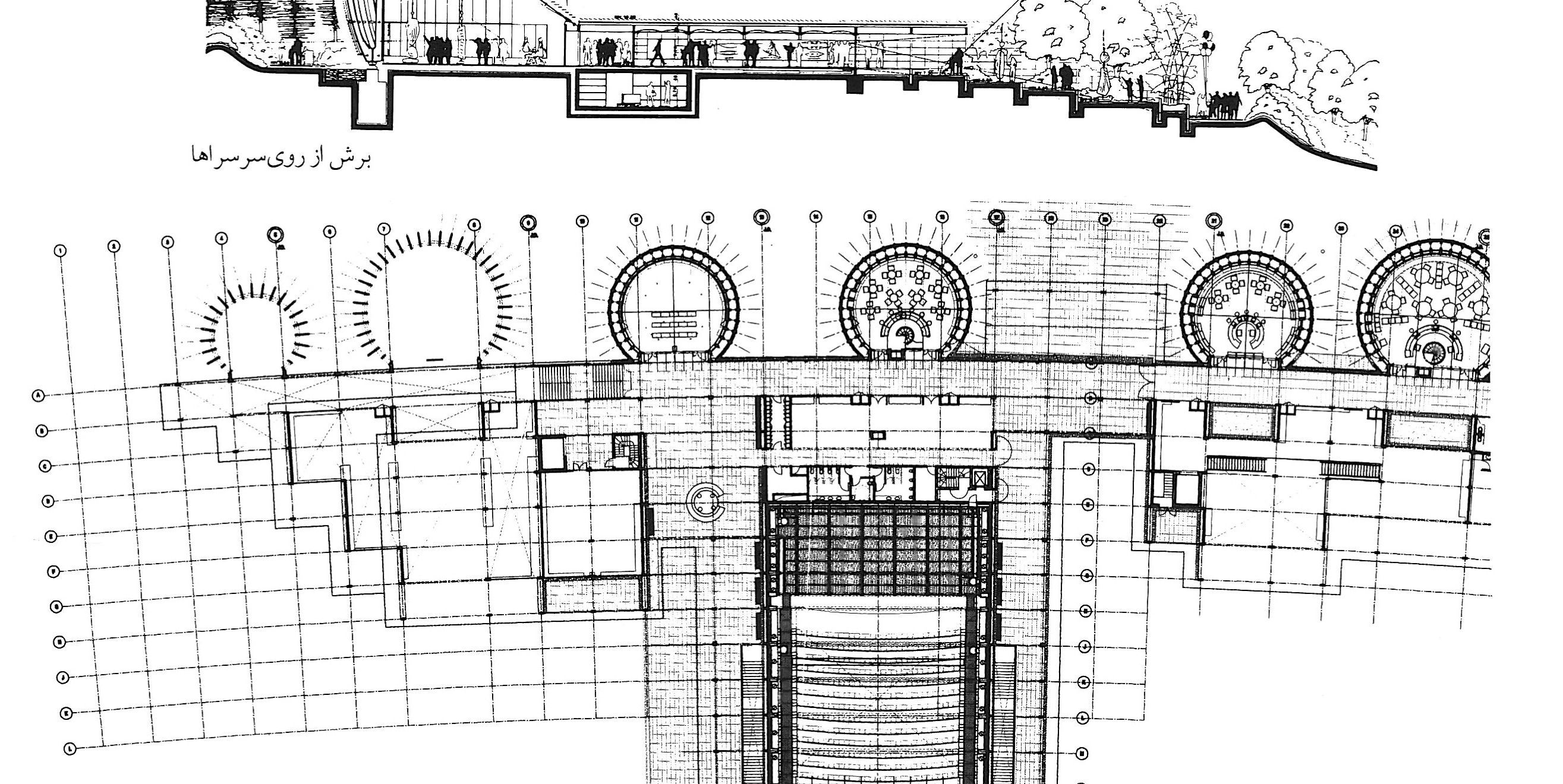
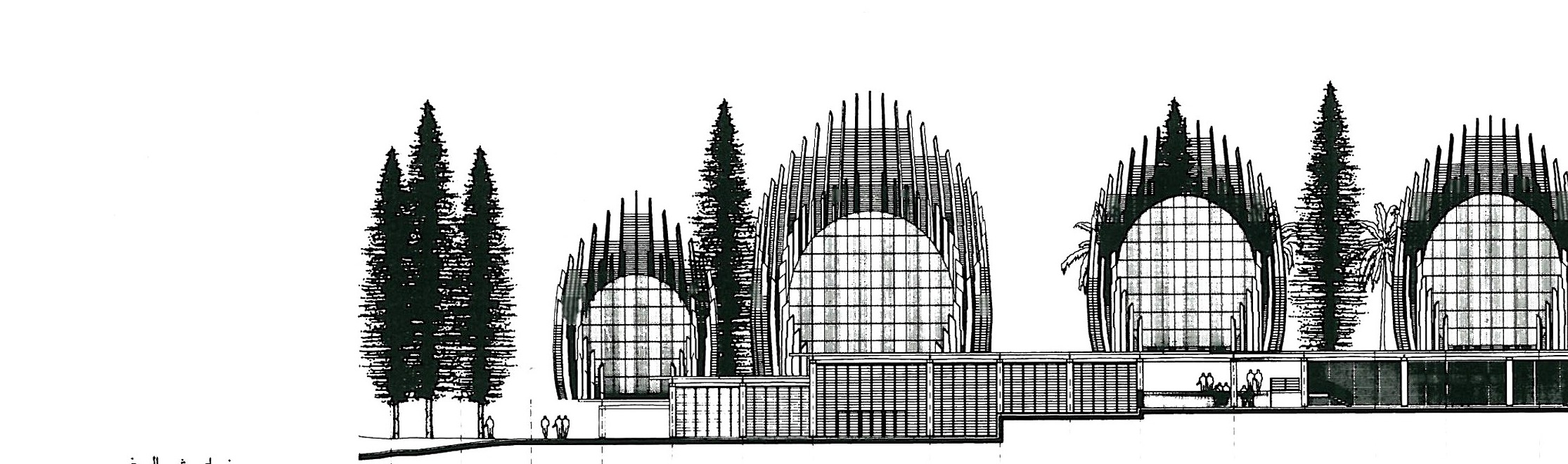
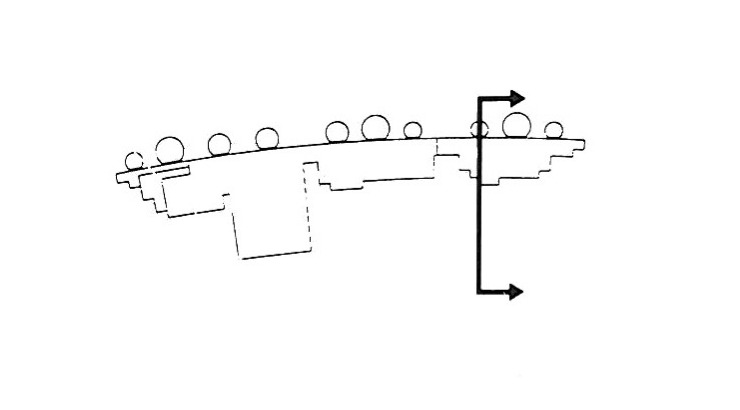
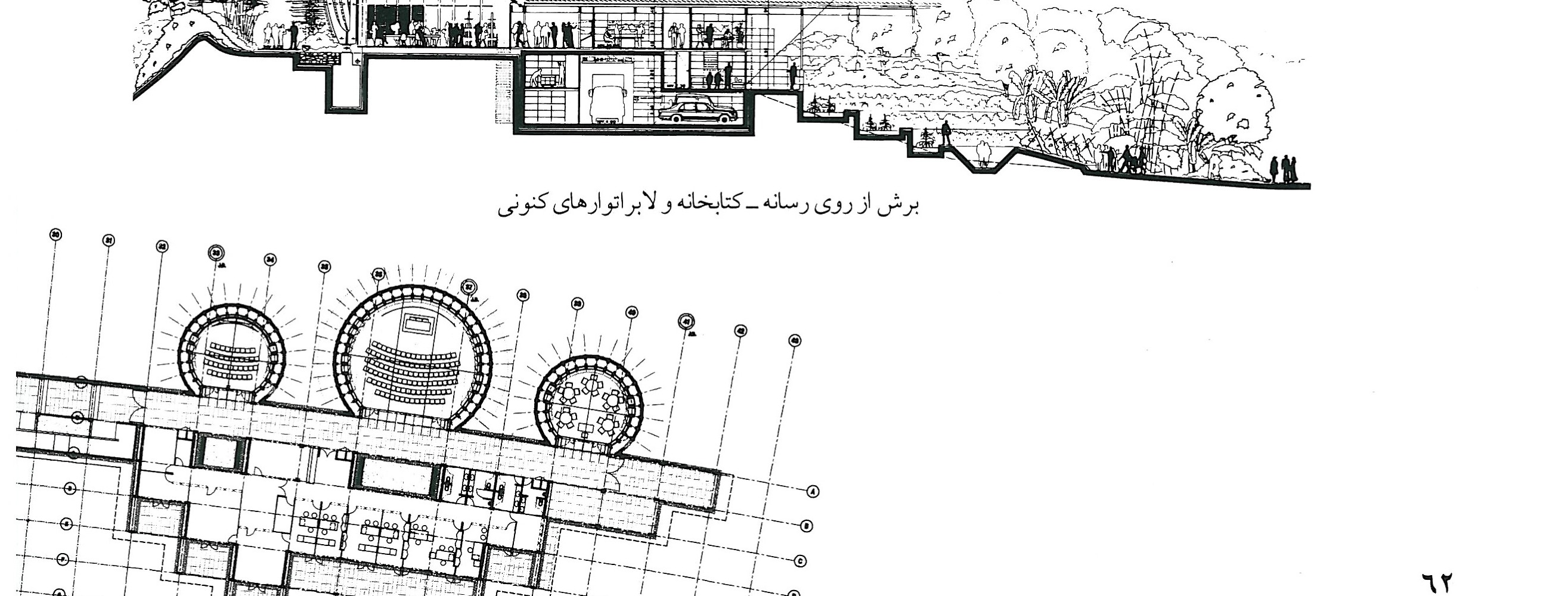
Architectural cross-section through the media library and laboratories of the cultural center, showing the double-shell timber structure
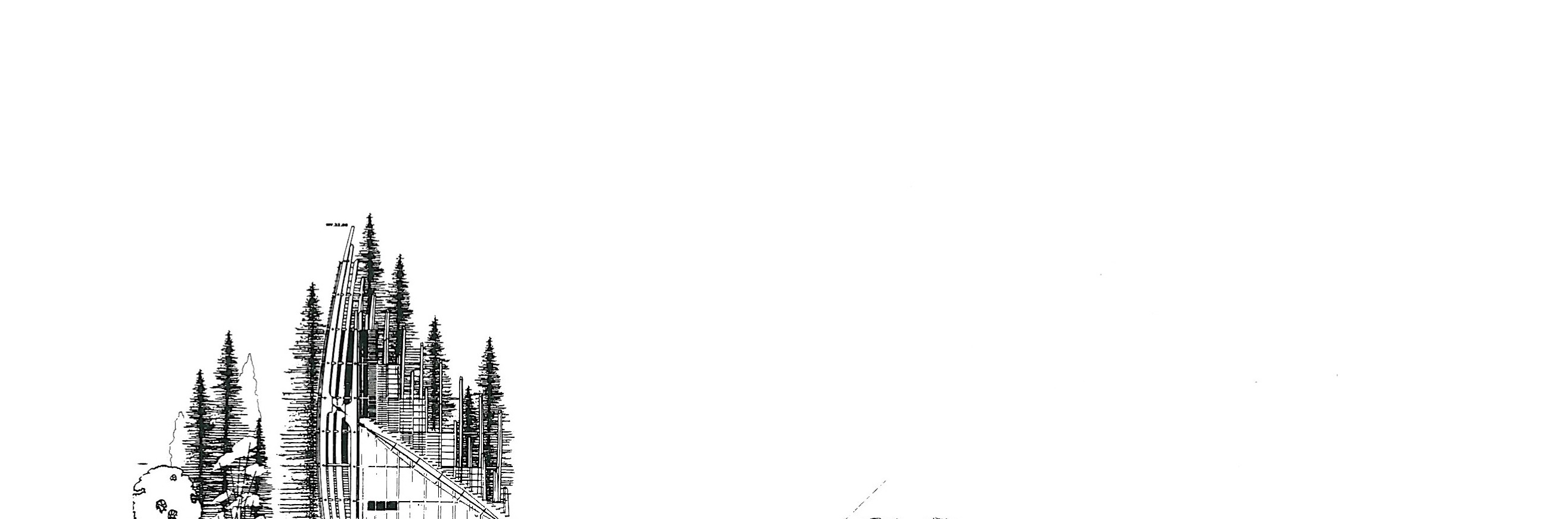
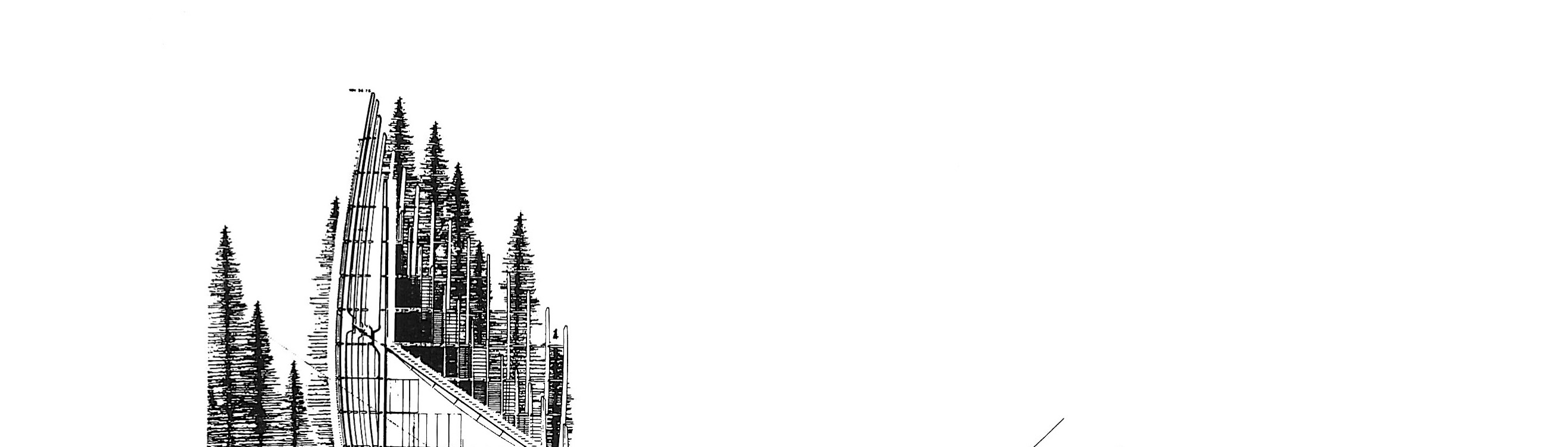
Section through the media library and laboratories. The double-shell timber construction is clearly visible: the outer curved ribs of iroko wood rise freely above the inner weatherproof shell, creating the natural ventilation channel between the two layers.
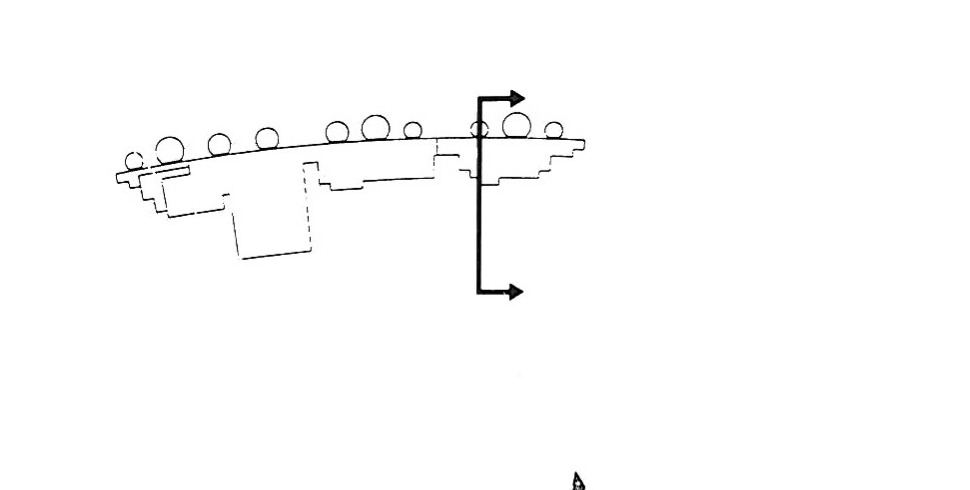
Floor plan of the media library cluster showing the circular shell structures and connecting corridor
Plan of the media library and laboratory cluster. The circular cases are connected by a linear covered corridor that serves as the project’s central spine, linking all three village groups.
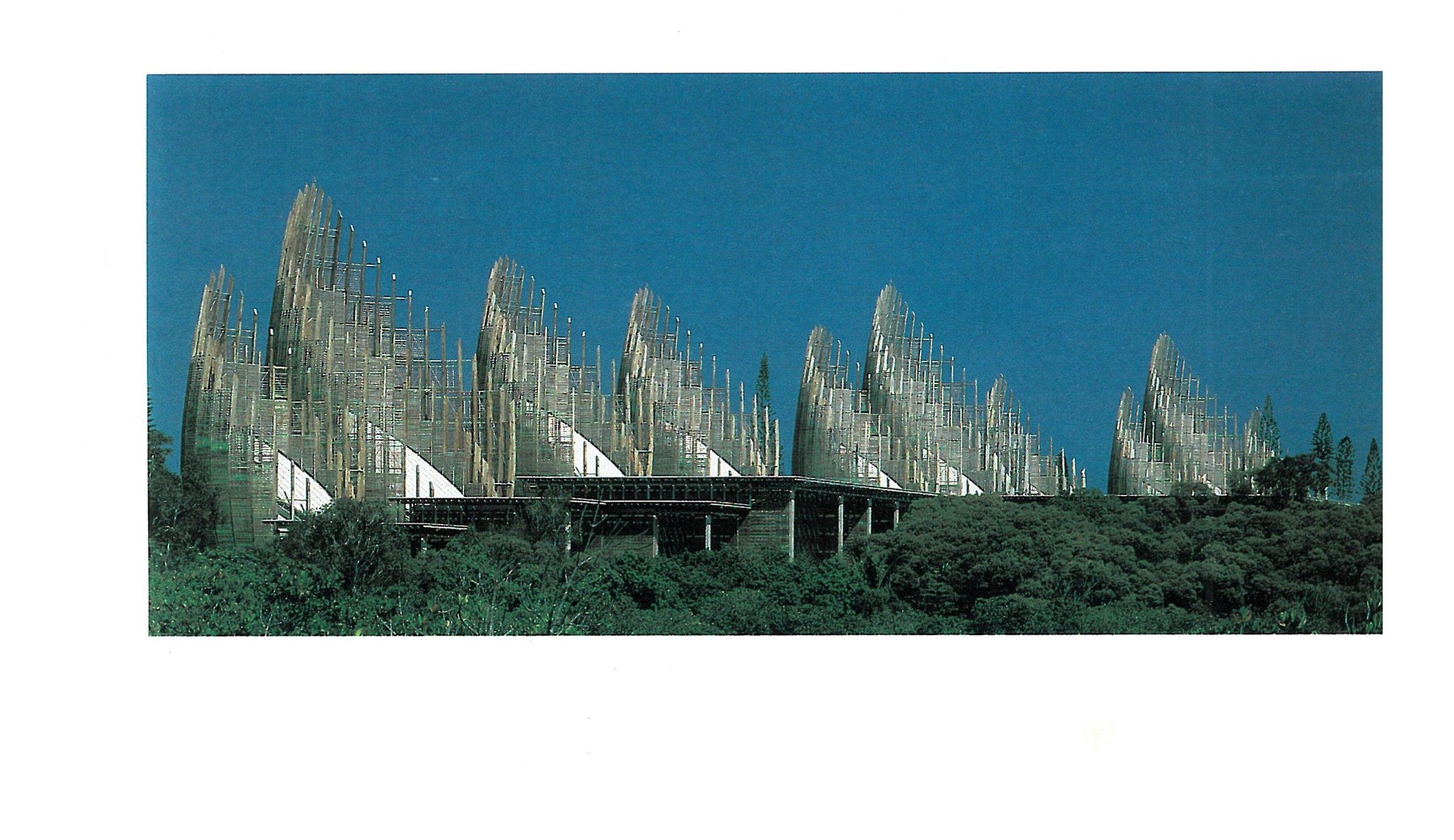
The Jean-Marie Tjibaou Cultural Center seen from a distance, with all ten shell structures silhouetted against a clear blue sky above lush tropical vegetation
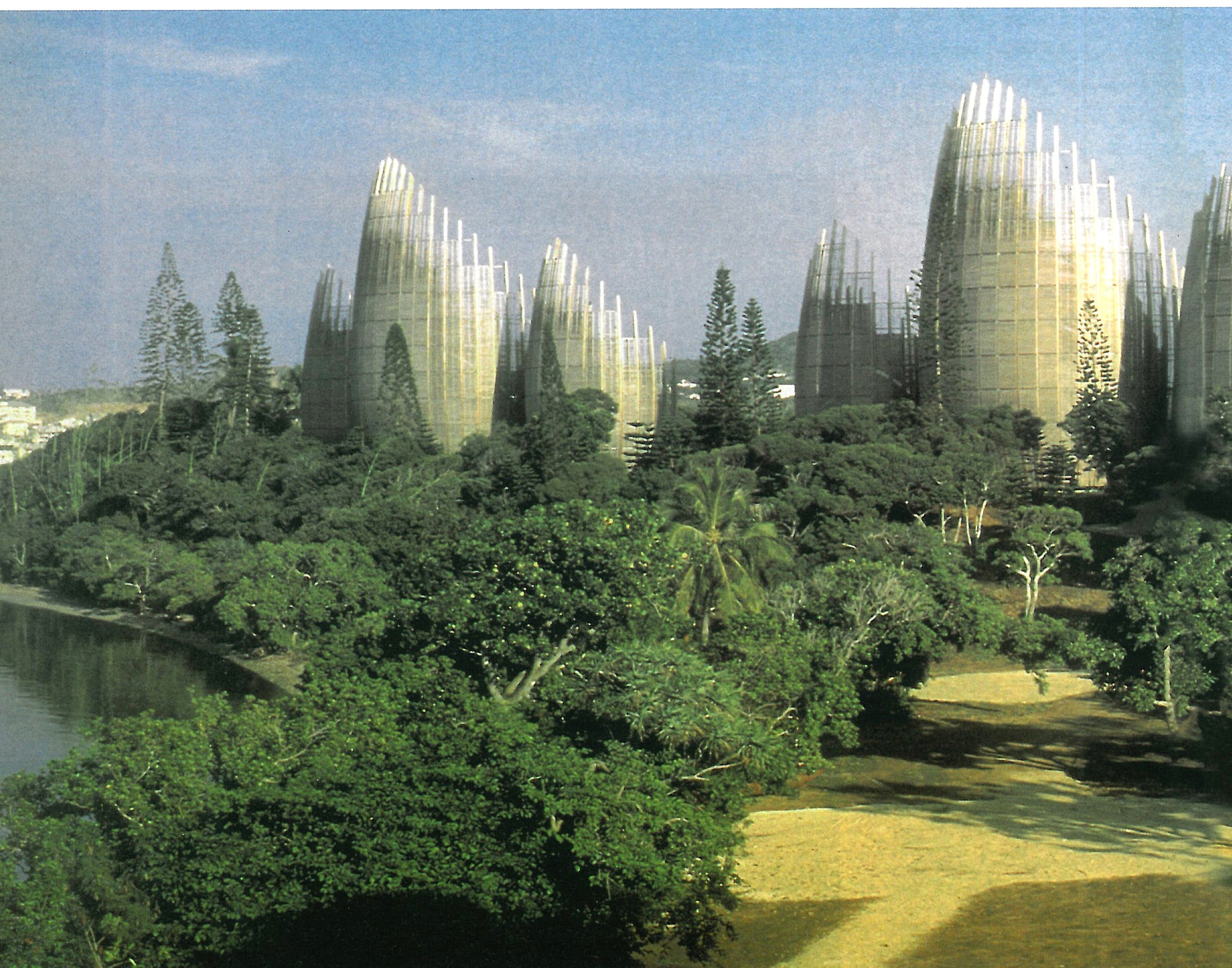
The cultural center seen from a distance. The ten cases of varying heights rise above the lush tropical vegetation like a cluster of vertical forms, their open tops silhouetted against the Pacific sky.
◆ ◆ ◆

Architectural Drawings

Cross-section through the corridors showing the relationship between the tall shell structures and the low connecting galleries
Section through the corridors. The section reveals the dramatic difference in scale between the soaring shell structures and the low, horizontal connecting galleries that house exhibition and service spaces.
Ground floor plan of the entire cultural center showing all ten cases arranged along the central spine
Ground floor plan. All ten cases are visible in their three village groupings along the central spine, with gardens and clearings between the clusters.
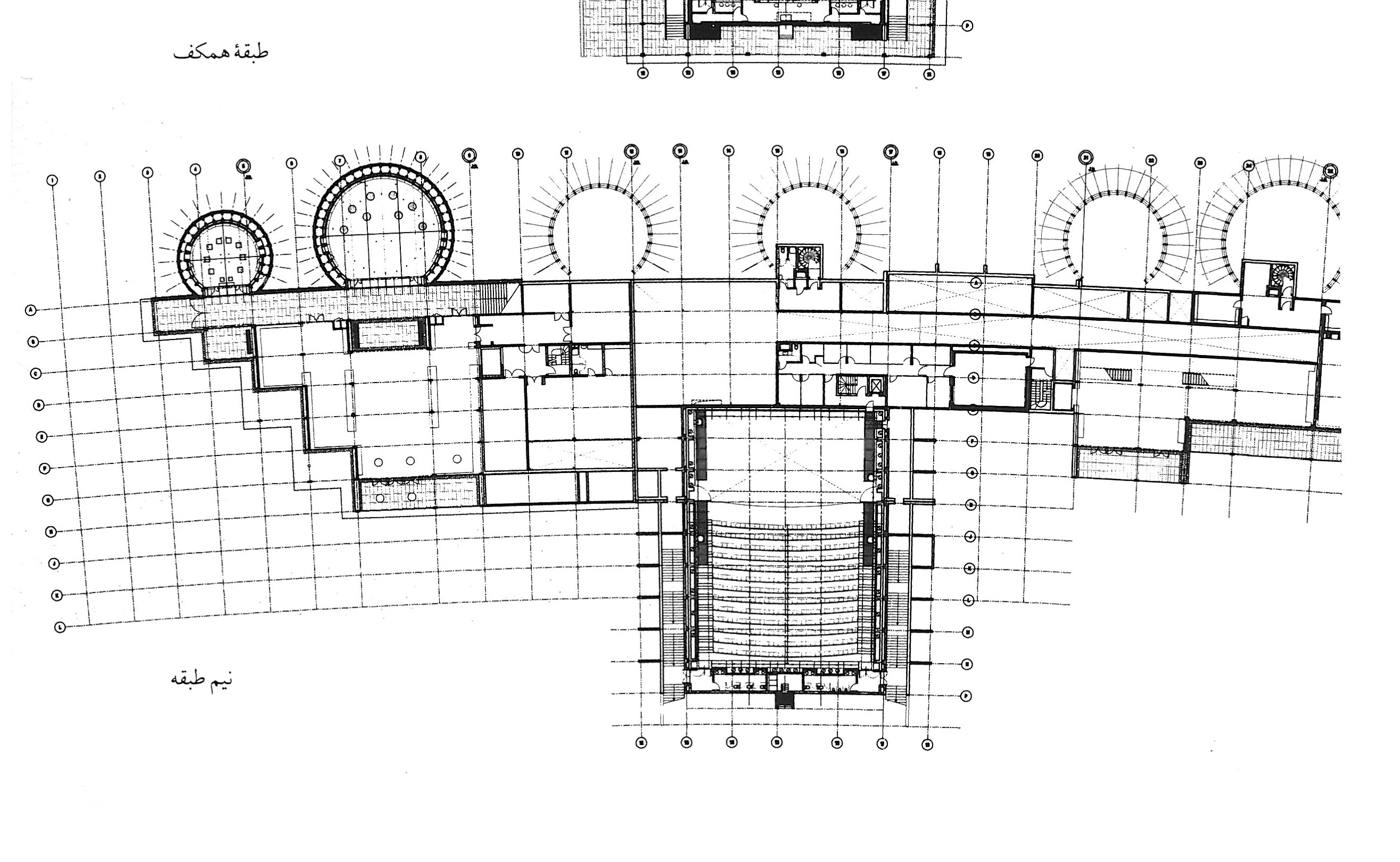
Mezzanine floor plan showing the upper-level galleries and the amphitheater seating
Mezzanine floor plan. The upper-level galleries within the larger cases and the amphitheater seating are visible at this level.
◆ ◆ ◆

Elevations

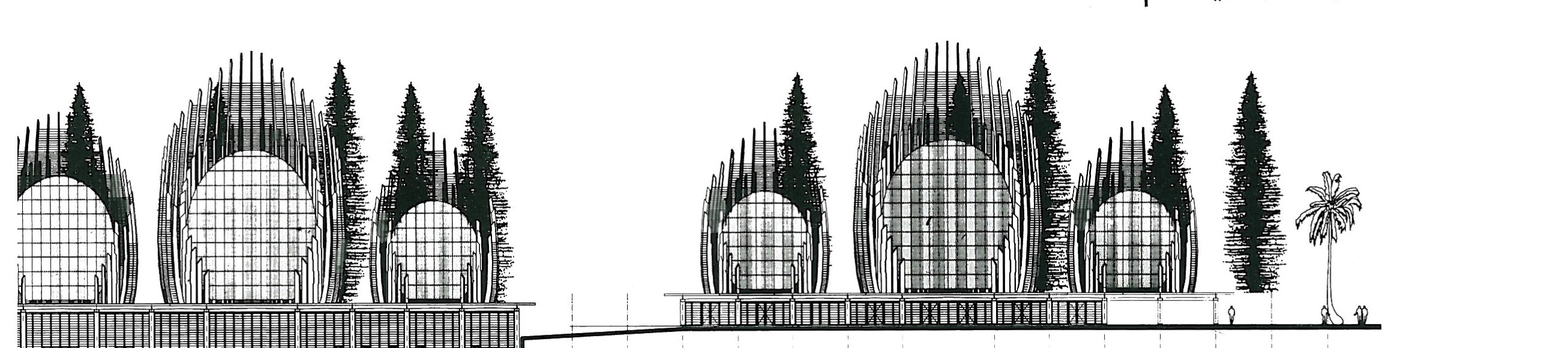
Northwest elevation of the cultural center showing the graduated heights of the shell structures
Northwest elevation, facing the ocean. The graduated heights of the shell structures create a rhythmic silhouette that evokes a village of traditional Kanak cases growing along the ridge.
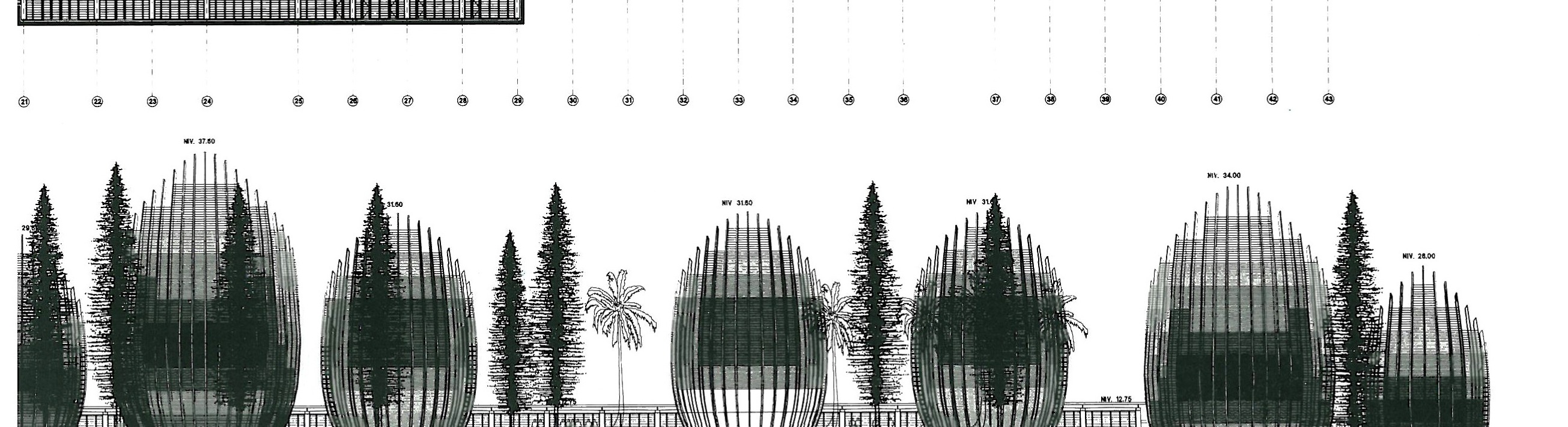
Southeast elevation showing the low gallery buildings along the lagoon side
Southeast elevation, facing the lagoon. On this sheltered side, the low horizontal galleries dominate the composition, with the shell structures visible rising behind them.
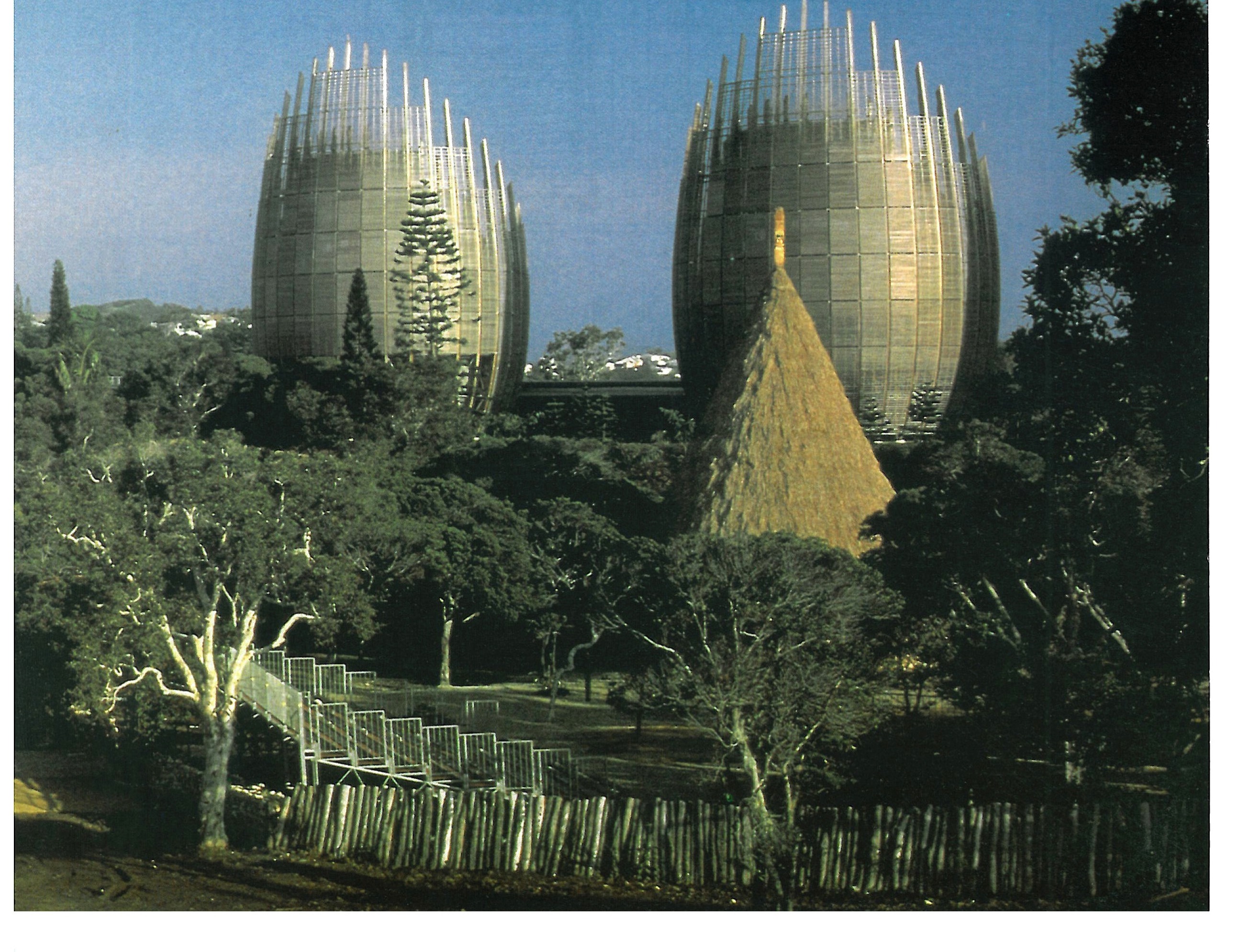
Two large shell structures of the cultural center with a traditional conical Kanak hut in the foreground, surrounded by tropical trees
The cultural center’s modern shell structures alongside a traditional Kanak case. The conical thatched hut in the foreground demonstrates the indigenous architectural tradition that inspired Piano’s design, while the wooden fence echoes the vertical rhythm of the new buildings’ structural ribs.
◆ ◆ ◆
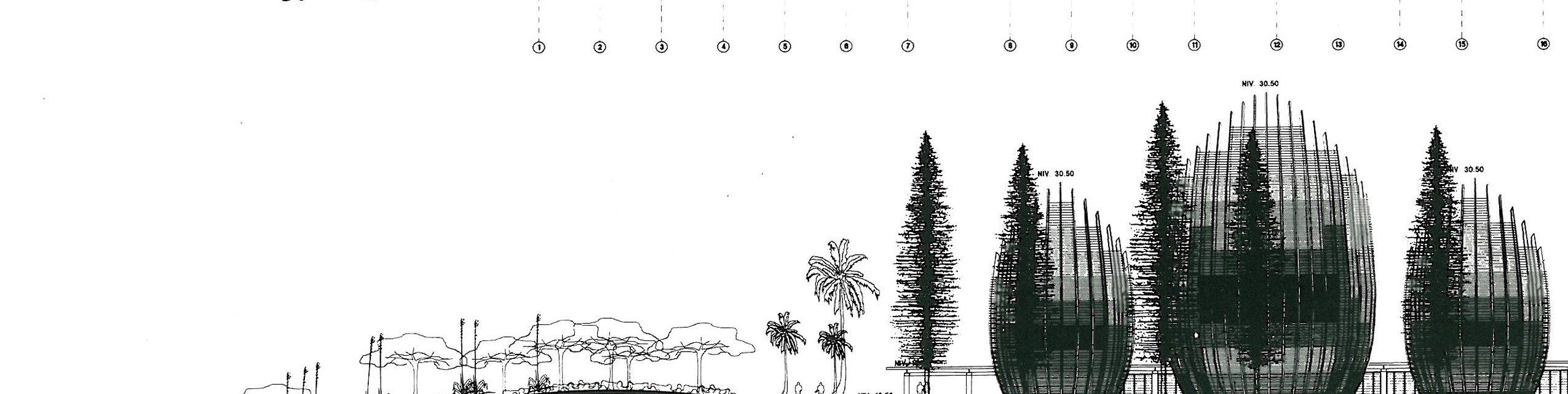
Detailed northwest elevation drawing showing the structural framework of the shell cases
Northwest elevation detail. The structural framework of the cases is shown with their graduated heights and the connecting low-rise galleries.
Detailed southeast elevation drawing showing the lagoon-facing side of the cultural center
Southeast elevation detail. The gentle slope of the terrain toward the lagoon is visible in this drawing.
The cultural center seen from the lagoon side, with the tall shell structures rising above tropical palm trees and Norfolk pines
View from the lagoon side. The shell structures emerge from the dense tropical vegetation—Norfolk pines, coconut palms, and native trees—like organic forms growing from the landscape itself. The varying heights of the cases create a composition that is at once monumental and naturalistic.
◆ ◆ ◆

Climate & Natural Ventilation

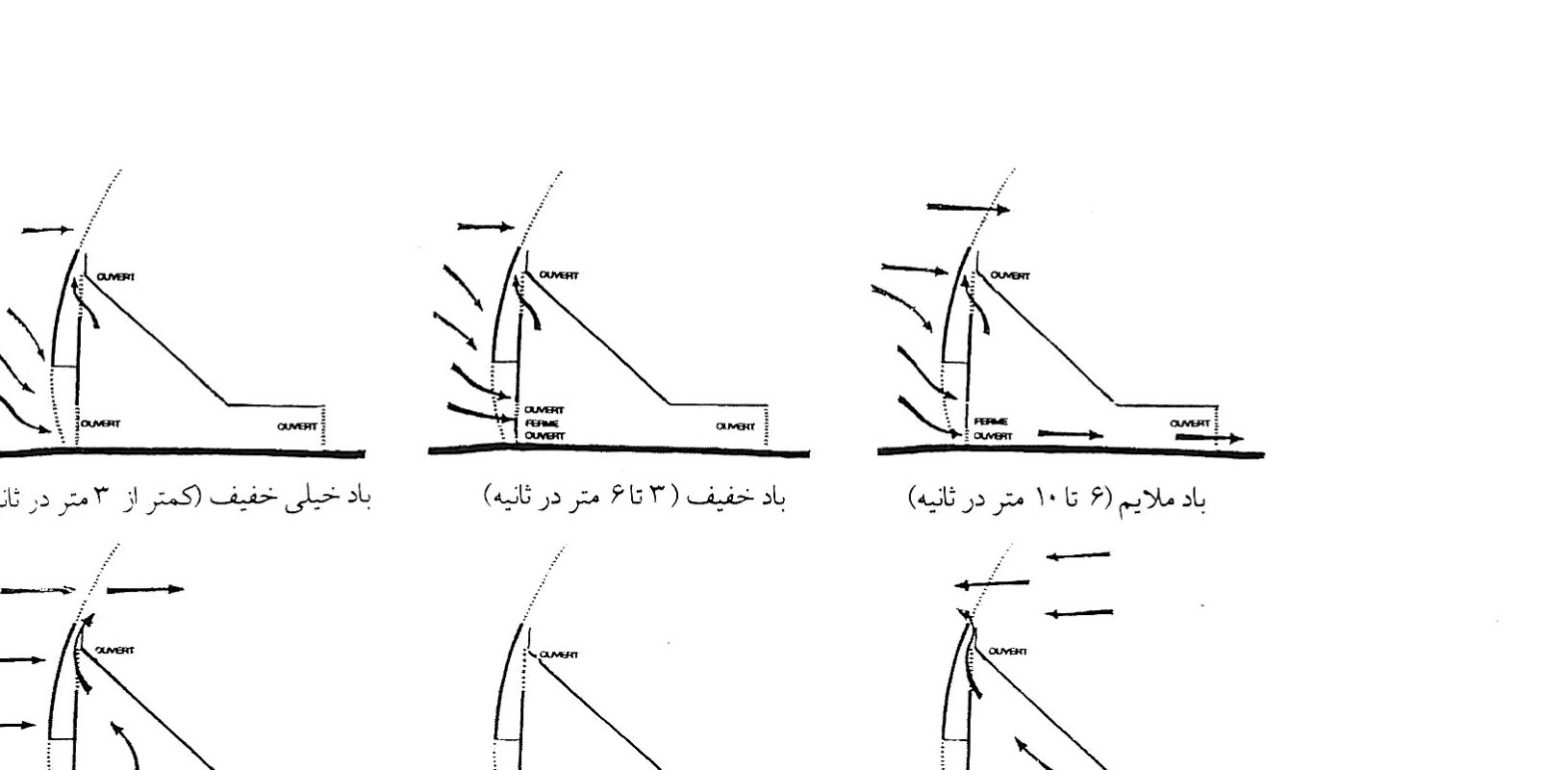
In the selected design, there is no deliberate showiness. The method of working with wood and of bending the structural members was discovered through extensive research and testing. These buildings are not mere imitations of the traditional Kanak “cases”—the name given to local dwellings—but rather they have derived their particular form from a construction technique specific to the Pacific region, one that employs natural ventilation throughout. Ventilation is achieved by introducing cool air currents through the upper portion of the building.

Six diagrams showing the natural ventilation patterns of the shell structures under different wind conditions, from gentle breeze to cyclone
Natural ventilation patterns. The diagrams illustrate how the double-shell construction responds to varying wind conditions: gentle breeze (6–10 m/s), very light wind (less than 3 m/s), light breeze (3–6 m/s), opposing wind (3–10 m/s), strong wind (10–15 m/s), and cyclone. Louvers between the inner and outer shells open and close to regulate airflow.

The cases are designed so that they receive the prevailing winds that blow almost constantly from one direction, continuously reducing the internal temperature as warm, stagnant air is expelled upward through the gap between the double shells. Obviously, these structures are also engineered to withstand any climatic event, particularly the tropical cyclones common to the region. The smaller buildings establish an intimate relationship with the surrounding natural environment. Paying attention to the landscape in New Caledonia is an art that has a deep connection with Kanak culture; the natural space between the cases and their surroundings is revived and preserved in exactly the same manner that the Melanesian people have traditionally employed in protecting their natural environment.

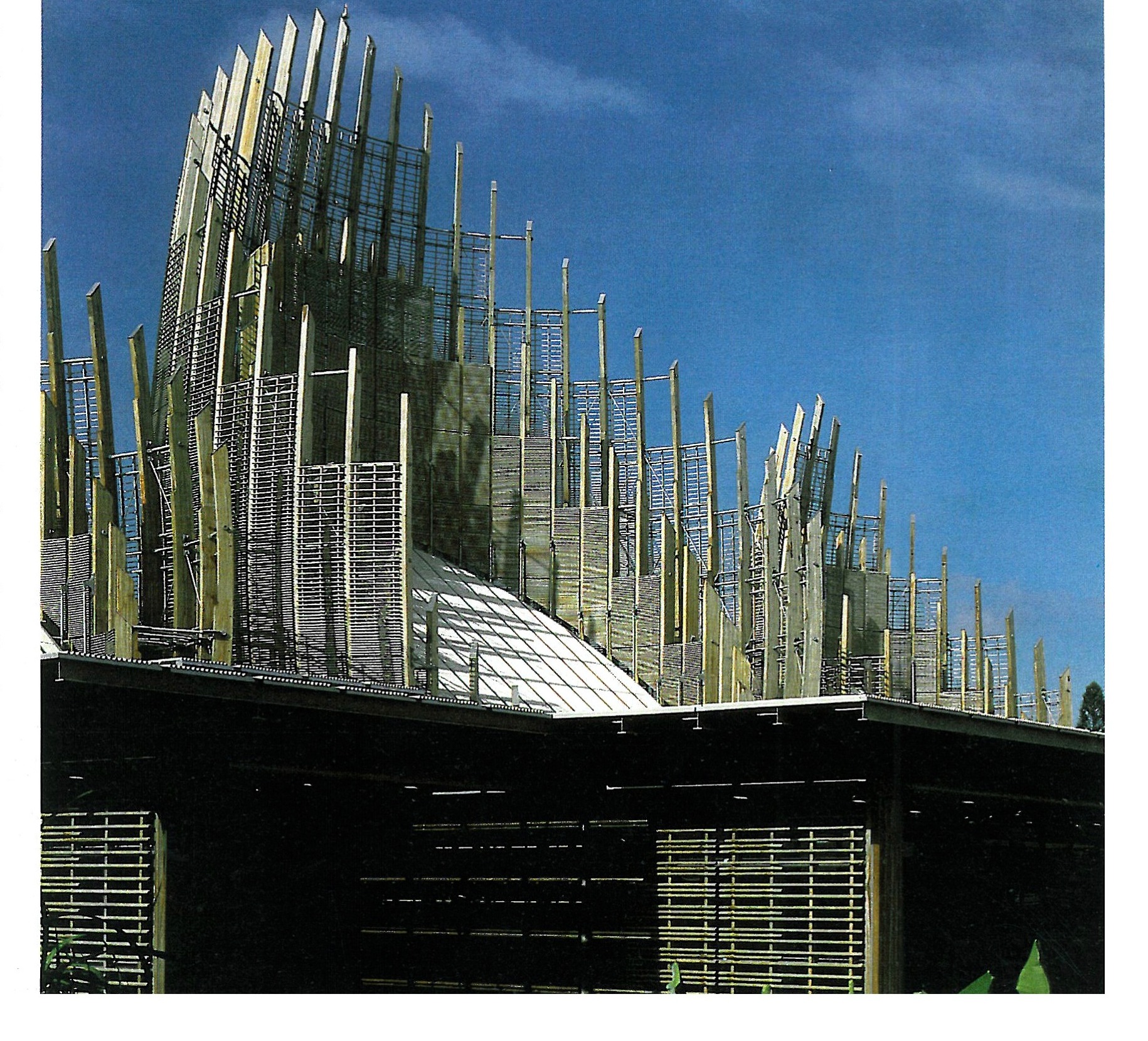
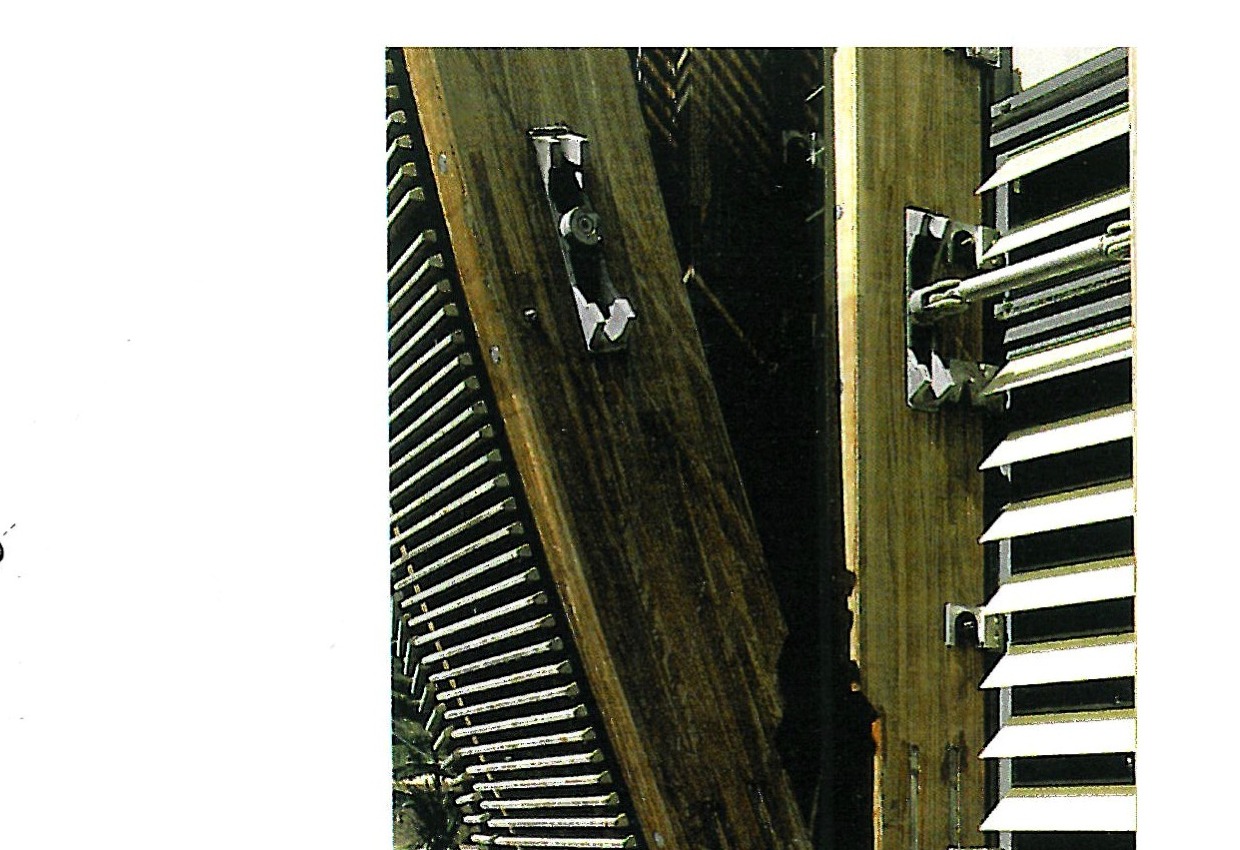
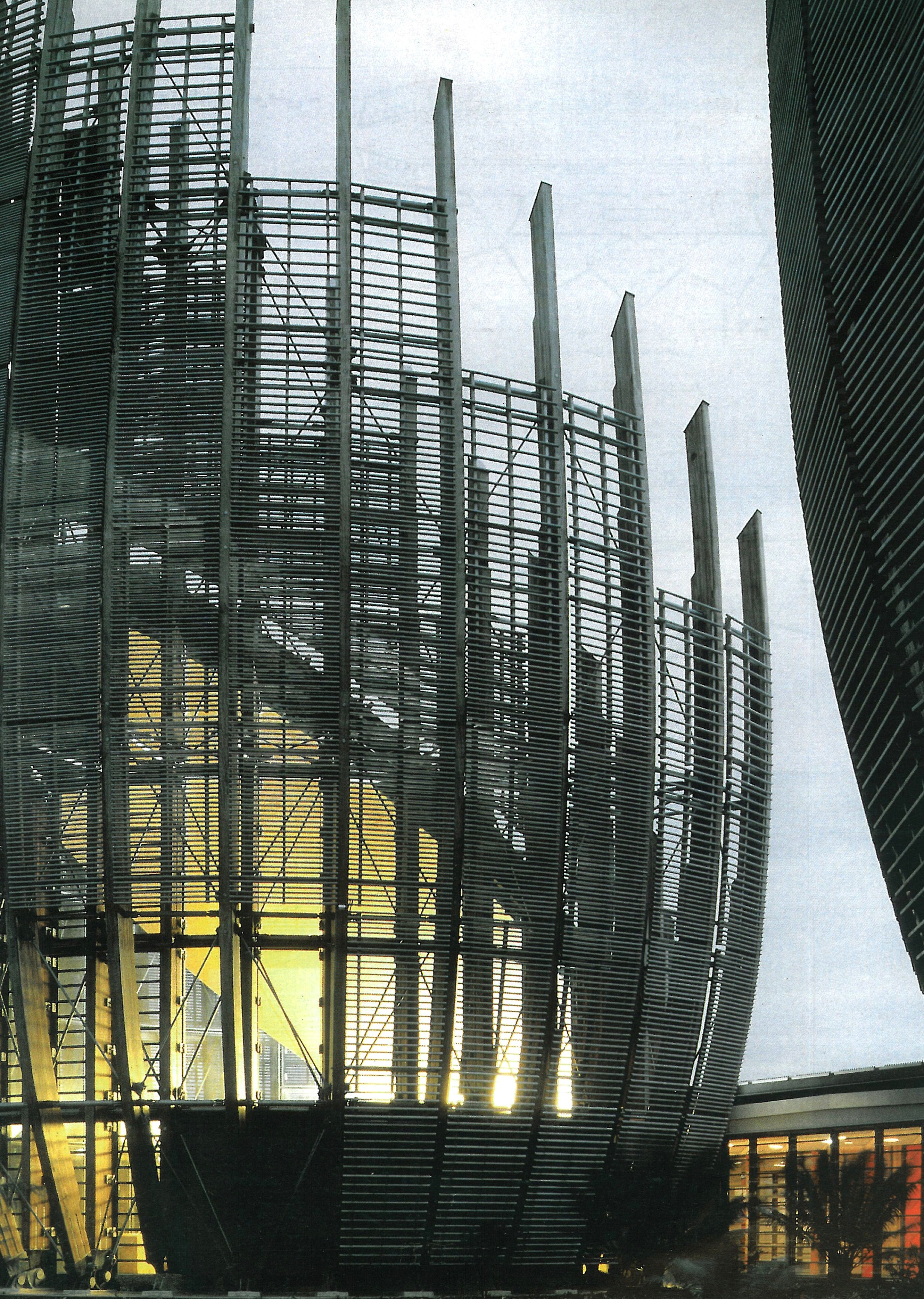
Detail of the shell structure exterior showing the vertical iroko wood ribs and horizontal louvers of the double-wall construction
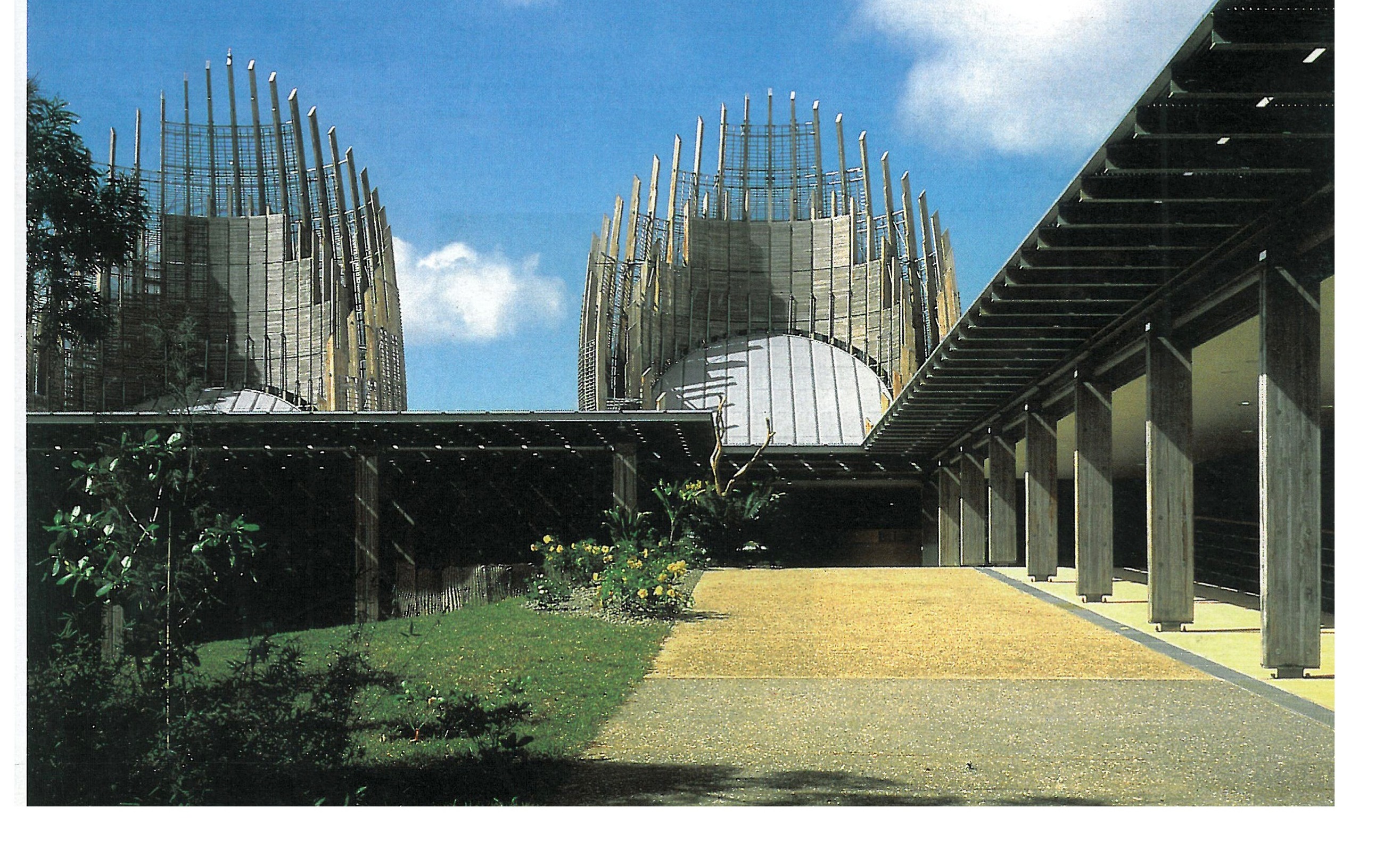
Detail of the shell structure from outside. The vertical iroko wood ribs curve inward at the top, while horizontal stainless steel ties and wooden louvers fill the space between the outer and inner shells. The glazed roof of the low connecting gallery is visible below.
“High technology, gentle execution.” Modernity, nature, and tradition are reconciled with one another.

High technology is the underlying foundation for the formation of this project, which has its roots in the concept of memory. In this approach—“high technology, gentle execution”—modernity, nature, and tradition are reconciled with one another. The use of laminated iroko wood for the primary structure, combined with stainless steel connectors and an advanced automated ventilation system, represents a synthesis of indigenous building wisdom and contemporary engineering that is without precedent.

◆ ◆ ◆

Structural Details

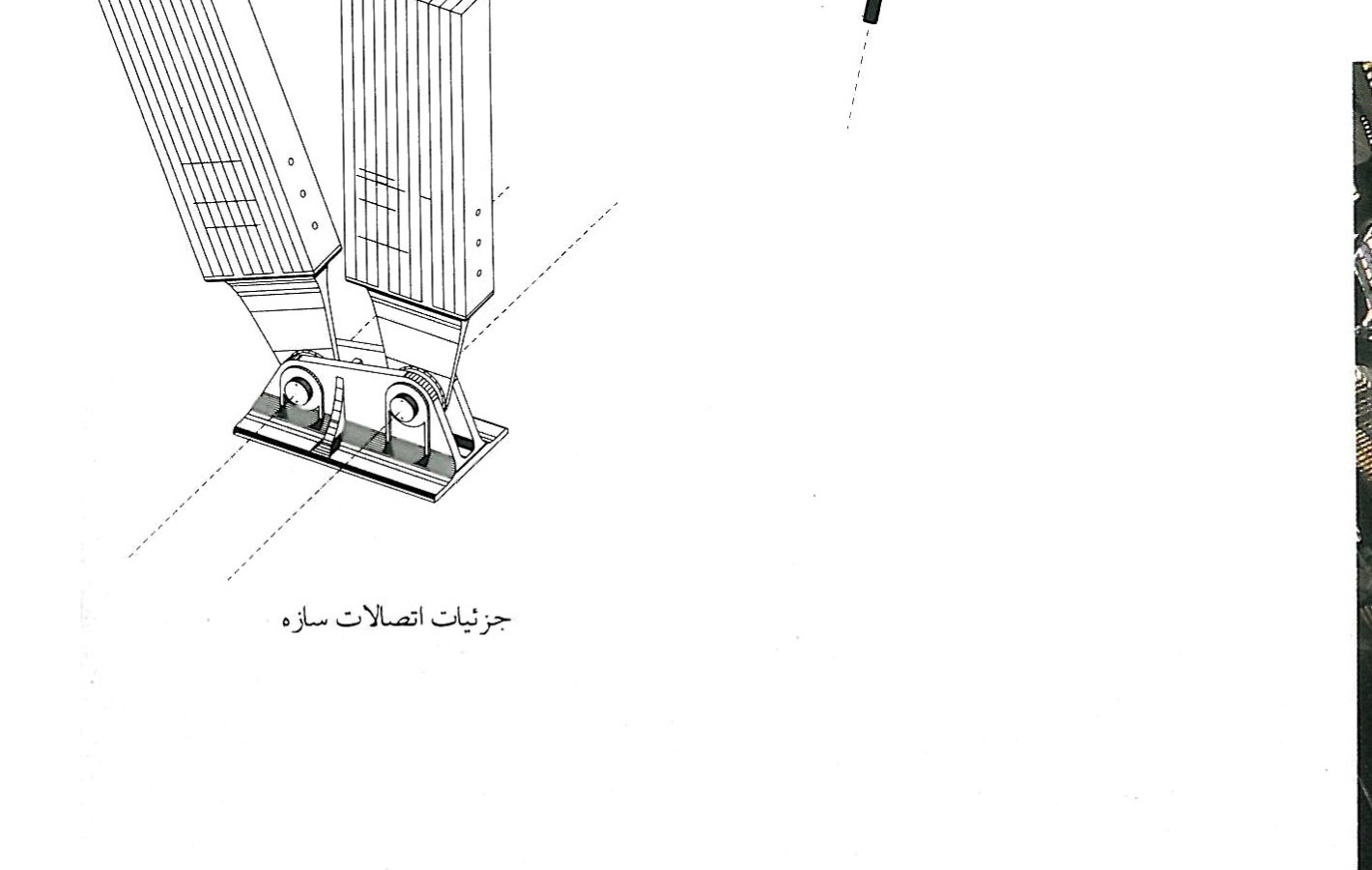
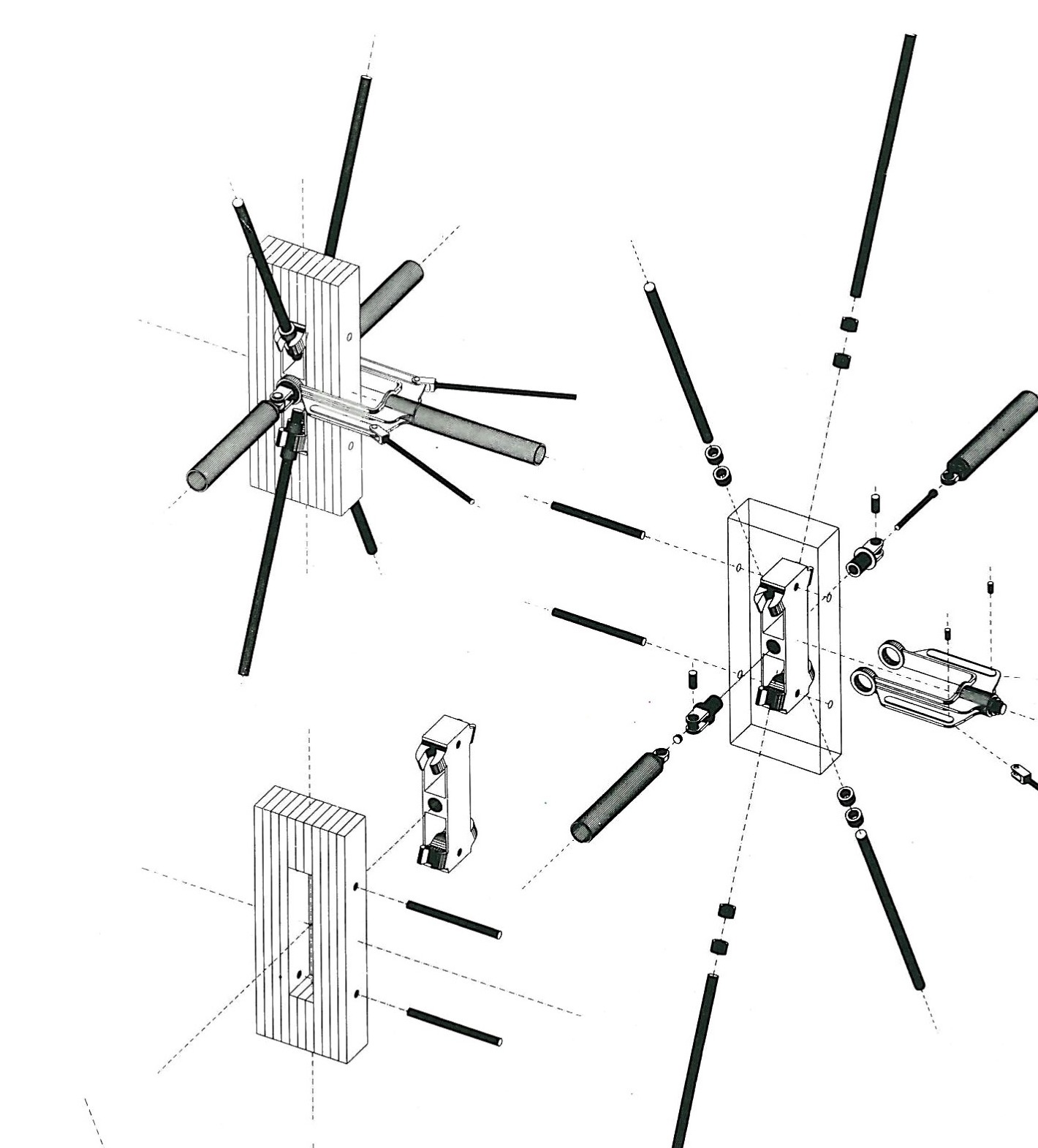
Exploded axonometric drawing showing the structural connection details of the timber and steel joints
Exploded axonometric of the structural connections. Laminated iroko timber members are joined by cast stainless steel nodes, with tension rods providing lateral bracing between the curved ribs.
Close-up photograph of the actual structural connections showing the stainless steel nodes joining the timber members
Close-up of the actual structural connections. The precision of the stainless steel castings and the warmth of the iroko wood are equally evident.
Vertical section drawing through one shell structure showing the curved rib framework and horizontal cross-bracing
Vertical section through one case. The drawing shows how the curved ribs are joined by horizontal cross-members and tension cables to create a rigid yet lightweight framework.
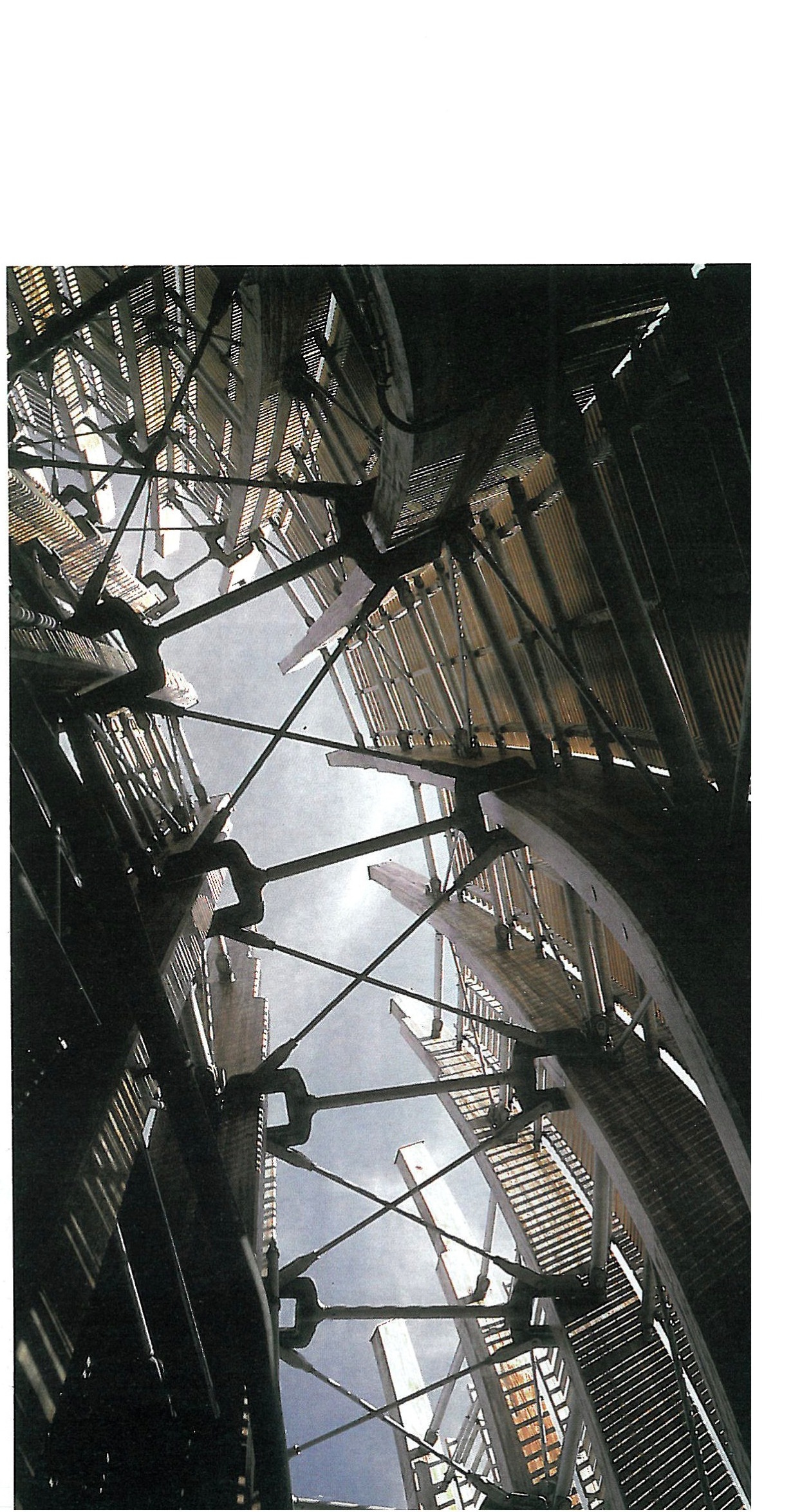
View looking up through the interior of a shell structure, showing the converging timber ribs and steel tension cables against the sky
Looking up through the interior of a case. The converging timber ribs, steel tension cables, and horizontal louvers frame views of the sky, creating a cathedral-like sense of enclosure and aspiration.
◆ ◆ ◆

Interior Spaces

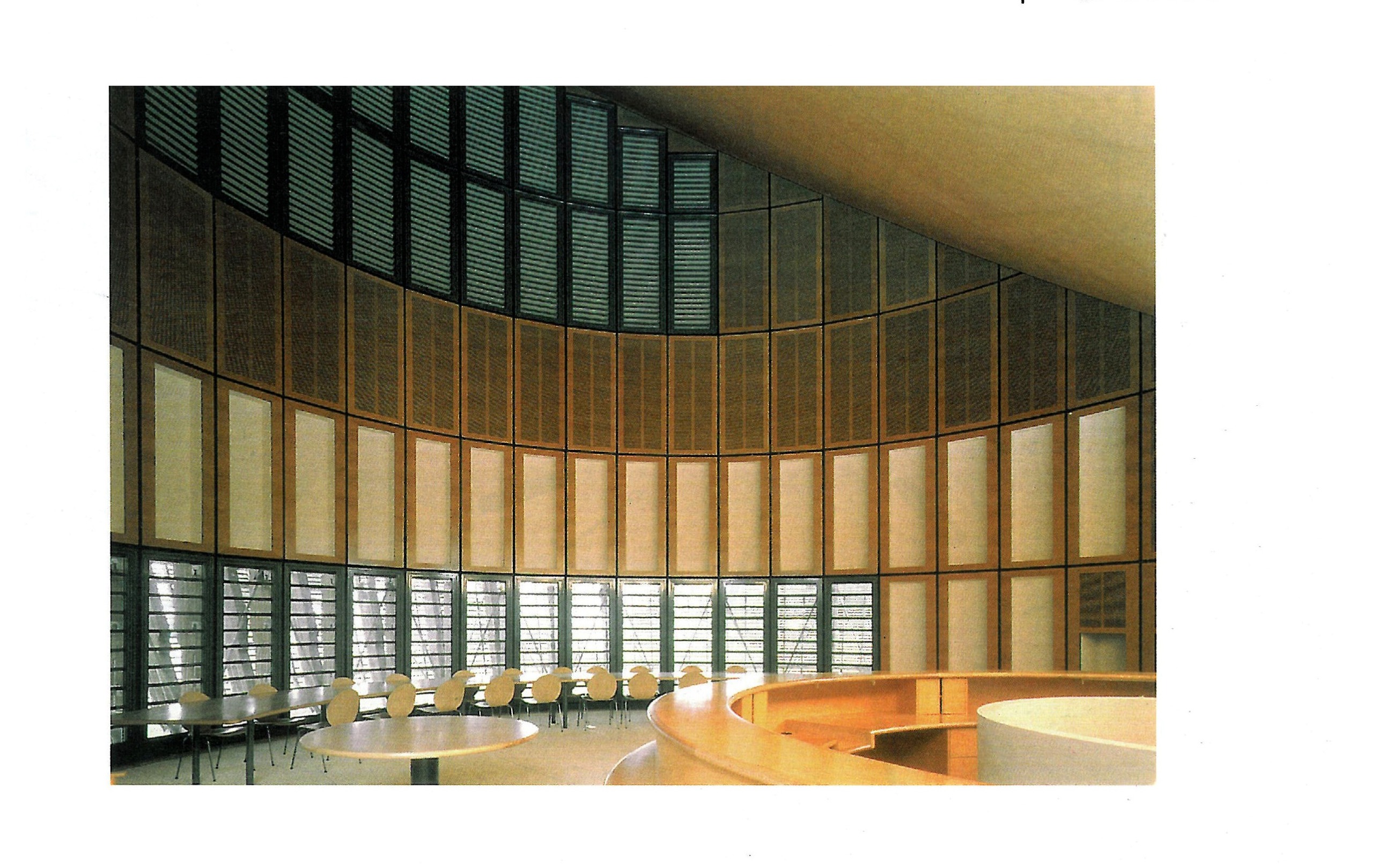
Interior of a circular conference room with curved wood-paneled walls, clerestory windows with louvers, and a ring of modern chairs around oval tables
Interior of the conference room within one of the larger cases. Curved wood panels line the walls, with clerestory windows and adjustable louvers above admitting filtered natural light. The warm palette of timber and earth tones creates a contemplative atmosphere appropriate to the center’s cultural mission.
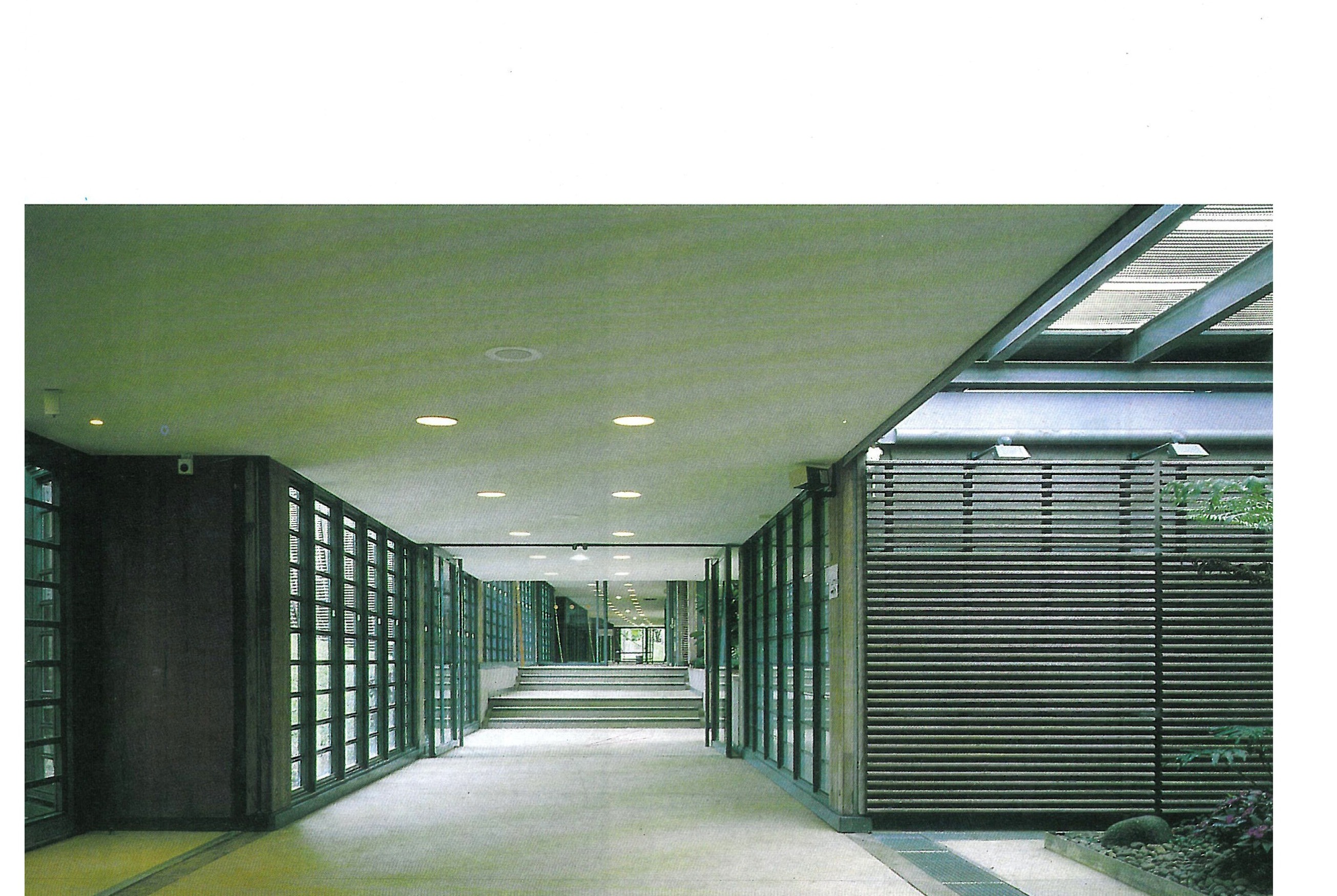
Interior corridor of the cultural center with timber-framed glass walls, horizontal louvers, and views to the surrounding gardens
The central corridor connecting the three village groups. Timber-framed glass walls and horizontal louvers on both sides provide natural light and cross-ventilation while framing views of the surrounding gardens and vegetation.
Dramatic dusk view of a shell structure with warm interior light glowing through the vertical timber ribs and horizontal louvers
A case at dusk. Warm interior light radiates through the vertical iroko ribs and horizontal louvers, transforming the building into a luminous beacon. The double-shell construction that serves as a climatic buffer by day becomes an expressive lantern by night, revealing the skeletal elegance of the structure.
Memar Magazine
Issue 04 · Winter 1377 / Spring 1999 · Source: el croquis, no. 92, 1998
Renzo Piano: Jean-Marie Tjibaou Cultural Center