



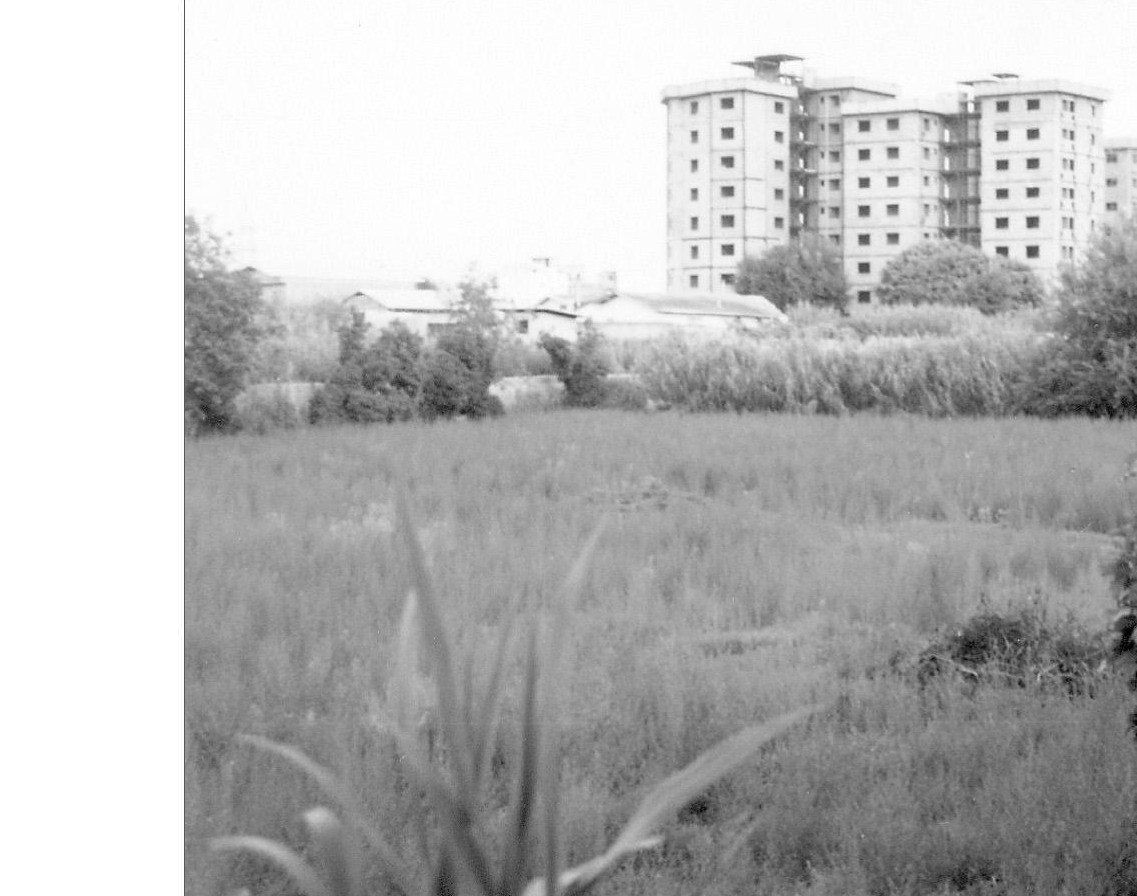
In 1381 (2002), when the law banning the sale and transfer of land without residential use was passed, a hope opened for urban planning and urban planners, for it seemed that this law had been passed to neutralize the negative consequences of Articles 147 and 148 of the Property Registration Law — which had apparently been enforced to solve the problem of unregulated construction on the fringes of cities such as Arak and Mashhad, and which in practice had voided urban-planning regulations. But after a long wait, the Council of Ministers, in its session of 6 Khordad 1383, on the joint proposal of the ministries of Housing and Urban Planning, of the Interior, and of Cooperatives and Social Affairs, and on the basis of Article 11 of the sale-ban law, approved the “Directive for the Preservation of Gardens and Agricultural Lands” — and unfortunately, in so doing, took a step backward compared with the past.
In the “Directive for the Preservation of Gardens and Agricultural Lands” — the subject of Article 14 of the law and Article 63 of the executive bylaw of the Urban Land Law, approved after the Revolution — gardens and agricultural lands that had residential use in the comprehensive and detailed plans were permitted to be subdivided and built upon in accordance with the plans’ urban-planning regulations; and the remaining gardens, with an occupancy of 150 metres and a maximum area of 300 square metres, and agricultural lands, with an occupancy of 250 square metres and a fixed maximum area, were permitted to build. Under this directive, gardens and tree-planted lands of less than 500 square metres were not counted as gardens, and the owner was permitted to build in accordance with the urban-planning regulations. After this, on 18 Tir 1369, the directive permitting the subdivision of all gardens and agricultural lands was issued, and the minimum subdivision was set at one hectare for gardens within the city and two hectares for agricultural land.
Thus, to declare wrong the blocking of part of the gardens while, on the contrary, permitting the subdivision of gardens that had residential use, is an unjust decision. This change treated all gardens equally before the law. After a few years, experience showed that a one-hectare garden in the city centre needs a permanent gardener; consequently this law was reviewed anew, and in 1372 the minimum plot subdivision was reduced to one fifth — that is, 2,000 square metres — and occupancy changed from the fixed figure of 150 square metres to 10 per cent, and density to 20 per cent (for a 2,000-square-metre garden the occupancy rose to 200 square metres and the total area to 400 square metres). In the article “Can the Remaining Gardens Be Preserved?” in the journal Shahr, it was noted, regarding Article 14 of the Urban Land Law, that laws which ignore the rightful interests of a group and are founded on excess and deficiency usually turn against themselves and yield the opposite result. It must be admitted that Article 14 of the Urban Land Law had been written by a group of experts and specialists resting on principles worthy of attention.
In Articles 147 and 148 of the Property Registration Law, we arrive at a process that subdivides these gardens on the city fringes without hindrance and grants a subdivision permit to all of them. The new directive had four positive points: first and second, permits to subdivide the gardens were granted (into 2,000-square-metre plots); third, permits to build in the gardens were granted (with a minimum occupancy and minimum density); fourth, to preserve part of the gardens, the freeing of the rest of the garden was demanded of the owners. All of these are positive; but percentages and quantities cannot strip the owner of proprietary rights, and the municipality — or, one might say, the people of the city — cannot demand a greater share from the owner either. Such laws will undoubtedly meet with strong resistance and will have results similar to what happened in Behshahr.
The comprehensive plan of the city of Behshahr had been carried out; in 1368, when the surveys of the existing state were made, the total area of gardens and agricultural land was 613 hectares. In 1372, when the detailed plan was carried out, the area of gardens and agricultural land fell to 427 hectares. In 1380, when the new detailed plan was carried out, only 310 hectares of gardens and agricultural land remained — that is, in twelve years half the gardens and agricultural land within the city was lost. Moreover, in Behshahr, from 1373, when its approved detailed plan was prepared, until the end of 1380 (the time of preparing the revision plan), 48 garden plots covering 7.3 hectares were granted a change of use by the Article 5 Commission: four to administrative use, three to sports, one to green space, one to medical, four to educational, five to commercial, and the rest converted to residential (35 of these were given to profit-generating services, and in these cases the double standard in dealing with the owners is clearly seen and is unjustifiable).
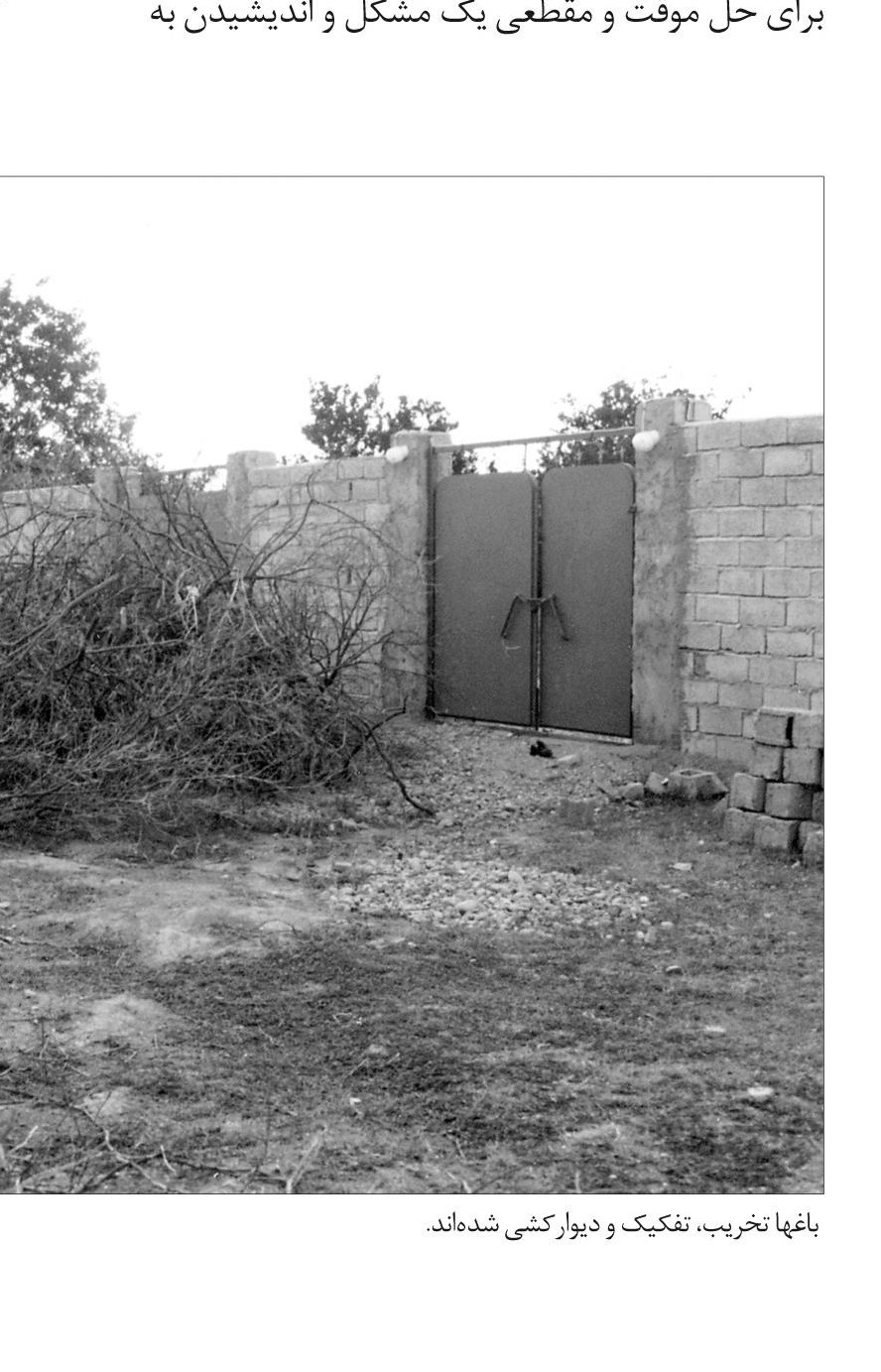
It is also necessary to note how the urban plans deal with this matter. The number of gardens and agricultural lands assigned to public uses in the past comprehensive and detailed plans is 34 and 67 plots respectively, with an area of about 21 and 79 hectares. Among public uses, green space and parks — although they are the closest public use to gardens — the trees planted in them are not fruit trees; and the other uses, regardless of how necessary they may be, mostly destroy the gardens: to build a school or a stadium in a garden, there is no choice but to fell all the trees, and only along its wall can one or two rows of trees be preserved. Thus the proposal by the makers of the urban plans to change the use of gardens to public, non-profit, or profit uses, and to bring a wide swath of gardens and agricultural land within the city limits, has been not in the direction of preserving the gardens but a seal of approval upon the destruction of part of them. In the article “A Study of the Factors of the Destruction of Gardens and Agricultural Lands South of Birjand,” it was likewise noted that, unfortunately, the governmental organizations and bodies — or those affiliated with them — that ought to preserve the gardens have themselves caused their ruin and taken the first step.
In this way, so far, first the laws and then, at later stages, the executors of the urban plans have joined hands and become the agents of the gardens’ destruction. Unfortunately the executive bylaw of the law banning the sale and transfer of land without residential use is, likewise, not only no solution to this problem but counts as an effective step in the destruction of gardens and agricultural land. It seems the authorities have not noticed that to test the tested is a mistake. They could at least have attended, too, to the following four points:
First: drafting an incentive bylaw so that people do not convert their gardens into barren land and, on the contrary, convert their barren land into gardens to enjoy its advantages — that is, taking back part of the privileges hitherto given to barren land and giving them to garden-owners. Second: drafting an incentive bylaw to preserve the integrity of gardens so that people will not wish to subdivide them, in such a way that the owner reckons that if he subdivides his property (even into 2,000-metre plots) he benefits from a lower density, and if he does not subdivide, from a higher one. Third: drafting a punitive bylaw for owners who wish to build, so that buying such land becomes uneconomical. Fourth: drafting law for long-term periods, not for the temporary and piecemeal solving of a problem, and considering uses that allow building at height with a limited occupancy — such as tourism, hospitality, or cultural uses, as set out in Article 14 of the Urban Land Law.
Land within the service boundary must be allotted to the city’s needs, and a garden or agricultural land retaining its use within the city limits can have meaning only if the public sector has taken it in hand for a particular purpose; otherwise, compelling owners to preserve a garden or agricultural land within the city limits is not possible. In conclusion: it is essential to study the earlier laws and to seek the views of those who implemented them, in order to avoid drafting laws that take one step forward and two steps back and are worse than lawlessness — and, more important, to avoid adding an article or a note for a particular group. Notes: 1. Shahr journal, no. 21, spring 1381; 2. Bon journal; 3. Shahr journal, no. 24, autumn 1381.