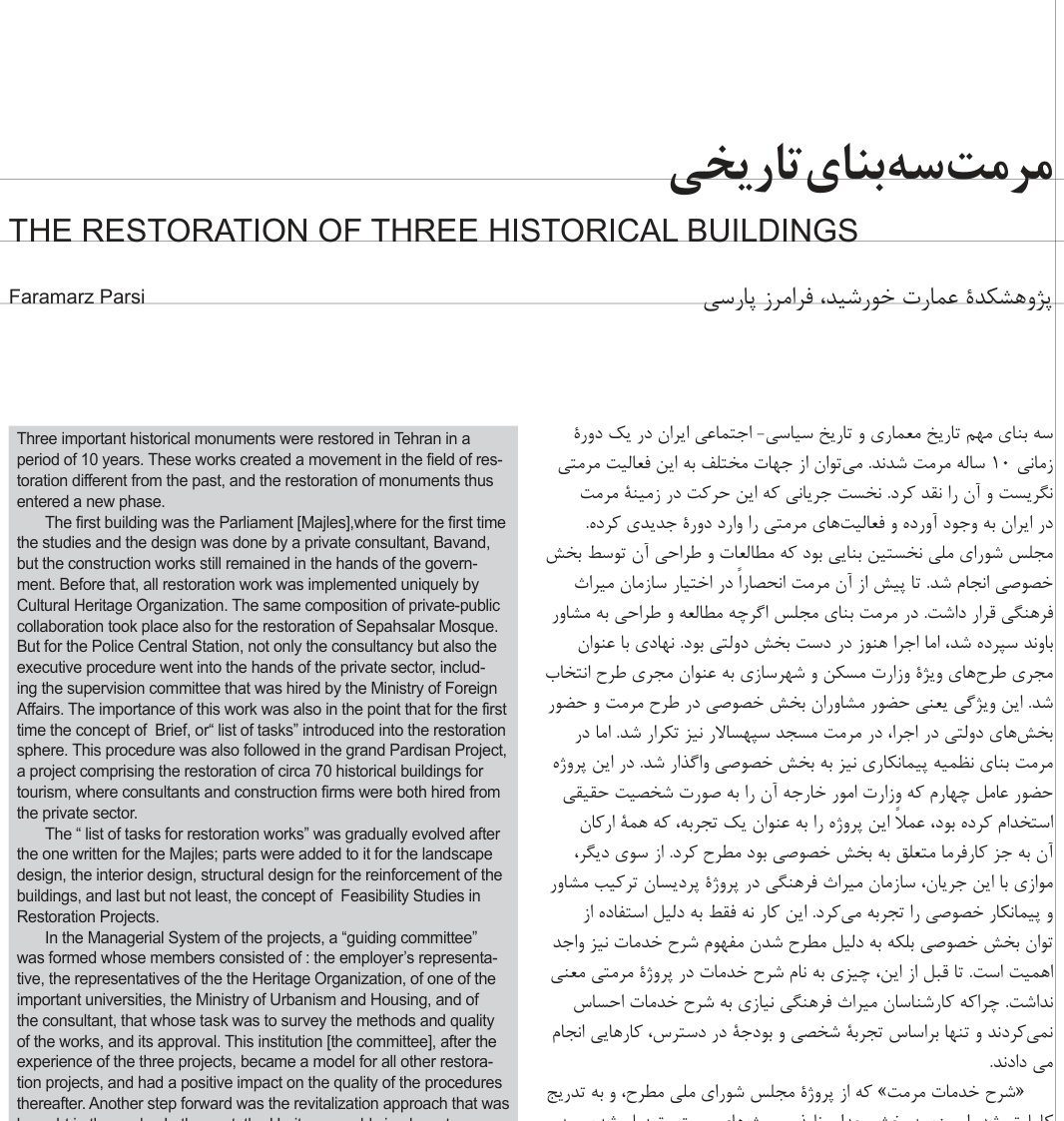
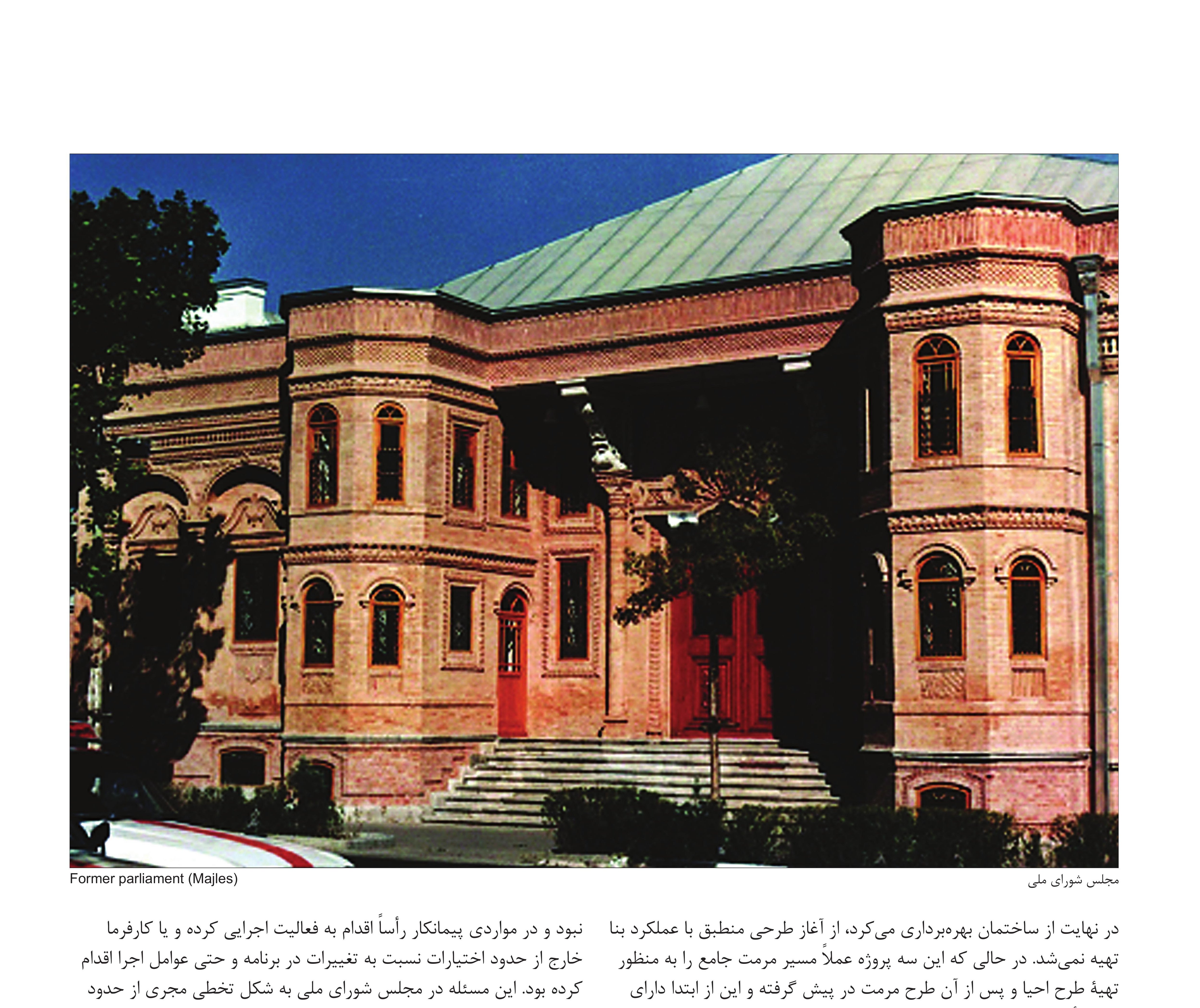
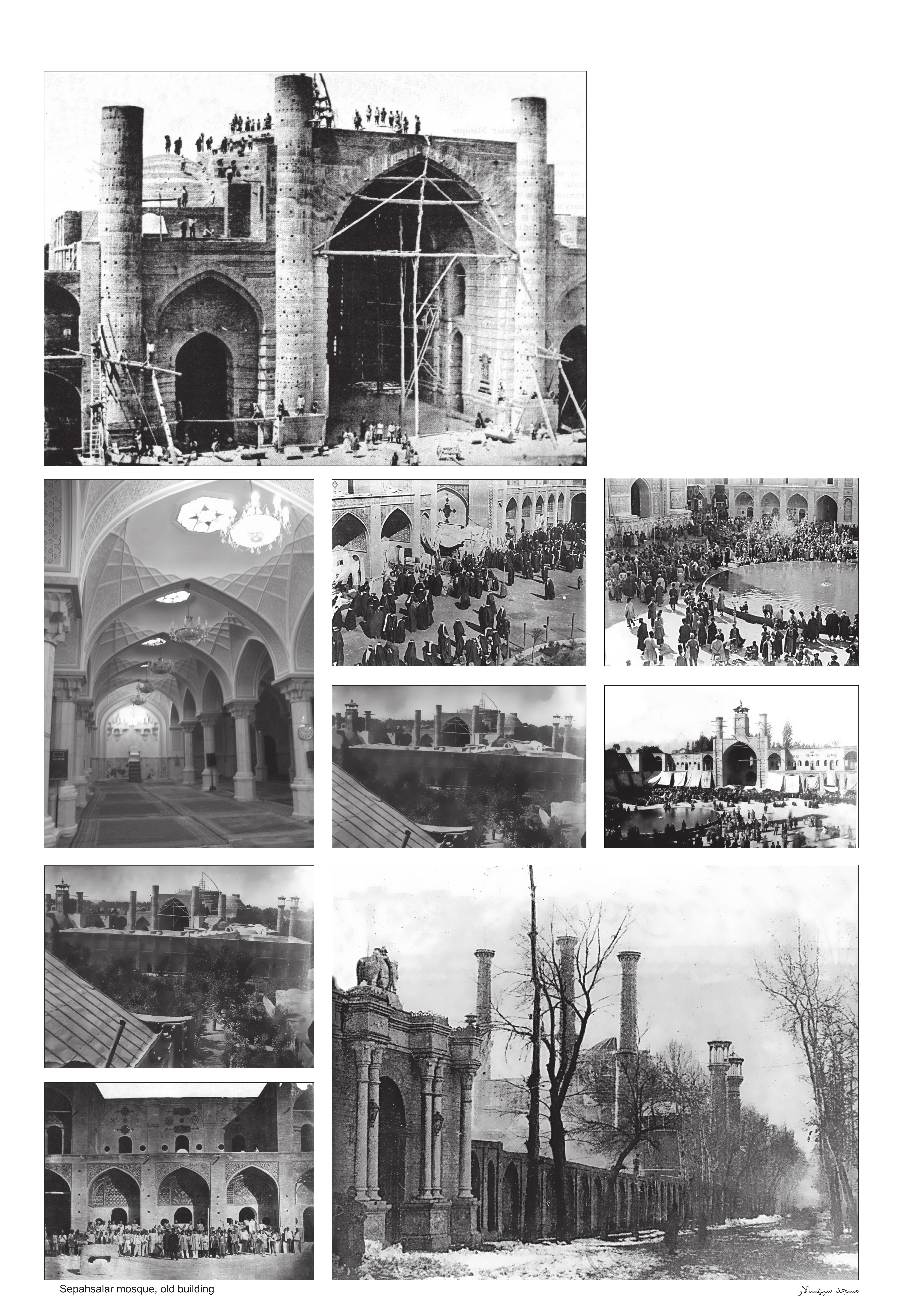
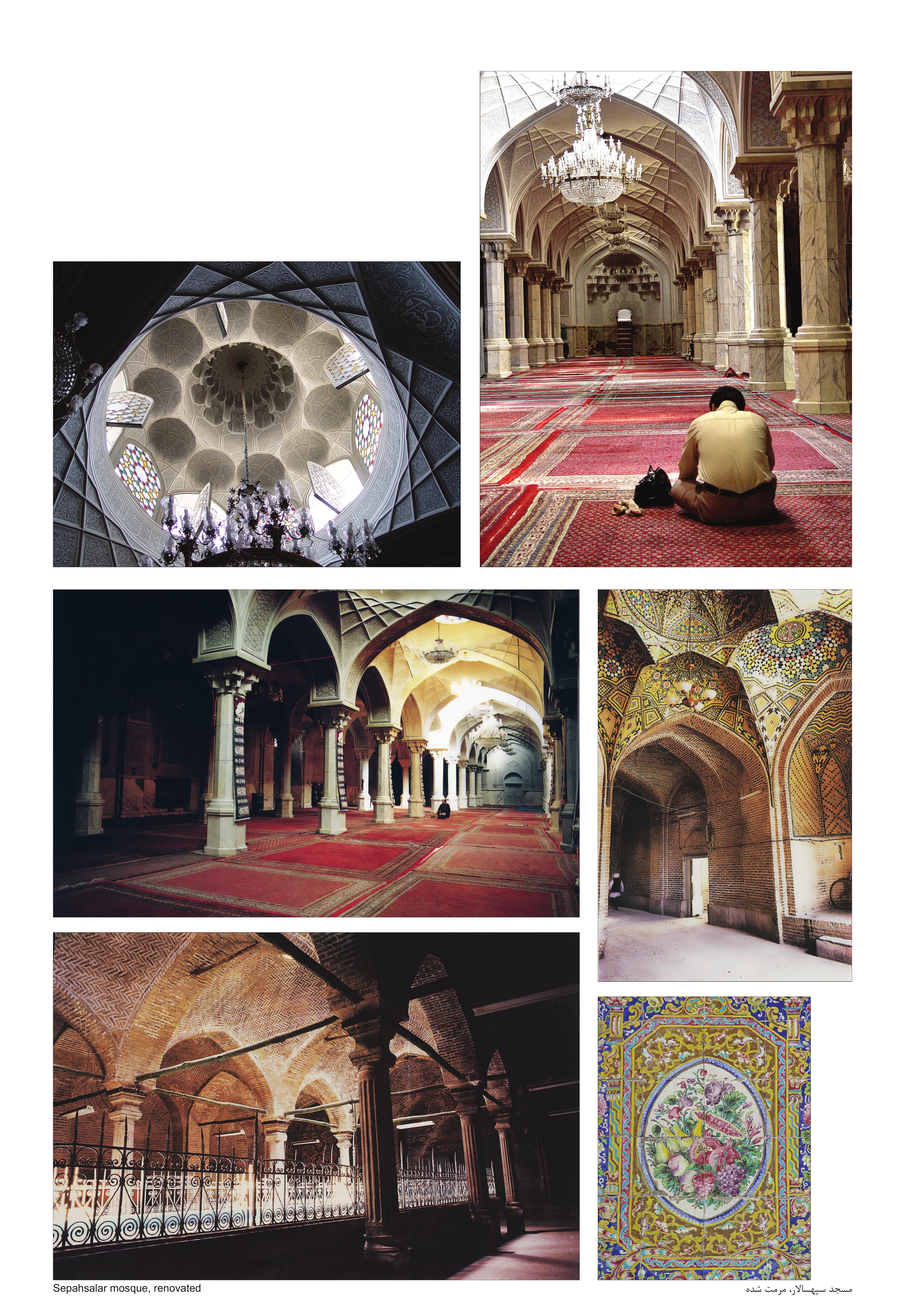
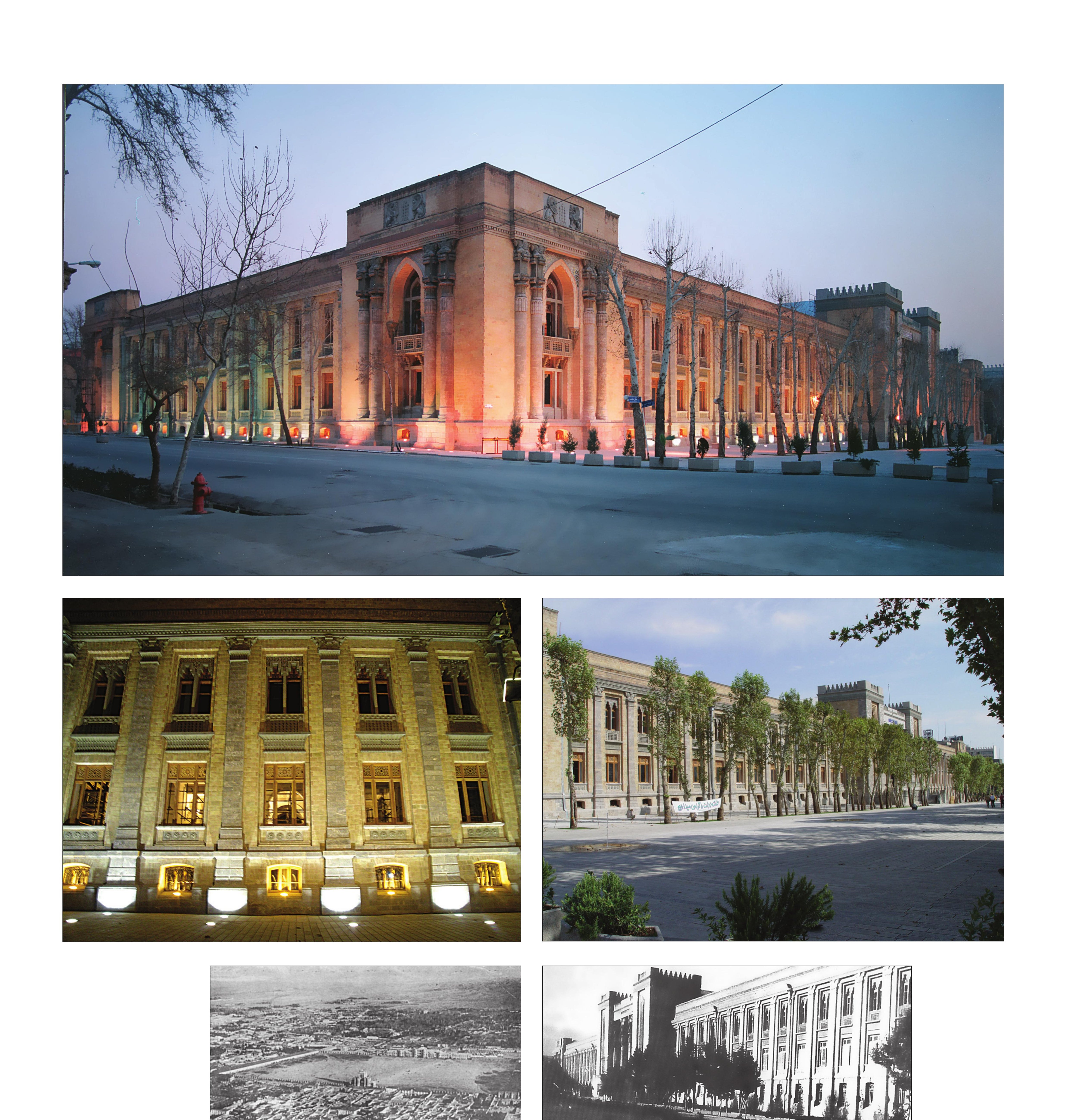
Three important historical monuments were restored in Tehran in a period of 10 years. These works created a movement in the field of restoration different from the past, and the restoration of monuments thus entered a new phase. The first building was the Parliament [Majles], where for the first time the studies and the design was done by a private consultant, Bavand, but the construction works still remained in the hands of the government. Before that, all restoration work was implemented uniquely by Cultural Heritage Organization. The same composition of private-public collaboration took place also for the restoration of Sepahsalar Mosque. But for the Police Central Station, not only the consultancy but also the executive procedure went into the hands of the private sector, including the supervision committee that was hired by the Ministry of Foreign Affairs. The importance of this work was also in the point that for the first time the concept of Brief, or “list of tasks” introduced into the restoration sphere. This procedure was also followed in the grand Pardisan Project, a project comprising the restoration of circa 70 historical buildings for tourism, where consultants and construction firms were both hired from the private sector. The “list of tasks for restoration works” was gradually evolved after the one written for the Majles; parts were added to it for the landscape design, the interior design, structural design for the reinforcement of the buildings, and last but not least, the concept of Feasibility Studies in Restoration Projects.
In the Managerial System of the projects, a “guiding committee” was formed whose members consisted of: the employer’s representative, the representatives of the the Heritage Organization, of one of the important universities, the Ministry of Urbanism and Housing, and of the consultant, that whose task was to survey the methods and quality of the works, and its approval. This institution [the committee], after the experience of the three projects, became a model for all other restoration projects, and had a positive impact on the quality of the procedures thereafter. Another step forward was the revitalization approach that was brought in the works. In the past, the Heritage would simply restore or reinforce, without planning about the function of buildings. Now, the design process starts having in mind the ultimate use of the building. This idea of Comprehensive Restoration was also taken into consideration in the Pardisan Project since the year 2000.
There were also weaknesses that should be mentioned: the sufficient studies and theoretical preparation for facing such projects; this was especially true for the Sepahsalar mosque, where a revision in the works has to take place some day in the future. Also in the other 2 buildings, some of the overdone interventions could be criticized. Furthermore There were too many “committee” meetings, and very few written reports; as a result, there is not enough documentation on what has taken place during the restoration works. In all three projects, the employer-contractor-consultant relations were not well defined, and this led to severe problems. It should be reminded that 2 of the projects are still not completed; and that in the old buildings the maintenance and continuous surveillance is of great importance, and it is not foreseen for these 3 monuments.
Nevertheless, the restoration of the 3 buildings, as three memories of our history in Tehran, has been so precious, and they can be used with today’s standards of living.
* Faramarz Parsi, an architecture graduate, has a long history in restoring historical urban fabrics and buildings, teaching from 1994 to 2011 at Azad Universities, Science and Technology and the Cultural Heritage Universities. Parsi has also been a member of the Memar editorial staff from 2006 to 2011.



