
Understanding Architecture.
For us to find our place in the world, the world must be a cosmos1. In chaos there is no place.2
Max Scheler
Every society takes part in a kind of social-political imagination. This is the expression of a concert of mythic or symbolic discourses that serves to motivate and guide the citizens of the society... By ritualizing and encoding its experiences in terms of an idealized self-image gathered from the past, the society provides itself with a kind of ideological stability: a unity of the collective imagination that may be overlooked in the everyday realities of [that] society.3
Richard Kearney
My present inquiry into narrative places me squarely at the heart of [this] social and cultural creativity, since telling stories... is the most important act of every society. By telling their own stories, cultures create themselves.4
Paul Ricoeur
The Form of Ritual
All architectural structures give concrete, material form to beliefs, ideas and patterns of behavior. As Louis Kahn observes, “Rooms should, without names, recall their uses.”5 The spatial structure of a school facilitates teaching situations, whereas a church is the material embodiment of ecclesiastical rituals and of the relationships between God, bishop and congregation. The building of a court or a parliament gives concrete form to hierarchies, roles and relationships of individuals, and to the patterns of behavior appropriate to them, in relation to legal and political procedures. A museum provides concentrated situations suited to viewing art and a necessary aura for the works on display, and a library intensifies the relationship between reader and book. Even a dwelling is an instrument that creates a particular pattern of daily activities and their relationships. Some buildings are openly built for ritual, but the repetition of any activity, whether secular or religious, tends to become ritualized, and by facilitating this, an architectural structure can turn into a ritual instrument - sometimes without drawing any attention.
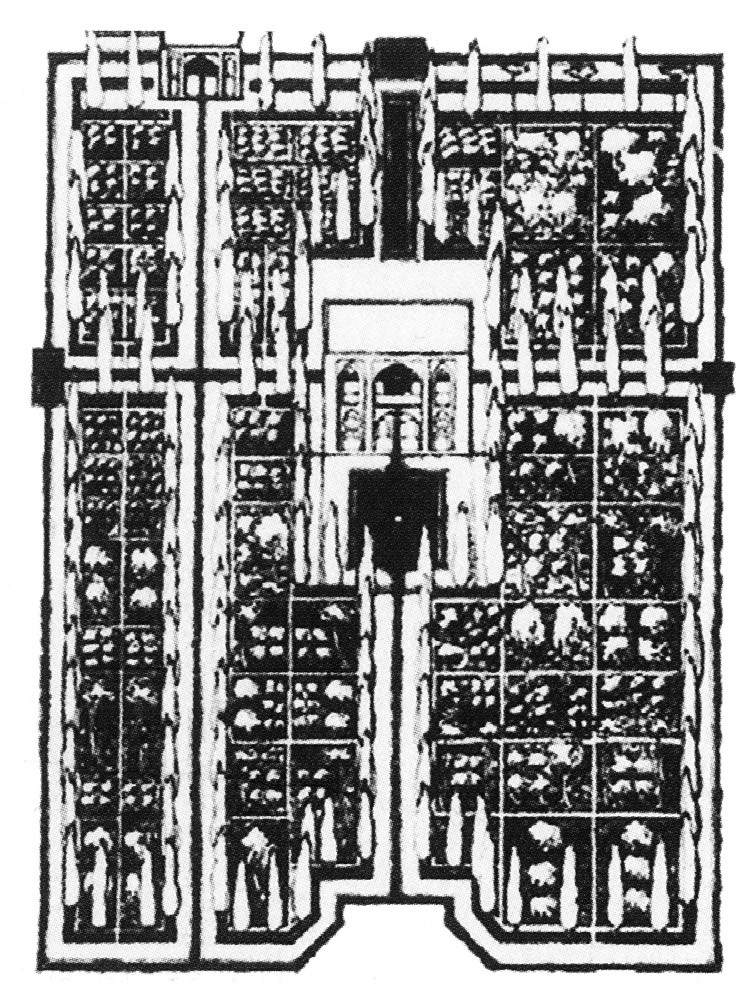
Most rituals arise from the human need to find the meaning of the world: its origins, its nature and workings, and also its ultimate fate. Understanding the world is also a precondition of understanding ourselves. Pre-scientific understanding was based on knowledge of the creation and origin of the cosmos, on myths, legends, and beliefs, all of which are still part of human consciousness alongside scientific knowledge. These transient sources of knowledge and belief are re-enacted through rituals and ceremonies and repeatedly take concrete form in the form of space; in turn, spaces tend to attract the creation of new rituals. As Karsten Harries observes, “Architecture helps to replace meaningless reality with a theatrically, or more or less architecturally, transformed reality, which draws us in and, as we surrender to it, grants us an illusion of meaning... We cannot live in chaos. Chaos must be transformed into cosmos... When we reduce the human need for shelter to a material need, what we call the ethical function of architecture is hidden from our view.”6
Through this transformation, the space of everyday life becomes a reflection on and a metaphor of the metaphysical world. The repetition of rituals expresses time and periodicity - the passing of the seasons, the cycle of sun and moon, and the events of the stars - and gives them, as well as the hierarchies and events of social, family and individual life, concrete form. Rituals are also mediators of the relationships of human beings with superior superhuman powers and deities, and they secure the favor of the gods and bring good fortune to everyday human endeavors.
This kind of thinking, which prompts rituals, myths and ceremonies, is akin to the images and associations we encounter in dreams; Sigmund Freud called these “archaic remnants of the mind” and Carl Jung later gave them the name “archetypes.”7 These deep historical associations act as a link between reason and the unconscious. Jung defines archetypes as patterns and emotions that tend to create associations and meanings. Archetypes therefore do not have a closed, fixed symbolic significance; instead they act as generators of associations; they prompt continual transformation. As Jung says, they belong to life itself, and through the emotions they are inseparably bound to the individual.
Archetypes are also the basic material of the language of architecture, which can be very simple yet very powerful. Sinclair Gauldie openly takes the existence of an archetypal architectural language for granted:
That building which, long after the fashionable interpretations of its time have turned into clichés, still contributes to certain memorable qualities of human life, is a building that draws its communicative powers from unchanging emotional associations in the architectural language, those that have deep roots in the shared sensory experience of humanity.8
Adrian Stokes’s remark, “Architectural forms are a language confined to the joining of a few ideographic signs that have immense consequences,”9 points to the condensed archetypal and metaphorical significance of the language of architecture. This condensation of meaning lets certain buildings make a sudden and deep impression on the mind. As Colin St John Wilson has described,
“It is as if a secret code has engaged me in play, one that cannot be translated into words, that acts directly upon the nervous system and the imagination, that at the same time fuses the signs of meaning with living spatial experience, as if they were one thing. I believe the reason this code acts on us so directly and vividly is that it is strangely familiar; it is in fact the first language we ever learned, long before words, and it is now recalled through art, which alone holds the key to its revival...”10.
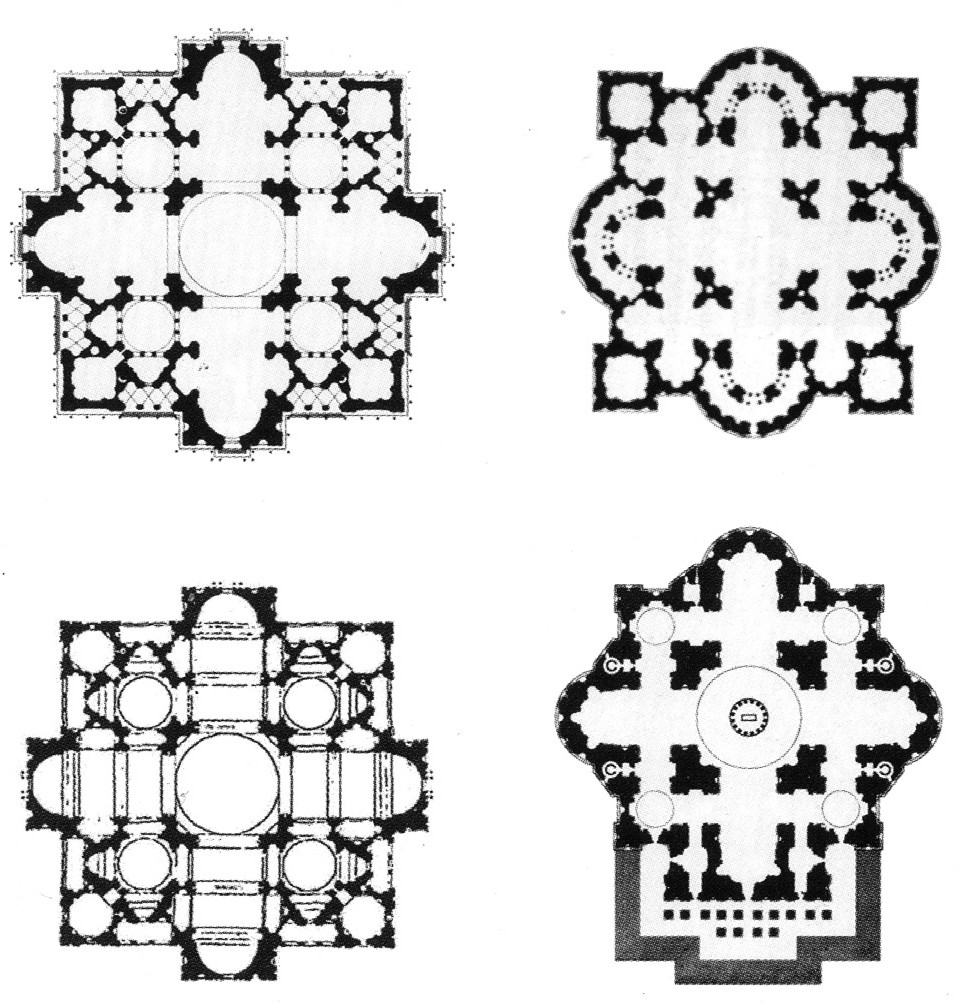
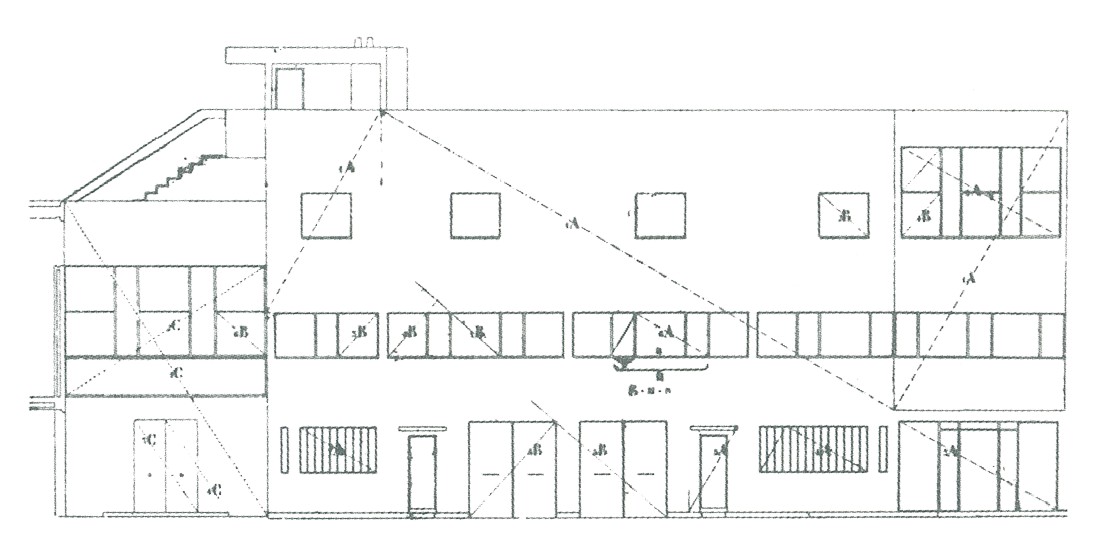
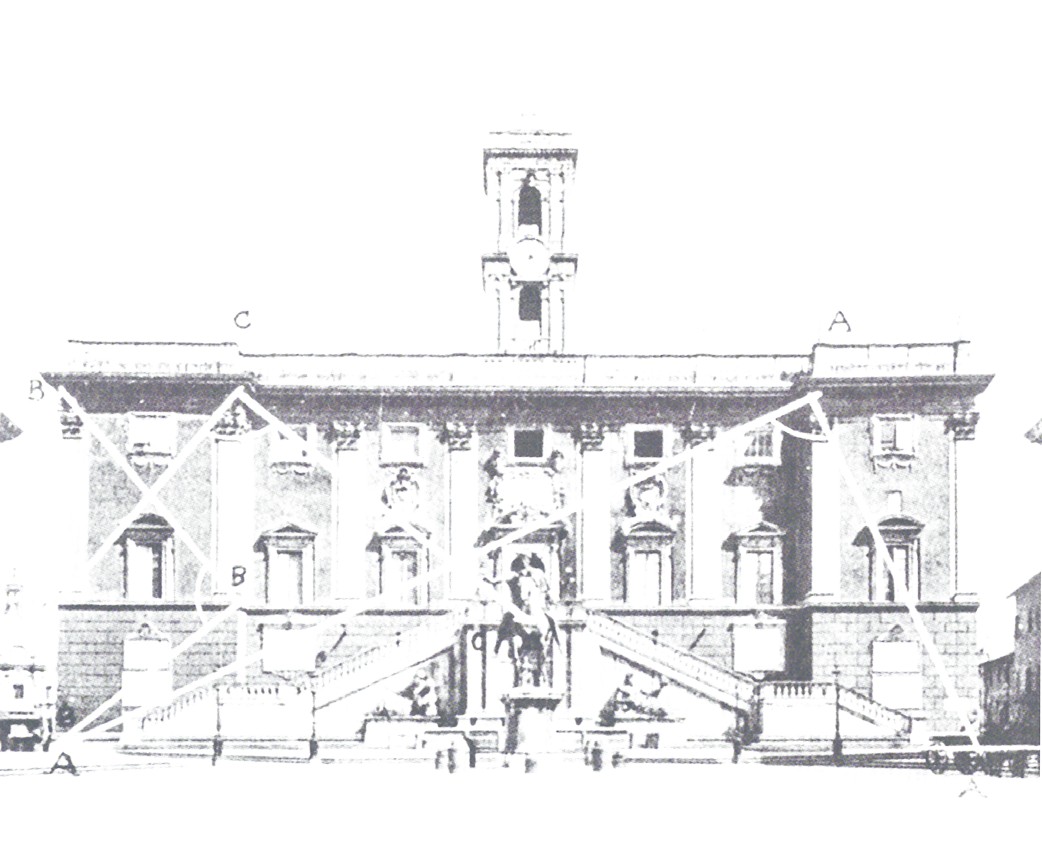
The form and construction of individual buildings and the design of the relationships between them bring such links between human thought and the larger world into play. The form of the symbolic structures of human settlements and of particular buildings and structures, for example places of worship, gives concrete form to myths and mythic beliefs. The mandala, an object of meditation that represents the cosmic order in relation to sacred forces, is a combination and juxtaposition of basic geometric forms. The mandala is usually associated with Eastern cultures, but it is also seen in Christian art. Indian temples are clearly three-dimensional spatial architectural mandalas, but the floor plans of classical buildings, including Renaissance and Baroque churches, also resemble meditation icons. In architecture and planning, too, the mandala has had considerable importance. In fact, all architectural structures can be regarded as a kind of mandala: allegorical structures that mediate between the human realm and the metaphysical dimension. Symmetries, axes, geometries, and other hidden systems of organization and ordering, including Pythagorean acoustics or Le Corbusier’s “regulating lines,” are manifestations of architectural mandalas, and invisible and often conscious and specific architectural rituals.
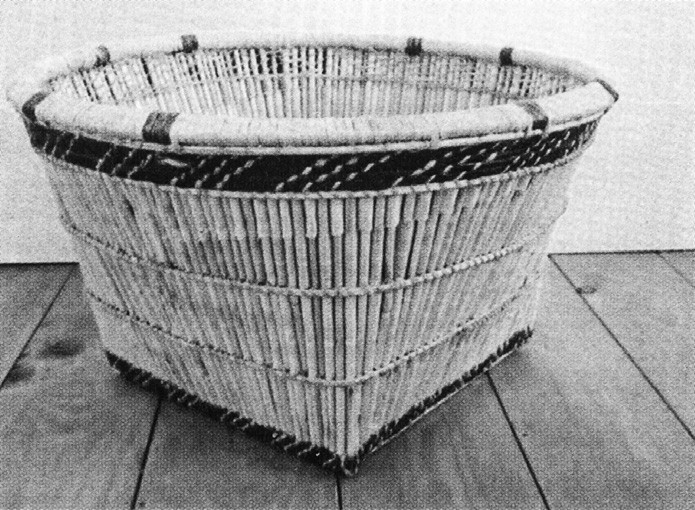
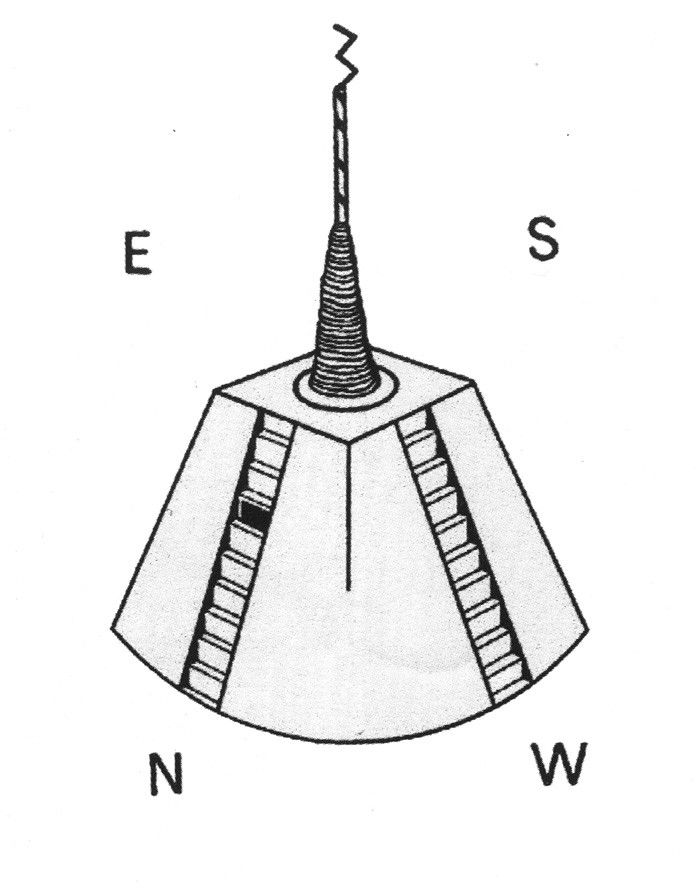
Since time immemorial, the practical procedures of building dwellings and buildings have included explicit rituals to ensure the success and sacred acceptance of these momentous efforts. These rituals range from the ancient methods of determining the position and orientation of temples, and the arrangements of circular and radial symbolic structures, to the founding rituals of the city of Rome, according to Plutarch Urbs Quadrata [square city]. The founding ritual of marking the boundaries of the city by ploughing is described as circular geometry, although the city is rectangular, as its Latin name indicates. The founding rituals and early plans of countless other cities are likewise based on images of the overlapping circle and square, regardless of geographical realities. The founding rituals of the city of Rome are essentially an instance of squaring the circle - a problem that also fascinated the alchemists - the symbolic connection of the cosmos with the man-made world.11 The same archetypal practical significance attached to basic forms is usually hidden in the orientation and placing of cult buildings. These ceremonies provided the ritual integration of the cosmic order and the human being, and the demarcation of a psychic center or of fundamental orientations.
Even in contemporary rational and secular culture, certain ceremonial rituals are carried out during the stages of the building process, especially excavation, laying the foundations, and the symbolic topping out. The various parts of a building have their own evolutionary history, and various beliefs, superstitions and ritual acts have become attached to them - especially to doors and windows. The Greeks applied resin to the frames of doors and windows to keep away evil spirits and demons, the Chinese used auspicious words with images of deities at the entrance, and the inhabitants of the Ozarks nailed horseshoes to doors, or drove three nails in the shape of a triangle to stand for the Father, the Son and the Holy Spirit.12 Recently, feng shui, the ritual processes of siting and orienting a building and its parts, has also spread in the Western world.
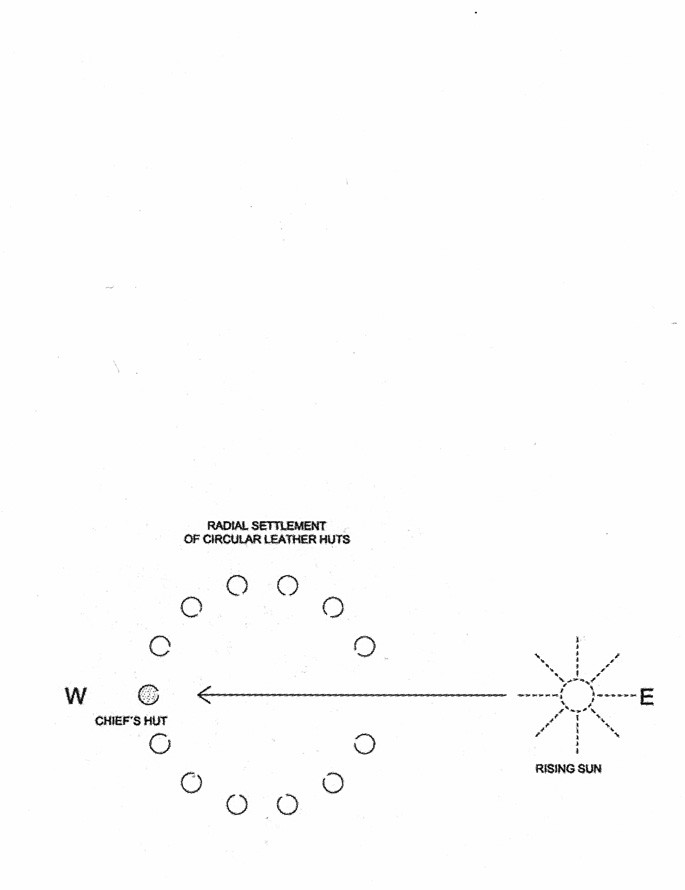
The orientation of buildings and the design of their relationships are also determined with regard to ritual. Early founding ceremonies were frequently based on the circle, the symbol of the cosmos, the sun, unity and integration. This practice is especially evident in nomadic cultures, which shun permanent settlement and therefore the material embodiment of their mental world; yet, to recall the essential aspects of their myths and cosmological beliefs, they constantly rebuild representations of these mental assumptions. The Rendille tribe, nomads who live in Kenya, are continually on the move. Every morning the women take apart the curved wooden frames and leather coverings of the huts and load these building elements onto camels to travel to the next destination on their endless journey. In the evening the women unload these hut elements and rebuild the settlement. It is always laid out as a circular village configuration with a wide opening toward the rising sun. The chief’s hut is set up on the other side of the circle, facing the rising sun. These traditional nomads carry the structure of the cosmos in their memory, and rebuild their image of the world, the cosmic image imago mundi - the daily cycle of time, the sense of place, and their social order - every day. This repeated ritual gives concrete form, through the very structure of their settlement, to their sense of space, place and time as well as to their social hierarchy. Narratives of the cosmic order, ceremonies, rituals and buildings serve the same purpose as is customary in other cultures.
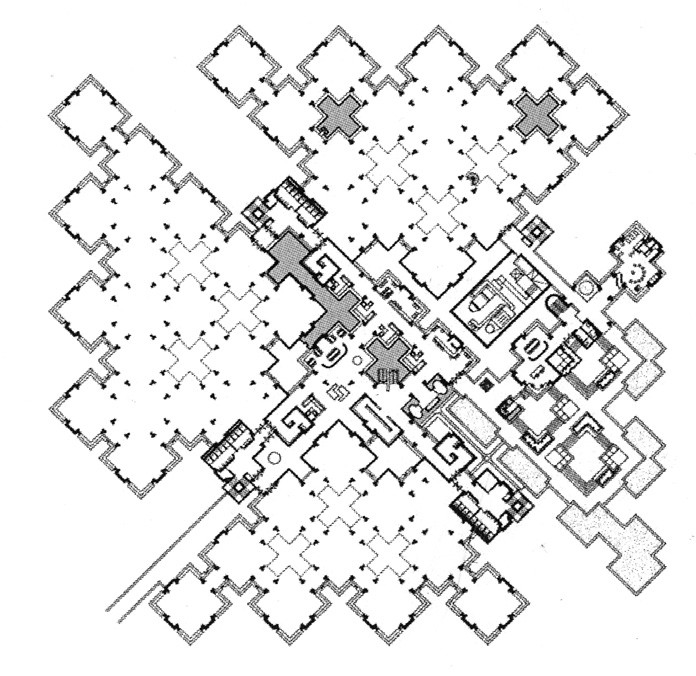
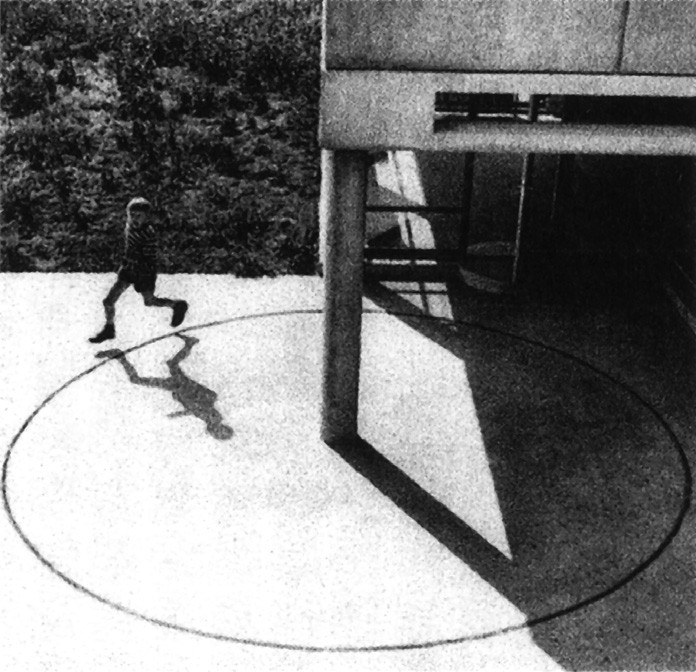
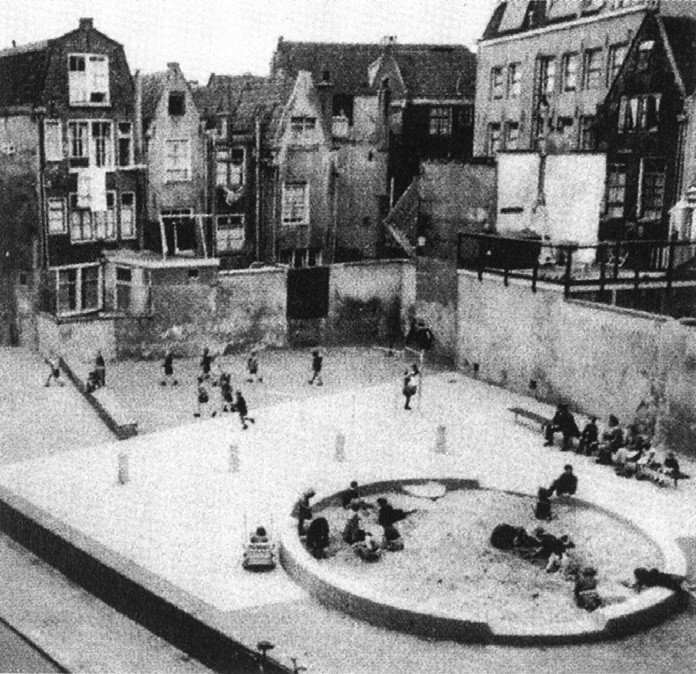
This kind of interaction between ritual and structure has inspired some modern architects. The famous Dogon tribe, who live around the Bandiagara valley in Mali, have a complex and layered cosmology, and they elaborate countless aspects and details of the story of the origins and principles of the workings of the world in the form of rituals, processes, and acts of everyday life, such as weaving, cooking and sleeping.13 Their whole life is a re-enactment of their myths and their world, and in this way it is symbolically recreated every day. The main ritual events and festivals, for example initiation ceremonies, also reflect mythic origins. In the 1950s these myths, the structure of the village and the ways of life inspired Aldo van Eyck and other Dutch architects, who wished to develop a contemporary architecture that would follow a kind of use and spatial geometry resulting from the established anthropological patterns of human spatial perception and behavior. The design of 700 playgrounds in the Netherlands (1948-61), as well as the Amsterdam Municipal Orphanage (1957-60), both employ nesting and repetitive geometries that reflect the organizing principles of traditional African settlements. Hertzberger’s structuralist projects, for example the Centraal Beheer offices in Apeldoorn (1968-72), also continue this primordial tradition of establishing architectural meaning through considered spatial geometry.
Some modernist architects tried to free architecture from its mythic and ritual context, and argued for the pure artistic autonomy of architectural language. An example of this kind of thinking appears in Philip Johnson’s remark, “The International Style was its own justification,14 which is untrue. An autonomous language, independent of the historicity and deep layering of the human mind, leads to the gradual decay of meaning and emotional resonance. Accepting and working with the countless meanings that derive from ritual leads to a better architecture and a mentally healthier society.
“One of the signs of alienation in the modern age is the widespread sense of meaninglessness... The most urgent need of modern man is the discovery of the reality and value of the inner subjective world, the discovery of the symbolic life... The symbolic life is in a sense a prerequisite of psychic health.”15
Notes
- Cosmos
- As quoted in Edward Relph, Place and Placelessness (London: Pion, 1986), 51.
- Richard Kearney, Poetics of Imagining (London: Harper Collins Academic, 1991), 158.
- Paul Ricouer, ‘L'histoire comme récit et comme pratique’, interview with Peter Kemp, editor (Paris: Esprit no 6, June 1981), 165.
- Louis Kahn, ‘The Room, the Street, and Human Agreement’, in Louis I. Kahn Writings, Lectures, Interviews, introduced and edited by Alessandra Latour (New York: Rizzoli International Publications, 1991), 265.
- Karsten Harries ‘Thoughts on a Non-Arbitrary Architecture’, in David Seamon, editor, Dwelling, Seeing and Designing: Towards a Phenomenological Ecology (Albany: State University of New York Press, 1993), 47.
- For example, Carl G. Jung, Man and his Symbols (New York: Doubleday, 1976 [1964]).
- Sinclair Gauldie, Architecture, the Appreciation of the Arts (London: Oxford University Press, 1969), as quoted in Juan Pablo Bonta, Architecture and Its Interpretation (New York: Rizzoli, 1979), 226.
- Adrian Stokes ‘Smooth and Rough’, as quoted in Colin St. John Wilson, ‘Alvar Aalto and the State of Modernism’, Alvar Aalto vs. The Modern Movement, ed. Kirmo Mikkola, (Helsinki: 1981), 114.
- Colin St John Wilson, ‘Architecture —Public Good and Private Necessity’, RIBA Journal, March 1979.
- The story of the founding of Rome and other myths of the founding of cities in the Old World are presented for example in Joseph Rykwert, The Idea of a Town (Cambridge, MA/ London: MIT Press, 1999).
- Yi-Fu Tuan, Landscapes of Fear (New York: Pantheon Books, 1979, 206, 207).
- The fascinating Dogon mythology is recorded in Marcel Griaule, Conversations with Ogotemmêli: An Introduction to Dogon Religious Ideas (London: Oxford University Press, 1975 [1965]).
- As quoted in Richard Plunz ‘A Note on Politics, Style and Academe’ (Precis, Spring 1980).
- Edward F. Edinger, Ego and Archetype (Baltimore: Penguin Books, 1973), 109, 117.