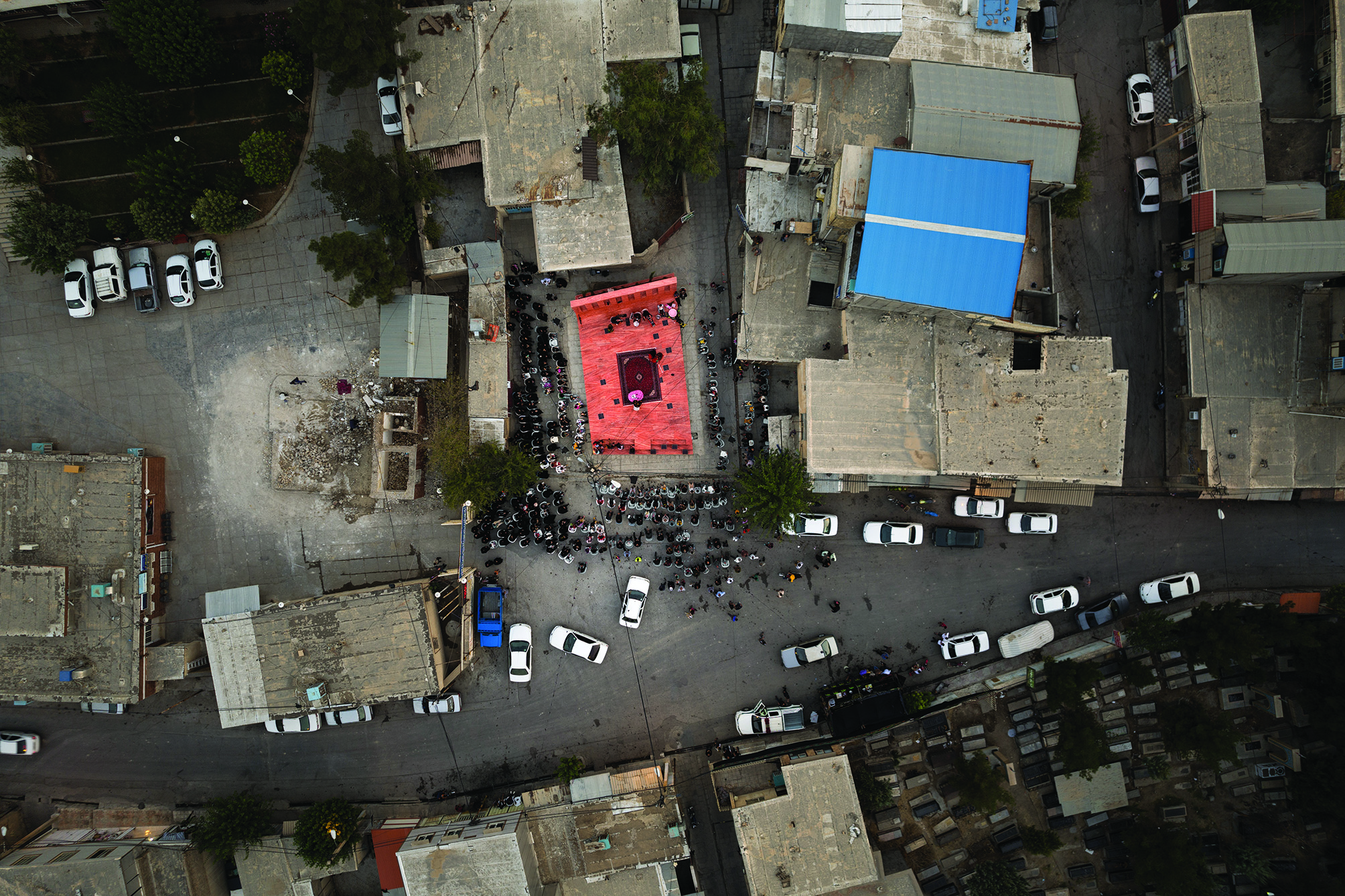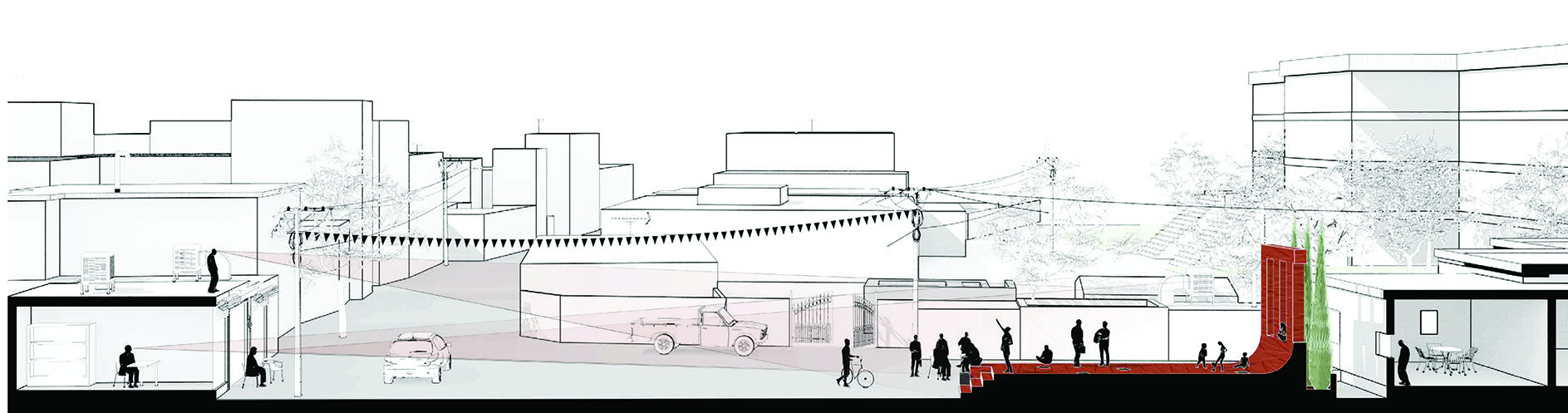
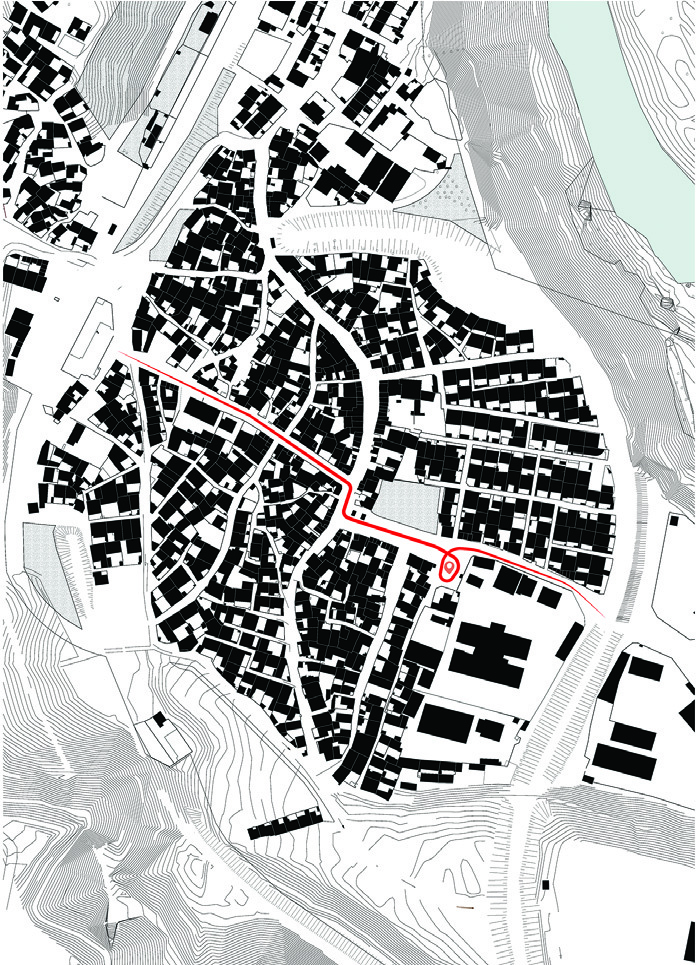
The subject of the project was the design of a martyrs' memorial with a very limited budget in the small town of Sepiddasht. The designated site had been situated in the old fabric of the town and had served as the town's cemetery for many years. The site's location was such that it occupied an opening in the urban fabric along the town's main axis.
The prevailing typology of memorial structures in both small and large cities across Iran takes the form of an object or statue — one that serves merely as a monument in the city — and the client's initial request, too, was the design of a memorial element for the martyrs.
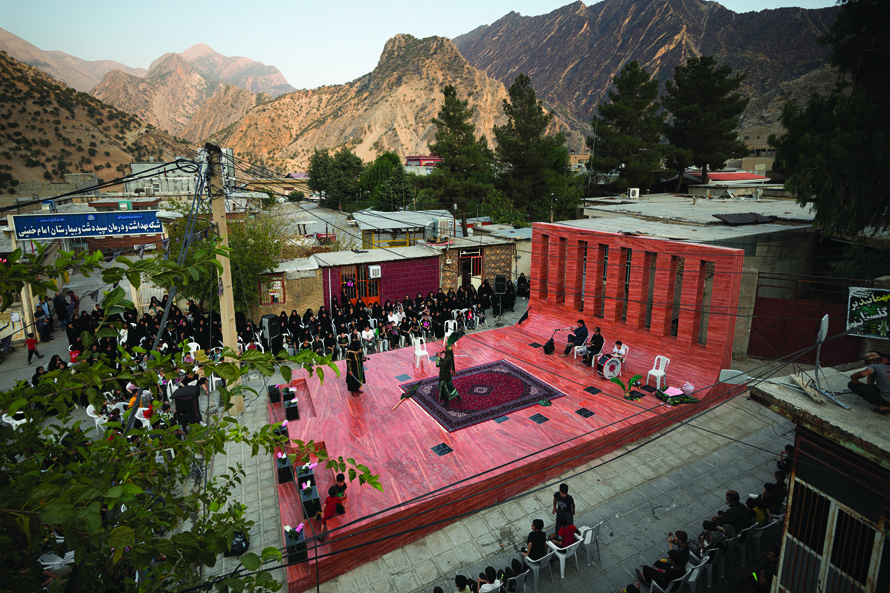
In response, our strategy was to move beyond the cliche of building a statue or a solitary object as a memorial. We decided instead to create a stage for the performance of urban events — a space of high adaptability for the town that could assume different roles at different times — offering, in other words, far greater possibilities than a single statue could provide.
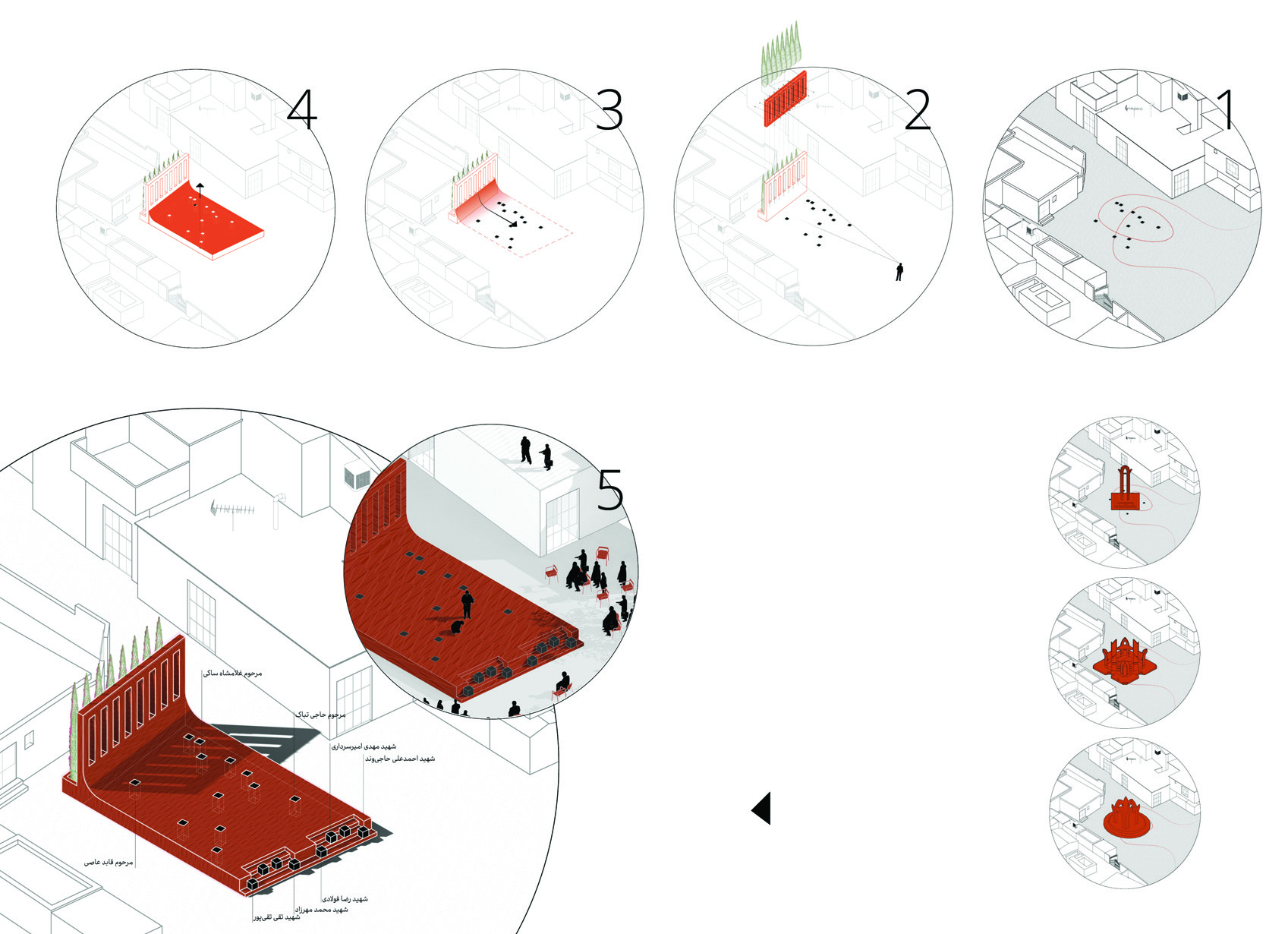
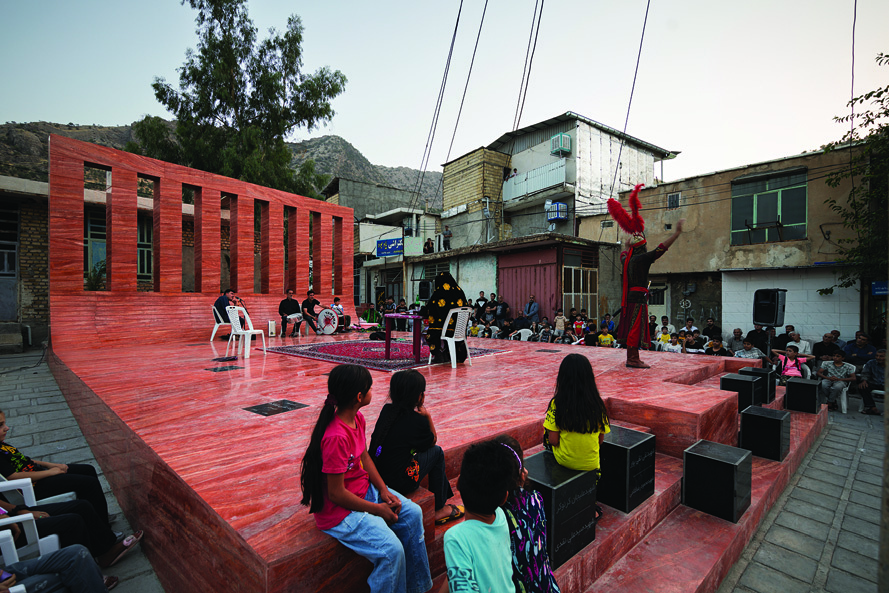
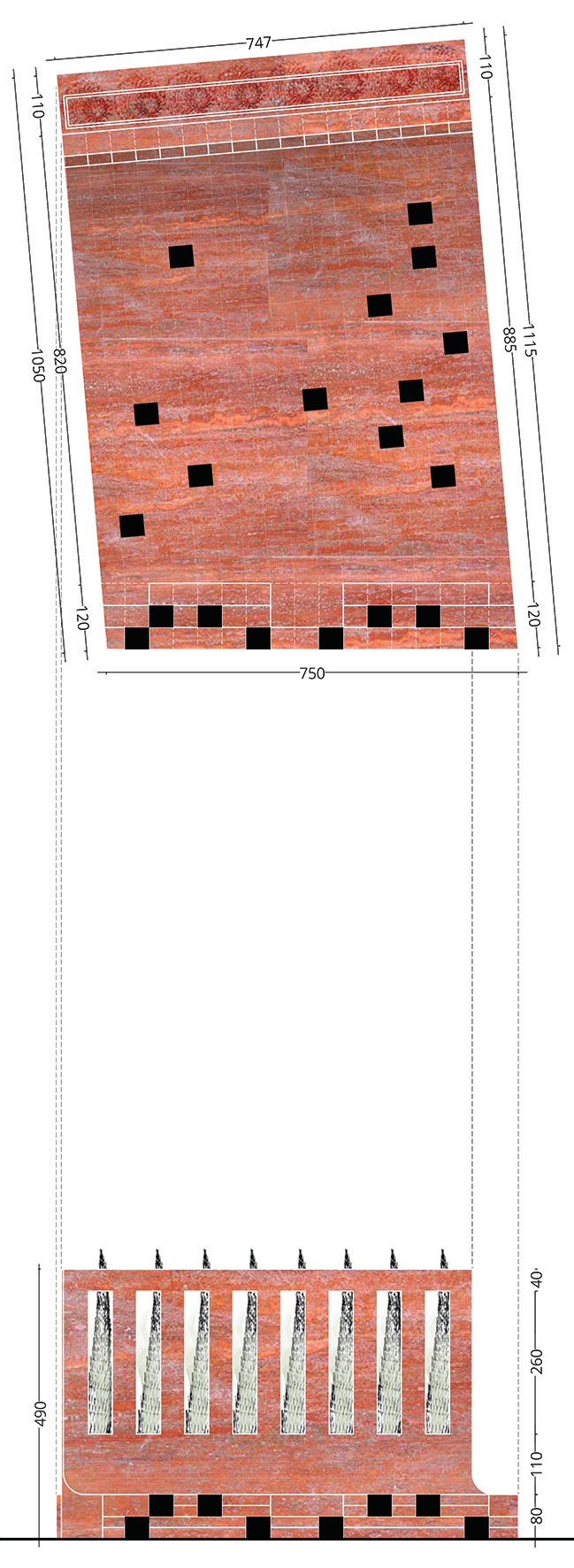
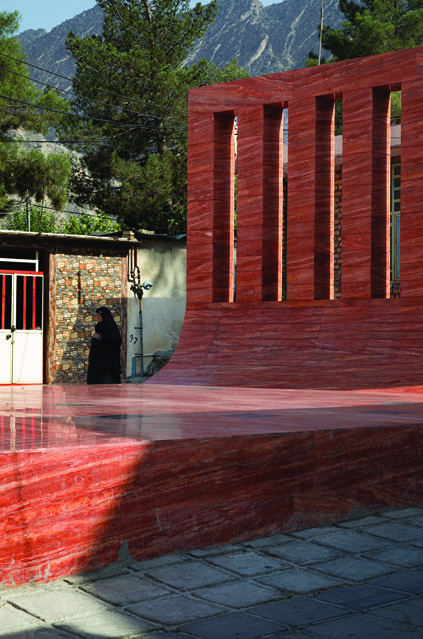
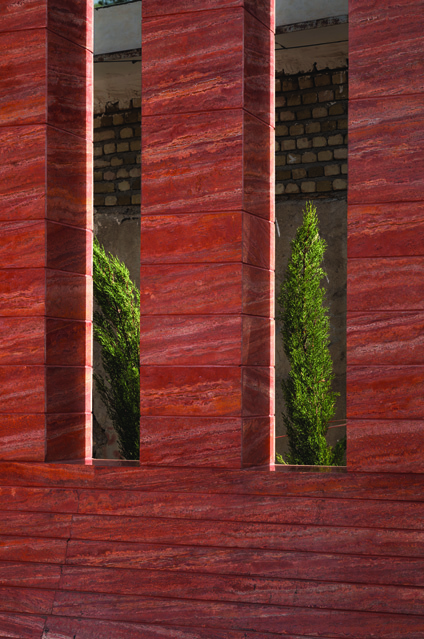
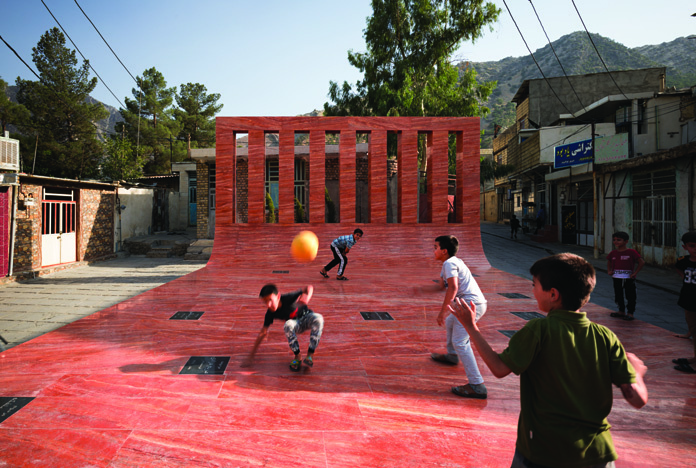
We employed a vertical plane that spreads wide across the ground, so that the upstanding portion of the plane preserves its symbolic role. To intensify this quality, we cut eight openings into it and planted an equal number of cypress trees behind each aperture.
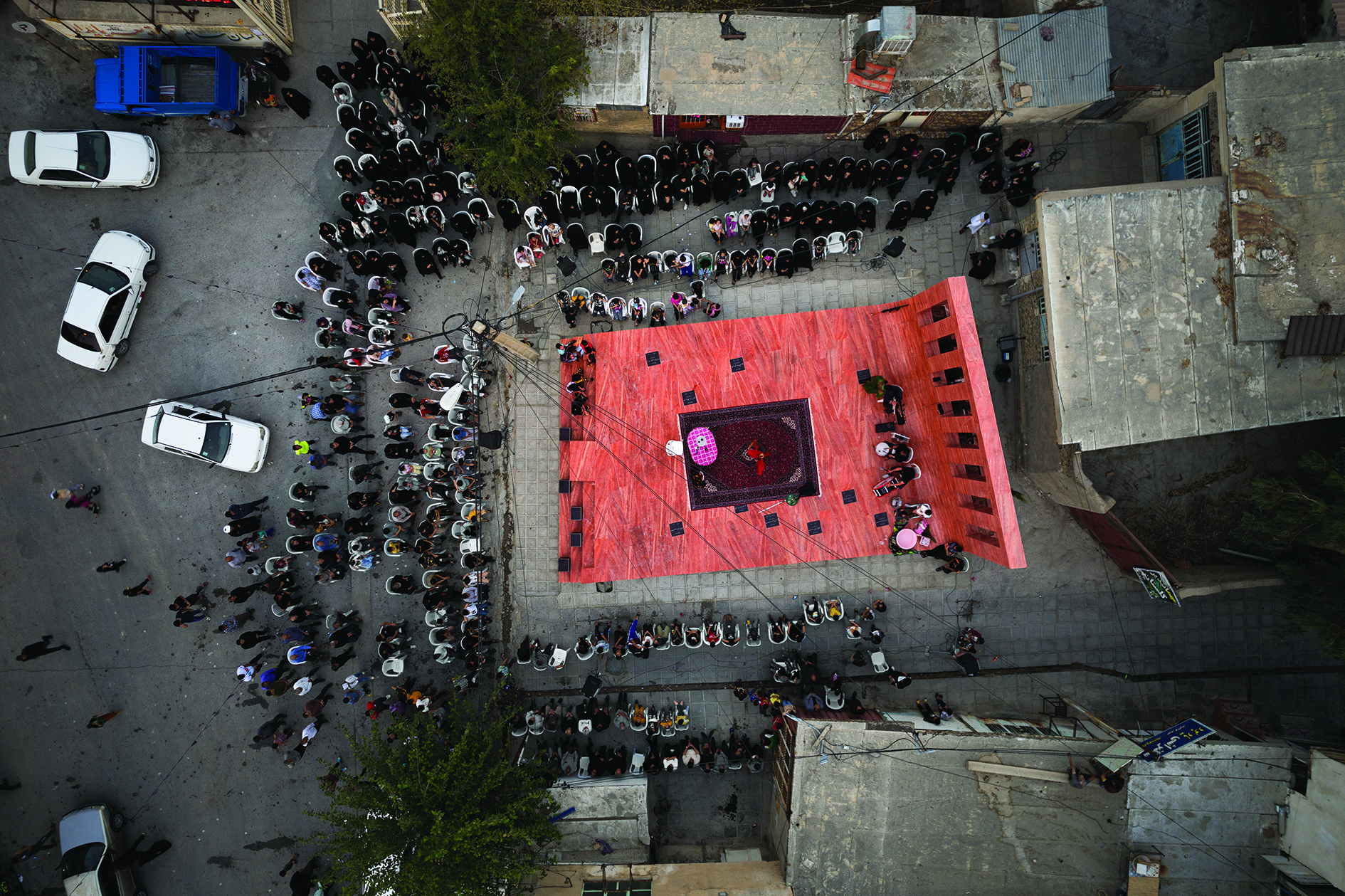
We used red stone from Azarshahr so that this "stage" would stand out prominently within the town's fabric. Meanwhile, the expanded, ground-hugging portion of the plane serves as a space for the performance of urban events. At the same time, we brought the locations of the existing graves onto this stage, and for each opening on the vertical body, we placed a black box along the edge.
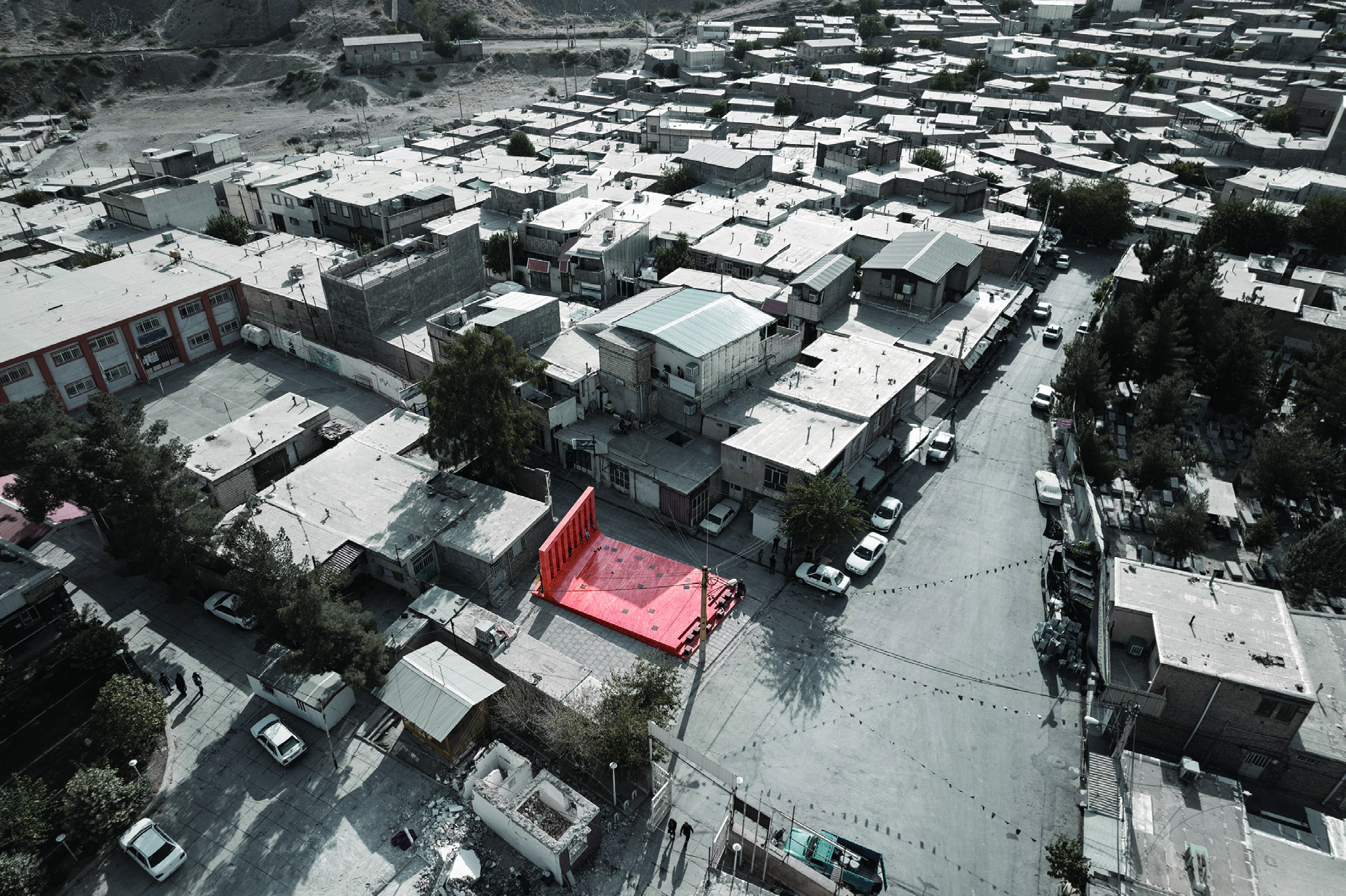
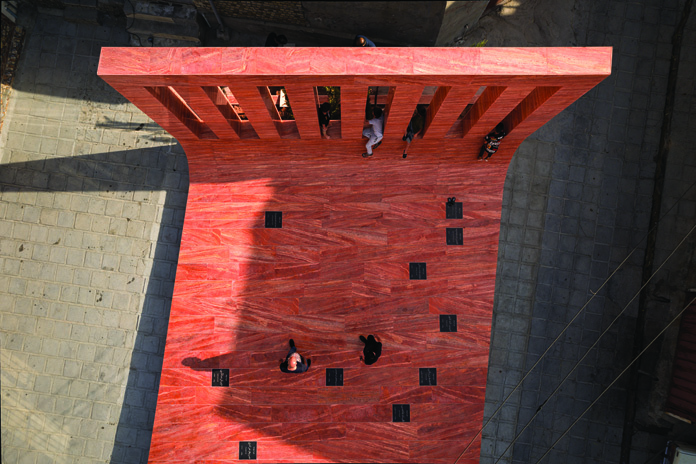
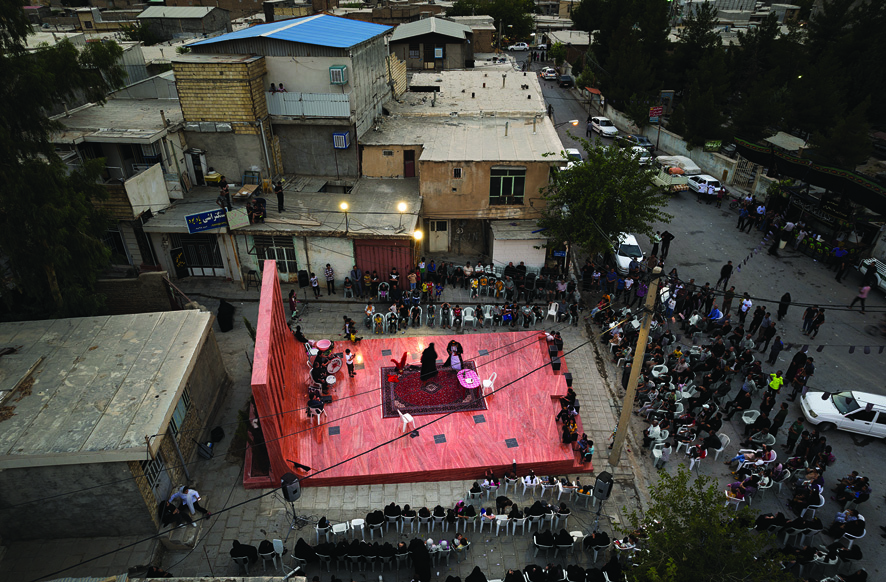
By activating the project as a flexible space — for the performance of religious and ritual ceremonies such as Taziyeh, as a playground for children, as a gathering place for the townspeople, as a venue for the residents' consultations, and simultaneously as a symbol and marker for Sepiddasht — we added new possibilities to it as a public space.

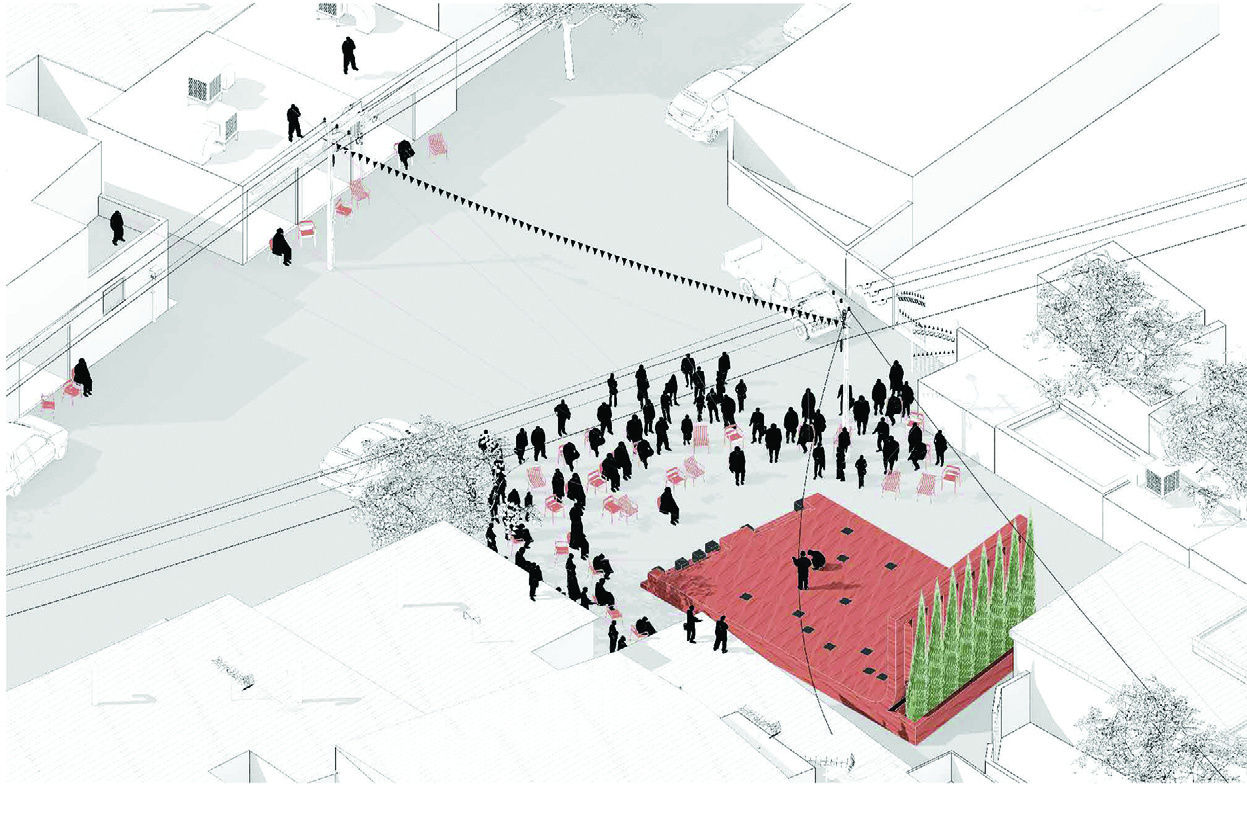
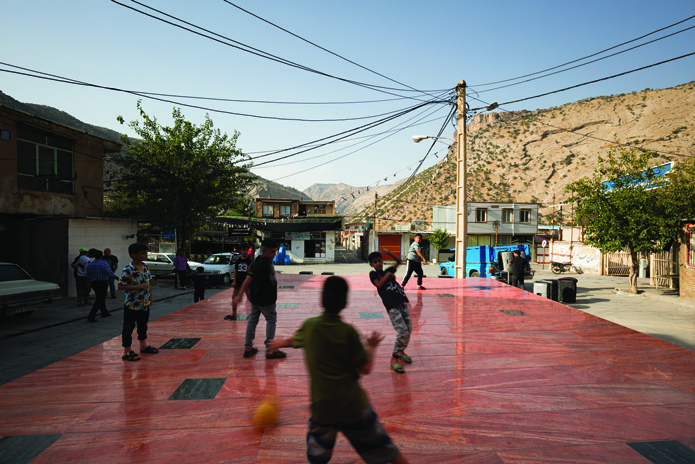
During various urban events, the different levels around this stage — the rooftops of surrounding buildings, terraces and balconies, streets and alleys, and even the surfaces inside adjacent shops — become activated as positions and vantage points for spectating, and this plane extends its role throughout the town.