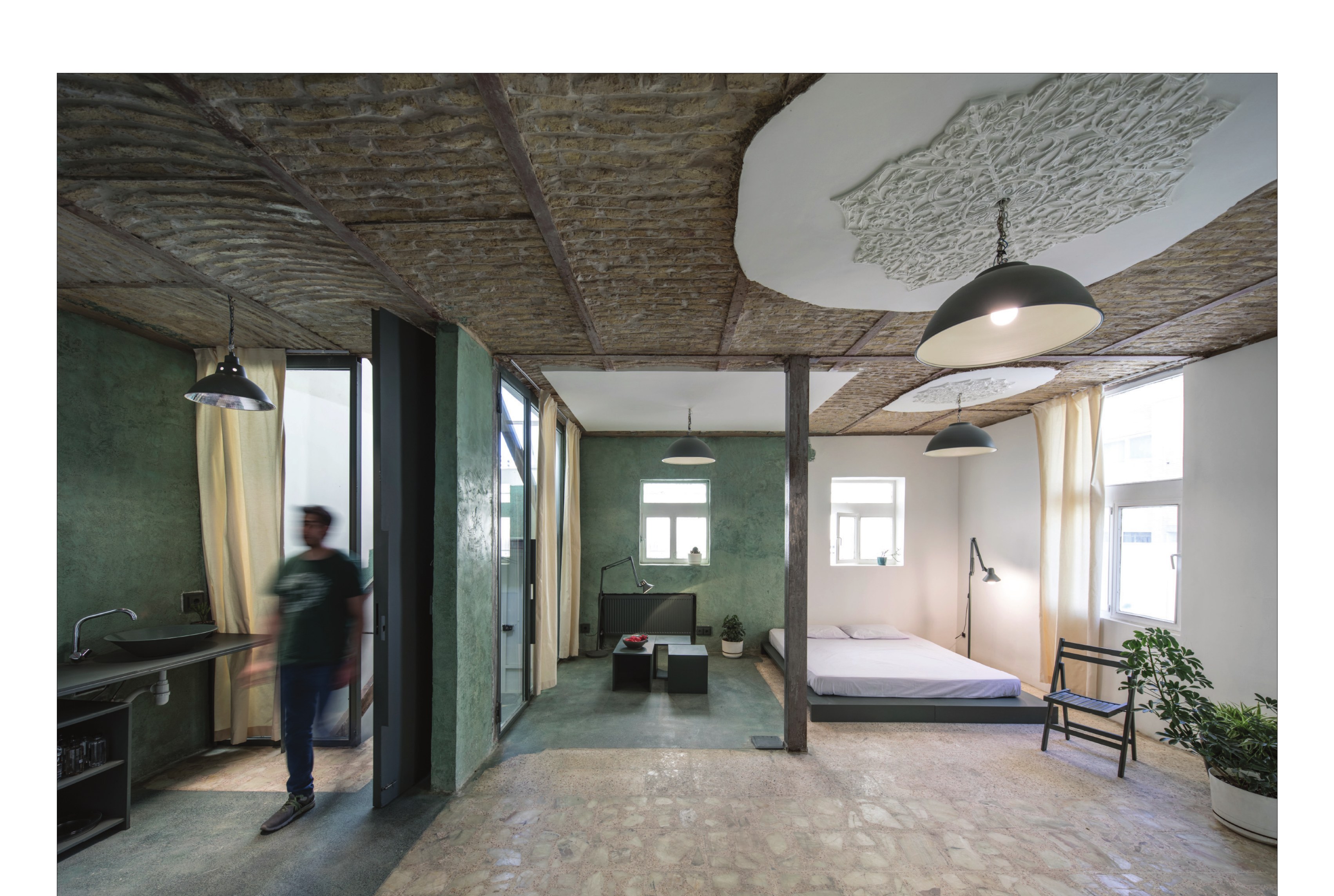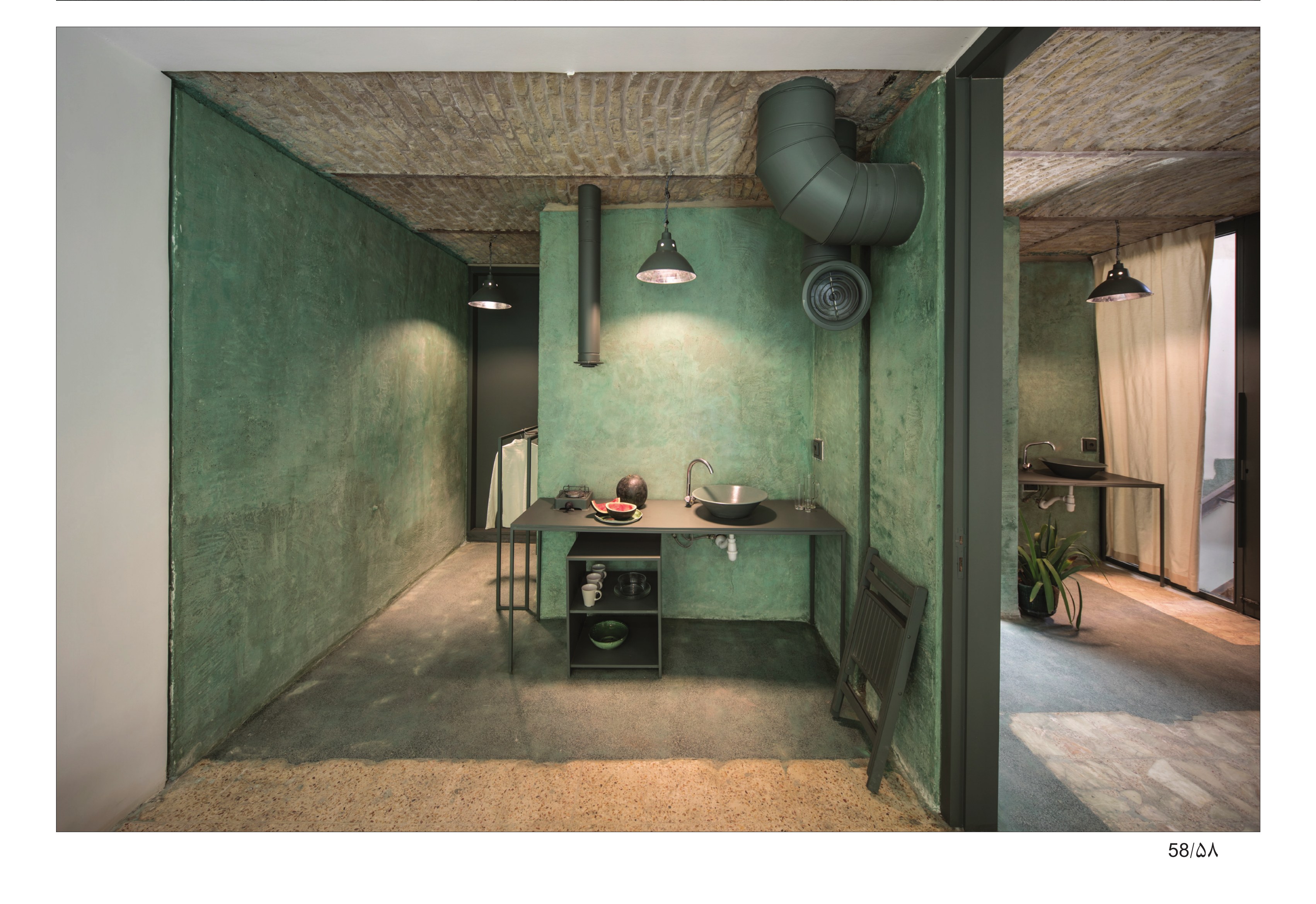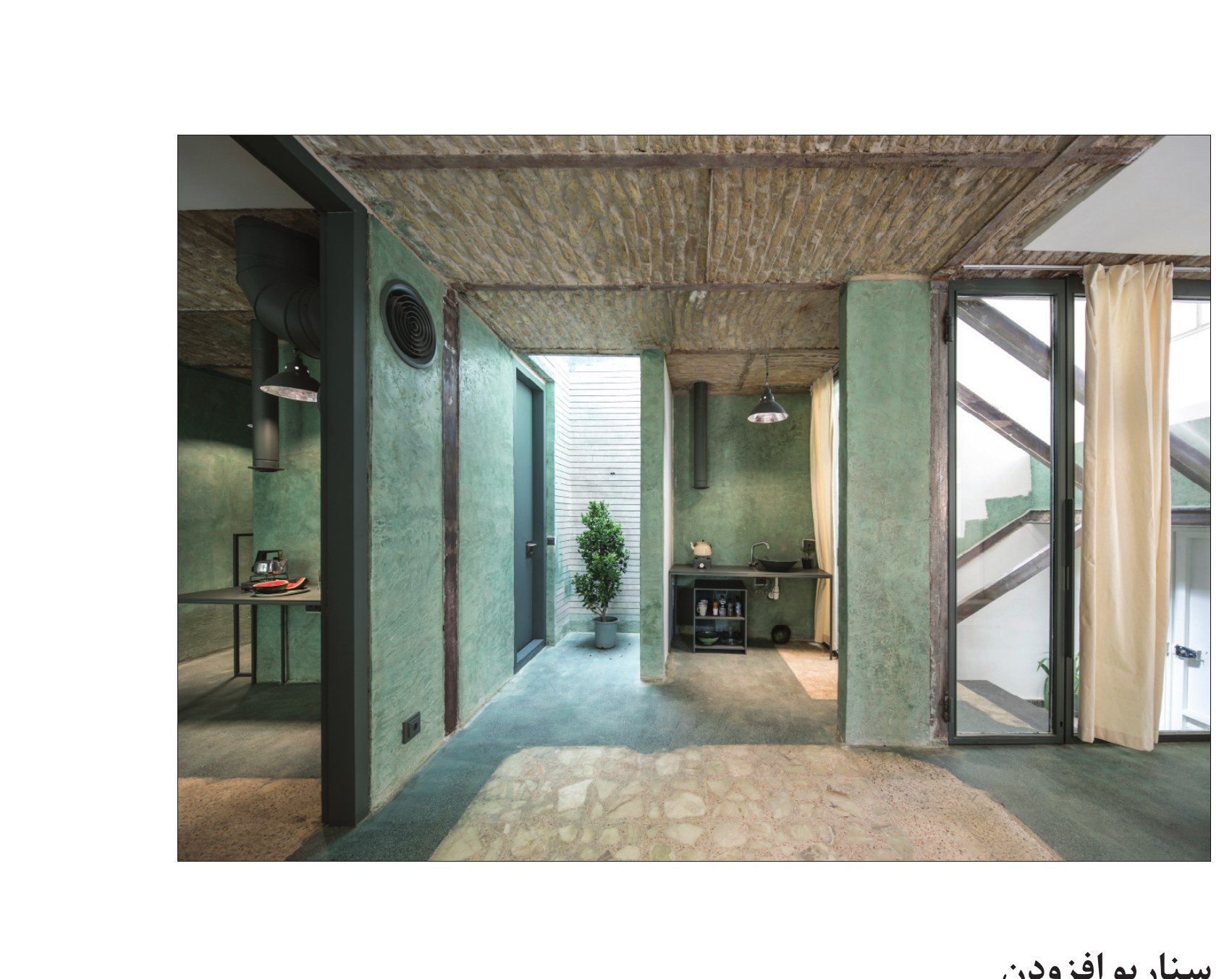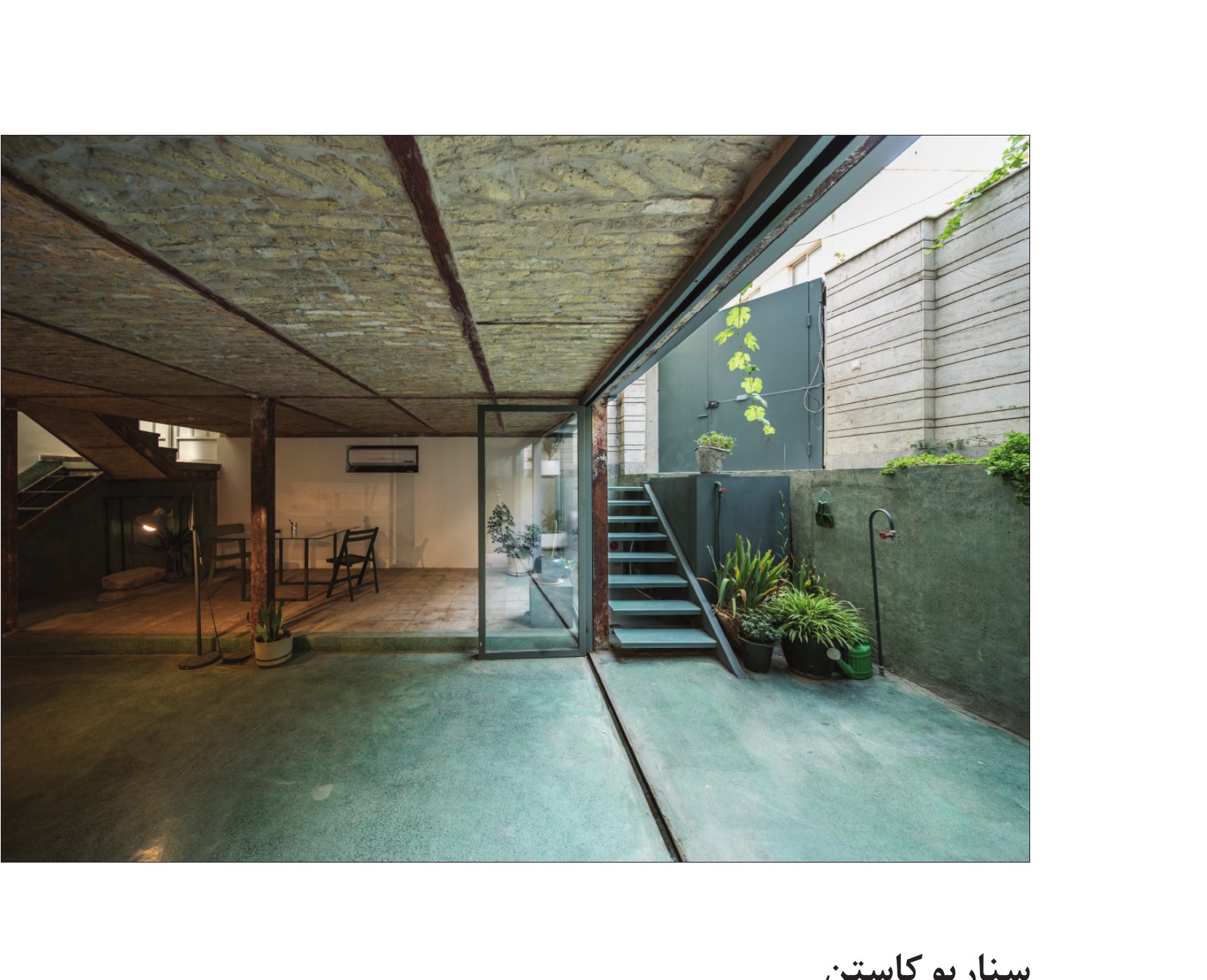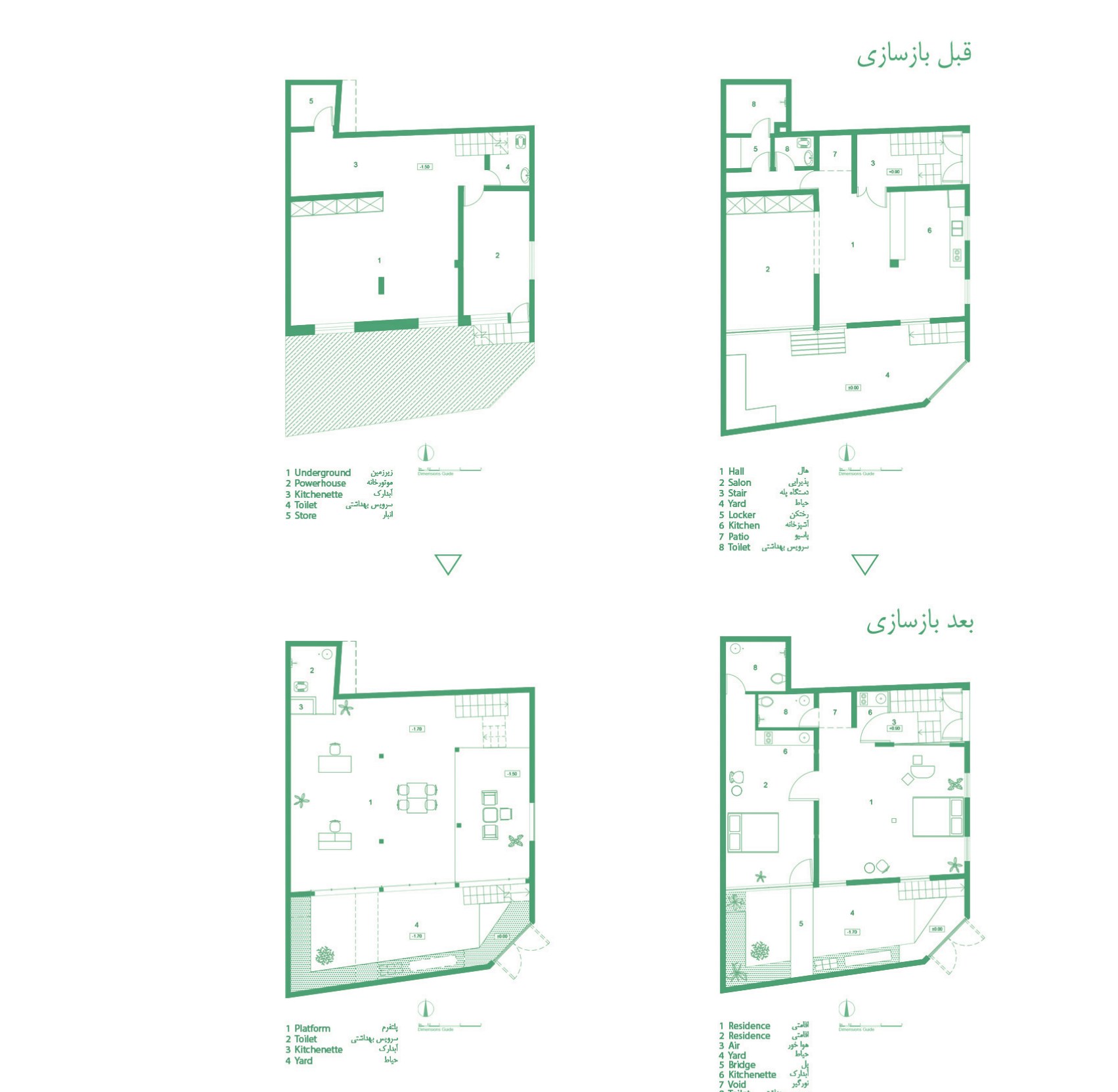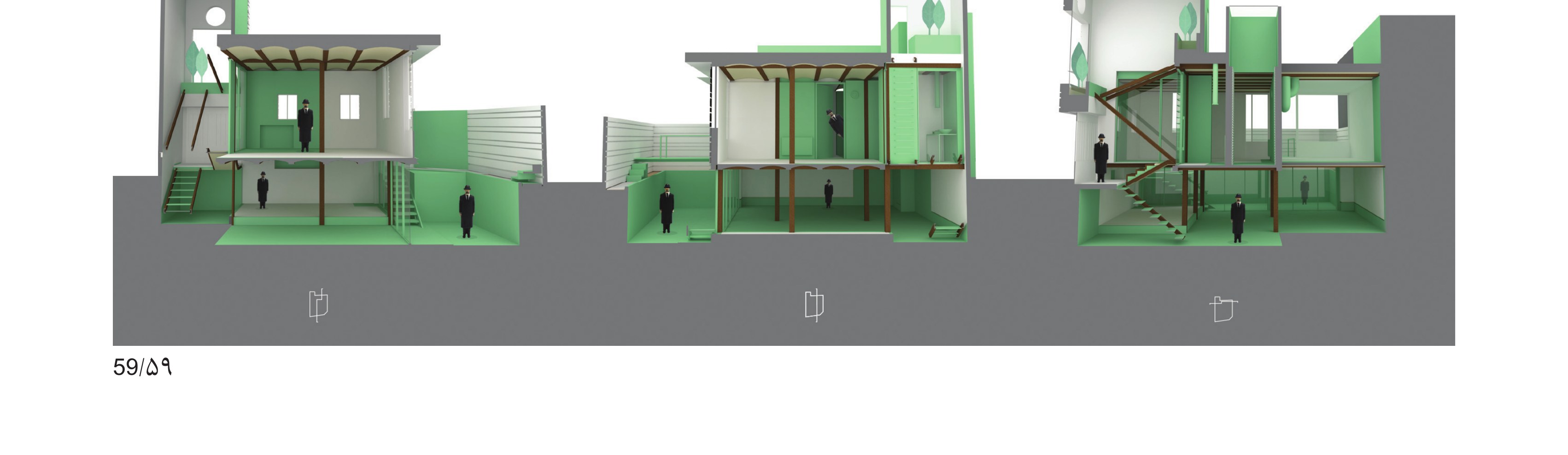
Trump officially withdrew from the JCPOA on 8 May 2018. Right at that moment, with all our capital and savings, we bought a kalangi (knock-down) house in the Sichan neighbourhood of Isfahan — the neighbourhood through whose middle Tohid Street now runs. The house had one storey, one basement, and a small courtyard with a vibrant tree. The path forward was clear: either partnership and construction for investment, or temporary preservation as a savings. But we decided to play our share and to return an abandoned place — abandoned because it was no longer usable for the life of today — to the usable cycle, perhaps so that we could carry out our social responsibility. To leave an effect on the community, and instead of stagnation and repetition, to experience practice and the making of a connection.
Programme Given the need we examined, we brought into being a space whose aim is the residence and experiencing of the life of artists in one of the neighbourhoods of Isfahan, and the interaction with the public; and we conceived of a space as a platform for acquiring the experiences that lie ahead.
Demolition Design In the first step, we defined demolition design with three scenarios — reduction, addition, preservation — and to fit the programme to the body of the project, we identified the wasted spaces of the basement and the staircase.
Reduction Scenario With a general picture of the design we had, we began demolition design. Whatever was needed we preserved, and whatever interfered with the project programme we removed — among them: doors; some walls; the roof stair; the courtyard and basement stair; the cupboards; scraping the ceiling plaster as much as had become bubbled; the broken tile crust; the removal of the stair window; and the lifting of the basement-courtyard floor soil to the extent possible and necessary.
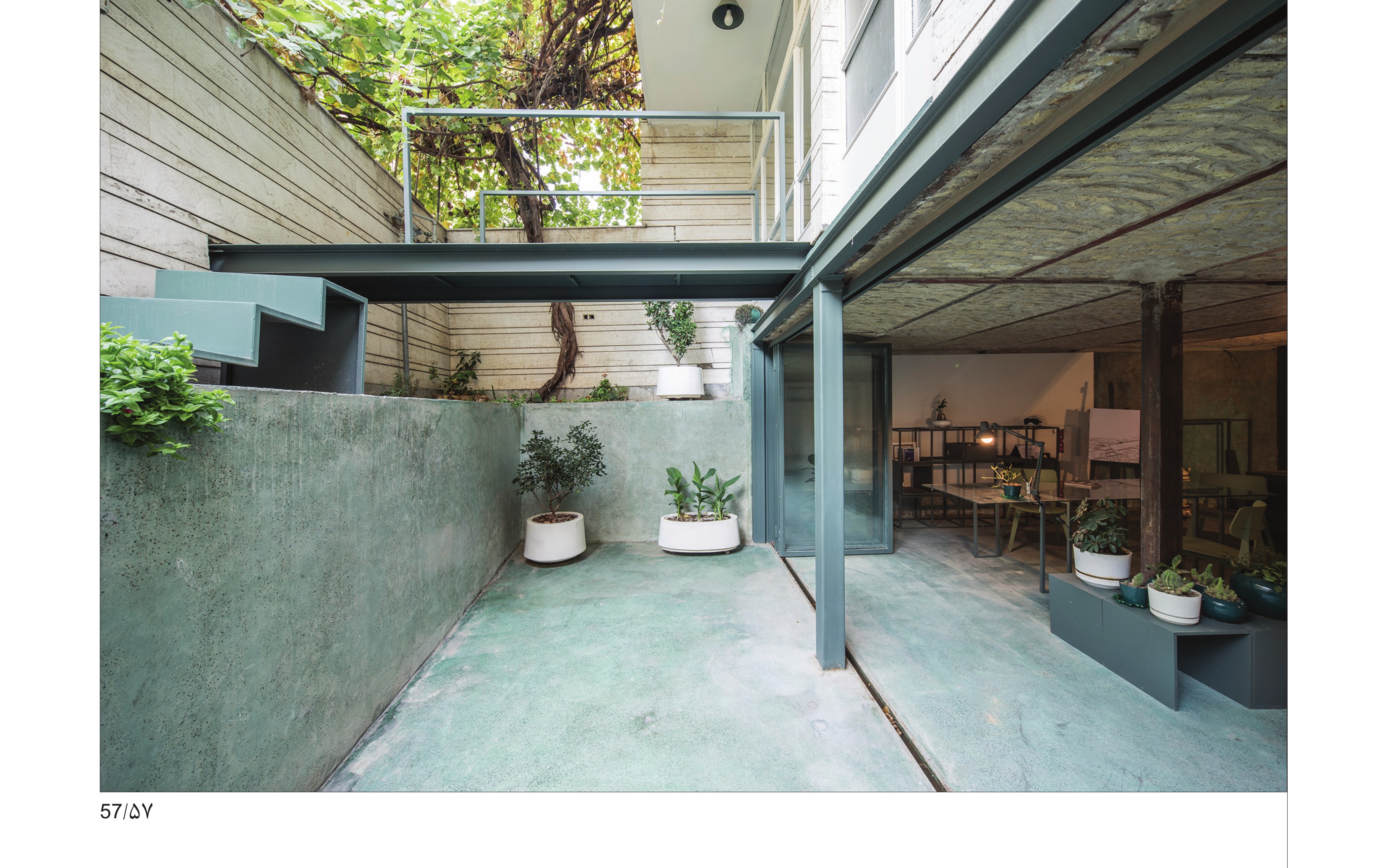
Addition Scenario Whatever we added, we nurtured as a green entity within the project — including the added walls and the dressing of the demolished sections; the routes added through stairs, bridge and ladder; the columns and beams necessary for the structure's reinforcement; and the installations and designed objects. The production of the make-stuff was done by mixing coloured mineral materials with gravel, sand, stone powder, white and black cement; and after drying, we sanded its surface so as to use the new make-stuff to clad the interior and exterior walls.
Preservation Scenario Alongside reducing and adding, some parts were also kept and held in place: the pointing of the arch-brick (taq-e zarbi); sanding the floor mosaics that had come out from beneath the ceramic tiles; sandblasting the facade stone; and the finishing of the beams and columns. Some windows, plaster reliefs, walls and ceilings — those that did not need change — were also kept in the same shape as before.