Much like the words that describe a quality or state, "serious" conveys a variety of meanings that in each instance is related to the context in which it appears. For example, it can mean somber if used to describe an individual or a situation that is not cheerful; it can also mean severe if that individual or situation is firm on his or her foundations. One who is serious in his or her words is usually someone to count on. A serious state is a grave state. Finally, seriousness can imply perseverance, hard work, concentration, and great focus on a work of labor.
But all the various contextual meanings of the word "serious" share one thing in common — serious indicates a state of necessity and importance, a state where what is done is a matter of life and death.
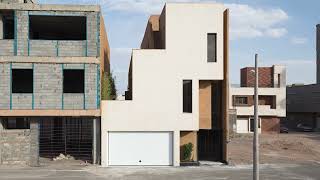
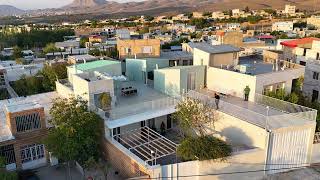
For us at Memar magazine, this introduction serves to highlight a subject matter that for the past quarter century has influenced Iran's state of architecture. Few buildings, even those not built for purely commercial purposes, can be called serious in their design and implementation; in other words, our designs lack vigor and are carelessly implemented.
It is this carelessness and lack of attention to details that underscores the destruction of buildings during the earthquake that undermined, over a year ago, Iran's southeastern city of Bam and its residents. And, despite all the promises made by authorities that "we will build Bam within the year," there are still no buildings ready for inauguration, not even the hospital whose work had started before the quake and whose completion could have conservatively been expected to take no more than a few months.
The Memar editorial board is hoping that by bringing attention to this issue it can open the discussion on related matters. In various articles, we have tried to define and determine the professional and social characteristics of a work of architecture.
Bam, a Year After the Disaster
A year has passed since the city of Bam was reduced to rubble in the wake of a devastating earthquake. On the anniversary of the disaster, newspapers and magazines have tried to evaluate the reconstruction efforts. What these publications have reported on, and what Memar magazine contributors have seen, indicate that the achievements are paltry; it seems that bureaucratic problems, especially mismanagement of the reconstruction project, are at the heart of the lackluster performance.
The 6.6-magnitude earthquake on December 26, 2003 (5 Dey 1382) struck the ancient city of Bam in Kerman Province, killing over 26,000 people, injuring more than 30,000, and leaving roughly 75,000 homeless. The citadel of Arg-e Bam, a UNESCO World Heritage Site and one of the largest adobe structures in the world, was almost completely destroyed.
Despite the massive influx of international aid and the Iranian government's pledges of swift reconstruction, progress on the ground has been painfully slow. Contributors who visited Bam report that most residents continue to live in temporary shelters. The few completed housing units display questionable construction quality, raising concerns about their resilience in future seismic events. The fundamental question of whether Bam should be rebuilt with modern materials or in a manner faithful to its historical adobe construction remains unresolved.
NGOs and international organizations have contributed expertise and funding, but coordination between various agencies has been poor. Administrative red tape, disputes over land ownership, and a lack of skilled construction workers have all contributed to delays. In the field of architectural preservation, the reconstruction of Arg-e Bam has proceeded with some international collaboration, though experts disagree on the methodology — whether to rebuild using traditional techniques or to incorporate modern reinforcement.
The reconstruction of Bam is not merely an engineering challenge; it is a test of how seriously Iran's architectural and planning establishment takes the matter of building for safety and permanence. The carelessness that characterizes so much of the country's construction activity is thrown into stark relief by the devastation of Bam. If the lessons of this disaster are not heeded, the next earthquake will exact an equally terrible toll.