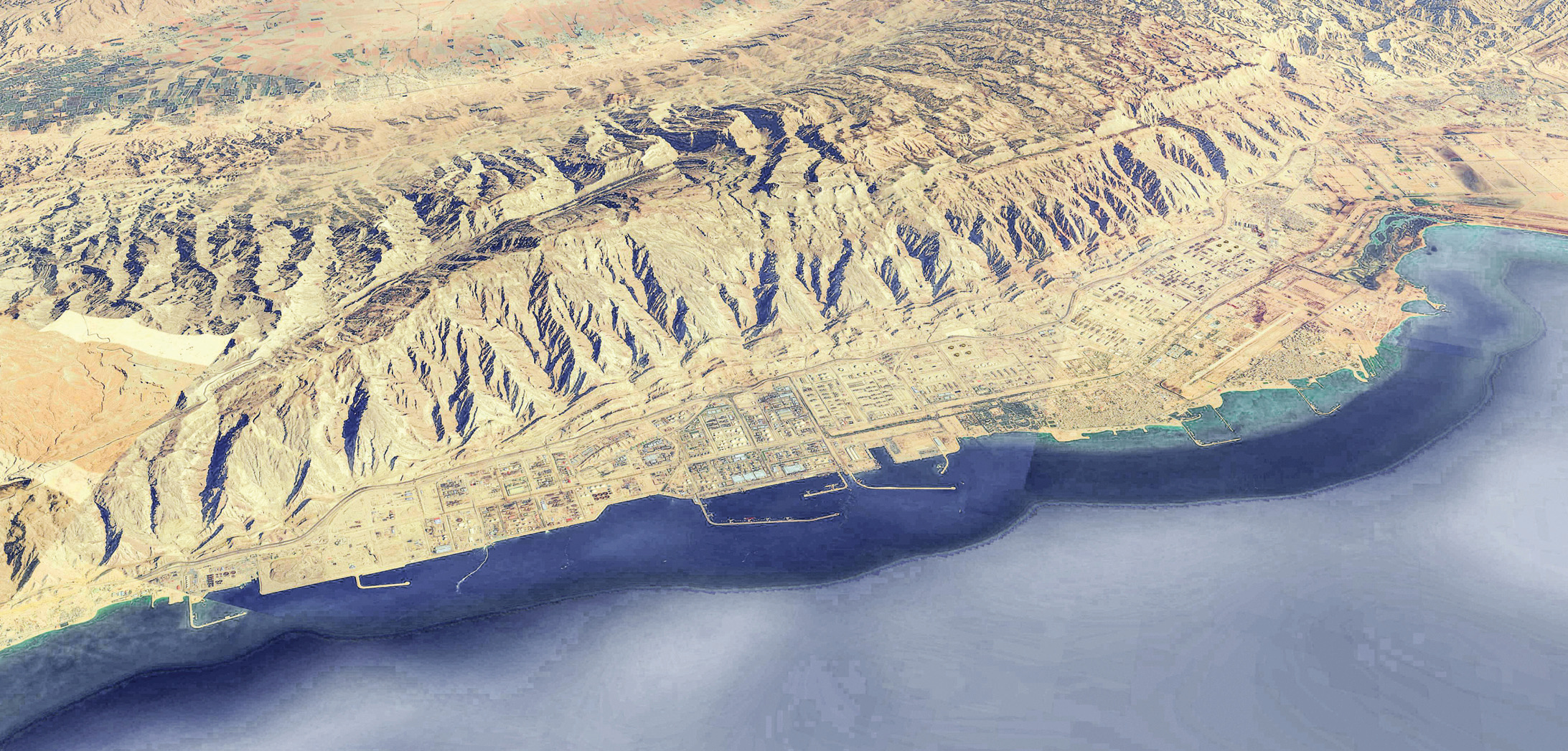
In Albert Lamorisse's beautiful film "Le Vent des Amoureux" (Wind of the Lovers), after circling Persepolis by helicopter, he comes upon Abadan and sees the refinery — with the geometric order of its site and its distillation, cracking, and other towers — as another Persepolis. The South Pars gas and petrochemical complex, or what we loosely call Asaluyeh, is a Persepolis of its own, tens of times larger. Just as Persepolis leans against Mount Rahmat and what remains of it is an ensemble of platforms and columns, the South Pars gas installations too stand where the foothills of the Iranian plateau are nearly tangent to the seashore, and to accommodate the refineries and petrochemical plants, dozens of platforms larger than Persepolis have been built through millions of cubic meters of earthwork, so that hundreds of distillation, cracking, separation, catalytic, and flare towers — and thousands of tall power-line pylons — may stand upon them. The panorama of South Pars installations, whether from the ground or from the sky, is like a Persepolis placed between two facing mirrors.
We have heard the sweet, honey-laden name of Asaluyeh a great deal in recent years — a small coastal settlement that until two decades ago lived mostly by fishing. It is still coastal and still small, and fishing dhows can still be seen in its breakwater. But now this small, peripheral settlement, like several neighboring villages of similar rank — Nakhl Taghi and Bidkhun — is stranded amid a sea of gas installations. As for why the entire complex, which has now expanded across approximately 60 kilometers, is still called by the name Asaluyeh — it is probably because the starting point of the installations was near Asaluyeh and its old military airfield, and the sweetness and euphony of the name Asaluyeh added to this association.
Let us contemplate some statistical facts to make the name Asaluyeh sweeter still: approximately 40 percent of Iran's gas reserves lie in the South Pars field. Iran's gas reserves are substantial — very substantial indeed. Its second-place world ranking after Russia is well deserved: in weight, value, or thermal equivalent, they exceed 1.5 times all our oil reserves. Currently, around 65 percent of total national energy consumption across all industrial, domestic, power-generation, and transportation sectors is supplied by natural gas, with current consumption surpassing 700 million cubic meters per day, of which approximately 90 percent is extracted from South Pars. Furthermore, we extract roughly one million barrels of gas condensate daily from this field — each barrel worth slightly more than oil — which, amid the tribulations of sanctions, has also saved us from gasoline shortages. In sum, the total gas and condensate we extract daily from South Pars is equivalent to approximately 5 million barrels of oil, whose share in the gross domestic product could range from 10 to 25 percent.1
South Pars is a gas field shared between Iran and Qatar.2 The Qataris — free from war and sanctions — started extraction 10 to 15 years before us, and with the unstinting presence of European and American financial institutions and oil companies, rapidly developed it. A gas field is a pressurized reservoir: whichever side extracts more, the reserves tend to migrate toward that side. Naturally, this movement was toward Qatar for years, but news that may gladden many of us is that for the past two to three years, we have surpassed the Qataris in gas extraction, and now the direction of gas migration is toward us. Moreover, several more phases are under construction, and we will pull further ahead, and the Qataris — who lack our large domestic market and are more reliant on exports of liquefied natural gas (LNG) — do not have much room to increase their extraction.3
All that forest of iron and steel that has swallowed most of the settlements from Kangan to Chah Mobarak is not merely gas refineries and extraction apparatus: approximately 10 very large petrochemical complexes (by global standards) have been erected in this zone, whose task is to convert substances like methane, ethane, or gas condensate — which come directly from the reservoir — into larger molecules such as ethylene, propylene, urea, ammonia, methanol, and so forth, which are themselves the raw materials for various polymers, plastics, and chemical fertilizers that ultimately emerge as thousands of plastic and polymer products or fertilizer-grown foods, cropping up in every corner of all our lives. These petrochemicals are very good in theory: they convert abundant and temporarily cheap feedstock from a shared reservoir into more valuable materials that have many buyers, and by this very means have, during the era of sanctions, somewhat sustained the national economy. Furthermore, two to three pipelines carry the ethylene they produce to the center, west, and northwest of the country to supply the feedstock for dozens of downstream petrochemical plants built — or, God willing, yet to be built — along their route. And perhaps most importantly, the export of their products, by the definitions of customs, the Central Bank, the Statistical Center, and other national authorities, counts as non-oil and industrial exports, so that despite the strong smell of oil they emit, the relevant statistics are inflated by several billion dollars at a stroke.
Reviewing these billions — which exceed the entire economies of many countries — gives a pleasant feeling, especially when we recall that South Pars has had other blessings that have not quite been quantified: the direct and indirect employment of tens if not hundreds of thousands of people, and the creation or enhancement of the scientific, technical, and managerial capacity of hundreds of factories, contractors, and Iranian consulting firms that, with or without foreign companies, have brought the work to a point that is in some respects unique in the world. But has South Pars been entirely a blessing, always dripping honey as sweet as Asaluyeh's name into our mouths? Certainly not, and if we persist in food-related metaphors, one could say that South Pars and its gas are something like Coca-Cola and its fizz: although palatable with a wide spectrum of foods from koobideh kebab and dizi to hamburgers and pizza, it inflicts an assortment of afflictions upon drinkers — from tooth decay and osteoporosis to obesity, diabetes, and fatty liver.
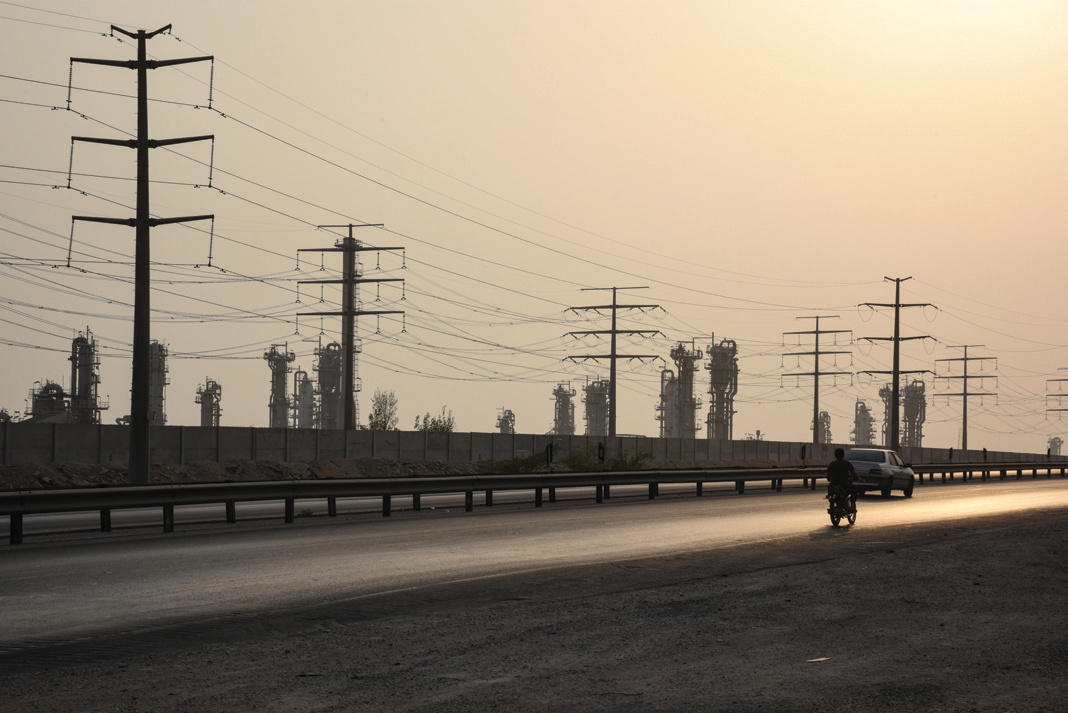
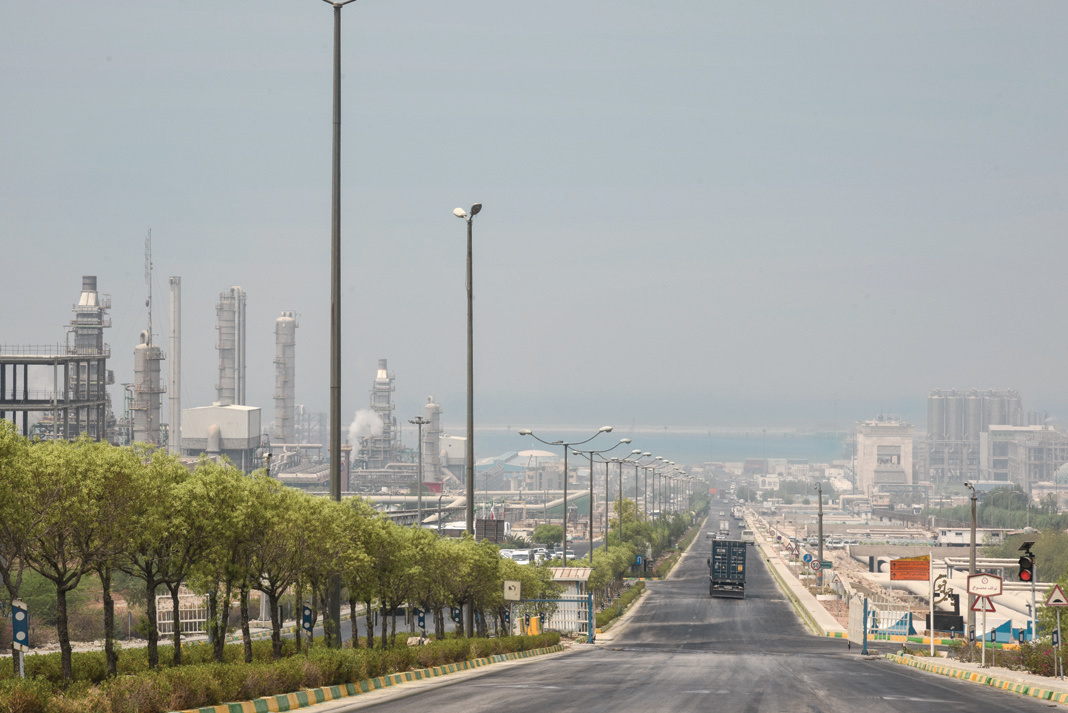
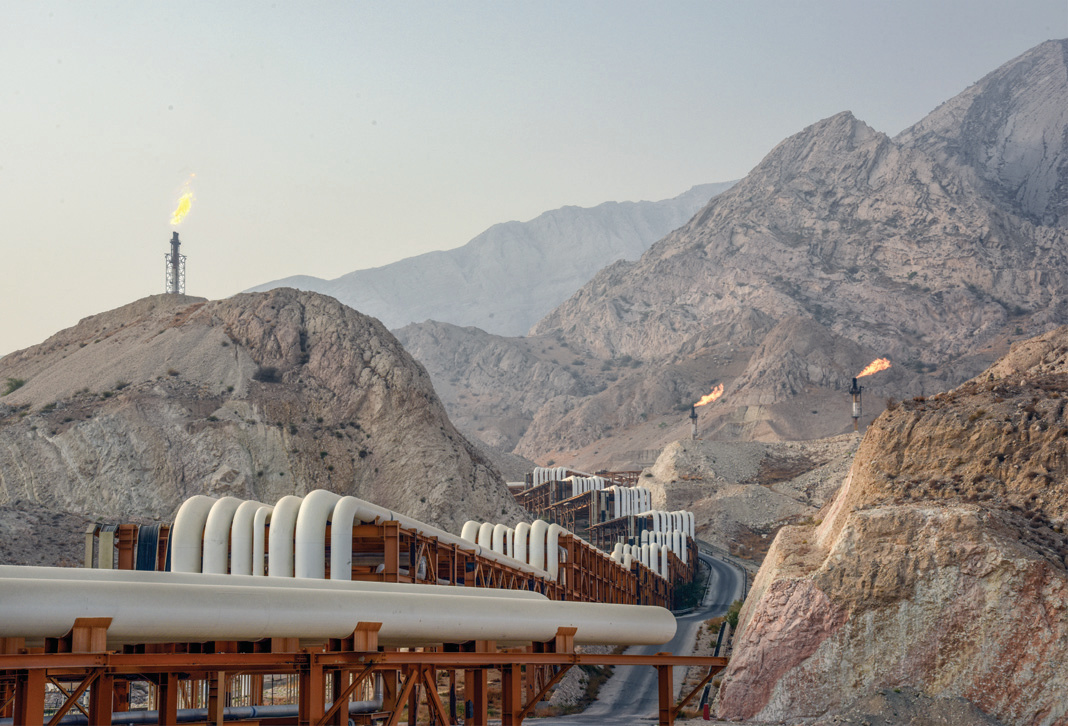
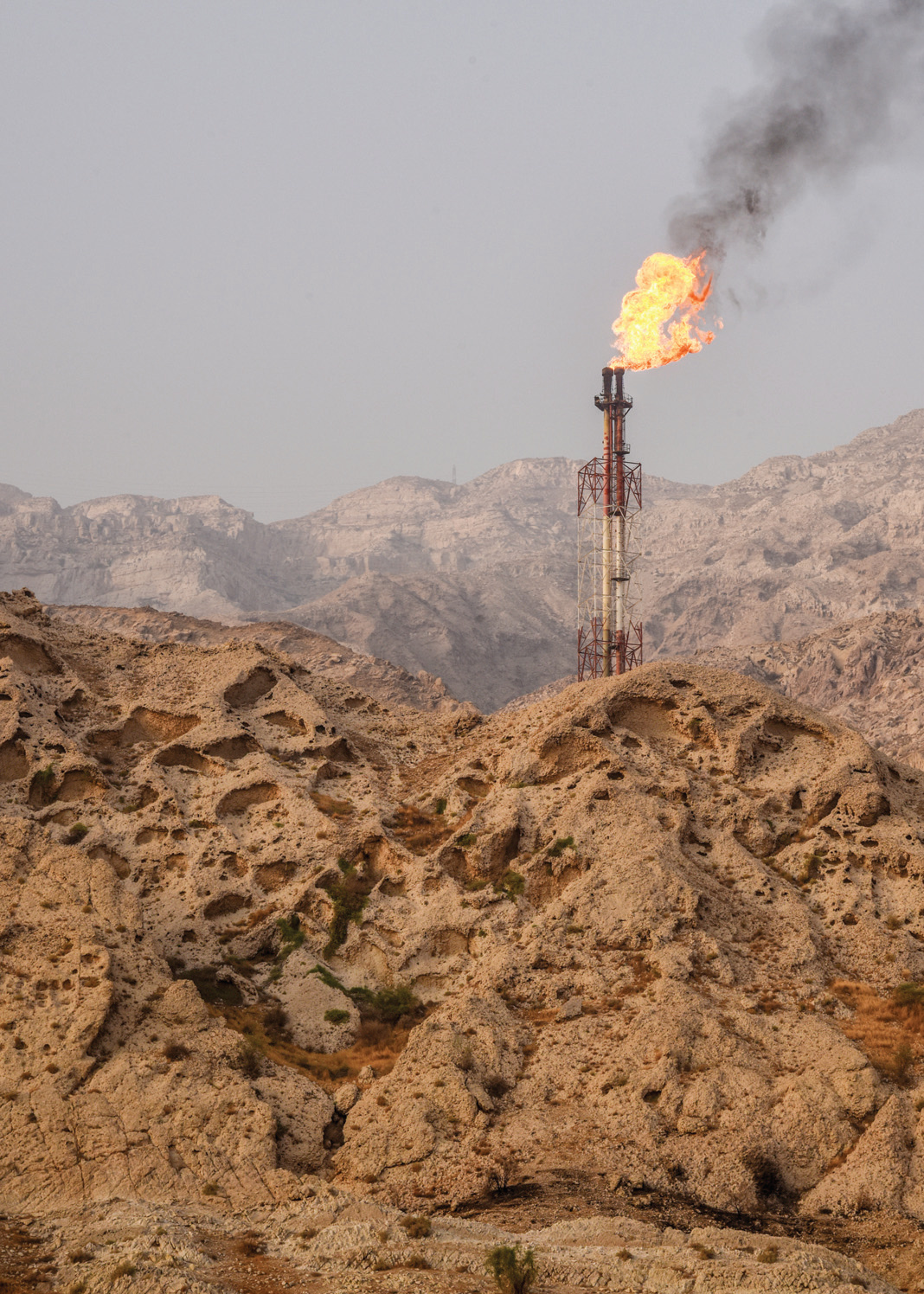
The aggregate of gas extraction and refining installations for the South Pars gas field and the petrochemical complexes — all of which we loosely call Asaluyeh — are spread over a length of approximately 60 kilometers from Kangan to Bidkhun in an east-west linear arrangement, dictated by the geography and topography of this zone: a strip several kilometers wide between the last range of the parallel Zagros mountain chains (effectively the southern edge of the Iranian plateau) and the Persian Gulf shoreline. The inter-provincial highway between Bushehr and Bandar Abbas passes through this very strip, and from whichever direction we enter, we will more or less encounter things like these: a dense forest of vertical steel elements, some with fire atop their heads, a polluted and dispiriting atmosphere, and an assortment of noxious odors that linger for two to three kilometers before giving way to a different smell.4 Even if we view this zone not from the road but from the sky, we will still see the polluted air, and a great many parallel lines that are the shadows of the vertical elements, and orderly square or rectangular plots arranged in mosaic-like fashion, most of them lined by pipes, and — one by one — uniformly yellow.5 In short, the beautiful and rare natural landscape of the region along these sixty-odd kilometers has been entirely affected by the gas and petrochemical installations and has assumed an altogether different form — though, to be sure, viewed from any angle it has a beauty of its own: if we look along the road from west to east or vice versa, the concentration of hundreds of tall power-line poles and pylons with the rippled lines of cables stretching to the horizon creates, in the region's grimy and hazy air, a surreal vista. If we look toward the sea, the tall towers and enormous cylindrical and spherical tanks, commanding a view of the expanse of the sea and "the azure waters of the ever-Persian Gulf," are quite exhilarating — especially if while contemplating them we let those sweet and pride-inducing statistics pass through our minds. And if we turn our gaze mountainward, the enormous flares6 with their several-dozen-meter flames atop and the black line their smoke draws against the sky, set against the stone backdrop of the mountain, are beautiful and evocative of fantasy.
But if we approach the flares, not only will we feel their heat — the ear-splitting roar of their flames seems to cry out the depth of a calamity that has not remained confined to polluting the region's air and wasting gas but has even reached the nuclear negotiating table: our negotiating counterparts have the gall to ask us, if you are concerned about energy — and clean energy at that — why don't you first do something about these flares that annually waste the equivalent of four times the total energy produced by the Bushehr nuclear power plant? Setting aside the pretexts at the negotiating table, a reality that could push the flares and their smoke and fumes to the margins is this: natural gas is by no means a clean fuel — though it may lack the conspicuous filthiness of coal or fuel oil, it shares the same problem as all fossil fuels,7 namely adding to greenhouse gases and warming the earth, which has caused the planet's greatest current predicament. Not to mention that in the process of extracting and refining natural gas, there is some leakage and waste, which, though small relative to the total, is significant because natural gas is mostly methane, and methane's greenhouse effect is 25 times that of CO2 — so this negligible waste makes natural gas even dirtier. For this reason, and given the Earth's critical condition, one cannot envision a particularly bright future for natural gas, and it is not far-fetched that the fate of coal awaits gas as well.8 On the other side of the median line, the Qataris heavily promote the cleanliness of gas and their commitment and sense of responsibility toward the planet's health, but the same race they have set in gas extraction with us they are practically also running in pollution — though on the whole they lag somewhat behind us. But thanks to their small population, they are far and away first in the world in per-capita greenhouse gas production.
On this side, and in our camp, the petrochemical plants are an added cause of pollution beyond the flares and the refinery: the petrochemical industry has three tiers — upstream, midstream, and downstream. The first converts gas well output into chemical substances that serve as feedstock for the midstream units. Midstream units convert this feedstock into the raw forms of various polymers and plastics, to be transformed into thousands of different products in the downstream industries. The capital investment and pollution of upstream complexes are high, while their profit margin and employment generation are low — all of which are reversed in downstream industries. The South Pars petrochemicals were meant to be the first link in the chain of the country's chemical industry development, and the logic behind building the ethylene pipelines was precisely this. But the development of midstream and downstream industries has not been proportional to the volume and scale of these upstream plants, resulting in a large portion of their output being exported — which, though classified as industrial exports and a source of pride for the relevant managers, means in practice we have shouldered the expensive, low-yield, and dirty part of the petrochemical industry without reaping adequate benefits from the midstream and especially downstream segments — the root of which must be sought in the administered pricing and near-free cost of gas and condensate fed into these complexes.9
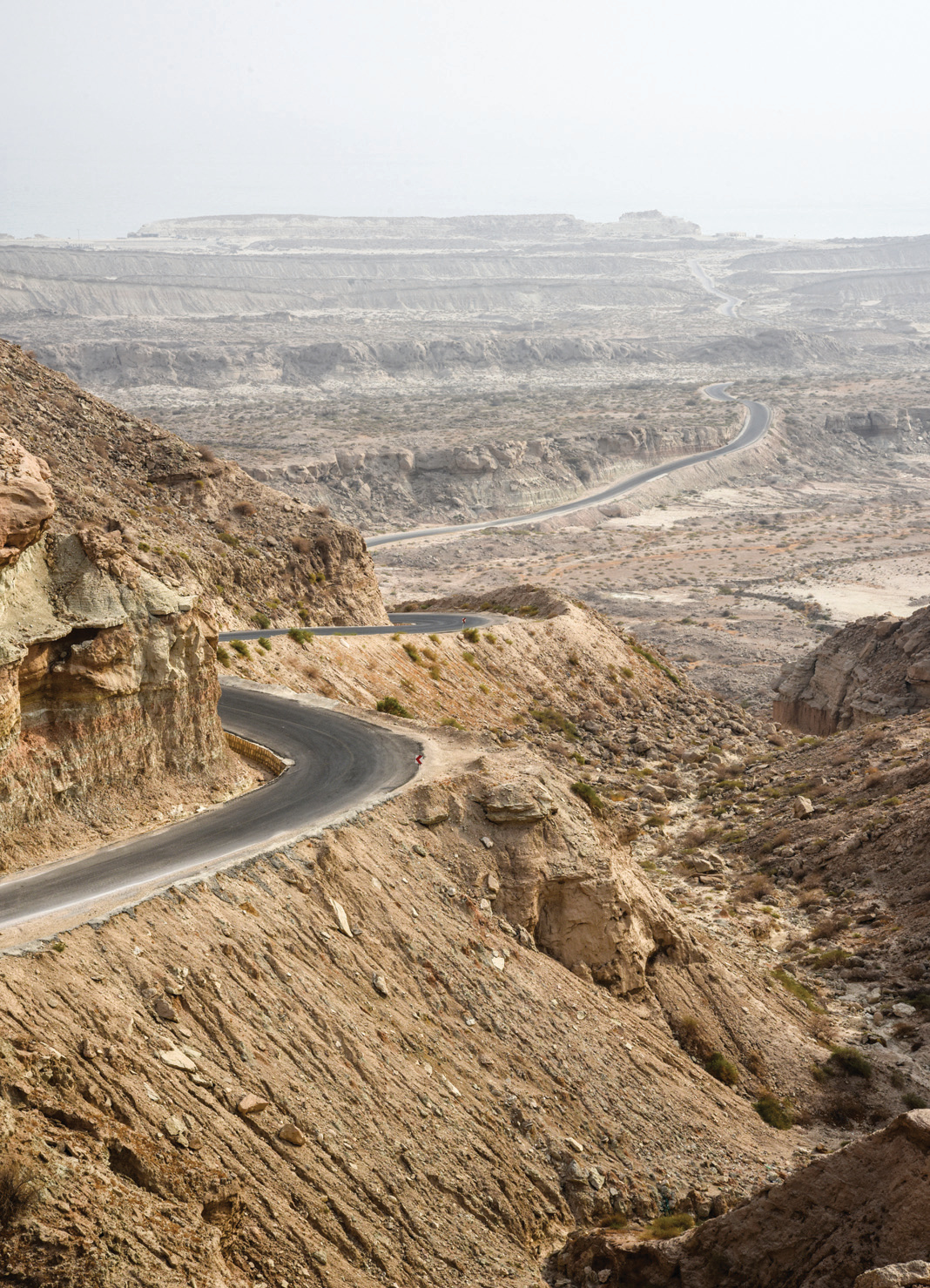
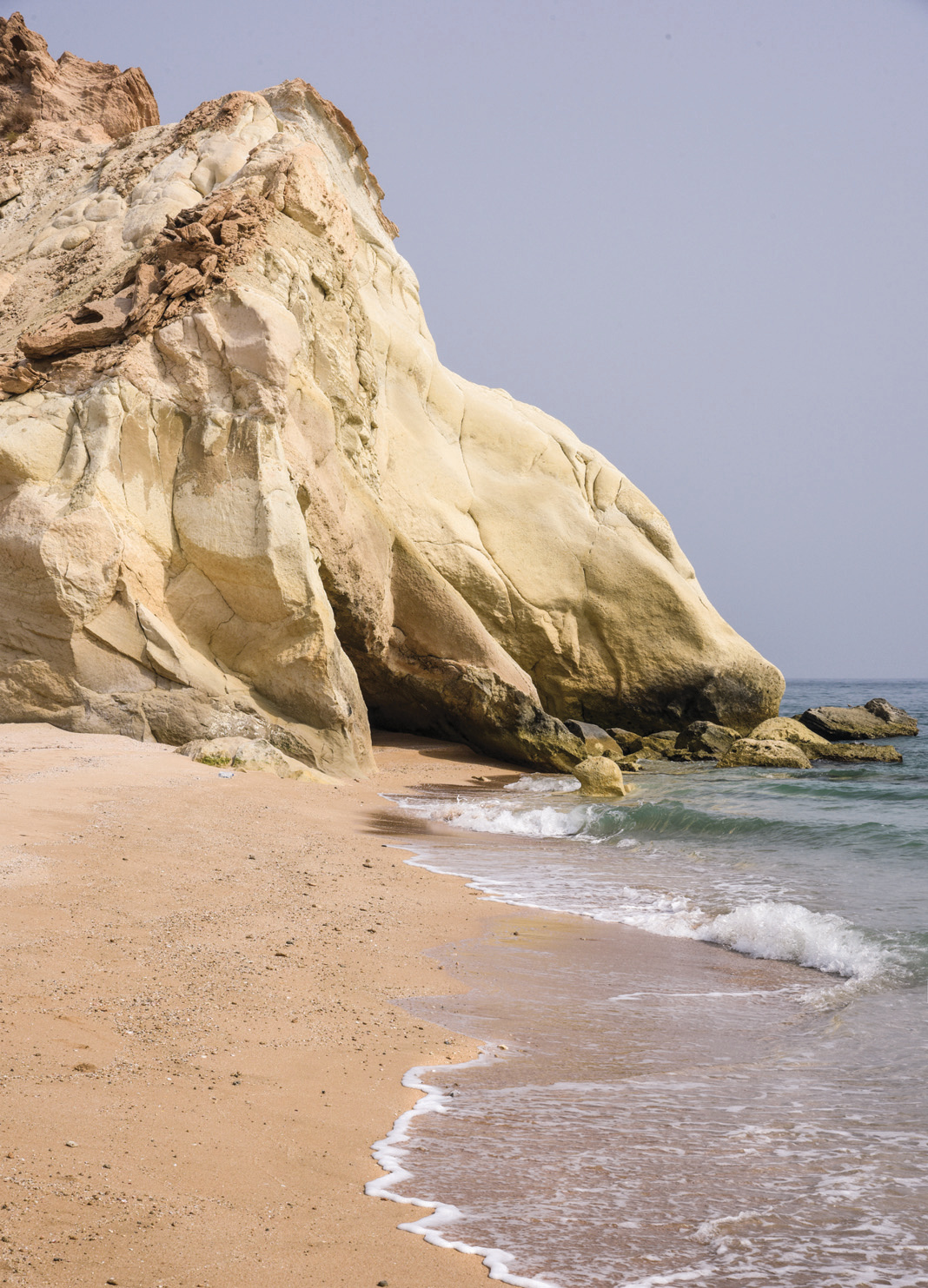
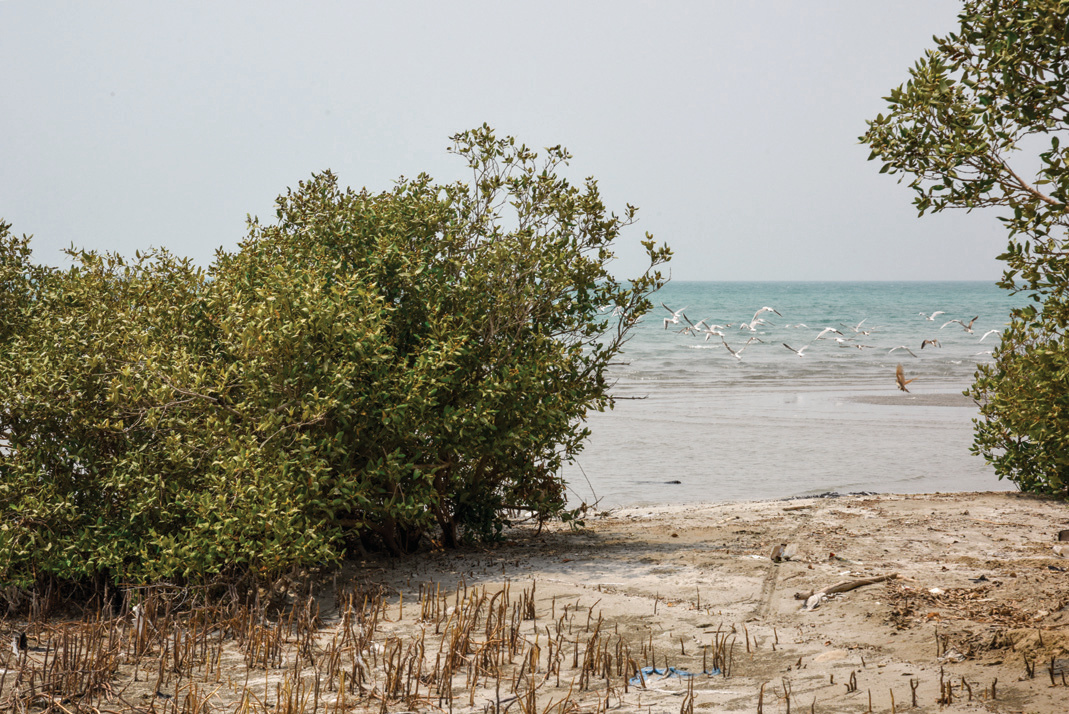
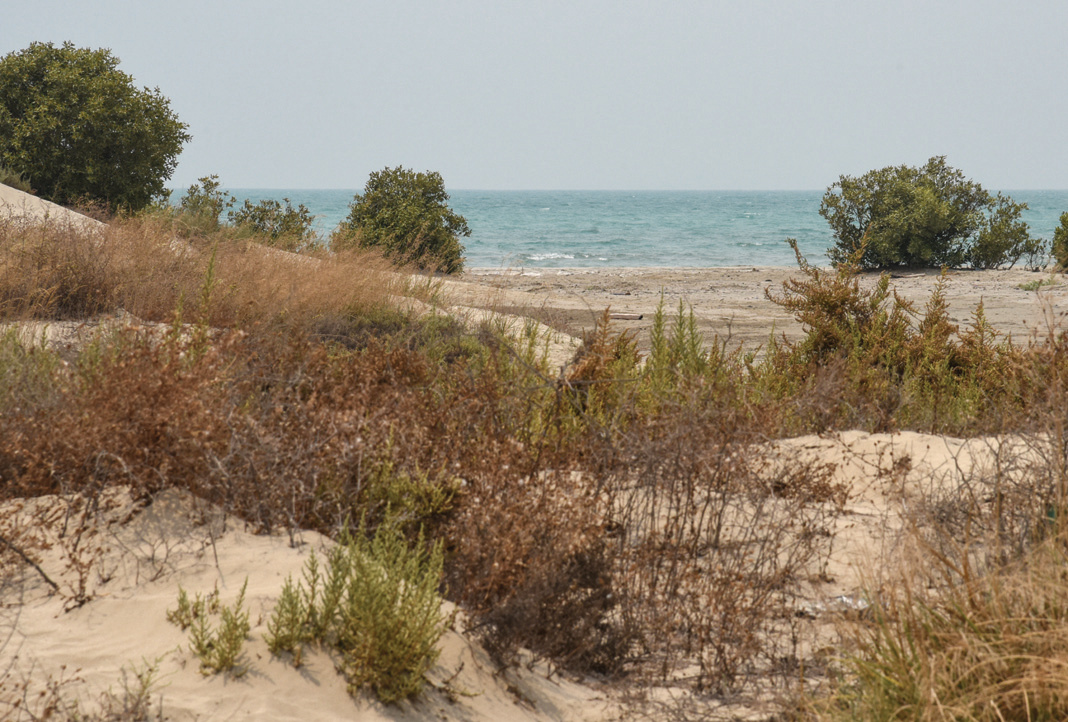
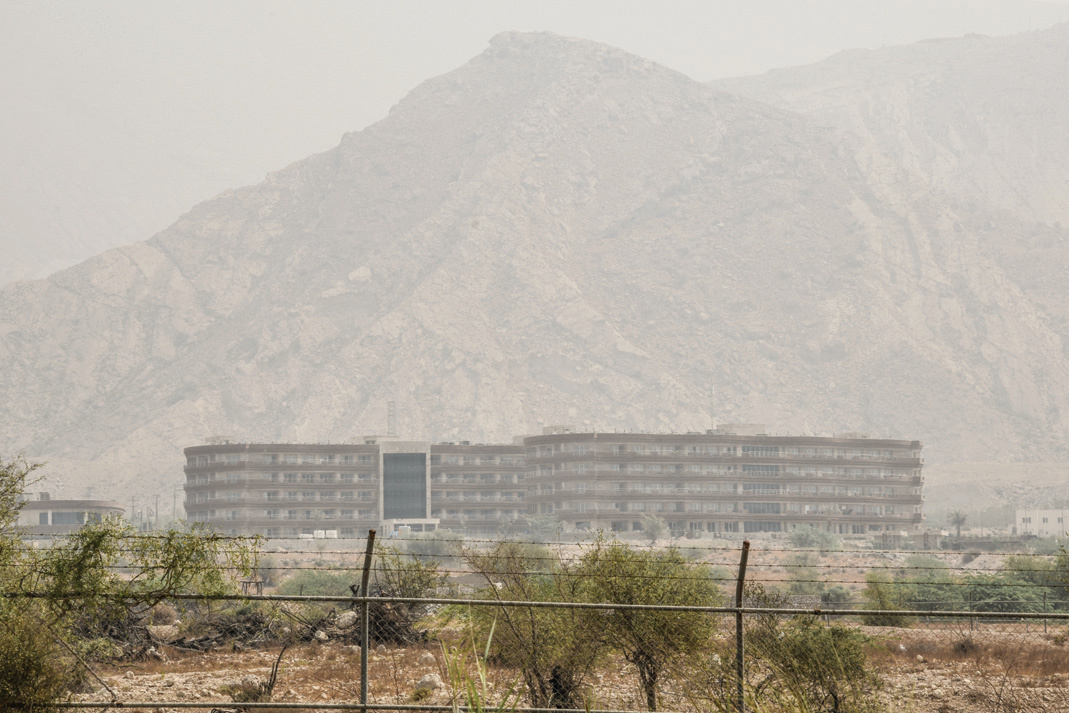
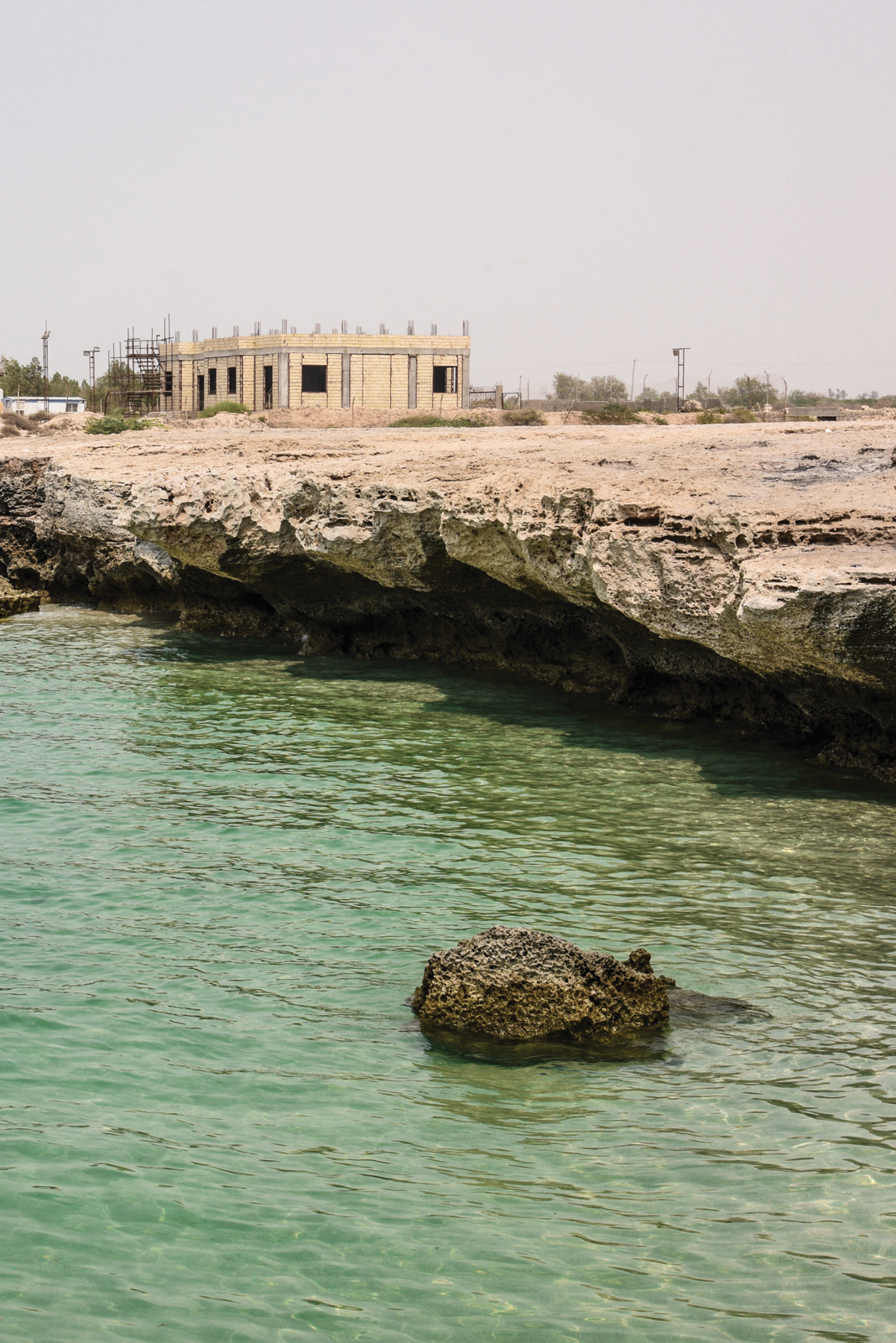
The gas and petrochemical installations have benefits that can be quantified and make everyone euphoric. But the price that nature, the environment, and public health pay in return is not easily quantifiable, and for instance, the multiplication of dangerous diseases and the number of premature and stillborn infants does not reveal every facet of the tragedy: the land beneath these installations — a narrow strip between the edge of the plateau and the waterline — in places becomes narrower than what gas and petrochemical facilities can fit upon, and it becomes necessary to push vast earthen platforms from the shore into the waters of Nay Band Gulf. Building these platforms requires millions of cubic meters of cutting from the mountain and dumping into the water — earthworks that in the delicate ecosystem of Nay Band are not without damage, seriously threatening and restricting the life of corals, fish, turtles, and mangrove trees.10 Even if these destructions could be quantified — and even if, say, it were reported that there had been several thousand turtles and now, say, ten remain — this is not something that would have a particularly tangible meaning, and comprehending these matters requires a different mindset from calculating and mercantile minds: the health and sustainability of the environment is a qualitative matter that cannot be demonstrated through statistics, charts, matrices, and voluminous, useless reports showing that all forms and components of life are sacred and have a right to live. For instance, until we accept that the Zayanderud is an ecosystem in which thousands of fish and birds and hundreds of thousands of plants and millions of insects and billions of microorganisms live — all with life and cherishing that sweet life — and is not merely a water pipe whose valve we can shut whenever we see fit, the situation of Isfahan and Gavkhouni will remain as it is. The popular understanding of the concept of the environment is not a garment cut only to fit the common folk, and it seems most high-ranking managers have derived greater benefit from it: they believe that whatever harm we inflict upon natural areas, water resources, and plant and animal life can be compensated by planting trees — trees that in Iran's arid climate can be a further burden. The signs that the petrochemical companies have posted beside the Nay Band mangrove forest proclaiming their commitment to the environment, and their reminders that they are "sponsors" of the Nay Band gazelles, are a tasteless joke — one made even more tasteless by their proximity to a half-finished, ugly residential complex a few hundred meters away.
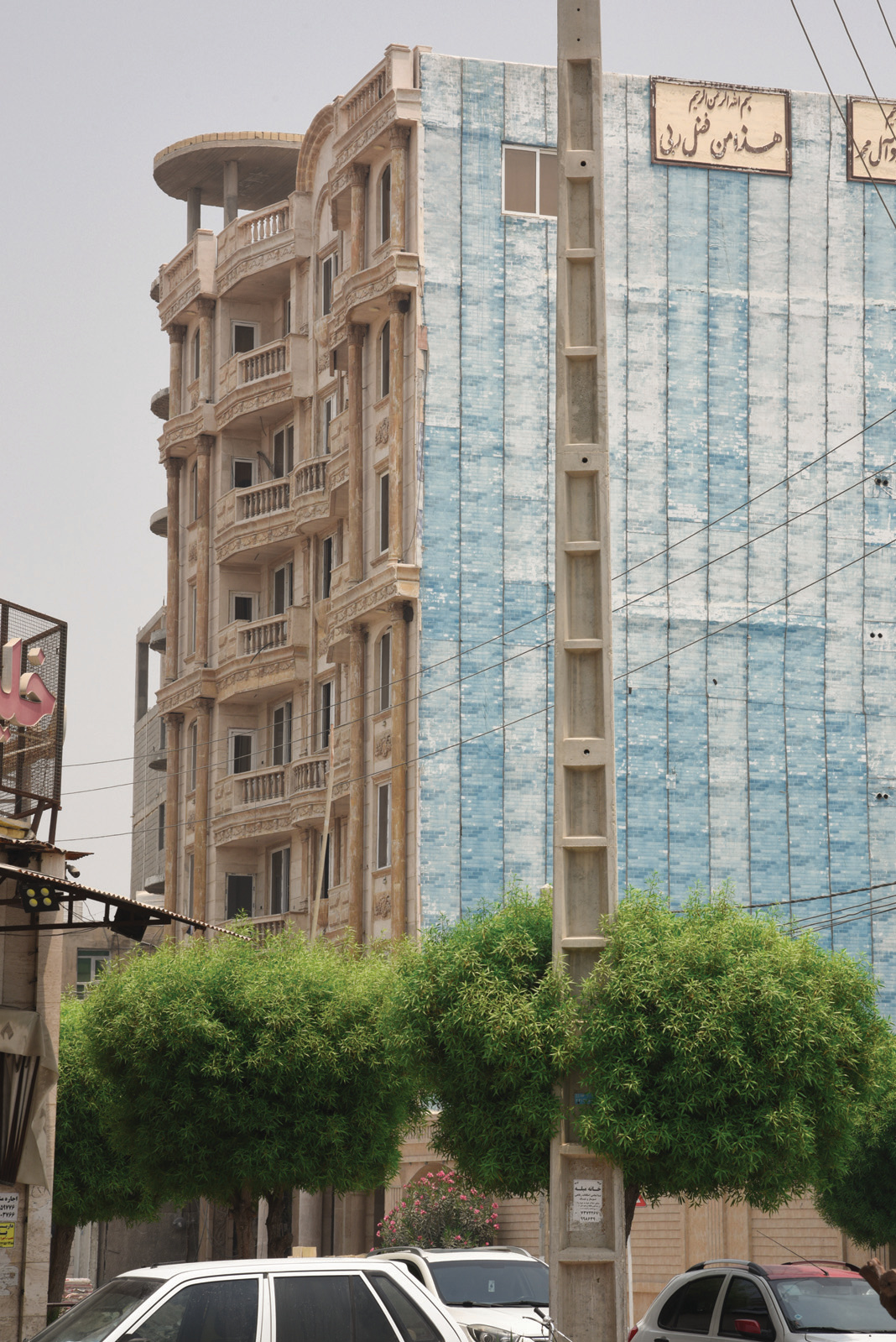
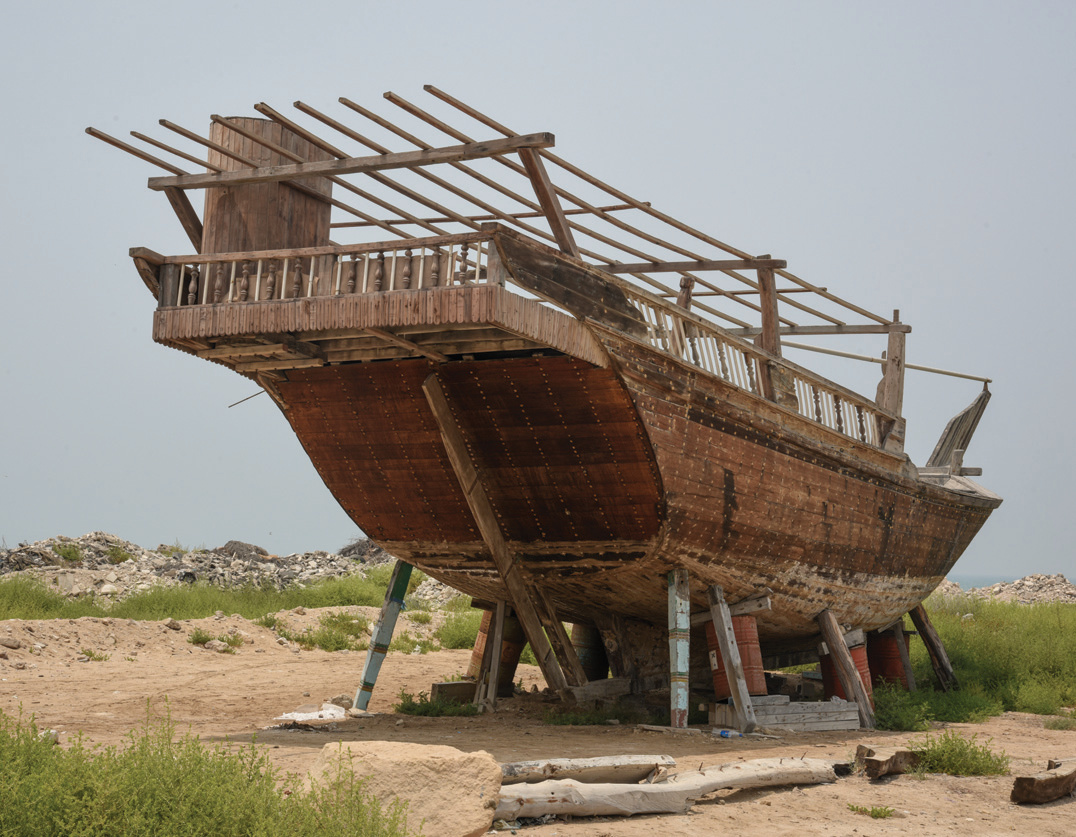
Along the approximately 60-kilometer stretch of gas and petrochemical installations (most of which lies within the Pars Special Energy Economic Zone), a number of settlements existed and still exist — but unlike the pre-gas years, when the distance between them was barren wasteland and the outline of their one- to two-story houses was visible from two to three kilometers away, now a forest of steel so engulfs them that unless one reaches the entry square with its sudden shift from industrial to residential fabric and sees the municipality's welcome sign (yes, municipality — they have become cities), no distant view of them can be seen, not even from their seven- to eight-story buildings. Nakhl Taghi, Asaluyeh, and Bidkhun are completely surrounded by installations. Dehno, Akhand, Bezbaz... are not yet fully besieged, and Kangan and Chah Mobarak are roughly at the boundary of the installations, but the effect of the permanent presence of tens of thousands of temporary (unaccompanied) workers is evident in the drastic changes to their appearance and structure. Most of these, until a few years after the advent of gas, had the dispersed village fabric typical of the south, with not-very-wide passages — some unpaved, some asphalted — and one- to two-story buildings mostly cement-rendered with reflective glass windows and a water tank on the roof. And now all of them have boulevards or wide streets with white and blue medians, with buildings up to seven or eight stories mostly clad in stone or composite panels, and still reflective glass, plus branches of every kind of bank and shops selling furniture and mobile-phone services. The horizontal expansion of these former villages and current cities has hit the barrier of gas installations, but within their former boundaries they are growing vertically — their three- to four-fold skyward growth being the natural response to the manifold increase of residents who are now mostly non-native. But despite the demographic shift and despite the encirclement by gas installations, within the four walls of these cities the customary rhythm of southern lands — working in the early morning and at dusk and taking a break from before noon to afternoon — still holds, while a kilometer further, amid the refineries and petrochemical plants, a bustle prevails that, if not around the clock by necessity, follows the standard office hours of anywhere else in the country.
A bold trace of newfound wealth can be seen in these cities, the most ready sign of which is the shops selling everyday consumer goods: until about 10 years ago, each village had a single shop whose inventory did not go beyond a few packets of laundry detergent, two or three bottles of barrel shampoo, and some stale biscuits — and now each has several "hypermarkets" that in size, variety of goods, and volume of customers rival their upscale Tehran counterparts. That the shabby appearance of the former villages should transform into the spruced-up, bustling visage of the current cities should in principle be regarded as a positive change — for no sensible person dislikes wealth and prosperity, especially compared with deprivation and penury. Or that service occupations should flourish abundantly and no local person remain without a job, or that real estate that was formerly not worth giving away should acquire value and price — all very good things. But the other side of this coin is the same repeated pattern we have seen in many other places, whose hallmark signs are "classical" stone facades or gaudy composite cladding: the dangerous phenomenon of nouveau-riche culture that seems the inescapable twin of sudden wealth. Dangerous because it is inherently the destroyer of everything that partakes of authenticity and culture, and from the other side it has absolutely nothing — absolutely nothing — to offer as a replacement for what it has destroyed.
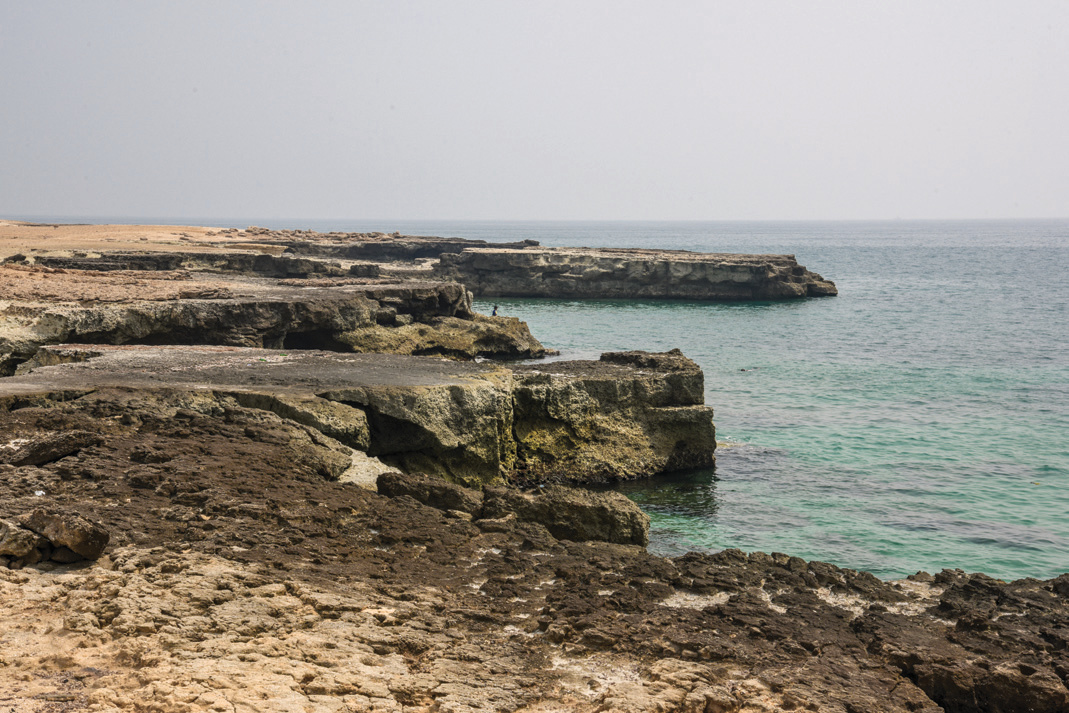
When sudden wealth has a source as vast as South Pars, its magnitude and consequences are also vast — so vast as to have national ramifications that may not be as visible as the transformation of these villages but for which certain statistical comparisons with earlier years can express the scale of the wealth that South Pars has laid in the lap of the national economy. But according to a pattern experienced both in our own country and elsewhere in the world, this kind of money does more to fatten the bureaucratic apparatus and to spawn nouveau-riche types dependent on the state, and to intensify economic (and consequently social) inequalities, than to elevate public welfare and prosperity.11 Not to mention that a large share of what the public gains from South Pars is not wealth and prosperity but rather the squandering of energy — in a world whose most serious concern, indeed threat, is the climatic consequences of fossil fuels: global warming, climatic damage, and biodiversity loss have reached dangerous thresholds, and if we do not reform ourselves sooner, nature will reform us with violence. We can no longer stand aside and, by invoking realities such as "Western Europe and America reached their affluence at the cost of years of polluting the earth, and now they forbid the likes of us, or China and India, from touching the dates" — seek only to extricate ourselves from this quagmire. Especially since our climatic conditions are such that we stand at the front line of this blow, and however happy we may be about possessing a windfall treasure like South Pars, we can be equally unhappy about this climatic "misfortune": a warming of one to two degrees may perhaps not drastically affect a tropical equatorial or a polar arctic region (though it does), but for most of our land it is synonymous with converting a large portion of winter precipitation from snow to rain — which, unlike snow, not only does not store itself in the ground but, even if it does not become a flash flood and erode the living soil, will evaporate instantly. Right now the temperature of the Persian Gulf waters is at a threshold where a slight further warming could petrify all its corals, and heedless of all the disputes we have over its name, turn it into a dead sea.12
It seems that in our "jewel-rich" border, the jewels of the earth bring transient benefits and lasting harms. We have heard much of expressions like "Dutch disease" or "the curse of oil" — the first alluding to the role of oil and gas in deforming the economic structure, and the second to its social and political consequences. But if we are honest, one cannot attribute any sin to the substance of oil and gas itself, nor lay calamities that arise entirely from our own reason and will at the feet of plankton from oceans millions of years ago. Wherever underground resources are at stake and we deal with concepts such as sustainable development, environmental health, nature conservation, and so on, our behavior evokes the tale of the bridal procession in the village of Shirin Aqelan: a bride was being carried on a mule to the bridal home when, at the threshold of the front door, a problem arose — the bride was tall and her head would catch on the lintel. The first remedy considered was to demolish the doorway, but this was rejected because damaging the abode of the newlywed's fortune was unlucky. The second proposal was to cut the mule's legs, but this too was vetoed because it would be a shame to disable a young, healthy animal for no reason. Finally, the most logical and economical option was chosen, and after approval by the groom and the bride's kin, it was duly ordered to be carried out: cutting off the bride's head.
* In the technical and legal domain of the oil and gas industry, there is probably a distinction between a gas reservoir and a gas field (or oil field), but we have not observed such a distinction in this text.
1. Gross domestic product (GDP) of a country means the total value of goods and services produced over one year, calculated by authorities such as the World Bank or the International Monetary Fund. Iran's GDP, for reasons such as multiple exchange rates, subsidized high-consumption items, underground and household economy, and the manifold price differences of certain goods and services from their global averages, is estimated with widely varying figures by different authorities.
2. Under the continental shelf legal regime, slightly more than one-third of the field's area is Iran's share and the remainder belongs to Qatar.
3. Here is more to gladden us: a portion of South Pars gas is injected into the Aghajari oil reservoir to increase its internal pressure and thereby, in oilfield parlance, raise the oil recovery factor. Thus we kill two birds with one stone: we extract more oil, and we transfer gas from a spot beneath the sea that has another claimant to a safe place under our own control.
4. The location of Asaluyeh Airport east of Bidkhun is such that after takeoff, the aircraft flies 20 to 30 kilometers along the runway and over the gas installations before gaining enough altitude to turn inland.
5. The yellow color is sulfur. South Pars gas is sour and mixed with hydrogen sulfide (H2S), and sweetening the gas in each of its twenty-some phases leaves approximately 200 tons of sulfur daily. Sulfur has its uses — such as producing sulfuric acid, rubber vulcanization, and of course premium safety matches. But global production volumes as a byproduct of oil and gas refining exceed all those uses combined. Consequently, in a place like South Pars, setting aside vast areas for storing sulfur is unavoidable.
6. A flare is a massive torch that, by burning a portion of the gas in the production and transmission circuit, acts like a safety valve and keeps the overall system pressure balanced. Its existence is apparently necessary, but with certain measures the gas burned in the flare can be reduced by approximately 90 percent — a task that requires money and time, and with the haste born of our race with the Qataris, there is no longer room for such considerations on either side (more so on ours). Flaring is not unique to South Pars and has a history as old as Iran's oil industry. The mythic visage of flares, despite the filth they scatter in the air, has also made its way into cinema — from the very "Wind of the Lovers" mentioned at the beginning of this text to "The Runner" and "Beyond the Fire." But the number and density of South Pars flares exceed all the flares in the entire history of Iran's oil industry.
7. For some years now there has been much clamor about biodiesel, which, being derived from plant sources, supposedly returns to the atmosphere the same carbon absorbed during the plant's growth, yielding a net-zero carbon balance. It seems a correct equation, but most of this biodiesel comes from corn grown in fields whose area is the result of clear-cutting the Amazon rainforest.
8. Right now, the thermal value of Britain's remaining coal reserves rivals the reserves of some of our oil-rich neighbors, but even the tightfisted, calculating British have been compelled to wash their hands of it so that living in their land does not become impossible.
9. "Low profit margin" pertains to when the input feedstock and output products of these complexes and their initial capital are all priced at global market rates — in which case they may well lose their economic justification entirely. One of the perennial disputes over these petrochemicals is how to calculate the prices of their input and output, alongside which the recurring debates over rent, corruption, and so on serve as the salt shaker on the table. Perhaps the matter also traces back to devoted managers' enchantment with vast and impressive structures: an upstream petrochemical complex with its hundreds-of-hectares site and enormous towers and odors that spread for kilometers is very visible, but the tens or indeed hundreds of plastics and polymer workshops and factories are at most medium-sized sheds that do not turn any heads.
10. While wandering among the mangrove trees of Nay Band, the crabs and mudskippers fleeing from my path made me ashamed that I had disturbed the peace of their home.
11. In the early [13]50s (1970s), following the sudden spike in oil prices, the government of the time, despite economists' warnings, decided to suddenly inflate government expenditures and lavish spending upon society. When the royal decree was communicated to the Plan Organization, an economist from that very organization named Alex Mejlumian warned: "This money will grow legs and walk into the streets."
12. The role of corals in the marine ecosystem is vital and comparable to trees and forests.



