



— If you had to choose your daily food from among 25 kinds, would this not be tormenting for you?
— How desirable is the freedom of choice within great variety for the consumer?
— How much room for the consumer's freedom of choice does the dizzying variety of one particular commodity in a given social situation leave?
— Can we say with assurance that the sports shoes of the year 2003 have a qualitative difference from those of, say, 1998? Are these differences real and worthy of attention?
Doubts of this kind lead us toward a truth hidden behind the multifaceted dimensions of design: design, by its received definition, no longer holds a place of any notable importance in today's life. Today, almost all commodities produced are of utmost quality — or at least can be. So in what particular characteristic does the distinction between them lie, and from the consumer's standpoint, is any distinction worthy of attention to be drawn between them at all? If we look at the matter very optimistically, we can attribute a small share to the difference in the social situation of consumers. But this difference covers only a small part of the limitless variety of commodities. Commodities that are produced for the satisfaction not of one specific need but of design itself — for one can still distinguish between the horizons of production and the aims and role of design. The horizons of production are manifested in sales and greater profit, while design — for all its intellectualist airs — is dependent on production. Is design becoming an instrument in the cycle of production and sales?
The truth is that design was born in circumstances in which the products of capitalism needed to acquire spiritual value, and design took on the task of performing this function. So design must, from the beginning, have been one of the links of the market. We therefore cannot say that it has changed its nature and is moving in the opposite direction of its original aims. The knot of the discussion probably lies in this fine point: that the nature and the social essence of phenomena are not necessarily identical with their social role. So perhaps we may say this: design is a phenomenon dependent on the cycle of production and the market, but it certainly has a nature independent of it. All social phenomena, in manifesting their function, appear in conformity with the characteristics of the historical era in which they are present. We therefore cannot claim that current design has come into conflict with its essential nature and aims. In circumstances where the technology of production and the volume of capital accumulation in the production sector have made possible mass production and rule-bound production for designers, is opposing this historical opportunity a sign of passivity and flight from responsibility?
Without doubt design is passing through a crisis. The task of the designer, from the production managers' standpoint, is in truth how to sell. But the designer's task takes on a meaning beyond this concept. The designer is at the same time someone sensitive to the quality of life and the passing of its moments; and the most exhilarating outcome of designing as a creative profession is the redefinition of a way of living.
A considerable portion of design history begins with Bauhaus1. A group composed of the pioneers of design — (semi-)Bauhaus — began the era of making commodities in the twentieth century. But they were mistaken on one point: they sought to create products that would be "honest" — display their roots and aims, not conceal their structure, and have their real structure show forth as an aesthetic element. The only thing they did not consider was that products of this kind always require buyers who can grasp the beyond-consumption dimensions of these products and grant them validity.2
"Today's consumer is much less of a fetishist3 than in the past. He is very astute, does not fall in love with the beauty of his car, and does not spend much of his free time washing it. The love affair he had with his car in the past no longer exists. He really needs the car, but mostly to meet the need of moving quickly from one point to another… and therefore such projects can go beyond a product as an object.4 Today it is impossible for design as a product to be complete in itself, however beautiful, useful and inexpensive it may be. What truly places it in its rightful place is the route that ends at the point of sale in the shop — into homes, into where it should be consumed."
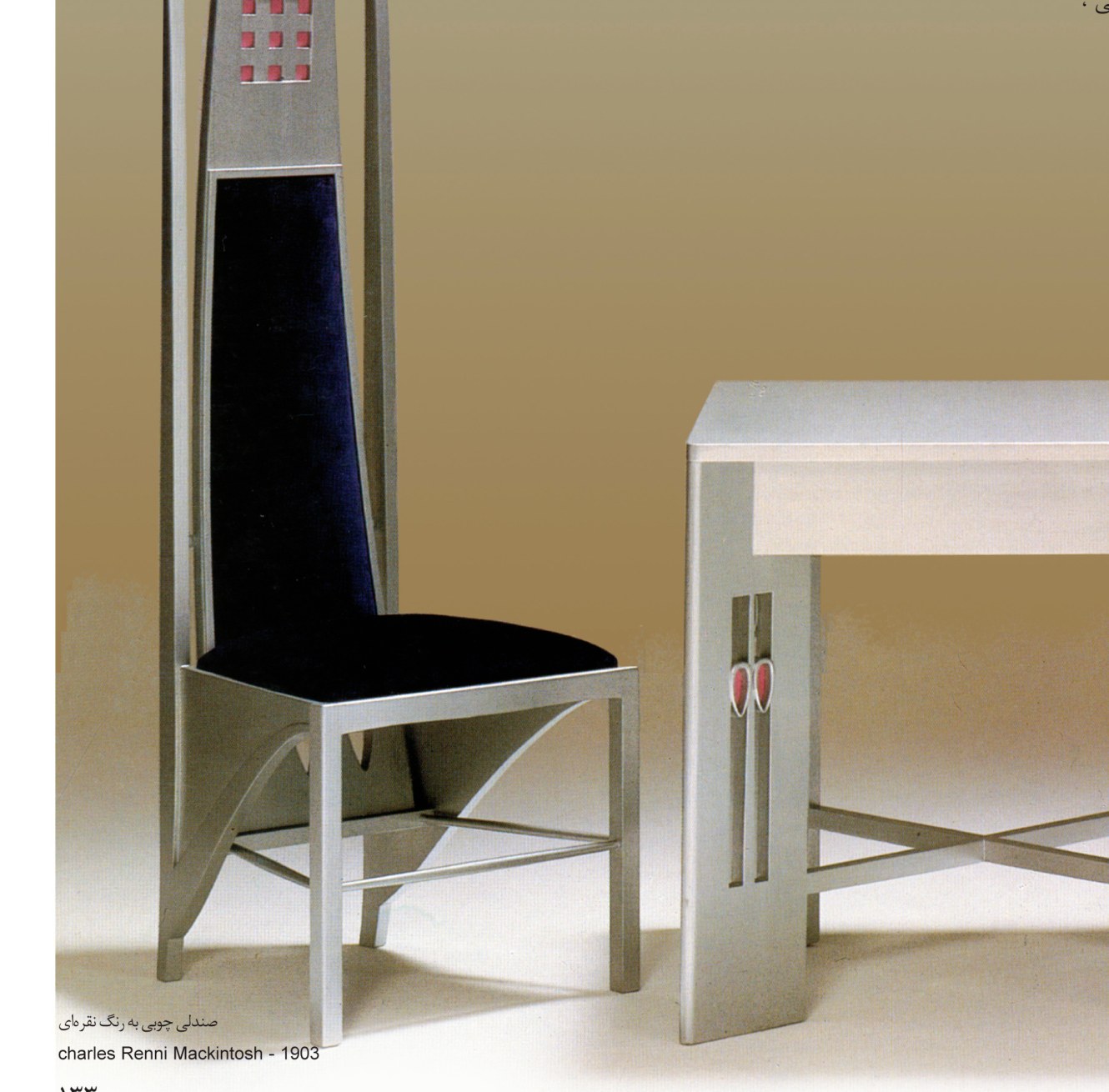
What truly is the meaning and purpose of design, and what effect can this have on the ways we think about its essence? What are the potentials of design? It seems that to answer this question we must first clarify what design is. Often, when design is being discussed, the parties do not know what they are talking about. It is apparently easier to be told what design seems to be. One of the features of design is that it appears — and that in a place where no one knows what design is. Speaking about design has made the very questioner question its essence. Being open to debate and being beyond debate are intrinsic and inseparable parts of design. The fact that design can appear is a truth pointing toward something that is not manifest — for what appears refers to something else that is not itself manifest. For example, when design appears in the form of a chair, the body of the chair refers to a particular conception held by one person (the designer) of "sitting". Although the chair's design has issued from the designer's particular conception of "sitting", is the designer's conception itself manifest in its essence? Better perhaps to say: the appearance of the chair "points" (refers) to the designer's conception of "sitting". The design of the chair is a necessity because sitting is a necessity. So one may say: design is the material embodiment of necessities — of needs.
Design theory5 emphasises at least two attributes of design: beauty and the provision of at least functional and technical needs. But the aim of design does not depend on responding to existing needs. Just as a name cannot substitute for the explanation of the thing it introduces, the aim of design is "to find a way of activating objects6 and producing satisfaction and a sense of accompanying conversation with the consumer".7 In this sense, design is known as an instrument for creating newness, expressing personality and redefining the way of life — not an instrument for better selling the commodity.
- Bauhaus
- Fritz Hahne, Design as a marketing factor – Design lines meet in Essen 1949-1989
- Fetishist
- Object
- Design Theory
- Objects
- Stefan Lengyel, Design as a marketing factor – Design lines meet in Essen 1949-1989
- Anonymous
- Acidic Pictogram
- Effective software
- Fritz Hahne. Design as a marketing factor – Design lines meet in Essen, 1949-1989.
- Stefan Lengyel. Design as a marketing factor – Design lines meet in Essen, 1949-1989.
- About the product – Interview with Giovanni Cutolo. www.idemagazine.net