Understanding Architecture, Robert McCarter, Juhani Pallasmaa.
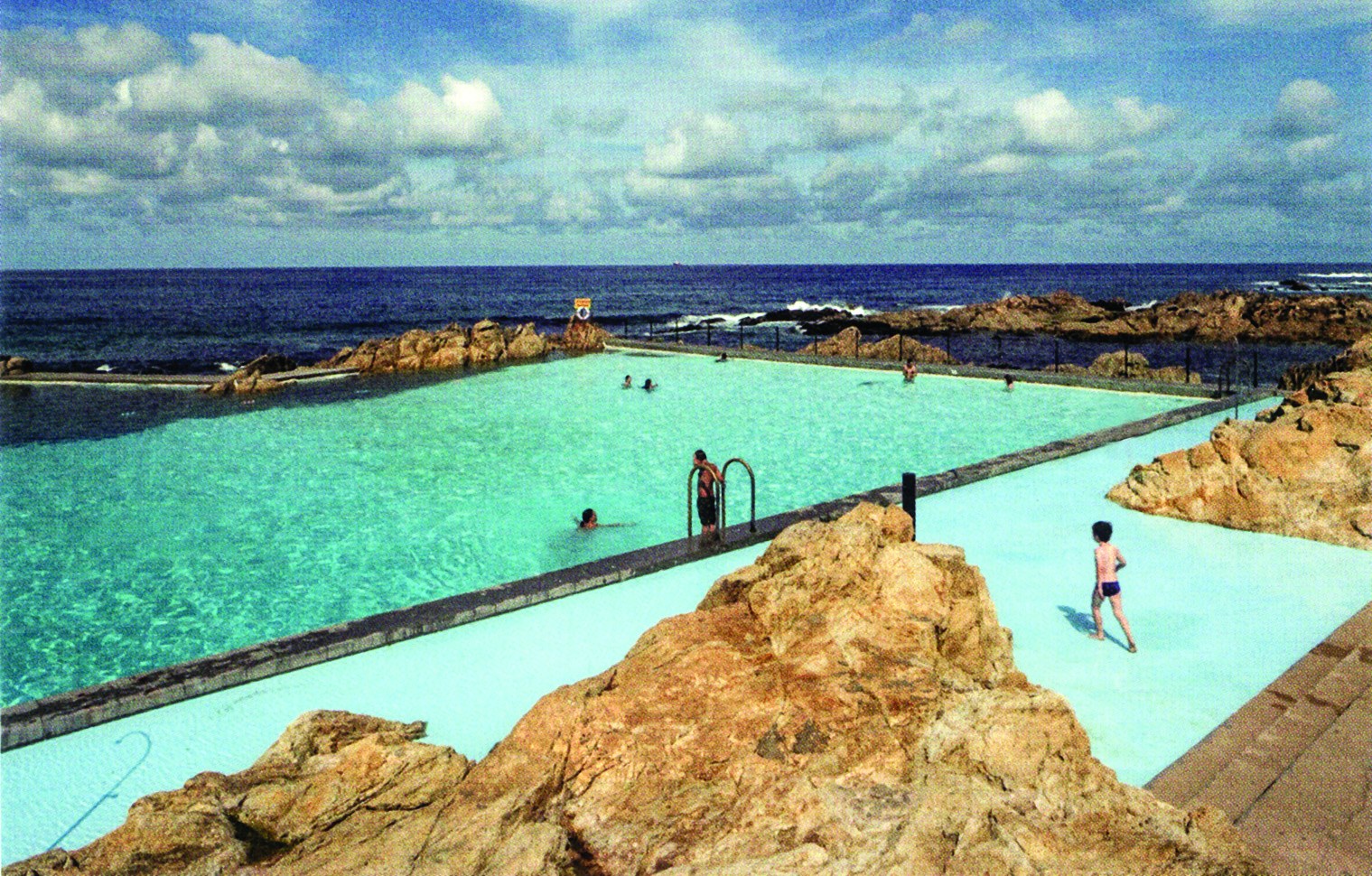
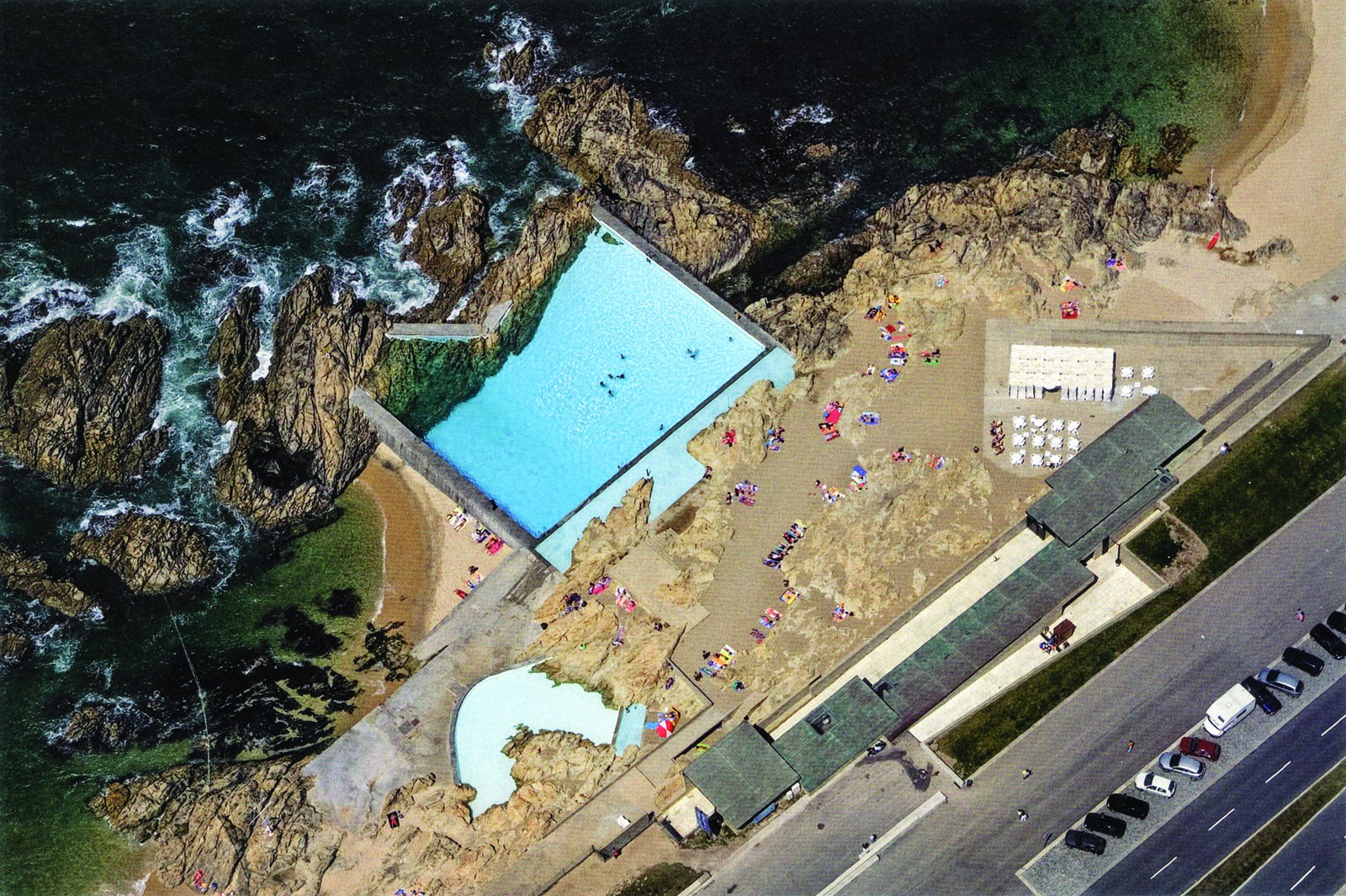
These swimming pools engage the natural rocky shoreline of the ocean, as well as the existing concrete sea wall and the coastal road, and they are part of a project of almost 50 years by Álvaro Siza to organise and give spatial structure to this space on the edge of the city. The elevated roadway has been incorporated into the project, and the pools have been set into the ground and merged with the shape of the land, while at the same time they have dramatically reshaped the natural landscape of the shoreline as a space for dwelling.
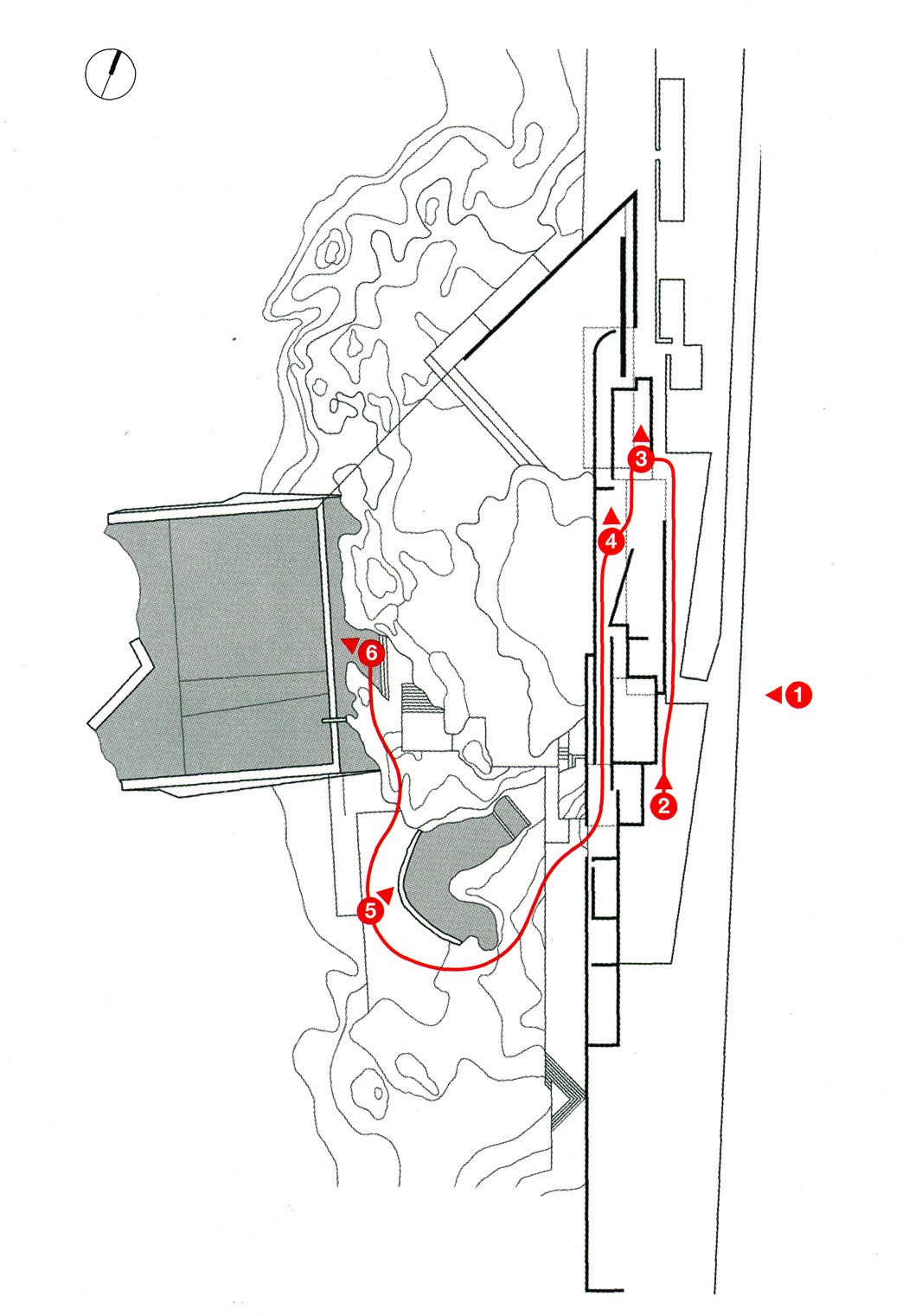
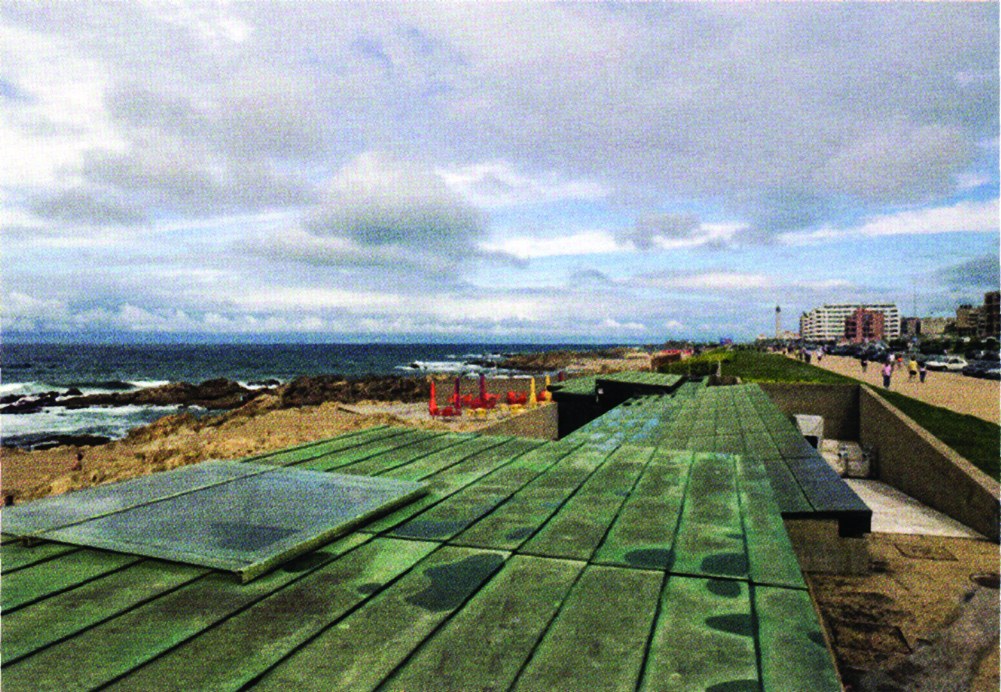
As we drive along the coastal road towards the pools, we hardly notice them, for they are sunk into the slope between the road and the beach. Walking along the outer edge of the road, we notice several rows of low walls and flat roofs of dark metal set between where we stand and the rocks of the shoreline below. The continuous low concrete sea wall has been opened, and we slowly descend a stone-paved ramp enclosed by two separate concrete walls. The space of the ramp widens as we descend, so that when we reach its end, instead of feeling compressed, we find ourselves in a wide and fully lit space. The wall on the left opens, and a projecting beam encloses a recessed space, and we turn, leave the sunlit court and enter the fully shaded entrance hall.
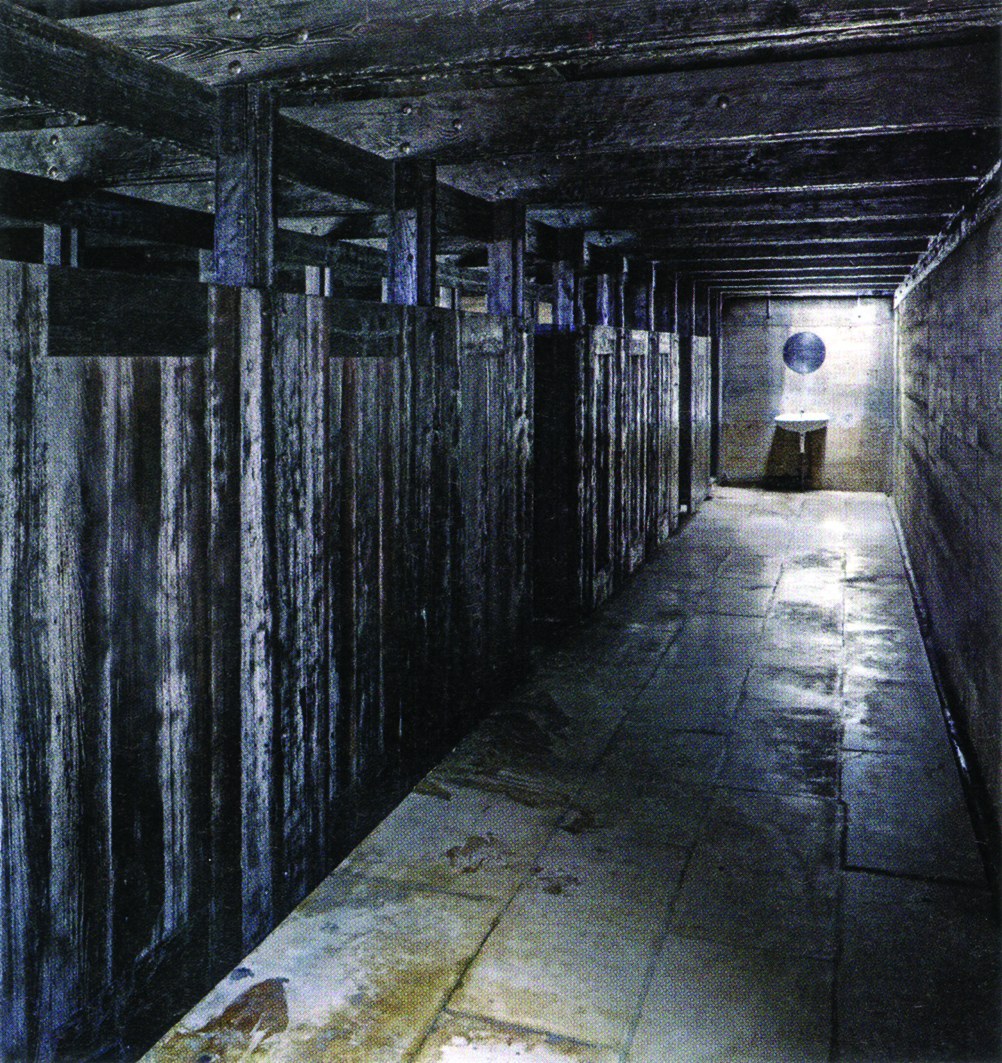
It takes a few moments for our eyes to adjust to the sudden change from light to darkness, and we move towards the dark changing rooms, which receive light only from a narrow horizontal slit between the top of the concrete wall and the slightly sloping roof. The floor is paved with the same large stone slabs as the ramp, and the walls are of reinforced concrete, with the horizontal imprint of the wooden formwork clearly visible, and the changing cubicles, beams, columns and ceiling are all made of black-stained wood. The black, polished wood has no contact with the floor, which is often wet with sea water or rain, and the changing cubicles are suspended from the thick beams that run across the room above our heads.
On emerging from the darkness of the underground changing rooms and going out towards the ocean, we are surprised to discover that we are still above ground level and that the natural slope has gradually reached the shoreline below.
We turn and walk on the stone paving between high concrete walls, parallel to the shoreline, and lose sight of the beach and feel as if we are once again sinking below ground. Passing through a narrow doorway and a sharply angled corner, we emerge into the large triangular plaza of the café, which is fully lit, with concrete walls, and a counter hidden in the shadow of the projecting roof at the back edge. Sitting here, surrounded by angled concrete walls behind and beside us, and with a view towards the rocky shoreline and the distant horizon of the ocean, we completely forget the traffic of the road nearby and feel that we are set into the ground, which, although open to the expanse of the sky, is sheltered not by roofs but by the enclosing walls.
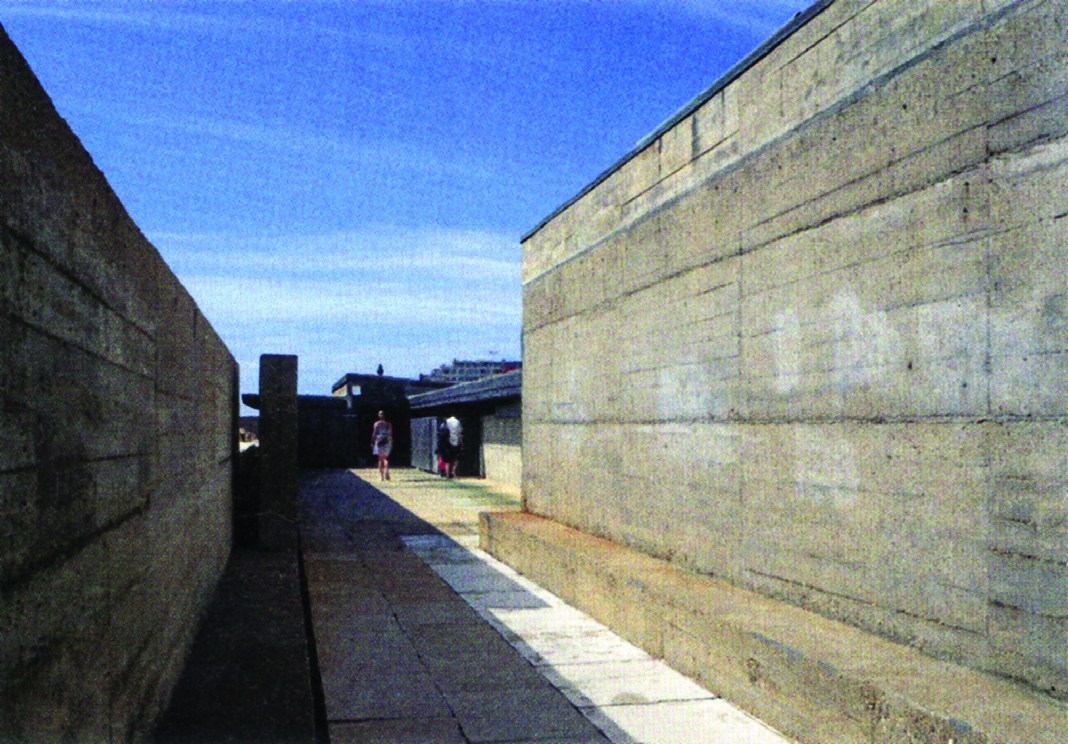
We return through the shadows of the walls, past the dark changing rooms, and along the enclosed corridor reach the other end of the complex, where we find the toilets and showers. The entrance porch has a low-pitched wooden roof that spans from the inner wall to a higher outer wall and casts a deep, cool shadow, and its floor is made of light blue lava sand that feels soft under our bare feet. Long concrete benches are formed along both sides of the wall that reaches here, and a wall clock is mounted on top of the inner wall so that it can be seen from the beach. All this time we have been in spaces formed between high monolithic walls – in the changing rooms, the café, the toilets, the showers, and walking along the many corridors that connect them – and much of the time we have not been able to see the ocean. But we know that the ocean is close by, for we constantly hear the roar of the waves breaking on the rocks and their echo from the concrete walls, and we half expect the water to pour in at any moment; in this way, the ocean is always present in our experience of this place.
We go out, towards the rocks and sand in front of the line of concrete walls, and before us we see a concrete bridge that leads to the large pool. But we also notice a space carved out among the rocks, right in front of the wall. Going down the concrete steps, we find ourselves in a small artificial cave with a sand floor that opens, beneath the concrete surface of the steps, onto the children's pool. This shallow, irregularly shaped pool, three sides of which are formed by the edge of the rock outcrops and the ocean side by a curved concrete wall, looks like a natural tidal pool among the rocks, its water probably left over from the last high tide. Below the children's pool lies the largest sandy beach, where people sunbathe, surrounded by rock outcrops.
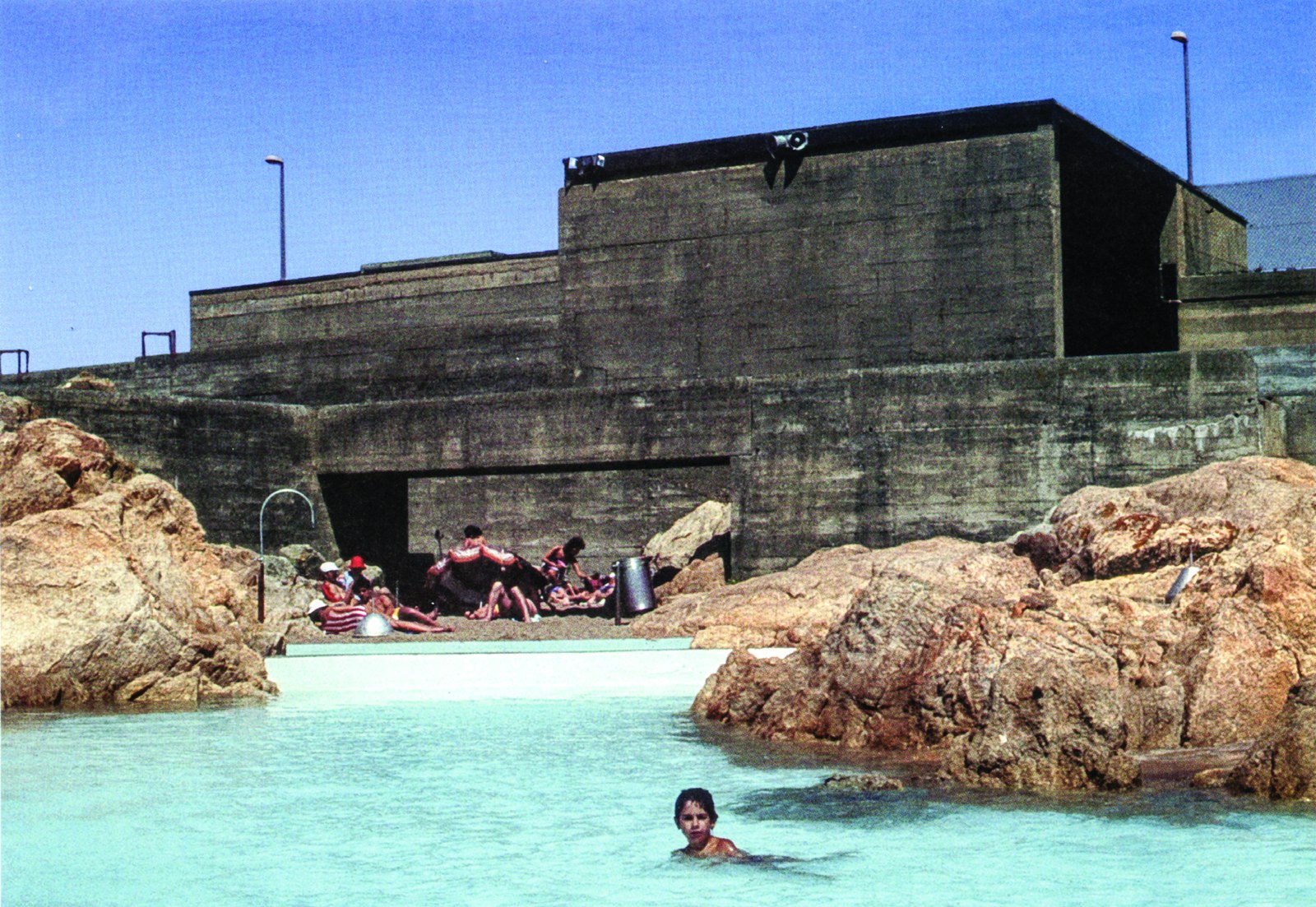
Climbing the rocks on the right, we find the concrete steps that lead down to the larger, deeper pool. Contrary to the children's pool in almost every respect, the larger pool – rather than being set above the beach, projects some distance into the ocean, and the waves break against three of its sides. The shape of the pool is nearly rectangular, three of its sides formed by thick, weathered concrete walls, while the fourth side is formed and enclosed mainly by the outcrops of the existing rocks. Walking across the beach-like platform with its lava-sand floor, one side of which is formed by the smooth concrete wall of the pool and the other by irregular rock walls, we enter the pool. The water level in the larger, deeper pool is only a few feet above the ocean, and as we swim in the pool, our ears ring with the roar of the surf breaking on the rocks around us; looking out at the ocean through the rocks, we cannot see the edge of the pool. The surfaces of the pool and the ocean seem to become one in our experience, and we float in the embrace of the bones of the earth, at the meeting point of land and sea.