



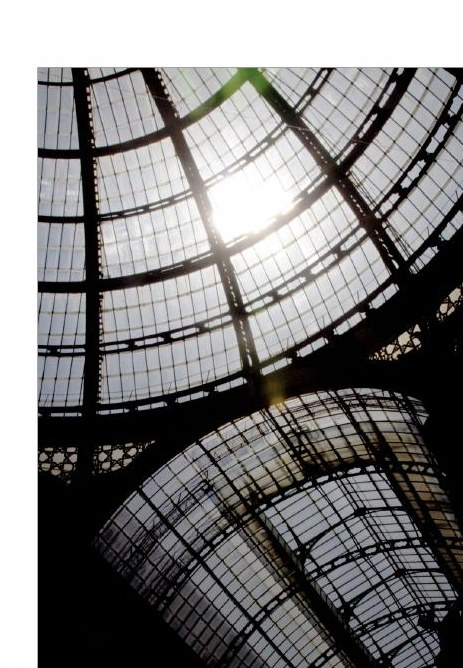
One day, on a trip from Kerman, I asked an architect who works at one of Iran's important architecture offices why he wouldn't give me his photography work. He said: “You know, we architects all carry cameras because we know perspective.” I replied: “In that case, all those who go to photography schools and faculties are just idlers; to become photographers they need only attend a session or two, learn perspective, and become photographers.”
The disregard for photography is striking even in Ms. Beski (for whom I have great respect), the publisher of Memar magazine, who has told me insistently, more than once: “Pay more attention to the Memar Award [read: only] and not to the photograph.” That astonishes me. Now, all that I have written so far was merely a preface; in fact, photography is the hardest, most difficult job in the world. Why? Because heart surgeons, say, and many others who belong to the group with difficult jobs, in fact deal with only a few cases and parameters — which, in many cases, they must assess and resolve in a few hundredths of a second. A photographer, however, deals with millions of parameters every day.
Take light, for example: morning light and sunrise, thousands of angles, changing across latitude and longitude. A photographer's way of thinking cannot be the same in Iran, in France, in Africa, in China and in Australia. Every photograph has its own particular parameters.
Unfortunately, in our country photographers, out of misfortune and unemployment, go off to become taxi drivers (since architects all carry cameras); the taxi driver in turn becomes an orange-seller, and the orange-seller becomes a builder-developer; and the very architect-with-a-camera orders, “Draw the plan for me like this,” and the builder-developer says, “Yes, sir.” We see the result in what has become of architecture. I do not know — perhaps in the years to come we former photographers and today's taxi drivers will move up, become orange-sellers and then builder-developers, and order the architects-with-cameras, “Build the building like this,” and at last bring some order to Iranian architecture.