
To European architects brought up on the traditions of building in stone and brick, the Japanese method of building with wood and bamboo has seldom seemed worthy of being recognised as architecture. Only quite recently has a competent student of Western architecture acknowledged and paid tribute to the remarkable perfection of our temples. Such has been the case with our classical architecture, and we can hardly expect an outsider to appreciate the subtle beauty of the tea room and the principles of its construction and decoration, which are entirely different from Western examples.
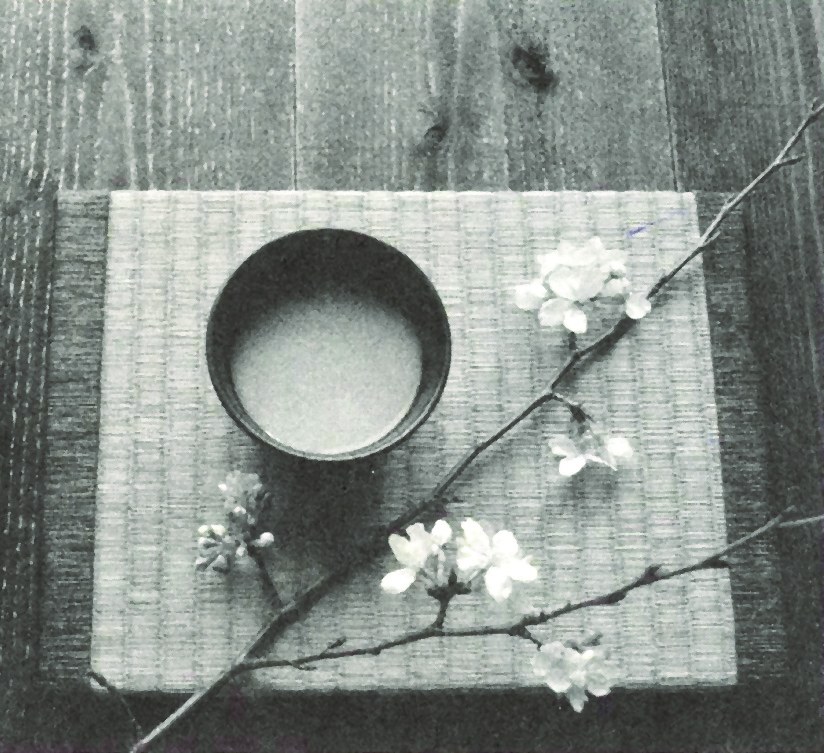
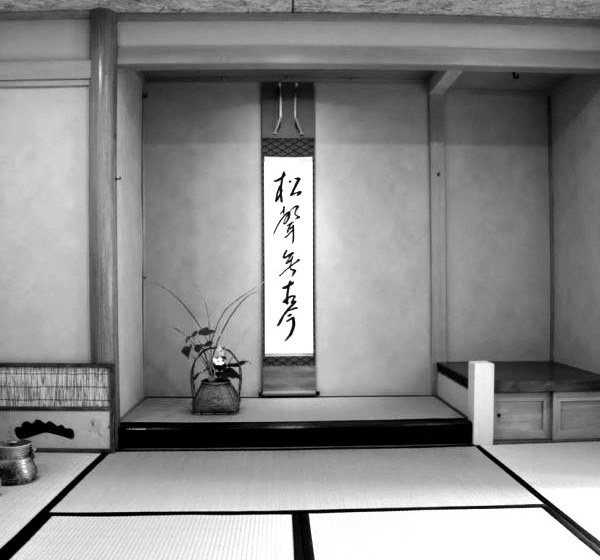
The tea room (Sukiya)1 does not pretend to be anything but a cottage – a straw hut, as we call it. The original ideograms of Sukiya mean the Abode of Fancy. Latterly, various tea masters substituted various Chinese characters according to their idea of the tea room, and the term Sukiya may also signify the Abode of Vacancy or the Abode of the Unsymmetrical. The tea room is an Abode of Fancy inasmuch as it is an ephemeral structure built to house a poetic impulse. It is an Abode of Vacancy inasmuch as it is empty of ornament except for what is placed in it to satisfy the aesthetic need of a moment. It is an Abode of the Unsymmetrical inasmuch as it is consecrated to the worship of the Imperfect, purposely leaving something unfinished for the play of the imagination to complete. Since the sixteenth century the ideals of the tea ceremony have influenced our architecture to such a degree that the ordinary Japanese interior of today, because of the extreme simplicity and modesty of its scheme of decoration, appears to foreigners almost empty.
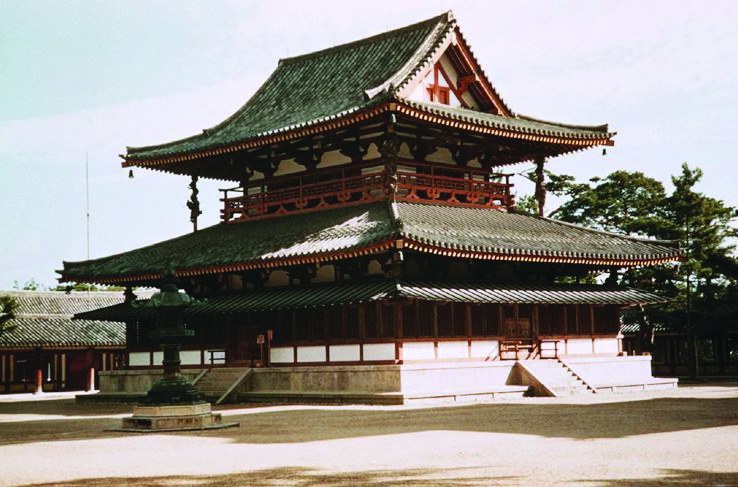
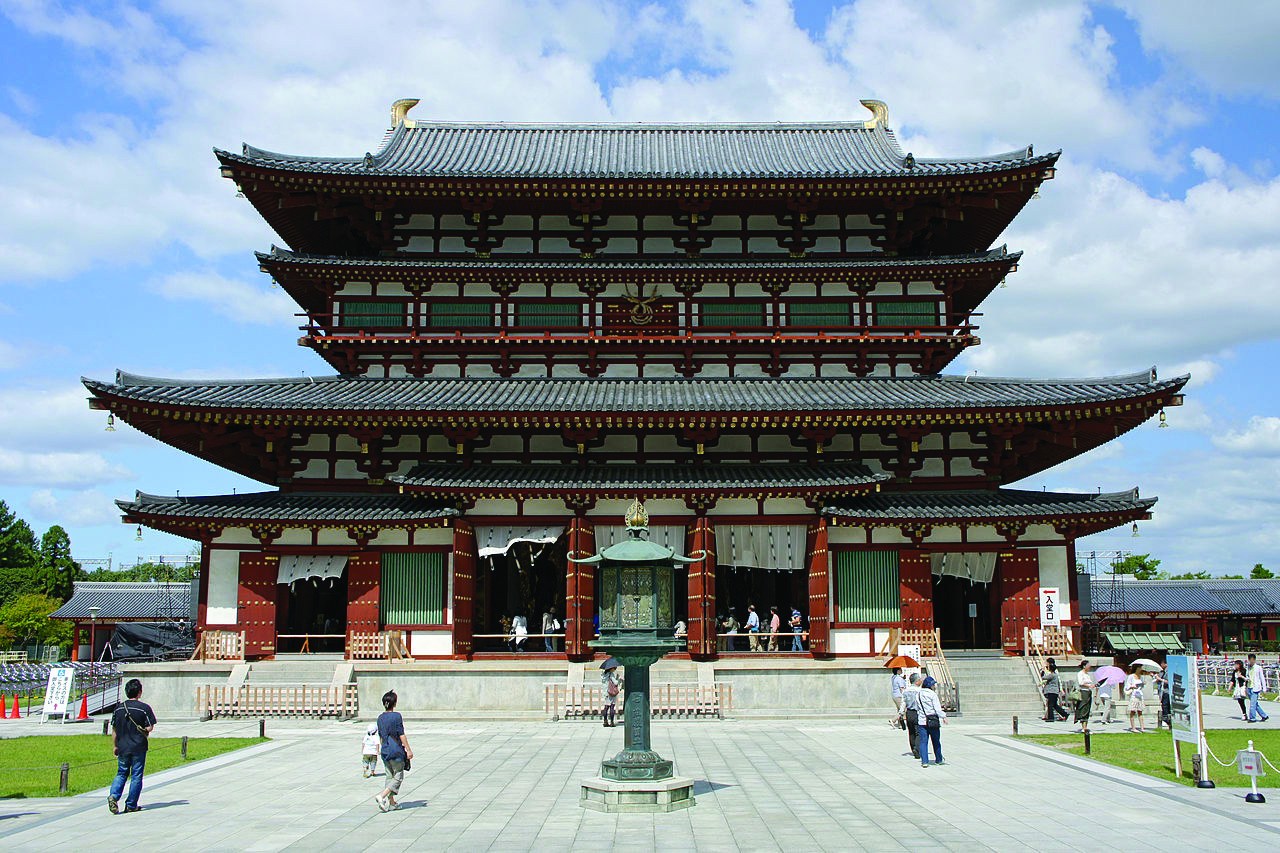
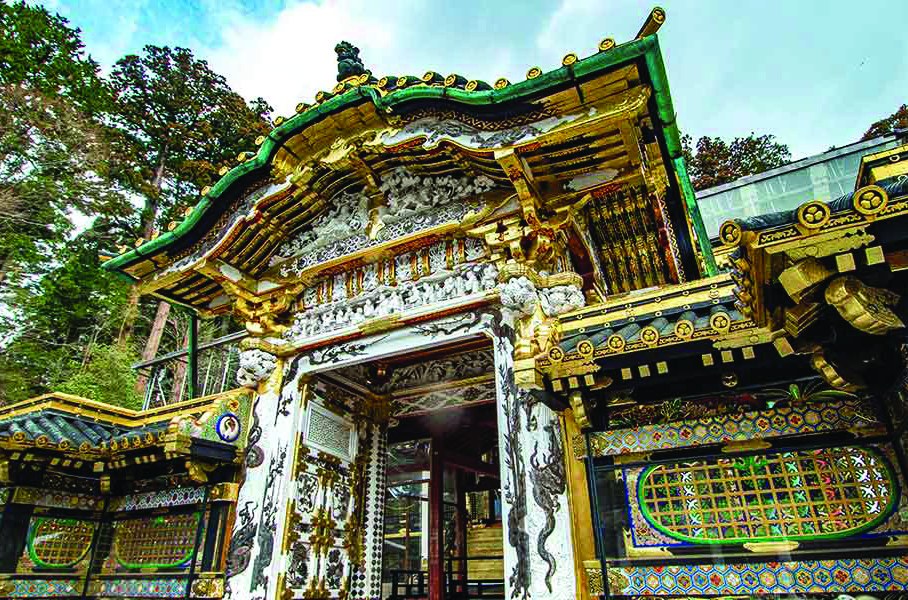
The tea room is not only different from any production of Western architecture, but also contrasts strongly with the classical architecture of Japan itself. Our noble ancient buildings, whether secular or religious, are not to be underestimated even in regard to their mere size. Some that have survived the disastrous fires of past centuries can still seem awe-inspiring in their grandeur and richness. Huge wooden pillars, sixty to ninety centimetres in diameter and nine to twelve metres high, held by a complicated network of brackets, enormous beams that groan under the weight of tile-covered roofs. The material and mode of construction, though not proof against fire, have been shown to be resistant to earthquakes, and are well suited to the climatic conditions of the country. In the Golden Hall of Horiuji2 and the Japanese-style building of Yakushiji3 we see notable and enduring examples of Japanese wooden architecture. These buildings have stood intact for nearly twelve centuries. The interiors of the old temples and palaces were decorated astonishingly. In the Ho-odo4 temple at Uji, dating from the tenth century, we can still see the elaborately made canopy and the gilded ceilings, in countless colours and decorated with mirrors and mother-of-pearl, as well as the remains of the paintings and sculpture that once covered the walls. Later, at Nikko5 and in the Nijo6 palace in Kyoto, we see structural beauty sacrificed to a wealth of ornament which, in colour and exquisite detail, equals the height of the splendour of Arabian or Moorish7 work.
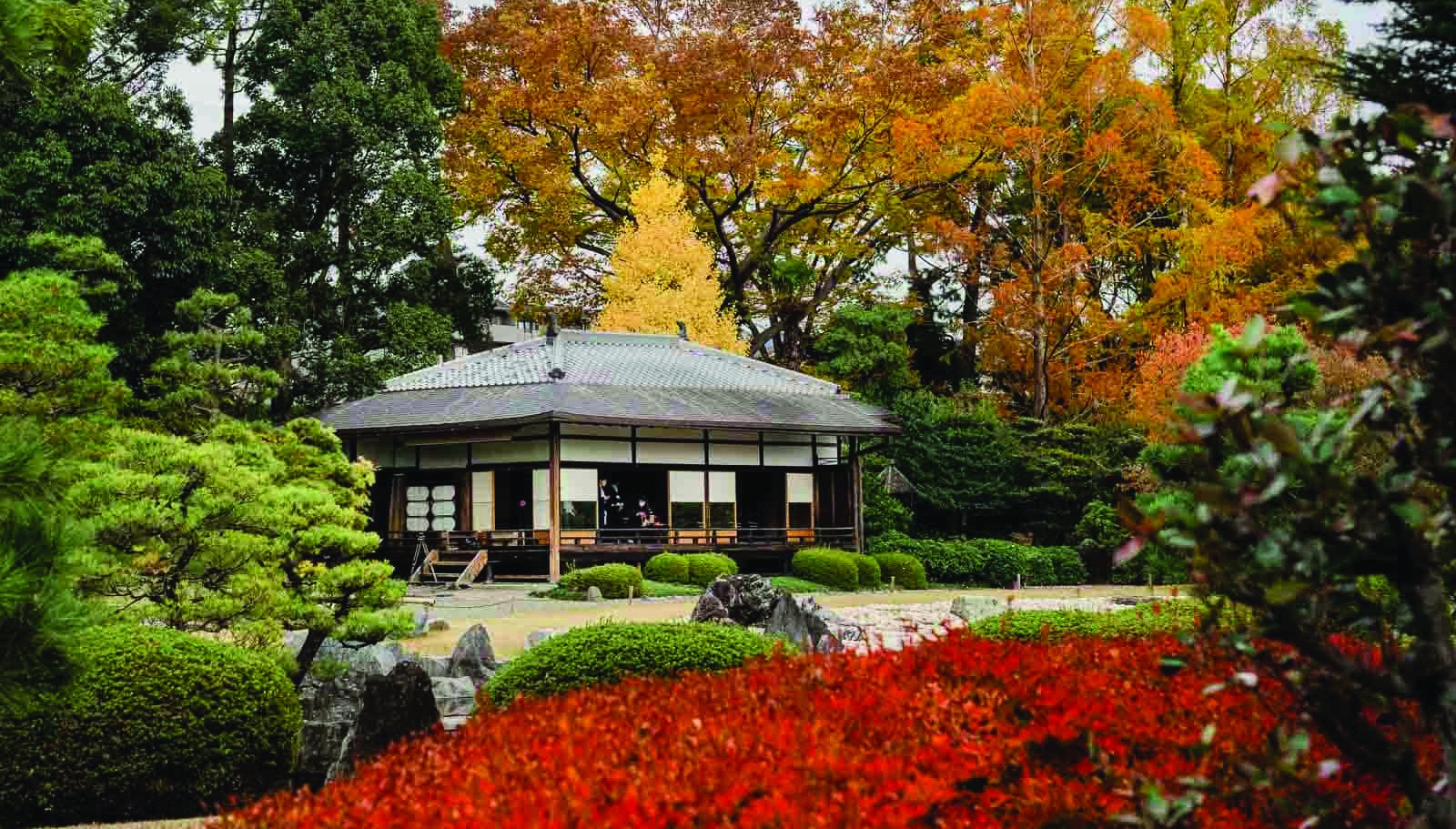
Even in the daytime the tea room is lightly lit, for the low-projecting eaves of the sloping roof admit only a few of the sun's rays. Everything is sober in tone from the ceiling to the floor; the guests themselves wear garments of discreet colours. The mellowness of age is everywhere present, everything suggestive of recent acquirement being tabooed, save only the one note of contrast furnished by the bamboo dipper and the linen napkin, both immaculately white and new. However faded the tea room and the tea equipage may seem, everything is absolutely clean. Not a particle of dust is to be found in the darkest corner, for if any exists the host is not a tea master. One of the first requisites of a tea master is the knowledge of how to sweep, clean and wash, for there is an art in cleaning and dusting. A piece of antique metalwork must not be attacked with the reckless zeal of the Dutch housewife. A drop of water that has dripped from a flower vase need not be wiped away, for it may suggest dew and coolness.
In this connection there comes to mind a story of Rikyu which well illustrates the ideas of cleanliness cherished by the tea masters. Rikyu was watching his son Shoan as he swept and watered the garden path. When Shoan had finished his task, Rikyu said that it was "not clean enough" and bade him try again. After an hour of weary toil the son turned to him: "Father, there is nothing more to be done. The steps have been washed three times, the stone lanterns and the trees are well sprinkled with water, the moss and lichens are shining with a fresh verdure; I have left not a twig nor a leaf on the ground." The tea master chided him, "Foolish youth, that is not the way a garden path should be swept." Saying this, Rikyu stepped into the garden, shook a tree and scattered over it gold and crimson leaves, scraps of the brocade of autumn! What Rikyu wanted was not cleanliness alone, but beauty and naturalness as well.
That the tea room should be built to suit some individual taste is an affirmation of the principle of vitality in art. For art to be fully appreciated, it must be true to contemporary life. Of course we should not ignore the claims of the past, but we should seek to enjoy the present more. Of course we should not disregard the creations of the past, but we should try to assimilate them into our consciousness. Slavish conformity to traditions and formulas fetters the expression of individuality in architecture. We can but weep over the senseless imitations of European buildings that we witness. We marvel why, among the most progressive Western nations, architecture should be so devoid of originality, so replete with repetitions of obsolete styles. Perhaps we are passing through an age of the democratisation of art, while awaiting the rise of some princely master who shall establish a new dynasty. Would that we loved the ancients more and copied them less! It has been said that the Greeks were great because they never drew from the antique.
The term Abode of Vacancy... conveys the need for continual change in the decorative motive. The tea room is absolutely empty, except for what may be placed there temporarily to satisfy some aesthetic mood. Some special art object is brought in for the occasion, and everything else is selected and arranged to enhance the beauty of the principal theme. One cannot listen to different pieces of music at the same time; a real comprehension of the beautiful being possible only through concentration upon some central motive. Thus it will be seen that the system of decoration in our tea rooms is opposed to that which prevails in the West, where the interior of a house is often turned into a museum. To a Japanese, accustomed to simplicity of ornamentation and frequent change of decorative method, a Western interior, permanently filled with pictures, statuary and bric-a-brac, gives the impression of a mere vulgar display of riches. To enjoy the constant sight of even a masterpiece requires a tremendous wealth of appreciation, and those who live day after day in such a confusion of colour and form, as is so often seen in the homes of Europe and America, must indeed have a boundless capacity for artistic feeling.
In the tea room the fear of repetition is a constant presence. The various objects for the decoration of the room should be so selected that no colour or design is repeated. If you have a living flower, a painting of flowers is not allowed. If you are using a round kettle, the water pitcher should be angular. A cup with a black glaze should not be associated with a tea caddy of black lacquer. In placing a censer on the tokonoma, care should be taken not to put it in the exact centre, lest it divide the space into equal halves. The wood of the pillar of the tokonoma should be of a different kind from that of the other pillars, in order to break any suggestion of monotony in the room.
Here again the Japanese method of interior decoration differs from that of the West, where we see objects arranged symmetrically on mantelpieces and elsewhere. In Western houses we are often confronted with what appears to be useless reiteration. We try to talk to a man while his full-length portrait stares at us from behind his back. We wonder which is real, he of the picture or he who talks, and feel a curious conviction that one of them must be a fraud. Many a time we have sat at a festive board, contemplated the abundant display on the dining-room walls, and suffered a mysterious indigestion. What are these pictures of hunting and sport, the pompous carvings of fishes and fruit? Why the display of family plates, reminding us of those who have dined and are dead?
The simplicity of the tea room and its freedom from vulgarity make it a sanctuary of escape from the vexations of the outer world. There, and there alone, one can consecrate oneself to the undisturbed adoration of the beautiful. In the sixteenth century the tea room afforded a welcome respite from labour to the fierce warriors and statesmen engaged in the unification and reconstruction of Japan. In the seventeenth century, after the strict formalism of the Tokugawa8 rule had been developed, the tea room offered the only possible opportunity for the companionship of artistic spirits. Before a great work of art there was no distinction between daimyo, samurai and commoner. Today, all over the world, industrialism is making true refinement more and more impossible.
* The text is an excerpt from the chapter "The Tea Room" in The Book of Tea (Memarnashr Institute, translated by Reza Amirrahimi).
Notes:
1- Sukiya
2- Horiuji
3- Yakushiji
4- Ho-odo
5- Nikko
6- Nijo
7- Moorish
8- Tokugawa