Understanding Architecture, Robert McCarter, Juhani Pallasmaa.
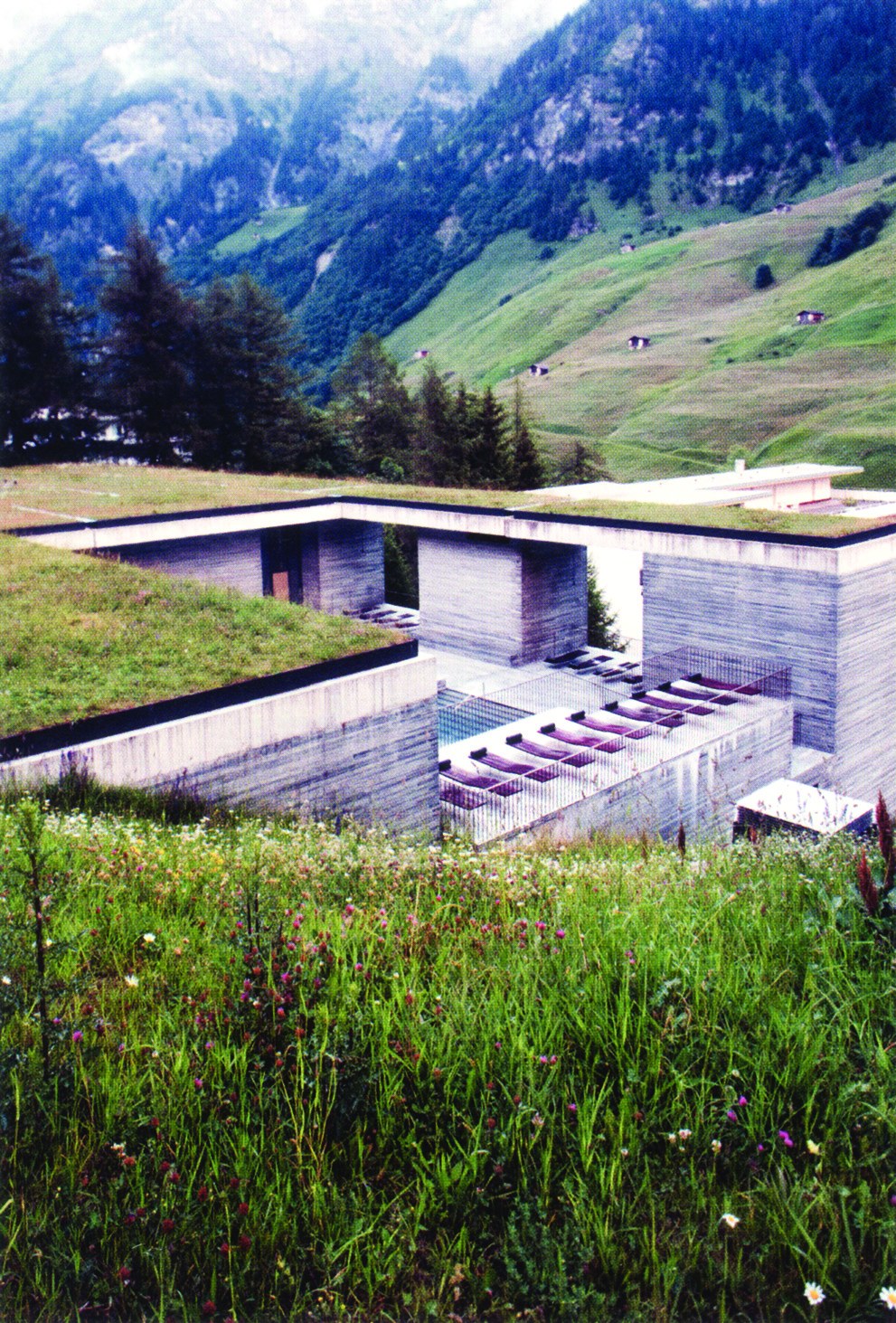
The Thermal Baths at Vals are built above the only hot spring in the Canton of Graubünden1, in a remote valley in the Alps. These baths are a prime example of buildings that, while deeply rooted and firmly established in their own place and time, are also directly connected to the rituals and traditions of bodily care of Roman times. The building uses stone and water to engage all our senses, and to join us to the earth beneath our feet and the sky overhead.
At first sight, from across the valley or from the hotel rooms above, the baths do not appear to be an ordinary, conventional building at all, but seem rather to be an earth mound – part agricultural terracing, part highway tunnel and part dam. We see an enormous rectangular volume with stone walls, half buried in the steep eastern slope of the mountain, its roof covered with grass and divided by lines that we discover are made of glass.
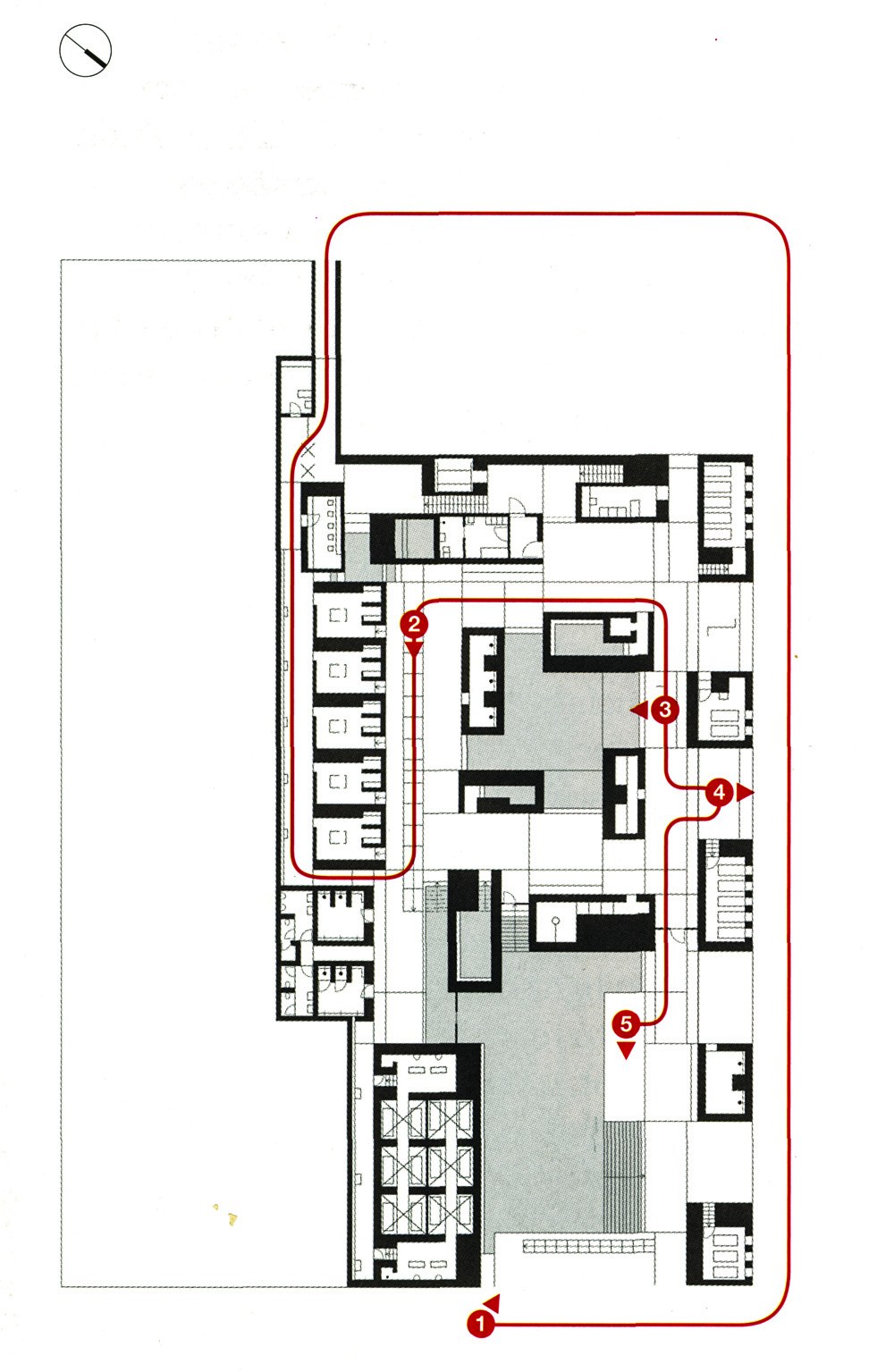
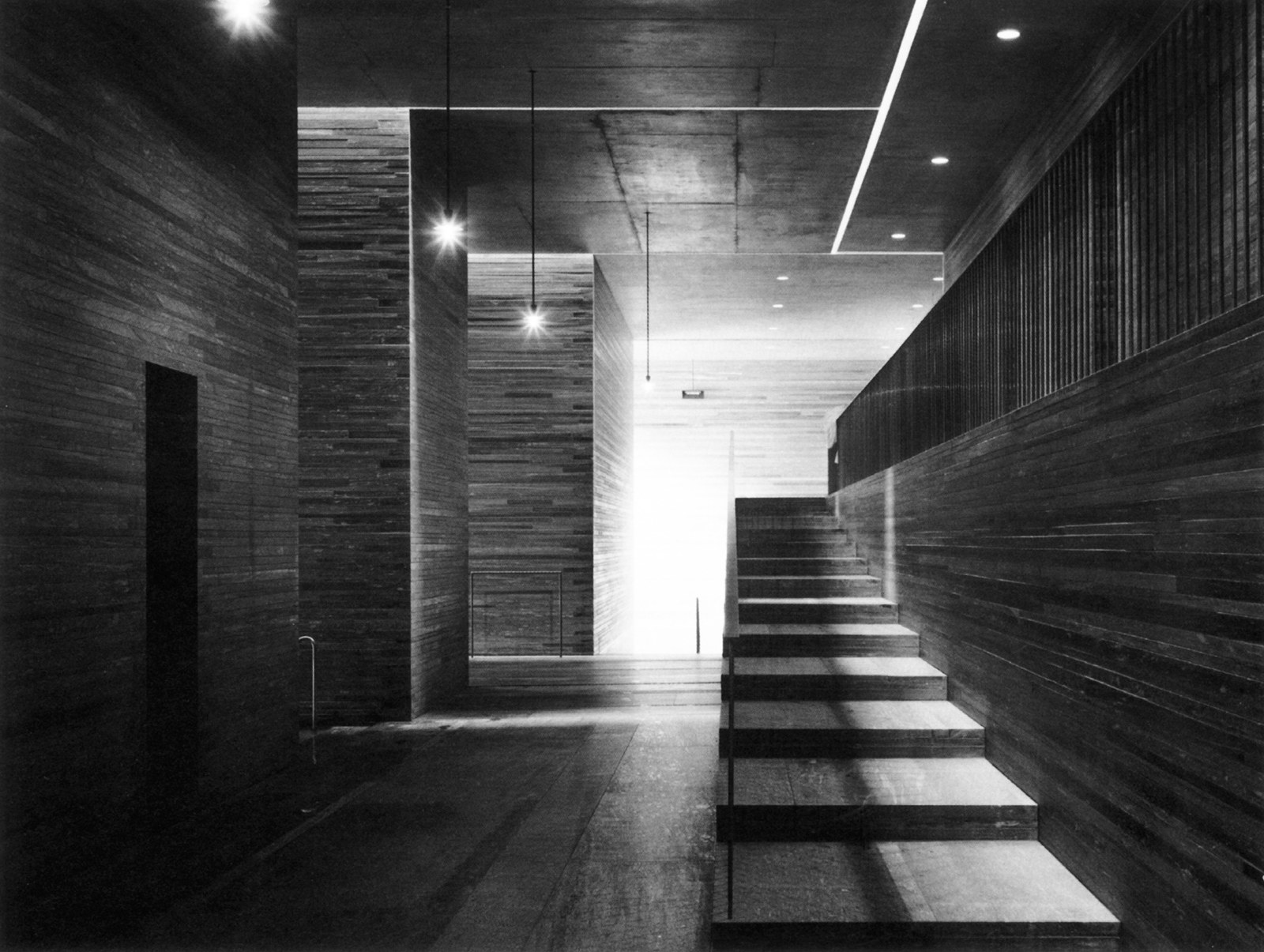
The baths have no entrance door on the outside, and we step into the earth through a small opening, like the mouth of a cave, cut into the slope of the hill. Entering a stone-paved hall by way of a narrow corridor, with a passing glimpse of the baths, we feel the warm, humid air. We descend through a hall in which a row of brass pipes emerges from the concrete wall on our right, and small streams of spring water flow from them, leaving dark stains on the wall behind and making us feel that we are deep within the earth, close to the source of the spring. In the wooden changing room, we draw aside the heavy leather curtain and step onto the warm, damp stone floor of the baths below.
We look out over a vast, half-dark space occupied by rectangular, room-like masses with stone walls rising from floor to ceiling, and beyond, we can glimpse for a moment the sunlight entering this cave-like space through distant openings. The floor beneath our feet is a stone texture, its patterns interwoven with the walls of the rectangular masses, and at its centre we see the shining surface of a large pool of water. But the ceiling overhead is the most astonishing of all, because its continuous horizontal concrete slab has been cut and opened to allow brilliant layers of light to enter through deep slots above, washing the rough surfaces of the stone walls and marking the stone floor with lines of light. As we descend the gently sloping stairs, whose stone treads are as deep as they are wide, one of these lines of light illuminates our path.
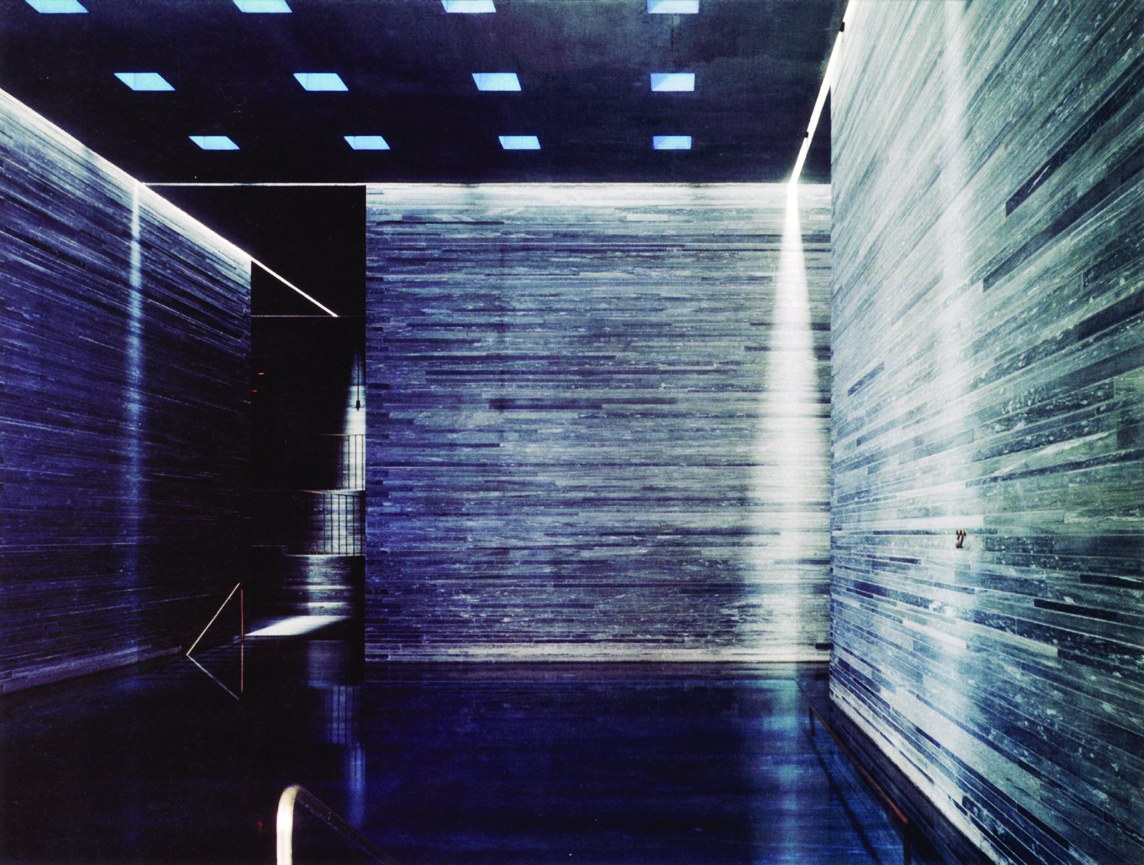
The baths are experienced as a labyrinth, enclosed on all sides by horizontal layers of the local gneiss2 stone; a dark blue quartzite cut into slabs of varying thickness and length that layer the cast concrete walls behind – a Roman method of construction. Walking around the central space, we see wet footprints on the stone floor, feel the texture of the stone with the soles of our feet, and feel the slight slope of the floor towards the deep drainage holes. The pattern of dark drainage holes in the floor, and the contrasting pattern of thin lines of light across the ceiling, bind this series of complex spaces together.
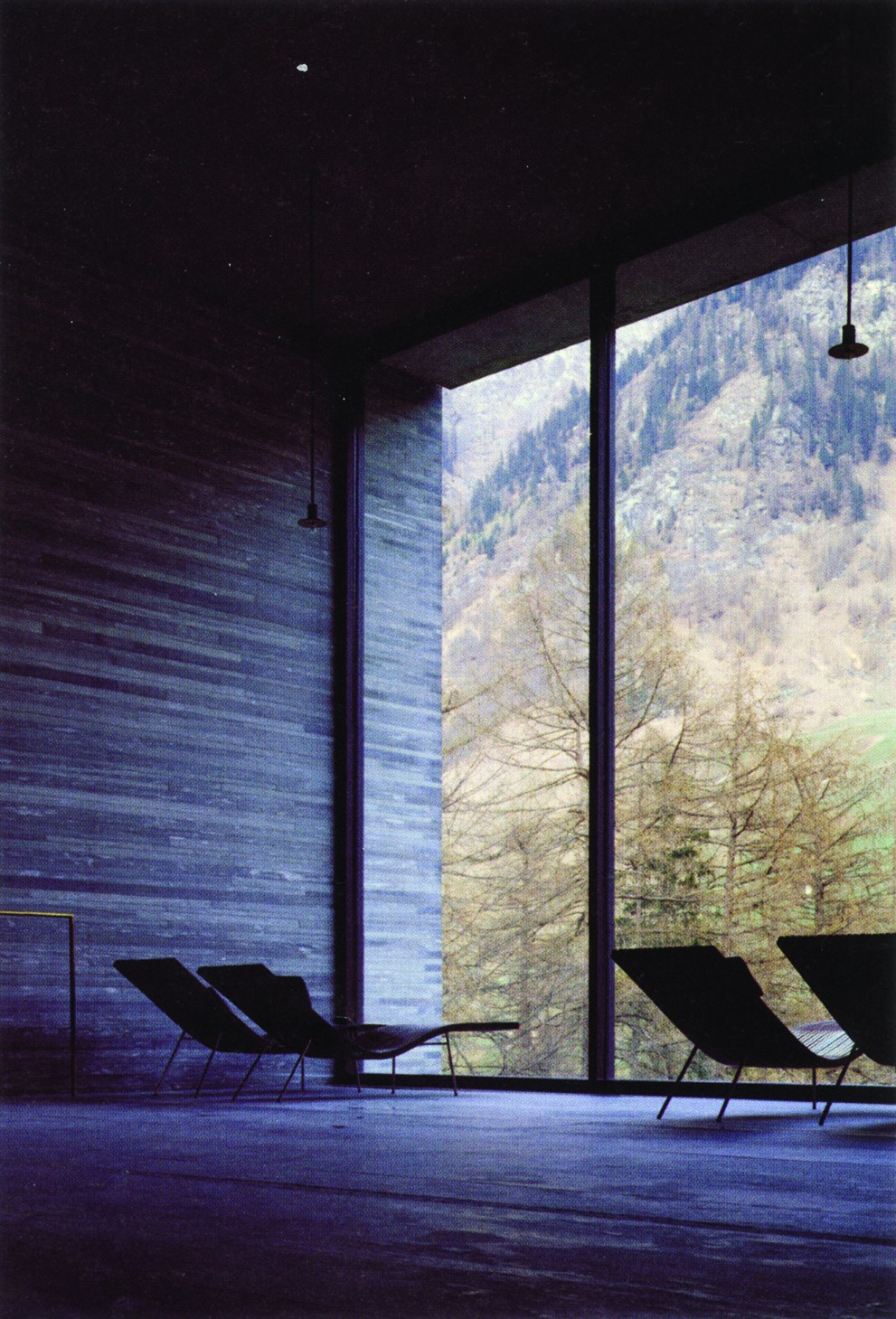
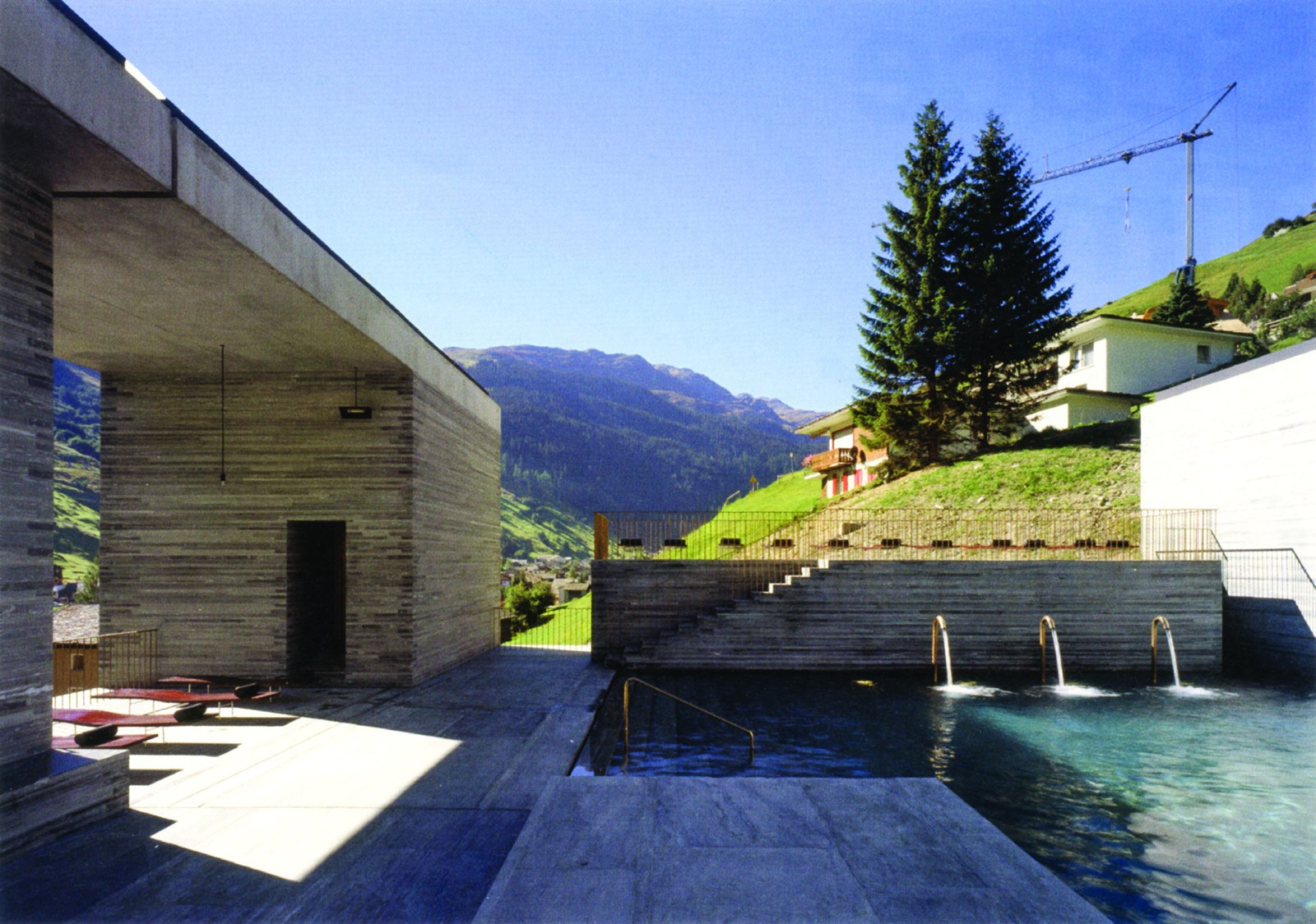
At the centre of the baths, we see the large pool of warm water enclosed by four rectangular masses with stone walls, and between them we descend by stone steps submerged in the water. Floating in the rectangular pool, we see that the concrete ceiling overhead is separated from all four walls by lines of light and is suspended above the pool. This rectangular ceiling is opened with sixteen small square holes through which a blue light pours in, its reflection dancing on the surface of the water. Along the long eastern edge of the baths is a row of large stone-walled rooms, where we recline in the warmth of the sunlight pouring in through the full-height glass wall. On the western edge, which is entirely buried in the earth, we continue our way along a narrow corridor lit by skylights in the ceiling, past spouts of mineral water, to reach the steam baths. In each of these very dark, hot and steam-filled rooms we find a pair of hot, polished stone slabs on which we lie down, feeling the heat and the steam pressing against our skin. On the southern edge we enter a long, narrow pool and swim around a corner to enter the large outdoor pool of warm water, which is open to the sky, surrounded by areas for sunbathing and fed by three large water spouts. Floating in this pool, through the large openings in the outer walls, we see the small farm buildings scattered on the opposite side of the mountain valley, their walls and roofs made of the same blue stone as the baths.
Inside each of the large rectangular stone-walled masses set in the main space of the baths, all reached by short narrow passages, we find a different experience of the mineral water. In a square room with large gaps between the rough-edged stone slabs of its walls, we find a stone basin full of spring water from which we can drink, with the slightly bitter taste of mineral water. A rectangular room with submerged seats on two sides is filled with warm water, and the scent of the flowers scattered in it fills the space. In a cave-like space that is completely buried and reached by swimming along a narrow corridor, the tall, rectangular room with smooth stone walls amplifies and extends our voices. The largest of these baths, the large hot bath, whose red walls hold a number of people, opens from one side to the other side of the smallest bath – a small cold bath with icy blue walls that only one person can enter at a time. All the stone-walled baths and pools are constantly filled with fresh water, and we hear the low roar of the water pouring through the deep drains into the outer walls.
At night, when the spaces of the baths are completely dark, we feel our surroundings more than we see them, and the sense of being buried deep in the earth is palpable. The sense of our fingers touching the varied textures and the patterns of the joints of the stone surfaces, and the sense of our bodies floating in warm water that presses gently on our skin, make us fully aware of our tactile and kinaesthetic sense of balance in relation to gravity.
Notes:
1- Canton of Graubunden
2- Gneiss
*For the authors' general view on gravity, see Memar 132.