Historical Architecture

Three Historical Houses in Oudlajan

Share
Three Historical Houses in Oudlajan

The residential building on the northeast corner: Among the later examples of the white, rectangular-cubic style from before the Revolution, this building possesses numerous details and remarkably precise craftsmanship. The stonework of this period is particularly exacting. The very smooth cantilevered surface is separated from the main volume by a vertical gap; the surface on the left side has acquired a zigzag relief pattern through especially delicate stonework. On the right side, the ends of the southern balconies are covered with stone lattices. Beneath the cantilevered volume, the horizontal window is shielded by a guard composed of vertical stone blades. Each of the rear windows (north facade) has different subdivisions and occasionally colored glass (Mondrian!). In general, narrow gaps for distinguishing surfaces and volumes have been the primary design instrument of this building (from extremely narrow gaps to windows like the three horizontal windows on the cantilevered volume that have no termination). The Art Deco and Modernist railings of Tehran are unparalleled in the world in terms of design quality, the unexpectedness of the patterns employed, the quality of execution and craftsmanship, the extraordinary variety of designs, and even the uniqueness of many. Therefore, it is perfectly logical that they should be discarded! Here too, the pattern alludes to a woven quality. But more interestingly, the pattern has also spread to the stone wall. The horizontal window at ground level facing the street — I have not seen such quality anywhere in the world. But with the prevailing "logic" and the silence of the Heritage Organization, consultants, professors, students, artists... soon there will be no trace of it!

The Farghani Arcade on the important southwest corner of Jomhuri and Si-e Tir: A design of great delicacy (note the thinness of the sail-like plates). This formal elegance is accentuated by an extremely refined ceramic cladding composed of a spectrum of horizontal gray stripes. This cladding, made of very fine Italian ceramics, belonged to an era when such materials were used for facades (like the former Cinema Polydor — Qods). Of course, under current conditions of eroded and coarsened tastes, such qualities are no longer discernible! This too is an urban building (meaning that inside it is an arcade, with shops, small offices, and so on, all serving the public and the locality — not the kind of building that could be anywhere and does not admit the public!). Judging by the size of the "Bank Keshavarzi" sign, one must conclude that this generation's eyesight has severely deteriorated. A very urban example of Art Deco tending toward Modernist (in terms of the Palestine intersection and — its nature in creating a small plaza on the left side and the recessed ground-floor shops connected to this plaza). One — the curve of surfaces — among the forms favored by Deco, the corner has been employed. But it has also played a role in softening the edges of two wide columns between the large windows, as well as at the corner of the roof parapet. The pairing of columns on the lower floor and a single tall column beside the staircase also merit attention. The chandelier shop sign.

With closer observation, one can discern that this facade is composed of two buildings, demonstrating how successful this method of urban architecture has been in shaping streets (meaning that different buildings, placed alongside one another, also created a larger collective quality). This ensemble, through the use of balconies, the projecting semi-cylinder, the vertical staircase window, is multi-dimensional. There is only one material. The manner in which the balcony connects to the semi-cylindrical volume is also noteworthy. The unique design of a door that will soon be sold as scrap metal!

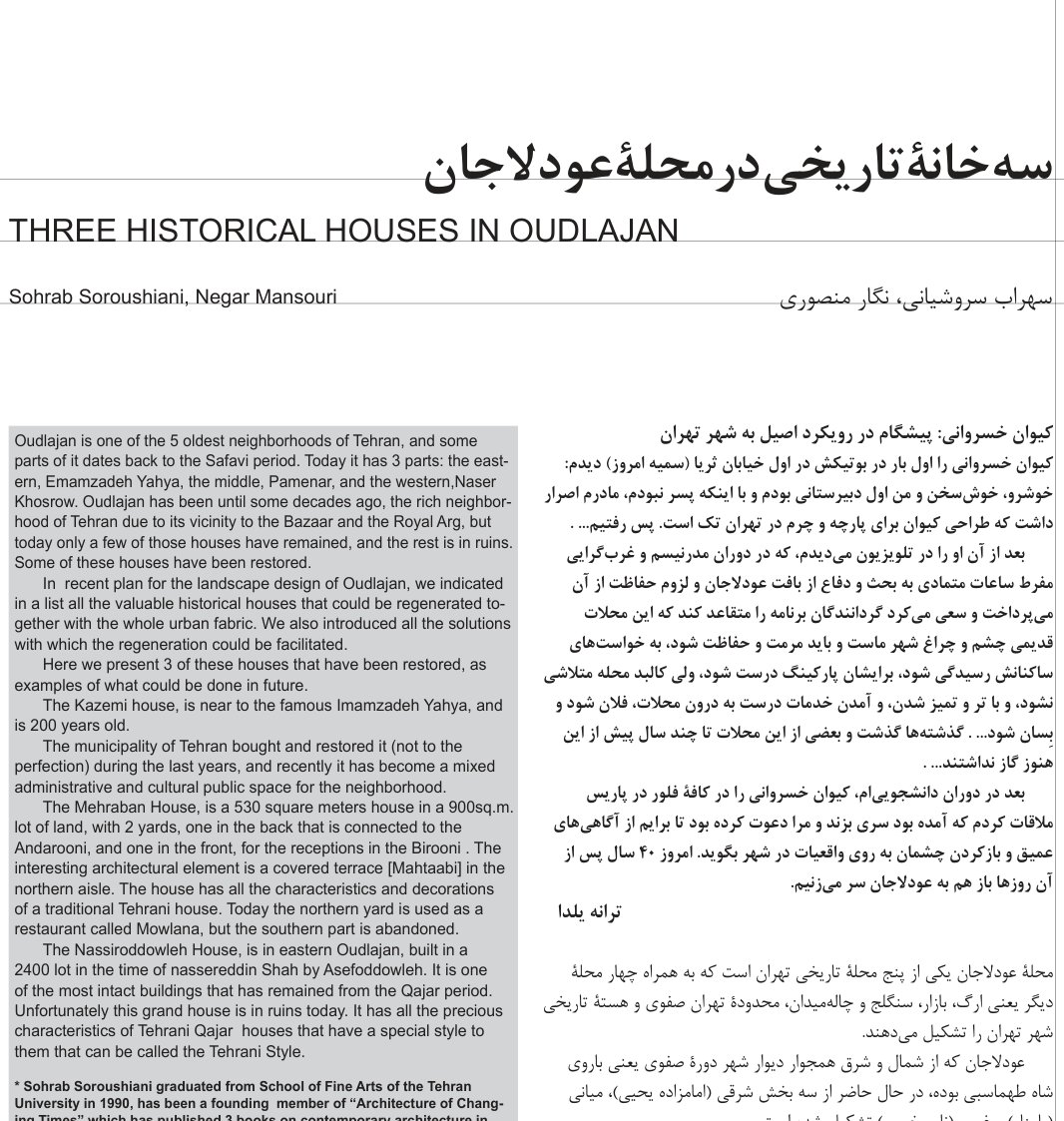
Three Historical Houses in the Oudlajan Neighborhood — Sohrab Soroushiani, Negar Mansouri. Keyvan Khosravani: A Pioneer in the Authentic Approach to the City of Tehran. I first saw Keyvan Khosravani in his boutique at the beginning of Soraya Street (today's Somayeh): warm, eloquent — and I was a first-year high school student. Although I was not a boy, my mother insisted that Keyvan's designs for fabric and leather were unique in Tehran. So we went... After that, I would see him on television, where during the era of extreme Modernism and Westernization he would spend hours debating and defending the fabric of Oudlajan and the necessity of its preservation, trying to convince the program hosts that these old neighborhoods are the jewels of our city and must be restored and protected, that the needs of their residents must be addressed, that parking should be built for them — but that the physical fabric of the neighborhood must not be demolished, and that with cleaning up and the arrival of proper services within the neighborhoods, such-and-such would happen and such-and-such would flourish... Time passed, and some of these neighborhoods until just a few years ago still had no gas... Then during my university years, I met Keyvan Khosravani at Café de Flore in Paris, where he had come to visit and had invited me to tell me about the deep awareness of the year after forty, and the opening of eyes to realities in the city. Today, those days again we visit Oudlajan. — Taraneh Yalda

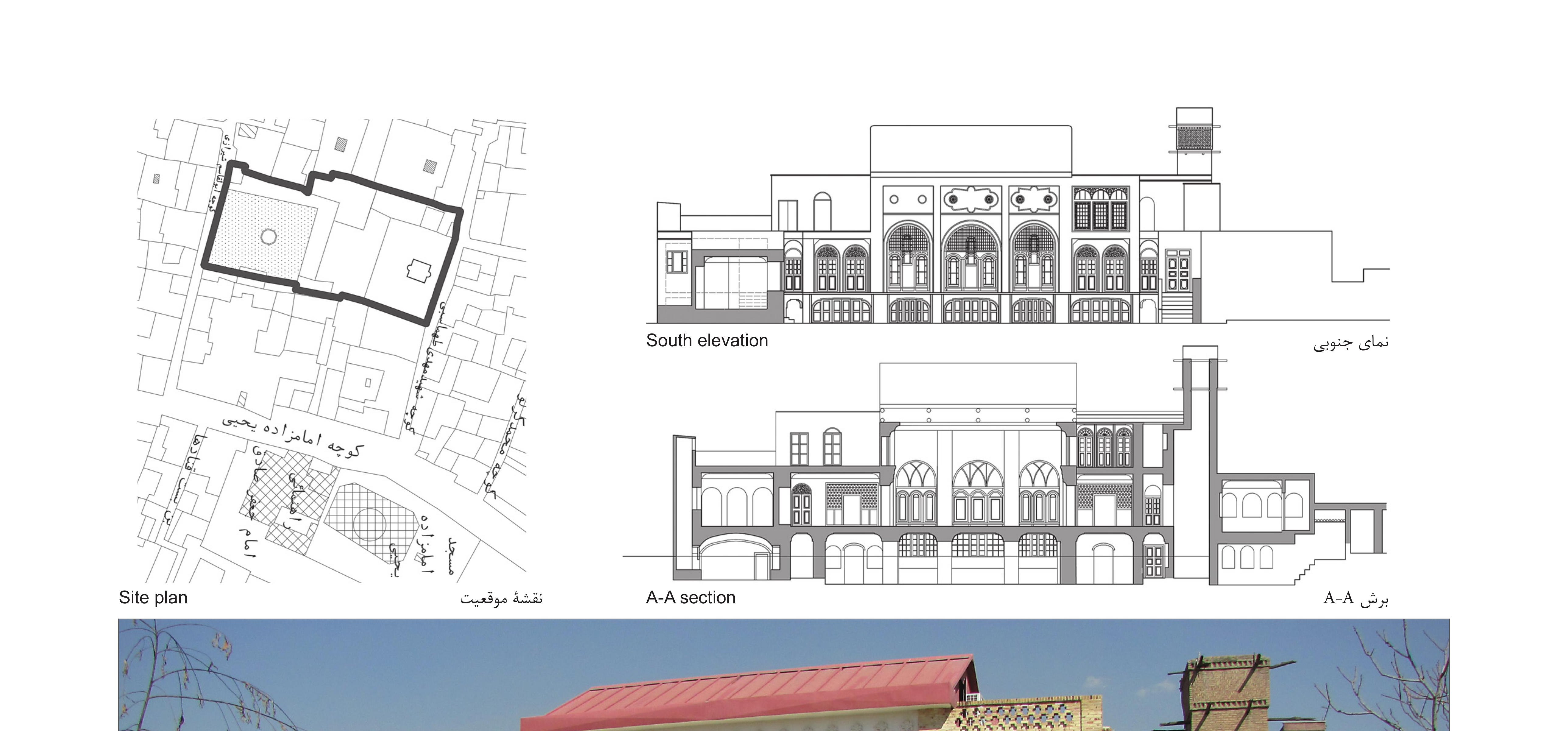
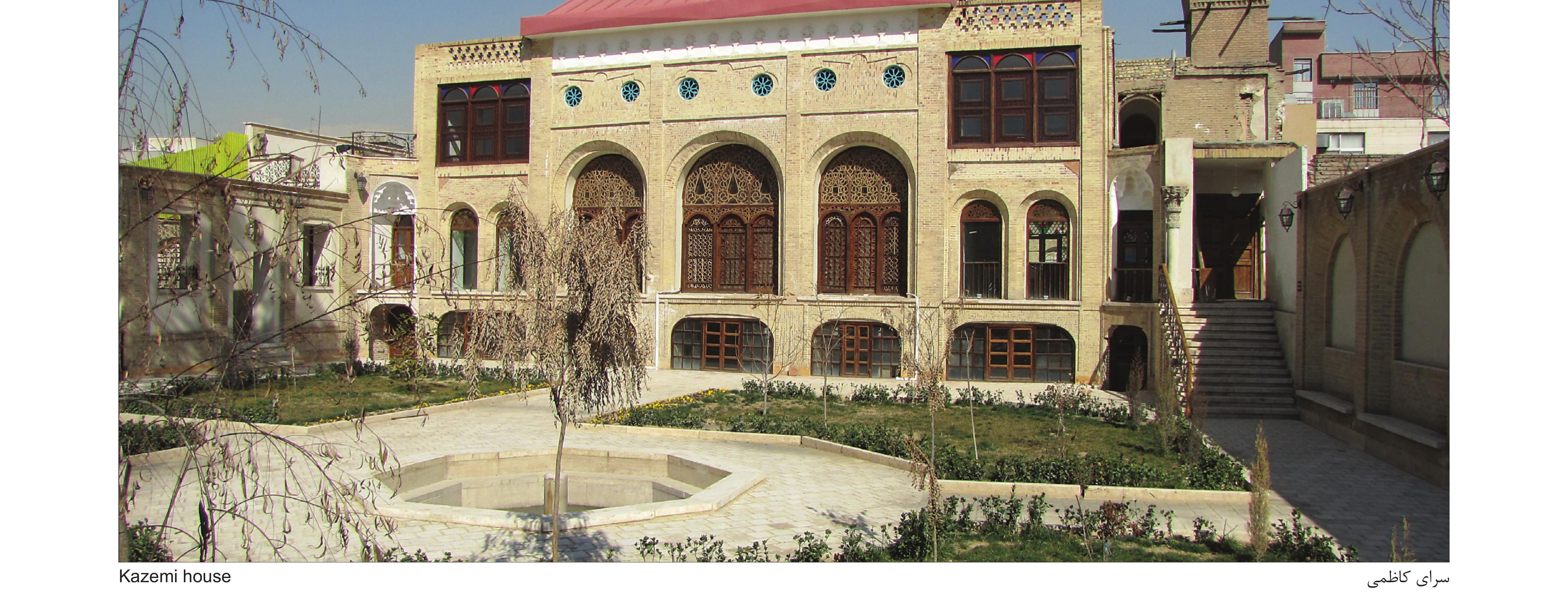
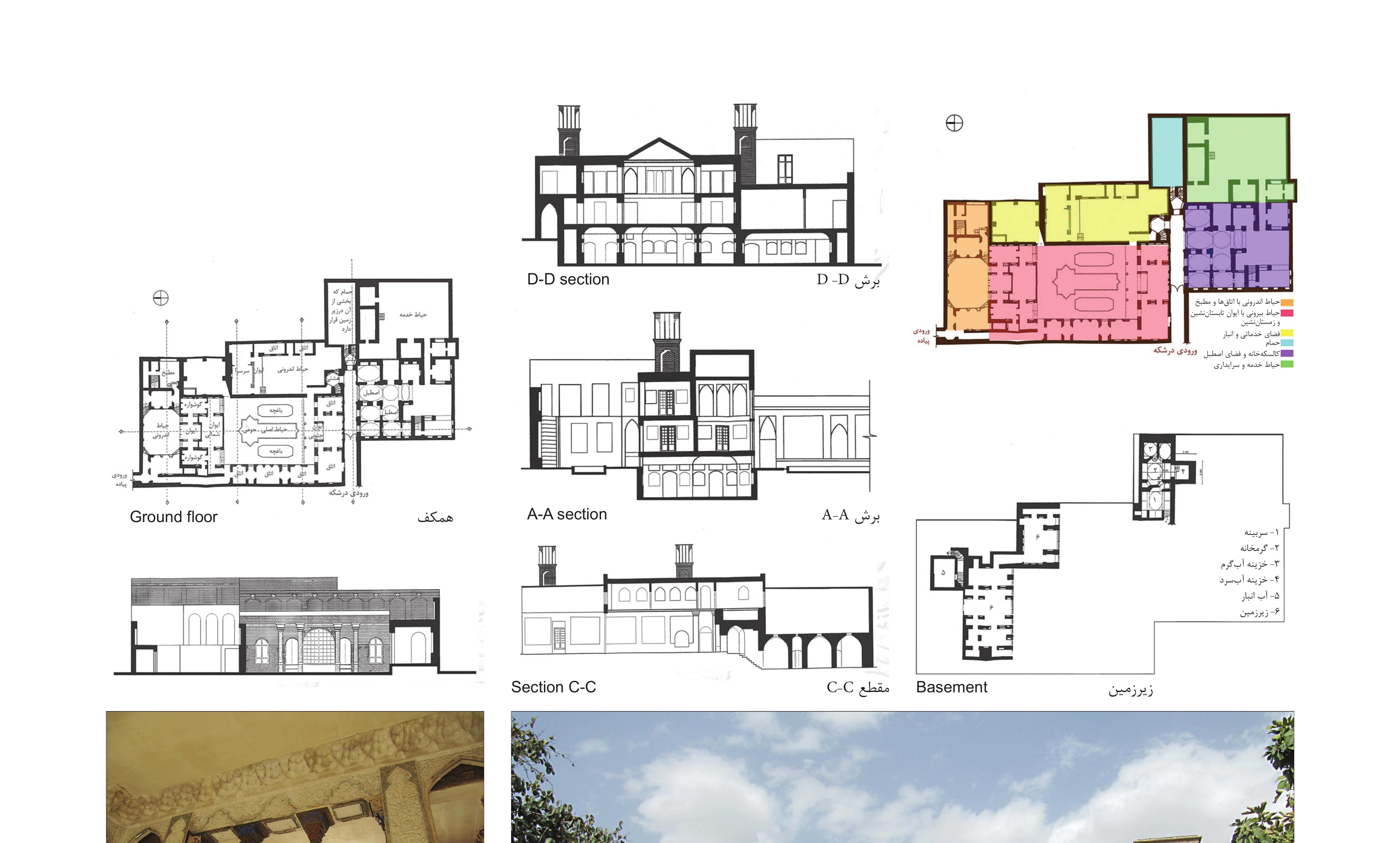
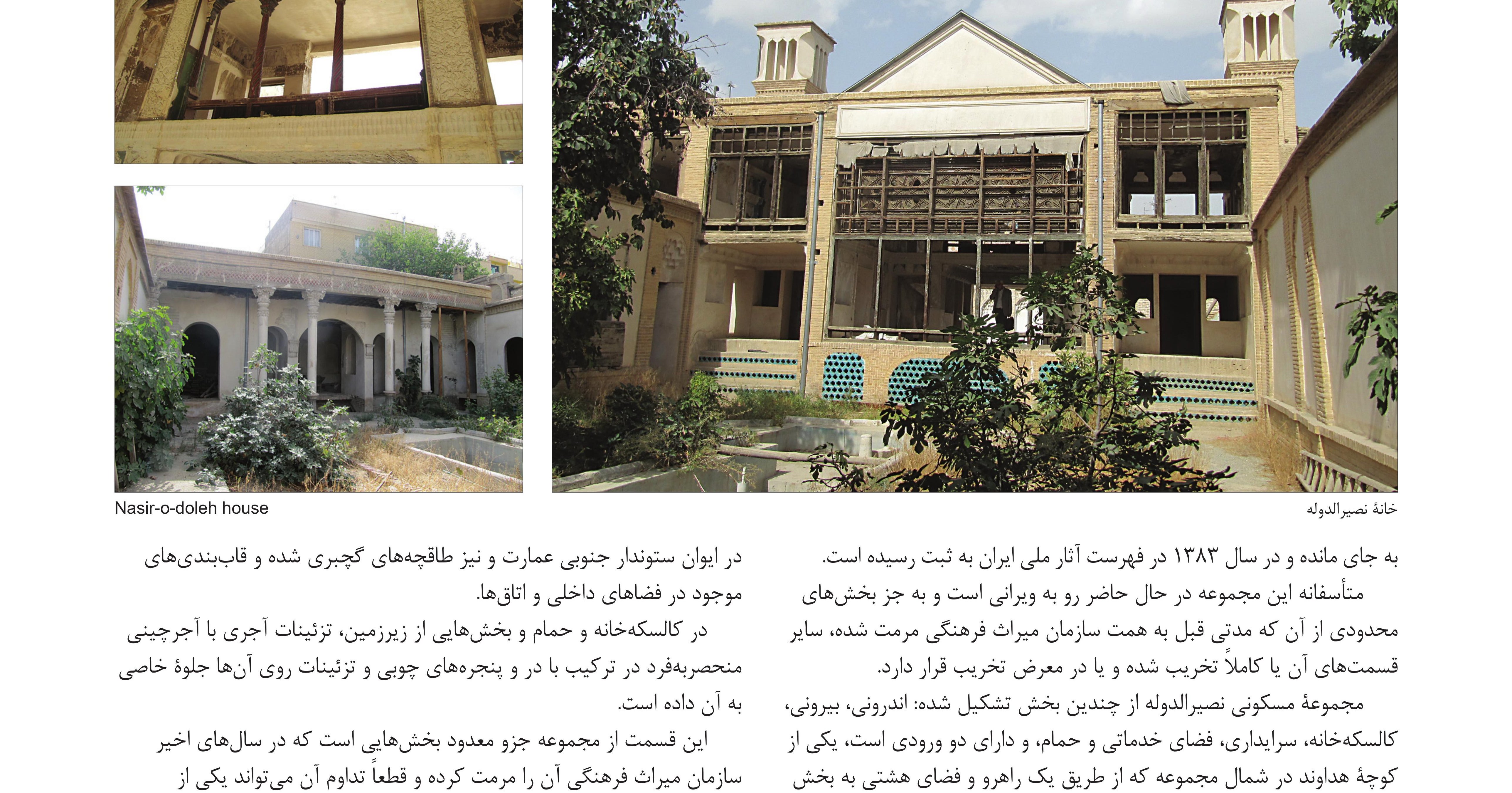
The supplementary restoration plan has proposed solutions for the conservation and functional revival of each of them. In this plan, all valuable properties in the Oudlajan neighborhood have been identified and classified under the categories of "registered or registration-worthy buildings," "valuable buildings requiring conservation and maintenance," and "buildings with valuable elements or spaces." Various proposals have been offered for their preservation, ranging from pure restoration to demolition and reconstruction while preserving the building's valuable elements, or documentation of the existing valuable building followed by demolition and reconstruction according to the consultant's proposed models. Likewise, various recommendations have been made to encourage owners to preserve existing buildings, including the provision of loans and free expert assistance for restoration and rehabilitation, tax exemptions, and the change of property use to profitable functions that would not threaten the building's longevity. In what follows, we introduce three historically valuable houses of the neighborhood, each with different typological and physical characteristics and belonging to different periods of the Oudlajan neighborhood's historical fabric formation. The House Known as "Kazemi Mansion": This house formerly belonged to the Chaleh Meydan neighborhood and currently, under the new neighborhood boundaries — due to the street-building of the contemporary period — is located within the Imamzadeh Yahya area as part of the eastern zone of the Oudlajan neighborhood. Heading east along Khordad, before reaching the 15 Khordad overpass bridge, after crossing Ri Street, one arrives at the continuation of the historic Imamzadeh Yahya passage. Passing through it, before reaching the Imamzadeh, one enters the Abolqasem Shirazi passage, and at its beginning there is a railing-like wall that has been set back considerably from the pathway, behind which a vista of the Kazemi Mansion can be seen. The building's original owner was Mirza Seyyed Kazem, son of Seyyed Mirza Hedayatollah Tafreshi, who entered government service in the early reign of Mohammad Ali Shah Qajar (1266 AH). Thus, the construction of this building can be attributed to the mid-thirteenth century — approximately 200 years ago. This building was registered on the National Heritage List in 1378 (1999). Likewise, after the building was acquired by District 12 Municipality in the mid-1380s (2000s), it was restored and structurally reinforced, and currently the office of the Historical Deputy of District 12 is housed there. What remains of this building today is a two-courtyard complex — one to the north and a larger courtyard to the south — belonging to the building's outer quarters, which was accessed through a vestibule leading to the southern alley and served as the main entrance. The northern courtyard overlooked the inner quarters. The two-story Kazemi Mansion was built upon a basement level. On the ground floor, a tall-ceilinged hall stands at the center of the building with two alcoves on either side, and two corridors on both sides of the alcoves connect the elements and components situated in the northern and southern courtyards. The basement, which covers nearly the entire built area, replicates the layout of the Kazemi Mansion.

Comments

No comments yet. Be the first to share your thoughts.