To construct a work of architecture is to describe an ideal relationship with the world. I have long been contemplating this reality — a reality that, when you pause to think about it, is self-evident. It does not matter whether the work is large or small. It does not even matter whether it is an existing building or merely a design. The moment a work of architecture comes into being, it enters into a relationship with the world. Even if we take an extreme example — a highly cerebral, expressionist design from Germany — it is an interpretation of the world, of what I call "the world." Some refer to it as "order." Architecture makes pronouncements about the world. Sometimes it rises against "order," and sometimes it itself becomes the representative of "order." One of the most important characteristics of architecture is precisely this need to describe a relationship with the world. And this is what makes architecture "universal." So by "universal" architecture, I mean that architecture in all ages has done nothing other than establish a relationship with the world.
Let us consider houses. The house, as a building type, was a product of the Industrial Revolution and the emergence of an urban society. In older structures — the Italian palazzo and the Japanese machiya — workplaces were combined with residential spaces. Thus the relationship with the world, into which architecture inevitably enters, even determines the forms of architecture's very coming-into-being. Upon such a ground, twentieth-century housing can be divided into two broad categories: standards and prototypes. These categories represent two different modes of establishing a relationship with the world. By "standards" I mean works such as the Domino or the Maison Citrohan of Le Corbusier, the low-cost housing at Kiefhoek by J.P. Oud, and the Siedlungen built during the same period in Germany. The Domino and the Citrohan were attempts to impose order on housing construction through basic, foundational forms — forms upon which diverse outcomes could be achieved. The Siedlungen were repetitions of units with a single plan. How they might look by the late 1990s does not matter. These works are testimony to the dream of that era, which was to provide as many clean and healthy housing units as possible to the people. This was a period — a universal one — in which people could all share a single dream. Architecture was able to express that world. This in fact means that creating standardized works of architecture was possible. Indeed, we can go so far as to define modernity itself by the capacity to establish standards. From this perspective, one could even say that Le Corbusier's Villa Savoye was a standard that expressed a universal order.
Prototypes are a different category. At a certain point in time, our dreams gradually diverged. Today, Mr. So-and-So's ideal home is not Mr. Such-and-Such's ideal home. At present, the very idea of the "ideal home" is suspect. One cannot conceive of standards that would be applicable to every point in the world. We can only imagine houses that respond to individual conditions arising from history, culture, environment, geography, and site — that is, houses that are unique. Yet, as I said earlier, the tendency toward universality is one of the essential characteristics of architecture. Works that are singular and yet universal — these I call prototypes. In my view, Philip Johnson's Glass House (1949) is a work of vital importance from this perspective. Since then, in regions such as Japan and California — which from a European standpoint lie on the periphery — many fascinating developments have occurred.
In the 1950s and 1960s, a series of houses known as Case Study Houses were built in California. These houses, prototypes of their time and place, are embedded in their own culture. They teach us the meaning of twentieth-century vernacular architecture. Case Study House No. 25 (1962), designed by Edward A. Killingsworth, is a case in point. In the interior courtyard of this house, an aluminum door of unusually tall proportions commands great attention. According to the architect himself, the door had been produced by Northrop, and its construction was made possible by the aeronautical knowledge of the day. Despite all this, there is no showing off or ostentation about it. In 1960, the aviation industry had become one of California's principal industries, and its technology was not some superior technology but rather a humbler, more accessible one available to everyone. "Vernacular" meant precisely this.
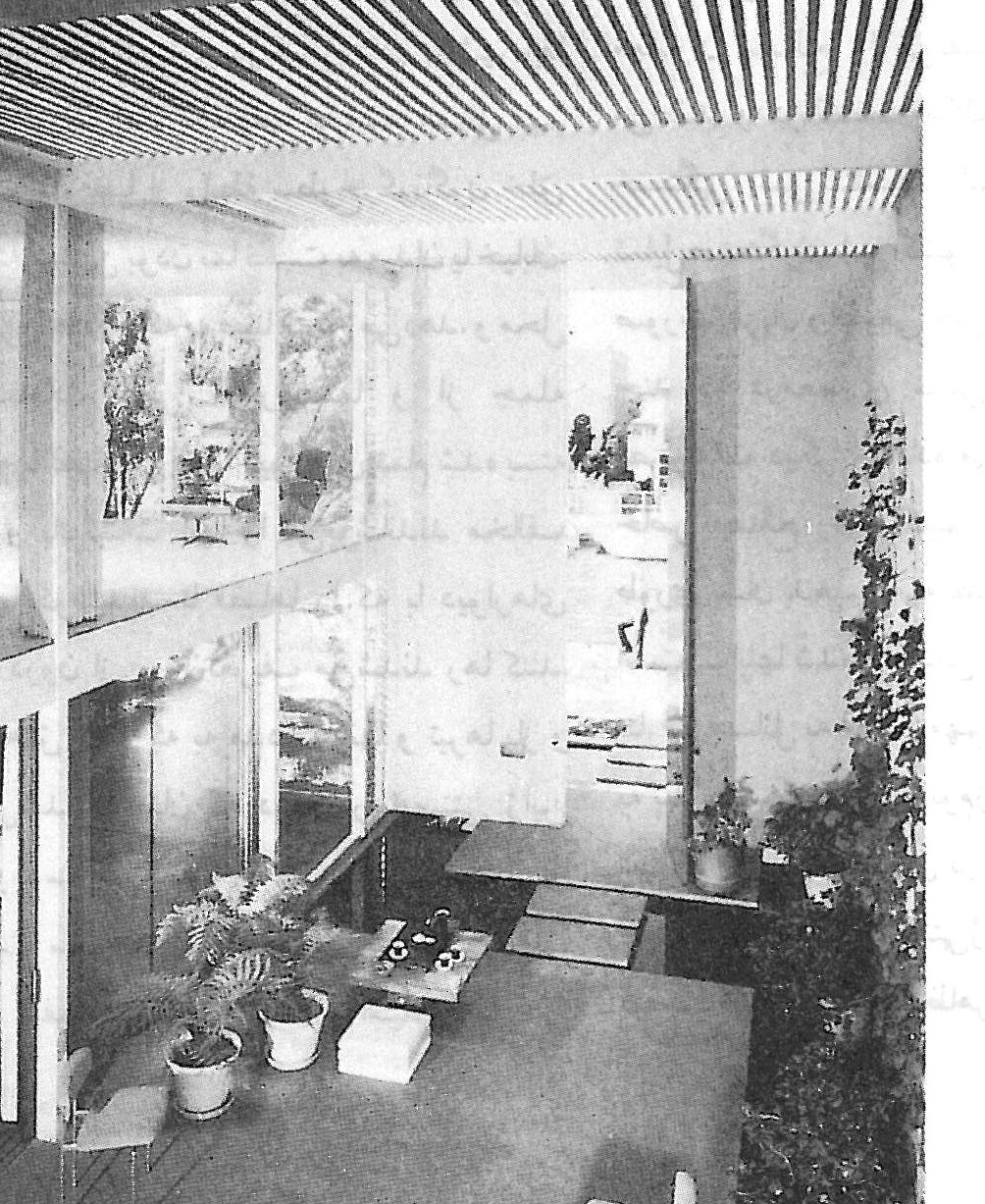
Case Study House No. 25
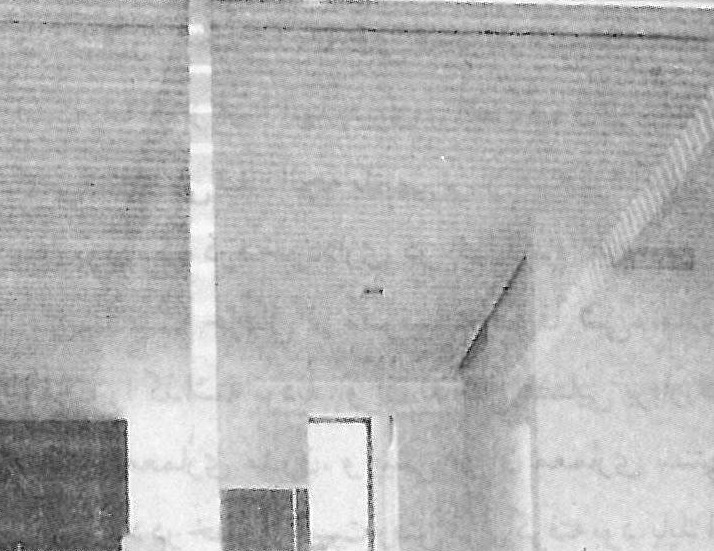
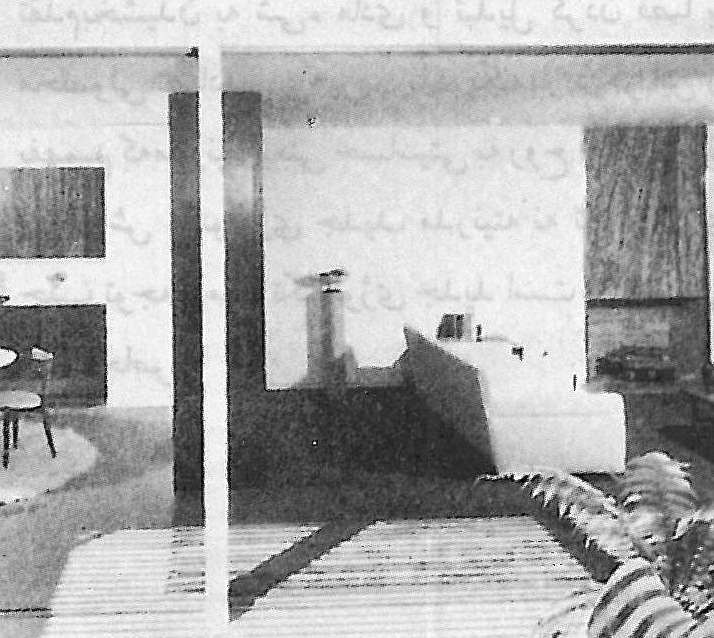
At the beginning of this century, the airplane was a metaphor for the twentieth century and the beauty of the machine. But for Killingsworth and California in 1960, it was simply another industrial product, like steel beams and lumber. I call any industrial product that is available everywhere in the world "industrialized vernacular." In 1960 in California, what had been a metaphor for the twentieth century had been demoted to the status of a commonplace technology. To be precise, "industrialized vernacular" is an oxymoron, because "vernacular" means being native to a particular place or culture, while "industry" is global in its orientation. Yet architecture today is also inherently contradictory. It has a universal tendency, but it can only produce prototypes that are unique. If the concept of "industrialized vernacular" is valid, then "vernacular" in the twentieth century is a picture of the world — not as metaphor or abstract order, but as something intensely real. This is a lesson we must draw from the difference between the meaning and significance of the airplane for Le Corbusier and its meaning and significance for Killingsworth.



