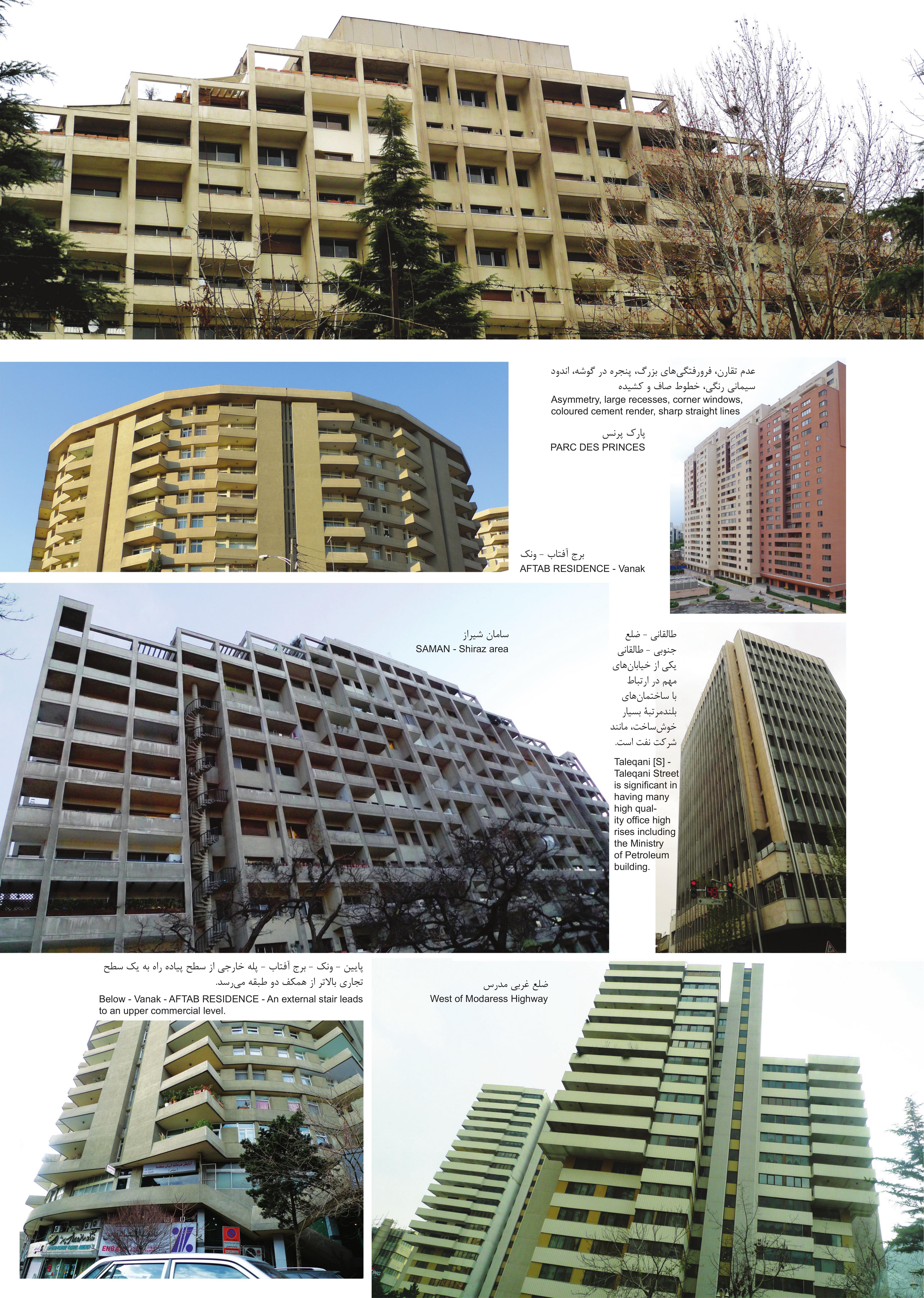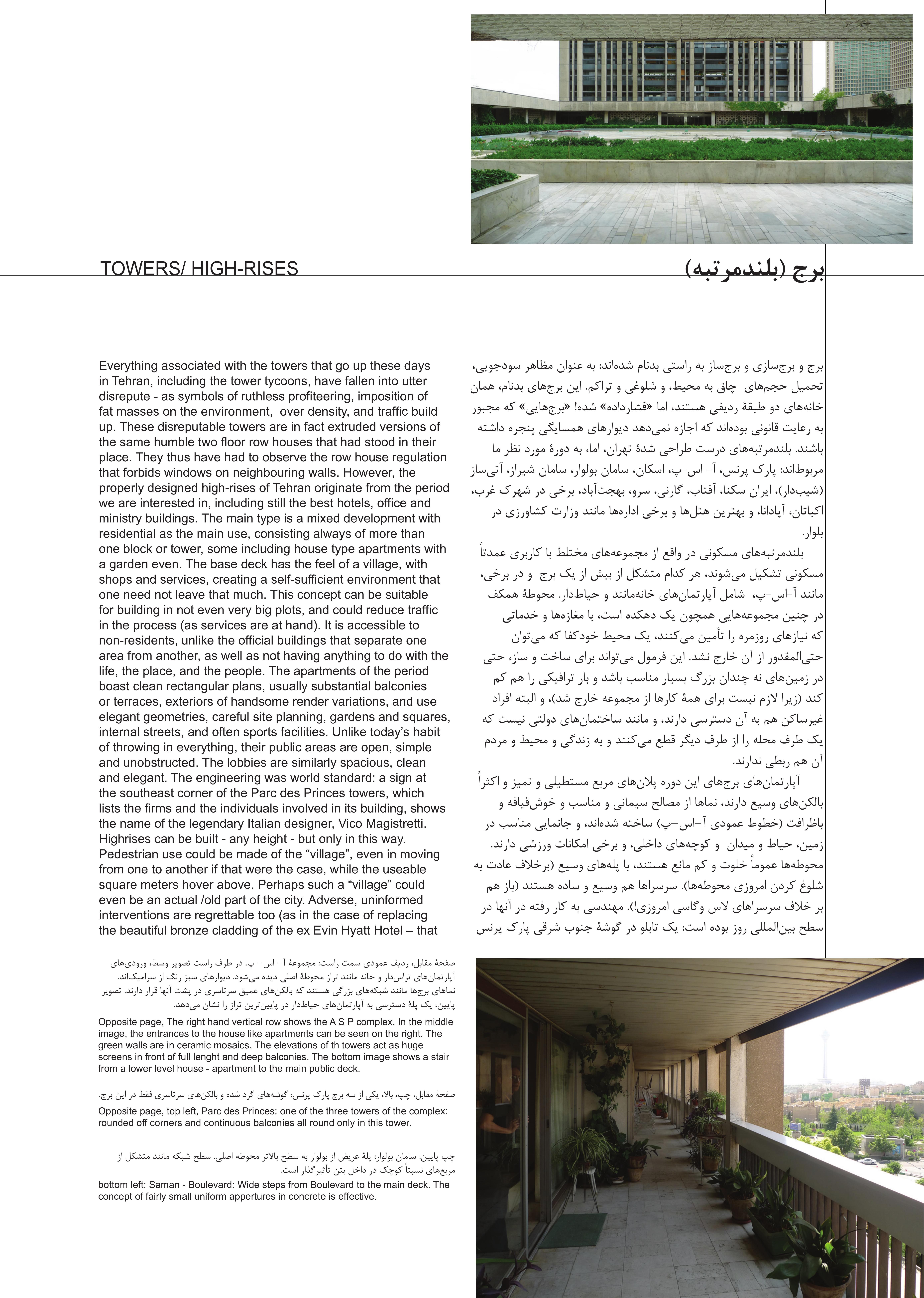
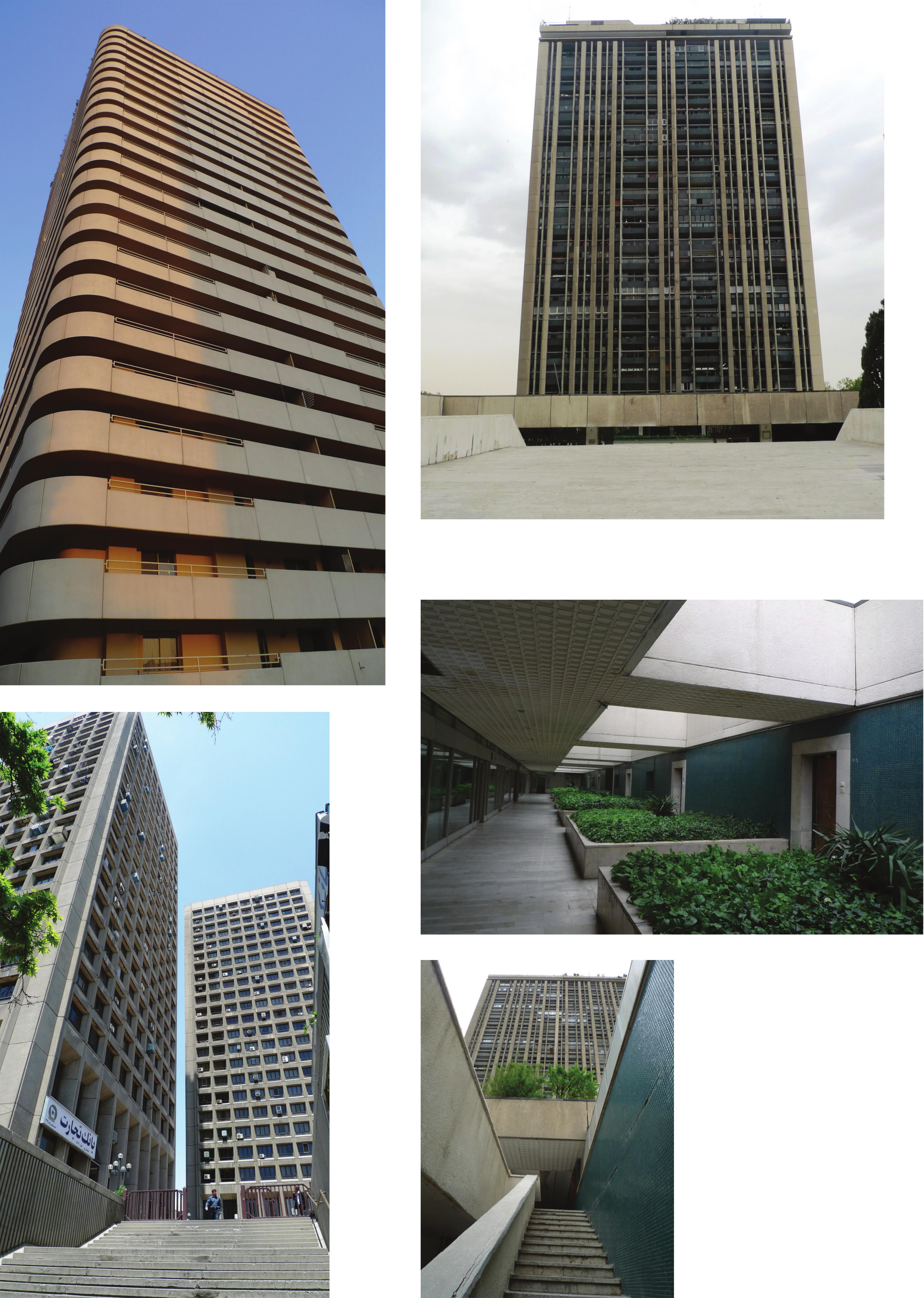
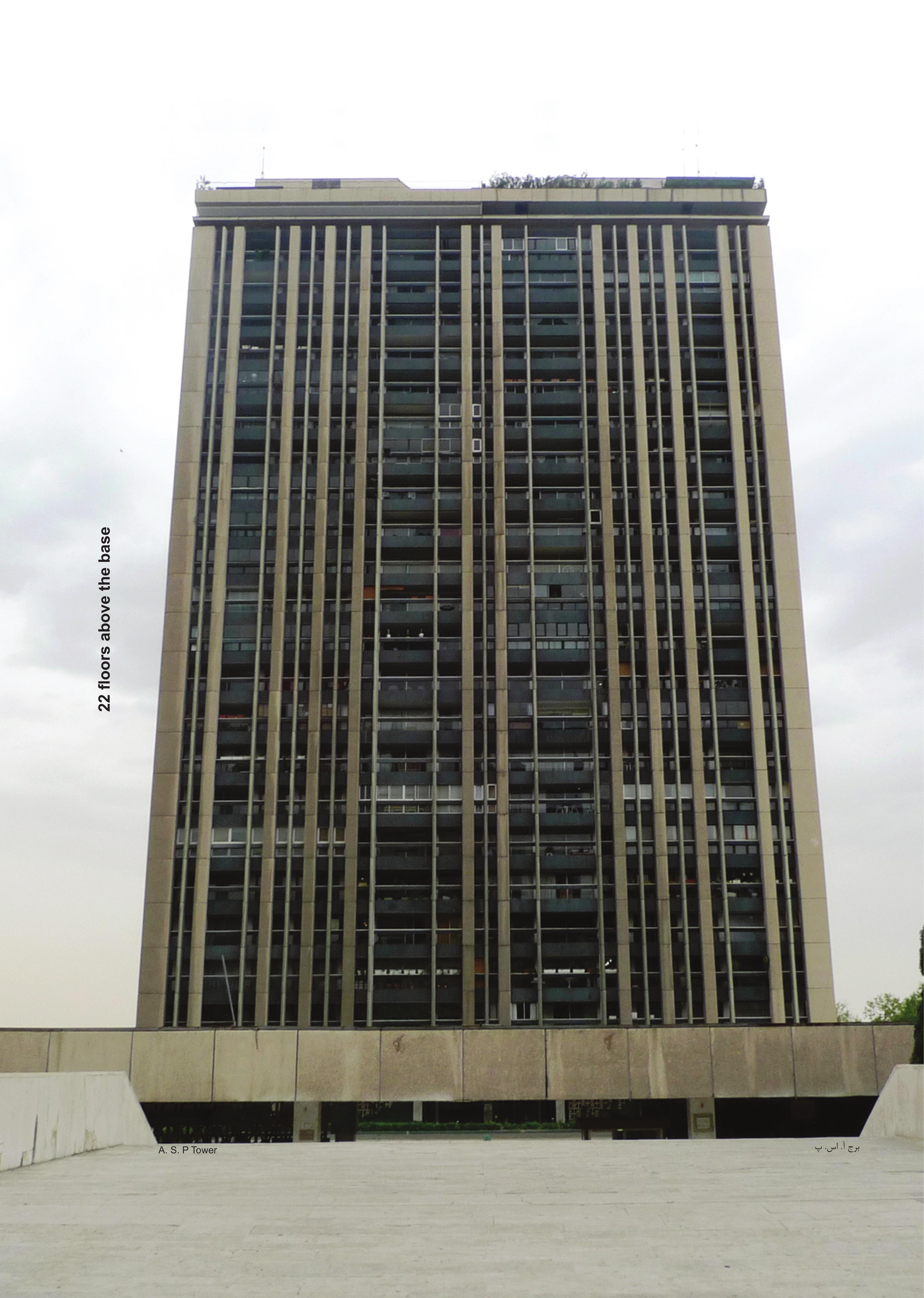
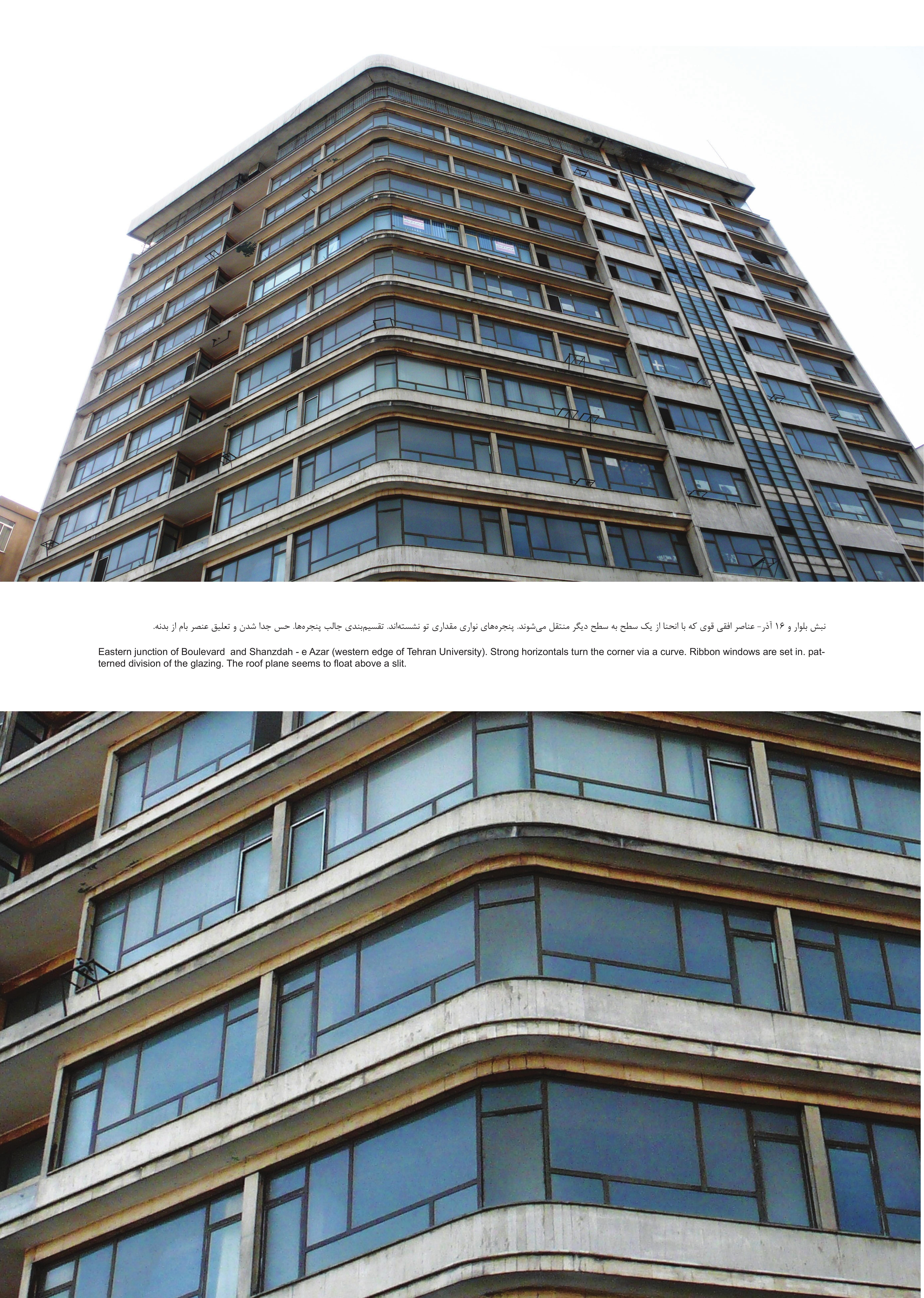
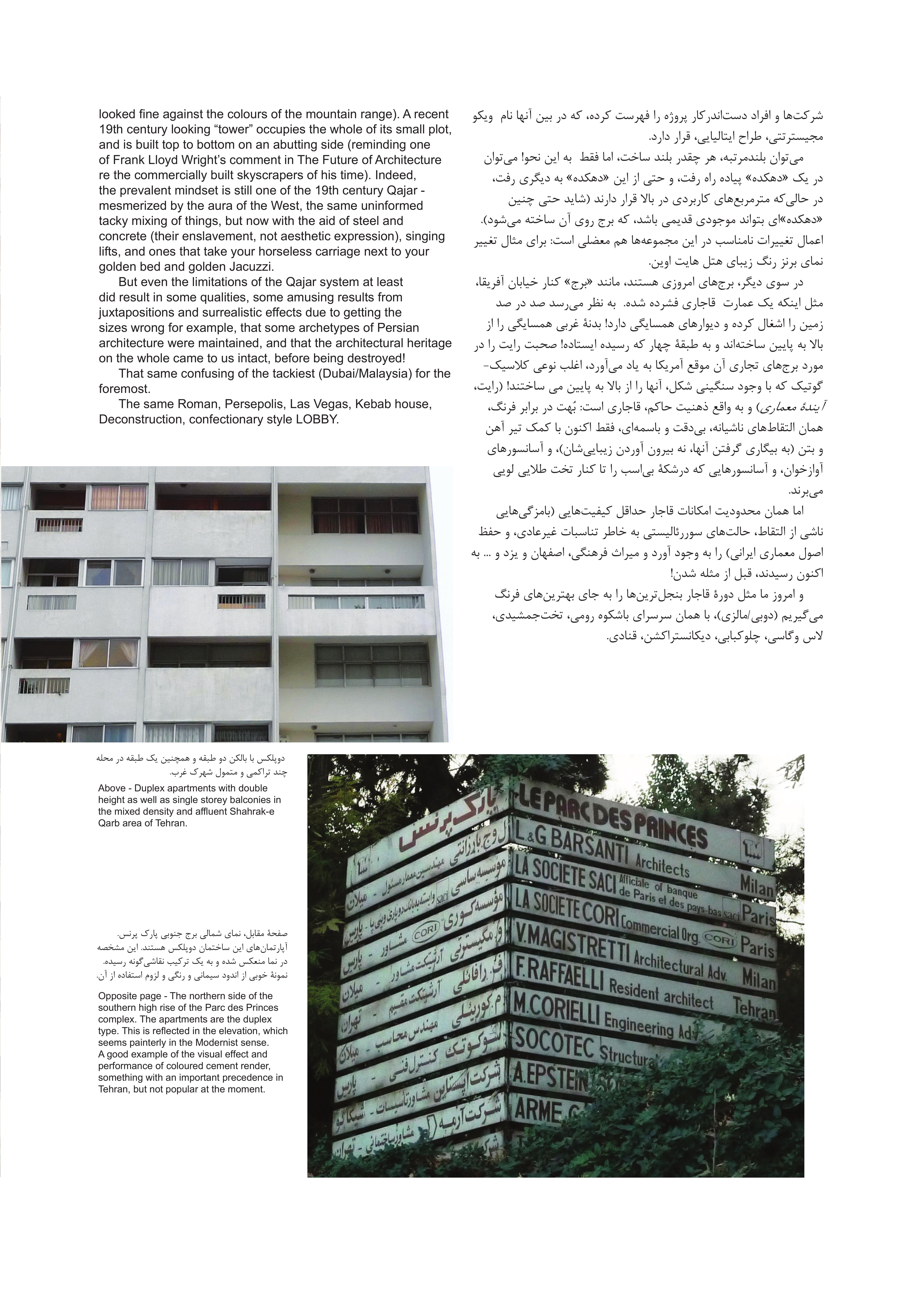
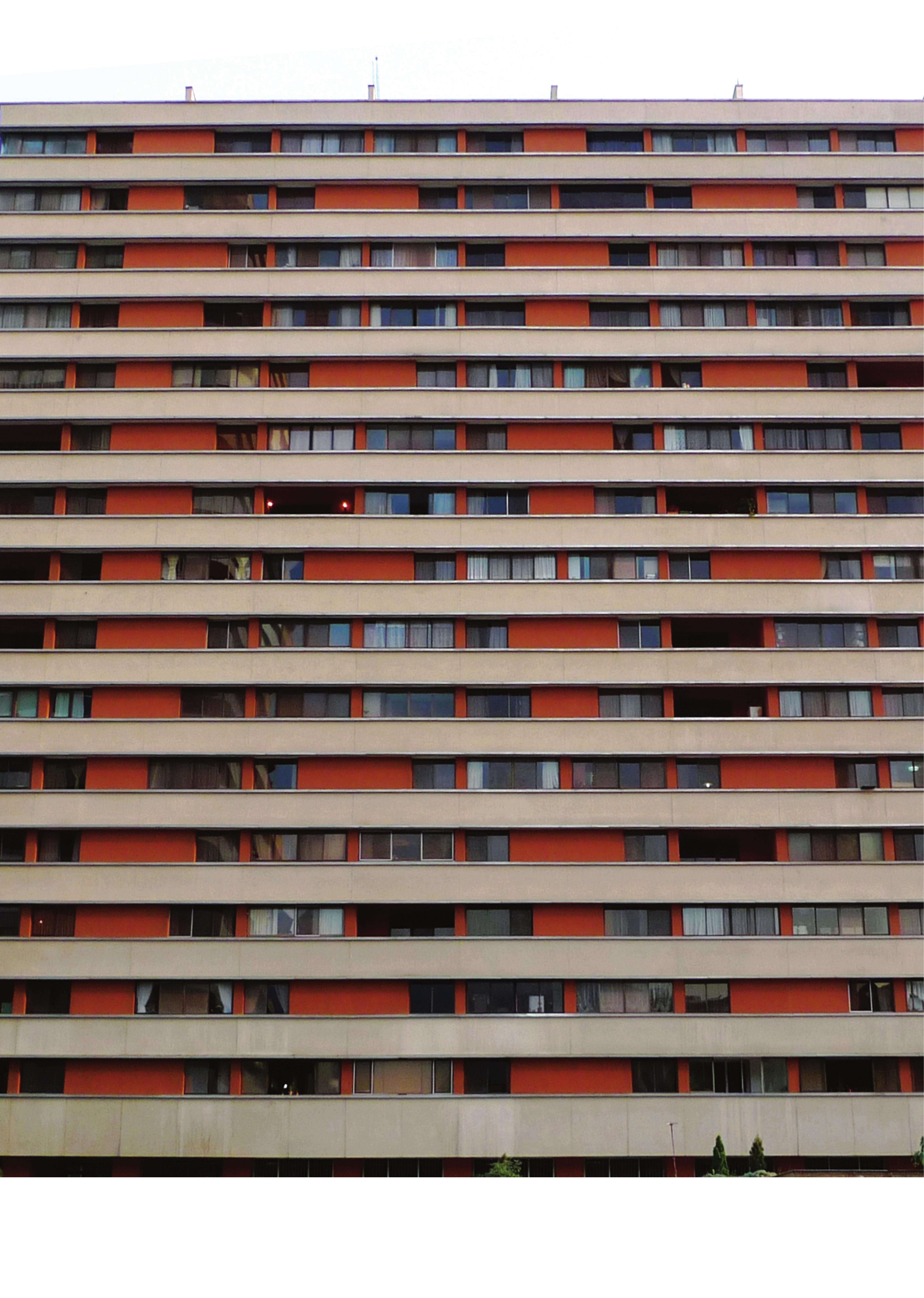
Everything associated with the towers that go up these days in Tehran, including the tower tycoons, have fallen into utter disrepute - as symbols of ruthless profiteering, imposition of fat masses on the environment, over density, and traffic build up. These disreputable towers are in fact extruded versions of the same humble two floor row houses that had stood in their place. They thus have had to observe the row house regulation that forbids windows on neighbouring walls. However, the properly designed high-rises of Tehran originate from the period we are interested in, including still the best hotels, office and ministry buildings. The main type is a mixed development with residential as the main use, consisting always of more than one block or tower, some including house type apartments with a garden even. The base deck has the feel of a village, with shops and services, creating a self-sufficient environment that one need not leave that much. This concept can be suitable for building in not even very big plots, and could reduce traffic in the process (as services are at hand). It is accessible to non-residents, unlike the official buildings that separate one area from another, as well as not having anything to do with the life, the place, and the people. The apartments of the period boast clean rectangular plans, usually substantial balconies or terraces, exteriors of handsome render variations, and use elegant geometries, careful site planning, gardens and squares, internal streets, and often sports facilities. Unlike today’s habit of throwing in everything, their public areas are open, simple and unobstructed. The lobbies are similarly spacious, clean and elegant. The engineering was world standard: a sign at the southeast corner of the Parc des Princes towers, which lists the firms and the individuals involved in its building, shows the name of the legendary Italian designer, Vico Magistretti. Highrises can be built - any height - but only in this way. Pedestrian use could be made of the “village”, even in moving from one to another if that were the case, while the useable square meters hover above. Perhaps such a “village” could even be an actual /old part of the city. Adverse, uninformed interventions are regrettable too (as in the case of replacing the beautiful bronze cladding of the ex Evin Hyatt Hotel).
A recent 19th century looking “tower” occupies the whole of its small plot, and is built top to bottom on an abutting side (reminding one of Frank Lloyd Wright’s comment in The Future of Architecture re the commercially built skyscrapers of his time). Indeed, the prevalent mindset is still one of the 19th century Qajar - mesmerized by the aura of the West, the same uninformed tacky mixing of things, but now with the aid of steel and concrete (their enslavement, not aesthetic expression), singing lifts, and ones that take your horseless carriage next to your golden bed and golden Jacuzzi. But even the limitations of the Qajar system at least did result in some qualities, some amusing results from juxtapositions and surrealistic effects due to getting the sizes wrong for example, that some archetypes of Persian architecture were maintained, and that the architectural heritage on the whole came to us intact, before being destroyed! That same confusing of the tackiest (Dubai/Malaysia) for the foremost. The same Roman, Persepolis, Las Vegas, Kebab house, Deconstruction, confectionary style LOBBY.
![Composite of Tehran tower clusters: Shahrak-e Qarb high-rises clustered together, an aerial view across newly built Milad Telecom Tower district, individual Shariati [W] tower, plus a small etched view referencing San Gimignano.](https://pub-2d7bd563aeb64af5a9da7459b4586df1.r2.dev/memar-78/towers-007-shahrak-qarb-towers-overview.jpg)