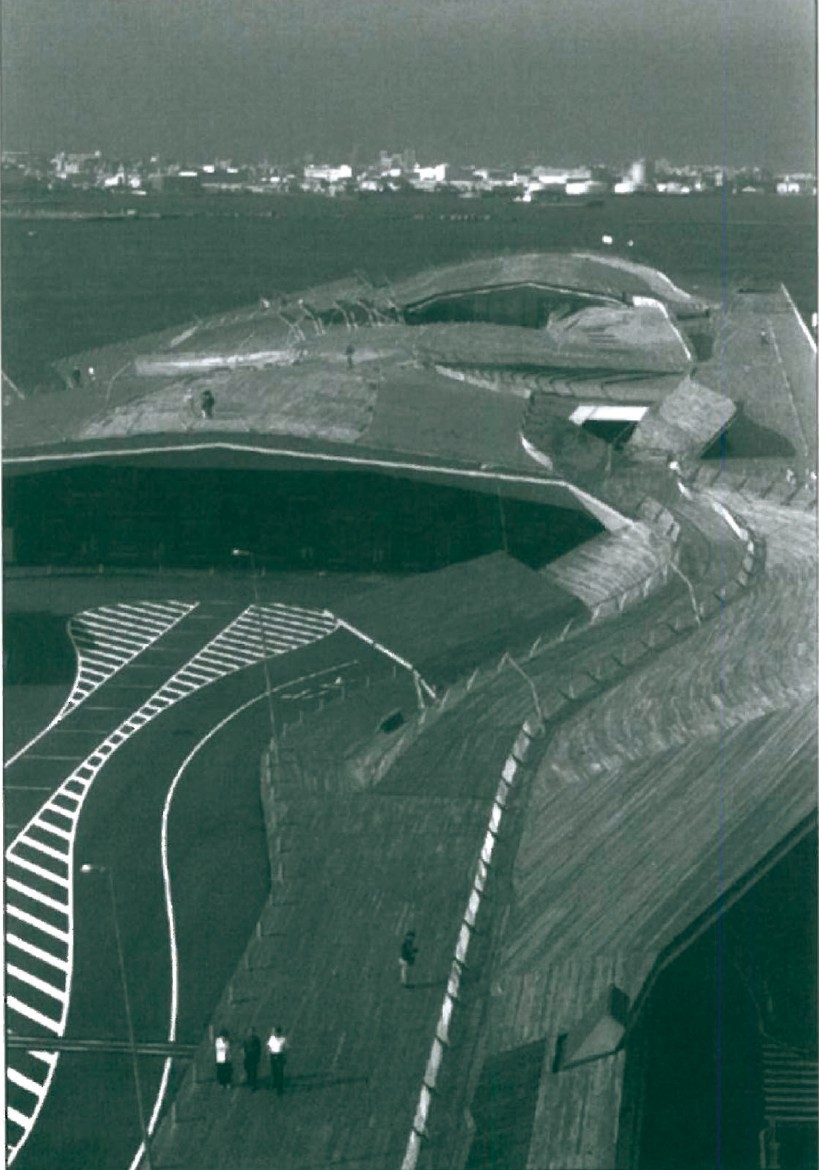
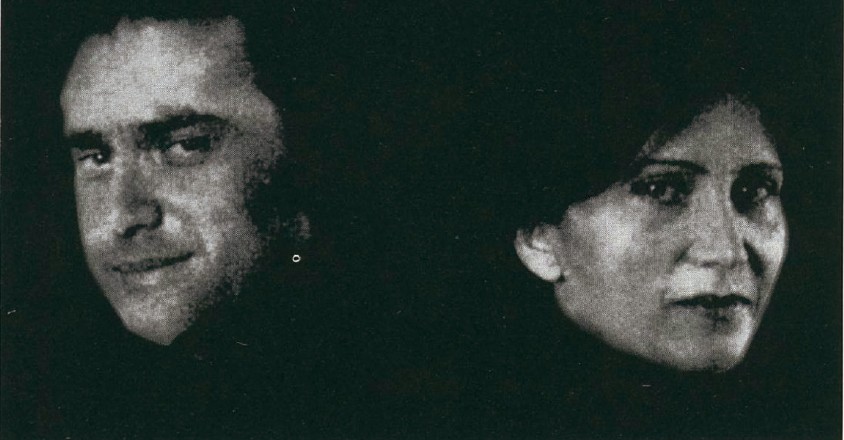
The architecture office FOA — Foreign Office Architects — was founded in 1992 by Farshid Moosavi and Alejandro Zaero-Polo. In the past ten years it has succeeded in attracting the attention of international critics through its theories and works, of which the Yokohama International Port Terminal in southern Tokyo (see Memar 17) is the best-known example. The works of FOA were exhibited for the first time in spring 2003 at the gallery hall of the Vienna MAK museum in Austria. This article, while looking at the works of these two architects, also draws attention to their bio-morphic thinking.
Two profiles
Farshid Moosavi, born in Tehran (1965 / 1344 SH), studied at the Bartlett School of Architecture in London and at Harvard in the United States. Alejandro Zaero-Polo, born in Madrid (1963 / 1342 SH), studied at the E.T.S. of Architecture in Madrid and at Harvard. After working with Rem Koolhaas the two founded their architectural office, FOA, first in Rotterdam in the Netherlands and then moved it to London. Farshid Moosavi has been teaching architectural design at the Vienna Academy since autumn 2002.
The MAK exhibition — June 2003
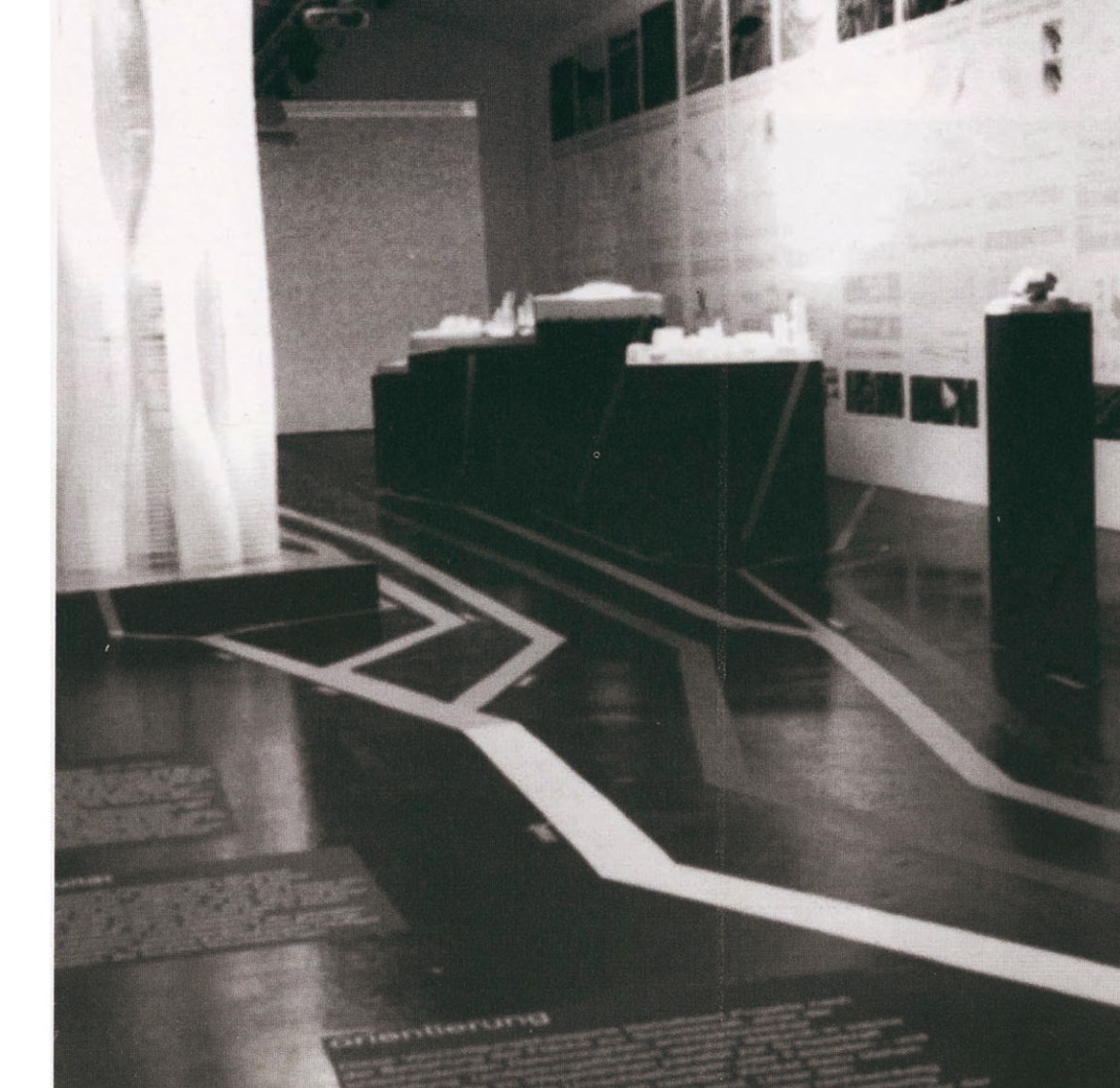
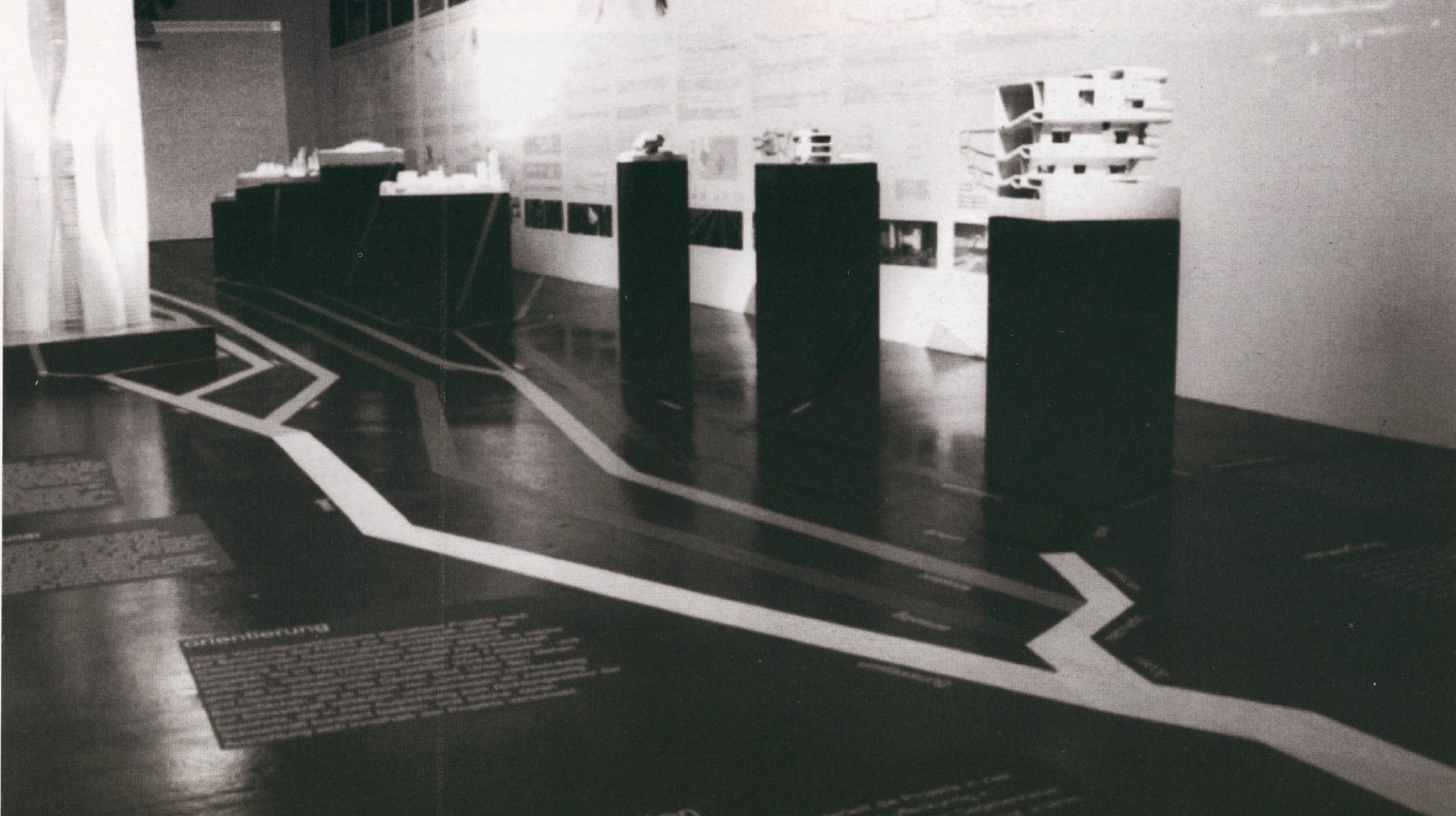
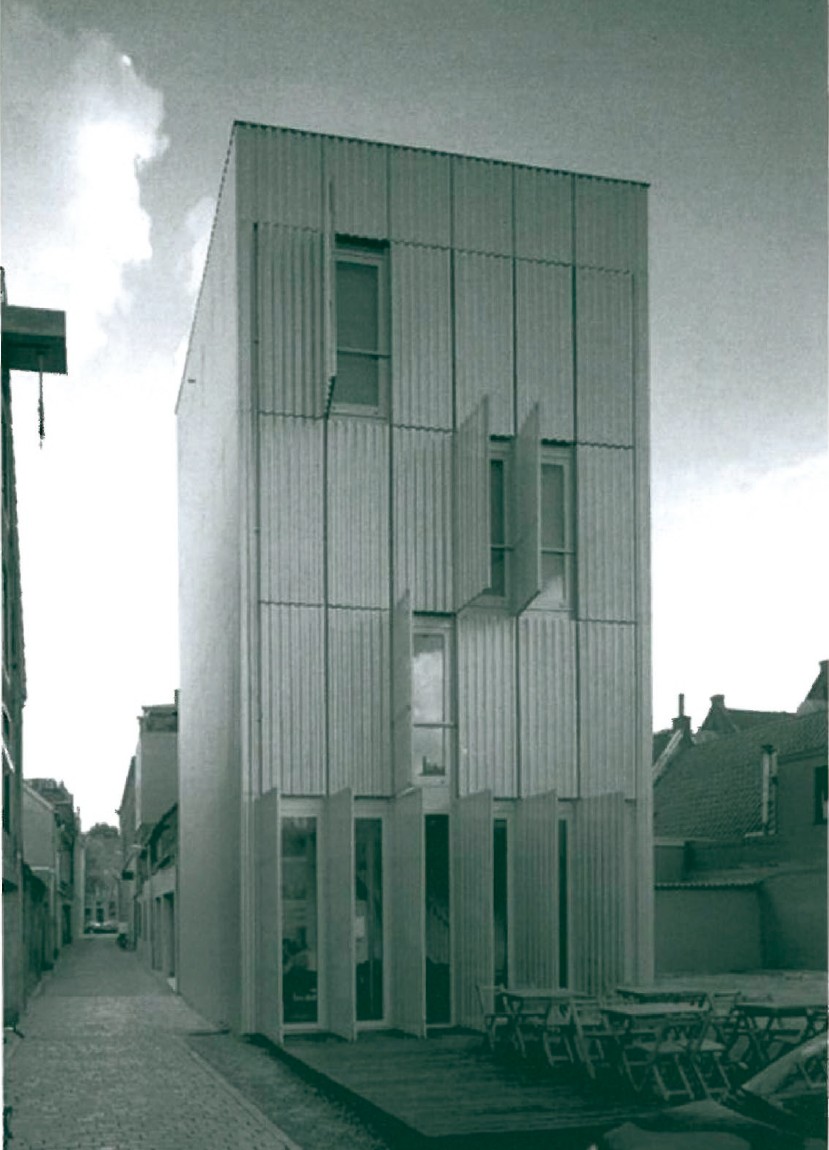
The MAK museum, in June 2003, displayed the most important works of this firm in the form of thirteen models, thirty wall tableaux and a short film (Figure 1). The diversity of the works on view was the first thing to draw the visitor's attention. Beside a cube-like piece — with classical geometry — like the Bluemoon Hotel (Figure 2), which has a strong resemblance to a rationalist approach, was placed a work without storeys, with complex surfaces, like the Yokohama Port Terminal (Figure 3); next to a project like the Dul-nouk Publishing Headquarter (Figure 4), with regular, flat and orthogonal geometric surfaces, the visitor met works such as the Virtual House (Figure 5), a composition of complex pleated surfaces with an organic order. This pluralism in the works was palpable, and unconsciously raised the question: how do these architects justify the wide range of their works?
The phylogenetic tree
The answer to that question lay in the tree-like structure that the architects had used to classify their projects. The trunk of the tree, which lay on the floor of the exhibition hall, branched outwards, each branch moving toward a different direction; a tree the two architects called the "phylogenesis of FOA office", with each branch ultimately enclosing one work like a fruit. With this tree — which strongly resembled a "phylogenetic lineage tree" of organisms — the architects classified their projects and showed the strategic evolutionary path of their works (Figure 6). On the tree each branching is a "member", and each branch indicates a "species"; the totality of like species exhibits the qualities of a theoretical or executed project.
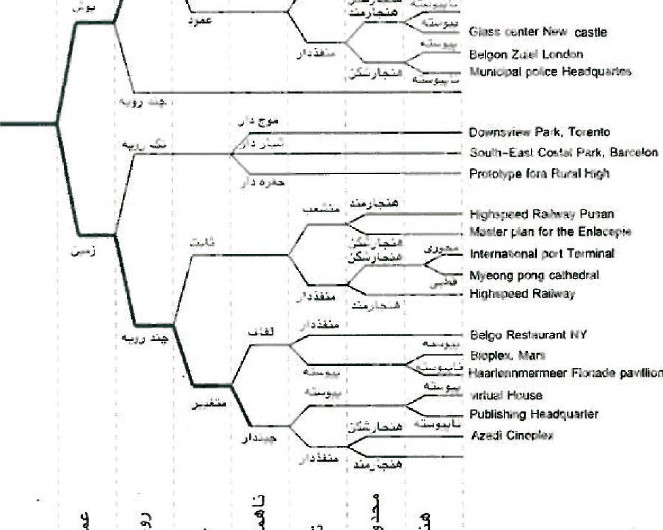
The architects, in describing their thought, say: "We look at the architectural design process as a process of phyletic evolution, in which different species of buildings — like organic cells — multiply in different environments and produce homologous yet distinct organisms (which here are the building, space and structure)."
The distinguishing point of their argument is the use of the word "species" instead of "type". They consider species a morphological member that varies in time and space, whereas a "type", being a fixed part in time and space with a limited radius of effect, is — in the changing environment of architecture — a less suitable concept than species. It is for this reason that they have organised their works systematically in a structure based on members and species. The architects, however, in describing their phylogenetic tree note: "We know that this classification is meant only for the dividing-up of our own works, and may not work for the classification of others' works. Our aim in this experiment is not to propose a generalised genetic classification; we wish, rather, to use the phylogenetic tree to identify and present the diversity of our works, so that the viewer becomes better acquainted with our way of working. Likewise, our aim is not to justify repetition; we have wished to show the territory of experiments and to give direction to the works yet to come, and on the other hand to indicate the use of a new scientific domain in architecture."
The seven members
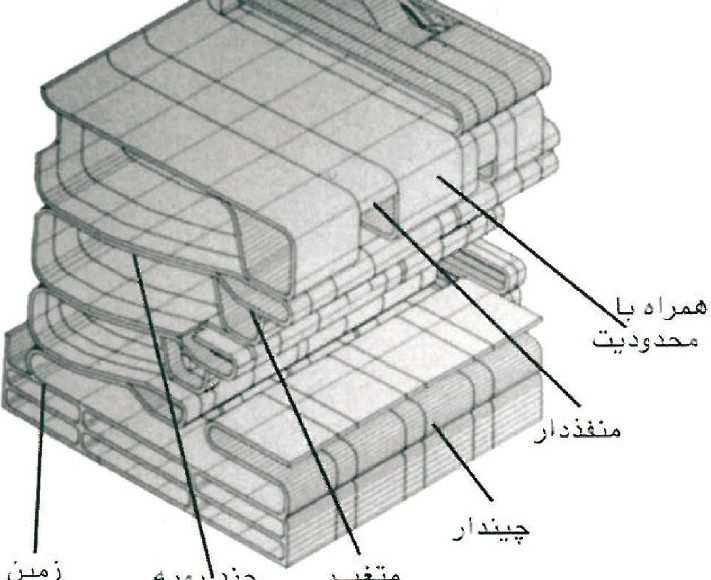
In their current classification they distinguish seven members, each of which has its own species: function, faces, direction, ruggedness, continuity, contingent / norm-shift, and geometry. Each is described in turn:
Function forms the first division of the tree. Here projects are split into two species: those whose principal strategy is the creation of an "envelope" (faciality), and those whose focus is the design of surfaces extending the "ground".
Faces is the second division. Each surface, like the ground, has at least one principal face. The number of these faces grows with the lived surfaces of a single sheet. For example, a planar sheet has two faces — internal and external (or floor and ceiling) — but with the continuation of the surface's movement in space the number of these faces grows. Here the architects distinguish two species: "single-face" and "multi-face".
Direction is the third division. At this stage projects are classified by the relation of their surfaces to the fixed direction of the gravity vector. The "single-face" member has two species — "parallel" and "perpendicular" — the first emphasising simple bounding surfaces such as façades, the second covering surfaces perpendicular to the vector, such as floor and ceiling. The "multi-face" member is in turn divided into two species: surfaces whose angle with the gravity vector is "fixed" and those whose angle is "variable".
Ruggedness is the name they give to the fourth member. This member shows the relation of the surface to its surrounding spatial domain, and is a measure for determining the relation of the surface — as a two-dimensional element — to its three-dimensional effect. This quality embraces a wide range of different surfaces. Single-faced surfaces are at this stage divided into species "smooth", "wavy", "grooved" and "perforated". Multi-faced surfaces with a fixed position relative to the gravity vector simply bound or enclose space and are not classified further. Multi-faced surfaces with variable position — sometimes parallel and sometimes perpendicular to the gravity vector — are split into two species: if a surface, by its folds, partitions and surrounds space, it is called "pleated"; if it makes a 360-degree rotation and entirely surrounds the space, marking the boundary between out and in, it is called "wrapped".
Continuity is the fifth member, with three species: a surface having no boundary other than its outer perimeter is "continuous"; a surface with an opening within itself is "perforated"; a surface that is cut at one place and continues in another direction by a new branch is "branched". The architects use clearer-spaced volumes and "branched" surfaces for sharper, gliding spatial expression.
Norm-shift is the next member. Here projects fall into two classes: those without a norm-shift (where the patterns or norms are free to repeat themselves in an ordered set), and those in which an external condition shifts the norm of the design. The "norm-breaking" strategy gives more weight to environmental indicators, while the "norm-bound" strategy is chosen when the site offers an ordered fabric or when the display of independent forms takes precedence over norm-shifting factors.
Geometry is the last member, again with two divisions: "extension" and "symmetry". The architects classify their surface "extensions" into two species: "continuous", with smooth, tangent connections, and "discontinuous", with broken or non-tangent connections. They use the first to create gliding surfaces of similar genus, and the second to create breaks in the succession of surfaces. Symmetry is divided into two species: "axial symmetry" and "polar symmetry".
A few projects in detail
A few examples may help to make the classification more comprehensible.
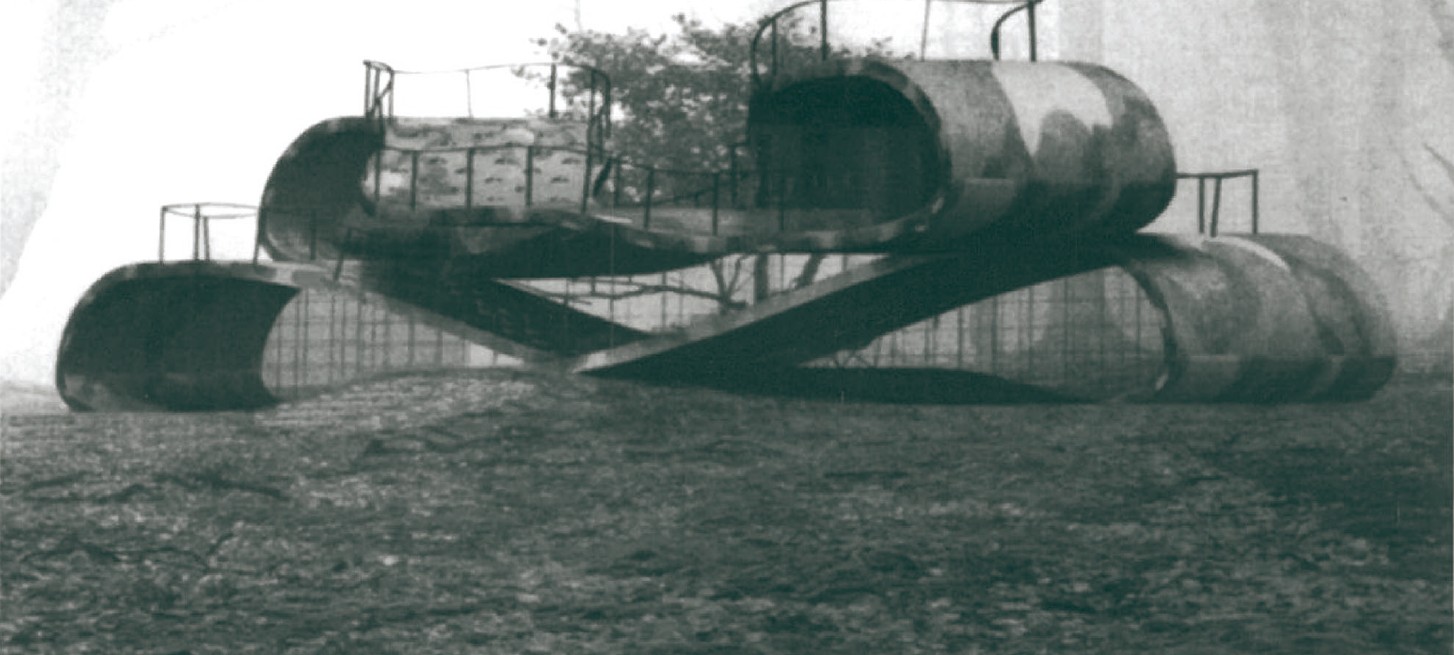
The Azadi Cineplex (Figure 7) in Tehran calls to mind a series of opened-out film reels. These multi-faced strips begin their movement in time and place from the extension of the ground, then — through folds and a variable extension — partition sub-spaces along their path. The architects pierce these sub-spaces with openings at various points. Because the Cineplex is designed for a space between two existing buildings, the perimeters of the project are pre-determined, and the three-dimensional model clearly shows the effect of environmental factors in shifting the norm of the design.
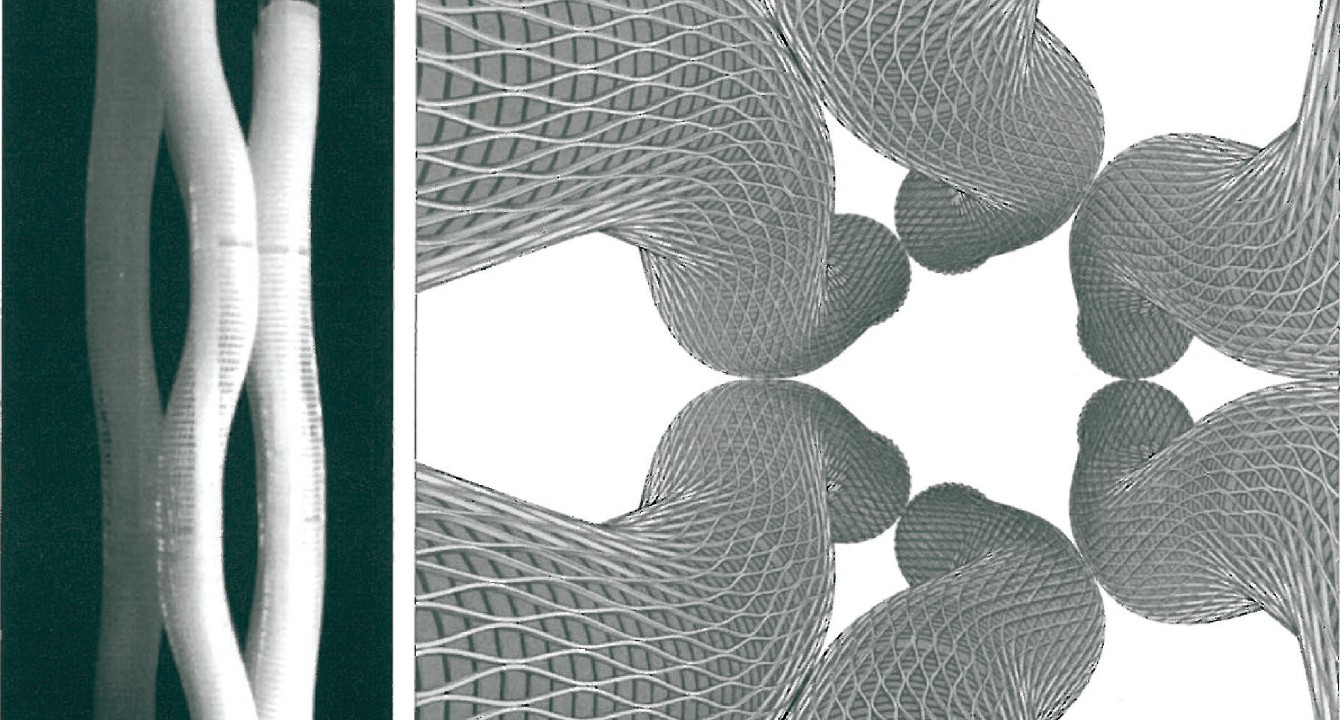
The World Trade Center proposal (Figure 8) — the "Bundle Tower" — is a set of six towers each rising to the sky like a stem. The six principal surfaces of the design grow as envelopes, in parallel extension and without environmental norm-shift. These single-face surfaces are linked, two by two at different heights, by openings.
The Bluemoon Hotel (Figure 2) is a cube built on a 5×5 m plot four storeys high. The interior space communicates with the outside world through six symmetrical openings on each storey. The architects' strategy here is the choice of a single, vertical envelope face. These surfaces, in their continuous extension, have no boundary at all.
The Dul-nouk Publishing Headquarter (Figure 9) shows a multi-storey building with a glass façade. The initial strategy in this project is the choice of the ground species. The multi-faced surfaces of this project, in extension of the ground, climb to the upper storeys as continuous folds with non-tangent connections, creating envelopes.
Limits, criticisms and an organic order
Looking at the tree of species, on one hand it seems that enclosing and dominating creativity within a systematic (however complex) classification will, in the end, lead to a constraint and a reduction of creativity. On the other, the analyst risks being led into a doubt about placing the architects within the existing modern tendencies.
Mrs Moosavi, while admitting the first point, says: "We know that this classification, like any other kind of taxonomy, in itself produces constraint and pressure, and sometimes calls into question the belonging of a project to a species. It is also possible that some projects belong more, and others less, to one of these categories. Some projects may, while emphasising one of their species, also signal the appearance of a new branch. But we believe that these very limits, pressures and tensions in our projects and species testify to the latent capacity of this way of thinking and indicate the species that have not yet been discovered, and that are foreshadowed in the projects to come."
As to the diversity of the works and their movement within a still-growing tree — in which the possibility of a tendency in any direction is preserved — Moosavi says: "What we propose in this exhibition is an attempt to overcome a particular style or signature, without falling into a kind of generalising tendency."
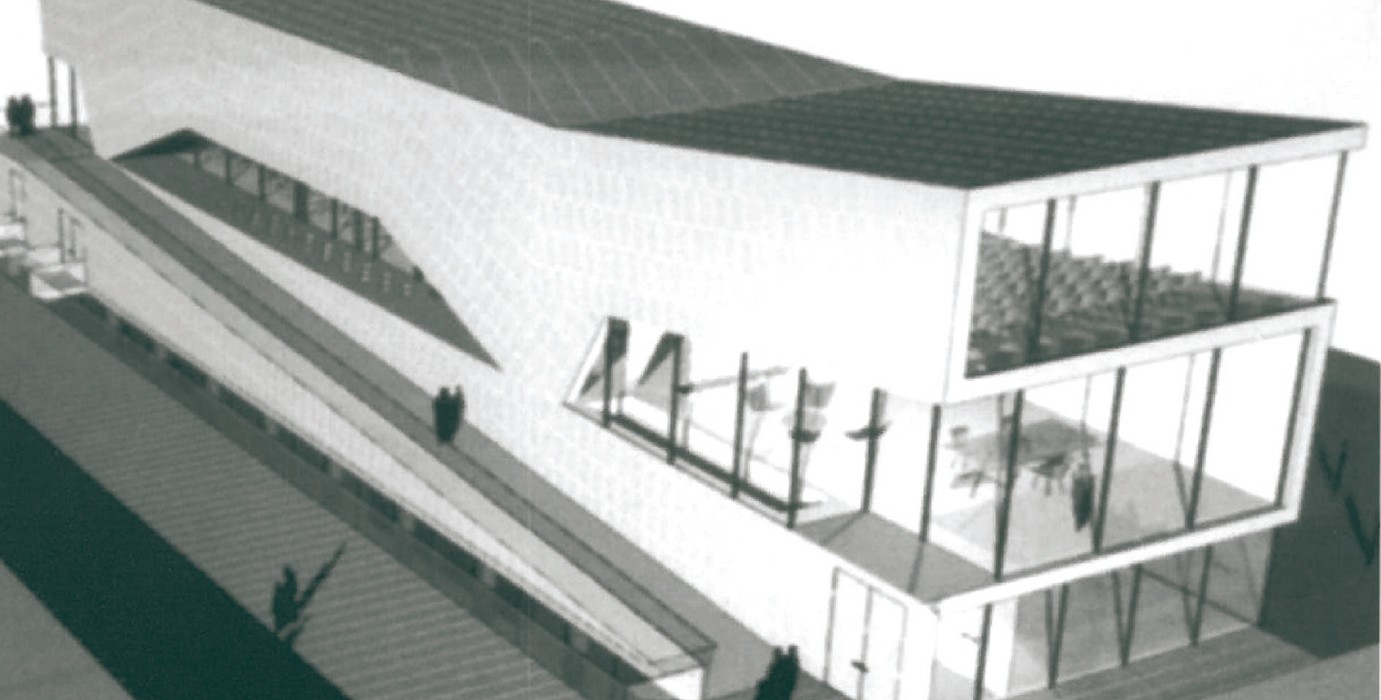
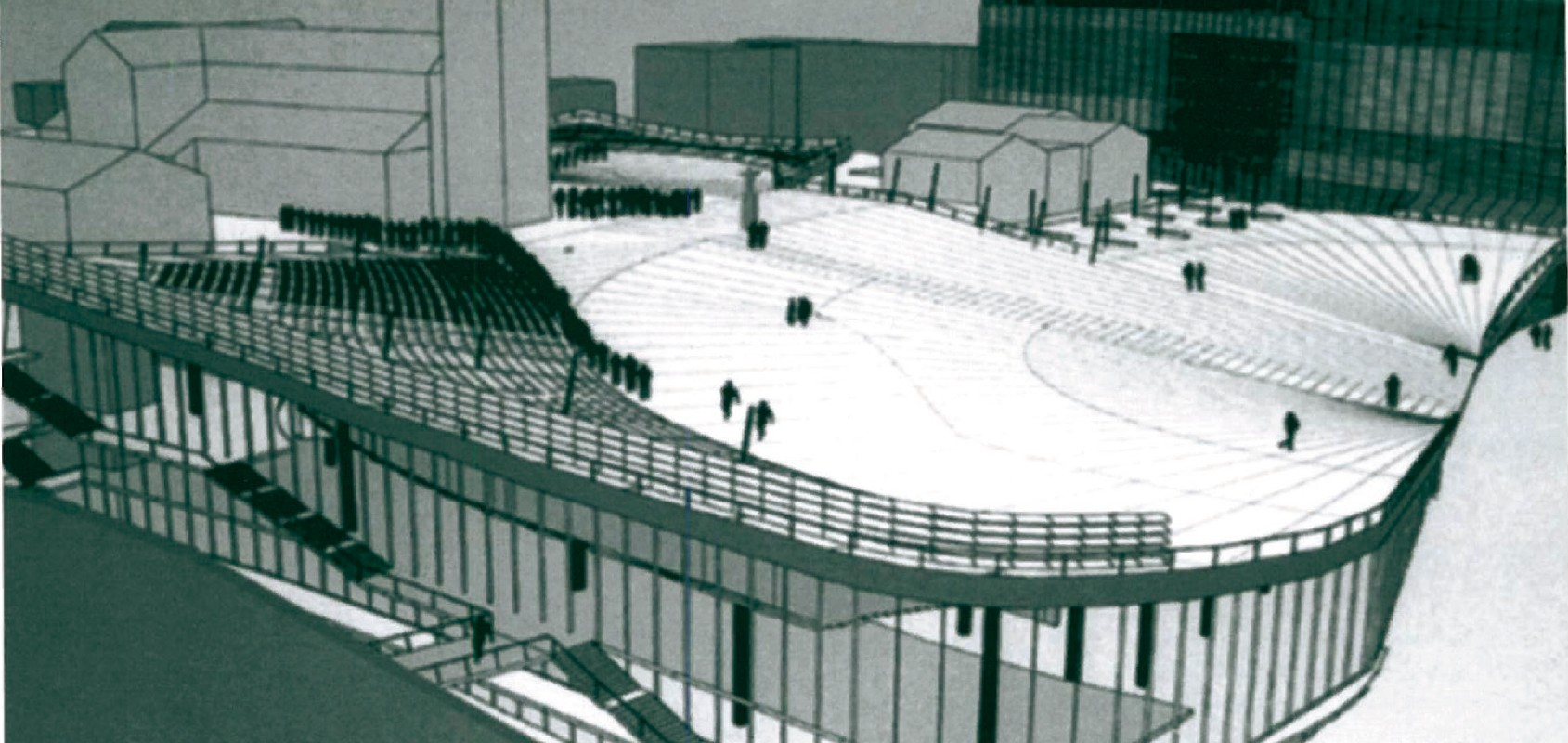
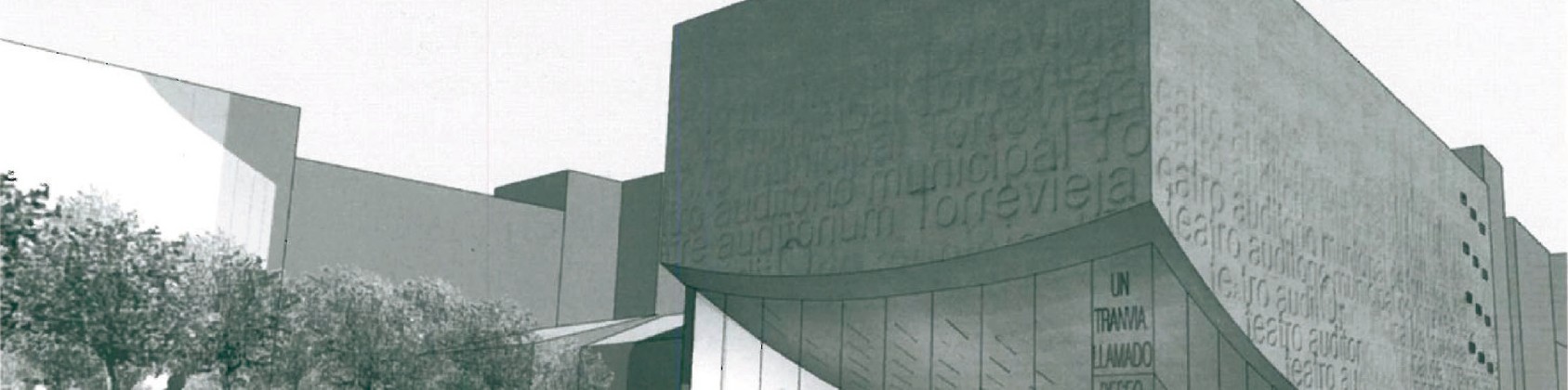
This pluralism we see not only in the works and the variety of species; we also see other points, such as the adaptation of the building (the living organism) to its growing-place. Within the range of their works we find, on one hand, a project like the Virtual House, which shows the architects' search for a house with the capacity to adapt to entirely different ecosystems, and on the other works like the Myeong Dong Cathedral in Seoul (Figure 10) and the Torrevieja Municipal Theater (Figure 11), designed only to take their stand and live in a particular place; and a third kind of living organism (like the World Trade Center six-tower project) which has an independent spirit and could be built in any large city.
Another notable point in the works of these two architects is their handling of the question of order. After looking at the works carefully one might ask whether Moosavi and Zaero-Polo believe in order or not — but the right question is what is meant by order. Is it classical order, or a kind of organic order — like the kind one sees in a sunflower? If we take order in an organic system, we can say that order has a salient place in their works. Of course the differences between classical and organic species are not always easy to recognise. For instance, the weight of classical order is found in a project like the Bluemoon Hotel, while reliance on organic order appears in the six-tower project or the Virtual House.
After this closer focus on the works and a sharper attention to the architectural ideas, we now better understand the breadth of the works displayed in the exhibition, and we see how diversity — itself the result of the application of different organic species — has become the architectural essence of their work. Therefore only the tree of species presents the totality of their thought and works, and a presentation of single works such as the Bluemoon Hotel, the Torrevieja Municipal Theater or even the Yokohama Terminal, without attention to that totality, would lose much.
Printed English summary panel (PDF 22)
In June 2003, Vienna MAK museum exposed the noblest works of Foreign Office Architects (FOA) by presenting 13 models, 30 tableaus, and a short film. Relying on the document presented in MAK museum and also a printed interview with Mrs. Farshid Moosavi, the author attempts to inspect the theoretical ground of the works of these two architects and their intellectual development, which is projected in their works. The author mainly refers to a tree-like structure designed by the architects themselves spreading throughout the exhibition space and wrapping around their works, intended to classify their works and explain their theoretical grounds. In this tree, each division is a "member" and each branch shows a kind of species and all the species together present the theoretical and practical project of the two architects.
Footnotes: 1. MAK Museum (Vienna). 2. Bartlett School of Architecture. 3. E.T.S. of Architecture (Madrid). 4. Rem Koolhaas. 5. Bluemoon Hotel. 6. Yokohama Port Terminal. 7. Dul-nouk Publishing Headquarter. 8. Virtual House. 9. FOA's Phylogenesis. 10. Phylogenetic lineage tree. 11. Species. 12. Phylogenetic. 13. Stem cells. 14. In biological classification "species" is in Persian rendered as jens (Mosaheb Encyclopaedia) or sometimes guneh; genus is rendered as nou'. For "type" no settled Persian equivalent has been chosen, but lately guneh has often been used; in this article, to preserve the distinction between species and type, guneh and nemuneh are used respectively. 15. Azadi Cineplex. 16. The Bundle Tower. 17. Myeong Dong Cathedral, Seoul. 18. Torrevieja Municipal Theater.



