Villa Residential Building, Tehran
Location: Ostad Nejatollahi Street, Labbaf Street, Narang Dead-End, Tehran
Client: Saeid Asuyar
Architect: ARSH 4D Studio — Pantea Eslami, Alireza Sherafati
Design manager: Shabnam Azmoudeh
Construction: Arsh 4D Studio, Ahmad Hosseinizad
Structure: Morteza Rezaeimehr
Mechanical: Ali Ghanizadeh Electrical: Ali Piltan
Photo: Ali Daghigh, Parham Taghioff
Total built area: 763 m²
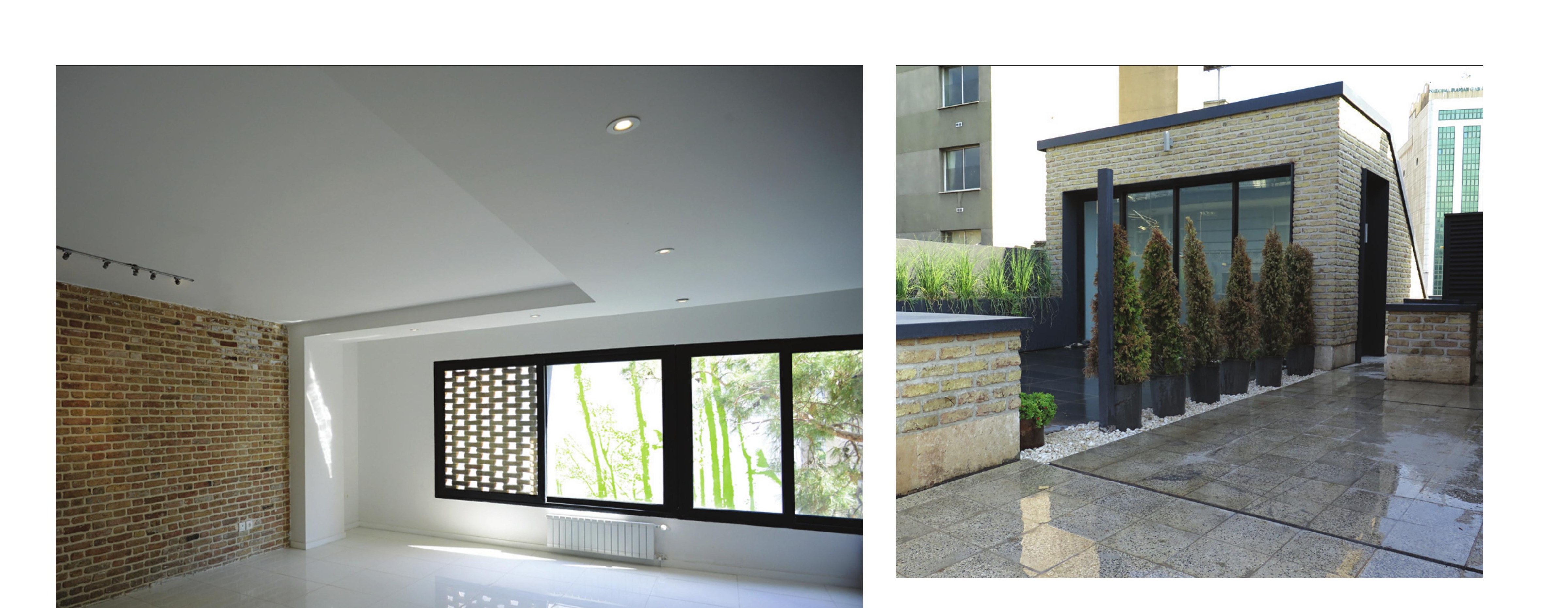
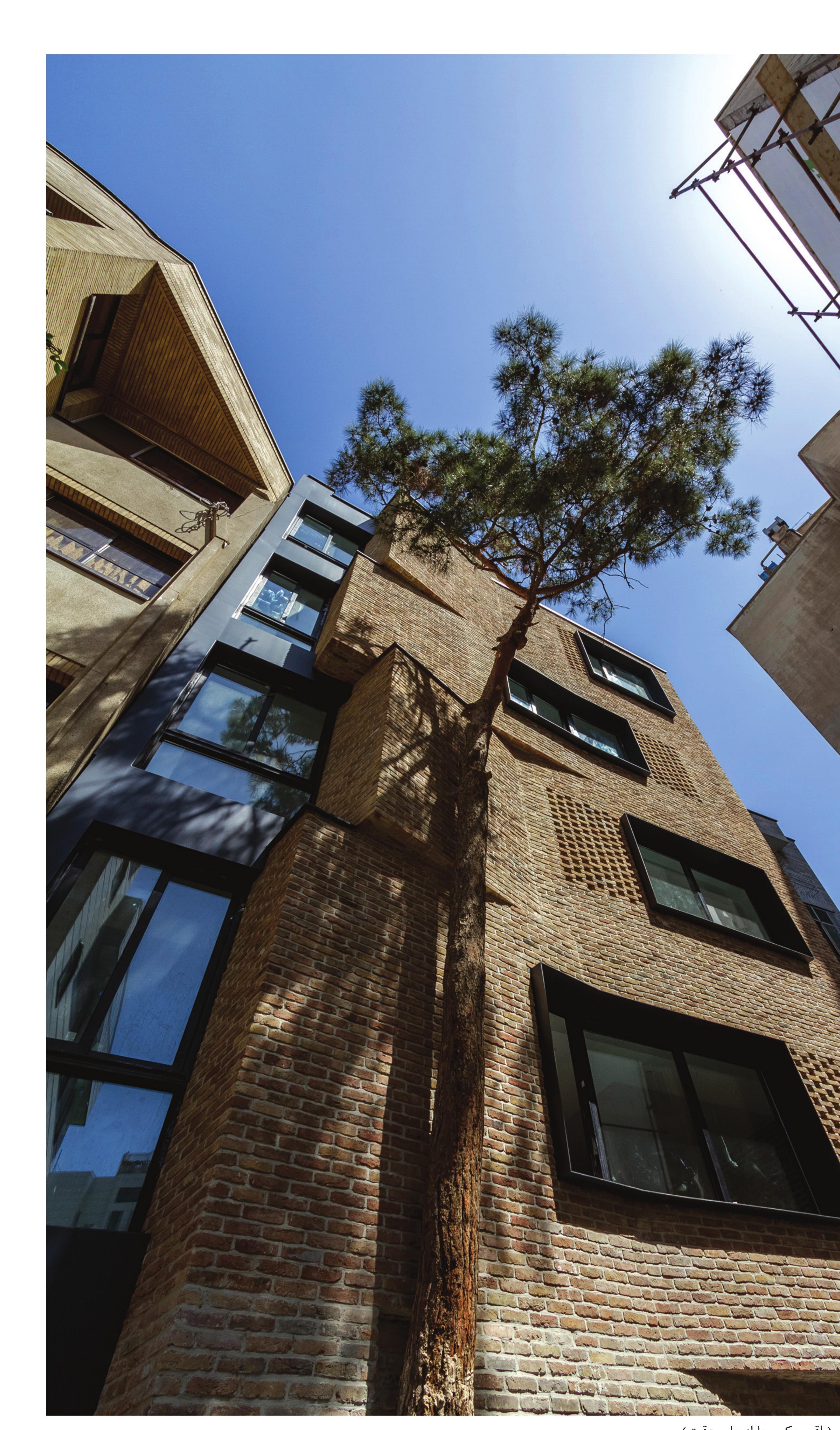
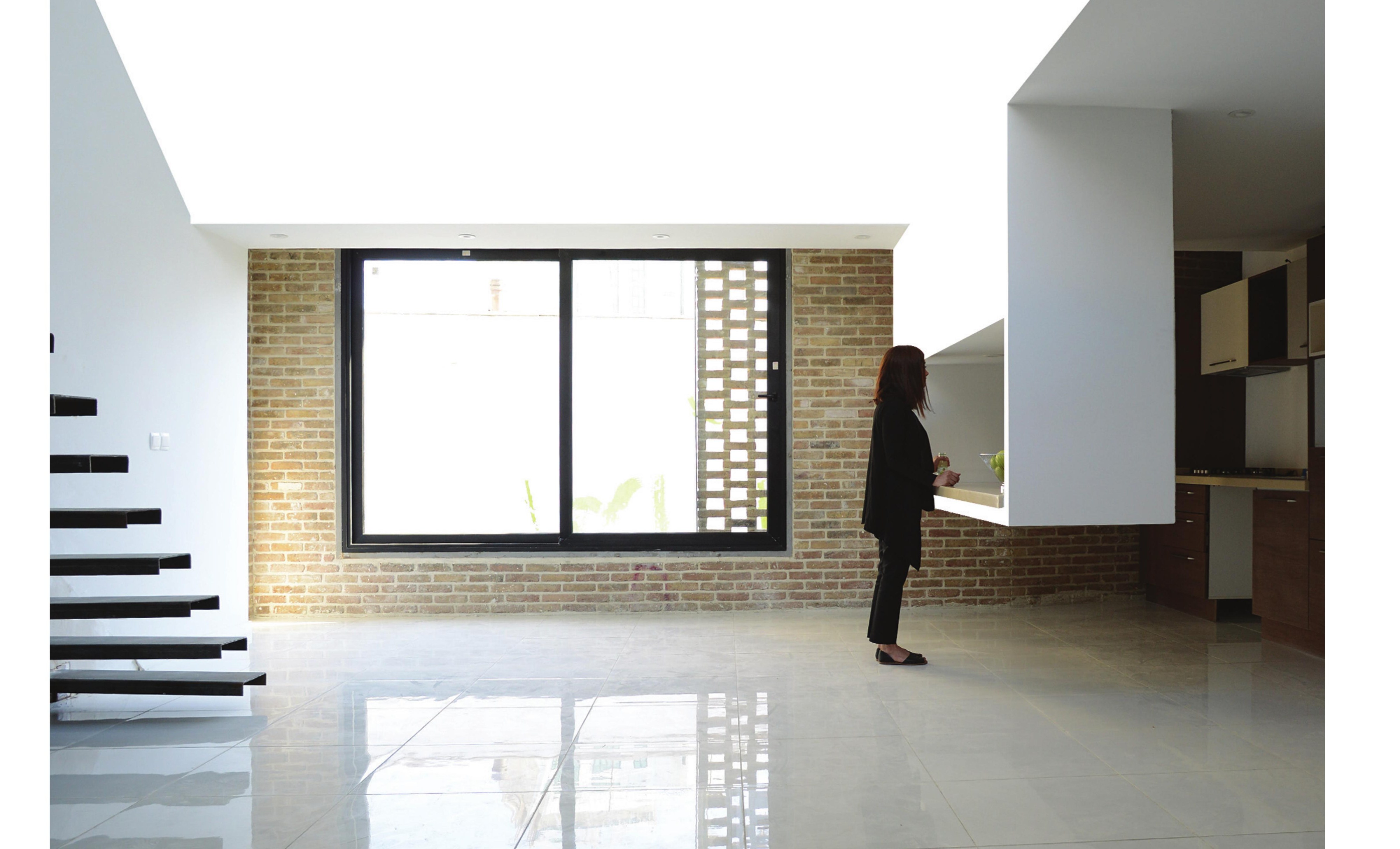
Recycled materials from demolition. Given the scarcity of land in Tehran, most new projects begin with the demolition of 2- to 3-storey buildings replaced by 5- to 6-storey ones, and the resulting debris is hauled to the outskirts of Tehran, with environmental consequences in tow. Reuse of building materials is one way of reducing construction waste. In this project, every reclaimed brick was used in the facade and interiors, reducing the cost of facade materials — a major share of the building cost — to zero.
Facade design. Because only three metres of the building's facade are visible from the street, the facade was designed so that the building announces its presence within the surrounding fabric.
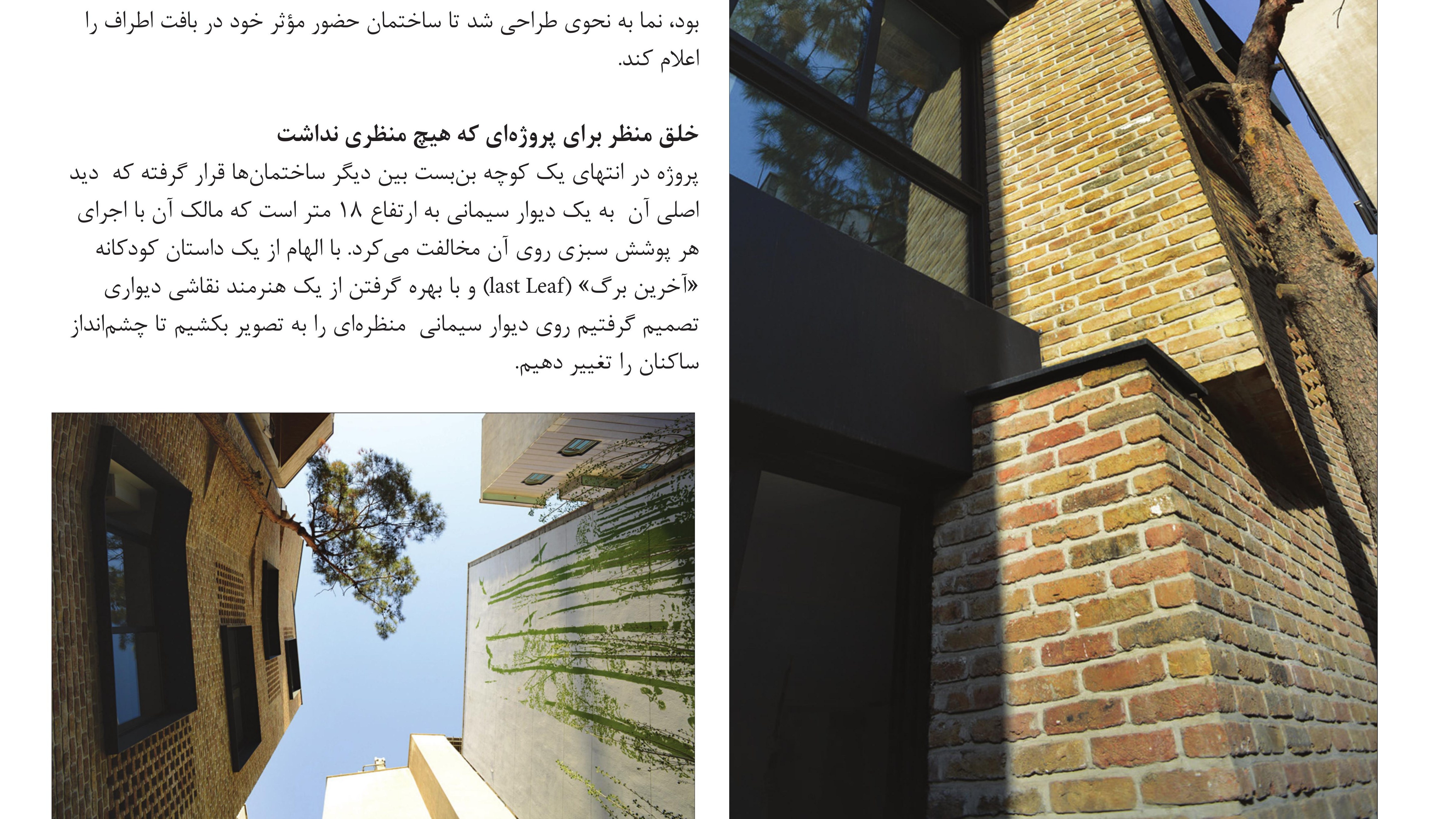
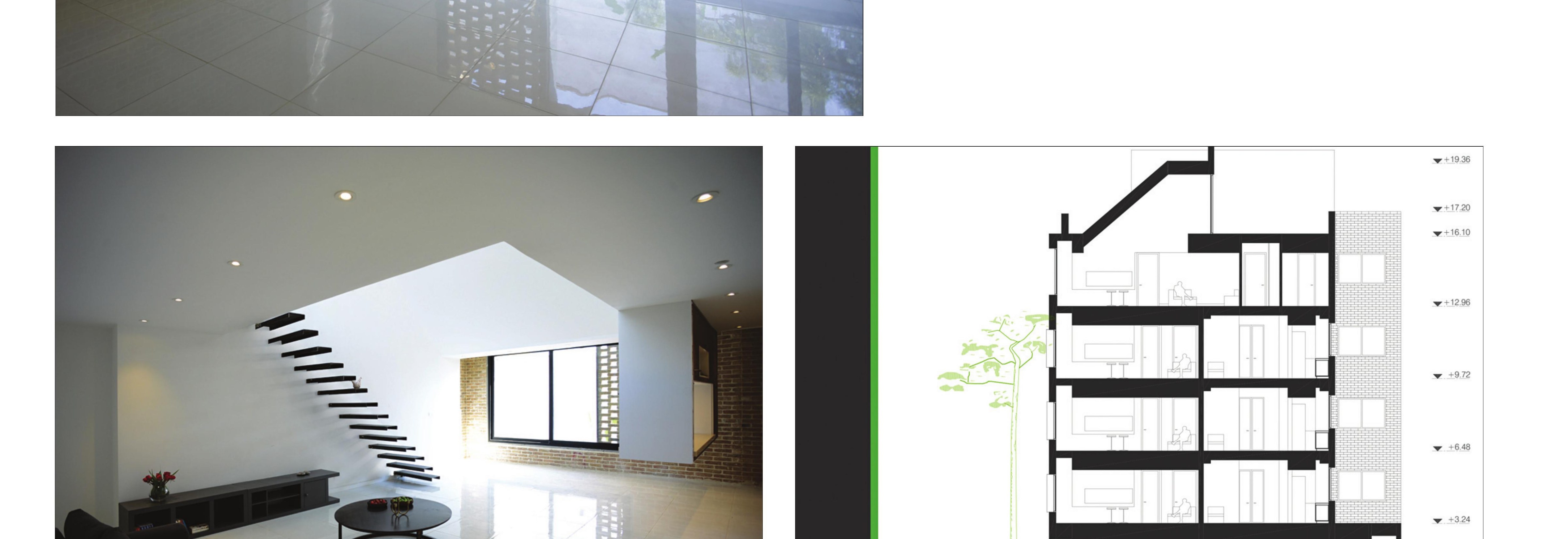
Creating a view for a project that had none. The project sits at the end of a dead-end alley among other buildings, with its principal outlook onto an 18-metre cement wall whose owner refused any green-cover treatment. Inspired by O. Henry's children's story "The Last Leaf", and with the help of a mural artist, we decided to paint a landscape on the cement wall so as to alter the inhabitants' view.
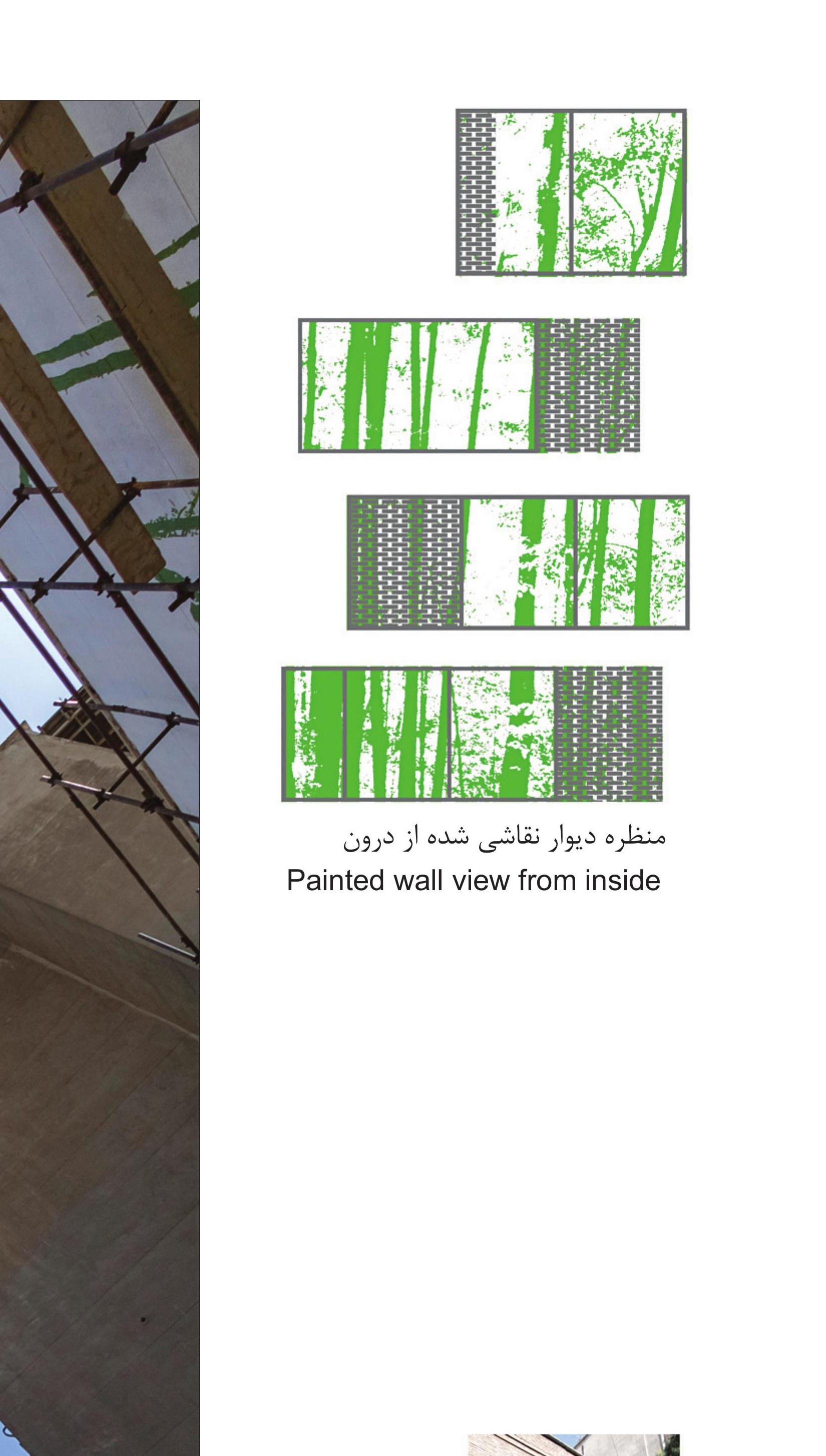
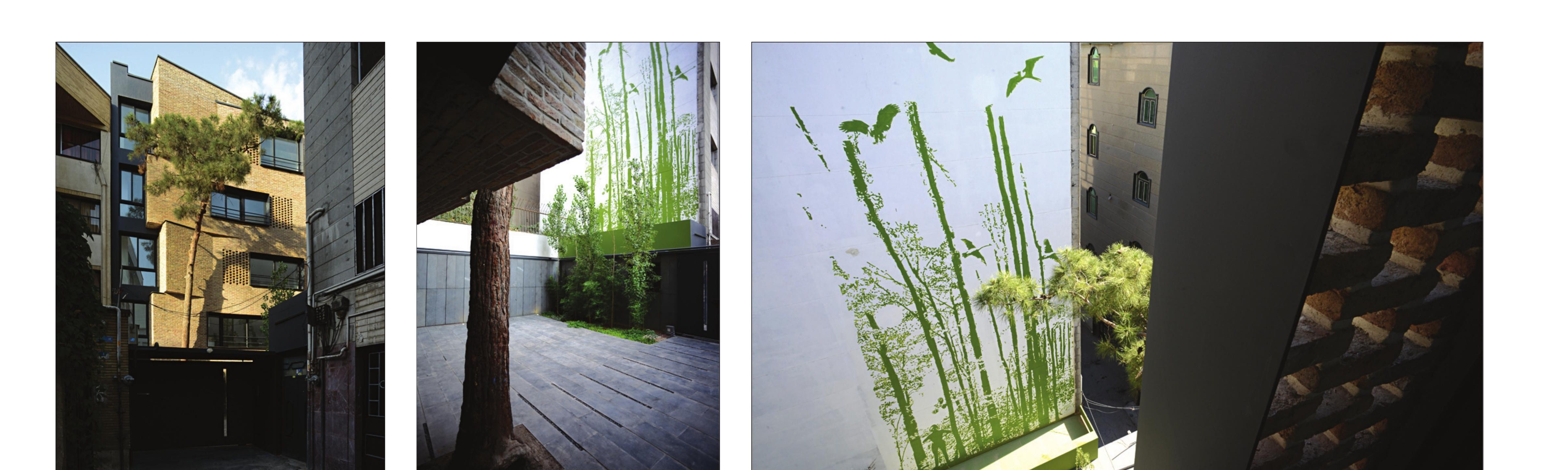
The mural alternates with bamboo planted in the courtyard, so that from inside the apartments the imaginary green and the real green read as a single layered landscape.