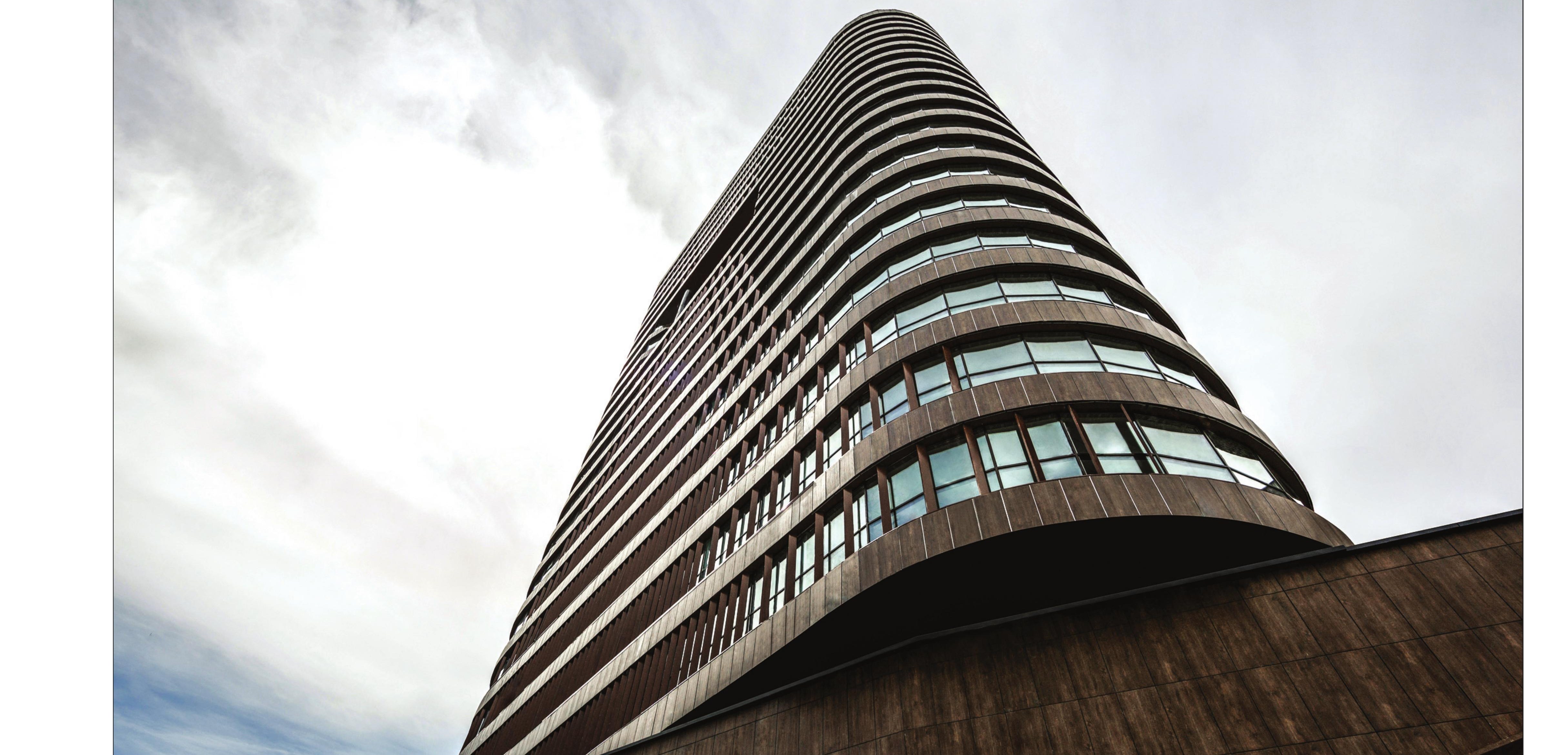
Vozara Royal Office Tower, Tehran
Location: Khaled Eslamboli (Vozara) Street, next to Sa'ei Park, Tehran
Client: Royal Sakhteman Arya Co.
Architectural design: Pooneh Vakilian, Arash Sajadi (Padra Paya Pars Consulting Engineers)
Facade & interior design review: Shahab Mirzaean, Ali Hadi Moghaddam (Manzar Boum Naghsh / L.E.D Architects)
Structural design: Alireza Jalilvand
Mechanical: Peyman Rohani Electrical: Masoud Ansari
High supervision consultant: Behrouz Mirmiran
Construction supervisor: Alireza Farid Abbasalinia
Photo: Hamoun Moghaddam, Hamoun Digital Cinema
Site area: 2,000 m² Total built area: 33,081 m²
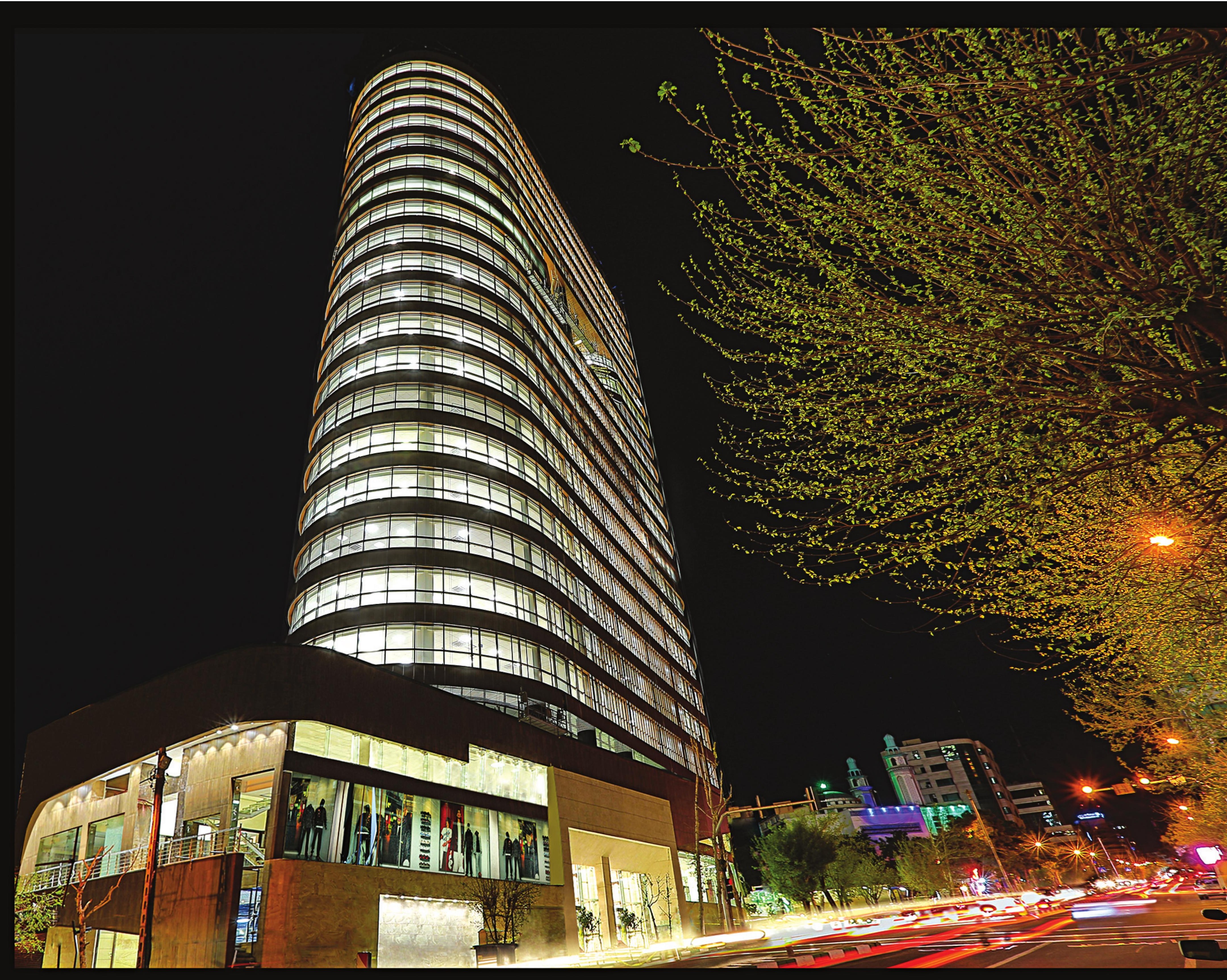
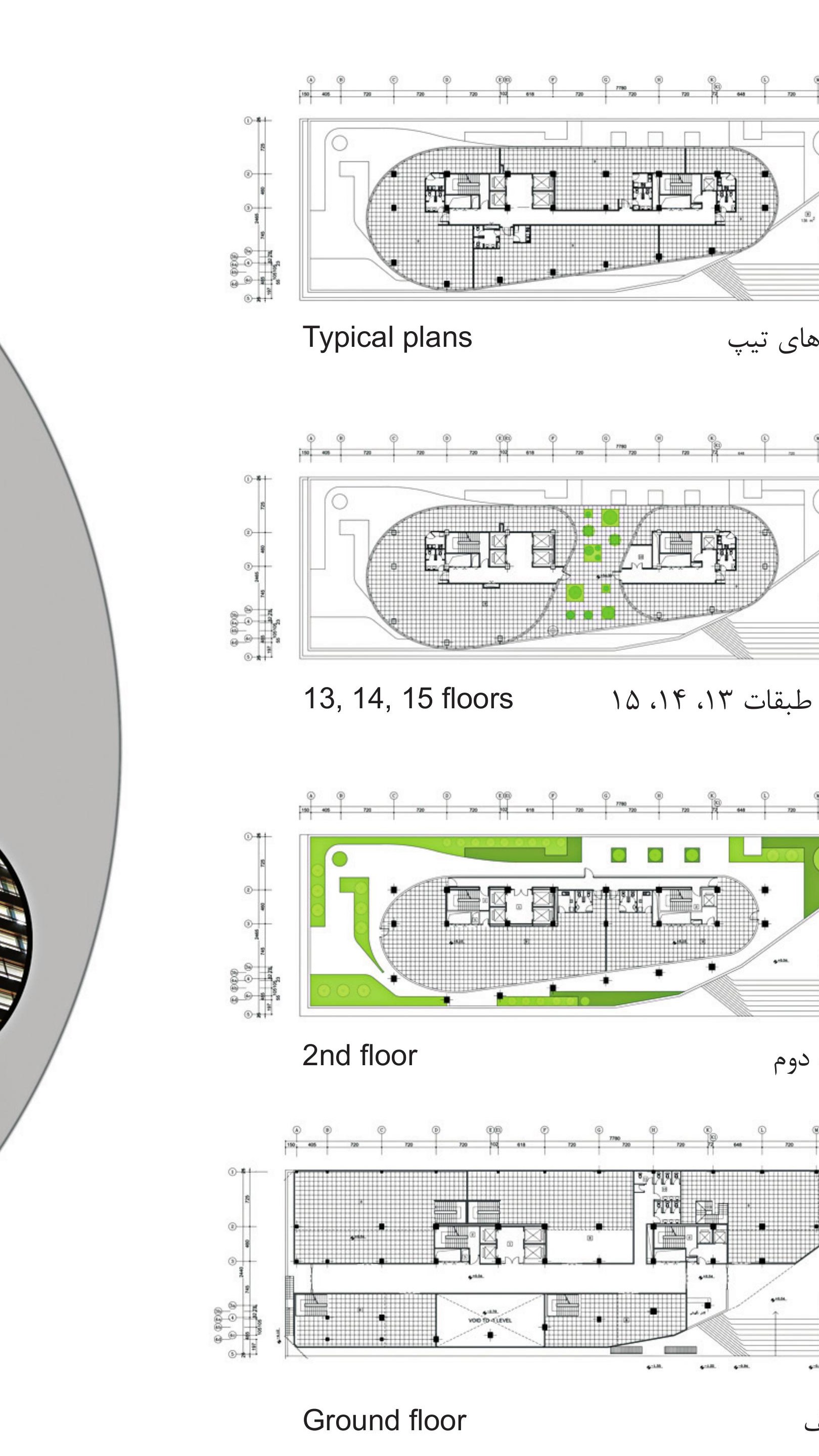
The volumetric concept of the design is based on a pure and simple geometry, aiming to create continuity with the surrounding environment and the forms found in nature. Visual unity of the mass is achieved through the repetition of horizontal elements along the tower's height, while variety and visual appeal are enhanced by creating an opening toward the sky and the city — conceived as the project's focal point. Located on the upper floors, this aperture is visible from a distance as a distinctive formal landmark.
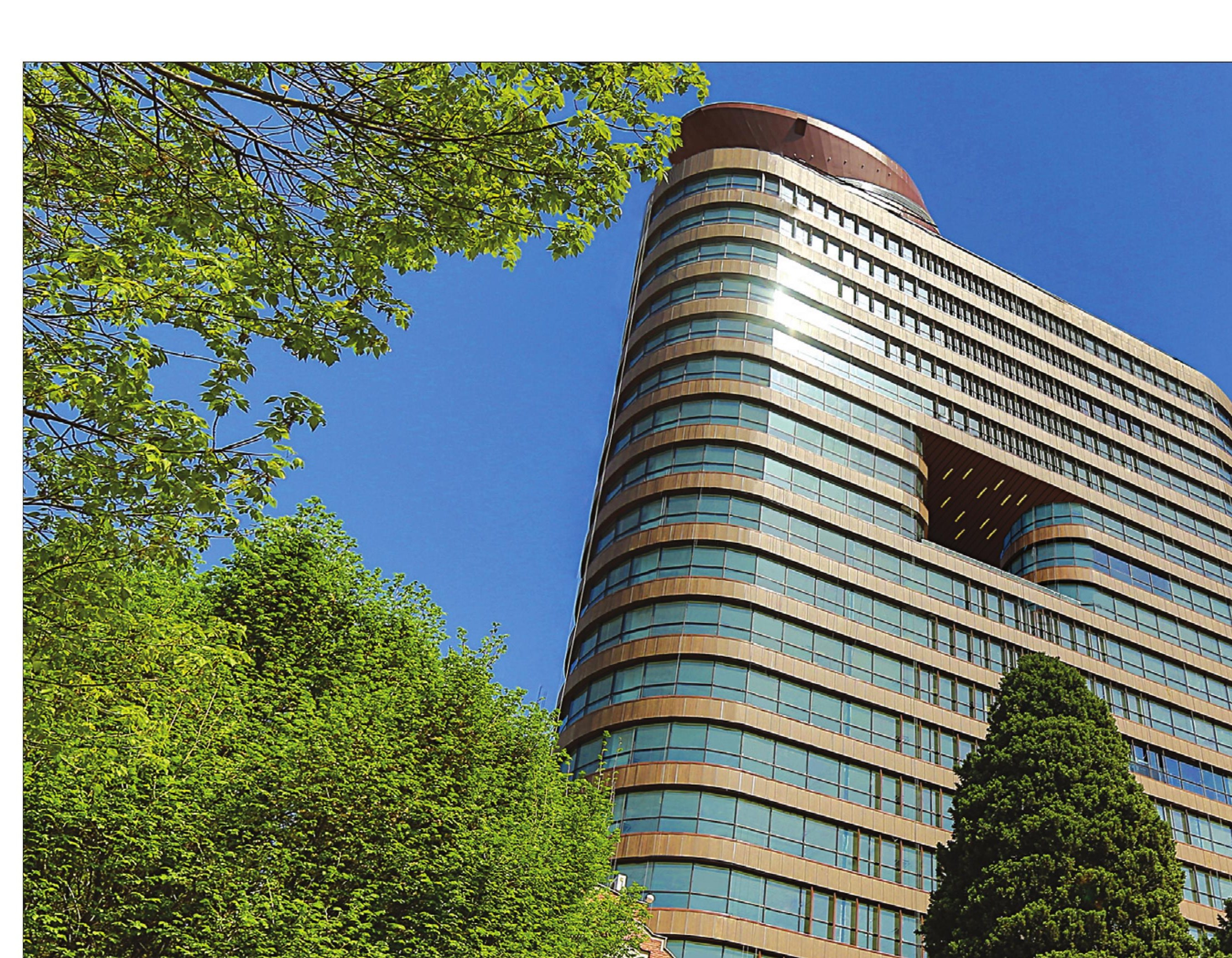
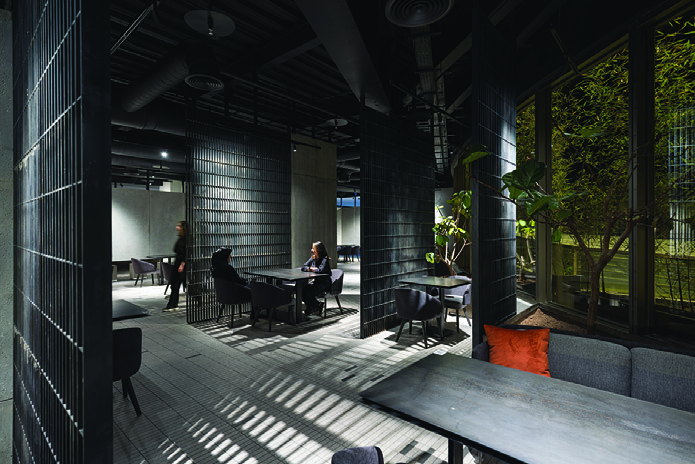
The green space within this cleft serves as a resting area, a place for pause and social interaction, offering airflow and panoramic views of the cityscape for the building's users.
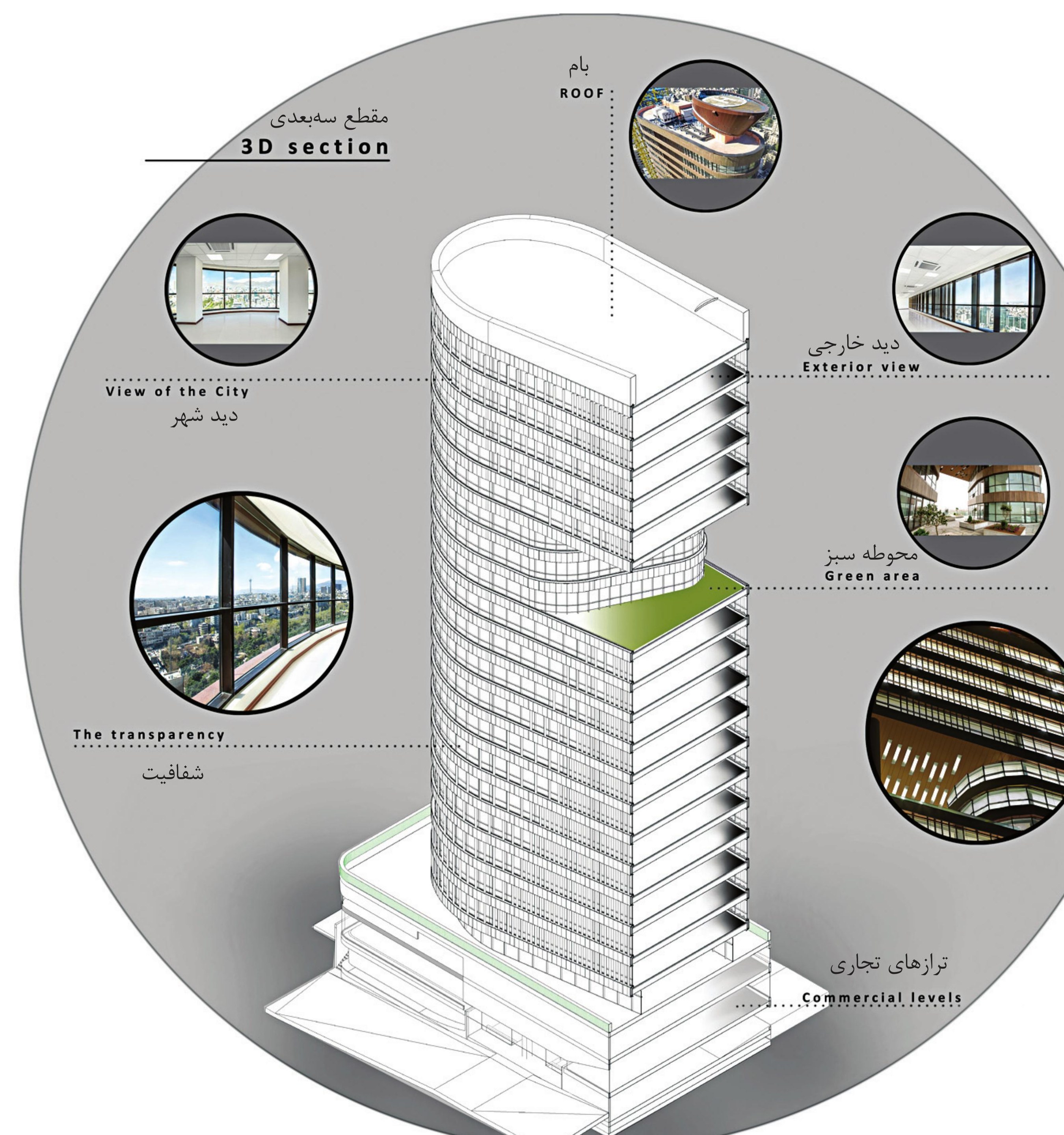
The commercial entrance, conceived as a boundary between interior and exterior, is integrated with its context. By creating an urban plaza between the entrance to Sa'ei Park and the building's commercial entrance — a space for movement and lingering — it evokes an inviting gesture toward the tower's interior.
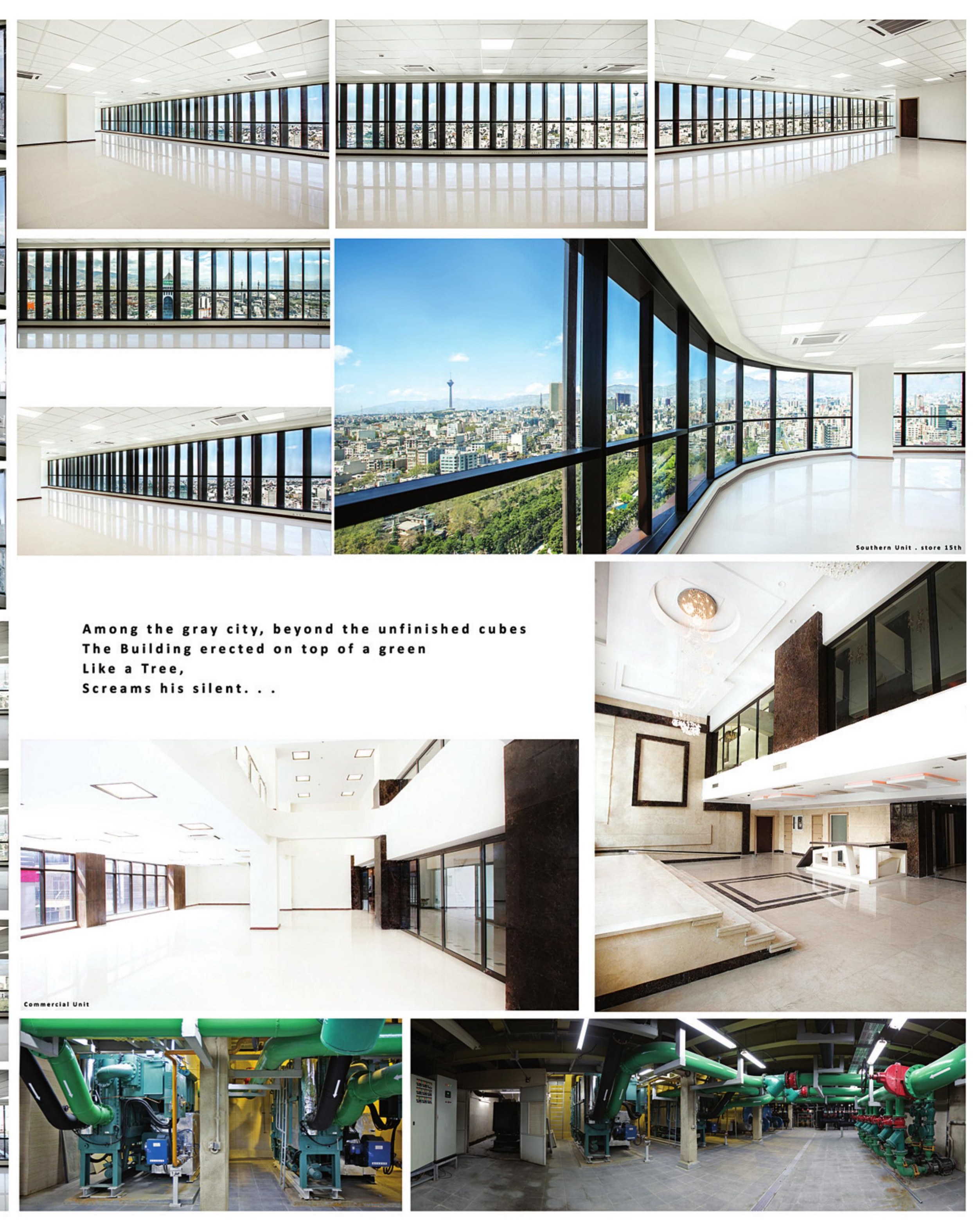
The curvilinear movement in the north and south facades of the tower reflects the urban landscape and maximizes views into the building's interior spaces. The continuity and height of the openings expand the field of vision, and by creating expansive panoramic vistas, they establish a connection between the users and the district.
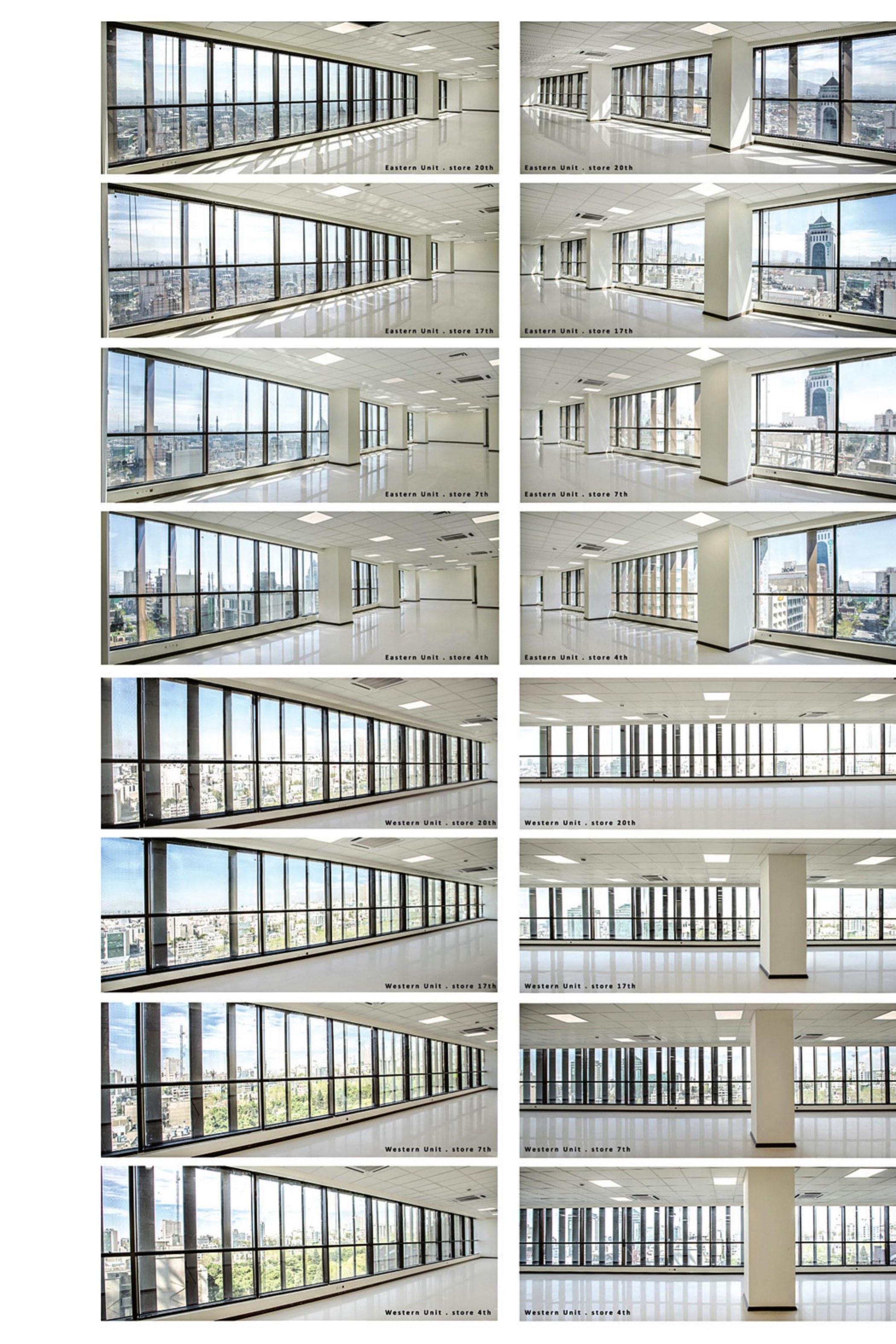
The changing degree of solidity and transparency of the facade, responding to the observer's angle and rhythm of movement around the tower, is one of its defining characteristics. The varying density of vertical louvers causes portions of the tower's transparent skin to appear hidden and revealed at different angles, resulting in a dynamic facade that interacts with the viewer. Moreover, these louvers regulate east and west light within the office units. Owing to the diverse views of the tower from the city, the helipad registers as an urban landmark in the collective memory of citizens.