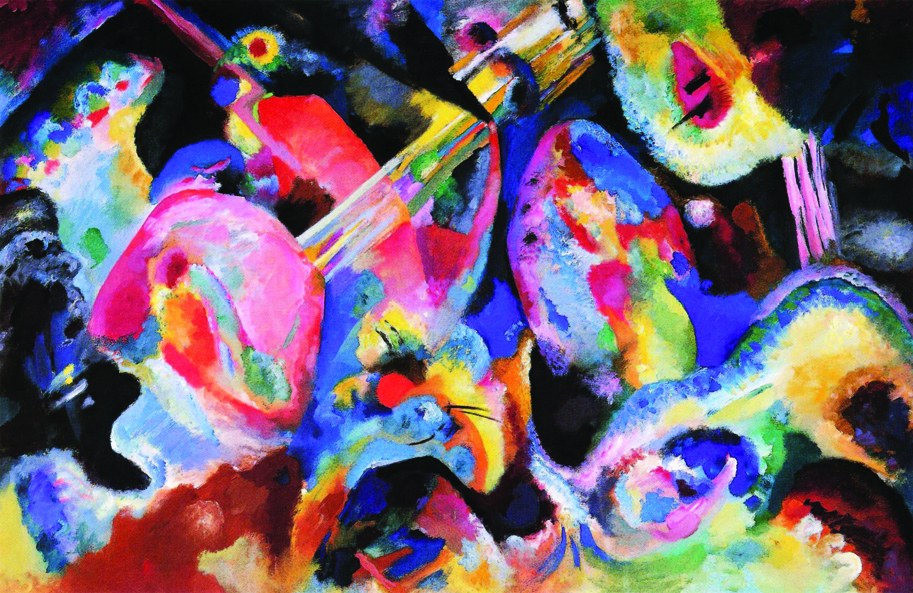
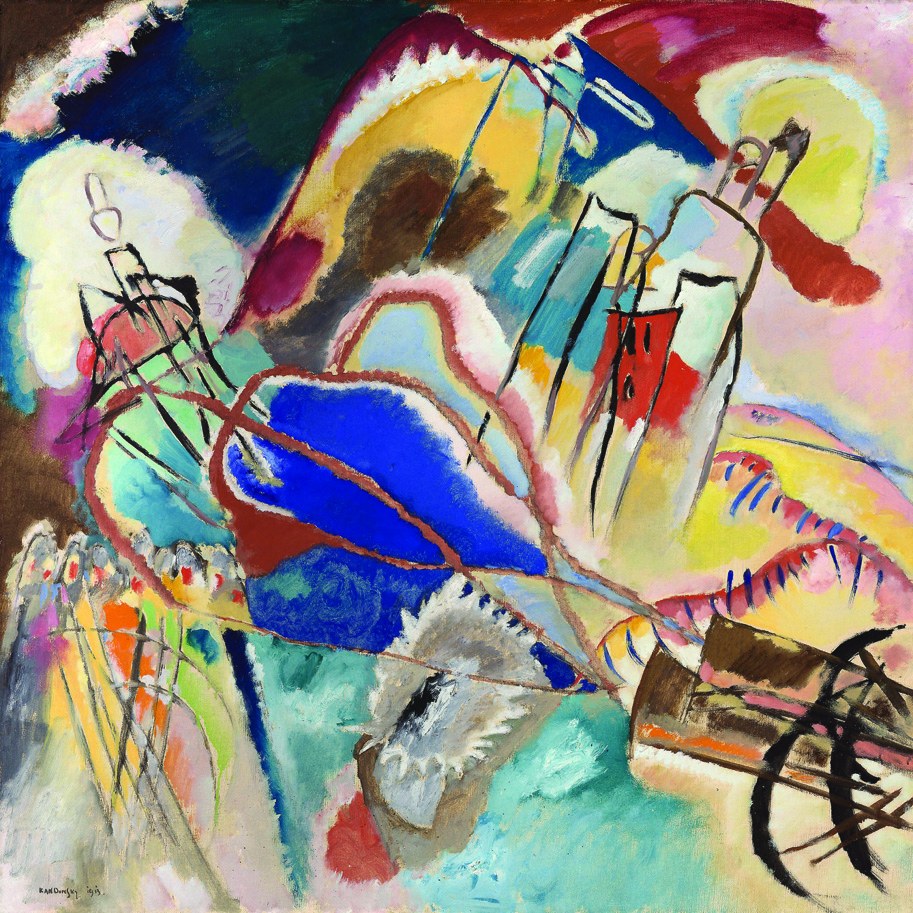
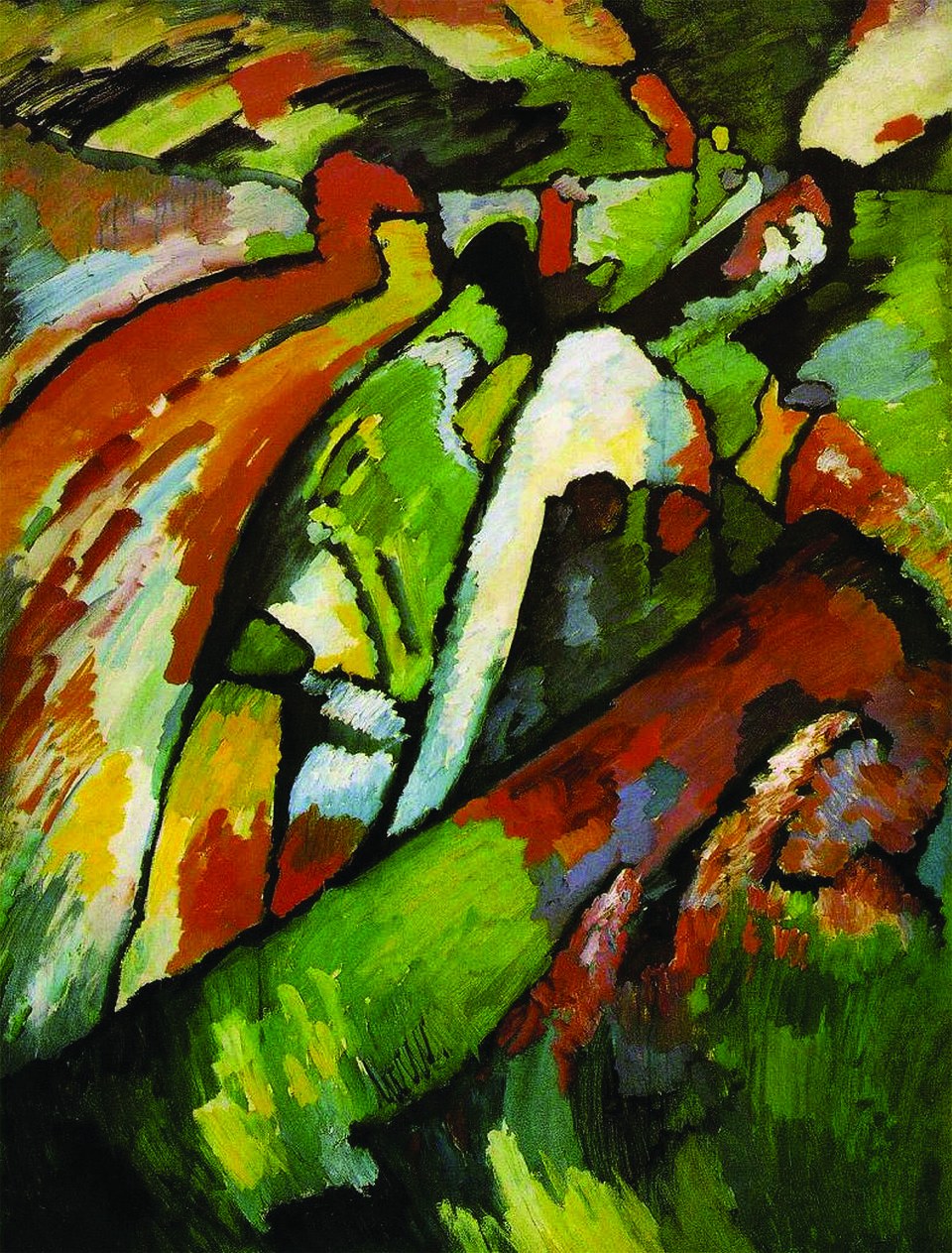
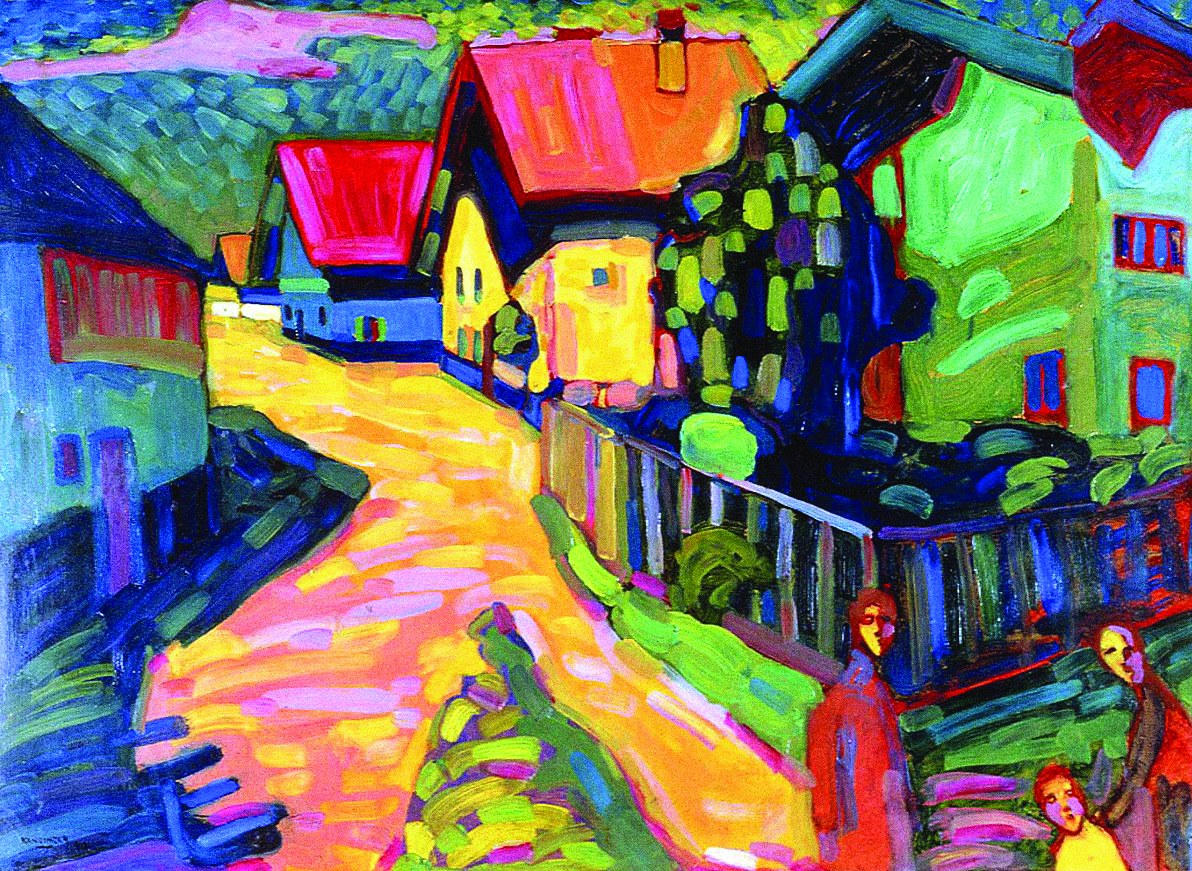
The first entirely abstract paintings have been attributed to Wassily Kandinsky (1866-1944); perhaps the truth of this view cannot be established with certainty, but in his book The Spiritual in Art1, which he wrote in 1910 and published in 1912, Kandinsky had warned plainly that complete abstraction might turn into mere decoration. From 1909 he began a series of canvases called Improvisations (improvisations). Kandinsky, like Whistler, had taken this title from the world of music. The titles of this group of Whistler's works, namely Harmonies, Symphonies and Arrangements2 and the like, point to deliberate design, whereas improvisations are not planned, and Kandinsky wrote that his improvisations "are rather the unconscious and spontaneous expression of the inner character, and have no material nature". Improvisation (30 Cannons), painted in 1913, at first sight seems a meaningless collection of freely painted forms coloured in very brilliant hues. But after a little attention we gradually not only see the cannons at the lower right of the canvas, but also recognise something resembling a number of hills and houses at strange angles, as well as clouds in the sky. According to Kandinsky the cannons may have been related to the question of war, which was the subject of everyone's conversation that year, but the name of this work had been chosen only for convenience and had nothing to do with the meaning of the canvas, which "had been painted more or less half-consciously and in a state of intense inner tension".
Music is the ultimate teacher.
Everything starts from a point.
The more frightening the world becomes... the more abstract art becomes.
Every colour leaves its mysterious life behind it.
The sound of colours is so definite that one could hardly find anyone who would express bright yellow with bass notes, or dark lake with a high tone.
The deeper blue becomes, the more powerfully it calls man towards the infinite, and awakens in him a longing for the pure and, finally, for the supernatural.
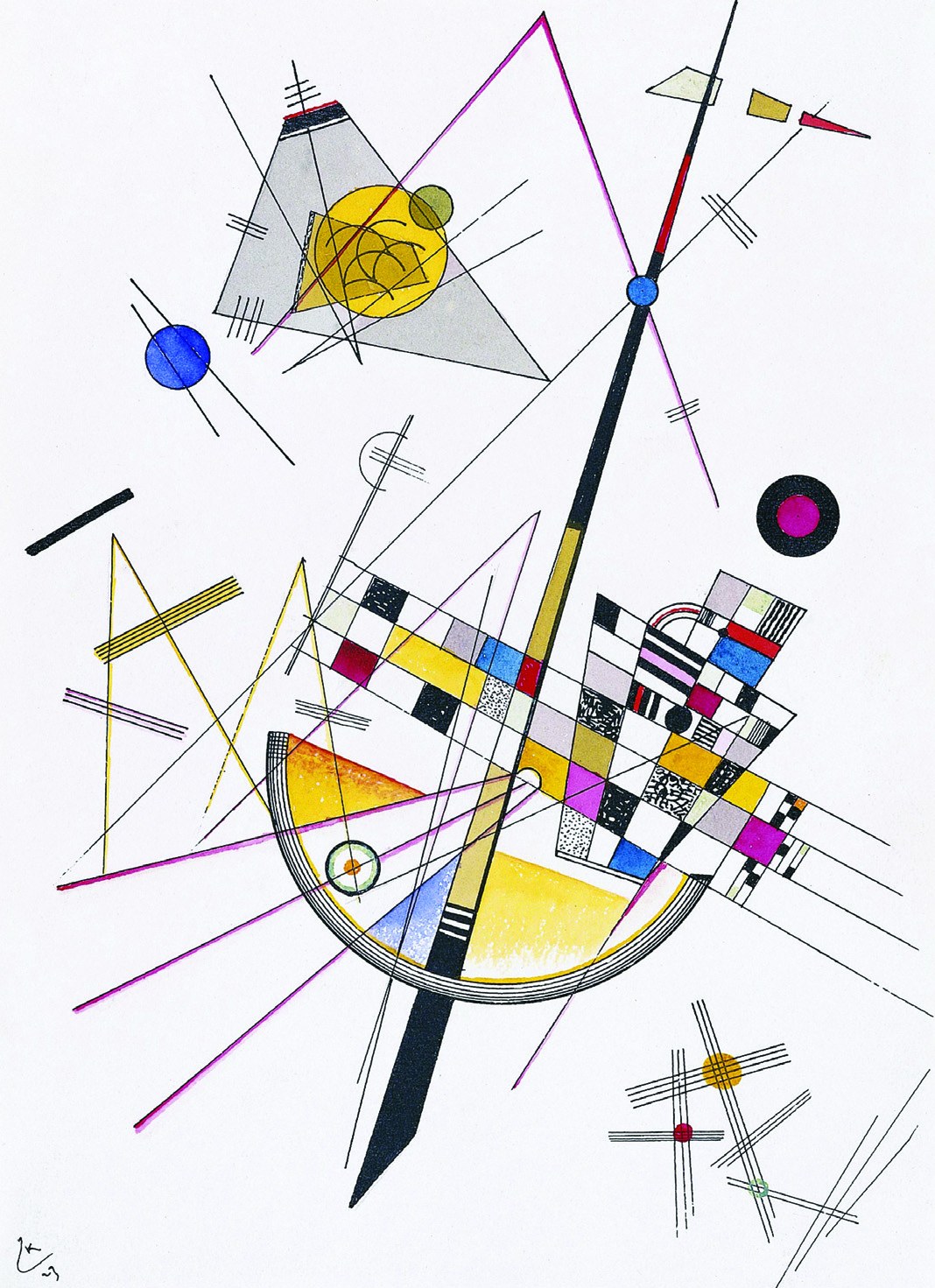
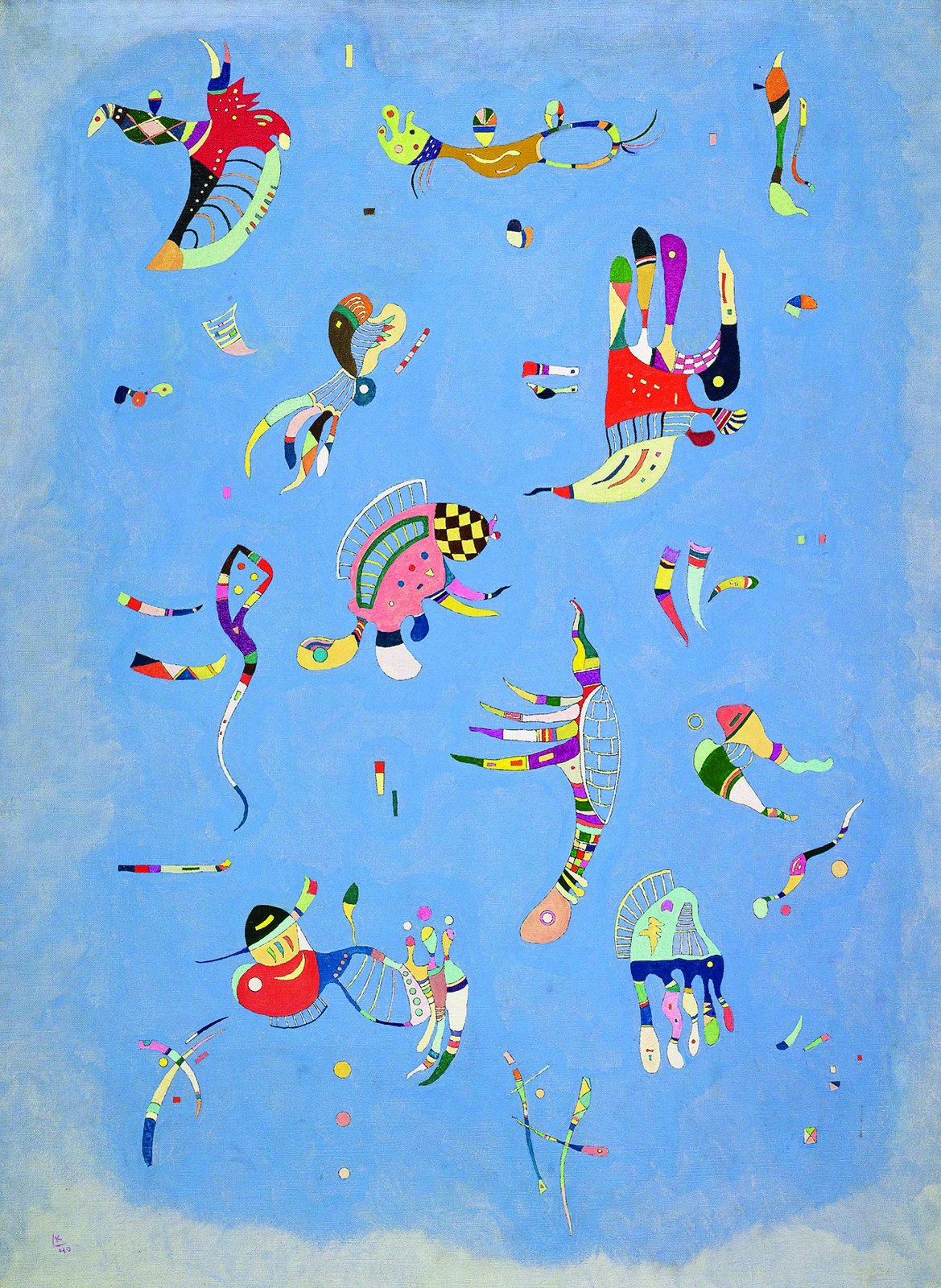
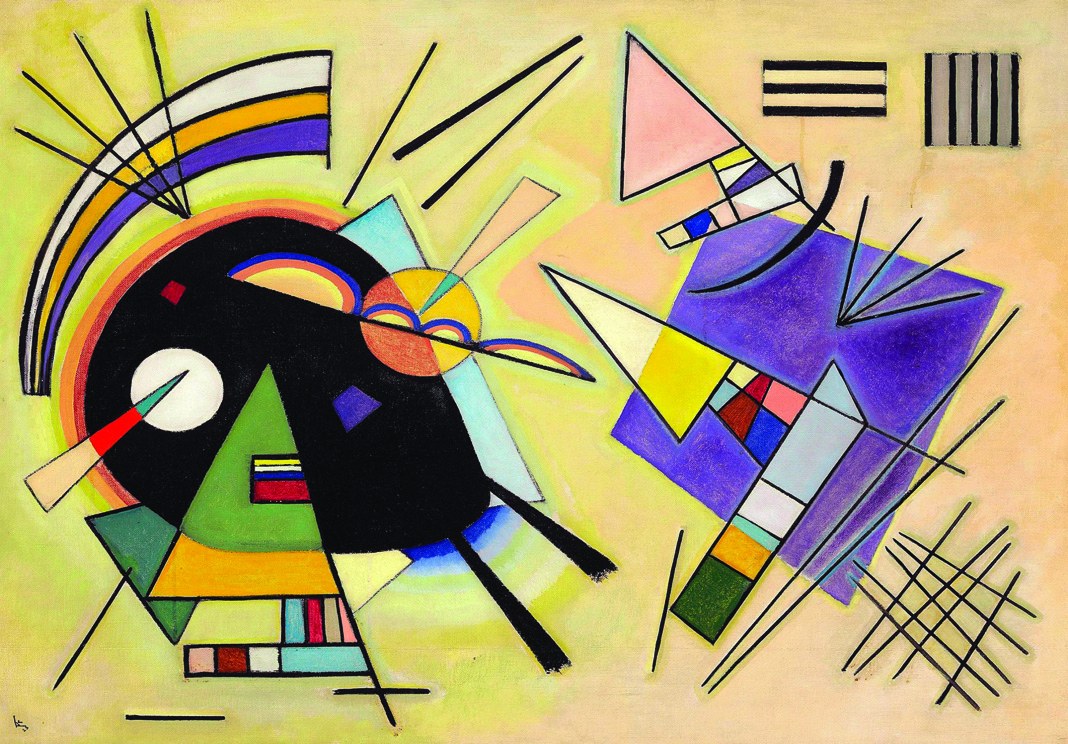
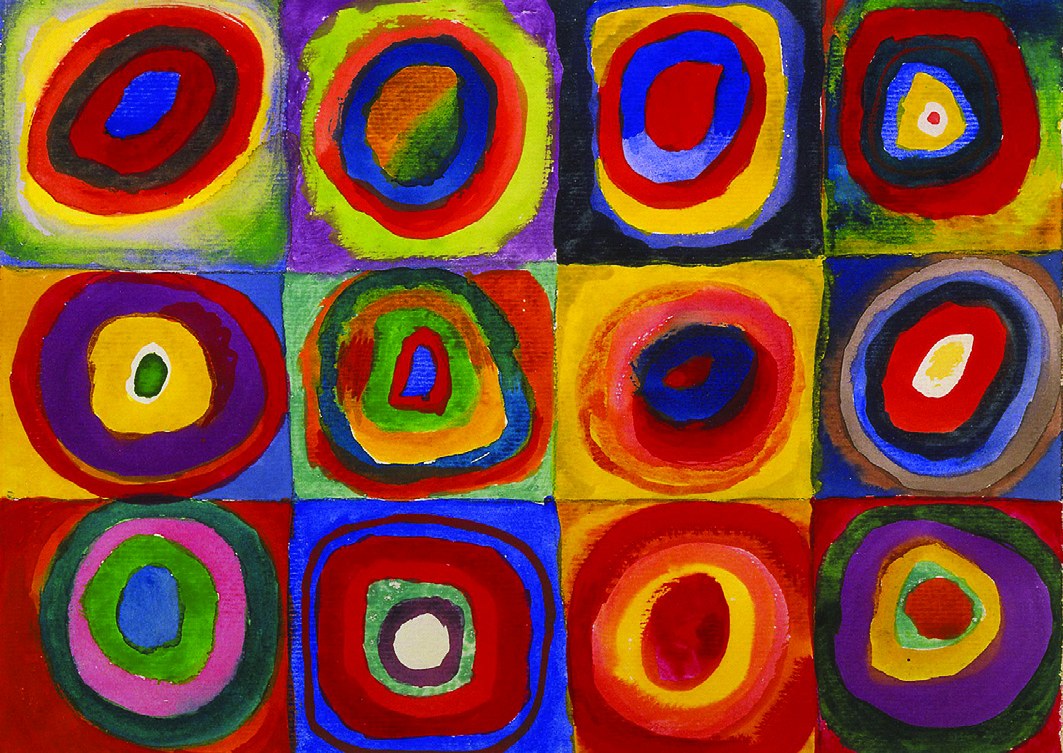
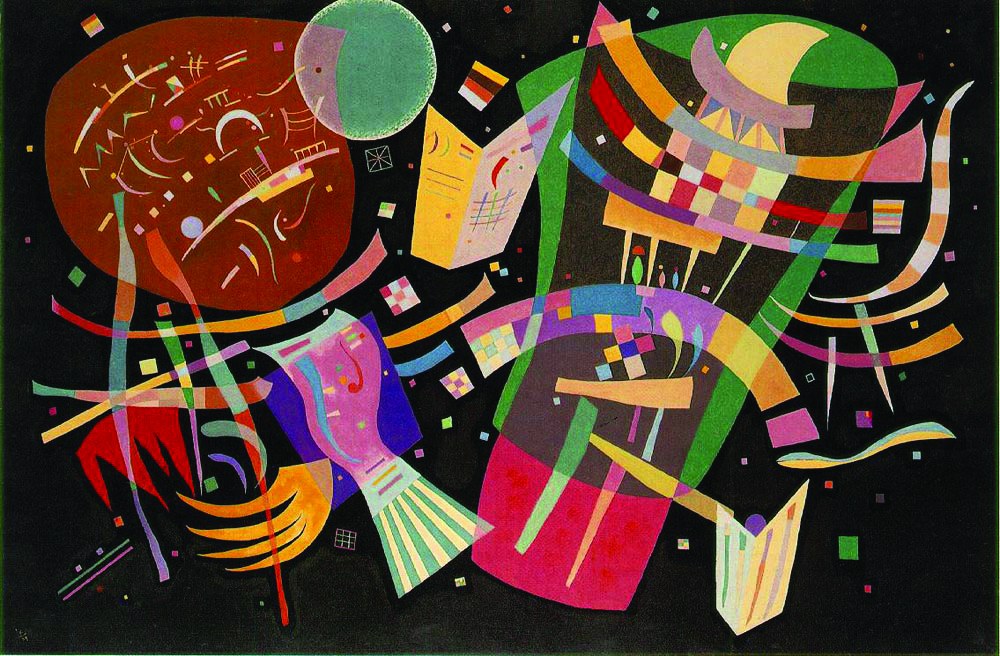
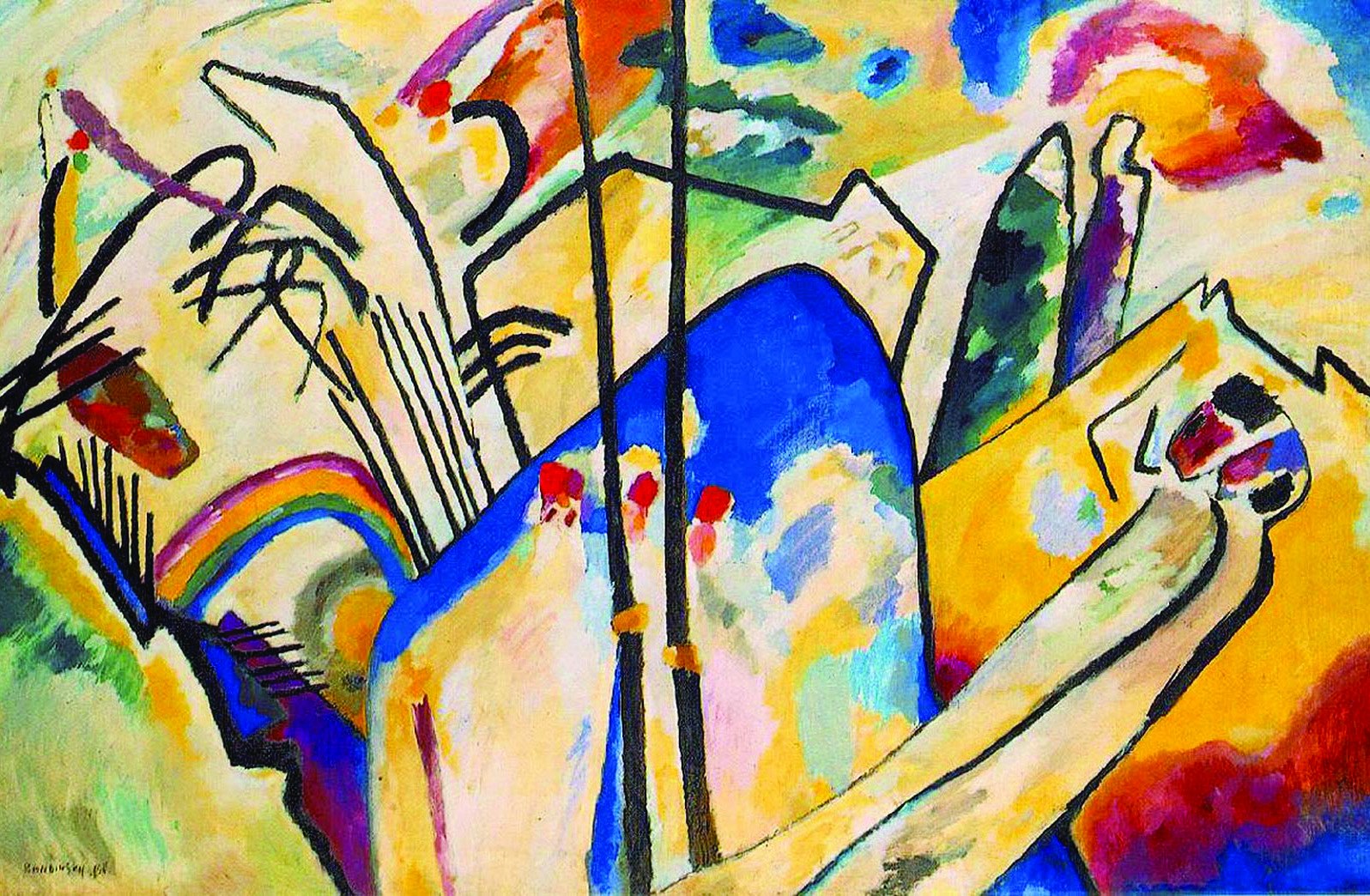
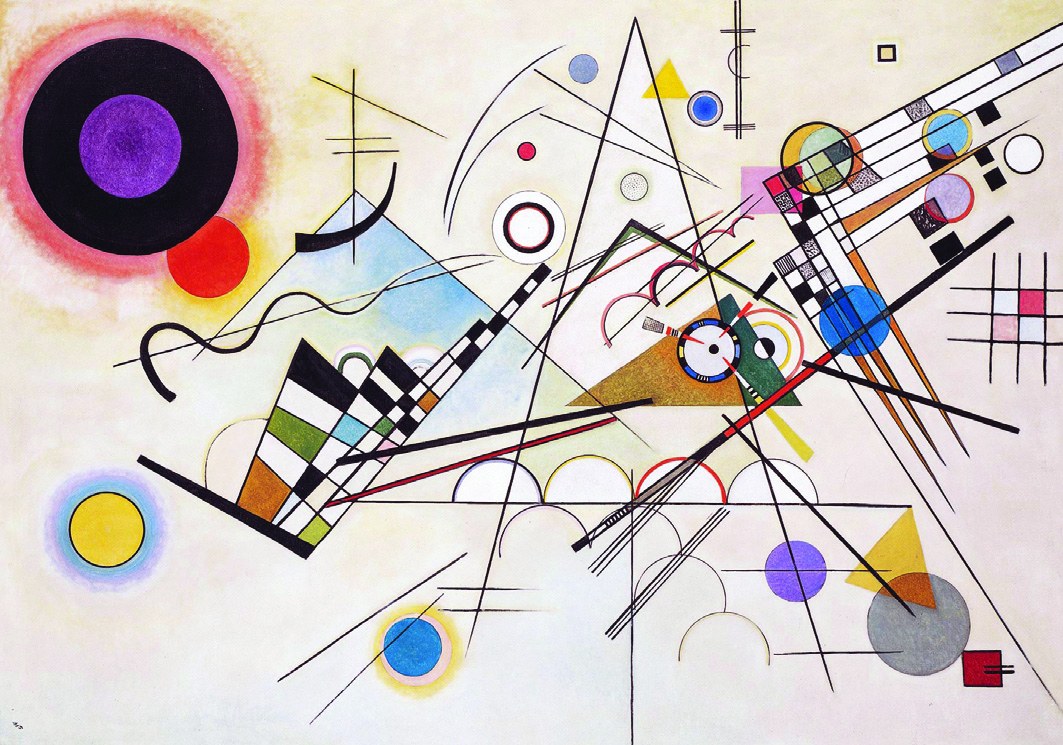
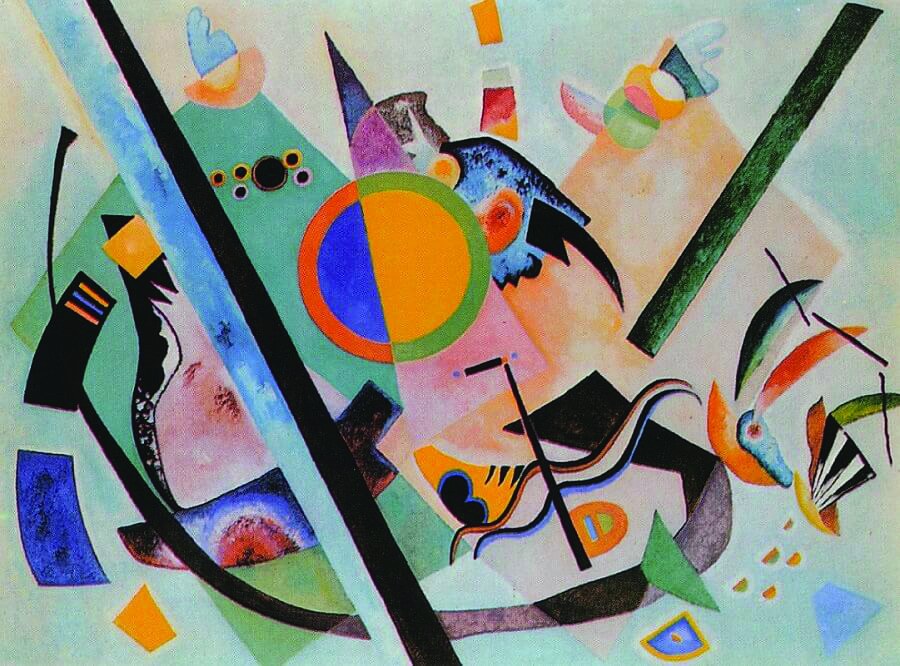
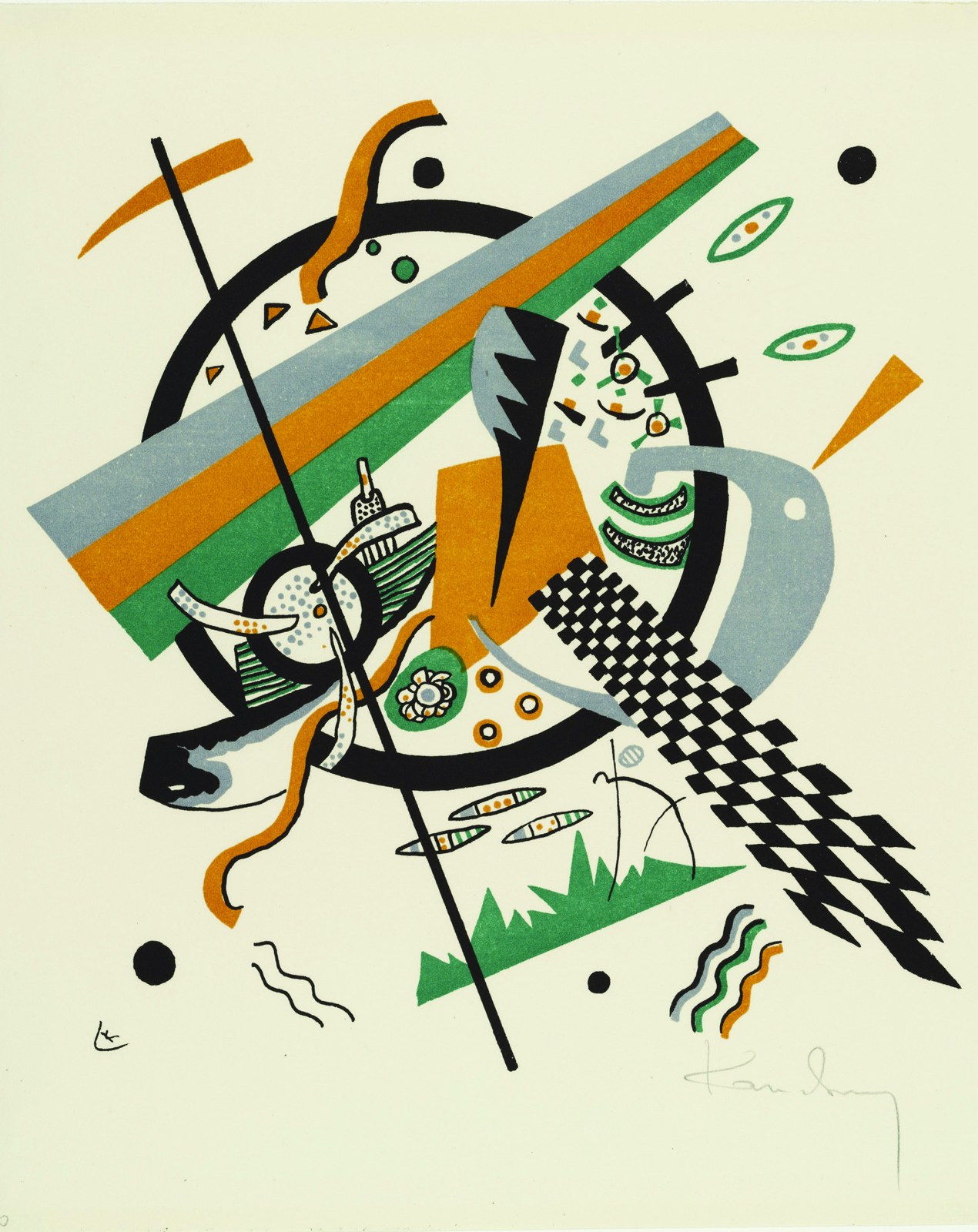
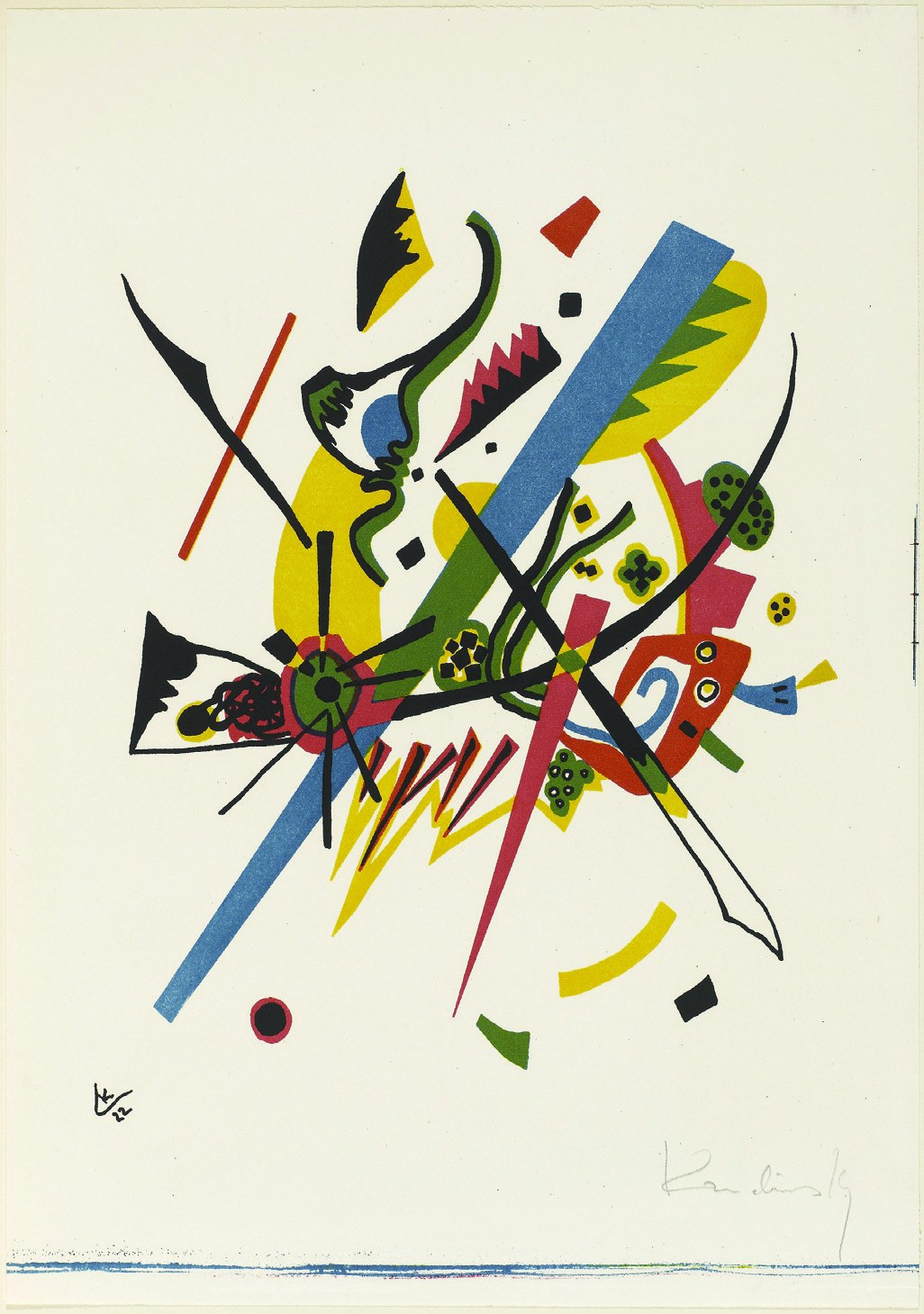
This work was exhibited in London in the very year of its creation, and Roger Fry3, the art critic, set his seal of approval on it as "pure visual music"; Fry too had seen a kind of logic in the seemingly spontaneous contrasts of forms and colours. Kandinsky, with a strange blend of Russian mysticism and illumination, and with the feeling that Impressionism had destroyed objects and atomic research had shattered all matter, like Marc, gave colour an entirely subjective and symbolic meaning, and also put forward a new theory of abstract structural relationships. At a stage in the creation of the Improvisations, perhaps in 1910, he happened to see one of these canvases upside down and, in a state in which none of the elements of the canvas was recognisable, was struck by its beauty. But until 1913 he did not abandon representational art altogether. Kandinsky's abstract paintings, after his return home in 1914 and his acquaintance with the Constructivist movement (Constructivism), whose members had reached abstraction by another route, gradually acquired new dimensions. Kandinsky painted the canvas Composition 238: Multicoloured Circle just before his return to Germany in 1921; the straight lines and geometric shapes of this work show the influence on him of Kasimir Malevich4 and El Lissitzky5, two artists of his own country, but the passion and excitement that created the freely associative forms came from Kandinsky himself. The painting seems to represent a kind of celestial explosion, and so the viewer, instead of facing the picture of a world with a familiar and stable force of gravity, finds himself floating in "cosmic" space. In 1922 and 1923 Kandinsky taught at the Bauhaus6, an experimental art school in Weimar7 that came into being after the First World War through the merger of the academy of fine arts and the school of applied arts or crafts, and in which art and design were taught in a new way, a way that immediately influenced methods of teaching art, the design of commercial products and graphic design throughout the world. From 1933 to the end of his life Kandinsky lived in Neuilly-sur-Seine8 on the outskirts of Paris. The true heirs of his creative art, that is, of forms set aflame by the surge of emotion, are the artists who founded the Abstract Expressionist movement in America after the Second World War.
To create a work of art is to create a world.
There is no must in art, because art is free.
Painting is a thunderous collision of different worlds, intended to create a new world in the womb of, and in the conflict between, these worlds, a new world which is the work of art.
Colour provokes a psychic vibration. Colour hides a power that is still unknown but real, which acts on every part of the human body.
Notes:
1- The Spiritual in art
2- arrangements
3- Roger Fry
4- Kasimir Malevich
5- El Lissitzky
6- Bauhaus
7- Weimar
8- Neuilly-Sur-Seine
Sources:
- Source of the text: Frederick Hartt, Thirty-Two Thousand Years of Art History: Painting, Sculpture, Architecture, translated by Mousa Akrami et al., edited by Hormoz Riahi, Tehran, Peykan Publishing, 1382 SH.
- Official Kandinsky website, www.wassilykandinsky.net