Understanding Architecture, Robert McCarter, Juhani Pallasmaa.
The Woodland Cemetery at Enskede, in the southern suburbs of Stockholm, consists of buildings designed by Lewerentz and Asplund, who set them within a landscape they designed together. Although the buildings house the formal rituals associated with the cemetery, they are set within a carefully crafted landscape. It is this sacred ground that gives the cemetery its tangible presence as a place of memory and a realm of silence.
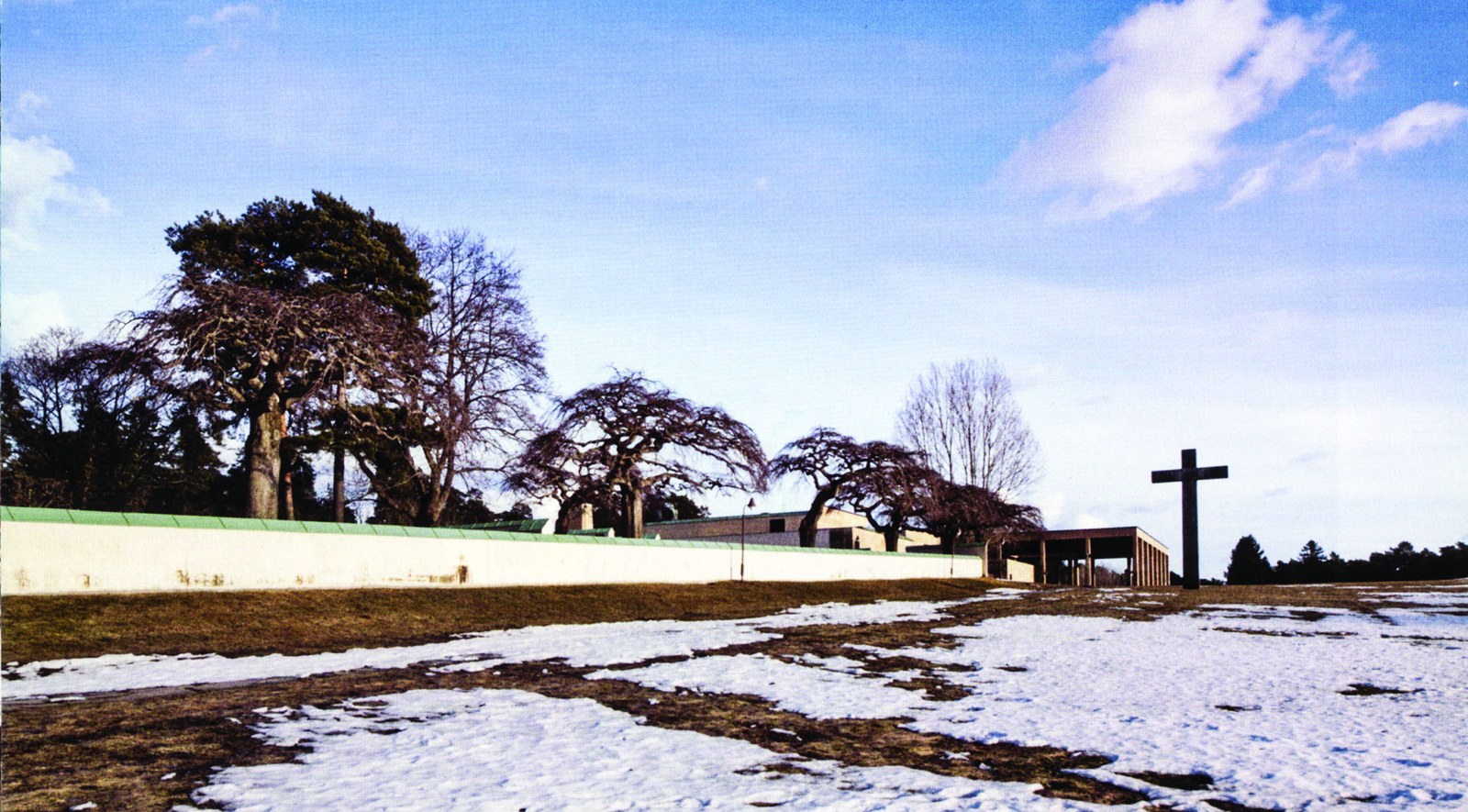
We enter the cemetery by passing through a semicircular forecourt and walk along a wide passage, both enclosed by rough stone walls. In the wall on the left, four stone columns stand in front of the wall holding a flat lintel, together with a curved recessed space carved out of the back wall that contains a fountain whose water drips down the back wall and stains the stone. On reaching the edge of the cemetery, we see a low plaster wall with a metal coping that rises gently from the slope on the left and leads towards a large, open colonnaded portico beside which stands a large cross. On the right, the steep wooded slope of the hill has an angled wall with a granite base, and further on, at some distance, several steps lead to the "Hill of Remembrance".
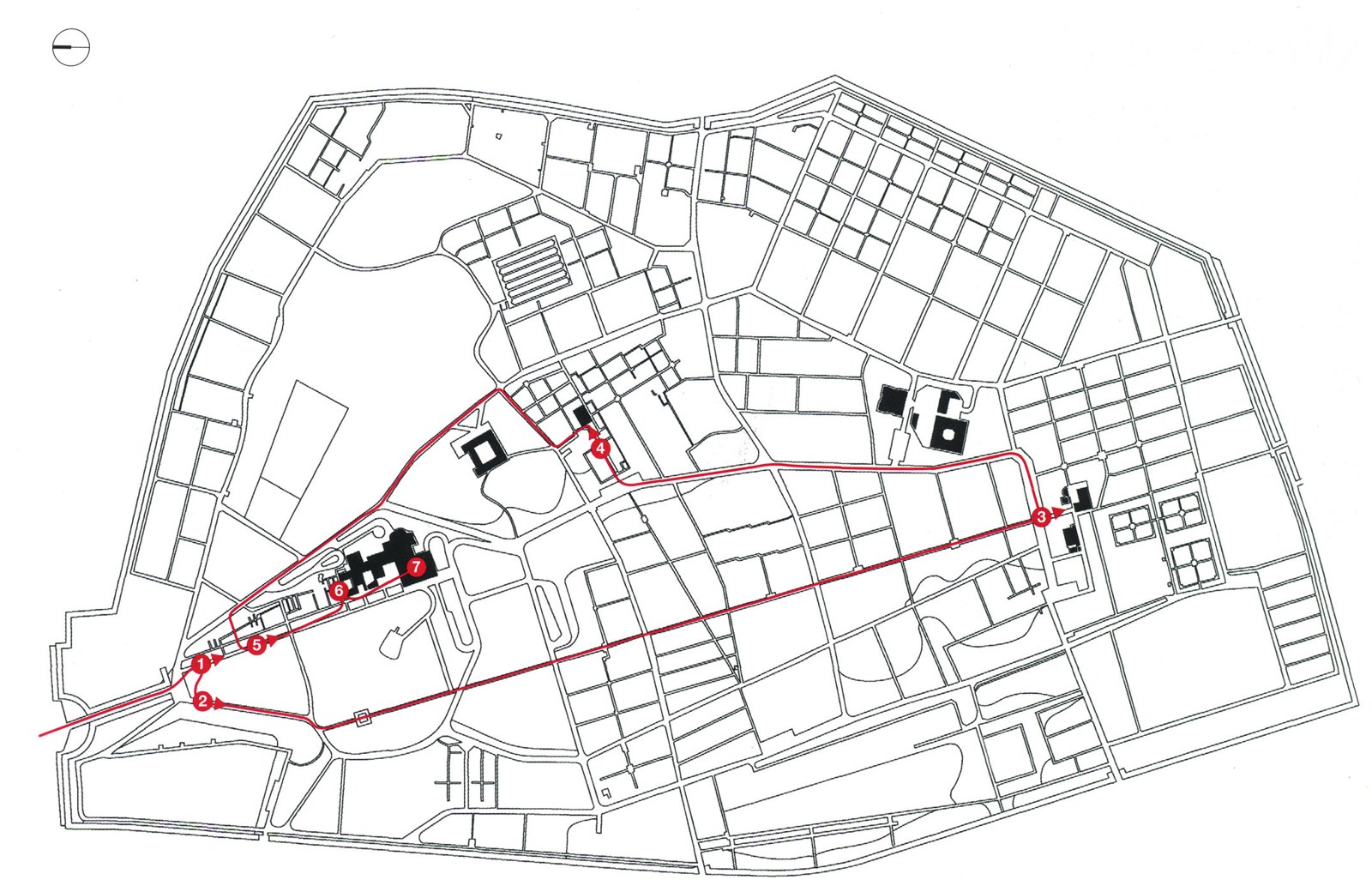
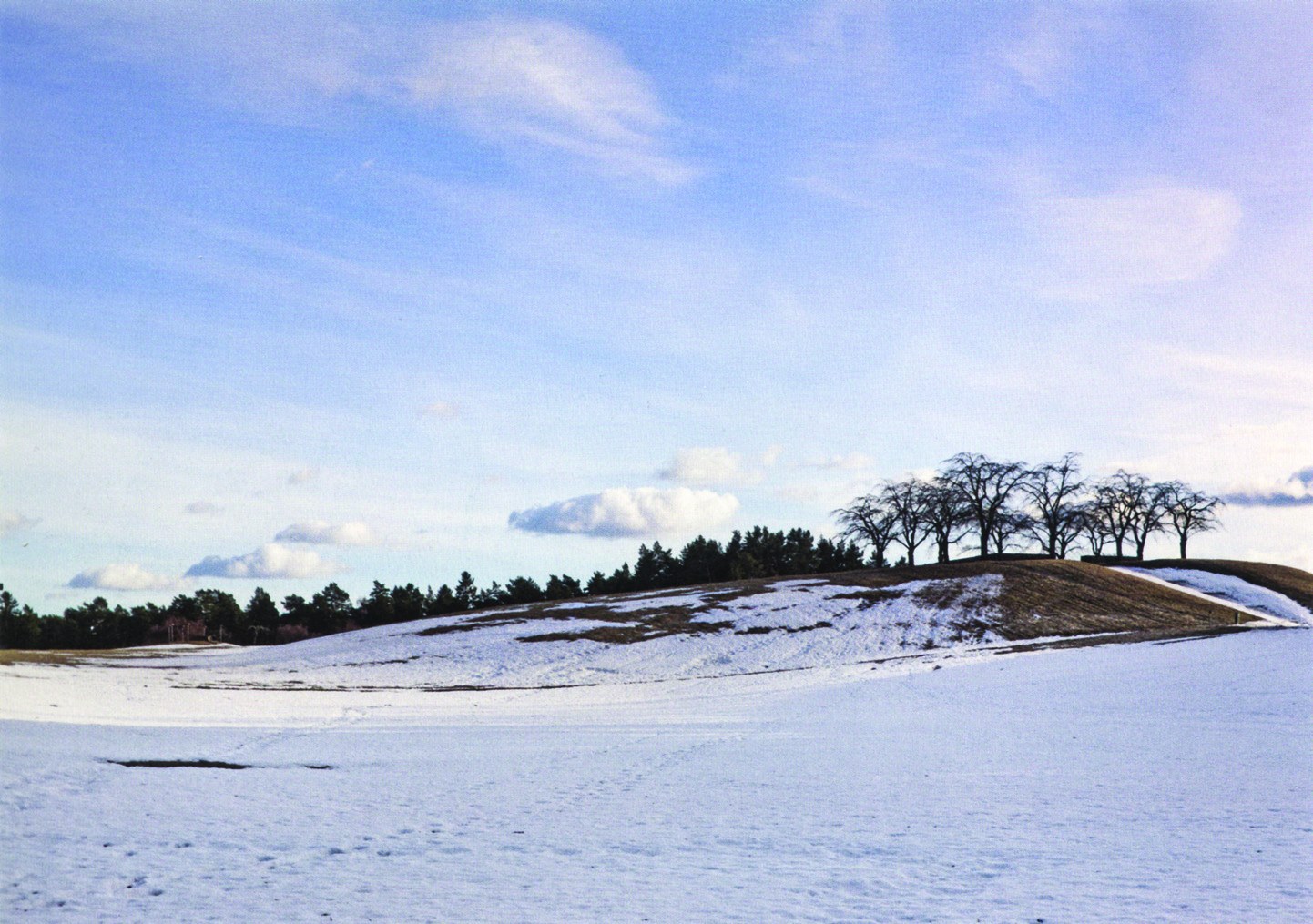
We are first drawn towards this grass-covered hill, the highest point of the landscape, crowned by a grove of trees. We climb slowly up the flights of twelve wide steps, separated by narrow landings, which are steeper at first and, as we approach the summit, gradually become shallower and easier to climb. When we reach the ring of elm trees called the "Grove of Meditation", we discover that the top of the hill is enclosed by a low rectangular wall capped with flowering plants, is paved with square stone slabs and has a well at its centre. From the seats here we can look around, at the crematorium and the chapels, and at the cemetery forest to the east and south.
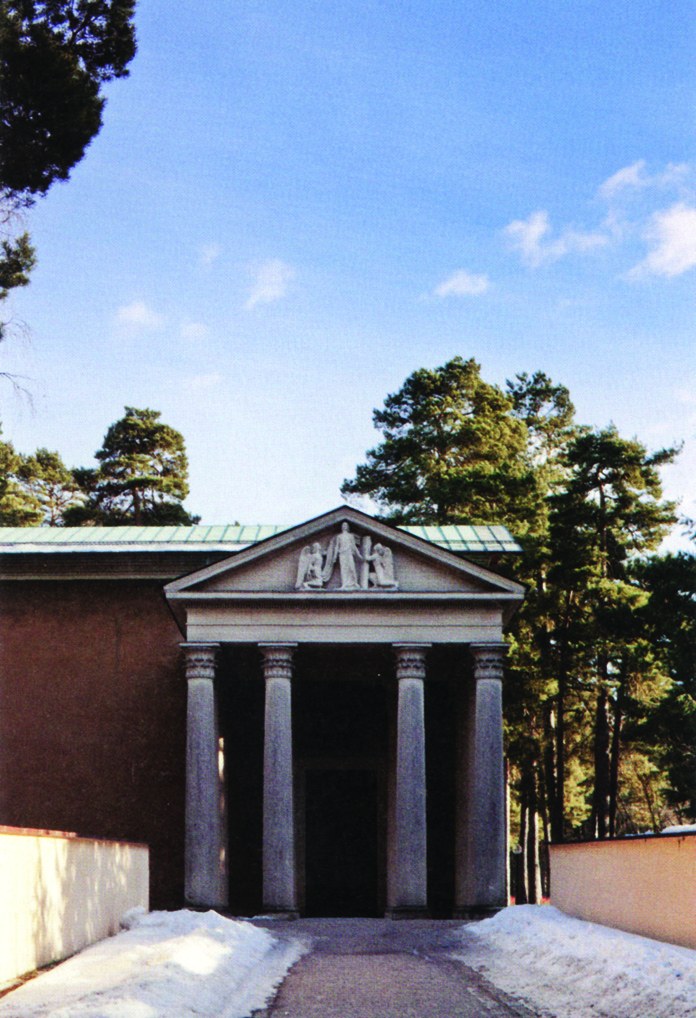
Behind the "Grove of Meditation" the stair goes down again and we enter the forest, walking slowly south along the "Way of the Seven Wells", while the burial grounds spread out to the left and right, each space with a well at its centre from which we can draw water for the flowers we lay on the graves. A narrow strip of sky, as wide as the path on which we walk, is framed overhead by the tall trees on both sides. At the end of this narrow way, we step into the forecourt of the "Resurrection Chapel" with its plaster walls. We then enter the shade of a freestanding stone-paved portico with twelve columns, set at the right edge of the main plaster-walled volume of the chapel. Inside the chapel, its narrow, tall and elongated rectangular volume is enclosed by smooth white walls and a dark flat ceiling. The coffin rests on a low platform at the centre of the room and the mourners sit facing each other, while the platform is brightly lit by the southern light, which pours in through a large, deep, projecting three-part window that seems to push the light inside.
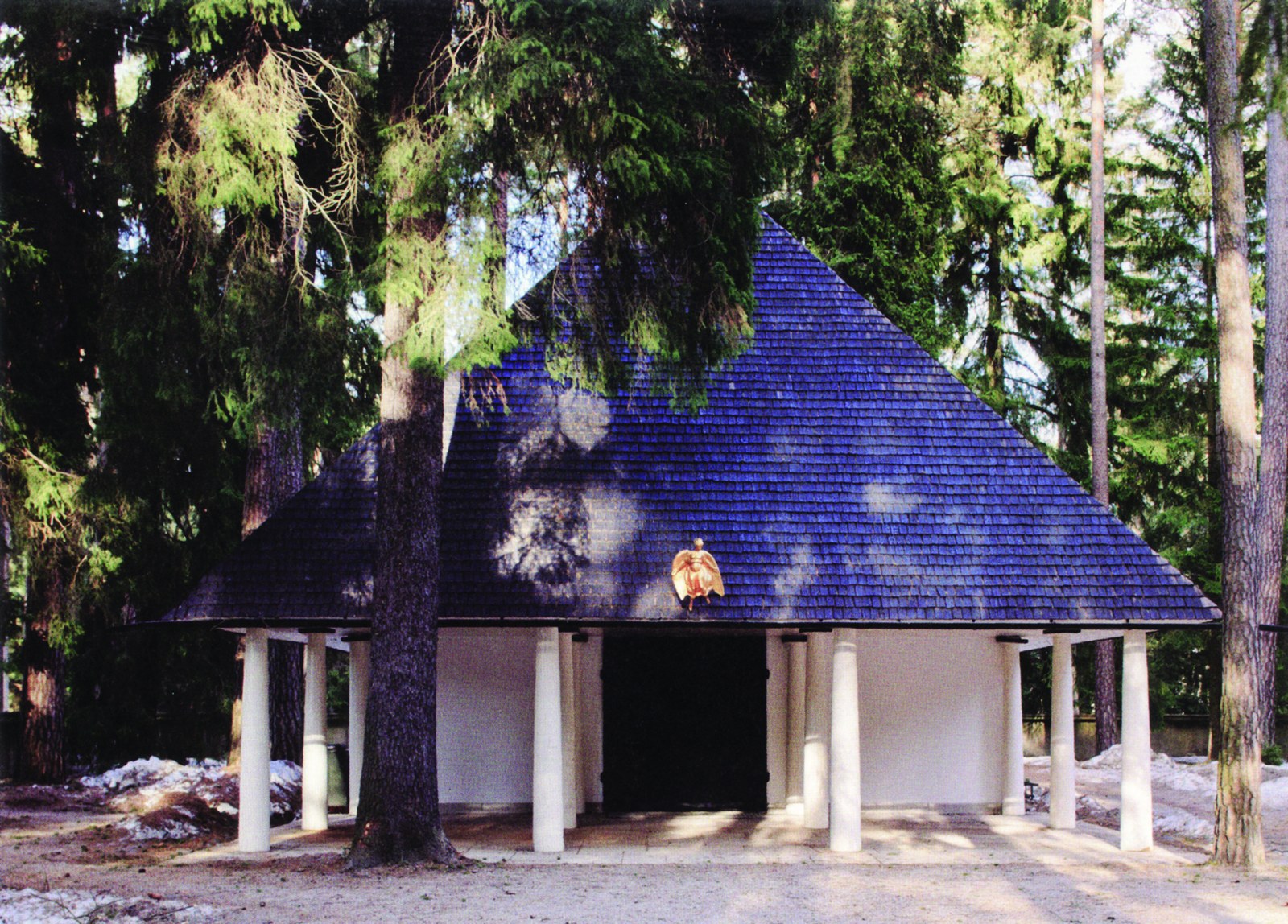
Returning through the forest, we enter the enclosure in which the "Woodland Chapel" stands. Following the gravel path through the forest, we reach the chapel: a pyramidal roof of wooden shingles above twelve plain white wooden columns. On the left, a narrow way goes down to the mortuary, which has a roof covered with grass and earth; on the right, a stair leads down to the sunken children's cemetery, and we become keenly aware of the space occupied below ground level, the realm of eternal silence. Stepping onto the stone-paved floor, we pass under the low, smooth white plaster ceiling of the portico and enter the chapel. We pause and look up; within the low ceiling of the doorway, a hemispherical dome opens overhead, its surface of smooth white plaster, with a glass skylight at the top. The rim of the dome rests on eight fluted columns standing on a raised circular base that, like the floor, is stone-paved. At the centre of the floor, the coffin platform is the focal point of the space, lit by a heavenly light from the skylight above.
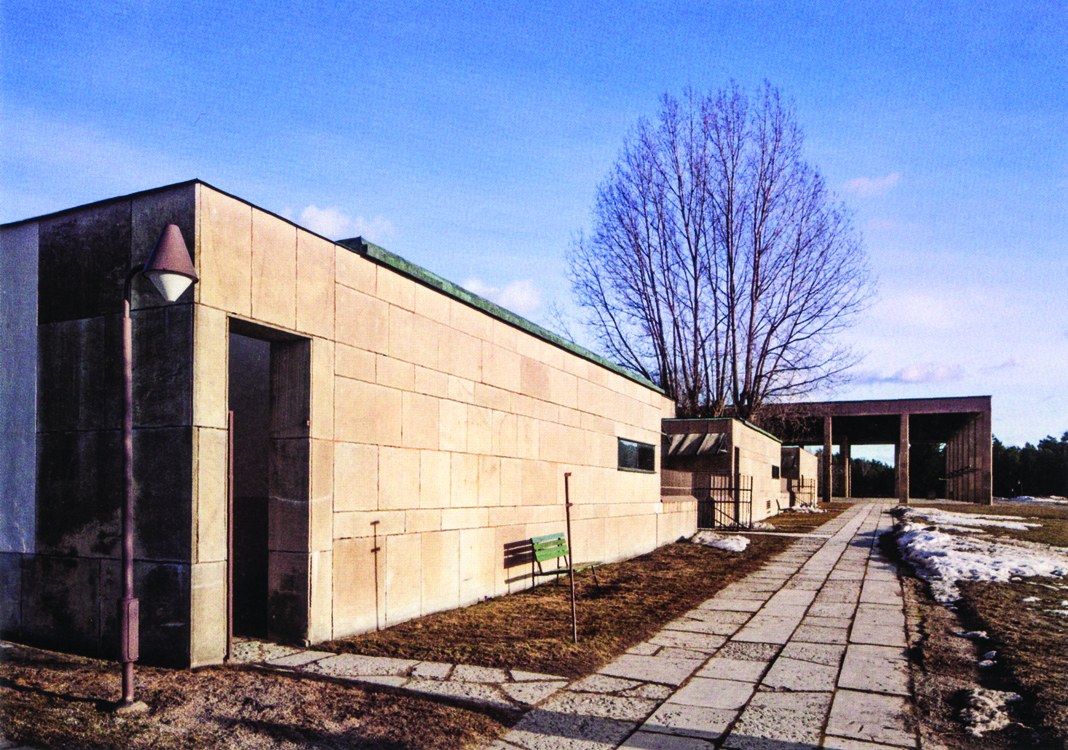
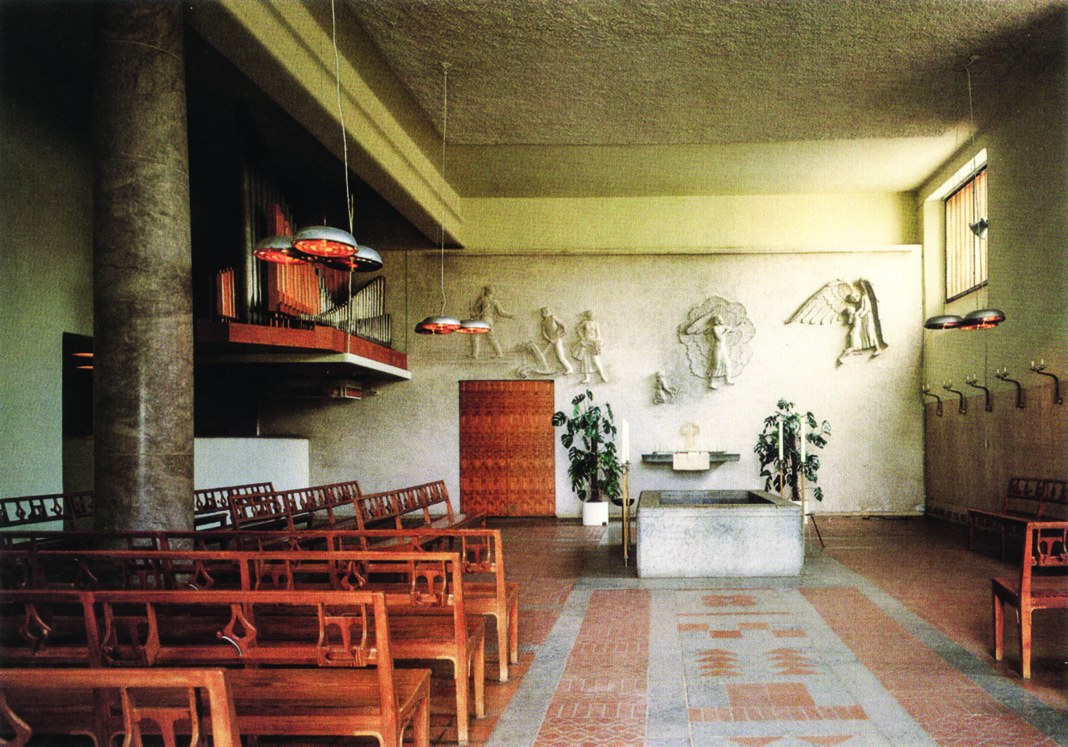
Returning to the cemetery entrance, we slowly climb the stone-paved "Way of the Cross" and enter the recessed entrance courtyards of the stone-clad chapels of "Faith" and "Hope". These rectangular sacred places, with a single monolithic stone column on the left, are lit by tall windows on the right; and their floors, on which our sorrowful eyes naturally fall during the funeral service, are patterned with veins of granite tile and terracotta. At the side of each chapel there is a waiting room for the family; a space with white plaster walls, two sides of which have a plywood lining that extends to form a long seat along the back wall, facing a large window with a view of a small enclosed garden.
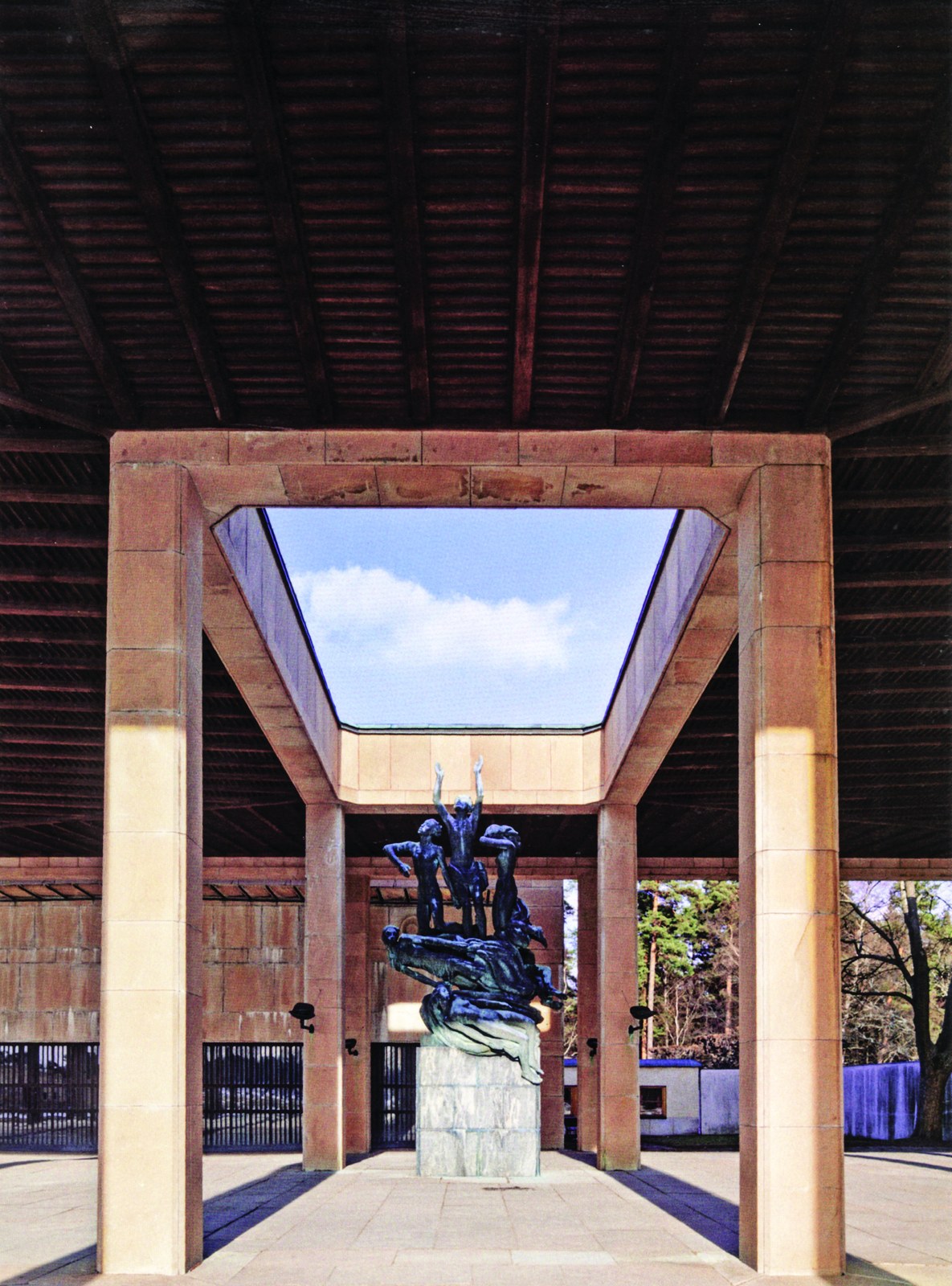
At the end of the walkway, we reach the portico of the "Monument Hall", in front of which a small pond reflects the sky above. Stepping onto its stone-paved floor, we see that this freestanding structure stands apart from the west-facing facade of the "Chapel of the Holy Cross", whose stone-clad wall is flooded with light. The entrance of the chapel is a full-width glass wall framed with closely spaced vertical metal bars, which gradually sinks and disappears into the ground. Inside the building, the outer walls are gently rounded at the eastern end, and eight columns frame the central space where the coffin rests. At the end of the funeral service, the coffin slowly descends into the floor and passes, through a wall lit by a row of circular skylights above, into the crematory furnace. As the service continues, we go to the portico, where four columns at its centre surround an opening through which rainwater pours into a basin towards which the wooden roof gently slopes. Circular light fittings, like cup-shaped leaves, project from the outer columns and cast their light onto the roof. In this open space of the portico, we feel that we are standing at the centre of the cemetery. And yet, at the same time, the stone-paved path, the reflecting pond, the forest graves, and above all the hill and the contemplative grove clearly make the realm of silence the focus of our experience of this place.