Contemporary Architecture

Worker's (Temporary) House, Shiraz

Farshid Roozitalab, Mohammad Hasan Tajik·Photos: Farshid Roozitalab, Mohammad Hasan Tajik·Memar 142 — 23rd Memar Award
Worker's (Temporary) House, Shiraz

The worker's house is neither an ideal place, nor an occasional building, nor an effort toward standardization. It is not precise in its finishing, and has essentially abandoned the fastidious eye and the desire for fine craftsmanship. It is an emergency encounter with the formation of space that sets to work with its own method and aesthetics.

Our principal concern is to point toward unconventional typologies and propose fresh thematic categorizations within the field of contemporary architecture. Another concern is that this work, through its exercises, simultaneously opens a window for establishing ethical considerations between employer and worker, and by emphasizing the importance of living conditions for the inhabitants of a project under construction, transforms its formation into a conscious decision.

In strategy, by avoiding a negative approach to subjects such as small scale and temporariness, or even the subject of "being a worker" itself, it enters into negotiation with the project's stakeholders.

The worker's house is not merely a building — it is a purposeful encounter with everyday matters and a message to remember things that are constantly before our eyes yet perpetually being forgotten.
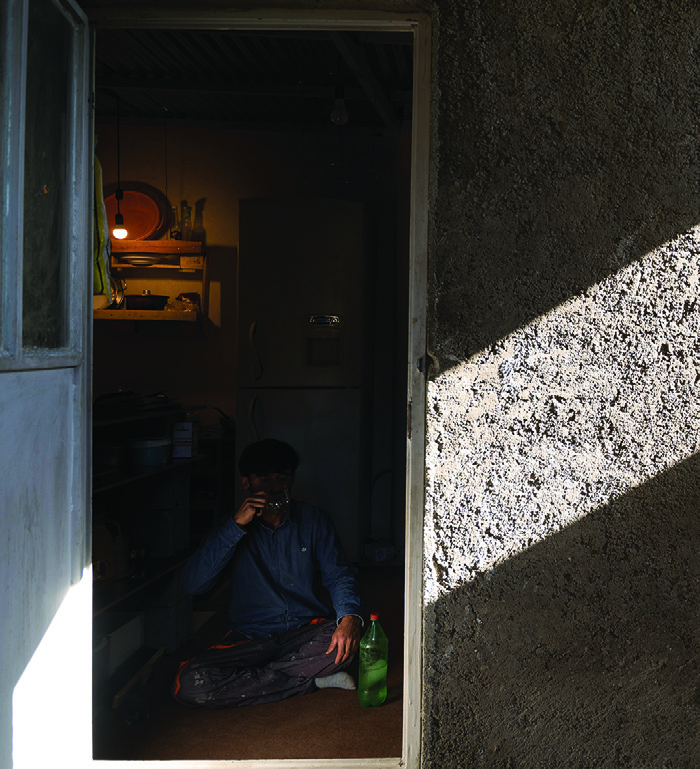
A construction worker sitting in the doorway of the temporary house, drinking tea in a shaft of sunlight, with the dimly lit interior behind showing a small kitchen shelf and refrigerator
A worker taking a tea break in the doorway — sunlight falling across the threshold between outside and the modest interior
◆ ◆ ◆
The Spaces

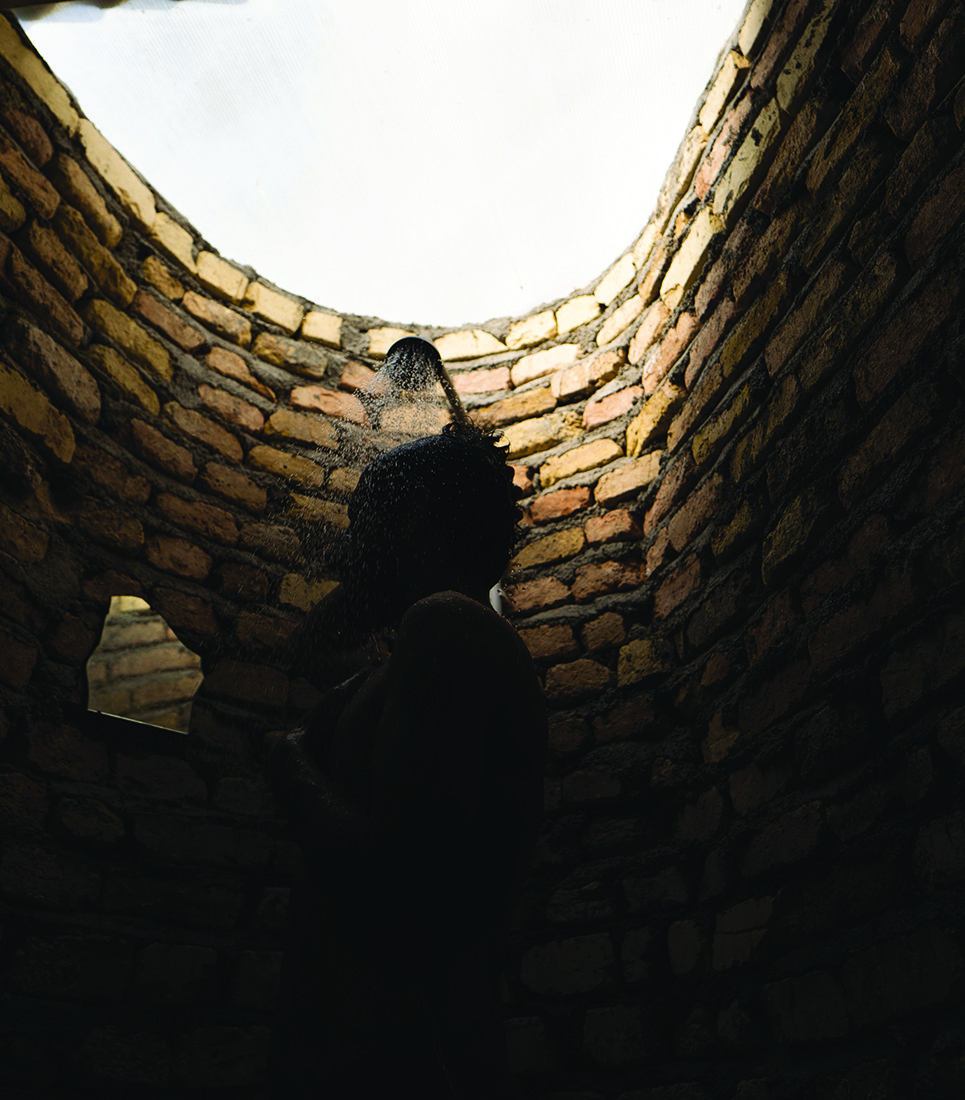
Bathroom and Sanitary Facilities. The form of this section derives from the intersection of two angular shapes and one curve, where the curved portion is a derivative of the body's movement lines within the bathing space. In the shower area, we designed the ceiling to be semi-transparent.
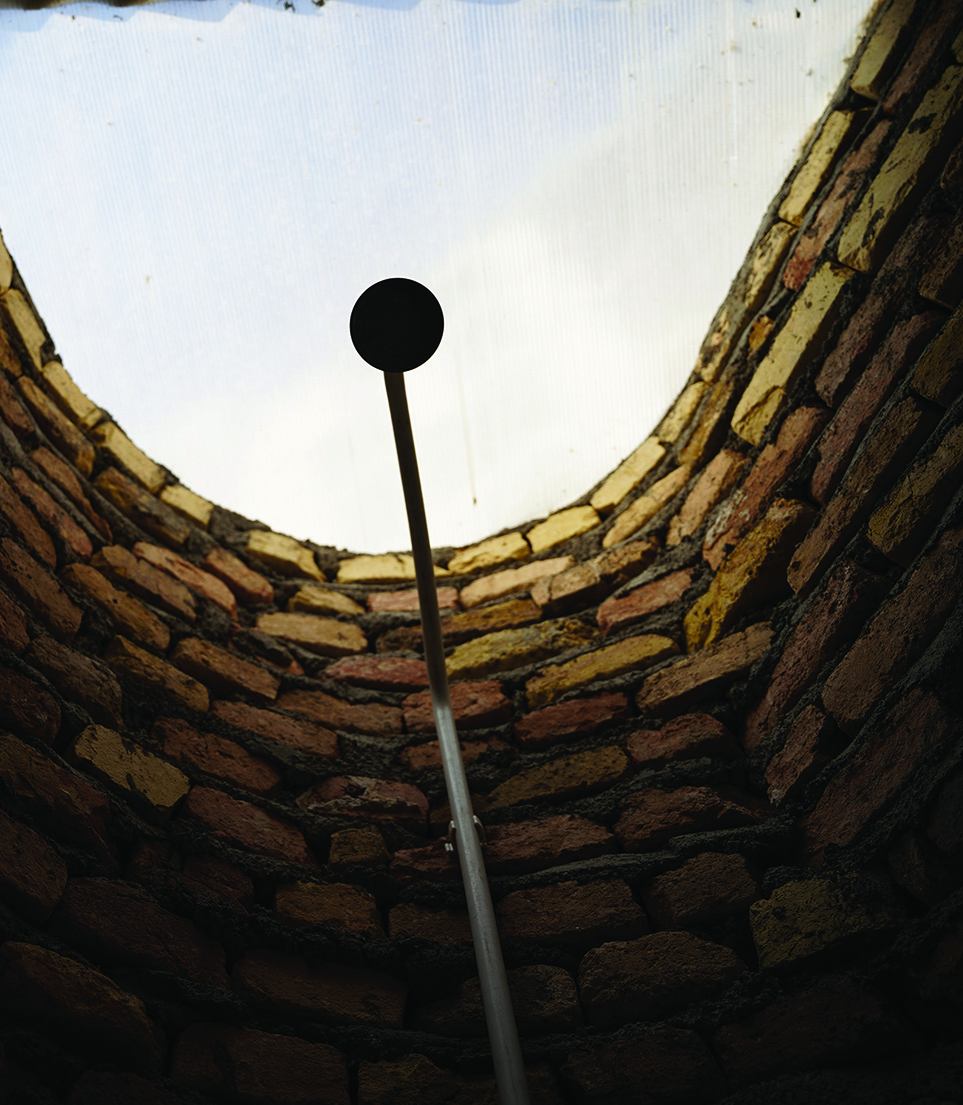
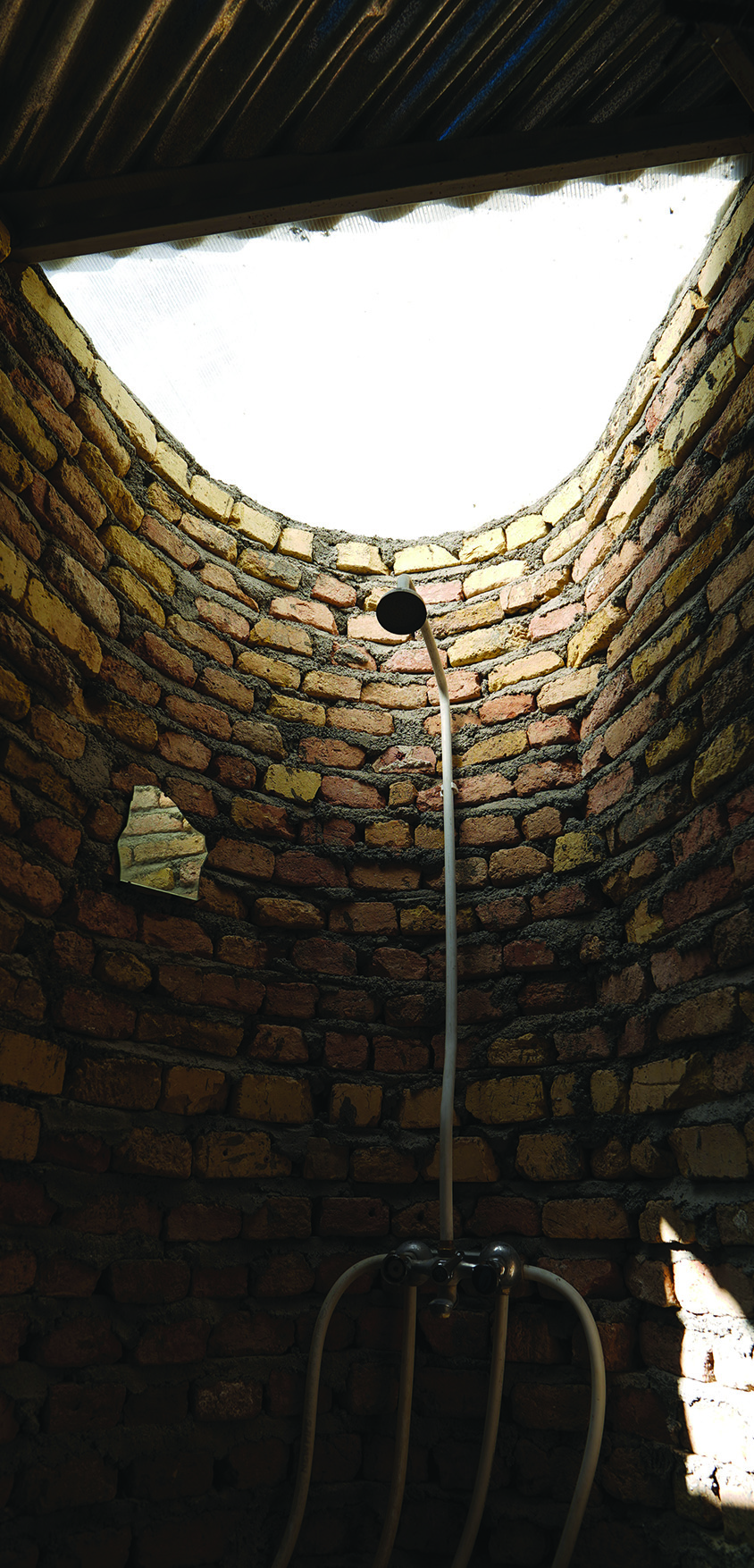
Interior of the curved brick bathroom with arched ceiling and a small skylight
The curved bathroom — brick walls following body movement lines
Inside the bathroom showing the semi-transparent skylight illuminating the curved brick interior
Semi-transparent skylight in the shower area
A worker showering in the curved brick bathroom, light streaming through the semi-transparent ceiling
A worker showering — light streaming through the translucent ceiling of the curved bathroom

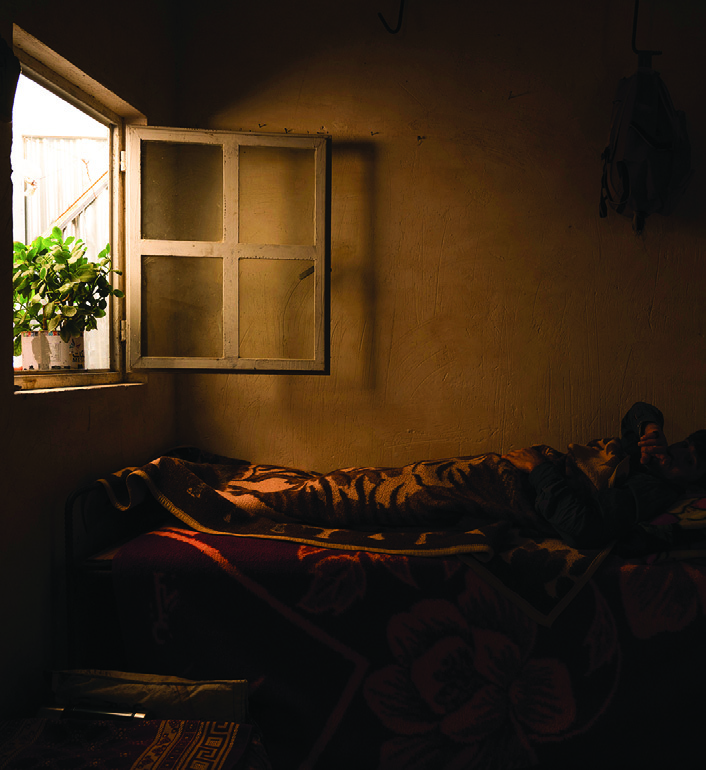
Bedroom and Kitchen. In this section, a recess in the corner of the room accommodates the necessary cooking equipment, and the remaining space forms a complete rectangular geometry that can ensure a smooth, unobstructed movement within this small spatial unit. The bed is also placed in the corner of the room and opens through a window onto the narrow gap between the building and the neighbor.
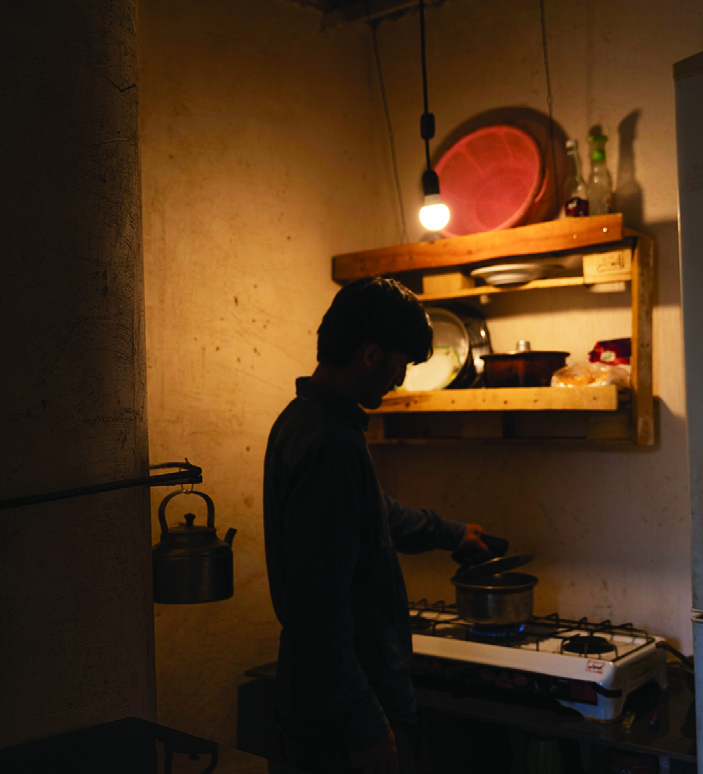
A worker cooking in the small kitchen corner with basic utensils hung on the wall and a single gas burner
The kitchen corner — basic utensils, compact efficiency
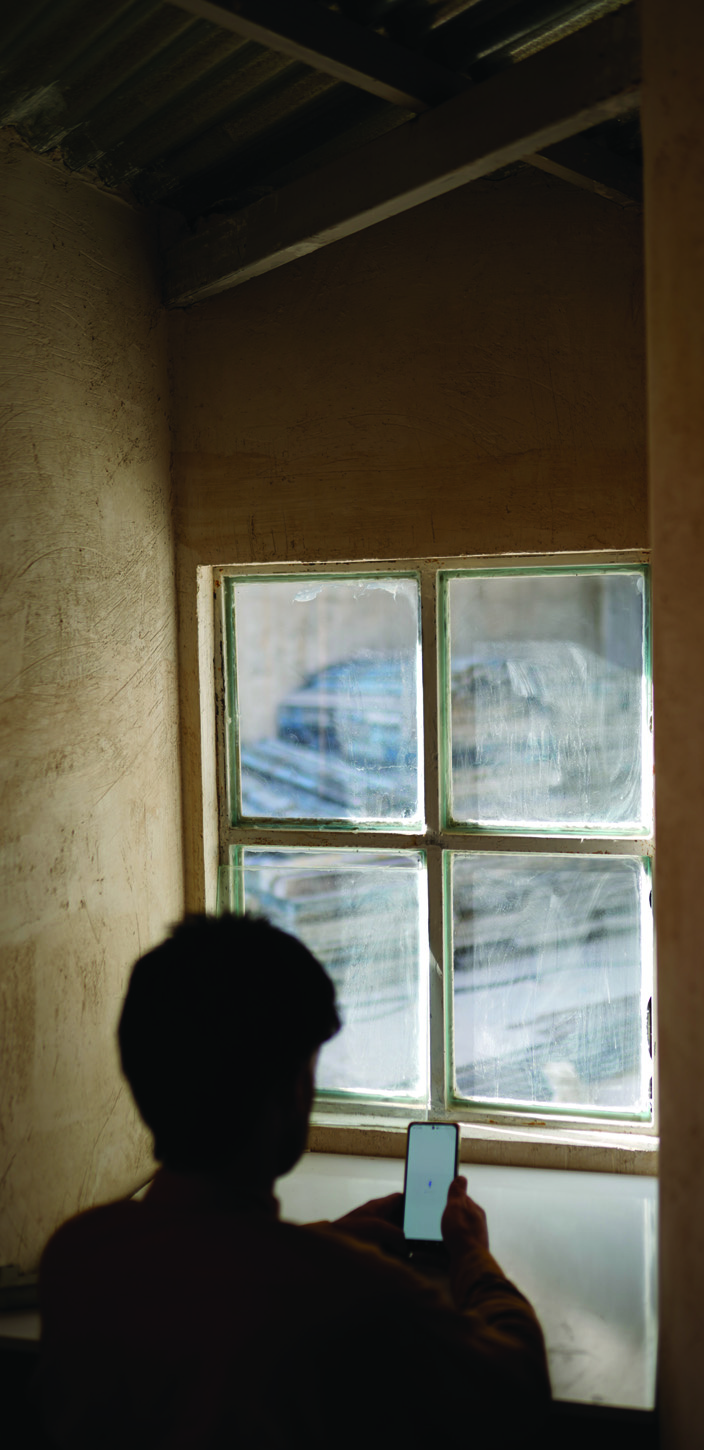
A worker resting on the bed in the bedroom area, with a small window letting in light from the gap between buildings
The bedroom — a window onto the narrow gap between buildings

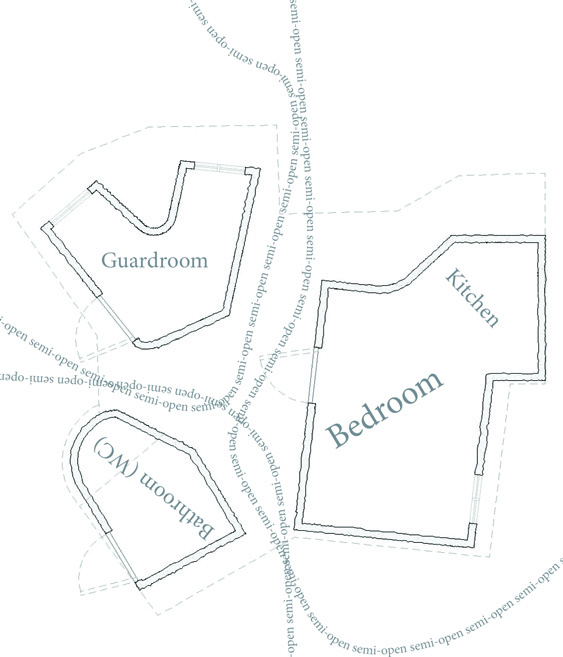
Empty Space. The empty sections allow a somewhat free choice of arrangement and manner of using the environment. Altogether, this empty space — in the form of a central corridor and interstitial zone — keeps the living environment away from the tension of the workshop. A place that, in Shiraz's predominantly sunny weather, is always shaded.
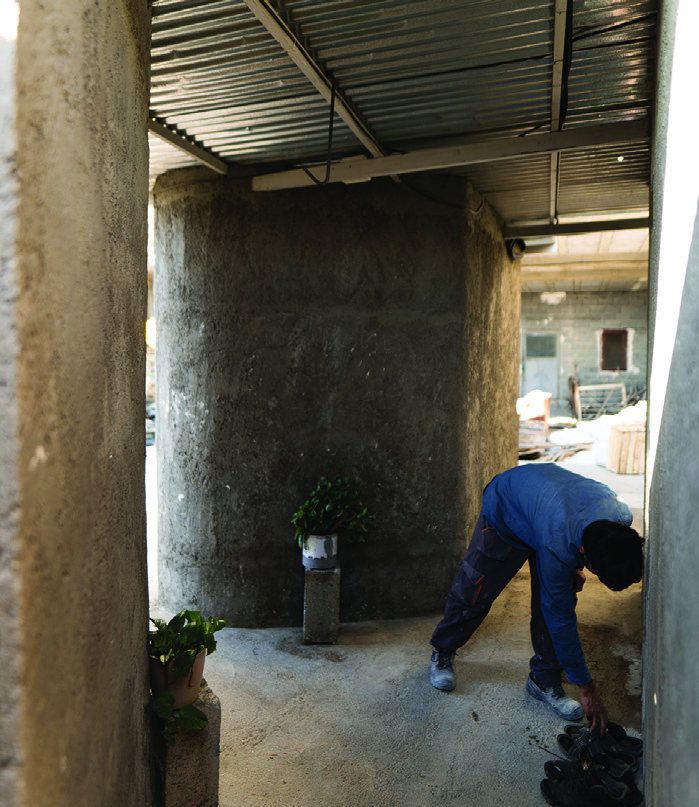
A worker in the semi-open corridor between the curved concrete modules, with corrugated roof overhead providing shade, plants in the corridor
The semi-open corridor — always shaded in Shiraz's sunny climate, a buffer between living and construction

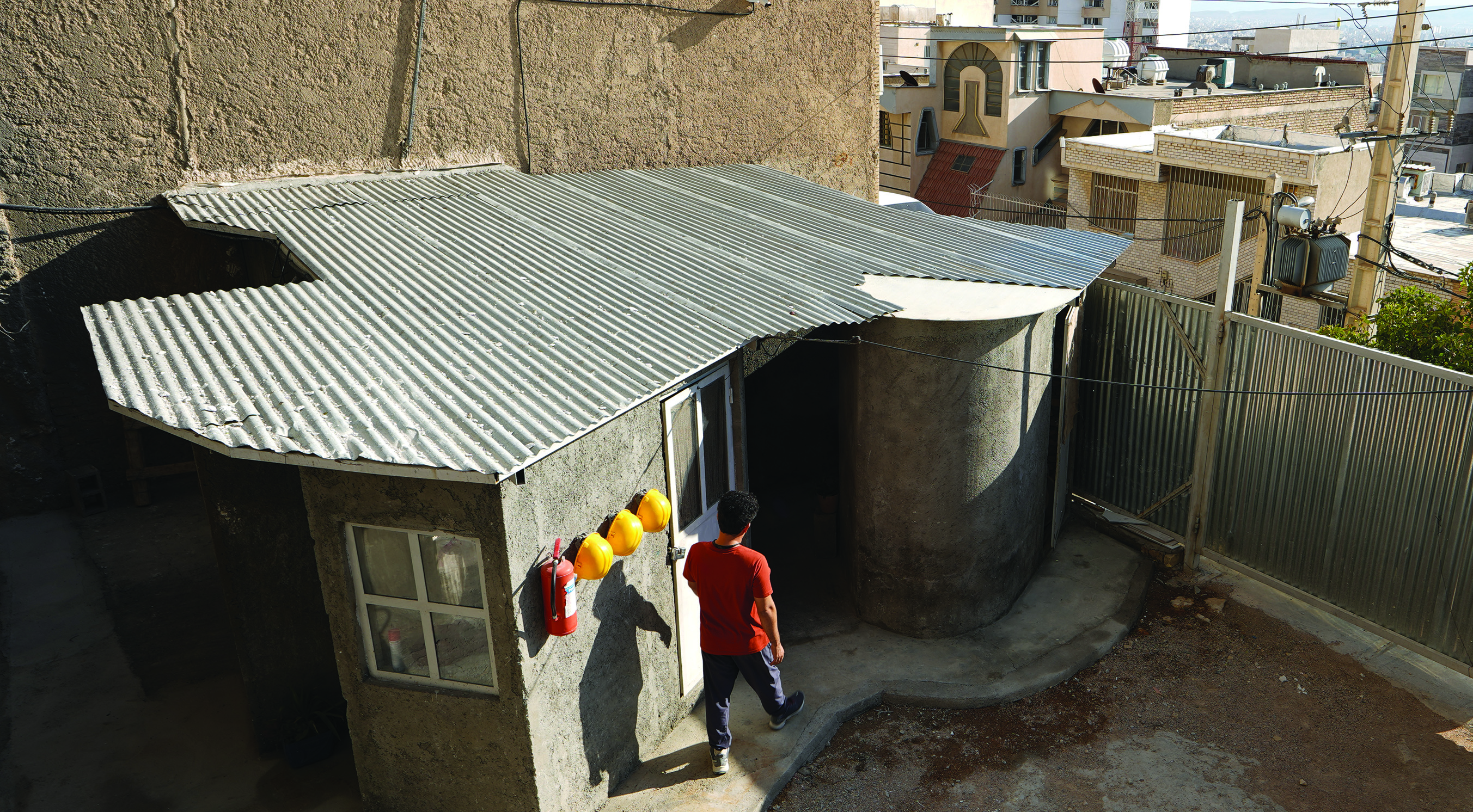
Guard Room. In the guard section, in the most minimal state possible — following the geometry of two desks and two windows in two directions — we arrived at a horseshoe-shaped form, one side holding the security cameras and their accessories, the other providing a place for the guard to sit and watch over the building.
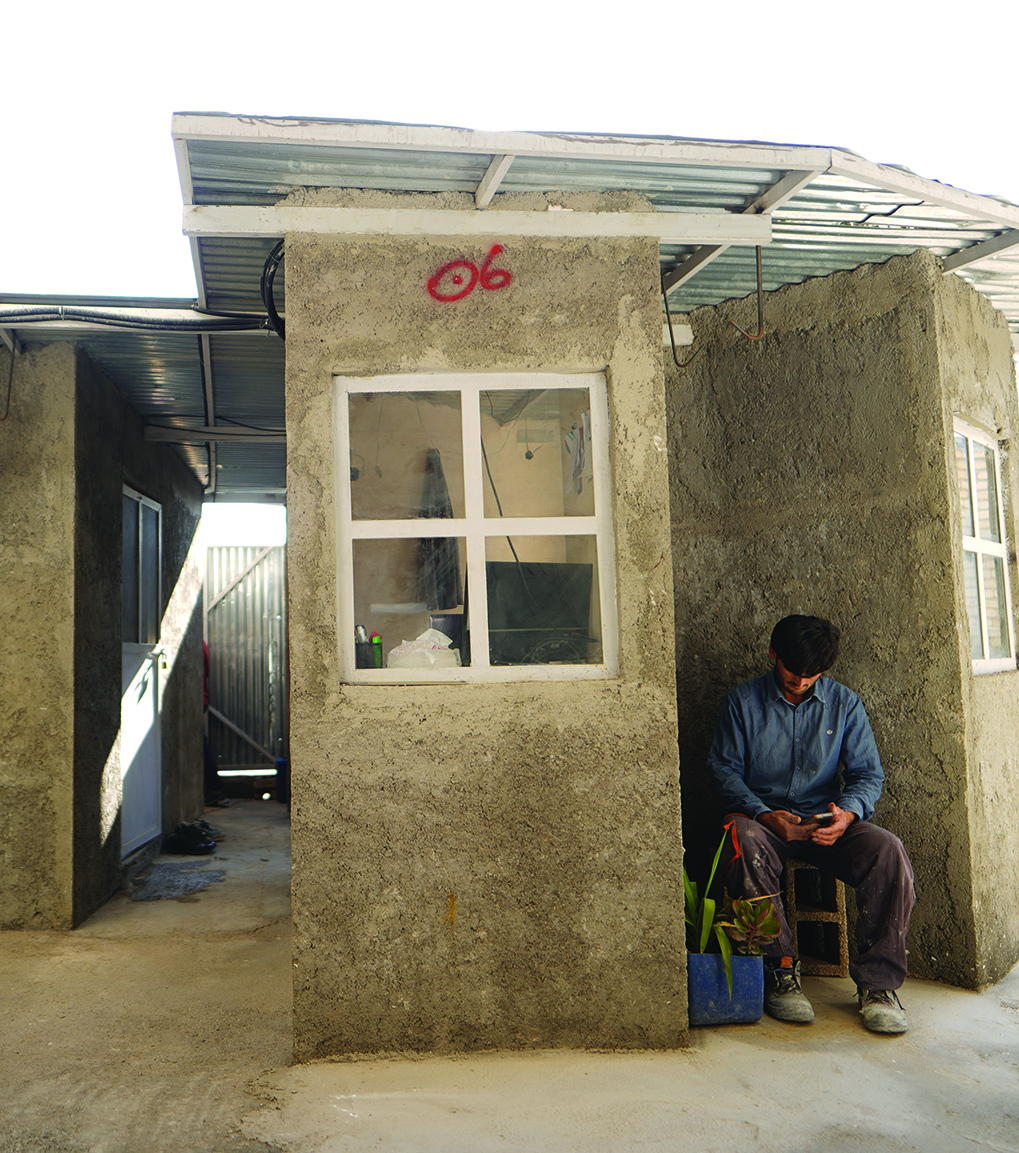
A worker sitting outside the horseshoe-shaped guardroom, with its curved brick wall and corrugated roof, fire extinguisher on the wall
The guardroom — horseshoe-shaped, minimal and functional
Night view of the guardroom with warm light glowing from the window, the curved concrete wall visible
Guardroom at night — warm light from the window
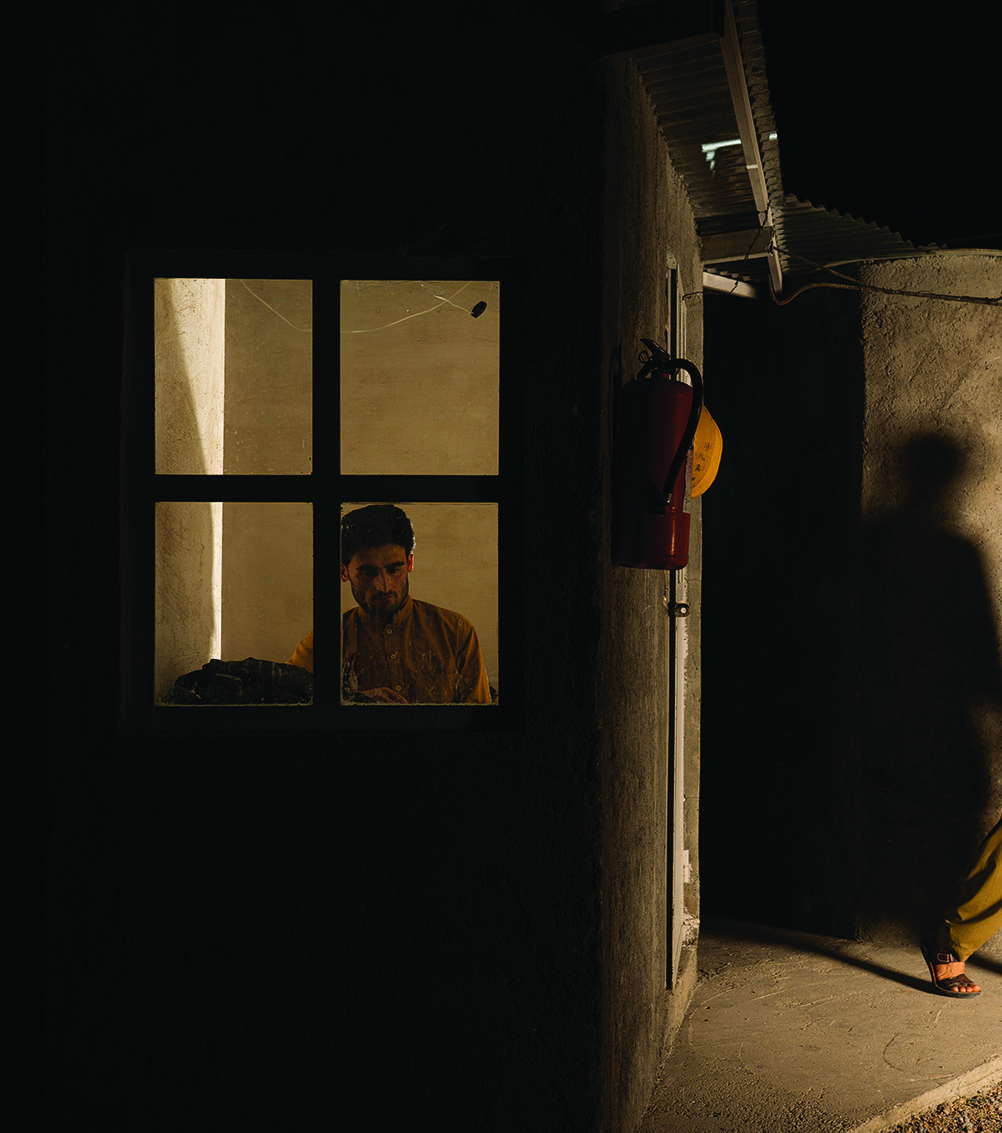
Silhouette of a worker seen through the guardroom window at dusk, the curved wall framing the figure
Silhouette of the guard — seen through the guardroom window at dusk

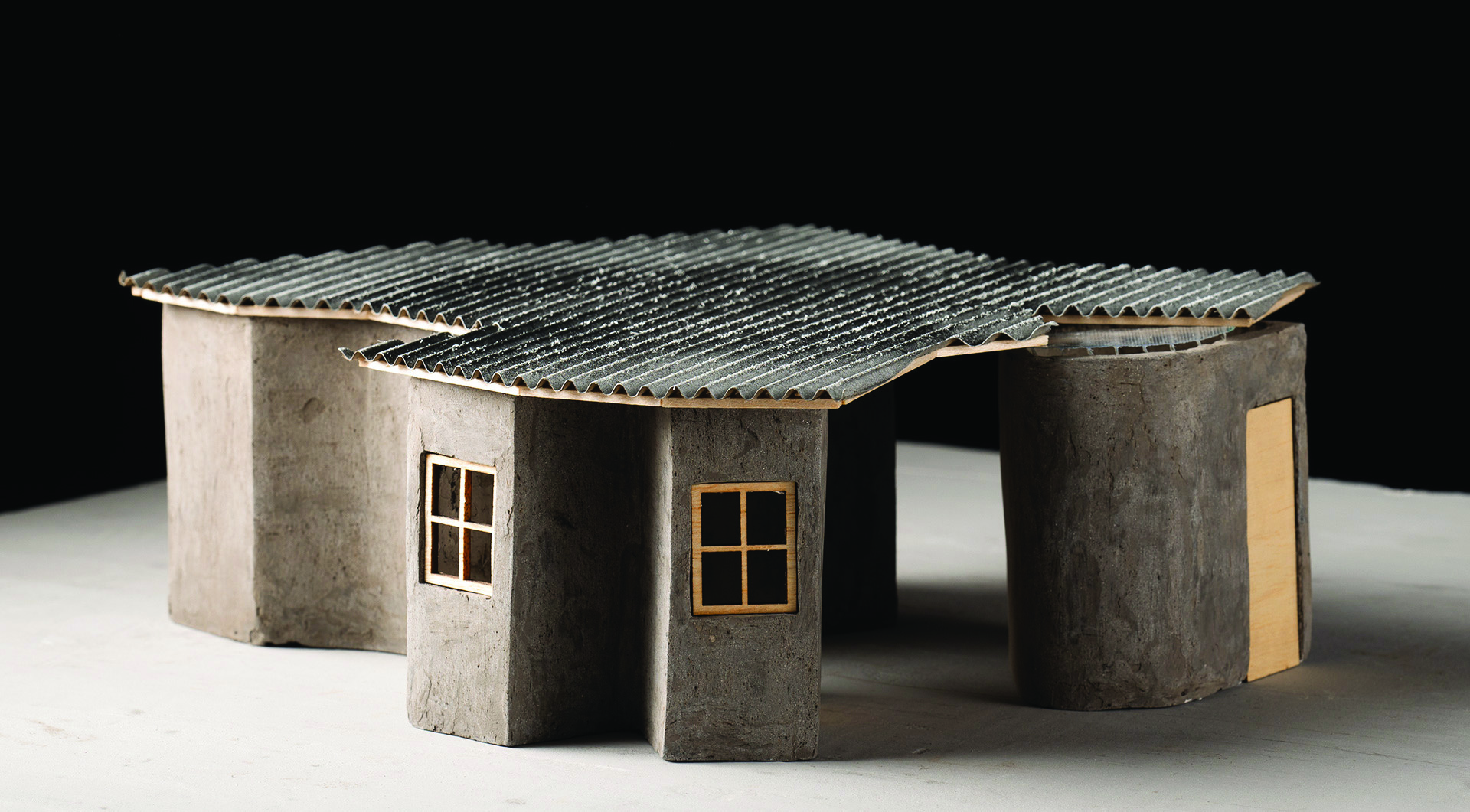
Roof. Ultimately, by attaching a lightweight roof to the volumes, we achieved a unified condition that formed a semi-open space in their midst.
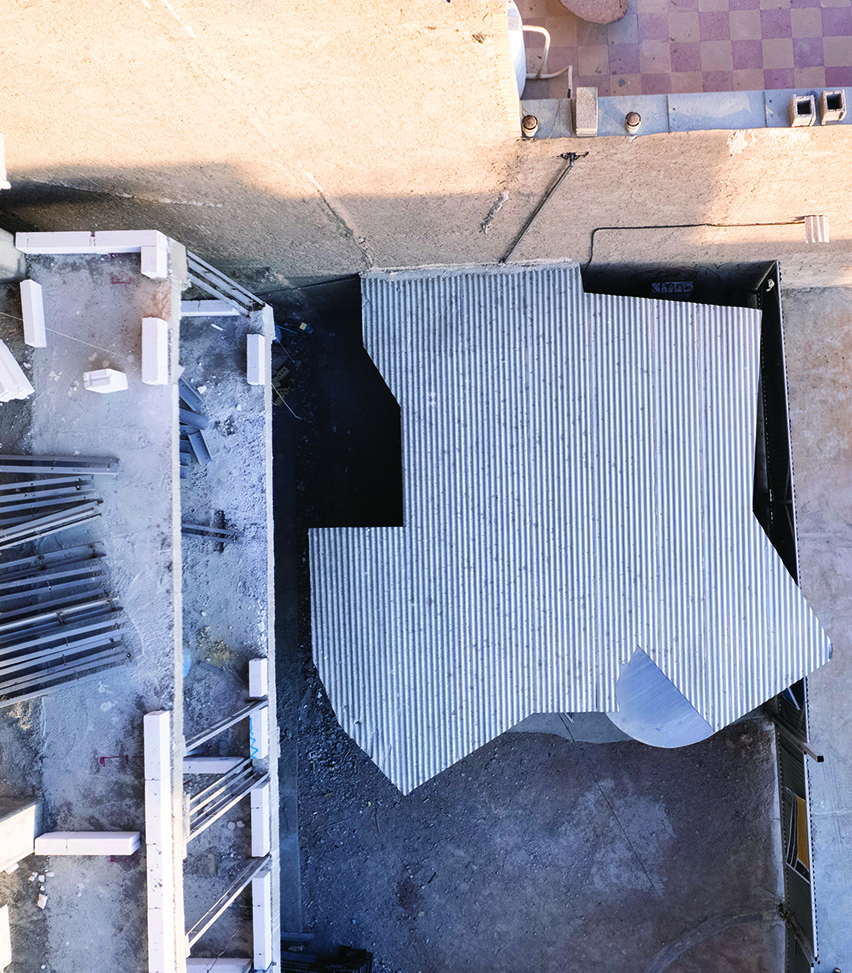
Aerial view of the corrugated metal roof covering the organic-plan structure, showing the irregular footprint and the gaps between modules
Aerial view — the corrugated roof unifies the distinct volumes beneath
◆ ◆ ◆
Construction Method

Given the temporary nature of the project, we decided to use secondhand materials. Bricks left over from the demolition of a dilapidated building nearby were collected and used during construction. Given the speed of formation and the limited time for design and execution, we forewent certain details. The materials used in the project are brick, cement board, metal profiles, glass, and polycarbonate.
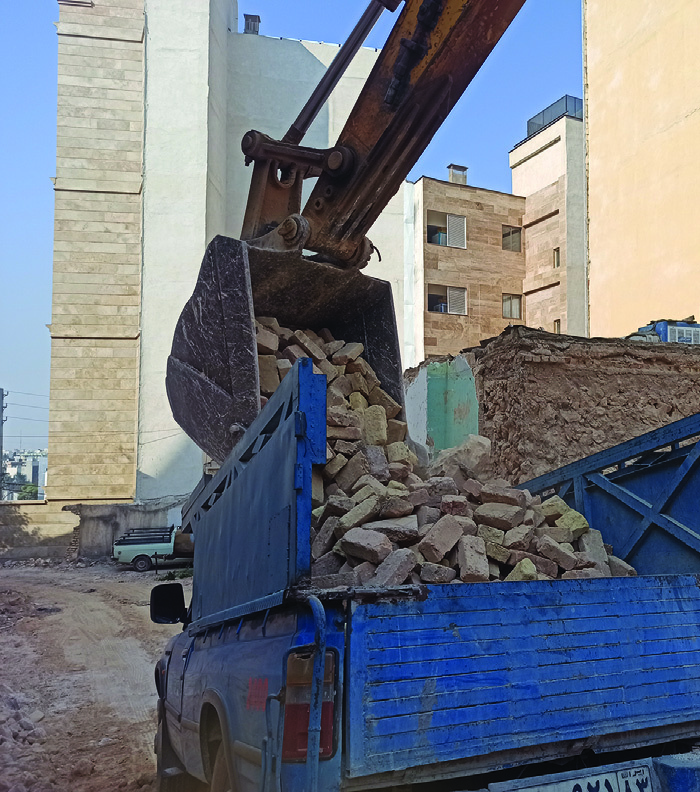
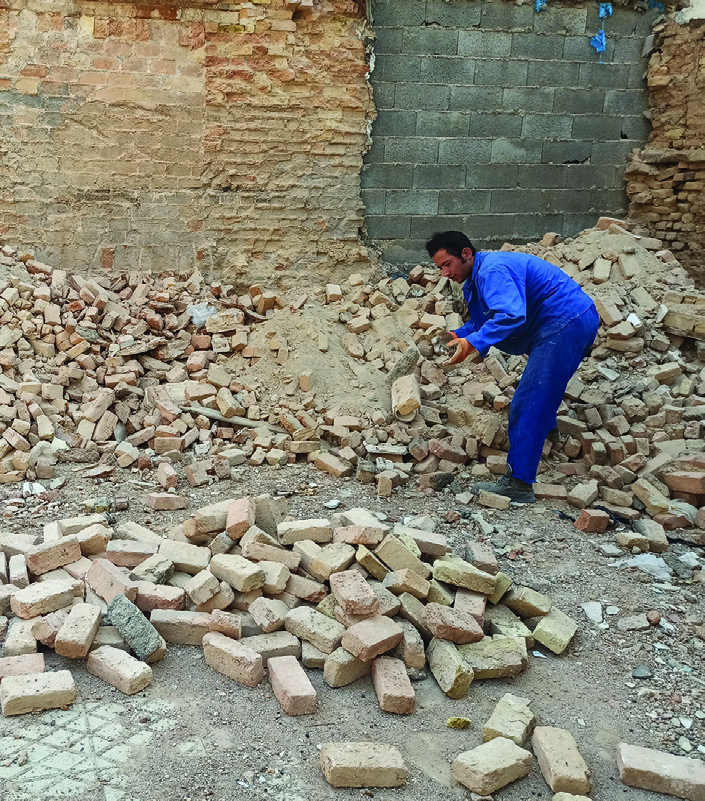
An excavator loading salvaged bricks from a demolished building onto a blue truck, the raw materials for the worker's house
Salvaged bricks from a nearby demolition site
A worker sorting and stacking salvaged bricks for reuse in the construction of the temporary house
Sorting salvaged bricks for reuse
Design and Model
Physical architectural model of the worker's house showing the corrugated roof, curved concrete modules, and the overall organic plan
Physical model — the corrugated roof connecting the curved modules
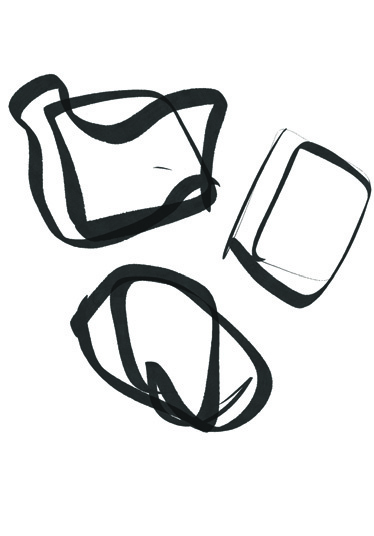
Hand-drawn concept sketches showing the organic, curved forms of the bathroom, guardroom, and kitchen modules
Concept sketches — organic curved forms
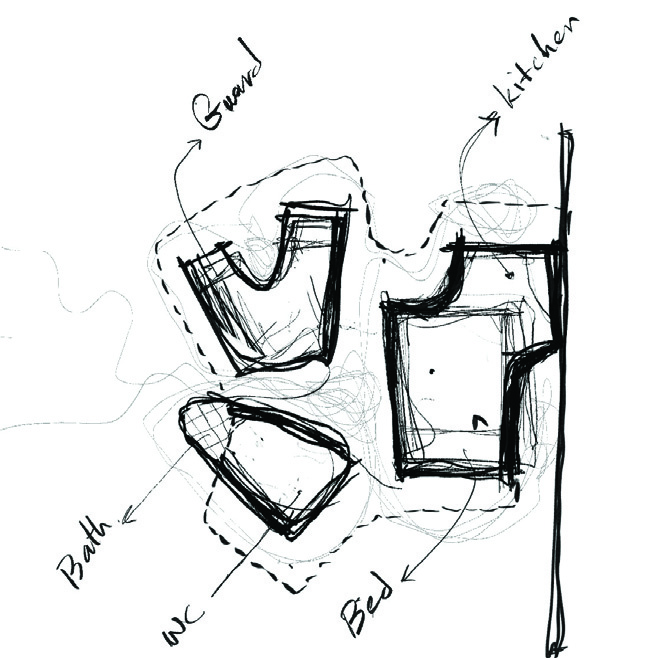
Hand-drawn plan sketch of the worker's house showing the arrangement of the curved modules
Hand-drawn plan sketch
Clean floor plan diagram showing the spatial organization — bathroom, bedroom-kitchen, guardroom, and empty corridor space
Floor plan — bathroom, bedroom-kitchen, guardroom, and the connecting corridor
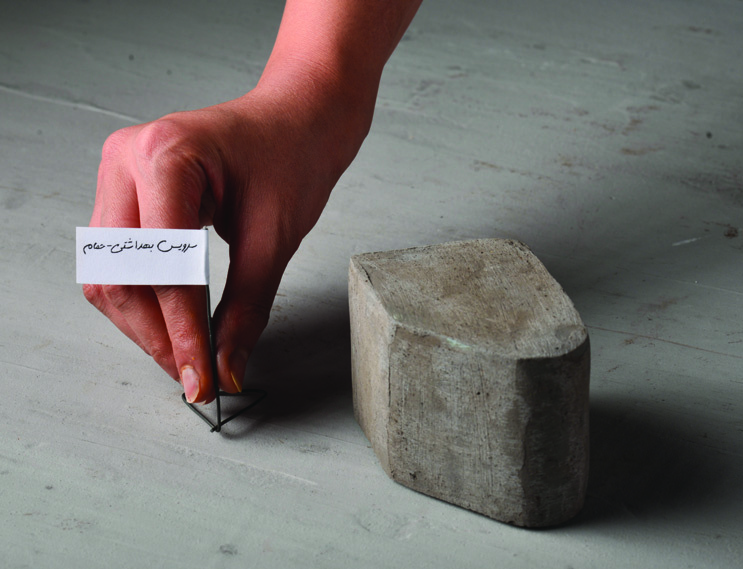
Close-up of the physical model showing the curved bathroom module with its small window
Model detail — bathroom module
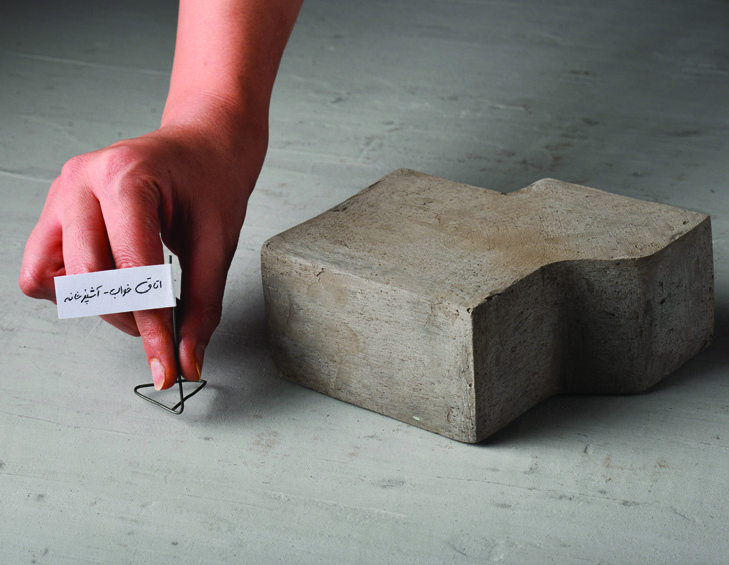
Close-up of the physical model showing the bedroom-kitchen module with its rectangular geometry
Model detail — bedroom-kitchen module
Close-up of the physical model showing the horseshoe-shaped guardroom module
Model detail — the horseshoe-shaped guardroom
Life in the Worker's House
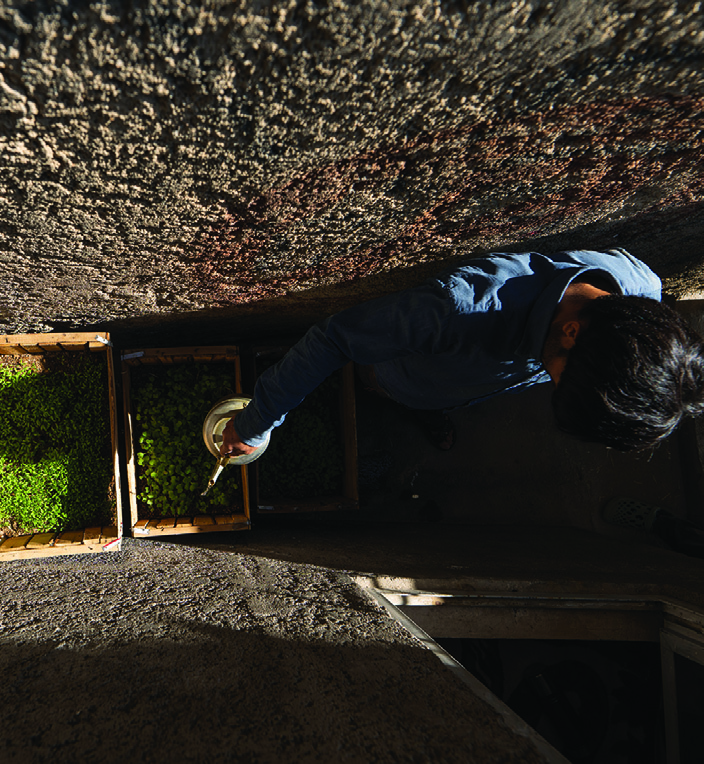
A worker watering plants outside the temporary house, with the curved concrete walls and corrugated roof visible, construction materials stacked nearby
A worker watering plants — domestic life amid the construction site
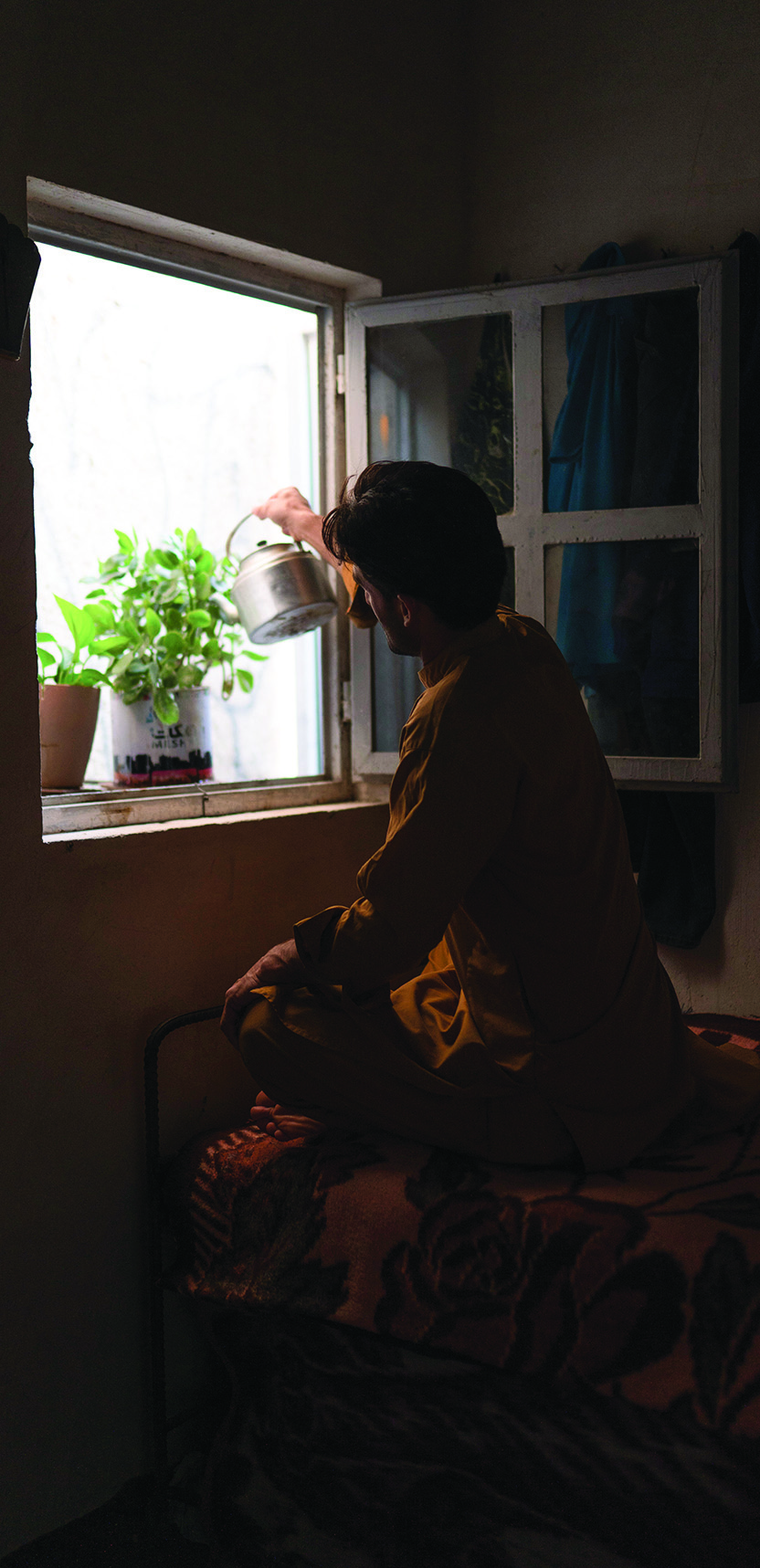
View through the window of a worker watering plants outside, the frame of the window creating an intimate domestic scene
Through the window — a moment of domesticity on the construction site

Project Data

Location: Shiraz

Design team: Farshid Roozitalab, Mohammad Hasan Tajik

Studio: Shid Architects

Photography: Farshid Roozitalab, Mohammad Hasan Tajik

Materials: Salvaged brick, cement board, metal profiles, glass, polycarbonate

Memar Magazine
Iranian Bimonthly on Architecture and Urban Design · Issue 142 · December 2023 – January 2024

Related in Architecture Database

Worker's (Temporary) House, Shiraz