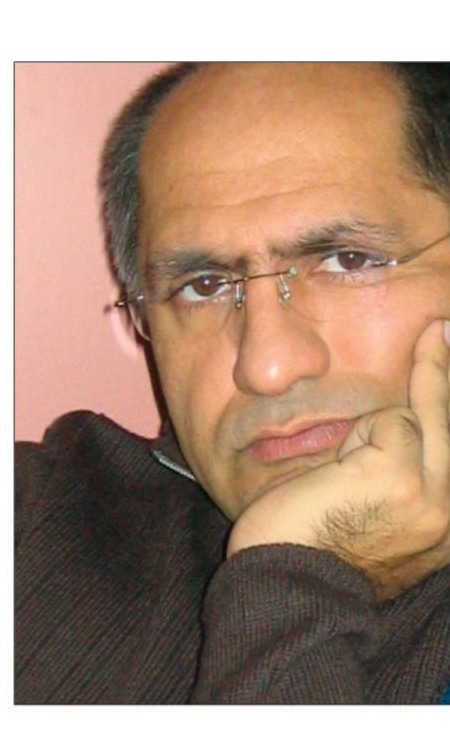
Ali Kermanian was born in 1344 (1965). He graduated in architecture with distinction from PCL in London and earned a master’s degree with distinction from the Bartlett School at UCL, University of London. He worked in the London offices of Price and Dusek and, since 1370 (1991), has practised from his own office in Tehran. The product of thirteen years of work is more than 90 designed projects and 60 built projects, two of which were selected by the Memar Award jury in 1380 and 1383. His office also took joint fourth place in the 1382 Bam municipality architecture competition.
Kermanian’s other activities have included teaching as an assistant at PCL in London and teaching and heading the architecture group at Azad University, where in 1371 he organised the country’s first student architecture competition; he was also among the active participants in the Bam project. In this issue a number of his residential designs are presented, with the explanatory text written by the architect himself.
For various reasons — including economic conditions, the restrictive bylaws of the Tehran municipality, and the conditions pre-set by clients, which directly reflect the housing market — the design of residential projects rarely allows the designer’s creativity room to flex its muscles in construction and spatial organisation. When, for instance, a typology such as “five storeys, two units per floor” is fixed, the division of interior spaces has effectively been done for the architect in advance. The architect is left only with the plain task of partitioning the plan, and unfortunately in Tehran many designers carry out even this partitioning only after the parking floor has been formed, which by itself substantially reduces the quality of the interior residential spaces — the project’s principal spaces.
In this way, the outer form of the mass and the facade of buildings are the only opportunities for creativity left to designers. Perhaps this is why, in these projects too, the outer facade has been used to the maximum to express the designer’s opinions and ideas — because, unfortunately, this idea-making cannot be realised in the interior spaces. Although it would seem that the users of these interiors have not been dissatisfied over the past twelve years, perhaps because their basis for comparison has been low-quality buildings that fail to resolve even the simplest architectural questions and that have, unfortunately, taken over most of our cities.
It should of course be added that in residential architecture, which makes up the major share of building activity in Iran, villa-type houses offer more scope for realising the architect’s spatial ideas. Presenting some of those projects requires a separate occasion.
Khaledi Complex (Dorus, 1375 / 1996)
Design assistants: Ali Ahmadzadeh, Baharak Raoufi
Structure: Parviz Parsirad
Execution: Khaledi, Abrinia
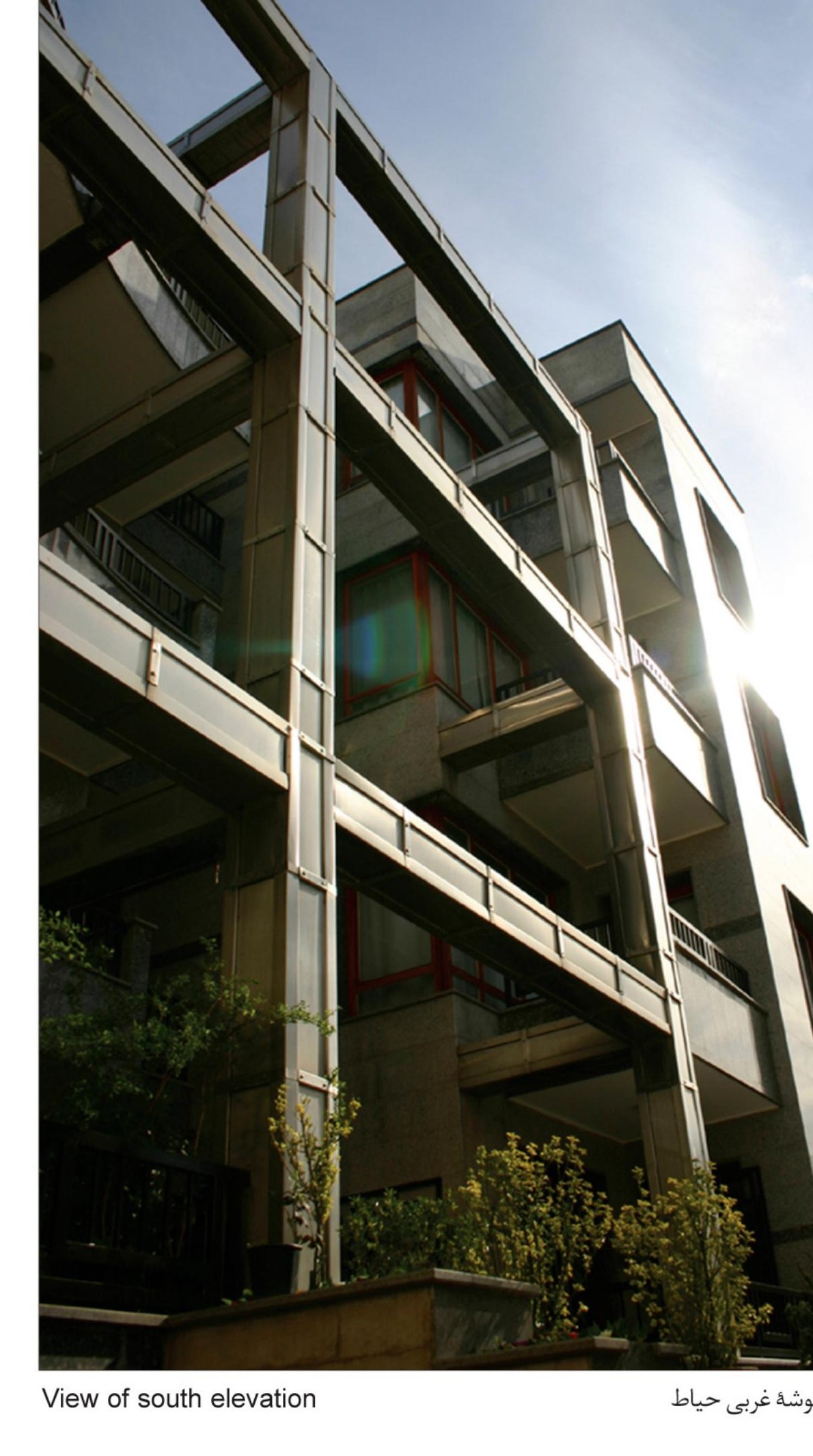
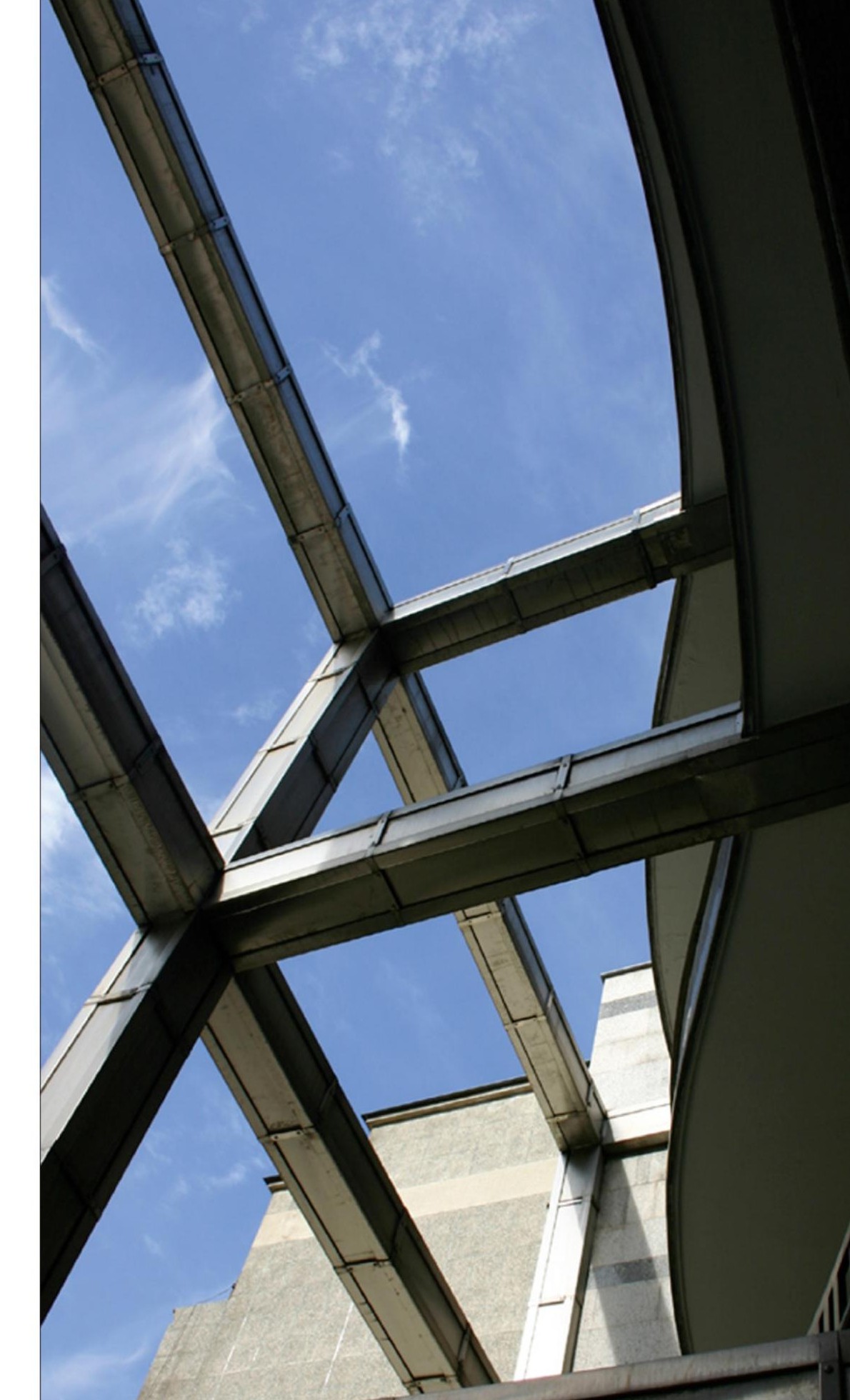
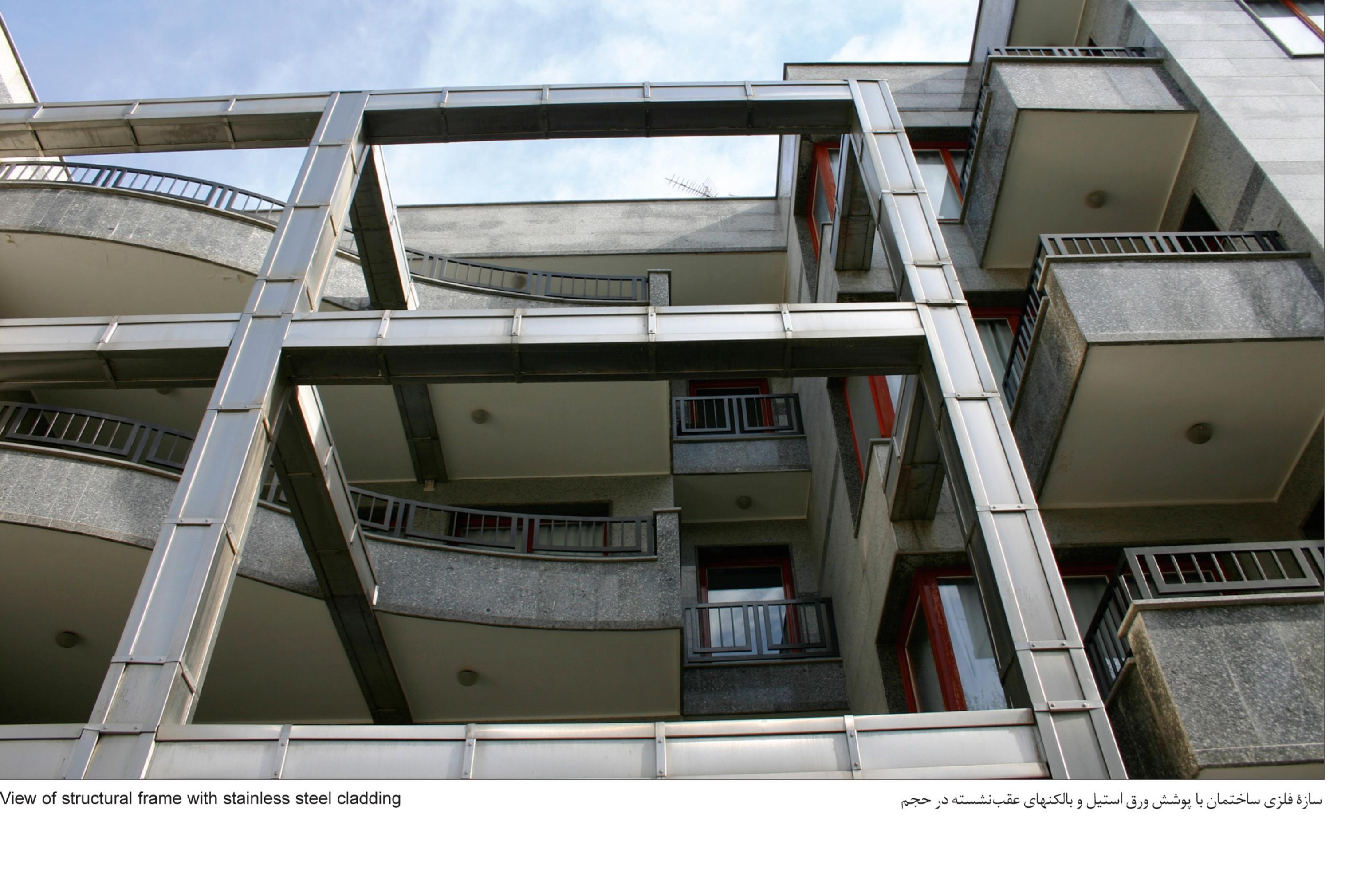
The client, himself a civil engineer, wanted a building that was “robust” and “very modern,” and gave great importance to its structure. This led the structural form to become the project’s guiding idea. Because the building occupies only 40% of the site, the only opportunity to play with massing was the single urban facade — the courtyard elevation. In that play, the in-between, semi-open space between the open courtyard and the enclosed volume was created through the interpenetration of the closed building form with curved and cube-like shapes, and their interpenetration with the structure pulled out from within the volume (this project was one of the twenty selected by the Memar Award jury in 1380).
Shahrivar Complex (Mahmoudiyeh, 1376 / 1997)
Design assistants: Ali Ahmadzadeh, Peyman Gharagozloo
Structure: Pedram Zarpak
Mechanical & Electrical: Mohsen Cheheltani
Execution: Ali Kermanian
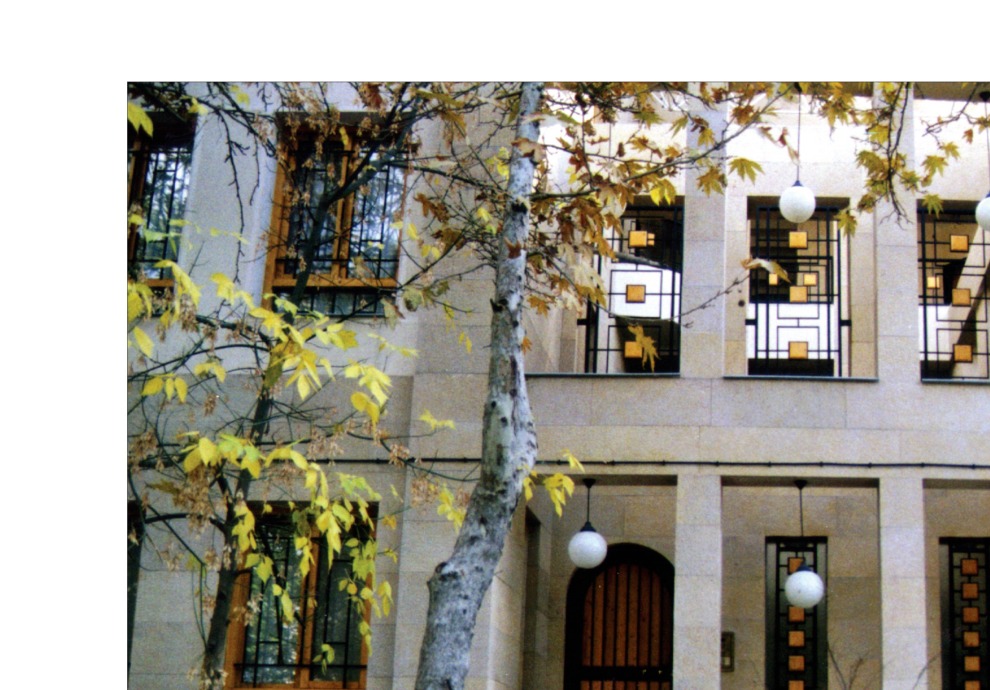
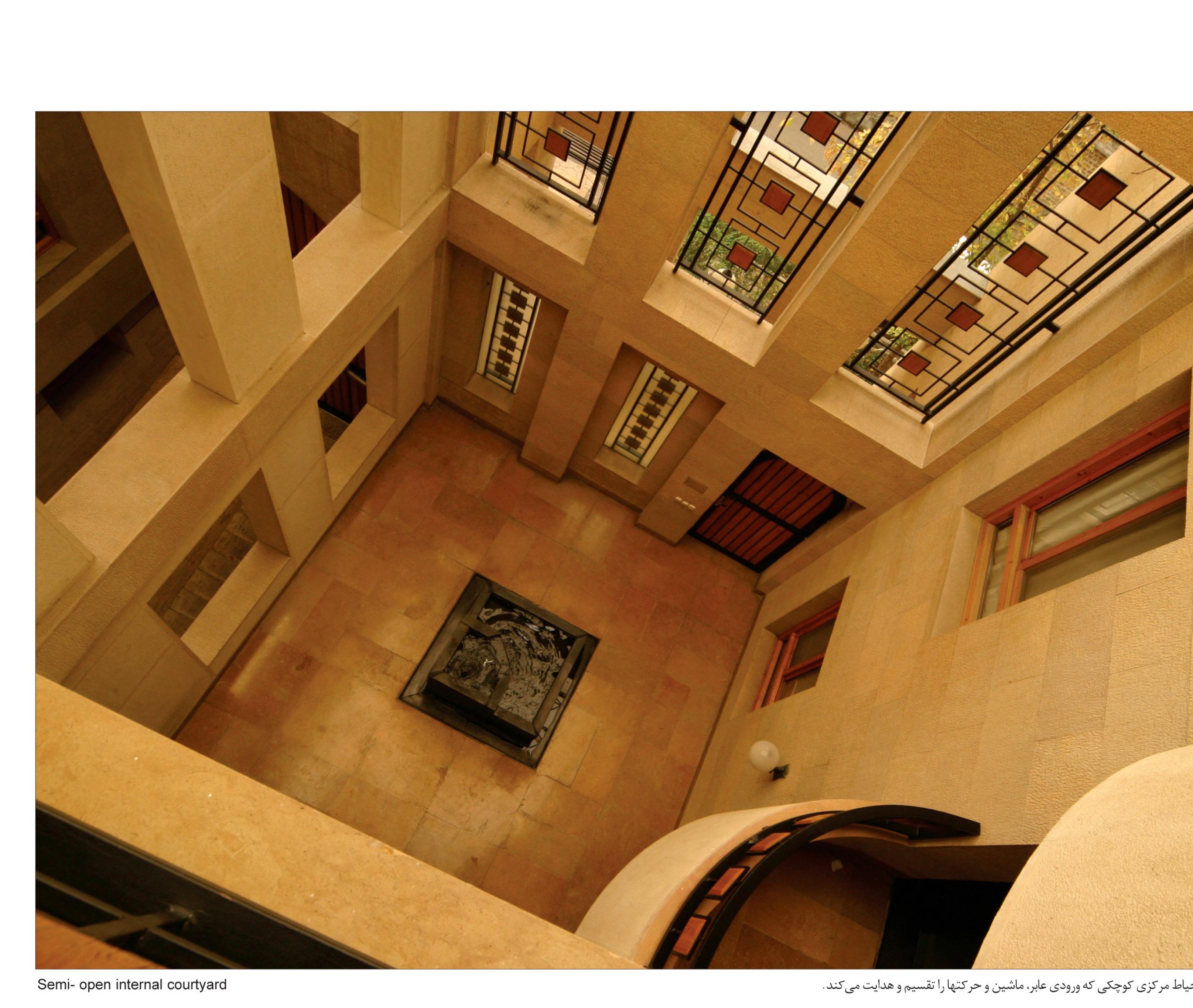
This complex was conceived as one large house for all the residents — in place of fully separate apartment units — while still respecting the independence of each dwelling. The central space recalls the central courtyards of the architecture along the edge of the desert, and serves as the entrance, the main distributor of circulation, and the point of connection with the open space outside the home.
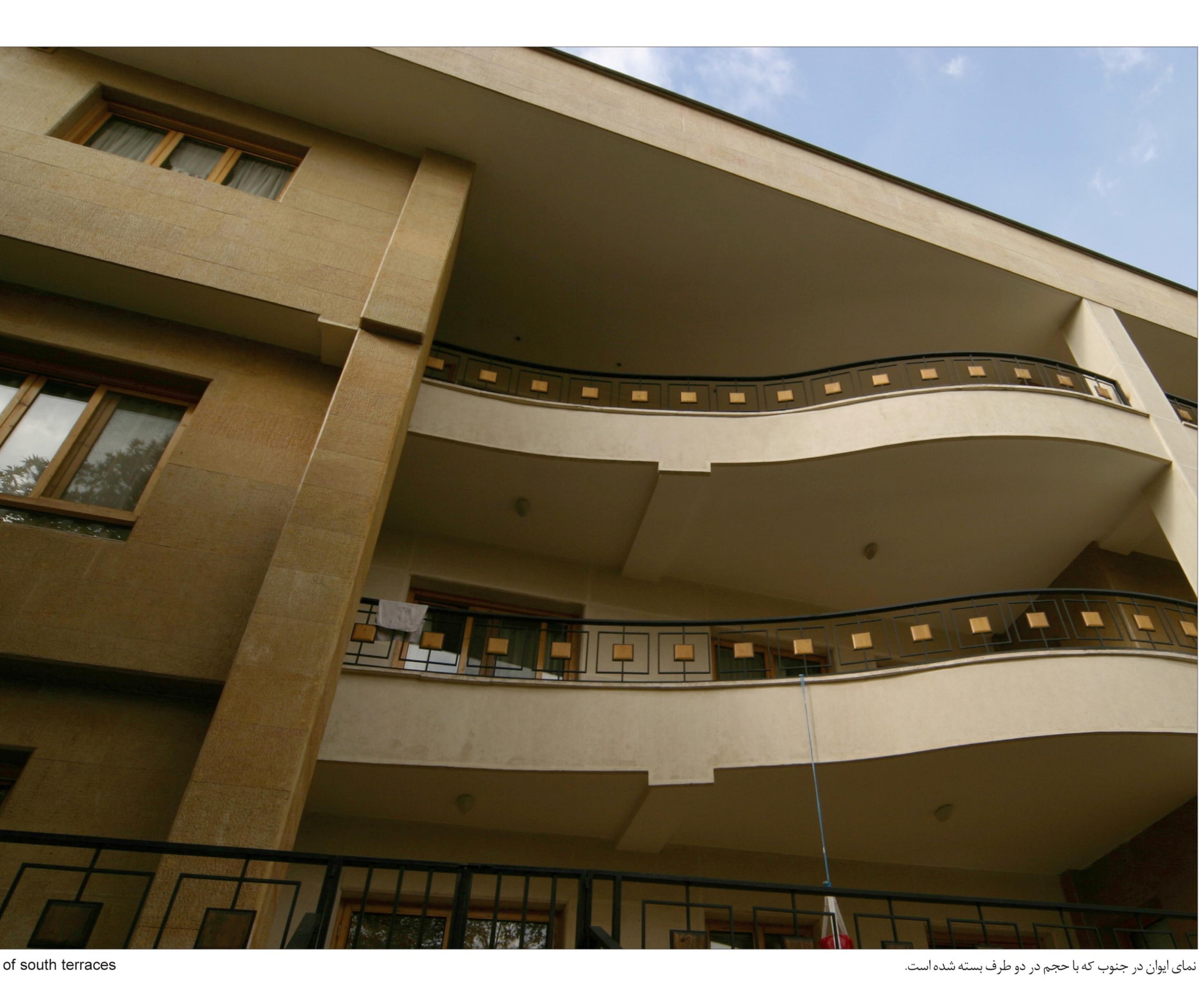
The complex is a residential cluster of six dwellings of three units. The family ties between residents and the leaving of 60% of the site unbuilt made it possible to design open and semi-open spaces that gradually draw the user from the outdoors into the interior.
The relative concealment of the access to each dwelling and the requirement to pass through the in-between spaces lets residents experience varied spaces that are rarely encountered in apartment complexes. From outside, the entrance is likewise a defined space set apart from the street.
The play of empty space inside a solid volume also occurs in other places — including the south elevation facing the courtyard — and for anyone who has experienced the middle courtyard before reaching the back courtyard, the same play of mass is evoked again. The client’s concern for “security” gave rise to the “fortress” as the project’s guiding idea.
Building 66 (Zaferanieh, 1380 / 2001)
Design assistants: Sasha Sadeghi, Nader Rahbar
Structure: Farid Saheb
Mechanical & Electrical: Mohsen Cheheltani
Execution: Ali Kermanian, Javad Kermanian
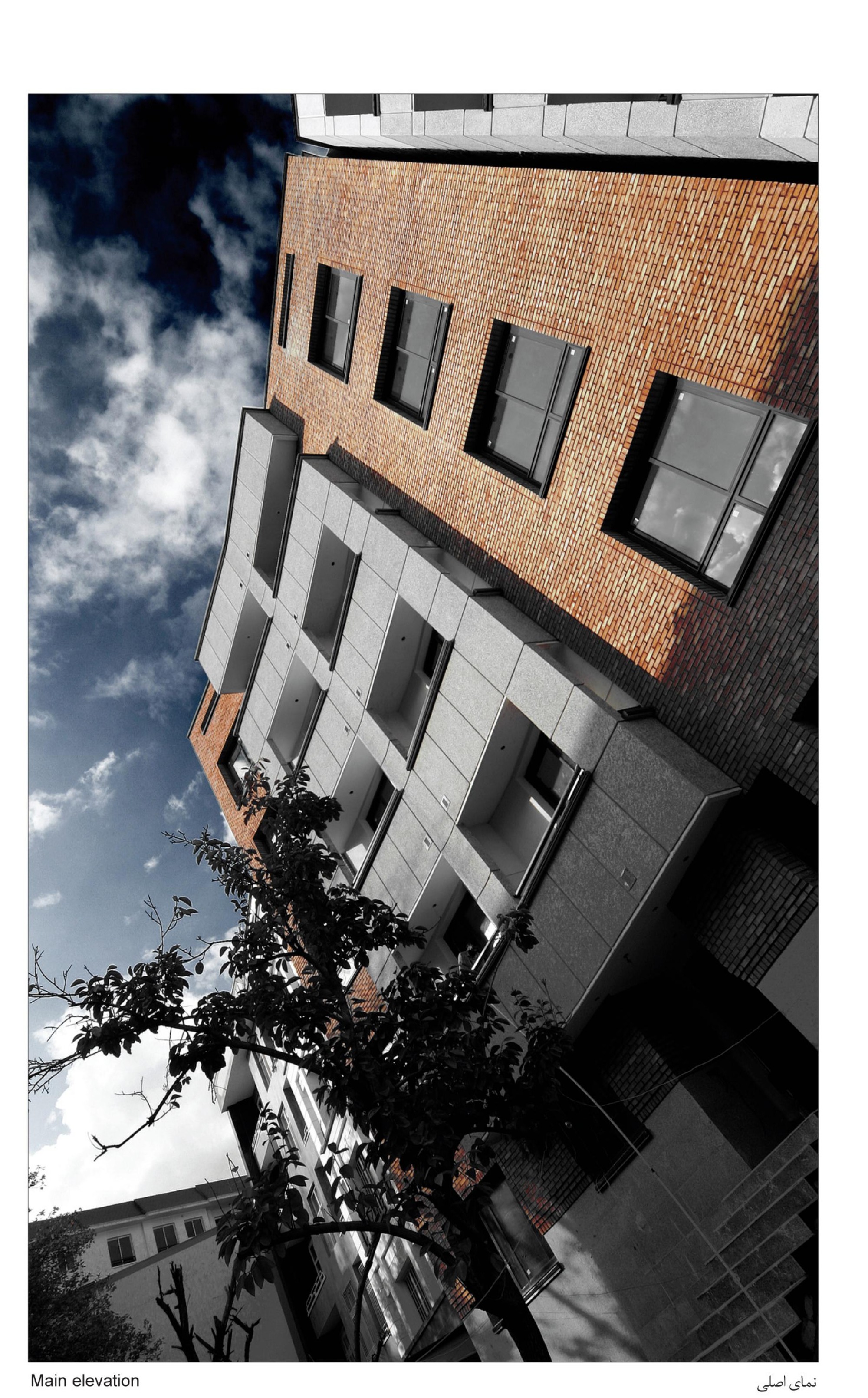
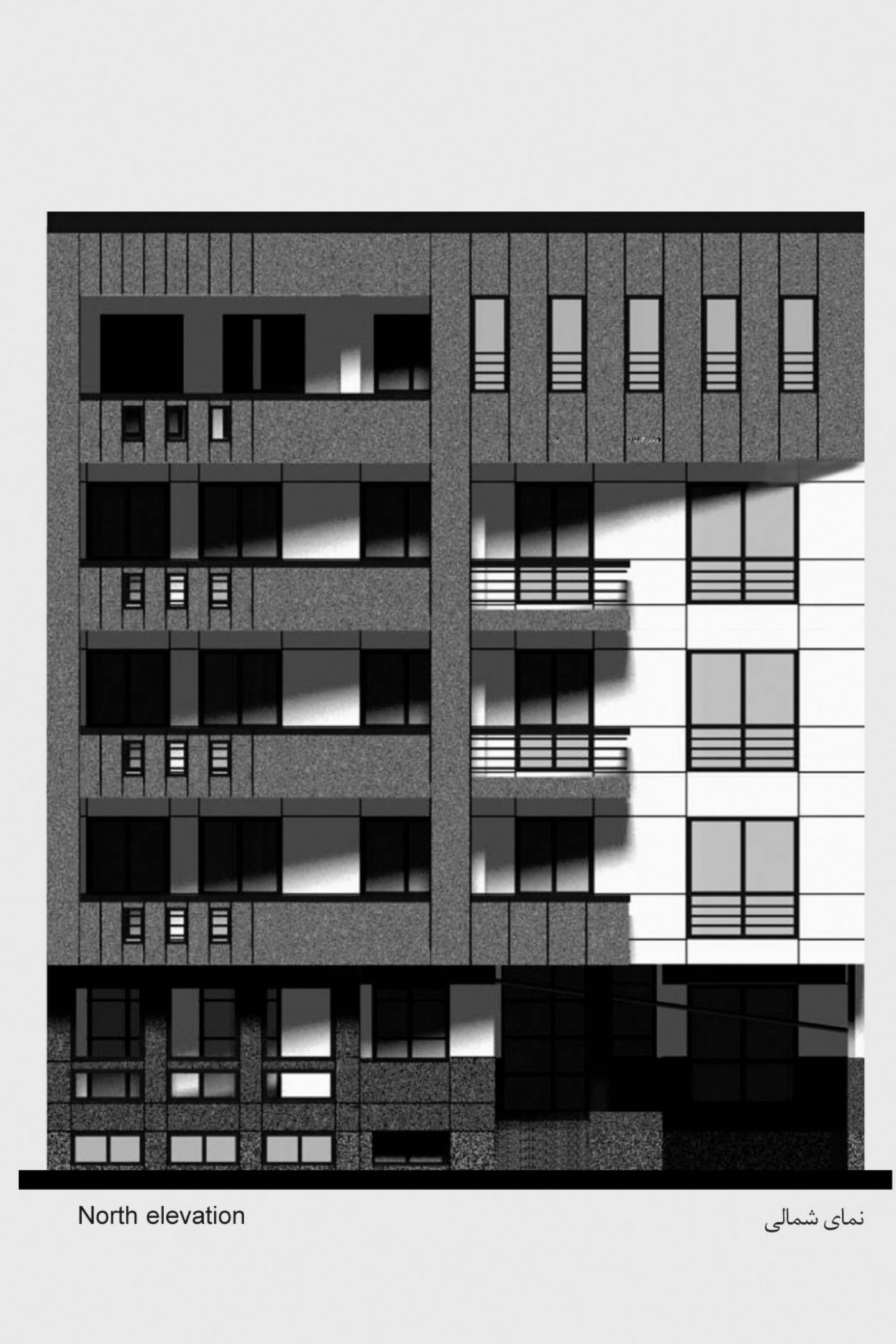
This building, one of the projects selected by the Memar Award jury in 1383, comprises five residential storeys in three different unit types. The guiding idea of the design was the very different geometry of the street and the site. In other words, the angular discrepancy between the street and the site became the basis of the design. This angular discrepancy is clearly felt in the facade and at the entrance of the building, but the physical program demanded did not permit this idea to be extended into the interior spaces, and this is the project’s most significant weakness.
Takhti 5 Building (1380 / 2001)
Design assistants: Sasha Sadeghi, Nader Rahbar
Structure: Farid Saheb
Mechanical & Electrical: Mohsen Cheheltani
Execution: Ali Kermanian, Farid Cheheltani
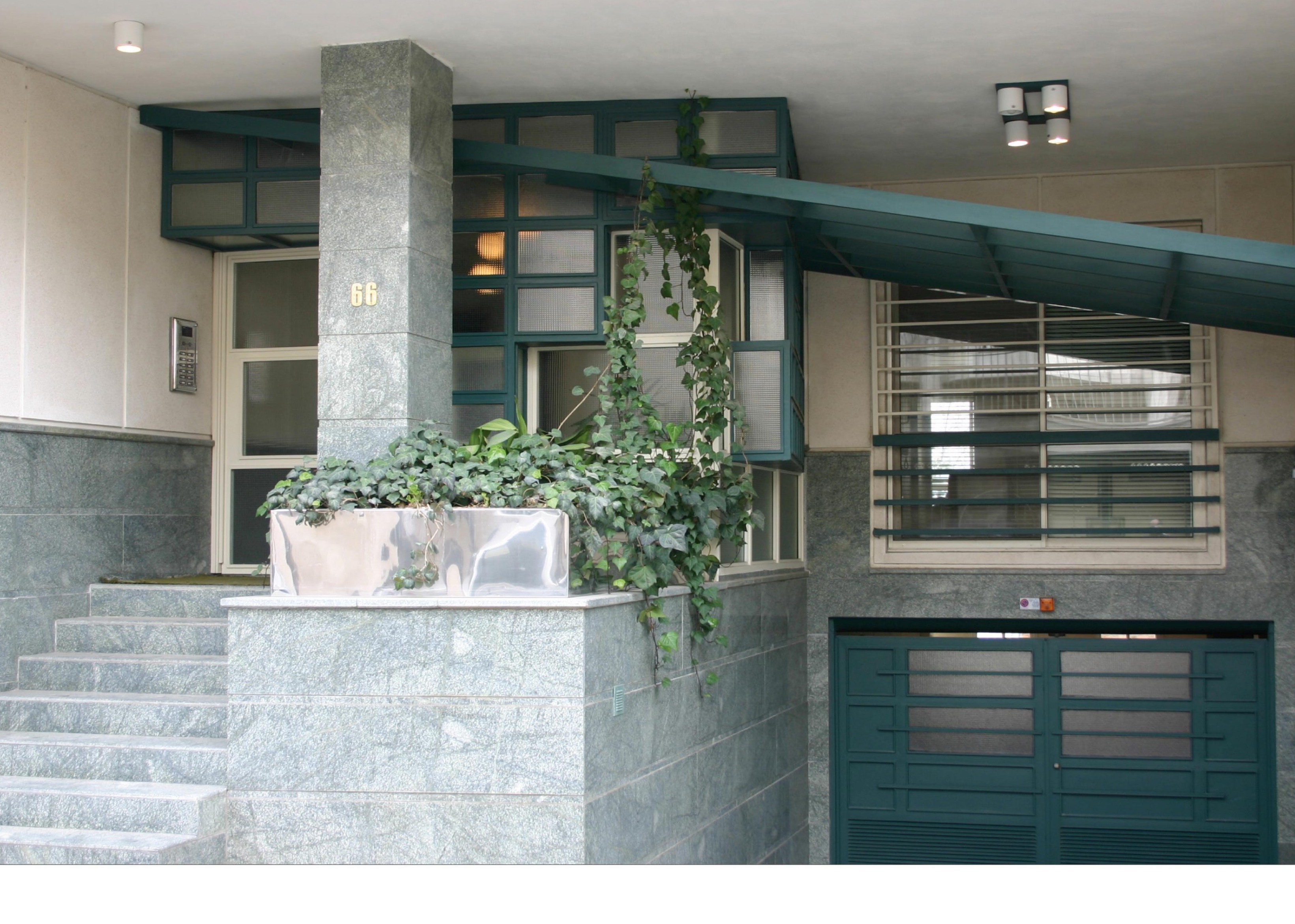
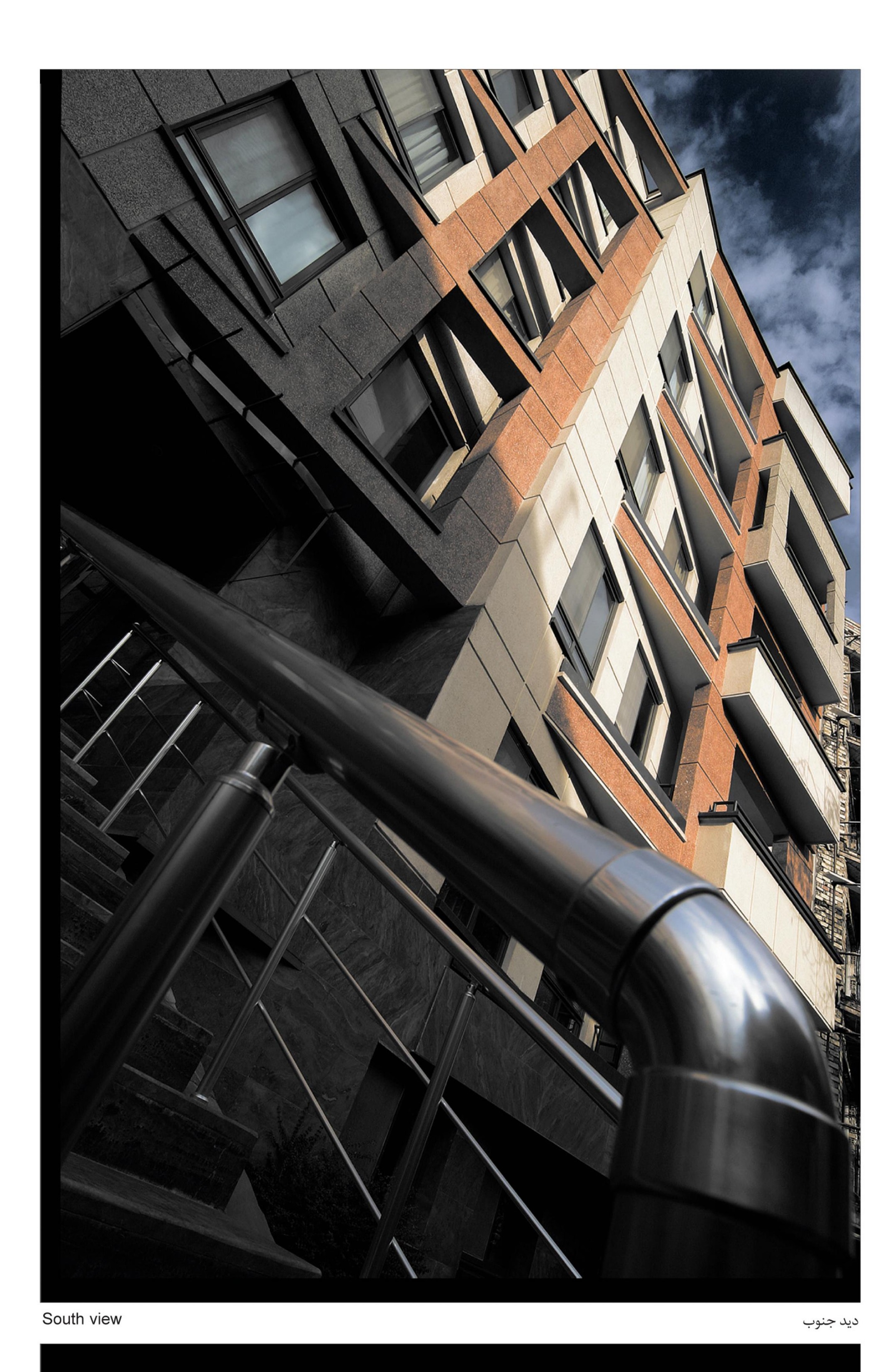
This building is a ten-unit residential complex in Elahiyeh, on a narrow and winding lane similar to the old garden lanes of the area. The irregular shape of the site and its considerable width mean that, as the passer-by moves along it, varied views and vistas are experienced. Using several layers — distinguished on the facade by colour and shape — produced this movement. The detachment of some of these layers from the volume also generated semi-open spaces between the open city space and the enclosed interior of the building. Unfortunately this idea has not extended into the interior spaces for various reasons. Although the interior, in contact with the surface of the outer facade and behind it, carries the same movement.
Takhti 7 Project (1381 / 2002)
Design assistants: Sasha Sadeghi, Nader Rahbar
Structure: Parviz Parsirad
Mechanical & Electrical: Mohsen Cheheltani
Execution: Ali Kermanian, Farid Cheheltani
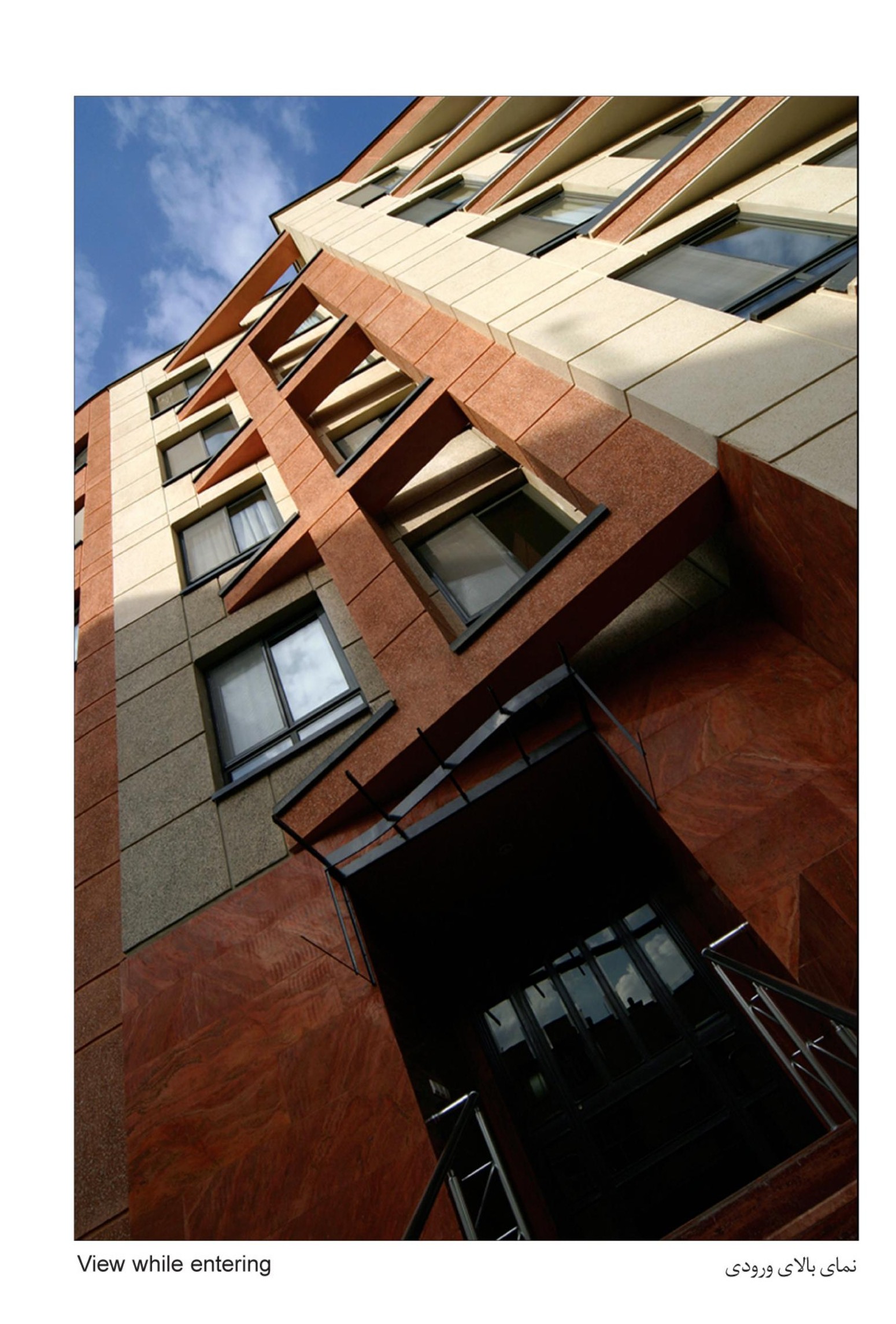
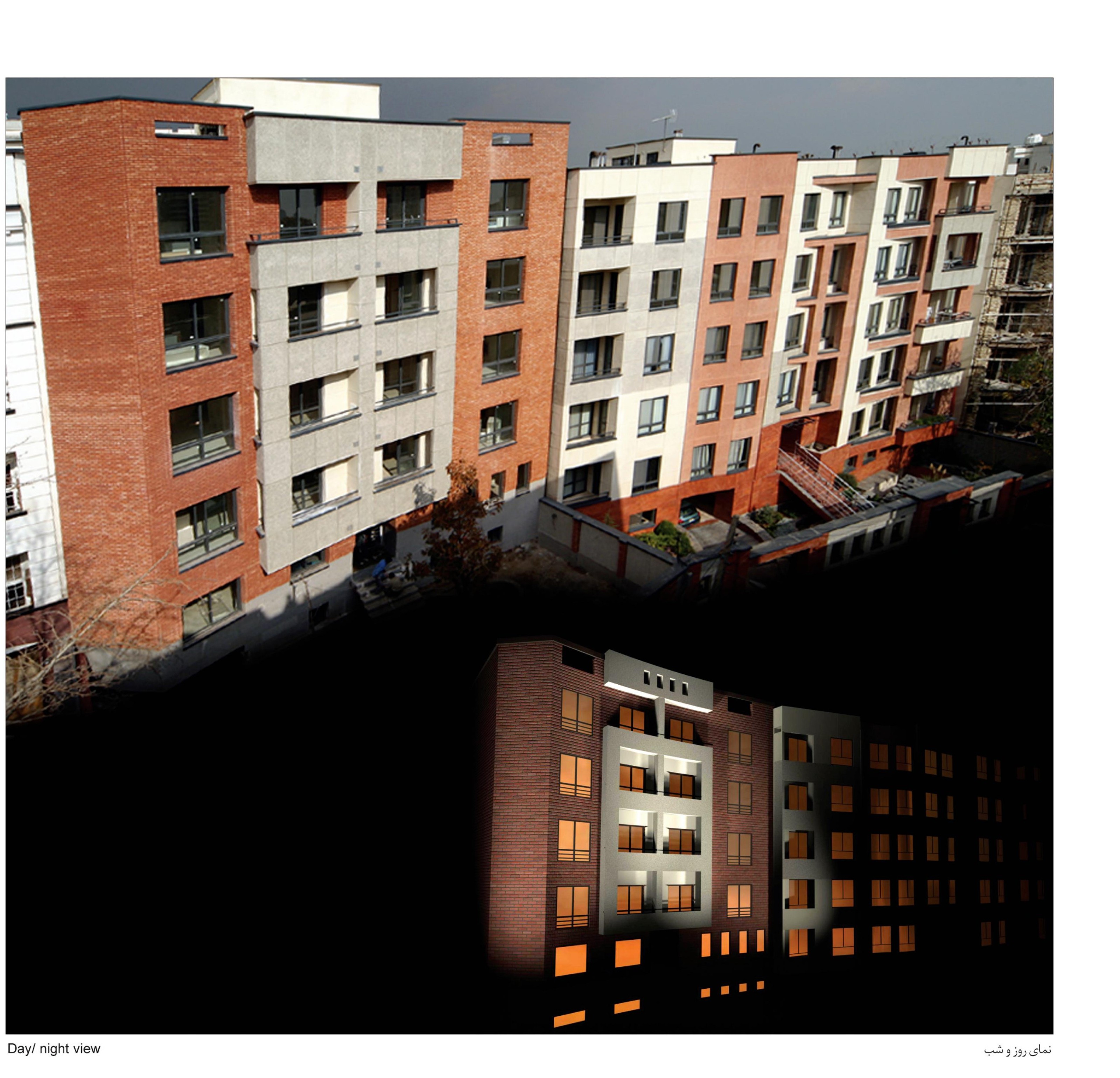
This building, designed in 1381 immediately beside the previous project, was conceived with the previous building in mind as the most important building on the lane, and with the aim of creating coherence while preserving its own independence. A 60% difference in length between its east and west sides, and the option of eliminating the 45-degree chamfer at the south-east corner, made the building’s form align with the previous one and incline toward it.